Blood ties and opportunity: Why more World Cup players than ever are not representing their birth nations

Blood Ties and Opportunity: Why More World Cup Players Than Ever Are Not Representing Their Birth Nations
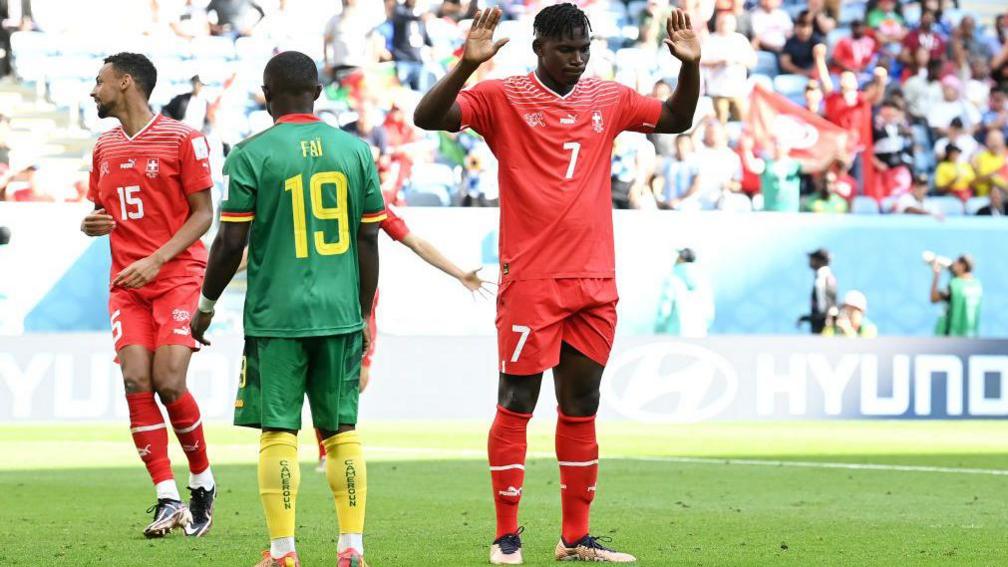
Constantvpn.com – When Breel Embolo scored for Switzerland against Cameroon in the 2022 World Cup, he chose not to erupt into the usual celebrations. Instead, the forward briefly lifted his arms in a gesture that seemed almost hesitant, as though acknowledging the significance of the moment. This marked a rare instance where a player representing a nation other than their birthplace achieved a milestone against their ancestral homeland, a trend that has since become increasingly common in the global football arena.
The 2026 Tournament Breaks Records
The 2026 World Cup has set a new benchmark for international representation, with nearly a quarter of all participating players hailing from countries different than where they were born. This is the highest proportion ever recorded in the tournament’s history, according to official squad lists submitted to FIFA. Among the standout cases is Morocco, which fielded 11 players not born in the North African nation during their opening match against Brazil, a feat that has drawn attention for its unprecedented scale.
Before 2026, the balance of foreign-born players in World Cup squads had fluctuated but remained relatively stable, hovering between 2% and 14% for decades. A 2022 analysis by Oxford University’s Centre on Migration, Policy and Society (COMPAS) revealed that the proportion jumped to 16.5% in the previous tournament, a sharp rise that continues into 2026. Now, with 289 foreign-born athletes across 48 teams, the trend is undeniable. The expansion of the tournament—from 32 to 48 nations—has also contributed to this shift, as more countries enter the global competition, bringing diverse talent pools into play.
Historical Context and Nationality Rules
FIFA’s formal nationality regulations, established in 1962, have played a pivotal role in shaping this trend. Prior to that year, players were free to choose their national teams without restriction, leading to some unusual alliances. Luis Monti, for instance, played for Argentina in the 1930 World Cup, then switched to Italy for the 1934 tournament, becoming the only individual to represent two World Cup-winning nations. Such flexibility allowed for historical anomalies, but the 1962 rules introduced a clearer framework: players must hold citizenship of the country they represent, and they cannot switch allegiances mid-career unless their nationalities change involuntarily, such as through political shifts in the former USSR or Yugoslavia.
This change has had long-term effects on how players identify with their teams. For example, in the 1980s and 1990s, over a dozen UK-born athletes represented the Republic of Ireland under manager Jack Charlton, qualifying through family ties. Today, the same principle drives players like Michael Olise, the London-born Bayern Munich winger who chose to play for France, his mother’s homeland, or Antonee Robinson, a Milton Keynes native who opted for the U.S. team via his father’s heritage. These decisions reflect a growing trend where personal connections and opportunities outweigh birthplace.
Family Divisions and Global Identity
The 2026 tournament has also become a stage for family dynamics, with four sets of brothers competing for different nations. Desire and Guela Doue, for example, represent France and Ivory Coast respectively, while Nico and Iñaki Williams play for Spain and Ghana. Similarly, Harry and John Souttar are divided between Australia and Scotland, and half-brothers Derrick Luckassen and Brian Brobbey now stand as rivals for Ghana and the Netherlands. This phenomenon is not new—Jerome and Kevin Prince Boateng, half-brothers who played for Germany and Ghana in 2010 and 2014, faced each other on the pitch twice. Yet, the 2026 edition sees an even greater spread of such stories, highlighting the personal and cultural complexities of international representation.
Professor Gijsbert Oonk, a Dutch historian specializing in migration and identity at Erasmus University, explains that this trend is a direct result of global migration patterns. “Almost 4% of the world’s population now lives in a country other than their birthplace,” he notes. “This percentage is even higher for high-skilled workers and elite athletes, who often move for better opportunities.” The increasing interconnectedness of the world has made it easier for players to forge ties with nations that offer greater exposure, financial support, or cultural alignment.
Implications for National Identity in Football
The rise in foreign-born players has sparked debates about what it means to be a “national team” in the modern era. While some argue that the tradition of representing birth nations is being diluted, others see it as a natural evolution. For instance, Qatar’s squad in 2026 includes players from 10 different nationalities, ranging from African and European backgrounds to South American roots. This diversity underscores how the World Cup has become a platform for global narratives, with players contributing to the identity of nations they may not have been born into.
Still, the emotional weight of playing for a birthplace remains strong. Embolo’s reaction in 2022, where he opted for a subdued celebration, reflects the bittersweet nature of such moments. “I knew that if I scored I wouldn’t celebrate the goal, out of respect,” he told reporters at the time. “That didn’t mean to say I wasn’t happy about it, though.” His words capture the tension between personal achievement and ancestral pride, a sentiment shared by many players who navigate the complexities of dual heritage.
As the 2026 tournament progresses, it serves as a microcosm of a broader global shift. With more players representing countries other than their birthplaces, the World Cup is no longer just a competition of nations—it is also a showcase of personal stories, cultural exchange, and the ever-changing nature of identity. Whether this reflects a weakening of traditional ties or a new form of connection, the data suggests that the game is evolving alongside the world it represents.
Looking Ahead
The increasing diversity of the World Cup’s players is a testament to the globalized world we live in. As migration continues to shape societies, so too does it influence the teams that compete on the world stage. While some may view this as a challenge to national unity, others see it as a celebration of human mobility and the opportunities it creates. The 2026 tournament, with its record-breaking numbers and emotional moments, is a clear example of how football mirrors the complexities of modern identity.
For the future, the trend may only intensify. With more players choosing to represent countries that resonate with their personal or professional goals, the World Cup will likely continue to reflect the interconnectedness of our world. Whether through family ties, career aspirations, or cultural affinity, the decision to play for a nation other than one’s birthplace is becoming an increasingly common—and accepted—part of the sport’s fabric.