Author: Robert Lopez – constantvpn.com

  • Pub’s ‘beloved’ manager stabbed to death in Germany

    Pub’s ‘beloved’ manager stabbed to death in Germany

    British Pub Manager Found Dead After Stabbing at German Railway Station

    Constantvpn.com – A 31-year-old woman from Buckinghamshire was killed in a knife attack at a busy railway station in southern Germany early on Sunday morning, leaving her family, colleagues, and a wide running community in mourning. Rebecca Bullock, who managed a country pub in Whitchurch, was struck shortly before 01:00 local time (00:00 BST) at Rosenheim station, a transit hub in Bavaria that handles thousands of commuters and travellers each day. She was rushed to hospital but succumbed to her injuries before dawn.

    Bavarian Police confirmed that a 27-year-old German national, described as having no fixed address, was apprehended at the scene. He was subsequently placed in a psychiatric facility while investigators pursue a murder charge. Authorities have not yet released further details about the circumstances of the attack or any apparent motive.

    The White Swan Closes in Grief

    Bullock’s workplace, The White Swan pub in Whitchurch, Buckinghamshire, issued a statement on social media confirming her death and paying tribute to what it called a deeply cherished member of its staff.

    “We are so deeply sorry to say that our beloved Becca passed away over the weekend whilst away on holiday.”

    The pub, which serves the small market town of Whitchurch and surrounding villages, shut its doors on Monday following what management described as a “tough few days.” Landlords indicated the venue would reopen from 15:00, a decision they said reflected what Bullock herself would have wished.

    “Becca was much-loved by all of the team at the White Swan and our amazing locals.”

    Customers and regulars began leaving flowers and handwritten notes outside the pub within hours of the news breaking, a spontaneous outpouring of sympathy from a community that knew her by name.

    A Runner, a Survivor, a Community Anchor

    Beyond her role behind the bar, Bullock was known across Oxfordshire and Buckinghamshire as an avid long-distance runner and a vocal advocate for spinal-injury awareness. In 2022 she completed the London Marathon fundraising for the Spinal Injuries Association, a charity based in Milton Keynes that supports people living with spinal cord damage. She had personally undergone three spinal operations, a history that shaped both her running career and her public advocacy.

    Her local club, Thame Runners in Oxfordshire, issued its own statement expressing how “deeply saddened” members were by the news. The group noted that in July of that year, Bullock and fellow clubmates had formed part of the winning women’s team at the Waddesdon 5k, a short-distance race held in Buckinghamshire.

    “She will be remembered with great affection by the many members who knew her, ran alongside her and shared in her love of running.”

    Hunting Community Pays Tribute

    Bullock also served as secretary of the Bicester Hunt with Whaddon Chase, a joint masters’ organisation that coordinates fox-hunting activities across parts of Oxfordshire and Buckinghamshire. The hunt’s leadership described her as indispensable to the group’s operations and friendships alike.

    “Becca was a vital and much-loved part of our hunt, both as a dedicated secretary and as a dear friend to so many. Her loss is being felt deeply across our entire community, of which she was such an integral part. We extend our heartfelt sympathies to her family and friends at this incredibly difficult time.”

    Consular Support and Travel Context

    A Foreign Office spokesperson confirmed that British consular staff were assisting Bullock’s family and maintaining contact with local German authorities in Rosenheim. The Foreign Office routinely advises British nationals travelling abroad to register with its travel-notice service and to keep emergency contact details accessible, particularly when visiting countries where language barriers can complicate communication with police and hospitals in the first critical hours after an incident.

    Rosenheim, a town of roughly 60,000 residents in the Bavarian Alps foothills, sits on the Munich–Salzburg rail corridor. Its station sees frequent regional and long-distance services, and the area is a popular weekend destination for British holidaymakers drawn by nearby ski resorts and Alpine scenery. The timing of the attack — just before midnight local time — meant Bullock was likely travelling home from an evening outing when the incident occurred.

    German police statistics show that knife-related homicides remain relatively rare in Bavaria, making an unprovoked stabbing at a public transport hub an uncommon event. Investigators in such cases typically examine whether the victim was targeted or caught in the vicinity of a dispute, and whether the suspect had prior contact with the victim. The decision to detain the arrested man in a psychiatric hospital rather than a standard holding cell suggests authorities are assessing his mental state as part of the ongoing inquiry.

    For now, the small town of Whitchurch and the wider running and hunting communities that knew Bullock are left to process a loss that came without warning, far from home, in the early hours of a Sunday morning.

    Frequently Asked Questions

    What is Pub s beloved manager stabbed to death?

    Pub s beloved manager stabbed to death is the main topic of this guide. The article explains the context, practical details, and next steps readers should understand.

    Why does Pub s beloved manager stabbed to death matter?

    Pub s beloved manager stabbed to death matters because readers are looking for a useful answer, not just a short summary. Good content should match search intent and help them decide what to do next.

  • In the studio with Kasabian: ‘We never thought we’d see success again’

    In the studio with Kasabian: ‘We never thought we’d see success again’

    Kasabian’s Serge Pizzorno Trades Midnight Benders for a Structured Morning Routine — and Aims to Make You Sing Along

    Constantvpn.com – Ten days before the release of Kasabian’s ninth studio album, Act III, the band’s frontman invited visitors into a black cube wedged into the Leicestershire farmland where he now composes. The session was meant to preview new material, but what emerged was something broader: a portrait of a musician who has deliberately abandoned the romantic chaos of his twenties in favour of discipline, melody, and a pointed critique of the algorithmic culture now shaping how young people consume music.

    The Studio at the End of a Country Lane

    Reaching the property requires driving deep into rural Leicestershire, past fields and fish ponds, to a gated house where Pizzorno’s wife Amy greets visitors alongside two dogs he describes as “unruly.” Inside, the kitchen carries his own visual art — a warped Count Duckula painting, a vintage apothecary cabinet — while a framed photograph of the band’s recent Finsbury Park concert rests in bubble wrap at the base of the staircase.

    Pizzorno, dressed in a dog-print designer shirt, leads guests through a side gate and over a scatter of abandoned Nerf guns into a walled garden. There, jutting into the open countryside, sits the studio: a stark black structure guarded by a towering gorilla sculpture. He built it so that creative impulses could be acted on immediately, without commuting to a commercial facility. On days when inspiration fails to arrive, a basketball court sits just outside the walls.

    Inside, eccentric vintage synthesizers line the racks — many of which appear on the new record’s track “Going, going, gong.” Wall-mounted artwork doubles as acoustic dampening. A small fridge holds milk for tea. Above the entrance, a pharmacist’s sign glows with the studio’s self-appointed nickname, “The Sergery,” a pun that stretched to its logical extreme in 2025 when Pizzorno received an honorary doctorate in music. A gong waits in silence in one corner. Four bobblehead Kasabian figures, rescued from the band’s Call music video, nod in unison as the new tracks cue up.

    From Three-Day Benders to Four-Hour Sessions

    The working method inside the cube is austere. Snacks are banned. Phones are banned. Pizzorno might queue a David Lynch film to play silently in the background while he tinkers with synths and guitars, but the rule is simple: no distractions, four to five hours a day, and no lunch break.

    “A little bit of hunger is good for you. Keeps you going.”

    That discipline marks a sharp break from the band’s early years, when Pizzorno would “live the French poet life,” staying awake for three consecutive days to chase inspiration at the edge of exhaustion.

    “That can be great. It adds to the atmosphere of a record. But for the last three albums, I’ve pretty much led a structured life, and I’m really digging it.”

    Melody as a Political Act

    The first track played in the session was “Soulmate,” a wry, affectionate tribute to Amy built around a peacocking guitar riff. Next came “Say You (Closer),” whose message of collective togetherness is carried by lush three-part harmonies — the closest Kasabian have ever sounded like The Eagles, a comparison that gives Pizzorno genuine stage jitters.

    “There are moments where it does sound like the Eagles, and there are moments where it sounds like three pissed up people in a pub. What I’m going to do, hopefully, is get the crowd to do that bit.”

    Audience participation has grown into a central pillar of Kasabian’s live shows, and the album’s stated philosophy — “Tunes You Can Sing™” — is entirely deliberate.

    “I feel like it’s not a very melodic time in music. So I was personally yearning for hooks and verses that are as powerful as choruses. Like an Elton John song where the melody just breaks your heart.”

    Hippie Sunshine and the Tech-Oligarch Critique

    The single “Hippie Sunshine” pushes that melodic ambition into sharper territory. Its lairy, chanted chorus is abruptly severed by a twinkling piano breakdown — a structural gambit Pizzorno compares to 1960s pop songs like “Good Vibrations” and “Baron Saturday,” where the middle section acts as a handbrake turn.

    “The first few times you hear it, you’re like, ‘Oh, that’s weird’. Then you get used to it, and it becomes the exciting bit, the part everyone waits for.”

    Beneath the playful surface, the verses deliver a pointed critique of soulless tech oligarchs whose algorithms now dictate daily life. The bridge functions as a sober awakening, where the elite suddenly recognise: “I’m a stone-cold killer.”

    “We find ourselves, somehow, at the whim of people whose intentions we don’t really understand. They’re playing around with culture, and we don’t really know why, or where it’s going to end.”

    The Teenage Boys and the Phone

    Pizzorno sees the downstream effects of that algorithmic culture in his own teenage sons. Rather than issuing blunt commands to put devices down, he is working to embed the lesson inside the music itself — letting the song’s pull do what a parent’s shout cannot.

    “If you just shout, ‘Get off your phone, get off your phone’, no-one wants to hear that. But you can subtly educate them.”

    For a band that built its reputation on wall-to-wall electronic intensity, the pivot toward singable melody and pointed social commentary marks a significant recalibration. Act III arrives not as a continuation of the Kasabian formula but as a statement about what the formula can become when its architect decides that structure, hook, and honest lyrical address matter more than sheer sonic volume.

    Frequently Asked Questions

    What is In the studio with Kasabian?

    In the studio with Kasabian is the main topic of this guide. The article explains the context, practical details, and next steps readers should understand.

    Why does In the studio with Kasabian matter?

    In the studio with Kasabian matters because readers are looking for a useful answer, not just a short summary. Good content should match search intent and help them decide what to do next.
  • BBC travels inside occupied Lebanon as officials say Israel expanding positions

    BBC travels inside occupied Lebanon as officials say Israel expanding positions

    BBC Travels Inside Occupied Lebanon as Israel Expands

    Constantvpn.com – When the BBC travels inside occupied Lebanon, the first thing that strikes you is the silence. The coastal road that once threaded through terraced orchards, fishing harbours, and sleepy residential lanes now runs past shattered facades and abandoned plots. Surveillance drones hum overhead at irregular intervals, and the only human activity visible is the slow crawl of a UNIFIL humanitarian convoy. What was, until recently, a corridor of ordinary daily life has been redrawn as a contested frontier, its boundaries marked by poured concrete, barbed wire, and rows of blue-and-white flags.

    The Checkpoint That Marks the Line

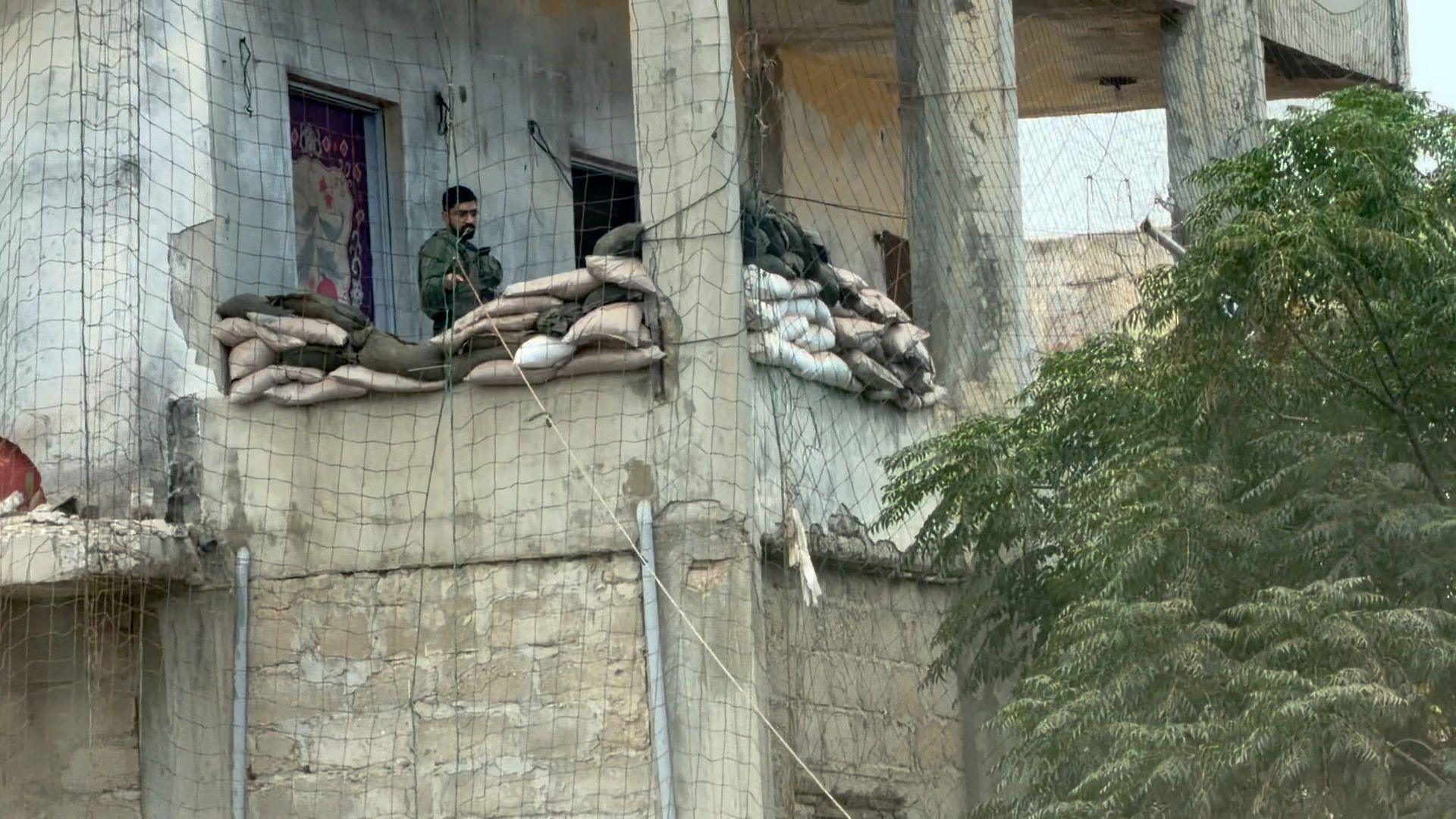
    Driving south toward Naqoura, the final symbol of Lebanese state authority is a military checkpoint painted in the white and red of the national flag. Behind poured-concrete barriers, soldiers scan an empty stretch of tarmac. A short distance further south, roughly a dozen Israeli flags appear in rapid succession — a visual threshold beyond which no one passes without Israeli clearance. That threshold now encloses a strip amounting to approximately five percent of Lebanon’s total land area, extending in places up to ten kilometres (six miles) inland from the border.

    The territory in question is the ancestral heartland of Lebanon’s Shia Muslim community and the principal base of support for Hezbollah, the Iranian-backed militia and political party that has shaped Lebanese governance for decades. Within the past twenty years, Israeli forces have invaded this region on three separate occasions. The most recent incursion opened in March, triggered when Hezbollah fired rockets into Israel following the killing of Iran’s supreme leader — an event that also marked the start of a broader US- and Israel-led war against Tehran.

    What the Ground Shows

    Access to the area under Israeli military control remains tightly restricted. One of the few viable routes runs through a humanitarian convoy operated by UNIFIL, the UN peacekeeping force stationed in Lebanon. Last month, a reporting team accompanied such a mission, escorted by Finnish troops serving in the UNIFIL contingent, as the convoy ferried civilians to and from Christian villages clustered near the border. Those communities were deliberately spared from Israeli strikes and ground operations during the war; now that the surrounding areas sit under occupation, they are effectively severed from the rest of the country.

    Entry was permitted through a deconfliction mechanism negotiated between the Israeli military and the United Nations. Along the route, the visual evidence of sustained military activity was difficult to miss: newly constructed service roads running parallel to the border wall, heavy troop movement, and residential buildings repurposed as Israeli positions. Several structures were draped in protective netting, a measure designed to shield occupants from Hezbollah’s explosive drones. In the sky, surveillance aircraft hummed at altitude; in the distance, muffled detonations suggested ongoing demolition work in occupied villages.

    The scale of the build-up is not incidental. During a visit to the region last month, Israeli Defence Minister Israel Katz stated that he had directed the military to:

    “take all necessary steps to prepare for a long-term presence in the area.”

    Israeli officials frame the objective as the creation of what they term a “security zone” — a buffer intended to shield communities in northern Israel from rocket and drone fire originating in southern Lebanon, as well as from the prospect of a future ground incursion by Hezbollah. According to UNIFIL, the Israeli military has erected four new bases within the invaded territory, raising the total number of such positions to nine. This follows the previous war against Hezbollah in 2024, after which Israeli forces remained stationed at five points in violation of the agreement that ended that conflict.

    Kandice Ardiel, a UNIFIL spokeswoman, described the observable changes on the ground:

    “In the past months, we’ve seen the consolidation and fortification of Israeli positions, construction of protective infrastructure, and other engineering works. We have [also] observed what appear to be Israeli civilian personnel carrying out demolition and engineering activities in support of military activities in south Lebanon.”

    For the Lebanese population, the practical consequence is displacement on a massive scale. Hundreds of thousands of residents remain uprooted from their homes, uncertain whether — or when — they will be permitted to return. The question of accountability, of who decides the future of this strip of land, and of how long the occupation will persist, remains unanswered as the BBC’s reporting from inside the zone underscores just how entrenched the current military posture has become.

    Frequently Asked Questions

    How much of Lebanon is currently under Israeli military control? Approximately five percent of the country’s total territory, extending up to ten kilometres (six miles) inland from the border in places.

    How did the current incursion begin? Israeli forces entered southern Lebanon in March after Hezbollah launched rockets into Israel following the killing of Iran’s supreme leader, an event that also opened a broader US- and Israel-led war against Tehran.

    What is the stated Israeli objective? Officials describe the goal as establishing a “security zone” to protect northern Israeli communities from rocket and drone fire. Defence Minister Israel Katz has directed the military to prepare for a “long-term presence” in the area.

    How are civilians moving in and out of the zone? Access is tightly restricted. One of the few viable routes is through UNIFIL humanitarian convoys, which operate under a deconfliction mechanism negotiated between the Israeli military and the United Nations.

    How many Israeli military positions now exist in the territory? UNIFIL reports a total of nine bases, including four newly erected positions. Five positions had already remained after the 2024 war, in violation of the agreement that ended that conflict.

  • Four charged with murder after baby stabbed to death

    Four charged with murder after baby stabbed to death

    Newborn Girl Found Stabbed to Death in Sheffield Home; Four Face Murder Charges

    Constantvpn.com – A baby girl, days old at the time of her death, was discovered with fatal stab wounds inside a residence on Holywell Heights in Sheffield’s Wincobank district on a Sunday morning. Police had been summoned to the property following reports that the infant’s welfare was in question. A subsequent post-mortem examination confirmed that the child had died from multiple stab injuries.

    The discovery triggered an intensive investigation by South Yorkshire Police, which has now resulted in four adults being formally charged with murder. Two men, aged 19 and 38, and two women, aged 20 and 37, face charges of murder, causing or allowing the death of a child, and perverting the course of justice through actions taken to conceal the killing of an infant. A fifth individual, a 15-year-old girl, has also been charged with perverting the course of justice.

    The Charged Individuals

    According to the details released by the force, the four adults named in connection with the murder are:

    Peter Horvath, 19, of Holywell Heights, Sheffield; Andrea Skopova, 20, formerly of Robey Street, Sheffield; Nina Horvathova, 37, of Holywell Heights, Sheffield; and a second Peter Horvath, 38, also of Holywell Heights, Sheffield. The 15-year-old girl charged alongside them cannot be publicly identified owing to legal restrictions on naming minors in criminal proceedings.

    All five individuals were remanded in custody following their initial court appearances and were scheduled to appear at Sheffield Magistrates’ Court later in the day. Separately, two women aged 26 and 37, who had been arrested on suspicion of murder, remain on bail pending further investigation.

    Police Statement

    Detective Chief Inspector Tom Woodward addressed the public following the charges, describing the move as a meaningful progression in the inquiry into what led to the infant’s death.

    “This is a significant step in our investigation into the tragic circumstances that resulted in the death of this baby girl.”

    He extended gratitude to local residents, acknowledging that the community would have been profoundly shaken by the incident.

    “I would like to thank our communities, who I know will have been deeply impacted by this traumatic incident, for supporting us as we work through this intricate investigation.”

    Woodward also urged residents and online audiences to exercise restraint while the legal process unfolds.

    “We would ask the public to avoid speculating and posting information online about this case while the legal process takes it course. Protecting the integrity of the criminal justice process is crucial to us securing justice for this little girl.”

    Investigation and Local Impact

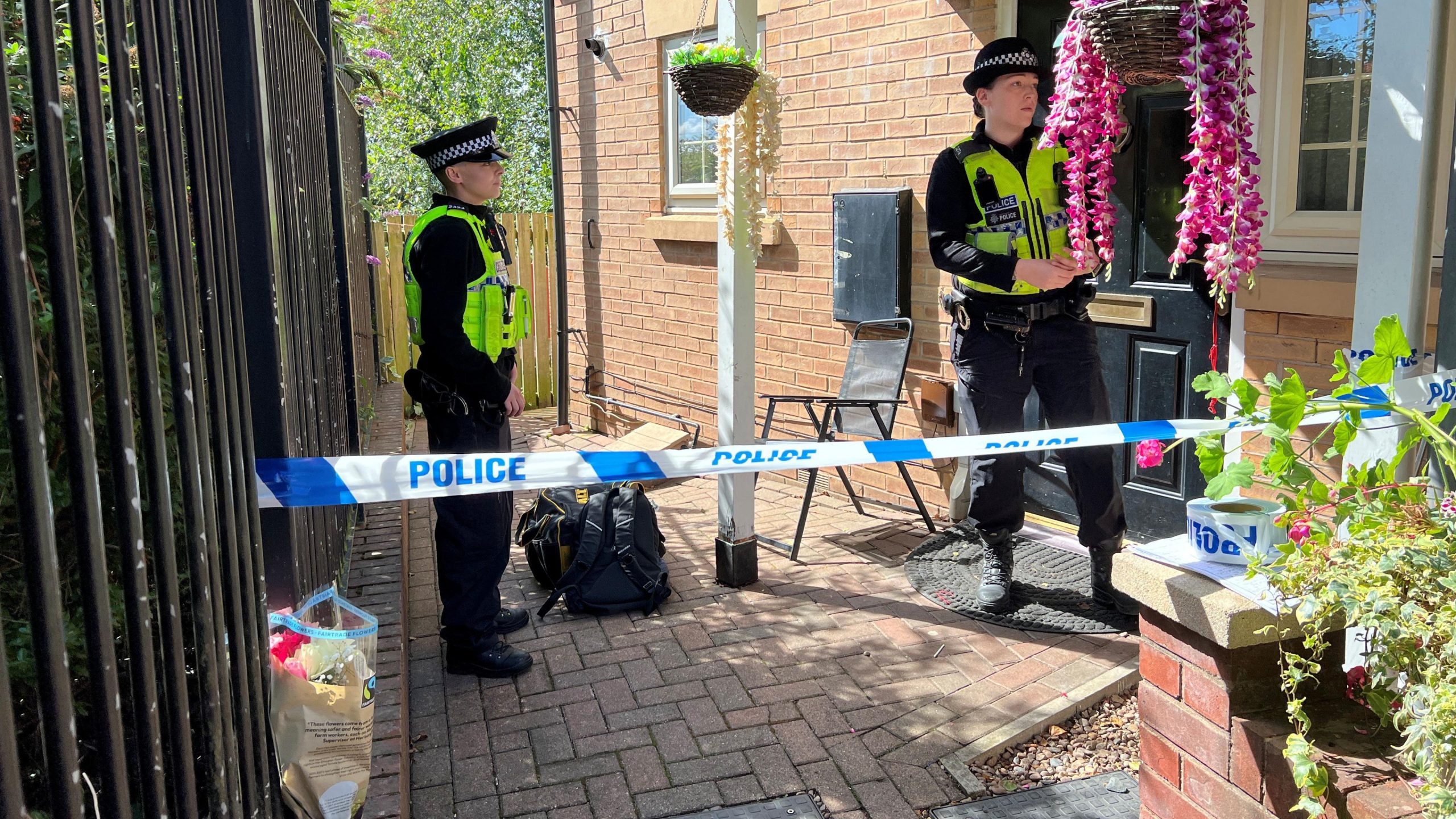
    Officers continued to be deployed in and around the Holywell Heights area in the days following the discovery, carrying out inquiries and gathering evidence. The presence of uniformed and plain-clothes detectives in a residential street of this kind is uncommon outside of major incidents, and neighbours in the Wincobank area reported a heightened police presence in the immediate vicinity of the property.

    The Wincobank district sits to the south of Sheffield city centre, a largely residential neighbourhood of terraced and semi-detached housing. Holywell Heights itself is a quiet street where the sudden arrival of emergency services and the subsequent weeks of investigative activity would have been an extraordinary disruption to daily life for those living nearby.

    Legal Context

    The combination of charges laid against the four adults — murder, causing or allowing the death of a child, and perverting the course of justice — indicates that prosecutors believe not only that the infant was killed by stabbing, but that steps were subsequently taken to hide the fact of her death. The additional charge of causing or allowing the death of a child, which sits alongside the murder count, suggests that at least one of the accused may have had a duty of care over the baby at the time of her death, whether as a parent, guardian, or other person in a position of responsibility.

    The separate charge against the 15-year-old girl for perverting the course of justice implies that she was involved in actions designed to obstruct the investigation, though she is not accused of the killing itself. Her case will be handled through the youth justice system, with the expectation that she will appear at a youth court rather than an adult magistrates’ court, though the initial remand decision was made at the adult court level.

    The two women remaining on bail were arrested on suspicion of murder but have not, at this stage, been formally charged. Their continued detention on bail means they are subject to conditions — typically including curfews, reporting requirements, and restrictions on contact with other parties involved in the case — while detectives complete their work.

    The case will progress through the magistrates’ court system before any decision on committal to the Crown Court for trial. Given the gravity of the charges and the age of the victim, the matter is expected to attract sustained public attention in Sheffield and across South Yorkshire until the legal process reaches its conclusion.

    Frequently Asked Questions

    What is Four charged with murder after baby?

    Four charged with murder after baby is the main topic of this guide. The article explains the context, practical details, and next steps readers should understand.

    Why does Four charged with murder after baby matter?

    Four charged with murder after baby matters because readers are looking for a useful answer, not just a short summary. Good content should match search intent and help them decide what to do next.
  • We survived the Aberfan disaster as schoolchildren, but were told to never talk about it again

    We survived the Aberfan disaster as schoolchildren, but were told to never talk about it again

    We Survived Aberfan. We Were Told to Forget

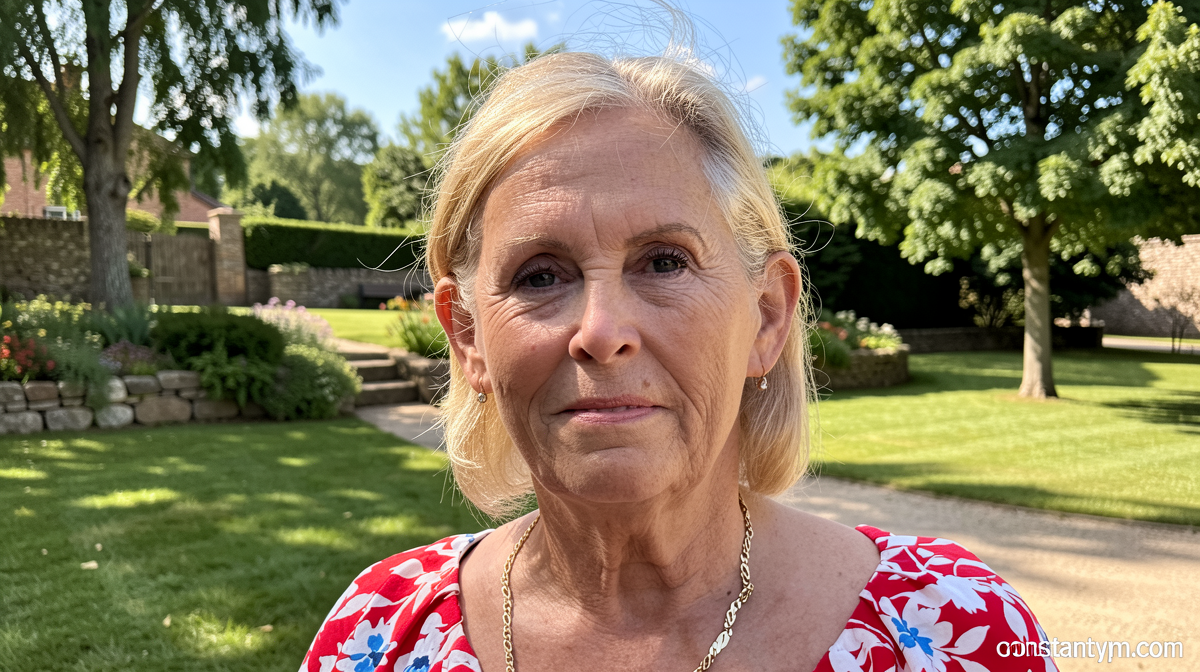
    Constantvpn.com – We survived the Aberfan disaster as eight-year-olds who had no idea that morning would end their childhood forever. On 21 October 1966, Janett Bickley fought her mother over getting dressed — she was still weak from pneumonia and wanted to stay in bed. She lost the argument, walked to Pantglas Junior School in south Wales, and sat down in class. Minutes later the colliery spoil tip above the village collapsed, hurling a wall of coal slurry across the schoolyard. Fourteen-four people died that morning; one hundred sixteen of them were children.

    Janett was buried under tonnes of wet waste. A classmate dug her out. She scrambled through broken timber, lined up with other pupils, and was pulled through a window to safety. When she reached home, she discovered she was the only child on her street who had come back.

    The Silence That Followed

    No one in the village talked. Families absorbed a single, unspoken rule: if you lived, you kept quiet. Janett remembers being told, flatly and without softening, that she should never speak of what had happened again.

    “We were lucky. ‘You lived, don’t speak about it ever again.’ It wasn’t discussed at all. We were way into our 30s or 40s before we even talked about it for the first time together.”

    Denise Morgan, another survivor, carried the silence from a different wound. She had just passed the eleven-plus and started grammar school when her younger sister Annette was killed in the collapse. The household shattered. When Denise eventually sat her O-level examinations, she failed every paper except one. Both girls were referred to a psychiatrist in the aftermath, yet even in those clinical sessions the disaster was never named. The children were steered forward, not back. The seal held for decades.

    Cracking the Seal

    It took adulthood and scattered former classmates reaching out to one another before the dam finally broke. Denise described the first shared testimony as something close to healing.

    “When we finally broke that seal of talking about it, it healed us, in a way.”

    The aftermath was uneven. Some residents carried the trauma openly for years; others rebuilt outwardly successful lives. The divide was visible in the village itself. Denise observed that you could see, in some people, that they had come through it, while others suffered silently for many years.

    For Janett, survival carried a debt. She has spoken openly about feeling she owed something to the community simply because she was still alive.

    “I’ve always wanted to do something to pay back to the community because I think I owed something, because I lived.”

    That impulse was not unique. Many survivors channelled their experience into sustained public service — teaching, charity work, community organising, civic leadership. Denise, inspired by her Pantglas teachers before the disaster, had decided at eleven that she wanted to become an educator. Grief derailed her academic progress, but she persisted. She qualified as a teacher, rose to headship of a school, and was later appointed an MBE for services to education. Much of her career centred on children from disadvantaged backgrounds, and she used her own story as a teaching tool.

    “I often told my story to schoolchildren: ‘You can be anything you want to be.’”

    Looking back now, Denise still thinks of the teachers who died that morning — the adults who threw themselves into the wreckage to pull children free. “They all helped to save many of the children that are alive today,” she said. Jeff Edwards, who was among the final children extracted alive from the school, confirmed that survivors have since been contacted in the wake of other mass-casualty events, including Hillsborough, to share what they learned about communal grief and recovery.

    Frequently Asked Questions

    How many children died in the Aberfan disaster?

    One hundred sixteen children and twenty-eight adults were killed on 21 October 1966, bringing the total death toll to 144.

    Why were survivors told not to talk about the disaster?

    Families across the village adopted an unspoken rule that those who lived should not speak publicly about what happened. Survivors report being told directly, without apology, to keep silent. Many did not discuss the event with one another until their thirties or forties.

    What did survivors do with their experience afterward?

    Many entered teaching, charity work, and community leadership. Denise Morgan became a head teacher and received an MBE for services to education. Survivors have also been approached by other communities after mass-casualty events to share lessons on collective grief and recovery.

  • Trump says US position on Falklands ‘one of many’ under review

    Trump says US position on Falklands ‘one of many’ under review

    Trump Signals Openness to Revisiting US Stance on Falklands as NATO Spending Tensions Mount

    Constantvpn.com – The question of whether Washington will formally challenge London’s claim over the Falkland Islands has moved from the margins of diplomatic speculation into the centre of transatlantic defence debate. Speaking to reporters on Monday, President Donald Trump confirmed that the United States’ position on the islands is being examined alongside a broader catalogue of policy reviews, framing the issue as part of a wider effort to push NATO partners toward greater military expenditure.

    “I always review every position. That’s just one of many.”

    The remark came in response to a direct question from a BBC correspondent asking whether the administration was reconsidering its long-standing posture on the archipelago. Trump did not elaborate on what a revised position might entail, but he immediately pivoted to pressing the United Kingdom to raise its defence budget, telling reporters that Britain has “got some problems, but they’ll get solved.”

    London’s Firm Response

    The UK government moved quickly to shut down any suggestion that sovereignty over the islands is negotiable. A spokesperson stated that Falkland islanders “are British with a right to determine their own future,” and added: “The islanders have repeatedly expressed their wish to remain a British overseas territory and our commitment to them is unwavering.”

    The response underscores a point that has defined British policy since the 1982 conflict: the islanders’ own expressed preference is treated as the ultimate arbiter of the question, not the preferences of Buenos Aires or Washington. Any US move to formally contest the claim would therefore collide not only with London’s diplomatic position but with the democratic will of roughly 4,000 residents who voted overwhelmingly to remain under British administration in a 2013 referendum.

    A Dispute Rooted in a 74-Day War

    The Falkland Islands, a scattered archipelago in the south-west Atlantic roughly 300 miles south of Tierra del Fuego, have been the subject of a sovereignty contest between Britain and Argentina stretching back centuries. The dispute erupted into open warfare in April 1982 when Argentine forces landed on the islands to stake a territorial claim. A British task force was dispatched across the Atlantic and, after a brief but bitter campaign, ejected the Argentine garrison.

    The conflict lasted 74 days and exacted a heavy toll: 255 British military personnel were killed, along with three islanders and 649 Argentine soldiers. For generations of British and Argentine families, the war remains a defining wound, and any diplomatic manoeuvre touching the islands’ status carries emotional weight far beyond its strategic calculus.

    Successive US administrations have formally recognised the United Kingdom’s de facto administration of the territory while deliberately stopping short of endorsing sovereignty. That careful ambiguity has allowed Washington to maintain working relations with both London and Buenos Aires without taking sides in a dispute neither capital has fully resolved.

    The Pentagon Email and the Spending Lever

    The current episode did not emerge in a vacuum. In April, an internal Pentagon email — first detailed by Reuters — outlined options the US was weighing to pressure NATO allies it judged had failed to back its war effort in Iran. Among the measures floated was the prospect of Washington reviewing its position on Britain’s claim to the Falklands, effectively using the islands as a bargaining chip to extract greater allied contribution.

    Those reports had largely faded from public view until recent days, when they resurfaced in connection with defence-spending negotiations. The Daily Telegraph subsequently reported that US defence officials were drawing up concrete proposals to incentivise NATO allies to meet their spending pledges, with the Falklands question listed among possible levers.

    Britain’s Defence-Spending Commitments Under Scrutiny

    The timing of Trump’s remarks intersects with a period of intense internal debate in Westminster over how quickly and how far the UK should expand its defence budget. Prime Minister Andy Burnham has pledged to honour a commitment made by his predecessor, Sir Keir Starmer, to allocate 3.5 per cent of gross domestic product to core defence spending by 2035.

    On Tuesday, Chancellor John Healey told The Times that he would “set out a clear path” to meeting that NATO pledge at the next government spending review, expected in the spring of next year. He also indicated a target date for reaching an intermediate threshold of 3 per cent of GDP in defence outlays.

    Healey’s own political trajectory makes the spending question personally charged. He resigned as defence secretary in the Starmer government following a public row over military expenditure. His resignation letter, published in June, laid bare his frustration that the cabinet had no firm timetable for hitting the 3 per cent target — a milestone he believed should have been reached by 2030 rather than deferred to a later date.

    What a US Position Shift Would Mean

    Should the administration move from “reviewing” to formally contesting British sovereignty, the implications would extend well beyond the South Atlantic. It would represent the first time a US government has taken an explicit position adverse to the UK’s claim, breaking decades of deliberate ambiguity. For Argentina, it would validate a decades-long diplomatic campaign. For NATO, it would introduce a new variable into alliance cohesion at precisely the moment Washington is seeking greater allied burden-sharing.

    For the islanders themselves, whose self-determination is enshrined in British constitutional arrangements, any external renegotiation of their status would be perceived as a breach of the compact that has governed their political life since the war ended. The UK government’s insistence that their wishes are “unwavering” is, in effect, a reminder that the question is not one for superpowers to settle over a conference table.

    Whether Trump’s “one of many” framing signals a genuine policy shift or merely rhetorical pressure to extract higher defence budgets from London remains to be seen. What is clear is that the Falklands, long treated as a settled footnote in transatlantic relations, have been elevated to a live variable in the arithmetic of alliance spending — and that elevation itself changes the political temperature of the South Atlantic.

    Frequently Asked Questions

    What is Trump says US position on Falklands?

    Trump says US position on Falklands is the main topic of this guide. The article explains the context, practical details, and next steps readers should understand.

    Why does Trump says US position on Falklands matter?

    Trump says US position on Falklands matters because readers are looking for a useful answer, not just a short summary. Good content should match search intent and help them decide what to do next.

  • Germany says Russia behind Leipzig airport drone attack

    Germany says Russia behind Leipzig airport drone attack

    Germany Blames Moscow for Drone Strike at Leipzig Airfield, Orders Closure of Russian Consulate in Bonn

    Constantvpn.com – The diplomatic rupture between Berlin and Moscow deepened sharply this week after the German government formally attributed last month’s drone incident at Leipzig/Halle Airport to Russian intelligence operations. Interior Minister Alexander Dobrindt framed the episode not as an isolated act but as part of a broader campaign of covert pressure that Moscow has waged across the continent since the full-scale invasion of Ukraine began in February 2022. Alongside the attribution came two concrete retaliatory measures: the closure of Russia’s consulate in Bonn and the termination of the lease agreement governing the Russian House cultural centre in Berlin.

    The Incident at Leipzig/Halle

    On 4 August, airport personnel discovered a small unmanned aerial vehicle resting on the tarmac at Leipzig/Halle Airport, situated in Saxony in eastern Germany. The drone was fitted with an explosive payload positioned in close proximity to parked Ukrainian cargo aircraft. Investigators later determined that the detonator mechanism had malfunctioned, meaning the warhead never fired. Separately, forensic examination of a nearby freighter indicated that a second drone had struck the aircraft’s fuselage, causing structural damage consistent with a mid-air or ground-level collision.

    The airport’s location and operational profile made it a logical target for any actor seeking to disrupt the flow of military materiel into Ukraine. Leipzig/Halle serves as a key logistics node for the German Bundeswehr and its NATO partners, handling the movement of weapons, ammunition, and other defence supplies destined for the eastern front. It also functions as the European hub for Antonov Airlines, the Ukrainian state carrier responsible for the bulk of Kyiv’s aerial cargo operations, including the delivery of large military transport aircraft and their associated freight. A successful strike or sustained harassment campaign at this node could have throttled the pipeline through which Western allies have sustained Ukraine’s war effort.

    Official Attribution and Diplomatic Fallout

    At a press conference in Berlin, Dobrindt stated that the 4 August event followed what he described as:

    “the well-established pattern of Russian hybrid operations in Europe.”

    He added that German planners now operate on the assumption that further attempts will be made against German territory, signalling a shift from reactive defence to a posture of expected recurrence. Foreign Minister Johann Wadephul, standing beside Dobrindt at the same briefing, announced that he would direct the closure of the Russian consulate in Bonn. In a parallel move, the German government will terminate the contractual arrangement underpinning the Russian House in Berlin, a long-standing cultural institution that many analysts and parliamentary observers have long characterised as a venue for intelligence gathering and the dissemination of Kremlin-aligned messaging.

    Moscow has, until now, declined to confirm or deny any role in the Leipzig episode. Russian officials have generally dismissed Western attributions of hybrid-operations incidents as politically motivated, though they have not offered an alternative explanation for the drone’s presence on a NATO airfield.

    Strategic Context: Hybrid Warfare on European Soil

    The Leipzig episode sits within a wider pattern of low-intensity coercive actions attributed to Russian state actors across Europe since 2022. These have included drone sightings over Scandinavian airspace, sabotage of undersea cable infrastructure in the Baltic, and repeated incursions into the national airspace of Poland, Romania, and the Baltic states. German defence planners have increasingly treated the eastern flank of the country as a zone where conventional deterrence and signals-intelligence countermeasures must operate in tandem. The discovery of a functional explosive device on an active NATO airfield, even one that failed to detonate, underscores the degree to which the operational envelope of conflict has extended westward.

    The closure of the Bonn consulate removes a diplomatic and consular presence that had operated in Germany since the post-war period. The termination of the Russian House contract, meanwhile, ends a decades-old arrangement that gave Moscow a permanent cultural and informational foothold in the capital. Together, the two measures represent the most significant reduction in Russian institutional presence on German soil since reunification in 1990.

    Implications for Alliance Logistics and Ukrainian Air Cargo

    For Ukraine, the Leipzig node is not merely convenient; it is structurally important. Antonov Airlines’ An-124 and An-225 freighters, along with smaller cargo types, rely on the airport’s long runways, heavy-lift handling capacity, and proximity to central European rail corridors. Any sustained campaign of intimidation or physical disruption at the airfield would force rerouting through longer, more costly corridors and could slow the delivery of artillery shells, air-defence components, and other time-sensitive military goods. German and NATO authorities have indicated that enhanced surveillance, electronic-countermeasure coverage, and physical security upgrades will be applied at Leipzig/Halle and at comparable logistics sites across the country.

    The German government’s decision to name Moscow publicly, rather than allowing the matter to rest in the domain of intelligence briefings, marks a rhetorical escalation. It signals that Berlin intends to treat hybrid-operations incidents as matters of state-to-state accountability, subject to diplomatic consequence, rather than as ambiguous events best left to quiet investigation. Whether Moscow responds with reciprocal measures—such as reviewing German consular facilities in Russia or imposing visa restrictions—remains to be seen, but the diplomatic temperature between the two capitals has clearly risen.

    Frequently Asked Questions

    What is Germany says Russia behind Leipzig airport?

    Germany says Russia behind Leipzig airport is the main topic of this guide. The article explains the context, practical details, and next steps readers should understand.

    Why does Germany says Russia behind Leipzig airport matter?

    Germany says Russia behind Leipzig airport matters because readers are looking for a useful answer, not just a short summary. Good content should match search intent and help them decide what to do next.
  • Russia says it helped to repel Niger attempted coup

    Russia says it helped to repel Niger attempted coup

    Niger’s Military Government Survives Mutiny as Russian Troops Play Central Role

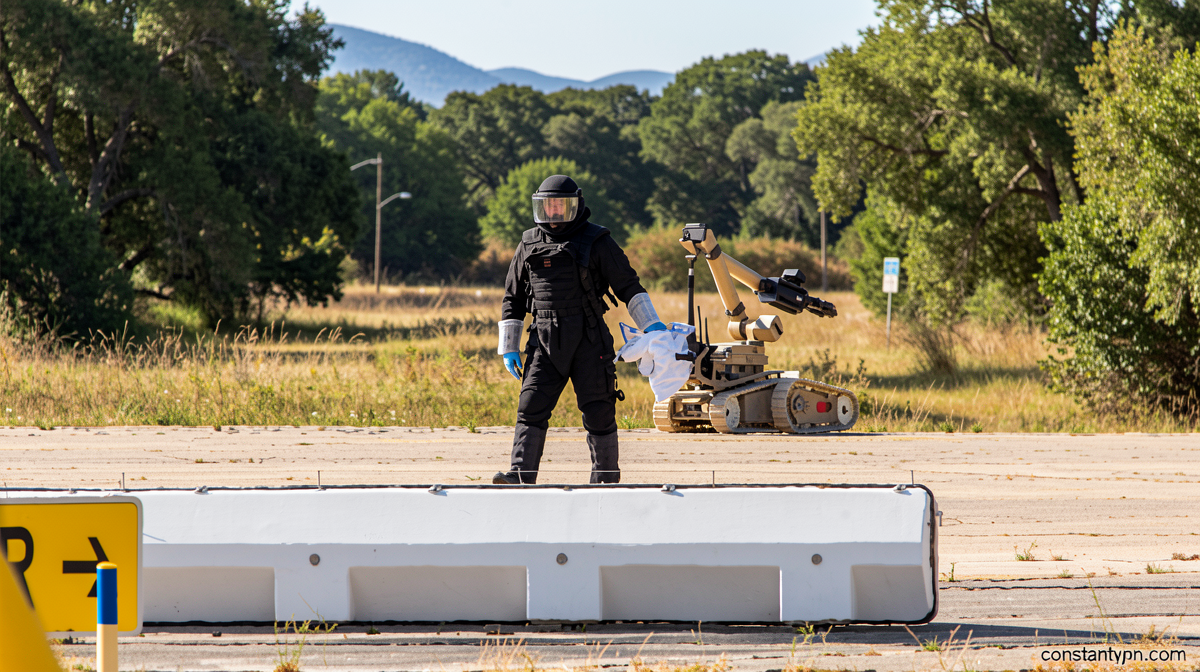
    Constantvpn.com – The Sahel’s latest chapter of instability unfolded in the early hours of a Saturday morning when gunfire and explosions tore through the streets of Niamey, Niger’s capital. What began as a mutiny at a major military installation quickly escalated into a full-scale attempt to overthrow the country’s ruling junta. Within hours, however, Nigerien authorities declared the uprising contained — and credited Russian servicemen with helping to break the back of the revolt.

    The incident struck at two of the most symbolically important locations in the capital: the presidential palace and Air Base 101, a critical military installation embedded within the Diori Hamani airport complex. The base houses Nigerien military aircraft and drone units, hosts a joint counter-terrorism detachment operated under the Alliance of Sahel States, and also accommodates Russian and Italian military personnel stationed in the country.

    Moscow Claims Credit for Repelling the Coup

    On Sunday, Russia’s foreign ministry issued a statement confirming that elements of its African Corps had assisted Nigerien forces in driving back the mutineers. The ministry framed the intervention as part of a broader commitment to the region’s stability.

    “Nigerien forces had repelled the attack with the assistance of servicemen of the African Corps of the Russian Ministry of Defence.”

    The statement went further, pledging continued Russian backing for Niger’s campaign against what Moscow termed “extremists,” while insisting the situation had been restored to the control of what it called the “legitimate authorities headed by President [Gen Abdourahmane] Tiani.” The language was deliberate: Moscow was reinforcing its position as the security guarantor of a government that owes its very existence to a military takeover.

    Context: A Region Locked Into Moscow’s Orbit

    The attempted coup lands in a region where three neighbouring juntas — Niger, Mali, and Burkina Faso — have collectively severed longstanding defence partnerships with Western powers and pivoted toward Moscow. Russia’s African Corps, a relatively small but strategically placed formation, has become the backbone of security cooperation across all three states. In exchange for Russian military presence, training, and logistical support, the Sahel governments have aligned their foreign policy, economic negotiations, and even their media narratives with Kremlin interests.

    Yet the bargain has not delivered the stability its architects promised. Jihadist insurgencies, fed by networks linked to both al-Qaeda and the Islamic State, continue to exact heavy tolls across the three countries. The very airbase where Saturday’s mutiny erupted had been struck twice earlier this year by jihadist forces — once by an Islamic State affiliate and later by an al-Qaeda-linked group — underscoring how thin the security margin remains even in the capital.

    The Alliance’s Response and the Silence of the Junta

    The Alliance of Sahel States, the trilateral bloc binding Niger, Mali, and Burkina Faso, issued a joint condemnation of the mutiny, describing it as:

    “a betrayal by a group of soldiers involved in an attempt at destabilisation.”

    Notably, neither the number of soldiers who participated in the revolt nor the casualty count has been made public. General Tiani, who assumed the presidency last year after deposing the country’s elected civilian leader, has not addressed the nation directly about the incident. Instead, the state broadcaster aired footage of several alleged mutineers being seized by members of the Presidential Guard, a visual meant to project control and finality.

    Life in Niamey Returns to a Careful Normal

    By Sunday, the Niger Press Agency reported that petrol stations, retail shops, and other commercial operations were reopening across the capital. Government supporters assembled in a central public square to voice backing for the security forces and for Tiani’s administration, a display of loyalty that also served as a signal to any remaining dissidents within the ranks.

    Security forces, meanwhile, have stepped up patrols around sensitive locations in Niamey, including the main airport entrance and the presidential pavilion. The heightened posture suggests the junta views the mutiny not as an isolated flashpoint but as a symptom of deeper fractures within the officer corps.

    What the Mutiny Reveals

    For a government whose legitimacy rests entirely on military authority, an internal revolt carries a particular sting. It signals that the chain of command is not monolithic, that grievances — over pay, deployment, or political direction — can crystallise into action even in a junta that has already removed civilian oversight. The fact that Russian troops were needed to help restore order, rather than Nigerien units acting alone, adds another layer of complexity to a relationship already defined by dependence.

    The Sahel’s three juntas entered their partnership with Moscow hoping to trade Western conditionality for unconditional military backing. Saturday’s events suggest that no amount of foreign firepower can fully insulate a fragile command structure from internal dissent. The question now is whether Niamey’s junta will treat the mutiny as a manageable hiccup or as a warning that the next challenge may come from within its own barracks.

    Frequently Asked Questions

    What is Russia says it helped to repel?

    Russia says it helped to repel is the main topic of this guide. The article explains the context, practical details, and next steps readers should understand.

    Why does Russia says it helped to repel matter?

    Russia says it helped to repel matters because readers are looking for a useful answer, not just a short summary. Good content should match search intent and help them decide what to do next.
  • Head teacher evacuated 900 children minutes before Nepal floods hit school

    Head teacher evacuated 900 children minutes before Nepal floods hit school

    Nine hundred children walked out of a Nepali school ten minutes before the river swallowed it

    Constantvpn.com – When the Trishuli River surged through Nuwakot district on Wednesday, it carried away homes, markets, and infrastructure across wide stretches of central Nepal. At least 794 people have been confirmed dead, and more than 2,426 remain missing as search teams work through mud and wreckage. Yet in one narrow window of time, a single decision by a school principal pulled 900 students out of a building that would soon be buried under debris.

    Rajendra Dawadi, head of Tribhuvan Trishuli Secondary School, made that decision at 09:10 local time (03:25 GMT) on the morning of the disaster. Within a matter of minutes, four separate phone calls reached him, each warning that a catastrophic flood was imminent. He ordered every child to run uphill and directed buses already loaded with students to reverse course and flee the valley floor.

    “If we didn’t make a quick decision, if it was 10 minutes later, we all – including the students and me – wouldn’t be able to speak to you today.”

    Dawadi explained that the urgency of the calls themselves confirmed the threat. One parent appeared at the school gate demanding to collect her daughter, a behaviour he read as confirmation that something extraordinary was unfolding.

    “A parent came and told me that ‘a big flood was coming, I am here to take my daughter, I will take her.’ Parents don’t rush without a strong reason, so it was confirmed that I shouldn’t waste a second to evacuate the children.”

    “I decided I shouldn’t delay any more. Even if the flood was not coming, it was just a matter of a single day’s classes. I feel proud that we saved so many lives.”

    The geography that made the choice urgent

    Nuwakot sits in a narrow valley where the Trishuli River, a major tributary of the Bagmati, can rise with terrifying speed after heavy rainfall upstream in the Himalayan foothills. The school’s hostel building stood roughly 100 metres (328 feet) from the riverbank. Dawadi described how that structure was engulfed almost instantaneously once the waters arrived, leaving no time for even a second evacuation wave. The main school building itself was subsequently buried under mud and debris.

    Nepal’s monsoon season, typically running from June through September, regularly produces flash-flood events of this magnitude. The country’s steep topography, combined with decades of deforestation and rapid urbanisation along river corridors, means that communities in the Terai plains and mid-hills face recurring, often fatal, inundation. The scale of this particular event — with thousands missing and hundreds confirmed dead — underscores how quickly a single afternoon of heavy rain upstream can become a valley-wide catastrophe downstream.

    A sixteen-year-old’s ten-second margin

    For the students inside the classrooms, the evacuation unfolded in confusion and fear. Yunisha Amatya, 16, was sitting in a maths lesson when teachers began gathering in one area, initially uncertain of what was happening. After roughly five minutes, staff informed pupils of the flood and instructed them to leave.

    “I along with my friends survived by just 10 seconds only,” she recalled. “Just before the flood came, we were in the class studying. Teachers had gathered in one place and initially had no idea what had happened. After five minutes teachers came and informed us about the flood and asked us to go home.”

    One student fainted upon hearing the news. Many pupils, still processing the shock, paused to wait for classmates in other rooms. Yunisha and her friends then scrambled uphill through a narrow escape route behind the school, climbing a ladder and pushing through crowds of panicked students and adults.

    “I could not walk fast, and my friends helped me to climb uphill. We tried our best to be in the safer zones then. We escaped through a narrow ladder from backside of the school. Within no time, the bazaar was swept away in front of my eyes.”

    “If there was no grip in my shoes I would have fallen and students and other people were jostling each other to reach the safer area while escaping. The people who choose to escape from another route are apparently swept away.”

    The group initially moved a few hundred metres uphill before continuing to a neighbouring village. With roads severed and transport networks paralysed, many evacuees were stranded for two nights before rescue teams could reach them. Dawadi and Yunisha, both of whom live on the opposite bank of the Trishuli, were eventually airlifted back to their home village.

    The hour a father could not reach his daughter

    While students climbed to safety, parents across Nuwakot were dialling phones into silence. Yunisha’s mother, Sabina Kumari Shrestha, repeatedly attempted to call both her daughter and her husband, reaching neither. Her husband, Yubaraj Amatya, reacted immediately.

    “Soon after the flood news spread, I tried my daughter’s number, but she was not reachable, then I was afraid. Within a few minutes I rushed toward my daughter’s school and Trishuli Bazar was all swept by the flood, then I thought my daughter was no more. I was so horrified, stopped my scooter, there was flooding but I could not think of returning without my daughter.”

    For nearly an hour he kept dialling, unable to confirm whether his daughter was alive. When the call finally connected and Yunisha answered, the relief was overwhelming.

    “Finally, my daughter received my call and I couldn’t stop myself, broke out… two relatives that were with me also cried and hugged me.”

    Yunisha, still visibly shaken, described the moment from her side of the line.

    “After I had reached the top of the hill, I received a call from my father. He was tearful and I could not speak a word then.”

    Back in their village, the family waited anxiously for hours before rescue operations allowed them to reunite. Their story, like that of the hundreds of other families separated by the flood, illustrates how quickly a routine school morning in a Nepali valley can become a life-or-death scramble — and how a single principal’s willingness to act within minutes can stand between a classroom full of children and a river that does not wait.

    Frequently Asked Questions

    What is Head teacher evacuated 900 children minutes?

    Head teacher evacuated 900 children minutes is the main topic of this guide. The article explains the context, practical details, and next steps readers should understand.

    Why does Head teacher evacuated 900 children minutes matter?

    Head teacher evacuated 900 children minutes matters because readers are looking for a useful answer, not just a short summary. Good content should match search intent and help them decide what to do next.

  • South African airline defends low-altitude aerial stunt over packed stadium

    South African airline defends low-altitude aerial stunt over packed stadium

    Two Jets, One Stadium, and a Nation Holding Its Breath

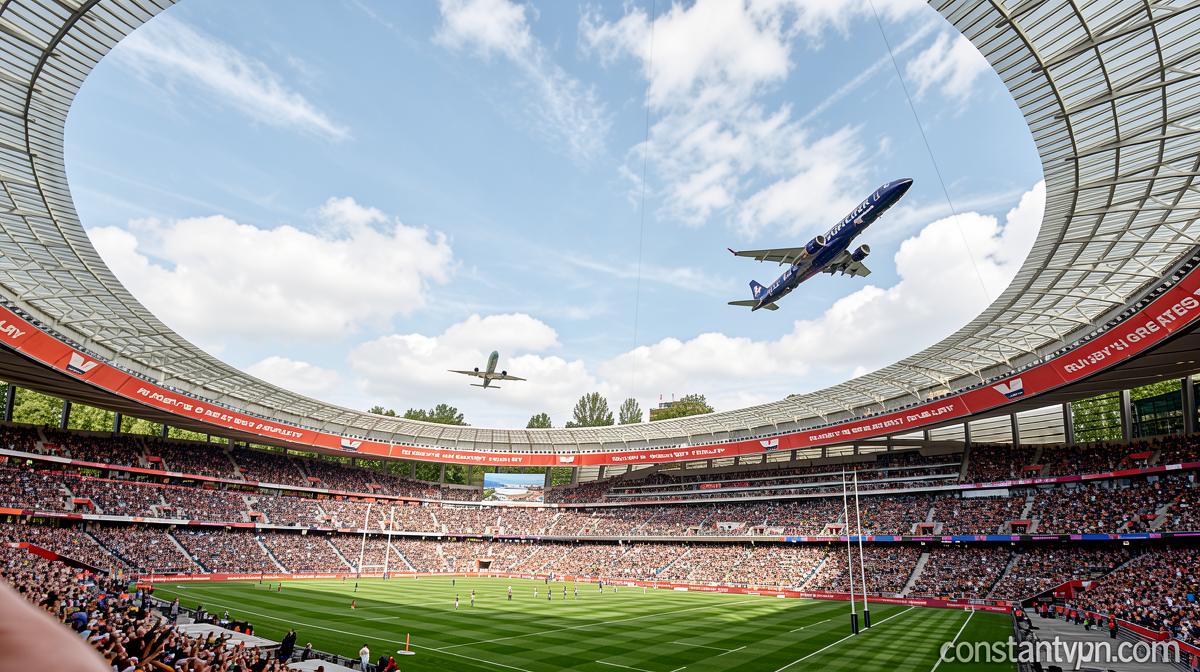
    Constantvpn.com – When flares erupted into the Cape Town night sky and two fighter-style jets screamed overhead in tight formation, the thousands packed inside DHL Stadium were not watching a rugby warm-up. They were witnessing a calculated aerial display by Airlink, a South African regional carrier, whose twin aircraft reportedly grazed the upper rim of the venue at a height measured in mere feet. The manoeuvre, staged immediately before a high-stakes Test match pitting the Springboks against New Zealand’s All Blacks, ignited a wave of reactions ranging from stunned admiration to outright alarm.

    The spectacle unfolded in seconds: one aircraft painted green, the other black, threading through the stadium’s airspace in close proximity while spectators below looked up. For a brief window, the boundary between sport and aviation performance dissolved entirely. Social media erupted within minutes. Some commentators called the flyby dangerously audacious, questioning whether any commercial operation should position two aircraft so close to a structure filled with tens of thousands of people. Others lauded the extraordinary skill and coordination the manoeuvre demanded, framing it as a showcase of South African aviation competence.

    Airlink’s Response: Deliberate, Approved, Rehearsed

    Rather than retreat from the controversy, Airlink leaned into the moment. On its social media channels, the airline paired the footage with a terse three-word caption:

    “Planning. Precision. Performance.”

    In a fuller statement later reproduced on a South African government news portal, the carrier detailed the operational safeguards behind the display. Each of the two aircraft carried a crew of three senior captains, assigned to distinct roles: commander, co-pilot, and a dedicated safety and technical officer. The airline stressed that the flypast was executed within parameters it described as pre-cleared and repeatedly rehearsed.

    “The two aircraft were flown by highly experienced crew, with each comprised of three senior captains operating in the roles of commander, co-pilot and safety/technical officer,” the airline stated. It added that the flights were performed with the “approved and rehearsed safety altitude and speed limits for the flypast.”

    The airline also noted that the operation carried the backing of national aviation authorities, a point it raised to counter accusations of recklessness. In practical terms, this means the flight path, altitude envelope, and speed corridors had been vetted before the event, and that the pilots had run through the sequence multiple times in preparation.

    The Numbers Behind the Fear

    Flight-tracking platform Flightradar24, which aggregates ADS-B and other telemetry data from aircraft worldwide, offered a quantitative reading of the event. Its post-event analysis concluded that the lead aircraft cleared the stadium’s highest point by less than 50 feet — roughly 15 metres. At that altitude, over a structure whose roofline is already well above ground level, the margin between the fuselage and the concrete parapet was, by any aviation standard, extraordinarily slim. The trailing aircraft, flying in close formation behind the lead jet, compounded the risk profile: a single deviation in heading or altitude could have brought two heavy machines into contact with the stadium structure or with each other.

    Those figures explain why the stunt divided public opinion so sharply. Aviation safety culture generally favours generous vertical and lateral separation, particularly over populated areas. A commercial airline choosing to fly its own aircraft at single-digit-metre clearance above a packed arena sits at the far edge of conventional operational practice, even when authorities have signed off on the plan.

    A Tradition Rooted in Rugby and National Identity

    The low-altitude flyby over a major South African sporting event is not an isolated novelty. It draws on a lineage that stretches back to one of the most emotionally charged moments in the country’s sporting history. In June 1995, a South African Airways jet roared over Loftus Versfeld in Johannesburg moments before the Rugby World Cup final, in which the Springboks defeated New Zealand to claim the Webb Ellis Cup. That victory, set against the backdrop of a nation still healing from decades of apartheid, became a defining symbol of post-apartheid unity.

    The final was later dramatised in the 2009 Hollywood film Invictus, starring Morgan Freeman as Nelson Mandela. In the most iconic scene, the newly inaugurated president — South Africa’s first black head of state — steps onto the field wearing the Springbok jersey, a garment long associated with the apartheid-era establishment and previously closed to players who were not white. The image of Mandela in that green-and-gold shirt, with the stadium roaring beneath him, remains one of the most recognised photographs of modern South African history.

    Against that backdrop, the Airlink flyby at DHL Stadium carried an unmistakable cultural charge. For many South Africans watching, the jets overhead were not merely a marketing stunt by a domestic airline. They were an echo of 1995, a reminder that the country’s pilots and engineers could execute feats of precision on the world stage. Social media commentary from the event was saturated with national pride, with users celebrating the skill involved and framing the display as proof that South African aviation talent remains world-class.

    What Comes Next

    The episode is likely to prompt closer scrutiny of how commercial carriers interact with major sporting venues in South Africa. Aviation regulators may review whether the altitude and separation parameters used at DHL Stadium represent a replicable template or a one-off exception. Airlines, stadium operators, and event organisers will face the question of how to balance spectacle with the conservative safety margins that underpin commercial aviation. For now, the footage of two jets threading the stadium’s airspace at Cape Town will circulate for years, a reminder that the line between showmanship and risk can be measured in metres — and that a nation’s sporting pride can make even the most audacious clearance feel, to those below, like a moment of pure triumph.

    Frequently Asked Questions

    What is South African airline defends low altitude?

    South African airline defends low altitude is the main topic of this guide. The article explains the context, practical details, and next steps readers should understand.

    Why does South African airline defends low altitude matter?

    South African airline defends low altitude matters because readers are looking for a useful answer, not just a short summary. Good content should match search intent and help them decide what to do next.