Author: Joseph Johnson – constantvpn.com

  • Madagascar ex-Senate chief sentenced to hard labour over deadly Gen Z protest crackdown

    Madagascar ex-Senate chief sentenced to hard labour over deadly Gen Z protest crackdown

    Madagascar’s ousted Senate president handed decade of hard labour for role in protest killings

    Constantvpn.com – A retired general who once sat at the apex of Madagascar’s legislative branch has been ordered to spend ten years performing forced labour, after a court in the capital found him complicit in the deaths of demonstrators during last year’s youth-led uprising. The verdict against Richard Ravalomanana, delivered on Tuesday in Antananarivo, marks one of the most consequential judicial outcomes of the political upheaval that toppled former President Andry Rajoelina’s administration and installed a new military-led government.

    The court concluded that Ravalomanana, a longtime confidant of Rajoelina, had directed security forces to employ lethal force against protesters during the so-called Gen Z demonstrations of September and October 2025. Prosecutors argued he issued explicit instructions to gendarmes and other officers deployed on the streets, turning what began as complaints about infrastructure failures into a campaign of state violence.

    The verdict and its immediate aftermath

    Ravalomanana was convicted of complicity in murder. He rejected the finding in court and announced his intention to lodge an appeal with a higher tribunal. His defence team confirmed it would challenge the verdict on procedural and evidentiary grounds.

    The court simultaneously dismissed a separate count alleging that Ravalomanana had made a death threat, ruling the matter had aged beyond the statutory limitation period for prosecution.

    In a separate matter unrelated to the trial, Ravalomanana remains under investigation for corruption, a parallel proceeding that could extend his time behind bars well beyond the ten-year sentence now imposed.

    From blackouts to barricades: how the protests unfolded

    The demonstrations that shook Madagascar’s capital and other cities did not emerge from a vacuum. They were ignited by months of rolling electricity outages and chronic water shortages that left ordinary households without basic services. What started as neighbourhood-level frustration over utility failures rapidly broadened into a sustained movement demanding the departure of Rajoelina’s government.

    The unrest proved deadly. United Nations figures, cited by local outlets, placed the toll at at least 22 fatalities and more than 100 injured. The scale of the violence ultimately triggered a constitutional crisis that ended Rajoelina’s tenure and brought Colonel Michael Randrianirina to the helm of a new administration.

    Ravalomanana’s position of influence

    The crackdown was executed primarily by the gendarmerie, the paramilitary force where Ravalomanana retained substantial informal sway even after his formal posts. A state prosecutor, speaking in December 2025, characterised his role bluntly:

    “He directed violent actions to suppress the demonstrations.”

    Ravalomanana had served as Senate president until October, when he was stripped of the role in the immediate aftermath of the protests. His removal from that office did not shield him from further scrutiny. In December, gendarmes went to his residence to arrest him after he failed to answer a formal summons. He was subsequently locked in pre-trial detention at Imerintsiatosika, a high-security facility on the outskirts of Antananarivo, where he has spent roughly seven months awaiting trial.

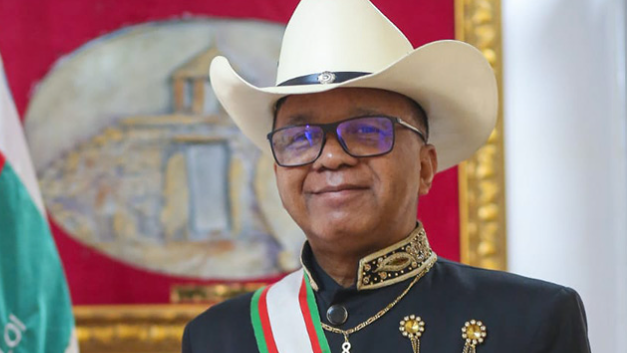
    Among the public, his image had become shorthand for the old order. Known for appearing in public wearing a cowboy hat and displaying rows of military medals, Ravalomanana was treated by demonstrators as a living emblem of authoritarian rule. His presence at rallies or official functions often drew jeers and chants from crowds who saw him as a proxy for Rajoelina’s security apparatus.

    The defence case

    Ravalomanana’s lawyers mounted a challenge centred on the absence of direct documentary or testimonial proof linking him to specific orders. They pressed the court to identify any written directive, recorded instruction, or sworn account from an officer on the ground confirming that commands flowed from their client.

    “Is there confirmed written or verbal evidence… to accuse him?”

    That question, posed by his counsel, framed the defence argument: prosecutors, they contended, had built a case of association rather than command.

    Testimony from a former national police chief, called to the stand, appeared to support the defence narrative. The witness stated that Ravalomanana had not occupied a position within the operational chain of command during the unrest and had issued no directives to police, gendarmes, or soldiers deployed in the streets.

    A reckoning for the old guard

    The Ravalomanana trial is one of several legal proceedings now targeting senior figures from the Rajoelina era. Since the change of power, multiple officials associated with the former government have faced charges ranging from corruption to abuse of authority. The new administration, led by Colonel Randrianirina, has signalled that accountability for the protest deaths will be pursued through the courts rather than through political purges.

    Whether the ten-year hard-labour sentence will survive appellate review remains open. But the verdict itself sends a clear message to Madagascar’s political class: the era in which senior security figures could direct street-level violence without personal legal consequence appears to have ended. For the families of the 22 killed and the hundreds wounded, the question now is whether a court sentence, however severe, can begin to close a wound that opened on the streets of Antananarivo a year ago.

    Frequently Asked Questions

    What is Madagascar ex Senate chief sentenced to hard?

    Madagascar ex Senate chief sentenced to hard is the main topic of this guide. The article explains the context, practical details, and next steps readers should understand.

    Why does Madagascar ex Senate chief sentenced to hard matter?

    Madagascar ex Senate chief sentenced to hard matters because readers are looking for a useful answer, not just a short summary. Good content should match search intent and help them decide what to do next.
  • EU and Nato vow to step up pressure on Russia after ‘new escalation’ in Germany

    EU and Nato vow to step up pressure on Russia after ‘new escalation’ in Germany

    Brussels and NATO Escalate Rhetoric After German Authorities Pin Drone Sabotage on Moscow

    Constantvpn.com – The diplomatic temperature between Europe and Moscow climbed sharply this week after German officials confirmed that Russian operatives were responsible for a series of drone incidents at Leipzig/Halle airport, prompting the European Commission and NATO to issue joint warnings about a shifting pattern of aggression on the continent’s soil.

    The confirmation came on Tuesday, when Germany’s interior ministry stated that police investigations and intelligence work had established Russian responsibility for the events. The ministry noted that the drone’s configuration, its components, the type of explosives used, and the detonator mechanism all matched equipment previously identified in other Russian hybrid operations across Europe.

    The Leipzig Incident

    On 4 August, a drone carrying explosives was found aboard a Ukrainian cargo plane parked at Leipzig/Halle airport. Airport staff defused the device using a robot. A second drone is believed to have collided with another cargo aircraft at the same facility. Ten days after the initial discovery, a third drone was reportedly located on the airport grounds. Leipzig/Halle serves as a significant NATO logistics hub and is regularly used by Ukrainian Antonov transport aircraft ferrying military equipment to Kyiv.

    Two suspects have been identified in connection with the attack. One is described as a Belarusian national holding a Russian passport who entered Germany on a tourist visa. The second individual reportedly carried both Latvian and Russian passports, arriving by plane in Berlin and departing the country two days before the failed strike.

    EU and NATO Response

    Commission President Ursula von der Leyen framed the incident as a watershed moment for European security. Speaking a day after Germany publicly attributed the attack to Russia, she stated:

    “Leipzig marks a new escalation on European Union soil directly attributed to Russia.”

    She added that the bloc must accelerate its readiness to counter what she called Russian recklessness, emphasizing that the operation involved military-grade material deployed by Russian operatives inside EU territory.

    “We will not tolerate it,” von der Leyen said.

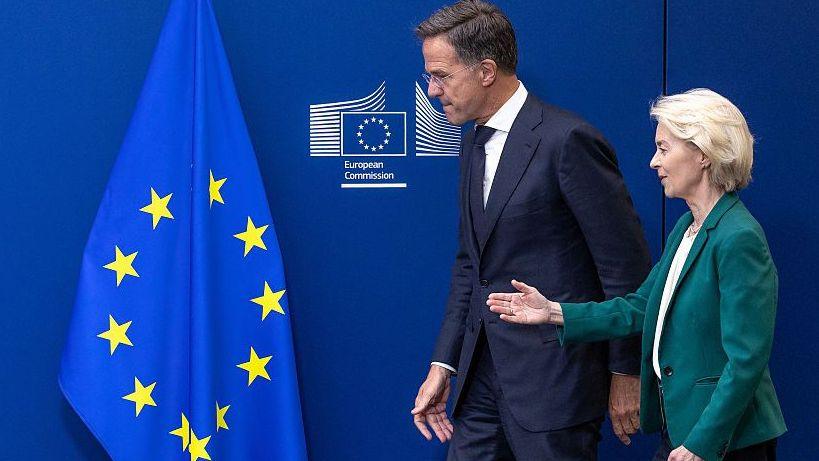
    NATO Secretary General Mark Rutte, meeting von der Leyen in Brussels, declared that the entire alliance — including the United States — stood in full solidarity with Germany. He warned that Europeans faced growing danger from drones and missiles crossing into countries along the Alliance’s eastern flank, and pointed to a broader catalogue of hostile acts, including fires set in factories producing defence equipment for Ukraine.

    “There have been more malign activities targeting our territory directly, whether it is fires set in factories producing defence equipment for Ukraine or indeed the Russian hybrid attack in Leipzig,” Rutte said.

    Berlin’s Domestic Countermeasures

    In response to the confirmed Russian involvement, Germany announced it would close the Russian House cultural institution in Berlin, widely perceived in the capital as a Kremlin propaganda outlet, along with the Russian consulate in Bonn. Moscow’s foreign ministry pledged a “mirror-image” response and accused Berlin of offering no evidence to substantiate its claims.

    Vladimir Putin condemned the German measures as a serious mistake that “clearly runs counter to the interests of the German people.” When asked whether Moscow might sever diplomatic relations with Berlin, Deputy Foreign Minister Alexander Grushko answered “maybe,” while noting that diplomacy was still being given a chance.

    Some German commentators argued the response was comparatively restrained. Berlin, however, appears to be calibrating its actions toward a more coordinated multilateral package, including expanded EU sanctions and bloc-wide entry restrictions on Russian visitors.

    EU Foreign Ministers in Wicklow

    While von der Leyen and Rutte met in Brussels, EU foreign ministers convened in Wicklow, Ireland. France’s Foreign Minister Jean-Noël Barrot proposed action at European level against Russia’s so-called “shadow fleet” — vessels carrying oil and other cargo that attempt to evade EU sanctions. Barrot, together with ministers from Belgium and the Netherlands, said they had summoned their respective Russian ambassadors in formal protest over the Leipzig attack.

    Lithuania’s Foreign Minister Kestutis Budrys observed that the episode made plain Russia’s apparent calculation that hybrid operations against European allies carry no meaningful political cost.

    A Wider Pattern of Sabotage

    Von der Leyen situated the Leipzig episode within a broader trajectory of increasingly dangerous incidents, including drone incursions and interference with critical infrastructure across member states. Within the past 24 hours of the announcement, German authorities reported several additional acts of suspected sabotage, including two attacks on electricity substations — one in eastern Germany and another in the west near Cologne. Police were seen searching an area in Bergheim following one of the substation strikes.

    The convergence of confirmed state-sponsored sabotage on NATO territory, the closure of Russian diplomatic and cultural facilities, and the prospect of expanded sanctions collectively signal that European governments are moving from reactive condemnation toward structured, multilateral deterrence. Whether that shift will alter Moscow’s calculus remains the central question facing the continent’s security architecture in the months ahead.

    Frequently Asked Questions

    What is EU and Nato vow to step?

    EU and Nato vow to step is the main topic of this guide. The article explains the context, practical details, and next steps readers should understand.

    Why does EU and Nato vow to step matter?

    EU and Nato vow to step matters because readers are looking for a useful answer, not just a short summary. Good content should match search intent and help them decide what to do next.
  • Burnham’s PMQs debut shows the challenge of delivering new style of politics

    Burnham’s PMQs debut shows the challenge of delivering new style of politics

    Burnham’s PMQs Debut Exposes Westminster’s Rivalry

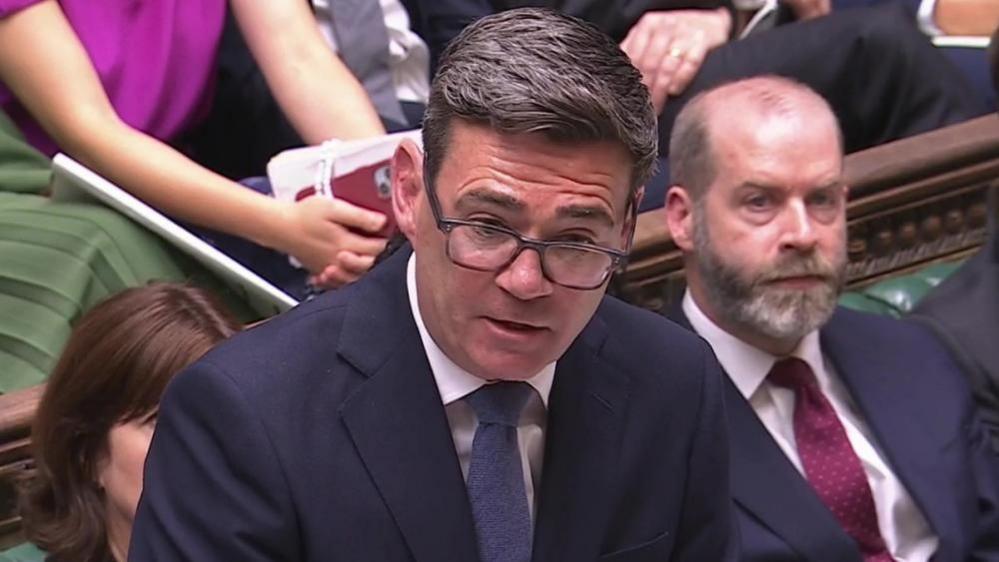
    Constantvpn.com – The moment Andy Burnham stepped to the despatch box for his first session as prime minister, the packed Labour benches erupted in partisan cheering. Yet within minutes, the raucous welcome dissolved into something far older: the weekly adversarial ritual of Prime Minister’s Questions. Burnham’s PMQs debut shows how deeply entrenched that ritual remains, even in an era of algorithmic feeds and thirty-second viral clips. Westminster insiders still treat the exchange as indispensable to democratic accountability, and no prime minister has yet found a way to opt out without appearing evasive.

    Burnham arrived carrying the momentum of a summer spent flooding social platforms with short-form video messages aimed at ordinary voters rather than party loyalists. That digital strategy, however, could not prepare him for the particular grammar of the chamber’s weekly theatre. His predecessor, Sir Keir Starmer, had navigated the same format, but Burnham’s debut carried an additional layer of expectation: he had publicly pledged to abandon what he termed political “point scoring,” a promise that collided immediately with the adversarial architecture of the House.

    The Badenoch Gambit

    Kemi Badenoch, leading the Conservative opposition, opened with a pointed joke about the prime minister’s physical endurance, referencing a marathon Commons session earlier that week in which Burnham had fielded questions for more than three hours. Laughter rippled through the chamber; Burnham offered a cautious smile. The early exchanges carried a faintly jocular edge, but the tone shifted within minutes as Badenoch pivoted to borrowing costs, tax policy, and what she characterised as profligate government spending.

    Despite his stated intention to move beyond partisan scorekeeping, Burnham found himself pointing directly at the Conservative economic record. He invoked the budget delivered under former prime minister Liz Truss as evidence of fiscal mismanagement while simultaneously pledging that his own government would enforce strict fiscal discipline. The contradiction between his declared style and the reality of the exchange was, by any measure, immediate.

    “Punch and Judy politics” — David Cameron’s description of Westminster’s adversarial culture when he assumed the Conservative leadership, a label that proved no more durable than Burnham’s own pledge to end point scoring.

    Cameron’s experience offers a useful parallel. He entered the despatch box promising to transcend partisan theatrics, only to discover that the format itself compels escalation. Burnham’s PMQs debut confirmed the same structural reality: the chamber’s dynamics reward confrontation, and no prime minister has yet found a way to step outside them without appearing to dodge questions.

    Beyond the Tone Shift

    What distinguishes Burnham from his immediate predecessor is not merely rhetoric. Observers in the chamber noted that he handled the exchanges with a noticeably greater ease of communication, a comfort absent under Starmer’s tenure. Yet comfort at the podium is not the same thing as competence in governance. The questions Badenoch pressed — on tax trajectories, spending priorities, and the trajectory of government borrowing — map directly onto decisions the chancellor must take before the autumn budget at the end of October.

    The macroeconomic backdrop complicates every answer. A global uptick in borrowing costs has narrowed the UK’s fiscal headroom considerably, and analysts expect the chancellor’s manoeuvring space at the October budget to be constrained by precisely the pressures Badenoch highlighted. Burnham has spoken of a “transformational government,” but the pressure points he inherits — defence spending commitments, welfare reform, social care funding — are substantially identical to those that occupied Starmer’s final months. The style may differ; the arithmetic does not.

    When pressed for specifics, Burnham pointed to two early policy moves: a reduction in VAT applied to domestic electricity bills and a cut in business rates for pubs and music venues. Beyond that, he retreated into a familiar ministerial refrain — that prime ministers do not compose budgets from the despatch box. It is a defensible position for a first session, though the questions themselves will not disappear. They will recur, sharpened, until the government produces a coherent economic narrative.

    Frequently Asked Questions

    What happened during Burnham’s first PMQs session? Burnham faced questions from Conservative leader Kemi Badenoch covering borrowing costs, tax policy, and government spending. He cited the Liz Truss budget as evidence of prior fiscal mismanagement and outlined two early measures: a VAT cut on domestic electricity bills and reduced business rates for pubs and music venues.

    How does Burnham’s approach differ from Starmer’s at the despatch box? Chamber observers noted Burnham handled the exchanges with greater communicative ease than Starmer displayed during his tenure. However, both prime ministers ultimately found themselves engaged in the same adversarial dynamic the format demands.

    When is the next major fiscal decision point? The chancellor’s autumn budget, scheduled for the end of October, is the next critical moment. Global borrowing-cost pressures are expected to constrain the government’s fiscal headroom considerably.

  • ‘I’ve never been to Afghanistan’: Six million deportees forced to start over under the Taliban

    ‘I’ve never been to Afghanistan’: Six million deportees forced to start over under the Taliban

    Six Million Return: “I’ve Never Been to Afghanistan”

    Constantvpn.com – “I’ve never been to Afghanistan.” The sentence, uttered by a young mother stepping off a packed bus at a dusty border checkpoint, sums up a crisis of staggering proportions. Since the Taliban reclaimed Kabul in August 2021, the UN refugee agency tallies roughly six million Afghans pushed back across the country’s borders from Pakistan and Iran. Approximately one million of those arrivals occurred in the current year alone. Charlie Goodlake, UNHCR’s spokesperson based in Afghanistan, describes the scale as unprecedented in modern history.

    “In a little under three years, we’ve seen six million people — a population the size of a small country — come back to Afghanistan. We’ve never seen in recent history a return movement on this scale.” — Charlie Goodlake, UNHCR

    Goodlake spoke from a makeshift camp of tarpaulin and plastic shelters near the crossing, many already shredded by wind and sun. Built by UN partners to give arriving families a few nights’ cover, the structures serve no purpose beyond the checkpoint itself; most families have nowhere else to go.

    Zero Point: Where Strangers Cross Home

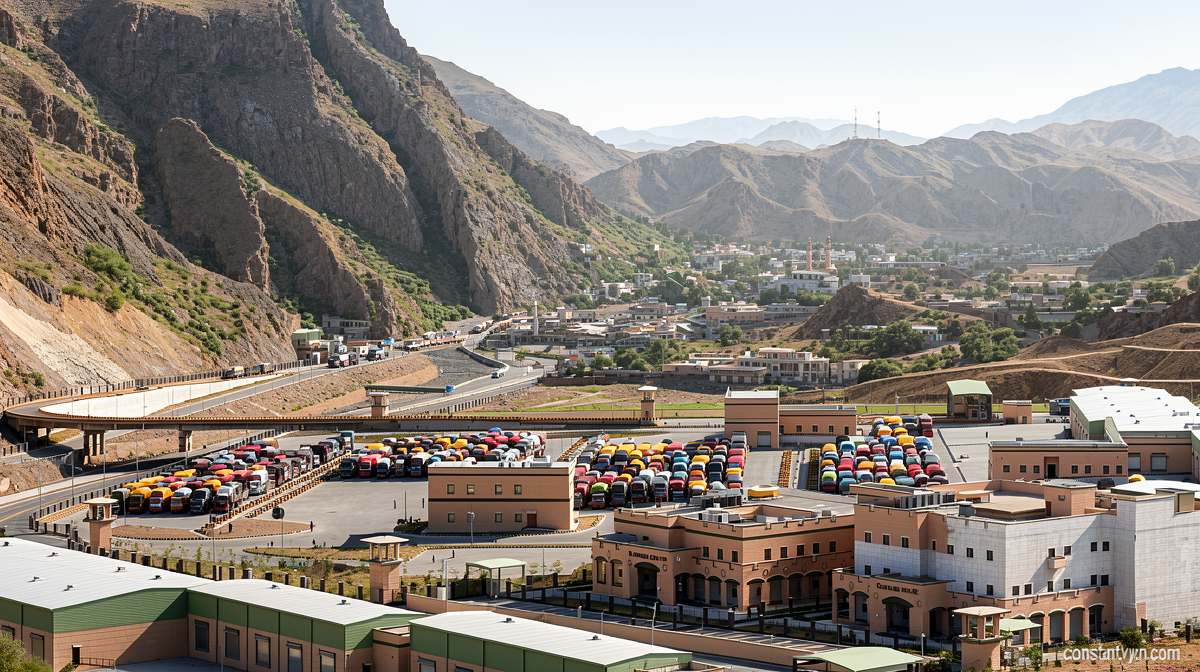
    The Torkham crossing, locally called “Zero Point,” churns with exhausted bodies. Elderly men lean on crutches. Children clutch chickens salvaged from homes they will never re-enter. Taliban flags in black and white hang over registration counters where families queue to be processed into a country most of them have never known.

    Nazia, 35, stepped off the bus minutes before being approached. She was born on the Pakistani side of the border. Nearly her entire extended family — eight sisters and their children — were expelled this year, some from Pakistan, others from Iran. She walked toward the registration desks with two small children trailing behind her.

    “It feels good to be in my own country,” she said, then paused. “But I’ve never been to Afghanistan before, and many people here don’t even have enough bread to eat.”

    Decades of Outward Flow, Now Reversed by Force

    For generations Afghans crossed into Pakistan and Iran for work or to escape successive wars. After the Taliban’s August 2021 takeover the flow accelerated sharply, and both neighbours have since turned the tide with aggressive crackdowns on undocumented migrants. The UN and human-rights groups warn the sweeps have expanded well beyond the undocumented to include Afghans holding formal registration documents. Pakistan’s foreign ministry has publicly stated that holders of Proof of Registration cards are no longer exempt from removal.

    Every family encountered at the crossing described prejudice and harassment by Pakistani authorities. The government did not answer direct questions from journalists, though a foreign-ministry spokesman told an Islamabad briefing that the state “undertakes the necessary measures to prevent any instance of harassment or maltreatment of Afghan nationals in Pakistan” and that any incidents are “sporadic and are dealt with fully in accordance with the law.”

    “I Left 45 Years Ago”

    Sarwar arrived days earlier in a convoy of forty relatives — seven brothers and their families — their accumulated belongings crammed into a lumbering Pakistani lorry. He departed Afghanistan forty-five years ago during the Soviet invasion. Most of his brothers were born on Pakistani soil.

    “We spent a long time there, so of course I felt heartbroken when they forced us out of our home. But, despite all that pain, I am also happy because I am finally free of harassment by Pakistan’s police.”

    Escalation and the Iranian Dimension

    Both Islamabad and Tehran argue the era of Afghan migration is over, citing perceived security risks and fiscal strain. From Pakistan, expulsions and alleged abuses intensified after a major military escalation between the two countries last October. In February, Human Rights Watch documented “door-to-door raids, late-night home searches and arrests without warrants” targeting Afghan communities.

    In Iran, which last year claimed to host more than four million undocumented Afghans, mass deportations accelerated following the country’s twelve-day war with Israel and the United States in June 2025. The New York-based Centre for Human Rights in Iran accused Iranian authorities of exploiting the post-war atmosphere to “cast suspicion on Afghan migrants — accusing them of espionage and branding them as potential spies for Israel.”

    Frequently Asked Questions

    How many Afghans have been returned since 2021?

    UNHCR estimates approximately six million people have been repatriated from Pakistan and Iran since the Taliban’s August 2021 takeover, with roughly one million arriving in the current year alone.

    What is the Torkham crossing?

    Torkham, locally nicknamed “Zero Point,” is the principal land border crossing between Pakistan and Afghanistan. It is where most of the current repatriation traffic is processed.

    Are documented Afghans also being deported?

    Yes. Pakistan’s foreign ministry has stated that holders of Proof of Registration cards are no longer exempt from removal, and human-rights organizations report that sweeps have expanded beyond the undocumented population.

    What is happening in Iran?

    Iran, home to more than four million undocumented Afghans, accelerated mass deportations after its twelve-day conflict with Israel and the United States in June 2025. The Centre for Human Rights in Iran alleges authorities have branded Afghan migrants as potential Israeli spies.

  • Monza memories – Italian GP in pictures through the years

    Monza memories – Italian GP in pictures through the years

    Where Speed Meets Sacred Ground: Monza’s Unbroken Thread Through Formula 1 History

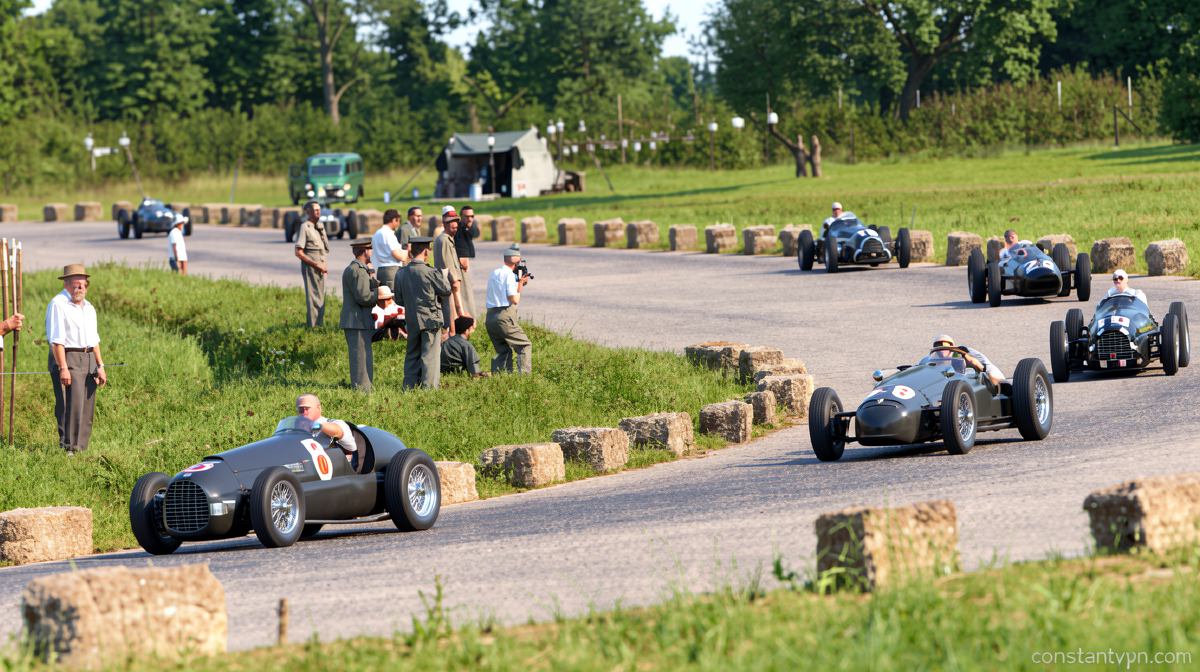
    Constantvpn.com – Every autumn, the roar of engines echoes through a stretch of royal woodland north of Milan, and the world of motorsport gathers at a place that has become inseparable from its own mythology. Monza — the so-called “cathedral of speed” — stands as the single most enduring fixture on the Formula 1 calendar. Since the sport’s inaugural season in 1950, the circuit has staged a grand prix in every year except one. That lone absence came in 1980, when the track underwent renovation work. No other venue can claim such an unbroken lineage of competition.

    The circuit sits within a royal park, its long straights flanked by dense woodland that gives the place an almost cathedral-like solemnity. For Ferrari fans — the tifosi who pack the grandstands in scarlet — Monza is not merely a race track. It is a place of worship. The Italian marque has called this stretch of tarmac its spiritual home for decades, and the emotional intensity of a home race here has no parallel elsewhere on the calendar.

    The stakes at Monza have always been existential. Seventy-six years ago, the very first Formula 1 world championship was decided on this very track. Last year, Red Bull’s Max Verstappen produced the fastest qualifying lap ever recorded in the sport’s history, again at Monza. The venue has witnessed title clinches, heartbreaking crashes, controversial finishes, and moments of pure, unrepeatable drama. To trace the history of Formula 1 is, in many ways, to trace the history of this one circuit.

    The Founding Era: Alfa, Ferrari, and the First Titles

    The 1950 Italian Grand Prix closed Formula 1’s maiden season. Giuseppe Farina, driving an Alfa Romeo, crossed the line to claim both the race and the inaugural drivers’ championship. He remains the only driver ever to win the title on home soil. Farina’s dominance in those early years was absolute — he, Juan Manuel Fangio, and Alberto Ascari collectively claimed the first eight world titles between them.

    By 1953, the grid at Monza featured all three of those champions lining up together. Fangio, in a Maserati, took the race that weekend, but Ascari, in a Ferrari, accumulated enough points across the season to carry the title. The era of near-total Italian and Argentine supremacy over the championship was well established by then.

    Banking, Brotherhood, and the First Woman

    Monza’s steep banked corners — still physically present at the circuit today — were a defining feature of the track until the 1961 season. In 1956, Fangio, Stirling Moss, and Peter Collins navigated those banks during a race that became a study in team loyalty. Moss, driving a Maserati, took the win. Collins, the British driver, handed his car to his Argentine teammate Fangio after the race, allowing them to share second place. Those points proved decisive: Fangio collected his fourth of five world championships that year.

    Two years later, in 1958, the grid carried a landmark of its own. Maria Teresa de Filippis, an Italian driver, became the first woman ever to compete in a Formula 1 race, piloting a Maserati at her home event. Her presence on the grid marked a milestone that the sport would not see matched for decades.

    Tragedy at the Lesmos

    The 1961 Italian Grand Prix will always be remembered for what happened on its second lap. Wolfgang von Trips, a Ferrari driver who was on the verge of clinching the world championship, collided with Jim Clark’s Lotus. His car launched over an embankment and into a crowd of spectators. Von Trips and fourteen others were killed. The image of the German driver before that fateful race remains one of the most haunting in the sport’s visual archive.

    Spectators watching through the Lesmos corners in 1962 saw a different kind of drama unfold. By 1963, Scotsman Jim Clark had turned the track into his own proving ground, collecting a garland after winning the grand prix to seal his first of two drivers’ titles with Lotus.

    Family, Slipstream, and the Narrowest of Margins

    In the pits before the 1967 race, Graham Hill adjusted his helmet and visor while surrounded by his family — wife Bette and their children. Among them stood a six-year-old Damon Hill, who would go on to claim the 1996 world championship.

    Before chicanes were added to the layout, Monza’s long straights turned every race into a war of slipstreaming. In 1969, Matra’s Jackie Stewart crossed the line just ahead of Jochen Rindt in a Lotus, Jean-Pierre Beltoise in a second Matra, and Bruce McLaren representing his own team. The top four finishers were separated by less than two-tenths of a second.

    The following year brought heartbreak of a different order. Nina Rindt sat in the pits, timekeeping for her husband during a practice session in 1970. Shortly after that session, Jochen Rindt was killed on the approach to the Parabolica corner, almost certainly due to a suspension failure on his Lotus. Weeks later, he became Formula 1’s only posthumous world champion.

    Thrills, Scars, and the Hunt–Lauda War

    The 1971 finish was another masterclass in razor-thin margins. BRM’s Peter Gethin edged past Ronnie Peterson in a March, Francois Cevert in a Tyrrell, Mike Hailwood in a Surtees, and Howden Ganley in a second BRM. Six-tenths of a second separated the top five.

    In 1973, team owner Frank Williams organized a charity-style race around the circuit. James Hunt led the pack at the start, but it was Williams himself — visible behind a bare-chested runner — who crossed the line first and collected the £750 prize.

    By 1976, Monza had become the stage for one of the sport’s greatest rivalries. Niki Lauda, still bearing the visible scars of his near-fatal crash at the Nürburgring German Grand Prix, returned to racing just six weeks after that accident. He drove at Monza in significant pain, finishing fourth to extend his championship lead over McLaren’s James Hunt. Hunt ultimately prevailed by a single point at season’s end, but Lauda’s decision to race at all — at that speed, with those wounds — remains one of the most extraordinary acts of will in motorsport history.

    The 1978 Italian Grand Prix opened with a multi-car accident behind the leaders, a reminder that even in an era of increasing safety, Monza’s speed demanded its toll.

    From Farina’s Alfa to Verstappen’s record lap, the circuit has absorbed every era of the sport. Its story is, quite literally, the story of Formula 1 itself.

    Frequently Asked Questions

    What is Monza memories?

    Monza memories is the main topic of this guide. The article explains the context, practical details, and next steps readers should understand.

    Why does Monza memories matter?

    Monza memories matters because readers are looking for a useful answer, not just a short summary. Good content should match search intent and help them decide what to do next.
  • Tottenham make Ndiaye move with Richarlison set for Everton

    Tottenham make Ndiaye move with Richarlison set for Everton

    North London and Merseyside Linked in a Web of Interconnected Transfer Deals

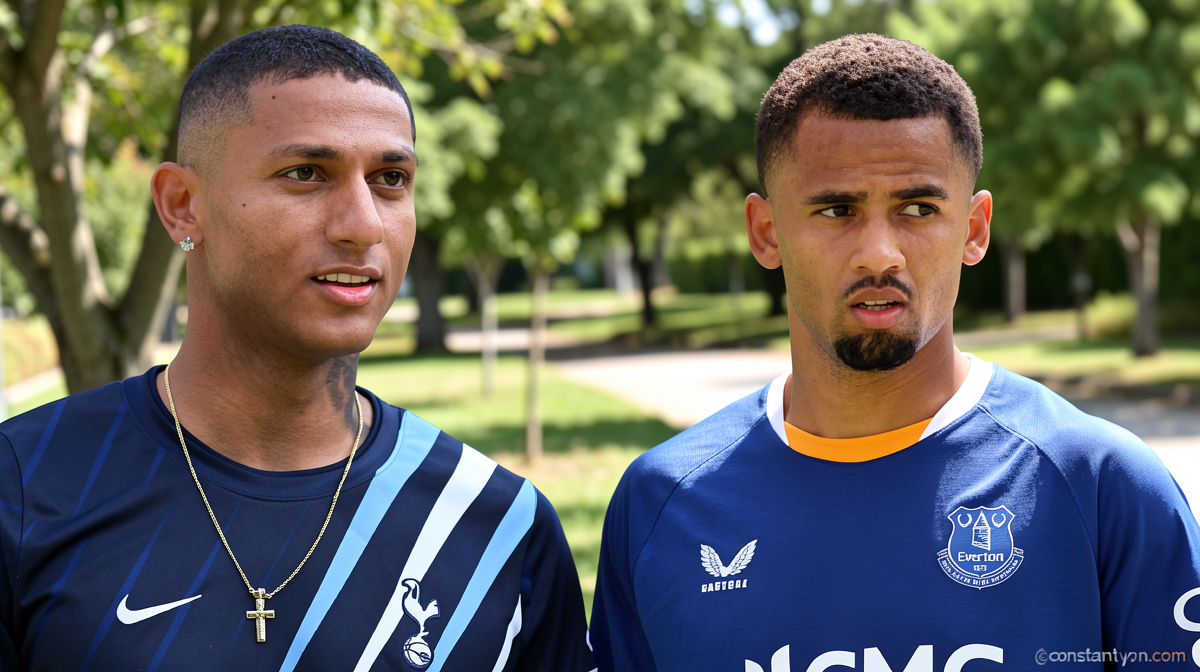
    Constantvpn.com – The final days before Tuesday’s Premier League transfer deadline are shaping up as a tangled web of linked moves, with Tottenham Hotspur and Everton at the centre of a swap that could reshape both squads. The two clubs are in advanced negotiations for a two-way exchange: Iliman Ndiaye, the 26-year-old midfielder who arrived at Goodison Park from Marseille in 2024, is expected to travel to north London, while Brazilian forward Richarlison — who originally joined Spurs from Everton back in 2022 — is poised to complete the reverse journey.

    Although the broad outline of the Ndiaye transaction has been largely settled between the two boards, complications remain. Manchester City have expressed interest in the Senegalese international, meaning the player’s final destination is not yet locked in. City’s scouting department has also explored the possibility of signing Liverpool forward Cody Gakpo, another name on Spurs’ shortlist, though the Reds would need to identify a suitable replacement before authorising any departure.

    Richarlison’s Departure and Everton’s Striker Equation

    On the Everton side, the club has agreed terms in principle to re-sign Richarlison after the Brazil international made his desire to depart Tottenham unmistakably clear. The forward, now entering the final 12 months of his Spurs contract, has repeatedly communicated his wish to leave to head coach Roberto De Zerbi. At Goodison Park, his arrival would inject direct competition for the starting striker role currently occupied by Thierno Barry, whose own long-term future at the Hill Dickinson Stadium remains uncertain.

    Richarlison’s departure would come at a sensitive moment for Spurs. Last season he netted 11 league goals — the most of any player in the squad — and was instrumental in guiding the club to Premier League survival on the final day of a campaign that ended in 17th place. De Zerbi himself acknowledged earlier in August that replacing such a player would be a considerable challenge, remarking that it is “not easy to find another striker like Richarlison.”

    De Zerbi’s Candid Assessment

    Following a 2-0 home defeat to Newcastle on Saturday — a result that left Tottenham bottom of the table with two games played and no goals scored — De Zerbi addressed the status of three players who have requested exits. None of the three featured in the matchday squad for that fixture.

    “Richarlison, I don’t know. He said too many times he wants to leave.”

    “Danso came to me two days ago and he said wants to leave and Pape Sarr the same, but he suffered a small injury, but he is almost ready to train.”

    “I have very good relationships but if they want to leave, they have to bring the solution, the economic solution, to the club, and they can go.”

    The three players in question — Richarlison, centre-back Kevin Danso, and midfielder Pape Matar Sarr — represent a significant portion of the squad’s depth, and their simultaneous exit would place considerable pressure on a coaching staff already managing a squad rebuilt around a spend exceeding £300 million this summer.

    Everton’s Broader Recruitment Push

    Beyond the Richarlison-Ndiaye axis, Everton are pressing ahead on multiple fronts. The club has grown increasingly confident of finalising a loan arrangement to bring Jack Grealish back from Manchester City, where the England international enters the final year of his contract at the Etihad Stadium. Precise financial terms remain complicated, but Grealish has made clear he prioritises a return to Everton — where he spent last season on loan — over the prospect of rejoining boyhood club Aston Villa, who have also shown interest.

    On the defensive flank, Everton are targeting a right-back and have reopened discussions over Fulham’s Kenny Tete after he came close to completing a move last summer. Fulham, in turn, are already evaluating potential replacements and have entered talks to sign Andrei Ratiu. These interconnected negotiations underscore how tightly linked the final hours of the window have become across the Premier League.

    Danso and Sarr: The Remaining Departures

    Danso, who carries 36 caps for Austria, faces diminished first-team prospects this season with the arrivals of Marcos Senesi and Jan Paul van Hecke to contest the central-defence positions. Micky van de Ven’s place in the back line has been cemented by a new contract and the award of the captaincy. Sunderland tabled a season-long loan bid for the Austrian, but Spurs turned it down.

    Sarr, 23, has seen his playing time curtailed by the early-window signings of Mateus Fernandes and Sandro Tonali in midfield. Tottenham broke their own club-record fee twice within a single week to secure those arrivals, marking the start of what has been described as a statement summer of recruitment. The Senegal international has attracted attention from several Premier League clubs and Turkish side Besiktas, though Juventus are understood to be confident of completing a loan deal carrying a conditional obligation to purchase. Sarr originally joined Spurs from Metz in 2021.

    Spurs’ High-Stakes Summer

    The backdrop to all these negotiations is a club attempting to correct two consecutive seasons finishing 17th in the Premier League. Tottenham have signed eight first-team players this summer and committed more than £300 million in total spending, yet the early-season results — defeats at Brentford and Newcastle, with no goals scored — have left them at the foot of the table. Last week, Manchester City striker Omar Marmoush arrived on loan and slotted into De Zerbi’s starting lineup against Newcastle in Richarlison’s absence, a temporary fix that underscores the urgency of finding a more permanent solution before the deadline arrives.

    Frequently Asked Questions

    What is Tottenham make Ndiaye move with Richarlison?

    Tottenham make Ndiaye move with Richarlison is the main topic of this guide. The article explains the context, practical details, and next steps readers should understand.

    Why does Tottenham make Ndiaye move with Richarlison matter?

    Tottenham make Ndiaye move with Richarlison matters because readers are looking for a useful answer, not just a short summary. Good content should match search intent and help them decide what to do next.
  • Right-wing commentator Milo Yiannopoulos deported from US to UK

    Right-wing commentator Milo Yiannopoulos deported from US to UK

    British Commentator Milo Yiannopoulos Sent Home After ICE Detention

    Constantvpn.com – The man who spent years urging Americans to deport millions of undocumented residents found himself on the receiving end of exactly that process this week. Milo Yiannopoulos, the 41-year-old British political commentator known for his combative online persona, was removed from United States soil and returned to the United Kingdom following a detention by Immigration and Customs Enforcement. The Department of Homeland Security confirmed the removal on Friday and published a mugshot of the former Breitbart News editor as part of its public announcement.

    The irony of the episode has not been lost on observers. Yiannopoulos had long championed aggressive immigration enforcement, praising ICE operations and calling for sweeping removals of people living in the country without legal status. His deportation to his native England, a nation he had left in May 2019, lands with particular force given those earlier positions.

    The Circumstances of His Removal

    Yiannopoulos was picked up on 27 August after landing at Louis Armstrong New Orleans International Airport. According to the Department of Homeland Security, he had entered the United States in May 2019 and subsequently remained past the period permitted under his visa. A DHS spokesperson described him as

    “an illegal alien from the United Kingdom”

    and stated that he had been sent

    “back to his home country.”

    The department added that he

    “chose to overstay his welcome in violation of our nation’s laws.”

    Yiannopoulos grew up in Kent, in southern England, before moving to the United States to build a career in media and politics. His removal marks a rare instance of a well-known public figure being processed through the standard deportation pipeline rather than through a negotiated or voluntary departure.

    A Career Built on Provocation

    Before his immigration troubles, Yiannopoulos had already established himself as one of the most visible voices in American right-wing media. He served as editor of Breitbart News, a digital publication that became a central hub for conservative commentary in the mid-2010s. He also worked as a political aide to rapper Kanye West, assisting the musician’s unsuccessful 2020 presidential campaign. Later, he took on a similar advisory role for Marjorie Taylor Greene, the former Republican congresswoman who eventually broke with Donald Trump and resigned from office after becoming a vocal critic of the president.

    Yiannopoulos first entered the national spotlight during the 2016 election cycle as an early and enthusiastic backer of Trump. He headlined a gathering called “Gays for Trump” during the Republican National Convention that year, an event designed to signal that the candidate’s movement welcomed LGBTQ supporters. In recent years, however, he has shifted into a more critical posture toward the president while continuing to endorse much of his policy agenda. In March of this year, he posted on X that Trump had

    “lost his way, bought off by foreign interests.”

    Advocacy That Now Echoes Back

    The commentator’s social media output in recent years made a point of championing mass deportation. Writing in 2025, he declared:

    “We have got to deport millions and millions of people. Without that, nothing else matters.”

    He separately urged

    “on the spot deportation for anyone who can’t prove they are in the US legally.”

    He had also called for

    “total legal immunity for ICE agents when they’re on duty.”

    Those statements, made while he himself was residing in the country on an expired visa, have drawn sharp commentary from both supporters and detractors of immigration enforcement.

    Reactions and Rivalries

    Laura Loomer, a far-right commentator and Trump ally who has been locked in a public feud with Yiannopoulos for some time, claimed credit for his ICE arrest. Posting on X on Friday evening, she announced that his flight back to Britain had already left American airspace and added:

    “This subversive foreign agent is already out of the United States and DHS tells me he’s NEVER allowed to come back to the United States ever again.”

    The exchange underscores how personal rivalries within the right-wing media ecosystem continue to shape public narratives around immigration enforcement actions.

    Controversies and the Alt-Right Question

    Yiannopoulos has long courted attention through pointed remarks about transgender people, Muslims, the Black Lives Matter movement, feminists, and gay individuals, even though he himself previously identified as gay. He now describes himself as an “ex-gay.” Critics have labelled him a purveyor of hate speech, while he has styled himself the

    “most fabulous supervillain on the internet.”

    His relationship with the broader alt-right movement has been complicated. He was once regularly associated with that loose coalition of figures who oppose political correctness and feminism and whose ranks include neo-Nazis and white supremacists. He has maintained that he does not consider himself part of the alt-right, yet has described the movement as

    “energising and exciting.”

    A defining moment in his public career came in 2017, when he was disinvited from CPAC, a major US conservative conference that also featured Trump, after video surfaced showing him appearing to condone paedophilia. He subsequently apologised and stepped down from his Breitbart post. He denied the allegations, explaining that he had been recounting his own childhood experiences.

    Broader Implications

    The episode raises questions about how consistently immigration rules are applied to high-profile figures who have spent years lobbying for stricter enforcement. It also highlights the vulnerability of foreign nationals residing in the United States on temporary visas: once the permitted period lapses, the legal pathway to remaining in the country narrows sharply, and removal becomes the default outcome. For Yiannopoulos, whose career has been built on commentary about American politics and culture, the deportation ends his ability to participate directly in that debate from within the country, at least until any future visa application is considered.

    Frequently Asked Questions

    What is Right wing commentator Milo Yiannopoulos deported?

    Right wing commentator Milo Yiannopoulos deported is the main topic of this guide. The article explains the context, practical details, and next steps readers should understand.

    Why does Right wing commentator Milo Yiannopoulos deported matter?

    Right wing commentator Milo Yiannopoulos deported matters because readers are looking for a useful answer, not just a short summary. Good content should match search intent and help them decide what to do next.
  • Greens call for temporary ban on new data centres

    Greens call for temporary ban on new data centres

    Constantvpn.com – Zack Polanski visits the site of a proposed data centre in East London Zack Polanski has called for a freeze on the approval of new data centres in England because of concerns about the amount of water and energy they use. The Green Party leader said the government should introduce stricter environmental rules and give communities more say on whether the centres are built in their area. Data centres can use significant amounts of water to cool their systems, although there are no official figures on how much water they consume in the UK.

    The government said a pause would lead to the UK losing investment and being dependent on overseas computing for sensitive data processing. A spokesman said: "It would be a disaster for jobs and national security." There are hundreds of data centres in the UK – with plans for many more. Exact numbers are hard to find, but the BBC reported last year there were around 477.

    Many are clustered around London and the south of England – areas which are officially in drought at the moment. The amount of water data centres consume can change based on size, design and local climate – the hotter the area the more water needed to cool the equipment. Speaking on a visit to the site of a proposed data centre in East London, Polanski told the BBC: "We need to slam the brakes on these energy guzzling, water guzzling data centres.

    "Essentially, we need basically a moratorium other than local scale data centres for the local community. "At a time when three-quarters of the country are in drought, it is outrageous that these are being considered critical infrastructure. "To most people critical infrastructure means hospitals, water, electricity.

    It doesn't mean Artificial Intelligence." Data centres were classified as critical in 2024, meaning they get extra government support during incidents like cyber-attacks or extreme weather. The Greens argue this means they could get priority over households for water. The government said data centres would not automatically get priority during shortages.

    Mark Acton, executive director of the Data Centre Alliance, said data centres were not taking water from local communities and used less water than leisure centres and golf courses. Speaking to the Today programme, he said getting planning permission was "very difficult" even in AI growth zones. He added: "Data centres are not just AI, data centres run our lives…

    social media runs through data centres, our banking systems run through data centres. "We depend on these things massively." The BBC has discovered that ministers have not carried out an environmental assessment on the impact of their " Delivering AI growth zones strategy , external ". A government official said it sees the paper as a statement of intent, rather than a formal policy moving towards implementation.

    Data centres in the UK do not currently have to report the amount of water they use. Water is used to cool electrical equipment in data centres The Water Research Centre consultancy estimated in February that centres in England currently use about 1.9bn litres of drinkable water a year – around 0.2% of the non-household market. The company says there is a "clear upward trend" , external in the use of water.

    The Greens cited research by Global Action Plan, , external an environmental charity, which suggested large centres could consume 1.5m litres per day. The party said data centres should be built on brownfield sites, near to renewable energy sources to allow them to use renewables when possible. The Greens also want owners to provide annual figures on water and electricity consumption.

    But the government said much more water – roughly a fifth of the supply – was lost through leaks. A government spokesperson said: "A pause on building new data centres would simply send investment and good jobs abroad, while leaving Britain dependent on overseas computing for the processing of sensitive health and defence data. "Put simply: it would be a disaster for jobs and national security.

    "That said, this does not mean a blank cheque for Big Tech or that every data centre should be approved. "Developers must plan to use clean power, use water responsibly, create British jobs and supply chains, and provide investment to the communities in which they are built." Watch: 'We need to slam the brakes on energy-guzzling data centres,' Polanski says Are you affected by the issues raised in this story? Data centres could pay hundreds of millions in deposits for power demands Scottish data centres powering AI already using enough water to fill 27 million bottles a year Miliband says climate impact of data centres is uncertain Sign up for our Politics Essential newsletter to keep up with the inner workings of Westminster and beyond.

    Frequently Asked Questions

    What is Greens call for temporary ban on new?

    Greens call for temporary ban on new is the main topic of this guide. The article explains the context, practical details, and next steps readers should understand.

    Why does Greens call for temporary ban on new matter?

    Greens call for temporary ban on new matters because readers are looking for a useful answer, not just a short summary. Good content should match search intent and help them decide what to do next.
  • Moon set to turn red as rare partial lunar eclipse graces UK skies on Friday

    Moon set to turn red as rare partial lunar eclipse graces UK skies on Friday

    UK Moon Turns Red in Rare Partial Eclipse

    Constantvpn.com – The Moon set to turn red over British skies this Friday night, as a partial lunar eclipse sends the full disc plunging into Earth’s shadow. Visible to the naked eye from the south-western horizon, the event marks the second major celestial spectacle of the season, following the partial solar eclipse that crossed the country earlier this year. For roughly two hours before the Moon slips below the terrain, observers with clear sightlines will witness the lunar surface darken and redden in stages.

    Peak eclipse arrives at 05:12 BST, when approximately 93 percent of the disc sits within the umbra — the deepest, darkest core of Earth’s shadow. Because the Moon will already be low on the horizon by that hour, the spectacle unfolds against a twilight backdrop rather than full darkness, lending the scene an unusual theatrical quality.

    Timeline of the Event

    The sequence opens quietly around 02:23 BST as the Moon crosses into the penumbra, the faint outer fringe of the shadow. Most viewers will register little more than a subtle dimming at this stage. The visually compelling phase begins at 03:33, when the leading edge of the disc bites into the umbra and a dark, curved shadow starts to carve across the surface.

    From that moment until moonset, the eclipsed portion glows in shades of rust, amber, and deep crimson. The colour arises because sunlight must thread through Earth’s atmosphere to reach the shadowed Moon. Shorter blue wavelengths scatter away readily, while longer red wavelengths penetrate the atmospheric filter and strike the lunar surface, which then reflects them back toward Earth. This is the mechanism behind the “Blood Moon” moniker that has attached to eclipses for centuries.

    The partial phase technically concludes at 06:51, but that instant falls after moonset for every location in the UK. Exact setting times vary by geography: 06:00 in Lerwick, 06:15 in London, 06:42 in Enniskillen. In practical terms, viewers will lose the sight somewhere between those hours depending on where they stand.

    Why the Display Looks Larger Than It Is

    Because the eclipse plays out while the Moon sits barely above the south-western horizon, a perceptual effect known as the Moon illusion amplifies its apparent size. When the disc is framed by trees, rooftops, or open fields, the brain interprets it as farther away than it truly is and compensates by perceiving it as larger. For this particular event, that distortion works in favour of the spectacle, making the shadowed disc appear more massive and more dramatic than a high-altitude eclipse would.

    The full Moon responsible for the display carries the folk name “Sturgeon Moon,” a designation tied to its position in the autumn lunar calendar. The name has no astronomical significance but adds a layer of seasonal colour to an already unusual night.

    Weather: The Deciding Variable

    A low-pressure system sits directly overhead for much of the country during the eclipse window, bringing the prospect of cloud, drizzle, and scattered showers. Slack winds beneath the centre of that low make it extraordinarily difficult for forecast models to pin down exactly where banks of cloud will drift and where temporary breaks might open. Hour-by-hour changes are possible, meaning a location that looks overcast at 03:00 could clear by 04:00, or vice versa.

    Computer-model guidance points to the clearest odds in East Anglia, the south-east of England, western Scotland, and Northern Ireland. Elsewhere, particularly across central and western England, a higher probability of persistent cloud and rain is indicated, though isolated gaps cannot be excluded. Anyone hoping to watch should monitor the latest hourly forecast for their specific postcode in the hours immediately before the event.

    Practical Viewing Advice

    Astronomers recommend choosing an elevated vantage point with an unobstructed arc of sight toward the south-west. A hilltop, a rooftop, or an open field free of tall trees and buildings will maximise the chance of catching the Moon before it drops behind the terrain. Binoculars are unnecessary — the eclipse is comfortably visible to the naked eye — but a stable surface for a camera tripod will help those attempting photography.

    Warmth matters. The small hours of an autumn night in the UK can be cold, and a stationary observer watching a slow-moving celestial event for up to two hours will feel the temperature quickly. Layered clothing, a thermos, and patience are as essential as clear skies.

    Frequently Asked Questions

    Do I need special equipment to see the eclipse? No. The partial lunar eclipse is safely and comfortably visible to the unaided eye. Binoculars or a small telescope can add surface detail, but they are not required.

    Is it safe to look directly at the Moon during the eclipse? Yes. Unlike a solar eclipse, a lunar eclipse does not require eye protection. The Moon is simply receiving less direct sunlight; its brightness remains well within comfortable viewing limits.

    What if my area is under cloud? Check the latest hourly forecast within a few hours of the event. Low-pressure systems shift, and temporary breaks can open or close on short notice. If skies remain overcast, the eclipse will still occur — it is simply invisible from your location.

    How long will the red phase be visible from the UK? Depending on your latitude and horizon profile, expect roughly one to two hours of partial eclipse before the Moon sets. The deepest colouration occurs near peak at 05:12 BST, so aim to be in position by 04:00 at the latest.

    The partial lunar eclipse of this Friday is the second major celestial event visible from the UK in a single season. Combined with the earlier solar eclipse, it offers observers a rare double opportunity to witness the geometry of Sun, Earth, and Moon in action.

  • What we know about deadly Nepal-Tibet floods

    What we know about deadly Nepal-Tibet floods

    Flash Floods and Landslides Devastate Nepal-Tibet Border Region

    Constantvpn.com – A catastrophic cascade of glacial collapse, rockfall, and torrential flooding struck the Nepal-Tibet border on Wednesday, sweeping through mountain towns, river valleys, and pilgrimage routes roughly 64 kilometres north of Kathmandu. Hundreds of people have been killed or remain unaccounted for, and military units have been deployed alongside civilian rescue teams to evacuate survivors and comb through debris fields in the Nuwakot district and surrounding areas. Nepalese officials have described the expected toll as a “huge scale loss,” while Chinese authorities confirmed significant casualties on the Tibetan side of the frontier.

    What Triggered the Disaster

    Not an Earthquake

    In the first hours after the event, Nepal’s foreign minister indicated that a seismic tremor had been felt along the border shortly before the slope failure, raising the possibility that an earthquake had initiated the collapse. The United States Geological Survey initially logged the event as a magnitude 4.4 quake. However, after re-examining long-period seismic waveforms from nearby stations and cross-referencing satellite imagery, USGS revised its assessment on Thursday.

    “Additional analysis of nearby seismic stations, long period seismic waves, and satellite imagery led to the determination that the seismic event was instead a glacial collapse and debris flow, and that no earthquake had occurred.”

    Nepali authorities had separately indicated that a massive section of ice may have sheared away from a high-altitude peak, dragging rock, sediment, and frozen debris down the mountainside in a single catastrophic release.

    Climate Context

    The Hindu Kush Himalaya region is experiencing accelerated glacier melt driven by rising temperatures, a trend that weakens the structural integrity of mountain slopes over time. Simon Cook, a senior lecturer in energy, environment, and security at the University of Dundee with a specialisation in glaciology, noted that the warming of permafrost layers that historically stabilised steep terrain is increasing the frequency of slope failures.

    “Permafrost is partially holding some mountainsides together, this permafrost is warming and thawing and degrading so you are going to get more landslides.”

    One plausible sequence under investigation is that recent rainfall or accelerated ice melt introduced water into fracture planes within the ice or underlying bedrock, destabilising the slope and triggering a chain reaction of collapse and debris flow. Researchers are now scrutinising satellite imagery to pinpoint the exact failure zone, determine whether any proglacial lakes drained abruptly, identify where river channels may have been dammed, and correlate the event with recent precipitation records.

    The Scale of Destruction

    Witness footage captured a towering wall of mud, boulders, and water racing down a gorge along the Trishuli River, engulfing the Rasuvagadhi Border checkpoint—a multi-storey structure—and flattening roads, vehicles, and buildings in its path. In the Nuwakot region, residents were seen fleeing the fast-moving wave of debris as it tore through settlements. The border zone affected sits in a corridor long associated with mountaineering expeditions and Hindu pilgrimage routes, meaning the casualty list includes a substantial number of foreign visitors.

    Severe flooding has been documented along three major waterways: the Bhote Koshi, the Trishuli, and the Narayani rivers. Deaths have also been confirmed in villages on the Tibetan side of the frontier, extending the disaster’s footprint across both nations.

    Casualty Figures and Ongoing Search

    Nepal Side

    Nepali police confirmed at least 270 fatalities as of the latest count. Of those, 64 bodies were recovered in downstream areas of Chitwan district and another 26 in Nawalparasi East. Nepal’s National Disaster Risk Reduction and Management Authority reported on Thursday morning that 826 people remain missing, including more than 529 tourists, of whom 466 are foreign nationals. The Nepal Tourism Board separately stated that 644 tourists are unaccounted for, among them 33 British citizens.

    Tibet Side

    China’s state broadcaster CCTV reported on Thursday that the number of missing persons in the mudslide disaster within Gyirong county, Tibet, had climbed to 558, including 260 foreign nationals. The confirmed death toll on the Tibetan side stood at three at the time of that report. It remains unclear whether some individuals counted in both the Nepali and Chinese tallies have been double-listed.

    Secondary Flood Risk

    The International Centre for Integrated Mountain Development (ICIDMOD) issued a warning that secondary flooding events could occur in the coming days as accumulated debris continues to interact with river systems. In a technical assessment, ICIDMOD stated it was evaluating whether the Trishuli River had been temporarily dammed in narrow gorge sections. If such a blockage exists, it carries the risk of forming a landslide dam whose eventual breach would release a second, potentially larger, flood pulse downstream.

    Authorities and glaciologists are continuing to assess the size, precise location, and structural stability of any potential river blockages. Helicopter evacuations have been transporting survivors to hospitals in Kathmandu, where medical teams are treating injuries ranging from hypothermia to traumatic crush wounds. Rescue operations remain constrained by ongoing instability in the affected valleys, limited road access, and the sheer volume of material that must be cleared before full accounting of the dead and missing can be completed.

    The Gyirong border crossing, a historic gateway between the two nations and a key node on the ancient trade route linking Kathmandu to Lhasa, now sits amid a landscape reshaped by the disaster. For the communities that depend on the Trishuli and Bhote Koshi valleys for agriculture, transport, and tourism, the coming weeks will determine whether the river systems stabilise or deliver yet another wave of destruction.

    Frequently Asked Questions

    What is What we know about deadly Nepal?

    What we know about deadly Nepal is the main topic of this guide. The article explains the context, practical details, and next steps readers should understand.

    Why does What we know about deadly Nepal matter?

    What we know about deadly Nepal matters because readers are looking for a useful answer, not just a short summary. Good content should match search intent and help them decide what to do next.