Why are there holiday delay warnings over the EU’s new border system?

Why are holiday delay warnings popping up for the EU’s new border system?
Constantvpn.com – As summer travel season kicks into high gear, travelers are bracing for potential delays at European airports due to the EU’s newly implemented digital border control system. This marks the first major test since the Entry/Exit System, or “EES,” became fully operational. The system, designed to modernize passport checks, is now impacting the flow of passengers across the Schengen Area—a group of 29 European countries—during peak travel times. British tourists, in particular, are among those affected, as they must now provide biometric data such as fingerprints and a photo when entering or exiting the zone.
The Mechanics of the EES
The EES streamlines border procedures by replacing manual passport stamping with automated biometric verification. Upon arrival, passengers are required to scan their passports and submit their fingerprints and a photograph. This data is cross-checked against the EU’s databases, ensuring accurate tracking of who enters and exits the Schengen Area. While the system is designed to speed up processing, its implementation has led to unexpected bottlenecks. For example, UK travelers flying to destinations like France, Spain, Portugal, and Italy are now expected to use automated kiosks for verification, a process that adds time to their travel routine.
However, not everyone is using the automated system. At certain airports, especially during busy hours, border staff still perform manual checks. This mixed approach has created inconsistency, with some terminals managing delays smoothly while others report waits stretching for several hours. A spokesperson from the airline trade body IATA warned that in some cases, passengers might face queues lasting up to six hours, adding pressure on travelers to plan their departures more carefully.
Early Challenges and Adjustments
Although the EES has been in place since October of last year, the summer season is revealing its limitations. The system’s reliance on biometric data processing has introduced new steps in the border control workflow, which some travelers find cumbersome. For instance, British passengers have been advised to arrive at least three hours before their flights home to account for the added time. This recommendation has already led to some missed departures, as delays at EES checkpoints have pushed travelers past their gate deadlines.
Across Europe, the impact varies. While some airports have adapted well, others are still grappling with staffing shortages and technical hiccups. The European Commission has granted temporary exceptions to allow the system to be suspended in cases where waiting times become excessive, a policy that will remain in effect until September. In Portugal, for example, officials have announced the deployment of hundreds of additional border staff to address the issue during July, a month expected to see high volumes of travelers.
Compounding the problem, reports have emerged of passengers being asked to register their biometric information multiple times. This redundancy has frustrated travelers and raised concerns about the system’s efficiency. At Dover’s ferry port, where French border police conduct checks before passengers leave the UK, queues began to form as early as the start of the May half-term holidays. Despite the fact that fingerprint collection was not yet in routine use, the situation highlighted the strain on the system during busy periods.
Technological and Logistical Hurdles
Travel experts and industry insiders have pointed to a combination of technological glitches and understaffing as the primary causes of the delays. The EES’s biometric registration process, while streamlined, requires precise coordination between multiple systems. In some cases, this has led to inconsistencies, such as passengers having to repeat the same steps at different locations. For instance, Eurotunnel has installed over a hundred EES kiosks at both ends of the English Channel, but these machines are not yet in full routine use. Instead, border staff are handling parts of the process, which has slowed the overall throughput.
Additionally, a mobile app developed to assist with pre-border registration is currently limited in its scope. Only two countries—Sweden and Portugal—have fully integrated the app into their processes. Sweden uses it for passport data and photo capture, while Portugal employs it for entry questionnaires. The app’s restricted use means many travelers are still relying on manual checks, further contributing to delays.
Looking Ahead: The Role of ETIAS
The EES is just one component of the EU’s broader plan to enhance border security. A companion system, the European Travel Information and Authorisation System (ETIAS), is set to be introduced as part of this initiative. ETIAS will require non-EU citizens—such as UK residents—to apply for online authorization before their travels. This dual approach aims to create a more robust framework for tracking movement across the Schengen Area while reducing the burden on border staff.
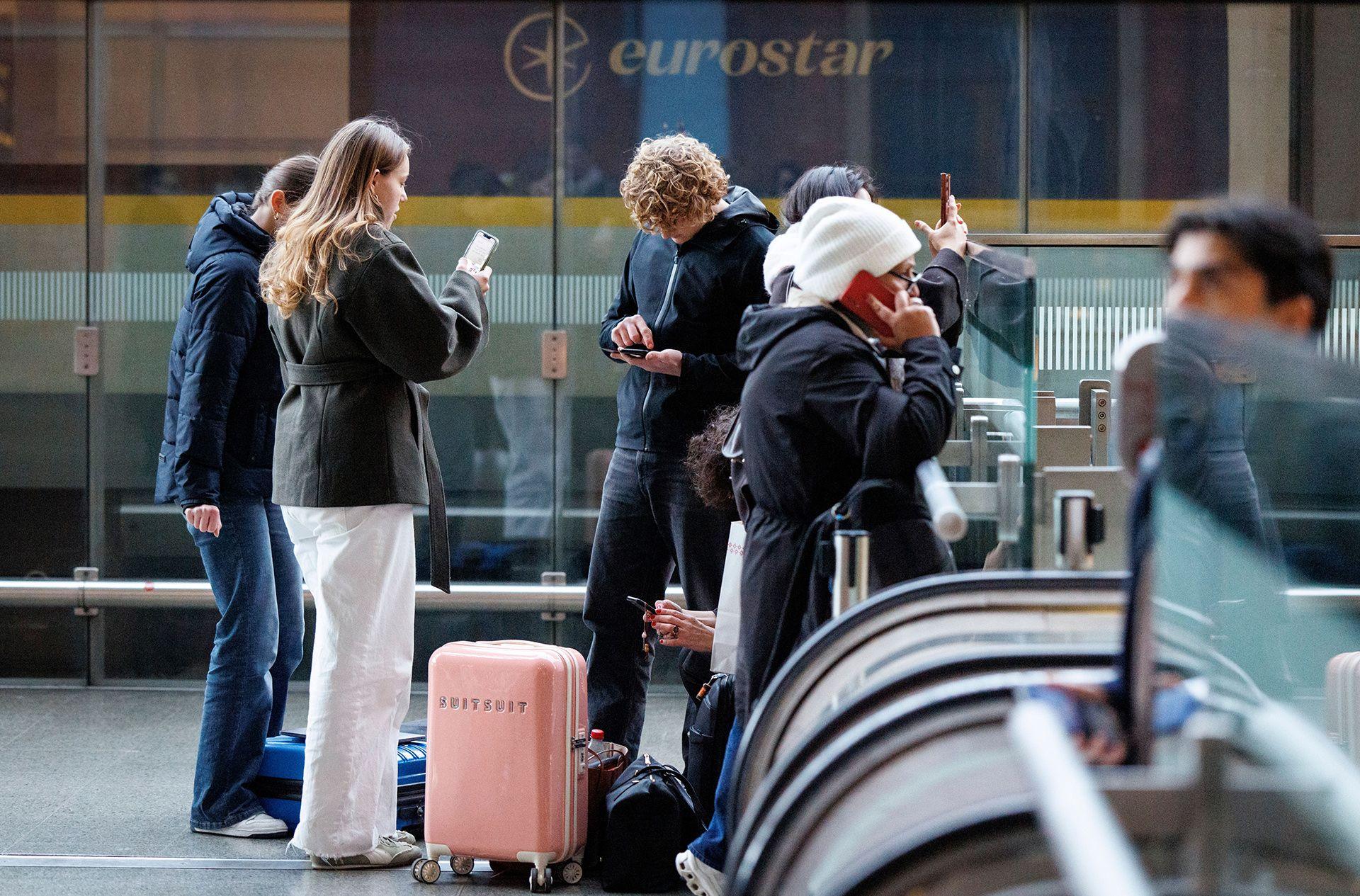
Despite these efforts, the current EES rollout has exposed vulnerabilities in the system. For example, in Greece, British visitors are temporarily exempt from biometric checks during the summer peak, a decision that underscores the EU’s flexibility in addressing challenges. As the system continues to be tested, airlines and airports are urging passengers to stay informed. Eurostar, for instance, has already installed 49 EES processing machines at London St Pancras, signaling a gradual rollout of the technology across key transportation hubs.
While the EES is still a work in progress, its implementation is reshaping the travel experience for millions. With summer holidays serving as a critical trial period, the system’s success will depend on how effectively it can balance efficiency with the need for accuracy. For now, travelers are advised to factor in extra time, as delays remain a possibility at certain points of entry. As the EU refines its approach, the hope is that the system will eventually streamline the process, making cross-border travel faster and more reliable for all users.