
Author: William Taylor – constantvpn.com

  • Lizzo ‘grateful’ after judge dismisses lawsuit against production company

    Lizzo ‘grateful’ after judge dismisses lawsuit against production company

    US District Judge Clears Lizzo’s Production Company of Workplace Harassment Claims

    Constantvpn.com – A federal judge in Los Angeles has dismissed the final set of workplace allegations filed against the touring and production entity of Grammy-winning pop star Lizzo, bringing a prolonged legal chapter to a close. The ruling, issued by District Judge Fernando L. Aenlle-Rocha on Tuesday, eliminates the remaining claims brought by Asha Daniels, a former wardrobe assistant who worked briefly on the singer’s Big Grrrl Big Touring operation in 2023.

    Daniels had alleged she endured a pattern of mistreatment during her short tenure, including what she described as “degradation, forced physical labor, denial of medical care, sexual harassment, and racial harassment.” The complaint, originally filed in September 2023, sought to hold the company accountable under federal employment-discrimination and disability statutes. With this week’s dismissal, no actionable claims remain against the production entity.

    The Judge’s Reasoning

    In his written opinion, Aenlle-Rocha found that Daniels failed to point to any specific conduct by company personnel that would establish a workplace environment of “general hostility to women” or evidence of “disparate treatment of men and women.” The judge characterized the alleged incidents as, in his words, “inappropriate and unprofessional,” yet concluded they fell “within the scope of what the Supreme Court has held to be outside the protection” of federal anti-discrimination law — essentially categorizing them as the “ordinary tribulations of the workplace” that courts have long declined to regulate.

    The ruling also addressed a particular episode in which Daniels claimed her foot was run over by a heavy clothing rack on tour. The judge acknowledged the court’s obligation not to “minimise or disregard the pain” she experienced, but determined that the resulting injuries “do not qualify as disabilities” under the Americans with Disabilities Act, thereby foreclosing that statutory theory of liability.

    Lizzo’s Response

    The singer, whose legal name is Melissa Viviane Jefferson and who is widely known for hits such as “About Damn Time,” took to Instagram to address the outcome. She described herself as “relieved” and pledged to keep contesting every allegation directed at her personally or at her businesses.

    “The truth matters to me more than anything and told y’all I will not settle and will continue to fight every vicious claim that has been made against me and my businesses.”

    In the same post, she thanked her legal team, reaffirmed her intention to use her public platform to “spread positivity and light to the world,” and closed by sending love to her fanbase.

    Broader Context of the Litigation

    This dismissal is the latest development in a series of employment-related suits that have shadowed Lizzo’s touring operations since late 2023. Earlier in the same case, Aenlle-Rocha ruled in 2024 that Daniels could not name the singer herself as an individual defendant, narrowing the suit to the corporate entity Big Grrrl Big Touring Inc. That procedural move preserved the company as the sole remaining target of the complaint until this week’s substantive dismissal.

    Separately, three former tour dancers filed their own suit alleging sexual harassment during the same tour cycle. Lizzo’s representatives have denied those claims. A distinct set of allegations — specifically accusations of fat-shaming — was also part of the broader litigation and was independently dismissed by a judge in 2025, further trimming the scope of outstanding disputes.

    What the Ruling Signals for Celebrity Employment Law

    The decision underscores a recurring theme in workplace litigation involving high-profile entertainers: courts draw a firm line between conduct that is genuinely unpleasant and conduct that rises to the level of statutory discrimination or disability discrimination. Federal anti-discrimination statutes, including Title VII of the Civil Rights Act and the ADA, require plaintiffs to demonstrate more than isolated rude or physically uncomfortable episodes. They must show a pattern or environment that would lead a reasonable person to perceive the workplace as hostile on the basis of sex, race, or disability.

    For touring musicians and their production companies, the ruling reinforces that brief, transient employment relationships — common in the live-music industry, where wardrobe staff, dancers, and technicians rotate through multi-week tours — carry particular evidentiary challenges. A plaintiff who worked only a short segment of a tour must still articulate concrete, repeated acts tied to a protected characteristic to survive a motion to dismiss.

    Industry observers note that while the ruling clears the current docket, it does not foreclose future claims should new evidence emerge or should a different plaintiff articulate a stronger factual record. The entertainment sector’s reliance on short-term, high-pressure touring crews continues to make workplace-conduct disputes a recurring feature of celebrity litigation, and courts will likely continue to apply the same demanding standards articulated here.

    As of publication, representatives for both Lizzo and Daniels had not issued additional public statements beyond the singer’s Instagram remarks.

    Frequently Asked Questions

    What is Lizzo grateful after judge dismisses lawsuit?

    Lizzo grateful after judge dismisses lawsuit is the main topic of this guide. The article explains the context, practical details, and next steps readers should understand.

    Why does Lizzo grateful after judge dismisses lawsuit matter?

    Lizzo grateful after judge dismisses lawsuit matters because readers are looking for a useful answer, not just a short summary. Good content should match search intent and help them decide what to do next.

  • Ski Sunday to end after nearly 50 years

    Ski Sunday to end after nearly 50 years

    A Landmark Era of British Winter Sports Broadcasting Closes

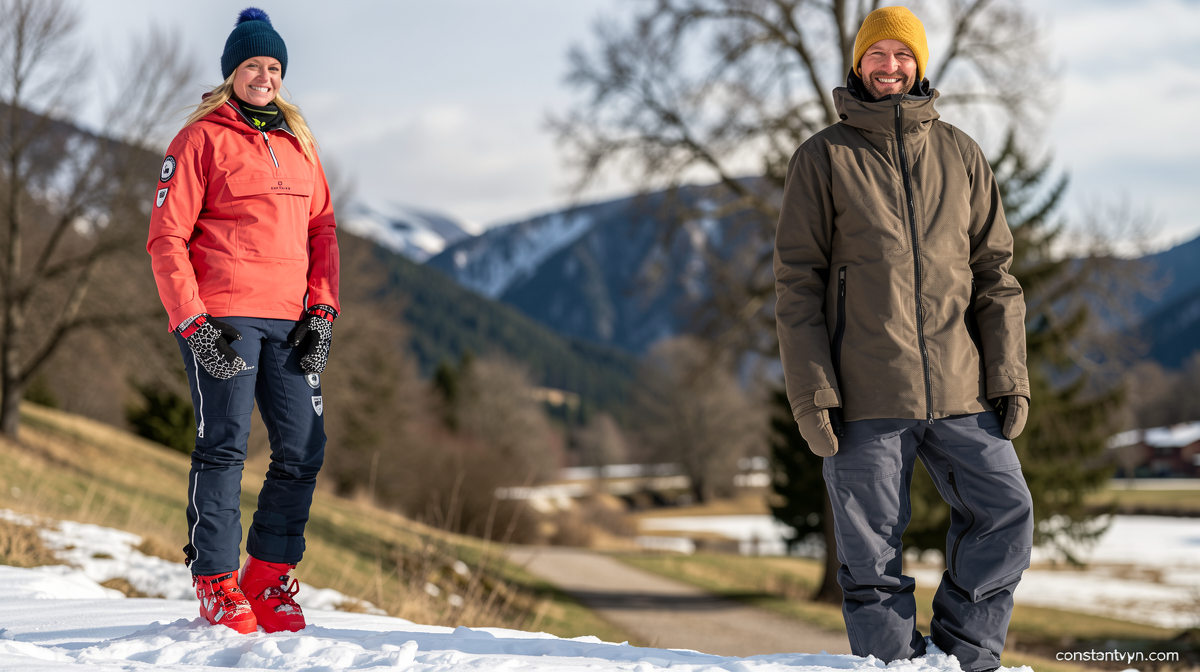
    Constantvpn.com – The long-running television show that carried British audiences through decades of alpine skiing, snowboarding, and other cold-weather competition will cease production following nearly five decades on air. The programme, which first hit screens in 1978, has been a fixture of the winter television schedule for generations of viewers who tuned in to watch the season’s most dramatic moments from the slopes. Its cancellation marks the end of an era in how the UK consumed live winter sports coverage.

    Five Decades on the Slopes

    Since its debut in the late 1970s, the show served as the primary weekly window into international winter sports for millions of households across Britain. At a time when satellite feeds and streaming platforms were nonexistent, the programme compiled and narrated the most compelling action from the FIS Alpine Ski World Cup, snowboard events, and other winter disciplines, packaging them into a single broadcast slot that became a ritual for sports fans during the cold months. Over roughly 48 years of transmission, the show witnessed the rise of countless athletes, the evolution of equipment and technique, and the transformation of winter sports from niche pursuits into globally televised spectacles.

    The decision to wind down the format arrives amid a broader reshaping of how audiences consume sports content. Viewers increasingly fragment their attention across digital platforms, short-form video, and on-demand services, reducing the reach of traditional scheduled television. Coupled with the need to meet internal savings targets, the broadcaster has concluded that the weekly compilation model no longer delivers sufficient value relative to its cost.

    The Final Presenting Duo

    The most recent iteration of the show paired veteran sports commentator Ed Leigh with former British alpine skier Chemmy Alcott, who stepped into the lead co-presenter role in 2021. Alcott brought firsthand competitive experience to the analysis, having represented Great Britain at multiple Winter Olympics and World Championships before transitioning to broadcasting. Leigh, a long-standing voice in British sports media, provided continuity and institutional knowledge across the programme’s final seasons. Together they represented the last chapter of a presenting lineage stretching back to the show’s inception.

    Official Rationale

    In explaining the rationale for ending the format, a statement from the sports division of the broadcaster framed the move as part of an ongoing review of how resources are allocated across platforms. The statement read:

    “Changing audience behaviours and the tough financial decisions needed to meet savings requirements mean BBC Sport must continually review how it delivers value for licence fee payers and serves audiences across all platforms. This decision forms part of that process.”

    The language underscores a tension familiar across public-service media: the obligation to justify expenditure to licence-fee contributors while simultaneously adapting to a media landscape where weekly television slots carry diminishing audience weight.

    Tribute from Leadership

    Philip Bernie, who heads the events division of the broadcaster’s sports arm, offered a more personal assessment of what the programme represented. He described the show as

    “a truly iconic programme”

    and acknowledged its cultural footprint:

    “Generations of viewers have enjoyed its coverage of the best in winter sports. We are enormously proud of the role it has played in bringing these moments to audiences across the UK, and extremely grateful to the brilliant people who have delivered them, not least the current outstanding team.”

    Bernie also acknowledged the difficulty of the decision while reaffirming the organisation’s ongoing commitment to winter sports coverage:

    “These decisions are never easy, but as audience viewing habits evolve and we work to deliver value for licence fee payers, we have to make tough choices. We remain committed to bringing audiences the very best of winter sport, above all at the Winter Olympics, across BBC Sport’s platforms.”

    What Changes for Viewers

    The cancellation does not eliminate winter sports coverage entirely. The broadcaster has signalled that Olympic Games coverage, in particular, will continue to receive substantial investment across its various distribution channels. However, the weekly compilation format that aggregated mid-season World Cup highlights into a single televised programme will not continue. Fans who relied on that weekly ritual will need to turn to other outlets, streaming services, or the broadcaster’s digital platforms for piecemeal coverage of individual events.

    The move also reflects a wider industry pattern: scheduled sports programming is being restructured around event-driven, on-demand, and multi-platform delivery models. The fixed weekly slot, once the backbone of sports broadcasting, is giving way to flexible formats that follow the audience rather than the other way around. For a programme that defined how an entire nation watched winter sports for half a century, that shift represents not merely an editorial decision but a cultural turning point in British sports media.

    As the final edition airs, the show’s legacy will be measured not only in broadcast hours but in the memories of viewers who grew up with its commentary, its slow-motion replays of downhill crashes, and its annual countdowns to Olympic qualification. Nearly fifty years of winter sports storytelling, distilled into a single weekly appointment, now draws to a close.

    Frequently Asked Questions

    What is Ski Sunday to end after nearly 50?

    Ski Sunday to end after nearly 50 is the main topic of this guide. The article explains the context, practical details, and next steps readers should understand.

    Why does Ski Sunday to end after nearly 50 matter?

    Ski Sunday to end after nearly 50 matters because readers are looking for a useful answer, not just a short summary. Good content should match search intent and help them decide what to do next.
  • Emergency measures needed to stop teachers quitting, say Lib Dems

    Emergency measures needed to stop teachers quitting, say Lib Dems

    Teacher Exodus Looms as Liberal Democrats Demand Emergency Intervention

    Constantvpn.com – As English schools prepare to reopen their doors for the new academic year, a fresh survey has painted a stark picture of a profession teetering on the edge of collapse. Nearly half of the educators polled across England intend to walk away from the classroom within five years, while one in ten are already counting down fewer than twelve months before they exit the profession entirely. The Liberal Democrats have seized on these findings to declare that the education system faces an “existential crisis” in retaining its workforce, and they are pressing the incoming Education Secretary to act before the autumn term deepens the damage.

    What the Survey Reveals

    The poll, carried out in collaboration with the National Education Union (NEU) and the Association of School and College Leaders (ASCL), reached more than 900 teachers, headteachers, and Special Educational Needs Coordinators (SENCOs) working across England. Respondents were asked how long they intended to remain in teaching. The answers were sobering: almost half of those currently in post were weighing departure within five years. Over three-quarters of all respondents — including former teachers who had already left — reported feeling “frequently or constantly burnt out” during their time in the profession.

    The drivers were consistent. Marking backlogs, lesson-preparation demands, and an ever-expanding administrative load were cited as squeezing teachers out of actual classroom time. The cumulative effect, participants described, was a profession where the work consumed every waking hour and left little room for recovery.

    A Political Call to Arms

    Caroline Voaden, the Liberal Democrats’ schools spokesperson, framed the findings as evidence of a government that is “not listening” to the people who deliver the nation’s education. Her argument was blunt: society depends on teachers to shape the next generation, and the minimum obligation owed to them is ensuring they actually want to return after the summer break.

    “We rely on teachers to educate our children, the least we can do is make sure they want to come back after the summer,” Voaden said.

    The party’s proposed emergency package, which it wants introduced as Lucy Powell’s first act in the Education Secretary’s chair, centres on several measures. The government would be required to fund the full cost of teacher pay rises rather than drawing on existing school budgets. It would also need to enforce the legally mandated working hours that teachers are already entitled to, introduce reasonable caps on overtime, and compel every school to adopt flexible-working policies.

    The pay context matters here. From September, teachers in England will see their salaries rise by 3.5 per cent, with a further 3 per cent increase scheduled the following year. Under current arrangements, half of that increase is absorbed from school budgets already stretched thin by years of austerity-era funding shortfalls. The Liberal Democrats argue this mechanism effectively taxes schools to subsidise a pay award, deepening the very pressures that push teachers out.

    Notably, the party did not specify where the additional funding would originate, leaving the fiscal mechanics of its proposals open to question.

    The Government’s Counter-Narrative

    The Department for Education pushed back on the alarmist framing. A spokesperson acknowledged that teachers perform “an incredible job” and pledged to match their dedication with appropriate support. The department pointed to statistics showing that last year recorded one of the lowest rates of teachers leaving the profession since 2010, alongside a record number of educators returning to classrooms.

    “Last year saw one of the lowest rates of teachers leaving the profession since 2010, and a record number of teachers returning to the classroom, but we know there’s more to do,” the spokesperson said.

    The department also highlighted its own interventions: pay awards totalling almost 17 per cent over two years, funding to improve maternity pay, and targeted measures aimed at normalising flexible working and keeping workloads at manageable levels.

    A Decade of Pressure

    The retention problem is not new. In 2019, the NEU reported that four in ten teachers were contemplating quitting, citing “huge workloads and excessive accountability.” That figure predated the pandemic-era disruptions that further strained an already fragile system. Daniel Kebede, general secretary of the NEU, described the current state of affairs in uncompromising terms.

    “After over a decade of austerity and chronic underfunding in our schools the system is on its knees,” Kebede said. “The new academic year is the perfect time for Andy Burnham to signal a fresh start for our schools. That means fully funding the pay award and properly funding all our schools and colleges to stem the recruitment and retention crisis and give children the education they deserve.”

    The NEU’s language underscores a broader structural argument: that successive governments have treated teacher pay and school funding as variables to be managed within fixed budgets, rather than as inputs requiring sustained investment. The result, critics contend, is a profession where the most talented and committed educators are systematically worn down and replaced by those with fewer options — a slow erosion of quality that compounds year after year.

    Why the Timing Matters

    The new term represents a narrow window. Teachers who are already exhausted enter September carrying the accumulated fatigue of another summer of preparation. If the signals from Westminster remain ambiguous — pay rises partially funded by schools, overtime unregulated, flexible working optional rather than universal — the survey’s projections of mass departure within five years become not predictions but plans. The Liberal Democrats’ intervention, whatever one thinks of its fiscal specifics, forces a question that the department’s statistics alone cannot answer: whether the profession’s most experienced practitioners will still be in the classroom when their pupils need them most.

    Frequently Asked Questions

    What is Emergency measures needed to stop teachers?

    Emergency measures needed to stop teachers is the main topic of this guide. The article explains the context, practical details, and next steps readers should understand.

    Why does Emergency measures needed to stop teachers matter?

    Emergency measures needed to stop teachers matters because readers are looking for a useful answer, not just a short summary. Good content should match search intent and help them decide what to do next.
  • This actor was told he had Alzheimer’s, now he’s performing a one-man show

    This actor was told he had Alzheimer’s, now he’s performing a one-man show

    An 85-Year-Old Actor Walked Into Rehearsals That Hadn’t Started — Then Decided to Take a London Stage Alone

    Constantvpn.com – For four consecutive days in early summer, Peter Marinker arrived at a theatre expecting to rehearse a play. The sessions simply were not scheduled. His mind, scrambled by dementia, had stitched together the wrong dates and conjured obligations that did not exist. He walked in, confused, to empty rooms. That small, bewildering episode became, in retrospect, the quiet overture to something far more audacious: a solo performance of Samuel Beckett’s Krapp’s Last Tape on a London stage.

    Marinker, now 85, is not a name most younger audiences will recognise from a face on screen. His career has been built largely in the voice — narrating radio dramas, lending his baritone to video games, and dubbing characters in major films including Labyrinth and Paddington in Peru. On camera he appeared as the American president’s adviser in Love Actually and as one of the passengers aboard flight 93 in the drama United 93. But it was in the theatre, in 2023, that the cracks first became visible. He was playing Gandalf in a stage adaptation of The Lord of the Rings when he felt himself, in his own words, “switching off.” An understudy stepped in to finish the run. MRI scans and a battery of neurological tests followed. Two years later, the diagnosis landed: Alzheimer’s disease.

    Acceptance, Then Laughter

    “I just had to accept it. It explained why I kept losing things and I started laughing at myself, at all the other silly things I do again and again.”

    That wry self-mockery has become a kind of compass for how Marinker navigates daily life now. It also shaped his response when, earlier this year, a phone call arrived from an old collaborator. Dave Wybrow, director of the Cockpit Theatre in London, had been thinking about the play and about the actor simultaneously. The idea was to stage Krapp’s Last Tape, Beckett’s ferocious one-man piece in which an ageing writer sits in darkness, replaying tape recordings of his younger self and confronting a catalogue of regrets, abandoned ambitions, and small cruelties. Wybrow, whose own mother lived with memory impairment in her final years, saw in the pairing something more than a casting decision.

    “It’s a dynamite show and a dynamite piece of writing.”

    A Production Built Around the Diagnosis

    Rehearsals opened at the end of June, deliberately earlier than a typical run would require, to give Marinker additional time to embed the text. The production team assembled a support architecture that would be invisible to the audience but essential to the performance: a stage manager stationed beside the set for the duration of each show, autocue screens positioned at intervals around the theatre, and a discreet earpiece worn by Marinker so that a prompt could reach him the instant a line slipped. Wybrow is careful to frame these measures not as concealment but as collaboration.

    “This is not about covering up his illness. It’s about showing that creative work, done collaboratively, is still more than possible after a dementia diagnosis.”

    Marinker, for his part, reports that anxiety was never a factor in his decision to accept the role.

    “Dave asked would I like to do it, and I was just ‘Yes. Oh yes, yes, yes, yes!’”

    He concedes that opening-night nerves will arrive, but treats them as familiar territory — “just the adrenalin” — something he has managed across six decades of performance.

    The 1983 Tape

    This is not Marinker’s first encounter with the role. In 1983 he performed the same part, and the production team located reel-to-reel recordings of that performance. More than four decades later, those tapes will be woven into the new staging: the character on stage listens back not only to his younger self as Beckett wrote him, but to Marinker’s own younger voice, captured in 1983. The effect collapses the play’s already vertiginous temporal structure into something deeply personal — an actor hearing his own past self, decades and a diagnosis apart.

    Why the Script Survives When the Holidays Don’t

    The neuroscience behind this resilience is instructive. Alzheimer’s tends to strike the hippocampus and surrounding tissue in the temporal lobes early, impairing the formation and retrieval of episodic memories — the specific events, conversations, and names that make up a person’s autobiographical record. A family holiday, a friend’s face, a colleague’s name: these are the first casualties.

    But memories encoded through extensive repetition and long-term consolidation occupy different neural architecture. Tara Spires-Jones, professor of neurodegeneration at the University of Edinburgh and author of Fighting for Our Minds, explains that well-practised skills and deeply embedded verbal material can remain accessible long after newer memories have begun to dissolve.

    “Something stored in long-term consolidated memory is often easier to access than new memories that have just been formed.”

    This is why a person with advanced Alzheimer’s may still brew a cup of tea, sing the chorus of a song learned in childhood, or deliver a theatrical script rehearsed over weeks, even as other facets of daily recall have faded. Marinker’s four-decade relationship with the Krapp text, combined with intensive recent rehearsal, places the material squarely in that more durable territory.

    Stigma, Charity, and the Four-Day Run

    All proceeds from the four-night engagement at the Cockpit Theatre will go to the Alzheimer’s Society, the organisation that assisted Marinker in the period immediately following his diagnosis. The charity’s 2025 research highlighted a persistent social problem: 42 per cent of people living with dementia reported feeling ashamed of their symptoms. One in five said they had avoided seeking a medical diagnosis because they feared how friends and family would react. Stigma, the study found, remains a significant barrier to early intervention and to the simple act of asking for help.

    Marinker’s decision to perform — openly, on a London stage, with the machinery of support visible in principle if not in practice — is a small but pointed rebuttal to that shame. The play itself, written by Beckett in 1958, has long served as a mirror for ageing, regret, and the impossibility of escaping one’s own past. In Marinker’s hands, with the 1983 tapes humming in the background and an earpiece waiting quietly, it becomes something else as well: a demonstration that the boundary between diagnosis and creative life is not the wall many assume it to be.

    Frequently Asked Questions

    What is This actor was told he had Alzheimer?

    This actor was told he had Alzheimer is the main topic of this guide. The article explains the context, practical details, and next steps readers should understand.

    Why does This actor was told he had Alzheimer matter?

    This actor was told he had Alzheimer matters because readers are looking for a useful answer, not just a short summary. Good content should match search intent and help them decide what to do next.
  • Man Utd pay tribute to ‘proud Red’ officer who died in A66 crash

    Man Utd pay tribute to ‘proud Red’ officer who died in A66 crash

    Two Sons Lead Out Manchester United as Club Honors Fallen Officer

    Constantvpn.com – On a Sunday afternoon at Old Trafford, two young boys walked onto the pitch ahead of Manchester United’s Premier League clash with Ipswich Town. They were not chosen for their footballing ability or their connection to the club’s academy. They were the sons of PC Matthew Blades, a North Yorkshire police officer who had spent years cheering from the terraces at Old Trafford and who lost his life in a devastating road collision just weeks earlier. Their mother, Blades’ widow, sat in the stands alongside the children for the match.

    The gesture was one element of a broader tribute woven throughout the club’s match programme, which carried a written tribute to the officer. United had learned of his death “with great sadness,” the club stated, and chose to honour his memory in the most visible way available to them: by placing his family at the centre of the pre-match ceremony.

    “Matthew was a proud Red, a devoted family man and a police officer who dedicated his life to helping others.”

    The Crash on the A66

    Blades, along with his colleague PC Tom Clough, was killed in a head-on collision between their police vehicle and a car travelling the wrong way along the A66 near Middlesbrough. The crash occurred in the early hours of 22 August. Five occupants of the other vehicle, a Volkswagen Passat, were also killed. Their names and ages were released as part of the investigation: Michael Robert Cahill, 23; Jacob Matusiak, 23; Makai Saddington, 18; Theo Rae, 17; and Cole Robert Worthy, 17.

    The total death toll from the single incident stood at seven. In the weeks following the crash, police continued to build their case. Earlier in the week preceding the Old Trafford tribute, seventeen further people were arrested in connection with the investigation, pushing the cumulative number of arrests to twenty-four.

    A Footballer’s Second Life on the Touchline

    Blades’ bond with the game extended well beyond the spectator stands. He had served as a junior football coach at both Seaton Carew FC and FC Hartlepool, two small clubs rooted in the Teesside community. That dual role meant his absence was felt not only by the police force and his family but also by the young players who had trained under him and by the volunteer coaches who worked alongside him on Saturday mornings.

    At a Seaton Carew FC fixture against FC Hartlepool earlier in the week, supporters gathered to pay their respects. The two clubs, neighbours in the local league, shared the grief of a community that had lost one of its own.

    Tributes Across the Football Calendar

    The weekend’s fixtures carried the memory of both officers into several grounds. At Riverside Stadium, before Middlesbrough’s Championship match against West Bromwich Albion on Saturday, fans observed a minute’s applause in Blades’ and Clough’s names. Photographs of the two men were projected onto the stadium’s main screen during the silence.

    At Elland Road, where Leeds United hosted Brentford in a Premier League contest, match officials wore black armbands. The reason was personal: referee Tony Harrington had been a friend of PC Blades, and the gesture was his way of marking the loss.

    Together, these tributes illustrated how a single road death can ripple through an entire sporting community. The officers had been on duty, responding to their responsibilities, when the collision occurred. Their families, their colleagues, their football clubs, and the fans who had cheered them on all found ways to say goodbye within the structures of the game they loved.

    What the Club Said

    United’s programme tribute framed Blades not merely as a fan but as a man whose identity was inseparable from his service to others. The phrase “proud Red” captured the casual, lifelong attachment many supporters feel to a local club, while the description of him as someone who “dedicated his life to helping others” placed his police work at the centre of who he was.

    For the two boys who walked out ahead of the Ipswich match, the moment was inseparable from their father’s memory. They carried his name onto the pitch at Old Trafford, the same ground where he had sat week after week, season after season, watching the team he called his own. The club, in turn, ensured that his widow and children were not spectators in the ordinary sense but honoured guests at the heart of the event.

    The investigation into the A66 crash continues. With twenty-four arrests now recorded, police have signalled that they are pursuing every available line of inquiry into how a vehicle came to be travelling the wrong way on a major arterial road at that hour, and what sequence of events led to the collision. For the families of all seven victims, the answer remains the question that matters most.

    Frequently Asked Questions

    What is Man Utd pay tribute to proud?

    Man Utd pay tribute to proud is the main topic of this guide. The article explains the context, practical details, and next steps readers should understand.

    Why does Man Utd pay tribute to proud matter?

    Man Utd pay tribute to proud matters because readers are looking for a useful answer, not just a short summary. Good content should match search intent and help them decide what to do next.

  • Collapsed glacier likely caused devastating Nepal-Tibet floods, scientists say

    Collapsed glacier likely caused devastating Nepal-Tibet floods, scientists say

    Collapsed Glacier Likely Caused Devastating Nepal Floods

    Constantvpn.com – Scientists have concluded that a collapsed glacier likely caused devastating flooding along the Nepal-Tibet border, killing at least 177 people and leaving more than 800 unaccounted for. The initial assumption that an earthquake had triggered the disaster was overturned after the US Geological Survey identified the seismic signature as the result of a sudden glacial failure rather than tectonic movement. The finding sharpens the focus on how rapidly warming is destabilising the Himalayan cryosphere.

    How the Flood Unfolded

    On Wednesday, a wall of ice, rock, and water tore through a narrow valley, giving downstream communities seconds to react. Because the impact registered as a magnitude-5.2 seismic event, monitoring stations initially logged the episode as an earthquake. The USGS later clarified that the reading reflected the kinetic force of the collapsing ice mass striking the valley floor, not a tectonic rupture.

    Dr Simon Cook, a glaciologist at the University of Dundee, traced the likely source to the lower section of a glacier situated roughly 15 kilometres (9 miles) west of the worst-affected zone, near Langtang Lirung peak. His reconstruction indicates the ice failed and surged in a northwesterly direction before the valley’s topography funneled the debris westward downstream.

    The International Centre for Integrated Mountain Development (ICIMOD) described the event as potentially involving “an ice-rock avalanche originating from a high-altitude area.” That avalanche dumped a massive volume of ice and rock into the Lende Khola, a tributary of the Bhote Koshi river system, sending a surge of water, fine sediment, and enormous boulders racing downstream. ICIMOD monitoring data showed river levels downstream climbing between seven and nine metres within roughly 30 minutes; several water-level gauges in the corridor were destroyed or rendered inoperable.

    A Widening Pattern of Cryospheric Hazards

    The precise trigger for the glacier’s failure remains under investigation, but the broader trajectory is clear. An ICIMOD assessment released earlier this year found that glaciers across the Hindu Kush Himalaya are now shedding ice at approximately twice the rate recorded since 2000, amplifying the frequency and severity of downstream flooding, debris flows, and lake outburst events.

    Dr Cook pointed to comparable glacier-collapse floods in India, Switzerland, and Italy within recent years. The most devastating parallel is the 2021 Chamoli disaster in northern India, when a large fragment of a Himalayan glacier broke loose and killed roughly 200 people; scientists later calculated the released kinetic energy as equivalent to about 15 atomic bombs. Within the same Nepali region, a glacial lake in Tibet ruptured last year, illustrating how layered and interconnected these hazards have become.

    Mohd Farooq Azam, a specialist at ICIMOD, described the rising frequency of cryospheric hazards as now unmistakable.

    “The pace of change is so rapid that current efforts are struggling to keep up.”

    Dr Cook cautioned that attributing any single event to climate change is scientifically complex. Yet the aggregate pattern, he argued, points in one direction: a warming planet produces shrinking glaciers, accelerated snowmelt, and the thawing of centuries-old permafrost that partially holds mountainsides together — conditions that generate more landslides, debris flows, and catastrophic surges.

    Frequently Asked Questions

    Was the Nepal-Tibet flood caused by an earthquake? No. The US Geological Survey determined the seismic reading (magnitude 5.2) was generated by the impact of the collapsing ice mass, not by tectonic movement. The event is classified as a glacial collapse.

    How many people were affected? At least 177 deaths have been confirmed, and more than 800 people remain missing as of the latest official counts.

    What river system was involved? The debris entered the Lende Khola, a tributary of the Bhote Koshi river system, sending a surge downstream through steep-sided valleys.

    Is climate change linked to events like this? Scientists note that while single-event attribution is complex, the aggregate pattern of increasing glacier loss, permafrost thaw, and cryospheric hazards across the Hindu Kush Himalaya is consistent with warming-driven destabilisation.

  • People deserve to ‘feel safe’ after crash and fire

    People deserve to ‘feel safe’ after crash and fire

    Nine Lives Lost in One Week: Teesside Demands Answers After Crash and House Fire

    Constantvpn.com – Within the span of a single week, nine residents of the Teesside area were killed in two separate incidents — a wrong-way collision on a major arterial road and a residential blaze in a housing estate. The cumulative toll has prompted local leaders, elected representatives, and grieving families to demand not only answers but sustained structural change in how the area’s public services are resourced and protected.

    The Crash at South Bank

    On Saturday, a Volkswagen Passat travelling in the wrong direction along the A66 at South Bank, near Middlesbrough, struck a police vehicle. Both officers inside — PC Matthew Blades and PC Tom Clough — were killed instantly. Five young men occupying the Volkswagen also died: Jakub Matusiak, Makai Saddington, Theo Ray, Michael Robert Cahill, and Cole Robert Worthy. Families of the two officers have described them as heroes who gave their lives doing their jobs.

    The investigation into the circumstances surrounding the collision has widened considerably. Cleveland Police confirmed that 17 individuals, aged between 18 and 61, had been arrested across Teesside in connection with the lead-up to the crash. Charges span a range of offences, including possession of a firearm and membership of an organised crime group. A public fundraising campaign for the two fallen officers surpassed the one-million-pound mark within days of the tragedy.

    The Grangetown Fire

    Earlier in the week, on Wednesday, a house fire in Grangetown claimed two lives: Natalie McDonald, aged 34, and her seven-year-old niece, Valentina Foster. Cleveland Police reported that a 48-year-old woman was left in critical condition in hospital, while three further occupants sustained non-life-threatening injuries. Two men, aged 23 and 31, were arrested on suspicion of murder and remain in custody.

    The force stated it was “keeping an open mind” regarding the cause of the blaze and emphasised that it could not “rule out any links to wider organised crime at this time.” The family of Natalie McDonald and Valentina Foster have paid tribute to both women, asking for privacy as they process their loss.

    Council Response and Community Sentiment

    Redcar and Cleveland Borough Council leader Alec Brown convened what he described as an “urgent meeting” on Friday, bringing together councillors, police representatives, and social housing providers to coordinate a response. Speaking on Radio 4’s Today programme, Brown acknowledged that residents of parts of Middlesbrough and Redcar may feel isolated from the attention their communities receive.

    “I’m from an estate, from the same ilk. You live around people that may be suffering poverty or other social issues, it can be that uniform sort of consciousness that ‘we’re left behind’.”

    He went on to reassure residents directly:

    “But I can assure the people of Grangetown and South Bank – they’re as important to me as a people from any other state in the borough and we’re working tirelessly to ensure that they do feel safe in their own houses.”

    Brown’s central message was that people living in a town where nine lives have been lost in seven days deserve to “feel safe in their own homes.” The remark landed in a community already grappling with long-standing anxieties about personal security, housing conditions, and perceived neglect by central government.

    MPs Call for Funding Overhaul

    Five Labour MPs representing Teesside constituencies — Anna Turley, Luke Myer, Andy McDonald, Jonathan Brash, and Chris McDonald — issued a joint statement affirming that their communities deserved to “feel safe.” While welcoming the temporary deployment of officers from other police forces during the past week, they pressed for durable, long-term reinforcement of local policing and fire services.

    The MPs noted that residents had voiced “safety concerns” for “far too long,” a complaint that predates this week’s twin tragedies. Luke Myer singled out what he called a structural mismatch in how national funding formulas allocate resources to police and fire authorities.

    “We essentially have a metropolitan style of crime and also risk of fire but with a sort of rural-style funding. This is why we need to see a real overhaul of the funding formula.”

    His argument is that the density and character of organised-crime activity in Teesside — including firearm offences and gang-related violence — resemble those found in large metropolitan areas, yet the funding model treats the region as though it were a low-crime rural district. The result, he contended, is a chronic under-resourcing of the very officers and firefighters tasked with protecting residents.

    Broader Implications

    The convergence of two high-profile deaths in one week has intensified an ongoing debate about whether current policing and fire-service funding mechanisms adequately account for regional crime profiles. Teesside, home to roughly 400,000 people across Middlesbrough, Redcar, and surrounding towns, has experienced a sustained rise in recorded violent crime over recent years. Local authorities argue that without a recalibration of the national formula, short-term reinforcements will remain the only available response to escalating pressure.

    For now, the immediate focus remains on the ongoing investigations. Cleveland Police continue to hold suspects from both incidents, and the council’s urgent meeting is expected to produce a coordinated local action plan addressing housing safety, community policing visibility, and support services for affected families. The question posed by this week’s toll is not merely investigative but structural: whether the institutions charged with keeping residents safe are equipped, funded, and trusted enough to answer it.

    Frequently Asked Questions

    What is People deserve to feel safe after?

    People deserve to feel safe after is the main topic of this guide. The article explains the context, practical details, and next steps readers should understand.

    Why does People deserve to feel safe after matter?

    People deserve to feel safe after matters because readers are looking for a useful answer, not just a short summary. Good content should match search intent and help them decide what to do next.

  • Radiation link in flight attendant’s breast cancer, French court finds

    Radiation link in flight attendant’s breast cancer, French court finds

    Cosmic Radiation Named as Occupational Cancer Hazard in Historic French Court Ruling

    Constantvpn.com – A judgment delivered in the southwestern French town of Bayonne has established, for the first time in any national court, that cosmic radiation absorbed during high-altitude flight constitutes a recognised occupational carcinogen capable of causing breast cancer in airline cabin crew. The ruling centres on Sophie Lainault, a 59-year-old former Air France purser who spent three decades in the skies between 1989 and 2019, accumulating 12,600 flight hours — more than half of them during night operations. The court identified three distinct carcinogenic hazards arising from her profession: cosmic radiation, passive smoking aboard aircraft, and prolonged night-shift work. Smoking was permitted on Air France flights until the year 2000, meaning that for roughly the first eleven years of her career, Lainault was routinely exposed to secondhand tobacco smoke in the confined cabin environment.

    What the Ruling Means for Lainault

    Now in remission from her cancer, Lainault will be entitled to take early retirement with all subsequent medical treatment fully reimbursed through the French public health system. The classification of her condition as an occupational disease — a formal legal category in France that triggers specific compensation and healthcare entitlements — transforms what would have been a personal medical burden into a state-funded obligation. Her attorney, Elisabeth Leroux, framed the decision as a precedent that extends well beyond one woman’s case.

    “In France the link between breast cancer and certain hazards has been established for a number of professions, such as nurses … but this is the first time for an air-hostess,” said Lainault’s lawyer Elisabeth Leroux.

    Lawyers representing other cabin crew members have indicated that the Bayonne judgment clears the procedural path for a wave of analogous claims. At least 180 aircrew members are reportedly pursuing compensation through France’s Ministry of Defence after receiving cancer diagnoses, though the precise number of pending cases tied specifically to cosmic radiation exposure remains to be determined.

    The Science Behind the Decision

    Cosmic radiation — technically a flux of high-energy particles originating from the Sun and distant stars — penetrates the atmosphere more readily at cruising altitudes than at sea level. The Earth’s magnetic field provides a partial shield against these particles, but that shielding weakens dramatically near the magnetic poles. Long-haul routes departing Paris and traversing northern latitudes would have carried Lainault repeatedly through zones of elevated exposure, particularly during the polar passages common to transatlantic and transpolar flight paths.

    A study published this month by researchers at Harvard Medical School examined mortality data across more than 500 distinct occupations and found that flight attendants and pilots recorded the highest proportion of radiation-related cancer deaths of any profession surveyed. Approximately 6.9 per cent of deaths among flight attendants and 6.7 per cent among pilots were attributed to radiation-associated cancers. These figures exceeded those for nuclear technologists — workers routinely exposed to non-cosmic ionising radiation — who ranked only twelfth on the list, the authors noted.

    For the vast majority of passengers, however, the radiation dose received on a single flight is considered statistically negligible. The distinction between a one-off traveller and a crew member logging thousands of hours at altitude is central to the court’s reasoning: cumulative exposure over decades, compounded by the polar amplification effect, produces a biologically meaningful dose that a single transatlantic crossing never would.

    Expert Perspective on Individual Causation

    Jim Smith, professor of environmental science at the University of Portsmouth, cautioned that attributing any single case of cancer to radiation exposure remains scientifically uncertain.

    “Current radiation protection guidance assumes that any small dose can potentially cause cancer, but the lower the dose the lower the risk. From the known cosmic ray dose to air crew, and based on this hypothesis, we might expect that air crew regularly flying at high altitudes would have a small additional risk of cancer,” said Prof Smith.

    His remarks underscore the probabilistic nature of the court’s finding: the judgment does not declare that radiation definitively caused Lainault’s tumour in isolation, but rather that it constituted one of several recognised occupational hazards contributing to her disease, satisfying the evidentiary threshold France’s occupational-disease framework requires.

    Air France’s Position

    The airline stated that it had played no role in Lainault’s legal proceedings and had not reviewed the court’s written reasoning before commenting. In a brief statement, the carrier emphasised its commitment to employee welfare.

    “The health and security of our staff is an absolute imperative. Every employee has a medical accompaniment that goes well beyond the regulatory minimum,” Air France said.

    Broader Implications for Aviation and Occupational Health Policy

    The Bayonne decision arrives at a moment when the aviation industry is already grappling with workforce-health questions raised by long-haul scheduling, circadian disruption, and cabin-pressure environments. By formally naming cosmic radiation as an occupational carcinogen for flight crews, the ruling creates a template that other jurisdictions may examine. France’s occupational-disease system, which requires employers or the state to fund treatment once a condition is classified, differs from common-law tort approaches used in Anglophone countries, but the scientific rationale underpinning the judgment — cumulative high-altitude particle exposure exceeding background levels — is jurisdiction-neutral.

    For the roughly 1.5 million flight-crew members worldwide, the ruling carries a message that extends beyond compensation: the hazards of the job are not limited to turbulence, fatigue, or ergonomic strain. The invisible particle flux that saturates the upper atmosphere during every polar transit is now, in French law, a named occupational risk factor for breast cancer. Lainault herself expressed a wish that the decision emboldens colleagues who have hesitated to seek recognition.

    “My dearest wish is that the decision encourages other women who up until now have not had the courage to take this step,” Lainault said.

    Whether the Bayonne precedent will be cited in subsequent French proceedings, or whether it will inform occupational-health guidance issued by the International Civil Aviation Organization or national aviation authorities, remains to be seen. What is settled, at least within French jurisprudence, is that the sky above the polar routes is no longer a neutral backdrop to airline work — it is a workplace hazard, and the law now treats it as such.

    Frequently Asked Questions

    What is Radiation link in flight attendant s breast?

    Radiation link in flight attendant s breast is the main topic of this guide. The article explains the context, practical details, and next steps readers should understand.

    Why does Radiation link in flight attendant s breast matter?

    Radiation link in flight attendant s breast matters because readers are looking for a useful answer, not just a short summary. Good content should match search intent and help them decide what to do next.
  • Yellow warnings remain in force as rain and thunderstorms hit parts of UK

    Yellow warnings remain in force as rain and thunderstorms hit parts of UK

    UK Faces Back-to-Back Thunderstorm Warnings as Weeks of Drought Meet Sudden Downpours

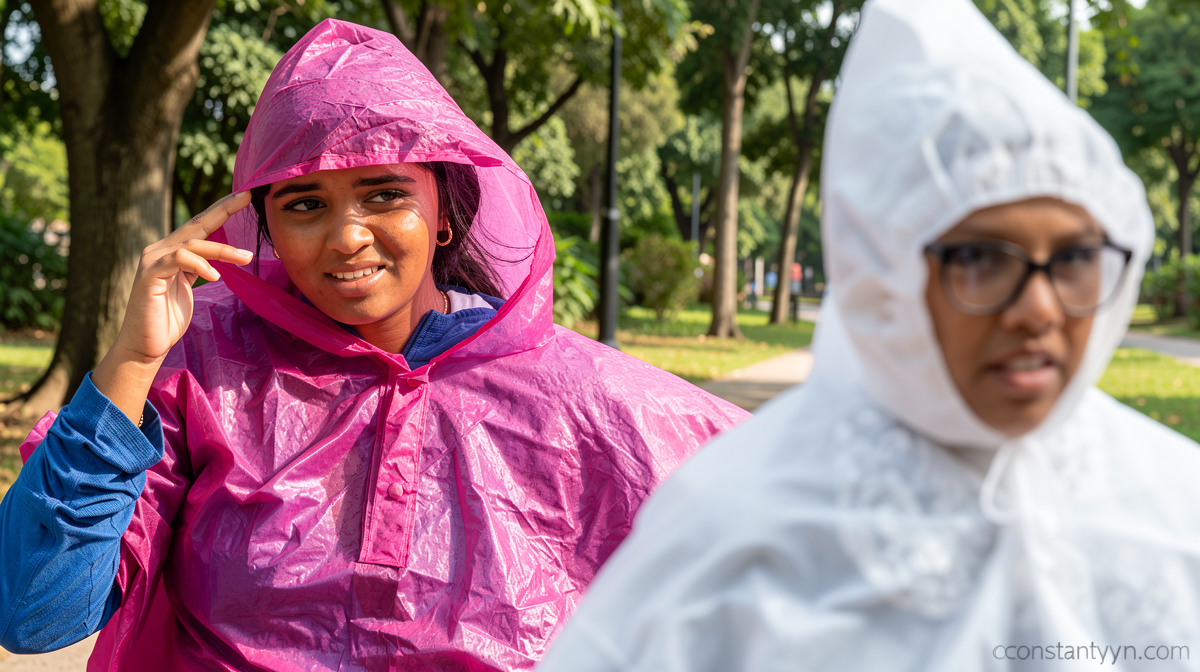
    Constantvpn.com – Parts of England and Wales are bracing for a second consecutive day of severe thunderstorms, with the Met Office maintaining yellow weather warnings through Wednesday evening and extending them into Thursday. The warnings, valid until 22:00 BST on Wednesday and again from 06:00 to 22:00 BST on Thursday, cover a broad stretch of northern and eastern Wales, north-west England, the Midlands, and sections of eastern and southern England. The combination of prolonged dryness and sudden intense rainfall creates conditions where flash flooding can develop rapidly, even in areas that have seen almost no precipitation for weeks.

    What the Storms Will Deliver

    After a morning of scattered cloud and light rain, sunny intervals are expected to break through across the warning zone. However, those brief spells of sunshine will give way to scattered thundery downpours building through the afternoon. In the most affected locations, rainfall intensity could reach 20 to 30 millimetres (0.8 to 1.2 inches) within a single hour. Over a longer window of several hours, totals of 40 to 50 millimetres (1.6 to 2 inches) are not beyond the realm of possibility. Thunder, frequent lightning, and hailstones measuring one to two centimetres in diameter all accompany the heaviest cells.

    The unpredictability of these systems makes precise forecasting extremely difficult. Because showers develop in a hit-and-miss pattern, two towns separated by only a few miles may experience radically different outcomes: one drenched by a flooding downpour while the other remains essentially dry. Weather applications, including hourly forecast icons, often struggle to capture the exact timing and location of individual storm cells. Forecasters understand that the atmospheric ingredients are in place — warm, humid air across the UK colliding with a band of colder air aloft pushing in from the west — generating low pressure and instability. Yet pinpointing where and when the most violent cells will erupt remains akin to watching popcorn kernels in a pan: you cannot predict which kernel pops first, or whether some will never pop at all. Some storms will also develop overnight, meaning they may not appear in standard daily weather icons. Anyone planning outdoor activity should monitor hourly symbols and percentage rain chances rather than relying solely on the daily summary.

    Why the Dry Spell Makes This Dangerous

    The flooding risk is amplified by the exceptional dryness that has persisted across much of southern England. Brize Norton in Oxfordshire has accumulated just 0.4 millimetres of rain so far this August — less than one per cent of the monthly average. Its July total was a mere 1 millimetre. At Kew Gardens in London, July brought zero measurable rainfall, and August has yielded only 1.8 millimetres to date. When ground has been baked hard by weeks of sunshine, it loses its capacity to absorb water. Rainfall that would normally percolate into soil instead runs off almost instantly into drains, streams, and low-lying roads, producing flash flooding within minutes of a downpour beginning.

    Drivers should expect difficult conditions, with the realistic prospect of temporary road closures where water accumulates faster than drainage systems can cope. Large hail and frequent lightning add further hazards for anyone caught outside during peak storm activity.

    Thursday’s Second Round

    The following day brings another zone of thunderstorms, again concentrated over England and Wales. The Met Office’s Thursday warning anticipates widespread rainfall totals of 20 to 30 millimetres within three hours across the warning area, with some locations potentially reaching 50 millimetres in the same window. A smaller but significant risk exists for eastern-facing hills exposed to easterly winds, where 12-hour totals of up to 75 millimetres (3 inches) cannot be ruled out — a figure that would carry a substantial flood risk. Gusty winds may accompany the Thursday storms, particularly across southern England in the morning hours. Hailstones of one to two centimetres, thunder, and lightning are all possible features of Thursday’s downpours.

    Northern Ireland will experience some showers over both days, though these are expected to be noticeably less intense, with reduced thunder activity. Much of Scotland should remain dry with sunny spells, although isolated showers are possible in the south-west later in the week. As the storm track drifts northward, showers reaching southern Scotland and Northern Ireland are likely to weaken considerably.

    Context: A Week That Changes the August Picture

    For regions that have endured an almost rainless August, the coming days could deliver more precipitation than has fallen in many weeks. The contrast between the preceding dry spell and the sudden intensity of these storms is what elevates the flood risk beyond what the raw rainfall totals alone would suggest. Residents in low-lying areas, near river crossings, or in locations with known drainage vulnerabilities should check local flood guidance and plan travel accordingly. The combination of saturated-surface runoff, overwhelmed urban drainage, and the sheer speed at which convective storms deposit their rainfall makes this a scenario where minutes matter — not hours.

    Frequently Asked Questions

    What is Yellow warnings remain in force as rain?

    Yellow warnings remain in force as rain is the main topic of this guide. The article explains the context, practical details, and next steps readers should understand.

    Why does Yellow warnings remain in force as rain matter?

    Yellow warnings remain in force as rain matters because readers are looking for a useful answer, not just a short summary. Good content should match search intent and help them decide what to do next.
  • Rupert Grint to return to Harry Potter in Broadway play

    Rupert Grint to return to Harry Potter in Broadway play

    From Child Star to Broadway Father: Rupert Grint Reclaims Ron Weasley on Stage

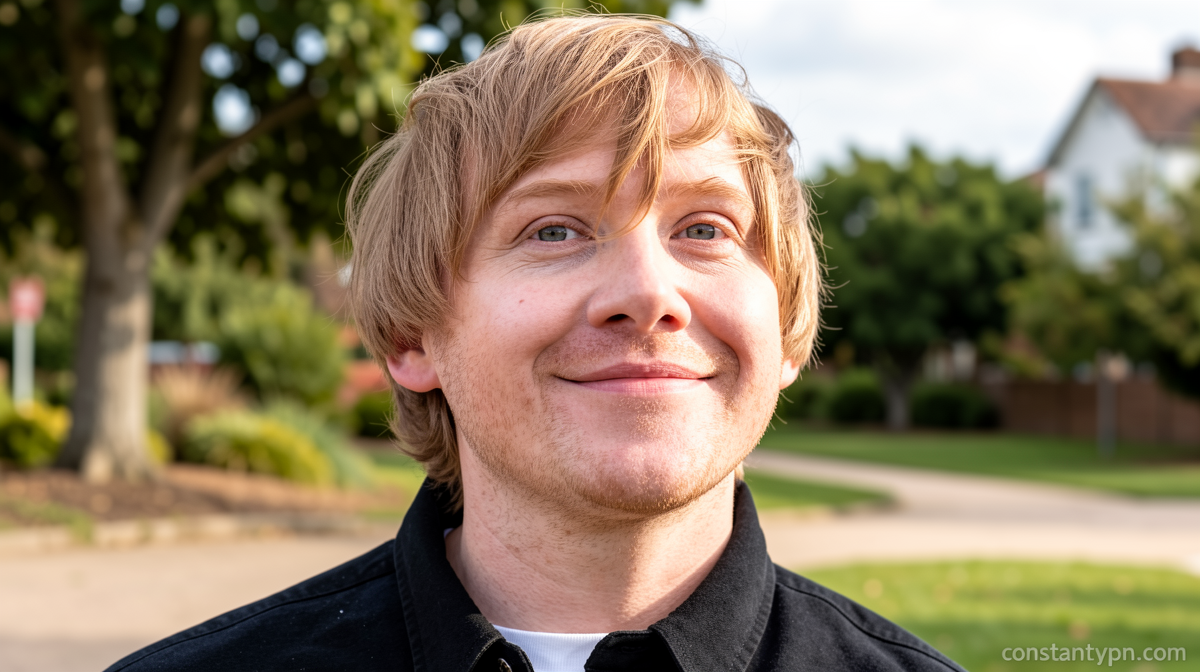
    Constantvpn.com – The actor who first donned the red-and-gold robes of Ron Weasley at eleven years old is preparing to walk back onto a New York stage as the grown-up version of the character. Rupert Grint, now 38, will join the Broadway production of Harry Potter and the Cursed Child for a four-month run beginning in February, stepping into a role he has inhabited, in one form or another, for over two decades.

    The play picks up the wizarding world nineteen years after the final battle depicted in the original novels and films. By that point, Ron and Hermione are married, their household includes a daughter enrolled at Hogwarts, and the trio of childhood friends navigates adult responsibilities alongside fresh magical threats. Grint’s casting places him squarely at the center of that domestic-and-adventurous hybrid, a far cry from the bumbling younger brother who first appeared on screen in 2001.

    A Full-Circle Moment

    In a statement released Wednesday, Grint framed the return as both deeply personal and professionally thrilling. He described Ron Weasley as having been woven into his identity since childhood and expressed eagerness to reconnect with the character at this particular life stage.

    “There is something so full-circle and so special about stepping back into Ron’s shoes now when we are both fathers; it is somehow both very familiar and completely new.”

    He added that the prospect of performing on Broadway once more, this time in a part that shaped so much of his formative years, filled him with genuine excitement.

    The fatherhood parallel is not incidental. Grint has spoken publicly about the emotional weight of playing a character whose fictional life now mirrors his own. Last November, he told reporters he saw no reason to distance himself from the Ron Weasley association, describing the link as something he embraced rather than resented.

    “I’m fine with that. I think it’s great.”

    On social media, he kept the announcement brief and playful: “Dusting off the old robes. New York – see you all in February.”

    Where He Fits Among the Original Trio

    Grint’s Broadway appearance makes him the sole member of the original film’s central three to revisit his role on stage. Emma Watson and Daniel Radcliffe, who played Hermione Granger and Harry Potter respectively, are not part of the production. Their characters were introduced to audiences in 2000, and all three actors appeared across the eight-film saga spanning 2001 to 2011.

    Co-star Tom Felton, who portrayed Draco Malfoy in the movies, is currently reprising that role in the same Broadway show. However, the two actors’ schedules do not overlap: Felton’s run concludes on 3 January, while Grint takes the stage on 2 February and is scheduled to perform through 30 May. Audiences will therefore not see the two former film colleagues share a scene.

    A Career Beyond the Wand

    Between the final Potter film and this Broadway engagement, Grint has built a varied acting résumé. Television credits include the comedy series Sick Note, the thriller Snatch, and the drama Servant. On stage, he previously appeared in the 2014 Broadway comedy It’s Only a Play, giving him prior experience with New York theatrical audiences before this return.

    His post-film career has also taken him through West End productions, establishing a pattern of moving between screen and stage that the producers of the Cursed Child production have explicitly acknowledged.

    Producers Frame the Casting as Continuity

    Sonia Friedman and Colin Callender, the show’s producers, issued a statement praising Grint’s earlier work and positioning the Broadway casting as an extension of his artistic journey rather than a nostalgic callback.

    “Ron Weasley has been a part of me since I was 11 years old and I can’t wait to meet him again in this stage of life.”

    Friedman and Callender noted that Grint’s film performances “defined for generations what it meant to be a loyal and brave friend even in the face of adversity and hardship.” They emphasized that he is not merely revisiting a past role but carrying forward a creative thread he began as a child, now enriched by two decades of additional experience across film, television, and acclaimed stage work in both New York and London.

    Broader Franchise Context

    The Cursed Child play, which premiered in London’s West End in 2016 before transferring to Broadway, has become a long-running theatrical phenomenon, drawing audiences who grew up with the books and films into a new chapter of the wizarding narrative. Its Broadway run has seen multiple casts rotate through roles over the years, and Grint’s addition marks the first time one of the original film’s lead actors has joined the stage version of the story.

    For fans who followed the eight-film saga from its 2001 debut through its 2011 conclusion, the prospect of watching the adult Ron Weasley performed by the same actor who played the boy offers a rare continuity that no other franchise property has replicated. The February start date means New York audiences will have several months of anticipation before the curtain rises on what Grint himself described as a role that is “both very familiar and completely new.”

    Frequently Asked Questions

    What is Rupert Grint to return to Harry?

    Rupert Grint to return to Harry is the main topic of this guide. The article explains the context, practical details, and next steps readers should understand.

    Why does Rupert Grint to return to Harry matter?

    Rupert Grint to return to Harry matters because readers are looking for a useful answer, not just a short summary. Good content should match search intent and help them decide what to do next.