Earthquake is devastating blow to Venezuela at time of uncertainty

Earthquake is devastating blow to Venezuela at time of uncertainty
Constantvpn.com – In the days following a powerful earthquake that struck Venezuela, rescues and appeals for aid have been ongoing. The toll of the disaster, which included twin tremors, continues to climb as the country grapples with its already fragile state. This crisis has compounded the challenges faced by Venezuelans, who have endured political instability, economic collapse, and a deepening divide between supporters of the ruling left-wing leader and opposition factions. The natural disaster has served as a stark reminder of the vulnerabilities exposed by years of mismanagement and underfunded public services.
Political Shifts Amid a Shaky Ground
Less than six months have passed since Nicolás Maduro, the leader who has governed Venezuela since 2013, was taken into US custody during a dawn raid on his presidential residence in Caracas. The incident, which occurred in January, marked a turning point in the nation’s political landscape. Following the raid, Maduro’s ally and former vice-president Delcy Rodríguez assumed temporary leadership, a move that has drawn criticism from opposition groups who had anticipated a shift in power to María Corina Machado. This transition has revealed both continuity and change in Venezuela’s governance structure.
Rodríguez’s address to the nation on state television channel VTV, delivered more than two hours after the earthquake, provided the first detailed update on the disaster’s impact. Prior to her speech, official information had been sparse, partly due to communication disruptions in heavily affected regions. However, analysts suggest that the limited reporting also stems from the Maduro administration’s control over media, which has led to the closure of numerous local radio stations and news platforms. These outlets, once vital for disseminating localized news, now operate under strict constraints, leaving citizens reliant on state-sanctioned narratives.
The Weight of Military Influence
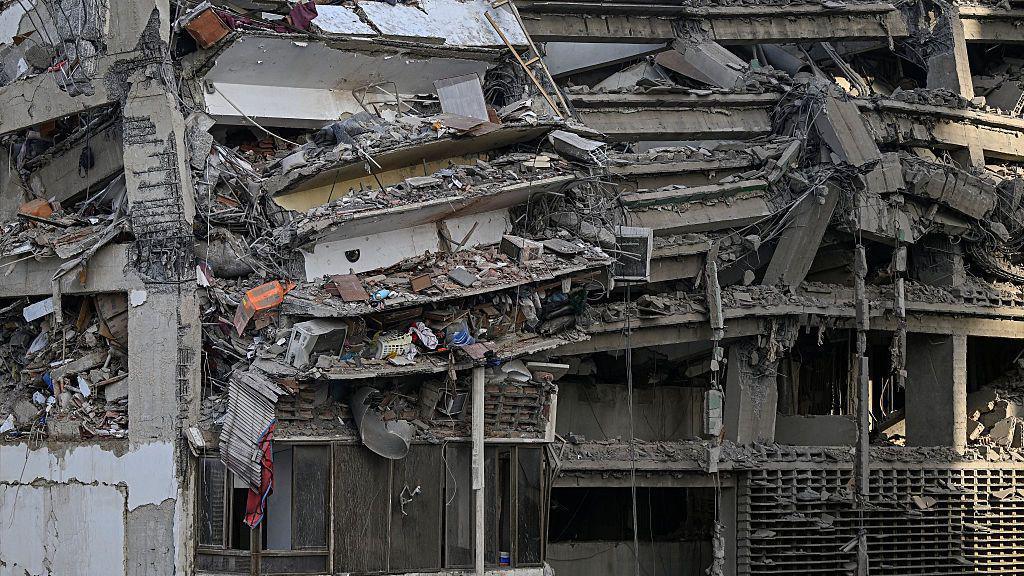
For over two decades, the military has held significant sway over Venezuela’s political and administrative systems. Key ministries, including housing and energy, have traditionally been managed by high-ranking generals, a legacy of Hugo Chávez’s rule and Maduro’s continuation of that system. This pattern has contributed to the country’s deteriorating infrastructure, with many public buildings and homes left in disrepair due to a lack of technical expertise and resources. The earthquake’s aftermath has laid bare the consequences of this reliance, as crumbling structures in Caracas and other cities collapsed under the weight of years of neglect.
Rodríguez’s recent appointments, however, signal a subtle shift. Under pressure from the Trump administration, she has replaced the general overseeing the housing ministry with a civilian architect and the electricity minister with an electrical engineer. These changes reflect a growing recognition of the need for specialized knowledge in managing essential services. Yet, despite such moves, the broader challenges of shortages and mismanagement persist. For example, the nationalization of the cement industry under Chávez led to a chronic shortage of materials, hindering critical repairs and increasing the risk of structural failures during the earthquake.
During Rodríguez’s address, she emphasized the importance of unity among Venezuelans, a call that resonated with a population deeply split between those loyal to Maduro and his predecessor, Hugo Chávez, and those who oppose his leadership. Her speech highlighted the nation’s resilience in the face of adversity, while also acknowledging the need for collective action to rebuild. The declaration of a state of emergency and the tasking of General Juan Ernesto Sulbarán, commander of the National Guard, to lead the response underscored the government’s reliance on military resources, even as it sought to bolster civilian oversight.
International Solidarity and Domestic Tensions
Rodríguez’s outreach to foreign governments for assistance has drawn attention to the evolving dynamics of Venezuela’s political relationships. She expressed gratitude to the Dominican Republic, El Salvador, and Chile, all of which are led by right-wing leaders, for their support. This gesture has been seen as a departure from Maduro’s earlier stance, which favored aid only from ideological allies. The United States, though a primary critic of Maduro’s regime, has also been highlighted as a key partner in the relief efforts, with Rodríguez noting their “constant contact” and “solidarity” in the wake of the disaster.
While the international response is commendable, it has also sparked debates about the implications of such support. Critics argue that accepting aid from right-leaning nations may signal a softening of the opposition’s stance, even as they continue to challenge the Maduro government. Meanwhile, supporters of Rodríguez see the moves as a pragmatic step toward stabilizing the country’s crisis. The earthquake, therefore, has become more than a natural disaster—it is a test of Venezuela’s ability to navigate both internal divisions and external pressures.
Analysts note that the disaster has exposed the fragility of Venezuela’s infrastructure, which has been further weakened by prolonged shortages of basic resources. The nation’s electricity supply, for instance, has suffered from years of underinvestment and corruption, with frequent blackouts disrupting daily life. Similarly, the housing crisis has deepened, as crumbling buildings and inadequate maintenance have left many families vulnerable. The earthquake’s destruction has forced a reckoning with these long-standing issues, highlighting the urgent need for systemic reforms.
Yet, the response to the disaster has also revealed the resilience of the Venezuelan people. Despite the devastation, communities have come together to aid one another, with volunteers and local leaders stepping in to organize search and rescue operations. This grassroots effort has been a counterpoint to the government’s centralized approach, showcasing the enduring spirit of a population that has faced immense hardship. As the days pass, the focus remains on recovery, but the path forward will depend on the government’s ability to address the root causes of its vulnerabilities.
Rodríguez’s leadership has been scrutinized for its effectiveness, particularly in light of the earthquake’s impact. While her actions have demonstrated a willingness to collaborate with international partners, the challenge of rebuilding lies in reconciling the country’s political fragmentation with the need for coordinated efforts. The disaster has also reignited discussions about the role of the military in governance, with some questioning whether the continued presence of generals in key positions has hindered progress in modernizing the nation’s institutions.
“The solidarity between our people and the international community is a beacon of hope,” Rodríguez declared during her speech, underscoring the importance of collective effort in overcoming the crisis. Her words, however, have been met with mixed reactions, as some view the aid as a temporary fix rather than a long-term solution.
As the search for survivors continues and the damage assessment expands, the earthquake has become a symbol of Venezuela’s precarious situation. The nation, already at a crossroads, now faces the daunting task of not only recovering from the disaster but also addressing the deeper structural issues that have plagued its development for decades. The road ahead remains uncertain, but the resilience of the Venezuelan people offers a glimmer of optimism amid the ruins.