
Author: Anthony Jones – constantvpn.com

  • Who are the free agents after transfer deadline day?

    Who are the free agents after transfer deadline day?

    After the Deadline: The Players Left Without a Club

    Constantvpn.com – The summer transfer window has shut its doors, and with it, the formal machinery of player movement grinds to a halt. Yet a quieter market persists beyond those closing dates. Players whose contracts have expired or been severed remain legally free to negotiate with any club, at any time, without a transfer fee changing hands. For teams operating under tight wage structures or seeking experienced depth without financial outlay, this pool of available talent represents a genuine opportunity. For the players themselves, the situation carries a different weight: uncertainty about the next chapter, sometimes compounded by injury, age, or off-field complications.

    Below is a survey of the most prominent names currently unattached to a professional club, spanning multiple continents, leagues, and career stages.

    The Saudi Disconnect

    The Saudi Pro League, which absorbed enormous spending power during the 2023–24 window, has also become a site of rapid contract turnover. Two high-profile departures this summer underscore how quickly the landscape can shift.

    Karim Benzema, the 2022 Ballon d’Or recipient, arrived at Al-Hilal in January after three seasons with Al Ittihad. Yet barely six months into that stint, his contract was terminated on 31 August. The arrival of attacking reinforcements Crysencio Summerville, Ollie Watkins, and Gabriel Martinelli appears to have reshuffled the hierarchy, leaving the Frenchman with just three appearances to his name this campaign before the split.

    Riyad Mahrez, the five-time Premier League champion, followed a similar trajectory at Al Ahli. The Algerian winger, who scored 37 goals in 122 appearances across all competitions since joining from Manchester City in 2023, saw his contract ended by the Saudi club. Indications point toward a continued stay in the league, with Al-Shabab reportedly close to completing a deal.

    Veterans at the Crossroads

    At the other end of the age spectrum, several players in their late thirties or forties find themselves navigating the final stretch of careers that once dominated European football.

    Sergio Ramos, now 40, has been without a club since departing Mexican side Monterrey in December 2025. He has not announced retirement, and some accounts suggest he still believes his physical condition permits elite-level competition. Earlier in the year, Ramos led a consortium attempting to acquire a controlling stake in Sevilla, his former club, though that bid ultimately failed.

    Jamie Vardy, 39, spent the 2024–25 season with Cremonese after thirteen years at Leicester City. Relegation to Serie B prompted the Italian club to release him. English Football League clubs including Wrexham, Sheffield Wednesday, and West Ham have all been linked with interest in bringing the striker back to domestic football.

    David Alaba, 34, departed Real Madrid in May after five seasons at the Santiago Bernabéu. His career résumé includes 12 league titles and four Champions League trophies. Manchester United were briefly the bookmakers’ favourite to sign the Austrian full-back this summer, yet no deal materialised. Alaba remains unattached.

    Dani Carvajal, also 34, has been a free agent since his Real Madrid contract lapsed in June. The Spanish right-back made 451 appearances across all competitions over 13 years at the club. He has not been linked with any new destination and has reportedly trained at the Spanish Football Federation’s facilities over the summer alongside fellow free agent Joselu.

    Younger Players in Transition

    Not every unattached player is a veteran. Several athletes in their twenties and early thirties find themselves between contracts for reasons ranging from injury to disciplinary matters to simple squad reshuffling.

    Jadon Sancho, 26, has endured a turbulent period since his £73 million move from Borussia Dortmund to Manchester United in 2021. He made only 30 Premier League appearances for United before spending the bulk of the last two and a half seasons on loan, most recently at Aston Villa following a subdued spell at Chelsea. Sancho has reportedly agreed terms with Brazilian club Palmeiras.

    Raheem Sterling, 31, was released by Feyenoord after just three months and eight appearances. The former Manchester City, Liverpool, and Chelsea winger is additionally set to appear in court next month to face dangerous-driving charges stemming from a May crash in which his car struck motorway barriers. Those close to the situation described to BBC Sport that Sterling has faced

    “an extremely tough couple of years.”

    Philippe Coutinho, 34, departed his boyhood club Vasco da Gama in February, explaining his departure by saying he was

    “tired mentally.”

    The Brazilian midfielder, who previously played for Liverpool and Barcelona, has not formally announced retirement and has previously been associated with a potential move to Major League Soccer.

    The Pogba Question

    Paul Pogba, 33, occupies a particularly unusual position. The former Manchester United midfielder has played very little football since his 18-month doping ban concluded in March 2025. He made just six appearances for Monaco after joining the French club last summer, and a succession of injuries led the club to terminate his contract last month, a full year before its scheduled expiry. At 33, with limited recent match fitness, Pogba’s marketability is diminished, yet his name still carries considerable weight in the transfer market.

    Other Notable Names

    Beyond the players detailed above, several additional former top-flight professionals remain unattached following the window’s closure. These include Jordan Ayew (34, formerly of Leicester City), Dele Alli (30, formerly of Como), Joselu (36, formerly of Al-Gharafa), Anthony Martial (30, formerly of Monterrey), and Conor Coady among others whose contracts have lapsed or been ended.

    For clubs, the free-agent pool offers a mechanism to bolster squads without triggering financial fair play constraints or competing in auction-style bidding wars. For the players, the calculus is starker: every week without a contract narrows options, erodes match sharpness, and raises the question of whether the next opportunity will arrive at all. The window may be closed, but the negotiations continue in quieter rooms.

    Frequently Asked Questions

    What is Who are the free agents after?

    Who are the free agents after is the main topic of this guide. The article explains the context, practical details, and next steps readers should understand.

    Why does Who are the free agents after matter?

    Who are the free agents after matters because readers are looking for a useful answer, not just a short summary. Good content should match search intent and help them decide what to do next.


  • Watch: BBC inside court as jury in Lindsay Clancy trial deadlocked

    Watch: BBC inside court as jury in Lindsay Clancy trial deadlocked

    Jury in Lindsay Clancy Murder Trial Fails to Reach Verdict After Four Days

    Constantvpn.com – The courtroom fell silent on Tuesday evening as the judge informed the jury panel that they had not reached a unanimous decision on the fate of Lindsay Clancy, the 36-year-old former nurse accused of murdering her three young children at their family home in 2023. After four full days of closed-door deliberation, the jurors were unable to agree on a verdict and were instructed to resume discussions the following morning.

    The case has drawn intense public attention, not only because of the devastating loss of three children, but because the defence has built its entire case around a single, deeply contested medical-legal question: whether Clancy was in a state of postpartum psychosis at the moment she killed her offspring, rendering her legally incapable of understanding the nature of her actions.

    The Charges and the Family Tragedy

    Clancy stands accused of three counts of murder. The killings took place at the family residence in 2023, and the children were found dead in their own home. The prosecution’s case rests on the straightforward fact that Clancy was present, that the children died, and that no other person was in the house at the time.

    What makes this trial legally unusual is the defence position. Clancy’s legal team has not attempted to argue that someone else killed the children, nor have they sought to cast doubt on the basic sequence of events. Instead, the defence contends that Clancy was experiencing a severe episode of postpartum psychosis — a rare but serious psychiatric condition that can develop in the weeks following childbirth — and that this condition robbed her of the mental capacity to know what she was doing was wrong.

    Postpartum Psychosis and the Law

    Postpartum psychosis affects roughly one to two women per thousand births. Symptoms can include hallucinations, delusions, extreme confusion, and a complete detachment from reality. In the most severe presentations, a mother may not recognise her own children or may act in ways that appear inexplicable to observers.

    In English criminal law, a defendant who was suffering from an “abnormality of mental functioning” at the time of the act may be found not guilty by reason of insanity, provided the condition caused them to not have the full appreciation of the nature and quality of their act, or to not know what they were doing was wrong. The threshold is high: the jury must be satisfied beyond reasonable doubt that the psychiatric condition was present and that it directly caused the lack of understanding. This is why the trial has become a careful examination of medical records, witness testimony about Clancy’s behaviour in the weeks before the killings, and expert psychiatric evidence.

    What Happened in Court on Tuesday

    The jury had been locked in the deliberation room since the close of evidence earlier in the trial. On Tuesday, they continued their discussions for several additional hours before ultimately reporting to the judge that they could not agree. The judge sent them home for the evening and directed them to reconvene the next morning, a standard procedural step when a jury is close but not yet unified.

    A journalist present in the courtroom gallery, Ana Faguy, described the visible tension in the room as the jury filed out. The atmosphere, she noted, was one of exhausted uncertainty — the kind of heavy, watchful silence that fills a courtroom when a verdict that should have been reached within hours has instead stretched into days.

    What Happens Next

    If the jury remains deadlocked when they return, the judge will typically issue a “Pitts direction,” reminding jurors of their duty to reach a unanimous verdict while also acknowledging that no juror should surrender a genuine, reasoned opinion merely to avoid conflict. In rare cases where deliberation continues without resolution over many more days, the judge may eventually discharge the jury, leading to a retrial.

    For Clancy’s family, for the wider community, and for the legal profession watching the proceedings, the outcome will carry weight well beyond this single case. A verdict of not guilty by reason of insanity would confirm that postpartum psychosis can, in extreme circumstances, meet the legal threshold for insanity in English law. A guilty verdict, by contrast, would signal that the jury was not persuaded the condition was present or sufficiently severe at the precise moment of the killings.

    The trial is expected to continue into the coming days, with the jury’s next session scheduled for the morning following the Tuesday adjournment. All eyes in the courtroom will be fixed on whether the twelve jurors can find common ground before the judge intervenes with further directions.

    Frequently Asked Questions

    What is Watch: BBC inside court as jury in Lindsay Clancy trial deadlocked?

    Watch: BBC inside court as jury in Lindsay Clancy trial deadlocked is the main topic of this guide. The article explains the context, practical details, and next steps readers should understand.

    Why does Watch: BBC inside court as jury in Lindsay Clancy trial deadlocked matter?

    Watch: BBC inside court as jury in Lindsay Clancy trial deadlocked matters because readers are looking for a useful answer, not just a short summary. Good content should match search intent and help them decide what to do next.
  • Kids eat free and loyalty points – six ways to eat out but not break the bank

    Kids eat free and loyalty points – six ways to eat out but not break the bank

    Stretching Your Dining Budget: Practical Strategies for Eating Out Without Financial Stress

    Constantvpn.com – The squeeze on household budgets has reached the restaurant table. YouGov’s most recent Dining Out report reveals that over one-third of British consumers have scaled back their restaurant visits, a shift driven by sustained pressure on food prices, energy costs, wages, and taxation. Restaurateurs point to these compounding expenses as the reason menu prices have climbed, and several high-profile chefs have publicly lobbied the government for relief measures. Yet the industry is responding not only by raising prices but also by deploying a growing arsenal of incentives designed to keep diners walking through the door. Understanding how those incentives work can make a meaningful difference to a household’s monthly food budget.

    Turning Surplus Food into Savings

    Before considering any discount scheme, the most immediate way to reduce food expenditure is to intercept meals that would otherwise be discarded. Apps such as Too Good To Go and Olio connect diners with restaurants, bakeries, and grocery outlets that have surplus food at the end of a service day. Customers purchase a mystery bag at a steep discount and collect it within a set window. The catch is uncertainty: you rarely know the exact contents until you arrive. Still, for households that need staples regardless, the savings accumulate quickly, freeing up cash that can be redirected toward an occasional full-price restaurant visit.

    Timing Your Visit for Maximum Value

    Restaurants face a structural problem: seats sit empty during shoulder hours. To fill those gaps, many venues now offer substantial reductions for diners who book outside conventional lunch and dinner peaks. First Table, operating across 21 UK cities as well as Ireland, New Zealand, and Australia, grants 50% off food when a customer reserves the very first or very last seating slot at a participating venue. The trade-off is a modest booking fee paid upfront. EatClub takes a different approach, extending up to 50% off the entire bill to walk-in customers who redeem an offer through its app at thousands of locations. The deepest discounts consistently cluster around off-peak windows.

    Shokofeh Hejazi, director of foresight and innovation at global trends agency The Food People, notes that earlier sittings carry an additional appeal beyond the price tag:

    “Earlier dining appeals because it tends to be quieter and calmer, people drink less and it allows them to get home sooner.”

    She adds that breakfast meetings, typically a single course, deliver comparable social time at a fraction of the cost of a full dinner.

    Family Meals During School Holidays

    When children are home from school, the per-head cost of a restaurant visit can spike. To counter that, a wide range of venues offer free or one-pound meals for kids dining alongside paying adults. The practice spans major chains like TGI Fridays, supermarket cafés operated by Morrisons and Asda, and even garden centres such as Dobbies. Some of these promotions are tied specifically to school holiday periods; others run year-round, making them a recurring option for families who dine out on weekends.

    Soft Launches: A Window into Higher-End Dining

    New restaurants frequently operate a “soft launch” phase lasting several weeks before their full public opening. During this window, menu prices are deliberately reduced to attract early diners and generate word-of-mouth. For budget-conscious eaters, this represents a cost-effective entry point into venues that might otherwise feel financially out of reach. Hejazi observes that some operators are extending the soft-launch period to build greater buzz, while others are converting the introductory pricing into a permanent weekday offer, particularly for quieter days like Mondays.

    “There’s access points for everybody in a lot of these places,”

    she advises, cautioning against the assumption that fine-dining-style venues are categorically beyond a modest budget.

    Loyalty Schemes and Recurring Perks

    Established restaurant groups maintain structured loyalty programmes that reward repeat visits with escalating benefits. Pizza Express Club, one of the most widely recognised schemes in the UK, moves members through bronze, silver, and gold tiers, unlocking perks that range from complimentary dough balls to hot and soft drinks on the house. Nando’s frames its programme around a chilli-based progression system. Tastecard takes a subscription model, charging an annual fee in exchange for discounts across hundreds of eat-in and takeaway locations nationwide. For diners who visit restaurants regularly, the cumulative value of these programmes can offset a meaningful share of annual dining expenditure.

    Supermarket Points as Dining Currency

    Weekly grocery shopping generates loyalty points that many households simply let expire. Converting those points into restaurant vouchers is a straightforward way to subsidise a meal out. Tesco Clubcard, for instance, allows members to exchange 50p of accumulated points for £1.50 in vouchers redeemable at participating Prezzo Italian venues. Prezzo is only one of several restaurant partners within the Tesco ecosystem, meaning the conversion pathway extends across multiple dining brands. For a family that shops at Tesco regularly, the points accrued over a month can cover a substantial portion of a family dinner.

    The Broader Picture

    These strategies do not eliminate the cost-of-living pressure that has pushed a third of the population away from restaurants. They do, however, redistribute the timing, frequency, and composition of dining expenditure so that households can maintain social and culinary routines without proportionally inflating their monthly outgoings. As the industry continues to negotiate with government over VAT treatment and energy costs, the incentive landscape is likely to evolve further. For now, the most effective approach combines several of the levers above: surplus-food apps for everyday meals, off-peak bookings for midweek dinners, loyalty programmes for habitual favourites, and supermarket-point conversions for the occasional splurge. Together, they transform dining out from a fixed-cost luxury into a flexible, manageable line item in the household budget.

    Frequently Asked Questions

    What is Kids eat free and loyalty points?

    Kids eat free and loyalty points is the main topic of this guide. The article explains the context, practical details, and next steps readers should understand.

    Why does Kids eat free and loyalty points matter?

    Kids eat free and loyalty points matters because readers are looking for a useful answer, not just a short summary. Good content should match search intent and help them decide what to do next.

  • Liberals sweep three seats in boost for Carney after trade tensions with US

    Liberals sweep three seats in boost for Carney after trade tensions with US

    Carney’s Liberals Sweep All Three By-Elections as Trade Showdown With Washington Reshapes Canadian Politics

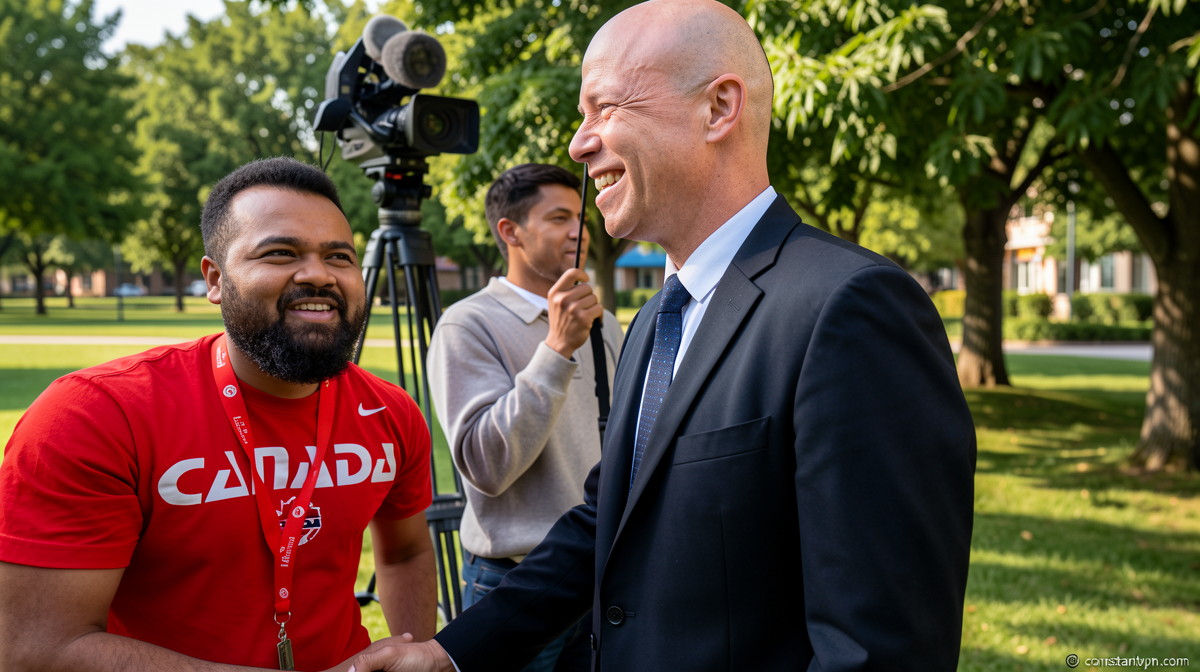
    Constantvpn.com – Prime Minister Mark Carney’s Liberal Party captured every one of the three parliamentary seats contested in Monday’s special elections across Canada, a result that underscores the governing party’s continued grip on public confidence even as a bitter trade dispute with the United States dominates the national conversation. The victories, spanning British Columbia, Ontario, and Québec, were triggered by the departures of three sitting members of Parliament and delivered a clear signal that voters remain aligned with Carney well into his second year at the helm.

    The most consequential outcome came in the Québec riding of Chicoutimi-Le Fjord, where the Liberals displaced the Conservatives for the first time since the April 2025 general election. Daniel Gobeil, a dairy farmer from the region, claimed more than half of the total vote cast, finishing ahead of both the Bloc Québécois and the Conservative candidate. The seat had been the subject of a tight three-way contest in the previous election, making Monday’s decisive Liberal win a notable shift in local allegiances.

    “This victory means we can maintain Canadian unity all across the country,” Gobeil told supporters in French after the result was confirmed.

    Two Further Liberal Holds in Ontario and British Columbia

    In Beaches-East York, Ontario, Tanveer Shahnawaz retained the riding for the Liberals, while Braeden Caley held the North Vancouver-Capilano seat in British Columbia. Both outcomes matched expectations set by pre-vote polling, and neither represented a dramatic swing. Together with the Québec result, the trio of wins preserves Carney’s narrow majority in the House of Commons, eliminating any near-term risk of a confidence challenge from the opposition benches.

    Carney acknowledged the three candidates in a social-media post, framing the result against the backdrop of external pressures facing his government. He wrote: “Canada is being tested in a changing world, and Canadians are up for it.” The comment pointedly referenced the collapse of bilateral trade negotiations with Washington earlier in the month, a rupture that has now pushed the two neighbours into a tariff confrontation.

    Conservative Party Under Sustained Pressure

    The loss of the Chicoutimi-Le Fjord seat lands as another setback for Conservative leader Pierre Poilievre, who seized the party leadership in January through a landslide internal vote. Since the April 2025 election, the Conservatives have struggled to narrow the gap with the Liberals, with recent polling placing them roughly ten points behind. The party’s internal fragility has deepened: four former Conservative MPs have crossed the floor to join the governing Liberals, and three additional members have either resigned their seats or publicly announced their intention to do so.

    The immediate trigger for the Québec by-election was the departure of Richard Martel, the former Conservative MP for the riding. Martel stepped down last month after Carney appointed him to the Canadian Senate, an unelected upper chamber whose members serve at the prime minister’s nomination. The seat’s subsequent loss to a Liberal candidate compounds the difficulties Poilievre faces in repositioning his party amid a volatile economic environment.

    Polling Surge Tied to Trade Standoff

    Canadian pollster Abacus Data released figures on Monday showing a four-point rise in approval for Carney’s government over recent weeks, accompanied by a parallel uptick in the prime minister’s personal popularity rating. David Coletto, founder of Abacus Data, attributed the shift primarily to US President Donald Trump’s unpopularity among Canadians and to a sense of national solidarity around Carney’s decision to walk away from trade talks with the White House. Coletto noted that the effect is most pronounced in Québec, where “Carney’s personal rating is stronger there than anywhere else in the country.”

    The trade dimension of the political story carries significant economic weight. After negotiations broke down earlier this month, Trump imposed new 50 per cent tariffs on a broad range of Canadian goods. Québec, heavily exposed to cross-border manufacturing and agricultural supply chains, stands to bear a disproportionate share of the fallout. Global forecasting firm Oxford Economics warned in a recent report that the province could lose C$2 billion (approximately $1.4 billion or £1 billion) in annual economic output by 2028 if the tariff regime persists.

    Carney’s decision to terminate the negotiations came after he accused the United States of tabled terms he described as “unfair,” a characterization that resonated with a public already fatigued by repeated trade threats from Washington. The by-election results suggest that, for now, Canadians are rewarding that hardline posture rather than punishing it, giving Carney political cover to maintain his negotiating stance while his government works through the economic consequences of a prolonged tariff war.

    Frequently Asked Questions

    What is Liberals sweep three seats in boost?

    Liberals sweep three seats in boost is the main topic of this guide. The article explains the context, practical details, and next steps readers should understand.

    Why does Liberals sweep three seats in boost matter?

    Liberals sweep three seats in boost matters because readers are looking for a useful answer, not just a short summary. Good content should match search intent and help them decide what to do next.

  • Could Tupac verdict inspire new efforts to also find killer of his rap rival?

    Could Tupac verdict inspire new efforts to also find killer of his rap rival?

    Could the Tupac Verdict Inspire New Efforts?

    Constantvpn.com – Could the Tupac verdict inspire new efforts to solve one of hip-hop’s most enduring cold cases? That question surged through fan communities the moment a Las Vegas jury returned a guilty verdict against Duane “Keffe D” Davis, formally closing a thirty-year investigation into the drive-by shooting that killed Tupac Shakur inside his black BMW on September 7, 1996. For the Shakur family, the courtroom moment delivered something no documentary, podcast, or speculation ever could: a legal determination that a specific individual bore responsibility. Yet the very same verdict cast a spotlight on a parallel tragedy still wrapped in silence — the murder of Christopher Wallace, the East Coast star known as Notorious B.I.G. or Biggie Smalls, gunned down in Los Angeles mere months after his West Coast rival fell.

    From Cold Case to Conviction

    The prosecution built its case almost entirely on Davis’ own recorded words. Across years of media appearances — television documentaries, a personal memoir, podcast interviews, and what appeared to be a covert police recording — Davis described placing a firearm in the backseat of the vehicle so his nephew, Orlando Anderson, could fire at Shakur as the car rolled alongside the rapper’s BMW. Anderson, killed in a separate shooting in 1998, had consistently denied pulling the trigger. No independent eyewitness placed Davis inside that car. No murder weapon surfaced. No surveillance footage or photographs entered evidence. Defense attorney Michael Sanft seized on those gaps, urging jurors to treat his client as a storyteller who padded details to sell books and generate income.

    “There’s no proof,” Sanft told the jury before deliberation.

    Former prosecutor Neama Rahmani, commenting after the verdict, called the decision to charge an “uphill climb” and a bold institutional choice. He noted that prosecutors are expected to win every time, yet this case carried a reputation among peers as a likely loser. Rahmani went further, suggesting Davis had effectively convicted himself through decades of public commentary.

    “He really couldn’t stop himself. Even when he was arrested and in custody, he was giving interviews.”

    The Family’s Release and the Unresolved Question

    When the verdict was read, the Shakur family broke into open weeping. Members wiped tears, embraced one another, and in one raw moment a relative stepped forward to hug a prosecutor. Trial attorney Shaun Kent, who guided the case through its final stages, had told reporters before trial that the prosecution’s most powerful witness was Davis himself.

    “There are no other witnesses, besides him. The strongest witness against him — is him.”

    Kent added that every public statement Davis chose to make added another thread prosecutors could pull, meaning the case effectively evolved in real time with each interview. The trial also forced jurors to mentally step back into an era when gang violence was braided into the fabric of rap culture. East and West Coast rivalries were not merely lyrical themes; they carried lethal consequences on city streets. Policing in those communities operated under deep mistrust, and a pervasive street code discouraged anyone from speaking to authorities. Shakur himself, struck multiple times in the drive-by that would ultimately kill him, declined to answer questions from an officer in the ambulance.

    What makes the Wallace connection more than theoretical is that Davis knew Wallace personally and was present at the same party the night the Biggie Smalls shooting occurred. Police interviewed Davis about that event, and the investigator who conducted that interview later took the stand during the Shakur trial. No one has ever been charged over Wallace’s death. Whether the momentum generated by this verdict could the Tupac verdict inspire new efforts to reopen that investigation remains an open question for prosecutors, families, and fans alike.

    FAQ

    Who was found guilty of Tupac Shakur’s murder? Duane “Keffe D” Davis was convicted by a Las Vegas jury of killing Shakur in the September 7, 1996 drive-by shooting.

    Has anyone been charged with Biggie Smalls’ murder? No. Despite the temporal proximity of the two killings and Davis’ presence at the party where Wallace was shot, no formal charges have been filed in connection with Wallace’s death.

    What evidence supported the Davis conviction? The prosecution relied principally on Davis’ own prior statements in documentaries, a memoir, podcasts, and a covert police interview. No eyewitness testimony, murder weapon, or video footage was presented.

    Could the Tupac verdict inspire new efforts to solve the Wallace case? Advocates and family members have suggested the renewed public and institutional attention may encourage prosecutors to revisit the Wallace investigation, though no formal announcement of a reopened inquiry has been made as of this writing.

  • UK long-term borrowing costs highest since 1998 ahead of October Budget

    UK long-term borrowing costs highest since 1998 ahead of October Budget

    UK Government Debt Costs Hit 28-Year Peak as Burnham Faces First Budget

    Constantvpn.com – The cost of keeping Britain’s government funded has climbed to levels unseen since the late 1990s, injecting fresh urgency into the political calculus facing Prime Minister Andy Burnham just weeks before his maiden Budget. On Wednesday, the yield on the 30-year gilt — effectively the interest rate lenders demand for lending to the British state over three decades — pushed up to 5.89%, a figure that had not been recorded since 1998. The benchmark 10-year gilt simultaneously touched its highest level since June 2008, when the global financial crisis was at its most acute.

    For households and businesses, the mechanics are straightforward: when gilt yields climb, bond prices fall, and the government’s existing debt becomes more expensive to service. Every additional basis point of interest paid on outstanding gilts narrows the fiscal space available for spending on public services, infrastructure, or consumer relief measures.

    What Is Driving the Spike

    Analysts point to a convergence of pressures rather than a single trigger. Inflationary anxieties tied to the ongoing conflict in Iran have kept investors demanding higher compensation for holding long-dated sovereign paper. At the same time, major technology corporations are flooding the long-end of the credit market with their own issuance to finance artificial-intelligence buildout, effectively competing with governments for the same pool of patient capital. Add persistent unease over the scale of state borrowing across advanced economies, and the result is a broad-based repricing of long-term rates.

    The phenomenon is not confined to London. In recent sessions, borrowing costs in the United States, Japan, and the eurozone have all touched comparable multi-decade peaks. In Washington, speculation that the Federal Reserve might still need to tighten policy added further upward pressure. Japan, meanwhile, faces mounting domestic pressure to lift its own rates from historically suppressed levels. The UK market itself had been shut for the bank holiday the previous day, meaning Wednesday’s move represented the first full trading session since that closure.

    Burnham’s Fiscal Dilemma

    The timing is awkward for the new government. Burnham, who addressed the House of Commons for the first time as prime minister on Tuesday, framed his administration’s economic philosophy around what he called “fiscal responsibility” — the “bedrock” on which he said the government would build its response to the cost-of-living crisis. He identified the economy and household affordability as “the biggest issues facing the country” and pledged to deliver “more substantial change” to ease living costs.

    “Britain is (not) where any of us would wish it to be,” he told MPs.

    Yet the market’s latest repricing directly constrains the fiscal headroom his Chancellor, John Healey, can deploy. Healey has publicly committed to maintaining the set of fiscal rules inherited from his predecessor Rachel Reeves — rules designed to give markets a predictable trajectory for public-sector borrowing. The more interest payments swell in official forecasts, the tighter the squeeze on discretionary spending or the greater the likelihood of compensatory tax increases to keep those rules intact.

    By one estimate, the recent rate moves alone could erase roughly half of the fiscal manoeuvring room that was projected in the last official economic forecast published in March. Layered on top of already-elevated pressures from defence spending and cost-of-living support, the arithmetic grows considerably more difficult.

    Global Context and Expert Readings

    Healey, currently in the United States attending the G20 gathering of finance ministers and central bankers, used the forum to argue that Britain had posted the fastest growth among G7 economies in 2026 to date, that productivity was trending upward, and that the UK was reducing its borrowing at the swiftest pace among major advanced economies. Those claims sit in tension with the market’s own pricing, which suggests investors remain sceptical about the sustainability of the fiscal path.

    Karen Ward, JP Morgan’s chief market strategist for Europe, told the BBC’s World at One programme that governments worldwide are expanding spending and turning to debt markets to finance it, while simultaneously contending with technology giants raising capital for AI investment. The combined effect, she explained, is that lenders now enjoy far greater choice over counterparties and can command higher interest rates across the board.

    “Markets are getting a lot more choice about who they are going to lend to and at what interest rates,” Ward said.

    Kathleen Brooks, research director at investment firm XTB, offered a more pointed assessment on the BBC News Channel. She described the current environment as one where “red lights (are) flashing,” noting that while pockets of volatility have been common over recent months, the combination of record government debt and a record tax take creates an uncomfortable position for the incoming administration.

    “These are not comfortable times for the new government and the new chancellor,” Brooks said.

    She emphasised that each incremental rise in bond yields translates directly into higher debt-servicing costs for the UK Treasury, compressing the budget year by year.

    The Road to 28 October

    Burnham has already introduced a series of short-term interventions aimed at supporting consumers and small businesses since taking up residence at Downing Street. The Budget scheduled for 28 October is expected to carry the weight of further cost-of-living measures, defence funding commitments, and whatever fiscal adjustments the market’s latest repricing forces upon the government.

    Ward urged both Burnham and Healey to set out, with specificity, how any incremental spending on defence and household relief would be financed, and how lenders providing that capital would be repaid. In a market environment where sovereign and corporate issuers are bidding against one another for long-duration capital, the credibility of that financing plan may matter as much as its content.

    For ordinary savers, mortgage holders, and small firms dependent on bank lending, the transmission channel from gilt markets to consumer credit rates is well established. Sustained elevation in long-end sovereign yields tends to lift the cost of commercial lending across the economy, adding a drag on investment and household spending at precisely the moment the government is trying to stimulate affordability. The interplay between fiscal rules, market pricing, and political ambition will define the next several months of British economic policy.

    Frequently Asked Questions

    What is UK long term borrowing costs highest?

    UK long term borrowing costs highest is the main topic of this guide. The article explains the context, practical details, and next steps readers should understand.

    Why does UK long term borrowing costs highest matter?

    UK long term borrowing costs highest matters because readers are looking for a useful answer, not just a short summary. Good content should match search intent and help them decide what to do next.

  • Algeria president seeks death penalty for arsonists after deadly forest fires

    Algeria president seeks death penalty for arsonists after deadly forest fires

    Algeria’s Forest Fires Claim at Least 12 Lives as President Pushes for Capital Punishment Against Arsonists

    Constantvpn.com – A scorched landscape stretches across the north-eastern provinces of Algeria, where more than 100 separate wildfires tore through woodland and scrubland over the course of several days last week. At least 12 people have died, dozens more were injured, and thousands of residents were forced from their homes as flames consumed large tracts of forested terrain. The devastation unfolded against the backdrop of a punishing heatwave that has gripped northern Africa, with Algeria and Tunisia bearing the brunt of temperatures that pushed ecosystems and infrastructure to their limits.

    In response to the carnage, President Abdelmadjid Tebboune has moved to impose the death penalty on anyone convicted of deliberately igniting fires in forested areas. On Sunday, he directed the justice ministry to draft amendments to the criminal code by 15 September, a deadline that would make intentional forest arson a capital offence. Under the existing legal framework, a person found guilty of starting a forest fire on purpose faces a maximum sentence of 30 years behind bars, or life imprisonment in aggravated circumstances.

    “I did not rule out foul play,” Tebboune said on Saturday, adding that thorough investigations would be conducted given the unusual intensity of the blazes.

    A Penal Code With a Long-Dormant Death Sentence

    The president’s directive is not an introduction of a wholly new punishment. Capital punishment already appears in Algeria’s penal code for a narrow set of offences, yet no execution has actually been carried out in the country since 1993. In practice, the death penalty has functioned as a suspended threat for over three decades. By extending it to arson, Tebboune would be reviving a sentence that has lain dormant for more than thirty years and applying it to a crime that, while devastating, has historically been treated as a serious but non-capital offence.

    Legal analysts note that the move signals a hardline posture by the executive branch. Algeria’s constitution and criminal procedure require parliamentary ratification of any amendment to the penal code, meaning the 15 September deadline sets the stage for a swift legislative session. Whether lawmakers will rubber-stamp the change or debate its proportionality remains to be seen, but the president’s framing — linking the fires to possible deliberate sabotage — suggests he intends to leave little room for hesitation.

    The Fires Themselves: Scale and Aftermath

    The blazes erupted across the north-eastern region in rapid succession during a period of extreme heat. By Sunday afternoon, Algerian civil authorities were still engaged in suppression operations, though the Algerian Press Service reported that 18 of the 19 fires that had broken out in the preceding 24 hours had been brought under control. The vast majority of the more than 100 incidents logged over the preceding days had already been extinguished.

    The human toll extended well beyond fatalities. Dozens of residents sustained burns and smoke-related injuries, while thousands were displaced from villages and towns adjacent to the burn zones. Homes, agricultural land, and critical infrastructure — including power lines and water systems — suffered extensive damage. Tebboune ordered that compensation be paid to affected families and that repairs to damaged dwellings and essential services begin without delay. He also directed that independent investigations quantify the full extent of property loss and economic damage.

    Climate Context: A Pattern Growing Worse

    Algeria is no stranger to summer wildfires. The country’s Mediterranean coastline and semi-arid interior have long been prone to seasonal blazes, particularly during the hot, dry months of July and August. What distinguishes the current episode, however, is its scale and ferocity. Climate scientists point to a combination of rising baseline temperatures, prolonged drought cycles, and increased humidity variability as factors that have intensified wildfire behaviour across North Africa over the past decade.

    The heatwave that triggered this week’s conflagration was not confined to Algeria. Tunisia, Libya, and parts of the western Mediterranean experienced simultaneous temperature spikes, straining firefighting resources and prompting emergency alerts across the region. For a country whose northern forests already face pressure from urban encroachment and limited water infrastructure, each successive heat event narrows the margin between a manageable brush fire and a catastrophic landscape-scale blaze.

    Political and Social Implications

    The president’s insistence on investigating whether human agency — beyond mere negligence — played a role in the fires introduces a layer of political sensitivity. In a country where public trust in institutional accountability has been tested by past disasters, the suggestion of deliberate arson can quickly become a rallying point for opposition voices demanding transparency. Conversely, if investigations confirm natural causes, the death-penalty amendment may be read by critics as a symbolic gesture rather than a substantive deterrent.

    Regardless of the final findings, the episode underscores a structural vulnerability: Algeria’s northern forests, which provide ecological services, tourism revenue, and cultural identity for millions of residents, remain exposed to a climate trajectory that makes each summer’s fire season more dangerous than the last. The question now is whether the political response — swift, punitive, and top-down — will be matched by longer-term investment in early-warning systems, rural firefighting capacity, and land-use planning that addresses the root conditions allowing small ignitions to become regional catastrophes.

    Frequently Asked Questions

    What is Algeria president seeks death penalty for arsonists?

    Algeria president seeks death penalty for arsonists is the main topic of this guide. The article explains the context, practical details, and next steps readers should understand.

    Why does Algeria president seeks death penalty for arsonists matter?

    Algeria president seeks death penalty for arsonists matters because readers are looking for a useful answer, not just a short summary. Good content should match search intent and help them decide what to do next.

  • The US-Canada trade war in 5 charts

    The US-Canada trade war in 5 charts

    A Trade War That Refuses to End: How Tariffs Are Reshaping Two Neighbours

    Constantvpn.com – Eighteen months after Donald Trump reclaimed the presidency and rolled out a sweeping programme of global tariffs, the border between the United States and Canada has become one of the most contested economic frontiers in North America. What began with sectoral levies on steel, aluminium, lumber, and automobiles has escalated into a full-scale tit-for-tat confrontation. Last week, Washington slapped an extra 50% duty onto roughly C$28 billion (US$20 billion; £15 billion) of Canadian products, while Ottawa answered on Tuesday with what it labels a “dollar-for-dollar” and “strategic” package of counter-tariffs aimed squarely at American goods. Neither side has signalled a path toward de-escalation.

    The dispute matters not merely because of its scale but because of the depth of economic entanglement between the two countries. Free-trade arrangements dating back to the 1980s, reinforced by the USMCA, have woven the two economies together so tightly that the United States absorbs more than 70% of everything Canada ships abroad. That structural dependency means every percentage point of tariff lands with outsized force on Canadian producers, workers, and provincial budgets.

    Provincial Pain: Where the Tariffs Bite Hardest in Canada

    The sectoral duties have not been distributed evenly across the map. Ontario, home to the country’s largest manufacturing base and its most populous province, has absorbed the sharpest blow from the auto and steel levies. Assembly plants and parts suppliers across the province have announced rounds of layoffs and output reductions, and the province is estimated to have shed tens of thousands of manufacturing positions since early 2025.

    Quebec, a major producer of steel, copper, and aluminium, saw metal exports plunge 36% between February 2025 and 2026, accompanied by a 3.6% contraction in sector employment, according to data released in July. The Royal Bank of Canada’s analysis places Ontario and Quebec at the top of the exposure ranking, while Newfoundland and Labrador, New Brunswick, Alberta, Saskatchewan, and Prince Edward Island sit at the bottom.

    The additional 50% duties that took effect on 22 August are expected to ripple through every province, though British Columbia, Quebec, and Ontario will bear the heaviest share given their export profiles.

    Swing-State Targeting: Canada’s Counter-Strike

    On the American side, the economy’s sheer size cushions the aggregate shock, but the distribution of Canada’s retaliatory duties is anything but random. As of 8 September, Ottawa has imposed tariffs on C$28 billion worth of US goods spanning steel, furniture, cosmetics, and even toilet paper. Statistics Canada data show that Ohio will face the steepest provincial hit, with C$3.2 billion — roughly 12% — of its exports soon subject to Canadian duties. Illinois and Pennsylvania follow closely behind.

    For Ohio, the steel tax and a levy on laundry machines carry the most weight. In Illinois, home to farm-equipment giant John Deere, the new duties on agricultural and construction machinery are the primary concern. Derek Holt, an economist at Scotiabank, observed that the targeting appears

    “very deliberately oriented” towards some swing states that could decide the US balance of power in the upcoming midterm elections.

    That political dimension adds a layer of complexity absent from most bilateral trade disputes: the counter-tariffs are not merely economic instruments but instruments of electoral pressure, aimed at states whose votes could reshape Congress in November.

    Tariff Rates: Canada’s Position in the Global Stack

    Prime Minister Mark Carney has repeatedly assured Canadians that, relative to the rest of the world, they still enjoy comparatively low US tariff rates. The arithmetic, however, has shifted uncomfortably. Before the latest 50% tranche, the average effective US tariff rate on Canadian imports stood at 2.9% in June — the lowest among major US trading partners, per Royal Bank of Canada figures. It has since nearly doubled to 5.7%, pushing Canada above Mexico and closing the gap with rates applied to the United Kingdom (6.2%) and Vietnam. China, by contrast, still faces an average effective rate hovering near 20.5%.

    The effective rate captures the weighted average duty actually paid across all import categories, making it a more honest gauge of a trading partner’s real exposure than headline sectoral rates.

    What Comes Next: Diversification and the Long Game

    Carney has pledged to double Canada’s trade with markets outside North America, a goal that would require years of infrastructure investment, regulatory alignment, and market development. In the near term, however, the tariff standoff shows no sign of resolution. Both governments continue to frame their positions in maximalist language, and the next round of duties — or the next round of negotiations — remains uncertain.

    For workers in Ontario auto plants, steel mills in Quebec, and farm-equipment suppliers in Illinois, the abstraction of trade policy has become a very concrete question: how many more months will the border remain a wall rather than a bridge?

    Frequently Asked Questions

    What is The US Canada trade war in 5?

    The US Canada trade war in 5 is the main topic of this guide. The article explains the context, practical details, and next steps readers should understand.

    Why does The US Canada trade war in 5 matter?

    The US Canada trade war in 5 matters because readers are looking for a useful answer, not just a short summary. Good content should match search intent and help them decide what to do next.

  • The transfers to watch before window closes

    The transfers to watch before window closes

    Deadline Day Pressure Builds as Premier League Clubs Race the Clock

    Constantvpn.com – The summer transfer window has been technically open since 15 June, yet the most consequential deals of the entire campaign are still being negotiated in the final hours before Tuesday’s 23:00 BST deadline. Several top-flight clubs remain locked in frantic negotiations, and the next 48 hours could reshape squad compositions across England’s top flight. What follows is a breakdown of the high-profile moves still in play, each carrying the potential to alter title races, European ambitions, and the financial landscape of the league.

    Alvarez: The €150m Question Mark at the Wanda Metropolitano

    No single transfer this summer carries more weight than the uncertain future of Julian Alvarez. The 26-year-old Argentine forward, who helped his country reach the World Cup final earlier this year, finds himself trapped between his own desire to depart Atletico Madrid and the club’s stubborn refusal to release him to Barcelona. Atletico’s position is clear: they will not sell to their city rivals, but they would entertain a deal with Arsenal.

    The Gunners have tracked Alvarez’s progress for several seasons and are now monitoring the situation closely. Atletico are demanding a fee of €150 million (approximately £128 million), a figure that places the transaction among the most expensive in the sport’s history. Signs of Alvarez’s restlessness have become impossible to ignore. He has skipped multiple training sessions and was left behind when the squad travelled to face Sevilla on Saturday, with Diego Simeone explaining that the striker was not well enough to participate.

    Simeone has attempted to soften the blow publicly, insisting he will

    “do everything” he can to make Alvarez feel important when he returns to training.

    Whether that gesture is enough to hold the player through the deadline remains the central question of the week.

    Fernandez and the City Ambition

    Enzo Fernandez’s absence from Chelsea’s Sunday Premier League victory over Brighton has sharpened speculation about his future. The Argentine midfielder has been linked with a substantial move to Manchester City, a club whose manager, Enzo Maresca, previously worked alongside him at Stamford Bridge. City’s need for midfield reinforcement is acute following the summer departures of Rodri, Bernardo Silva, Nico Gonzalez, and Tijjani Reijnders.

    Any completed transfer would almost certainly set a new club record, eclipsing the £116 million paid for Elliot Anderson earlier this window. For Chelsea, a Fernandez exit would trigger a domino effect across their midfield planning.

    Camara: The Replacement Equation at Stamford Bridge

    Should Fernandez depart, Lamine Camara emerges as the most logical successor. The Monaco midfielder, who has already earned 49 caps for Senegal, is linked with a move to Chelsea as a direct replacement. Such a signing would represent the Blues’ 13th incoming deal of the summer, a figure that underscores the scale of squad reconstruction underway at the club.

    The broader context is striking: Chelsea’s outgoing player count is expected to exceed 30, and the club is on course to surpass the Premier League player-sales record of £300 million they established last season. Additional uncertainty surrounds the futures of Mykhailo Mudryk, who is seeking a loan, alongside Pedro Neto and Tosin Adarabioyo. Young players Dario Essugo, Deivid Washington, and Shim Mheuka also face potential exits.

    Gakpo: Liverpool’s Conditional Window

    Manchester City have opened direct talks with Liverpool regarding Cody Gakpo, and the Netherlands international is reportedly open to the switch. However, Liverpool will only authorise the sale if they can simultaneously secure one additional attacking signing beyond Bradley Barcola, who has already been agreed. Tottenham have also expressed interest in the Dutchman, but City are prepared to table a package worth approximately £85 million, and sources indicate that City represents Gakpo’s preferred destination.

    The conditional nature of Liverpool’s approval creates a tight coupling between two separate negotiations, meaning Gakpo’s fate may hinge on a deal that is not even formally on the table yet.

    Sarr: The Right-Wing Alternative

    With Gakpo’s status unresolved, Liverpool have pivoted their attention to Crystal Palace’s Ismaila Sarr. The Senegal international, who has scored 23 goals in 81 appearances for his country, operates on the right flank in a similar profile to the Dutchman. Liverpool’s initial enquiry last week was rebuffed by Palace, and the Seagulls are demanding more than the £60 million initially tabled. Whether Oliver Giroud’s successor at the helm will revisit the bid before the deadline remains an open question.

    Liverpool’s interest in Sarr follows the rejection of two separate bids for Brighton’s Yankuba Minteh, compounding their search for width and directness in attack.

    Richarlison and Ndiaye: The Tottenham–Everton Swap

    A more straightforward, if still unresolved, exchange is taking shape between Tottenham and Everton. Spurs are in advanced talks to acquire Iliman Ndiaye, the 26-year-old midfielder, while Richarlison — now in the final year of his Tottenham contract — is set to travel in the opposite direction. Everton have agreed terms in principle to re-sign the Brazilian striker after he reportedly told Spurs head coach Roberto De Zerbi “too many times that he wants to leave.”

    The complication: although the Ndiaye deal is largely agreed between the two clubs, the player himself has not confirmed his destination. Manchester City have expressed interest, and Ndiaye’s earlier rejection of multiple contract extensions at Everton, combined with talks held with Saudi club Al-Hilal this summer, suggest he retains leverage in the final negotiation. Everton remain open to selling, but the player’s ultimate choice will determine whether the swap materialises before Tuesday’s deadline.

    Across all these threads, one constant emerges: the window’s final hours will decide not just individual careers but the competitive balance of the entire Premier League season. Clubs that fail to act before 23:00 BST on Tuesday will enter the autumn with incomplete squads, while those that succeed will carry the momentum of a completed project into the first competitive fixtures of the campaign.

    Frequently Asked Questions

    What is The transfers to watch before window?

    The transfers to watch before window is the main topic of this guide. The article explains the context, practical details, and next steps readers should understand.

    Why does The transfers to watch before window matter?

    The transfers to watch before window matters because readers are looking for a useful answer, not just a short summary. Good content should match search intent and help them decide what to do next.

  • Djokovic in tears during US Open first-round exit

    Djokovic in tears during US Open first-round exit

    Age and Humidity Conspire: Djokovic Falls in US Open Opener

    Constantvpn.com – For nineteen consecutive appearances at Flushing Meadows, Novak Djokovic had never dropped a first-round match at the US Open. That unbroken streak ended on a sweltering New York night when Argentina’s Mariano Navone, ranked 49th in the world, dismantled the four-time champion of the tournament in five sets: 7-6 (7-5), 5-7, 4-6, 6-2, 6-1. The result marked the first time the 39-year-old Serbian legend had been eliminated in the opening round of any Grand Slam since 2006, and it arrived with a visible emotional toll that left spectators and commentators alike stunned.

    A Body Pushed Past Its Limits

    The match was less a tennis contest than a study in physical deterioration. Djokovic, seeded fourth, appeared nauseated from the earliest stages, and at one point had to vomit into a towel bin between points. What began as a promising first set — he broke Navone’s serve immediately and raced to a 4-1 lead — unraveled after a punishing rally drained his energy. His serve speed dropped, his groundstrokes lost punch, and he summoned the on-court physician after the ninth game for medication to manage what he later described as a recurring “health condition” that worsens in oppressive heat and humidity.

    The first-set tiebreak, reached after an hour and 13 minutes of grinding play, went to Navone. An unsettling silence settled over Arthur Ashe Stadium as the crowd watched the four-time US Open champion bow his head and bend over between points, visibly depleted. When the roof closed and temperatures dropped, Djokovic found enough residual fire to level the match, breaking Navone’s serve for 5-4 in the third set. That position — a break in the third set — is precisely where prime Djokovic would typically seize control, even while managing minor physical complaints. He could not do so here.

    The Emotional Aftermath

    After the final point, Djokovic managed a brief, gracious smile as he congratulated the 25-year-old Navone on what will rank among the most significant wins of his career. But the composure lasted only moments. Walking back toward the locker room, the Serbian appeared on the verge of tears again, unable to sustain the brave face he had shown at the net.

    “I think it was obvious that it was an awful feeling on the court for me. I don’t want to take too much out of Mariano’s win. Congrats to him, he’s a nice guy and a fighter — but I didn’t enjoy myself.”

    Speaking to reporters afterward, Djokovic was candid about the physical ordeal:

    “It’s something that I have been carrying pretty much every match this year — vomiting, throwing up. And then my whole body starts to collapse basically, cramping and pain — the back just gave up in the end and shoulder, and I couldn’t close it out.”

    He called the recurring issue a “serious issue,” one that has “bothered” him in humid conditions over several years. Two weeks earlier at the Cincinnati Open, he had suffered a similar collapse in a shock early-round exit to fellow Argentine Thiago Tirante, also in oppressive North American hard-court conditions.

    What the Loss Means for the Record Books

    The defeat extinguished Djokovic’s latest attempt at a standalone 25th Grand Slam singles title, which would have moved him clear of Australian Margaret Court’s all-time record of 24. With the year already deep into September, the window for such a milestone is narrowing rapidly. He had reached at least the semi-finals at six of the previous seven major championships entering New York, making the manner of this collapse all the more alarming for his supporters.

    The timing compounds the concern. World number one Jannik Sinner is sidelined with injury, and defending champion Carlos Alcaraz is attempting a comeback from a long-term wrist problem. Many observers had flagged this US Open as a realistic opportunity for Djokovic to reclaim the top of the draw. That opportunity has now passed.

    Historically, the loss also places Djokovic in rare company: he becomes only the fourth man in history to have competed at the US Open on 20 occasions, and his first-round exit at that milestone underscores how the competitive landscape has shifted. Navone, who had never progressed beyond the second round in New York before this match, will carry the result as a defining moment of his career.

    Context for the Reader

    Djokovic’s career spans more than two decades at the highest level, and his record of 24 major singles titles remains the men’s benchmark. Yet the physical demands of modern professional tennis — longer rallies, heavier balls, more travel — have compressed the effective competitive lifespan of even the most durable athletes. A 39-year-old body that once shrugged off humidity and fatigue now signals distress within minutes of sustained exertion in tropical conditions. Whether this represents a temporary setback or the beginning of a longer decline will become clear over the coming months, but the image of a once-unstoppable competitor reduced to tears in the first round of his home-season major is one that will define this chapter of his career.

    Frequently Asked Questions

    What is Djokovic in tears during US Open?

    Djokovic in tears during US Open is the main topic of this guide. The article explains the context, practical details, and next steps readers should understand.

    Why does Djokovic in tears during US Open matter?

    Djokovic in tears during US Open matters because readers are looking for a useful answer, not just a short summary. Good content should match search intent and help them decide what to do next.