Venezuela earthquakes in maps and graphics – where they hit and how severe they could be

Venezuela Earthquakes in Maps and Graphics – Where They Hit and How Severe They Could Be
Constantvpn.com – Two powerful earthquakes rocked Venezuela in rapid succession, leaving a trail of devastation across multiple regions. The tremors, which occurred just seconds apart, caused widespread destruction to homes and infrastructure, resulting in at least 235 fatalities and hundreds of injuries. Among the most striking images from the disaster was a ten-story hotel in La Guaira, which collapsed entirely, reducing it to rubble. Only the entrance of Eduard’s Hotel remained standing, with debris from the rest of the structure piling up around it, as captured in verified footage by the BBC.
Seismic Impact and Timeline
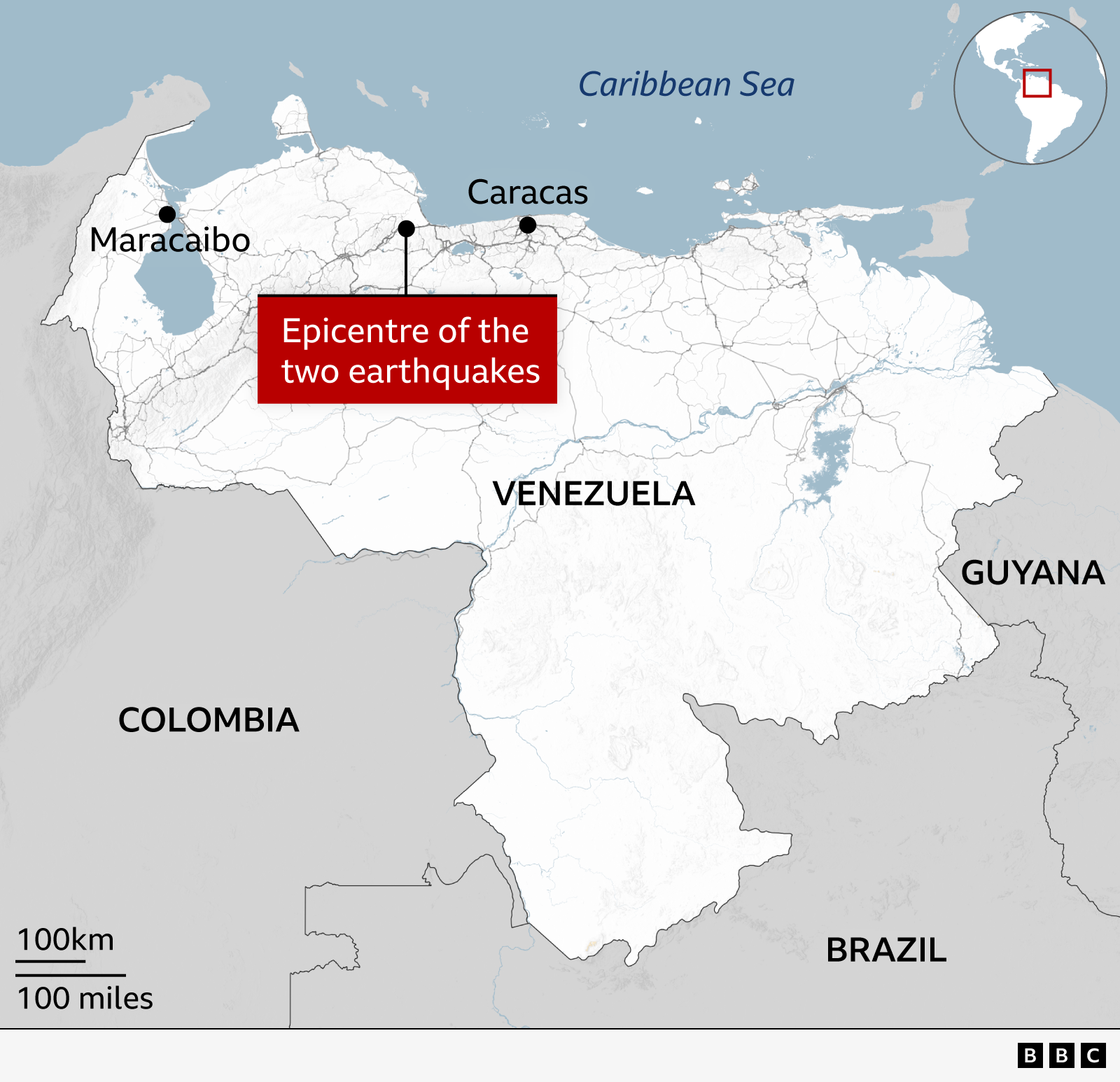
The first quake, measuring 7.2 on the Richter scale, hit at 18:04 local time (22:04 GMT), striking 23 kilometers southeast of Yumare. This coastal town lies west of Caracas, the country’s capital. The second earthquake, with a magnitude of 7.5, followed shortly after—just 38 seconds later—hit in a nearly identical location. The intensity of the second tremor was particularly damaging, shaking buildings in Caracas and the nearby seaside city of La Guaira to their cores. The aftermath saw structures crumble and entire neighborhoods left in disarray, with the scale of destruction raising concerns about the region’s vulnerability to such events.
According to the US Geological Survey (USGS), the first earthquake originated 20.3 kilometers beneath the surface, while the second was much closer, at a depth of just 10 kilometers. This shallow depth significantly amplified the surface effects, making the second quake more destructive. The proximity of the epicenter to densely populated areas and the aging infrastructure in the region contributed to the severity of the damage. The USGS also warned that the second quake had a 44% probability of exceeding 10,000 deaths, underscoring the potential for catastrophic outcomes.
Regional Damage and Affected Areas
While Caracas and La Guaira bore the brunt of the destruction, the tremors were felt across several states. Venezuela’s interior minister confirmed that regions including Trujillo, Yaracuy, Carabobo, Aragua, and Miranda were impacted. In Caracas, the capital, buildings swayed violently, and cracks appeared in roads and sidewalks. La Guaira, a bustling port city, suffered particularly severe damage, with the hotel collapse serving as a stark symbol of the quakes’ power.
The country’s main international airport, located on the outskirts of Caracas, was forced to shut down due to extensive structural damage. Video footage from the terminal revealed dust and debris falling from the ceiling, creating a chaotic scene as emergency crews worked to assess the situation. The BBC verified these visuals, confirming the collapse of the 10-storey hotel and the collapse of other buildings in the area. This imagery highlights the immediate and visible consequences of the earthquakes, which have left communities reeling.
Factors Behind the Earthquake’s Destructive Power
The magnitude of an earthquake is not the sole determinant of its impact. The depth of the seismic event, the population density in the affected zone, and the quality of construction all play critical roles. The second quake, occurring at a much shallower depth, released energy more directly onto the surface, increasing its destructive potential. This phenomenon is common in tectonic settings where fault lines are close to the ground, as is the case in Venezuela.
Venezuela lies along the boundary of the Caribbean and South American tectonic plates, which are slowly shifting relative to each other. The USGS explained that the sudden release of friction between these plates is likely what triggered the quakes. This movement creates stress along fault lines, leading to seismic activity that can destabilize the region. The country’s location makes it prone to earthquakes, though the frequency and intensity of such events can vary.
Historical data suggests that Venezuela has experienced significant seismic activity in the past. However, the recent quakes have raised questions about the country’s preparedness for such disasters. Experts note that many buildings in the region were not constructed to withstand high-magnitude tremors, exacerbating the damage. The combination of natural factors and human infrastructure has led to a disproportionate impact on communities, with some areas facing prolonged recovery efforts.
Survivors’ Accounts and Emergency Response
“I thought I was going to die,” said a survivor describing the panic that gripped Venezuelans during the quakes. The sudden, violent shaking left many in disbelief, with people rushing to safety as walls crumbled and ceilings collapsed. Witnesses reported hearing screams and the sound of glass shattering, capturing the raw fear that swept through the country.
Rescue teams are working tirelessly to locate survivors and assess the damage. The urgency of the situation has prompted a coordinated effort to stabilize the affected areas and provide aid to those displaced. The closure of the main airport has disrupted evacuation plans, but officials are prioritizing the recovery of critical infrastructure to support relief operations. Meanwhile, the government has issued statements confirming the toll of the quakes and pledging resources to address the crisis.
As the dust settles, the focus shifts to understanding the full scope of the disaster. The USGS continues to monitor the region for any additional tremors, while local authorities evaluate the long-term effects on the population and economy. The earthquakes serve as a reminder of the region’s seismic risks and the importance of resilient urban planning. For now, Venezuelans are left to rebuild, with the hope that lessons learned from this event will prevent future tragedies.
Geographical Context and Future Risks
Venezuela’s geography places it in a seismically active zone, where the collision of tectonic plates can generate powerful quakes. Maps show that the epicenters of these recent events were near the coastal regions, which are densely populated and home to key economic hubs. This location means that future tremors could have even greater consequences, particularly if they occur in similar proximity to the surface.
Graphics from the USGS illustrate the fault lines responsible for the quakes, highlighting the complex interactions between the Caribbean and South American plates. These visuals underscore the geological forces at play and the potential for recurring seismic activity. As researchers analyze the data, they emphasize the need for improved building codes and emergency protocols to mitigate the impact of such events. The recent earthquakes have exposed vulnerabilities in the region’s infrastructure, prompting calls for immediate action to safeguard communities.
With the situation still unfolding, updates on the disaster will be crucial in guiding recovery efforts. The interim President, Delcy Rodríguez, has highlighted the significance of the airport’s closure and the need for international support. As the nation grapples with the aftermath, the focus remains on rescuing survivors, restoring essential services, and rebuilding what was lost. The earthquakes have left an indelible mark, reminding Venezuelans of the fragile balance between the earth’s movements and human habitation.