US and Iran exchange strikes in Gulf in latest test of ceasefire

US and Iran Exchange Strikes in Gulf in Latest Test of Ceasefire
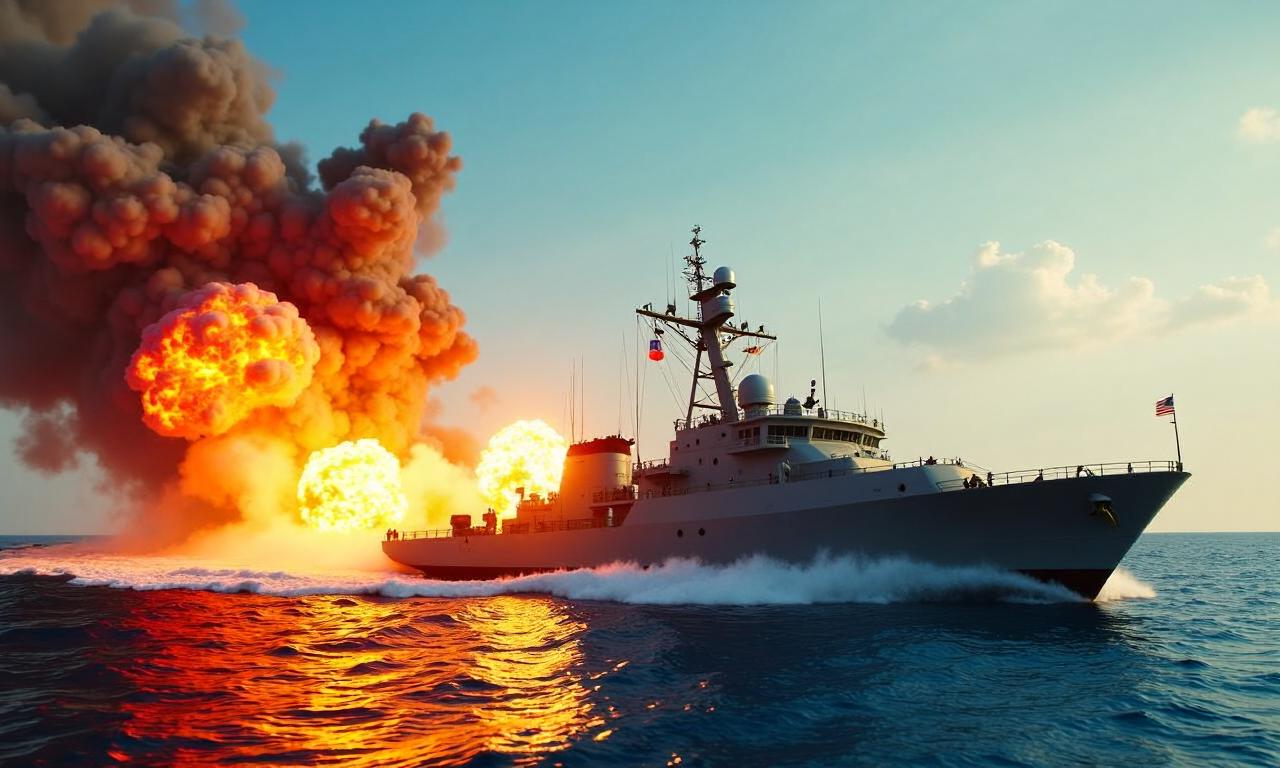
Constantvpn.com – The fragile truce between the United States and Iran has faced renewed scrutiny after a series of military actions unfolded in the Gulf region. On Wednesday, American forces intercepted four Iranian “one-way attack drones” heading toward the Strait of Hormuz, a key maritime route for global oil shipments. According to the US military, these drones posed an immediate threat to regional trade, prompting a response that included strikes on Iranian coastal surveillance radar sites in the southern part of the country. These actions, described by US Central Command (Centcom) as defensive measures, aimed to prevent further attacks. However, Iran retaliated by launching ballistic missiles at US bases in Kuwait and Bahrain, as reported by the Islamic Republic of Iran Broadcasting (Irib) news agency.
Centcom confirmed that initial assessments showed six out of the seven Iranian missiles fired at the two Gulf states were intercepted, with one missing its target entirely. This latest round of strikes comes amid ongoing tensions that have kept the ceasefire agreement from April in a precarious state. The conflict escalated after the US and Israel targeted Iran’s military infrastructure on 28 February, sparking a chain of retaliatory strikes across the Middle East. Iran responded by attacking Israeli and US-allied positions in the Gulf, including a significant disruption of the Strait of Hormuz. The closure of this critical waterway, through which around 20% of the world’s oil and liquefied natural gas flow, sent oil prices surging globally.
Escalation of Tensions
Iran’s Islamic Revolution Guard Corps (IRGC) claimed that its attacks on US bases in the Gulf were a direct response to previous US strikes on an Iranian oil tanker and the Qeshm Island, a key military outpost. The IRGC denied responsibility for the drone strikes on Kuwait’s international airport, which resulted in one fatality and over 60 injuries. They attributed the damage to an error by a US missile interceptor. Centcom, however, dismissed this explanation, calling the attack “deliberate, calculated, and unjustified.” This disagreement highlights the continued friction between the two nations, even as they attempt to maintain a fragile ceasefire.
Meanwhile, the US has taken a diplomatic approach to ease tensions, granting visas to Iran’s World Cup football team ahead of their debut match in Los Angeles on 15 June. This marks a historic moment, as it is the first time the competition will host a team from a country engaged in active conflict with the host nation. The decision has been seen as an effort to foster goodwill, though it also underscores the complex relationship between the two powers. The IRGC had previously stated that its attacks on US facilities were retaliation for the US’s strikes on Iranian assets, indicating that the conflict remains deeply rooted in mutual grievances.
Ceasefire Negotiations and Stalled Agreements
As the ceasefire negotiations between the US and Iran stall, the conflict shows no signs of easing. The latest strikes have intensified the pressure on both sides, with Iran’s foreign ministry spokesman criticizing the US for its “constantly changing views and putting forward new or contradictory demands.” This comes after the initial agreement in early April, during which the US imposed a maritime blockade on Iranian ports, a measure President Donald Trump insisted would stay in effect until a formal ceasefire was finalized.
The blockade, along with other military actions, has kept the Gulf region on edge. Despite the efforts to reach a deal, the negotiations have encountered obstacles, with both parties struggling to align their positions. Centcom noted that the recent drone strikes and radar site attacks were part of a broader pattern of escalation, as the US seeks to deter Iranian aggression. Iran, in turn, has used its military strikes to assert its capabilities and pressure the US into renegotiating the terms of the ceasefire. The IRGC’s denial of the Kuwait airport strike further complicates the situation, suggesting a willingness to shift blame while maintaining its position as a victim of US aggression.
The international community has been watching closely as the conflict between the US and Iran continues to unfold. The US’s military actions in the Gulf, including the downing of drones and strikes on radar sites, have raised concerns about the potential for a larger war. However, the Iranian response, while significant, has not yet reached the scale of a full-scale invasion. The fact that six out of seven missiles were intercepted indicates that the US has maintained a strong defensive posture, even as it faces the challenge of managing its relationship with Iran.
Adding to the complexity of the situation, the US’s decision to host Iran’s football team has sparked mixed reactions. While some view it as a symbolic gesture of reconciliation, others argue it may be a strategic move to soften Iran’s stance ahead of the World Cup. The timing of this decision—weeks after the latest exchange of strikes—suggests that the US is balancing military engagement with diplomatic outreach. This dual approach reflects the broader strategy of maintaining pressure on Iran while keeping open channels for negotiation.
The ongoing conflict has also highlighted the importance of the Gulf region in global energy markets. The closure of the Strait of Hormuz during the February strikes demonstrated how Iran’s military actions can disrupt the flow of oil, affecting prices worldwide. The US, which relies on Gulf states like Iraq, Kuwait, Qatar, Saudi Arabia, and the UAE for a significant portion of its oil imports, has a vested interest in ensuring the stability of this vital route. The recent attacks on radar sites and the missile strikes on US bases further underscore the strategic importance of the Gulf in the broader context of the US-Iran rivalry.
As the ceasefire remains under threat, both the US and Iran are testing the limits of their agreement. The IRGC’s claim that the Kuwait airport strike was a result of a US missile error contrasts with Centcom’s assertion of a deliberate Iranian attack. This divergence in narratives complicates efforts to resolve the conflict, as each side seeks to justify its actions. The stalled negotiations, combined with the recent strikes, suggest that the path to peace remains uncertain, with both nations continuing to assert their military and political will in the region.
The latest events mark another chapter in the US-Iran standoff, a conflict that has evolved from direct military confrontations to a broader struggle over regional influence and global energy security. While the ceasefire holds, the continued exchange of strikes indicates that the two nations are still navigating the delicate balance between cooperation and conflict. The decision to host Iran’s football team, though seemingly unrelated, serves as a reminder that diplomacy and military action can coexist in the pursuit of strategic objectives.