Wildfire raging south of Paris could have been set deliberately, says minister
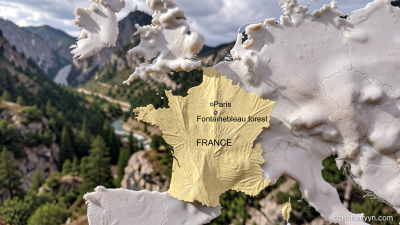
Authorities Investigate Possible Arson as Fontainebleau Blaze Continues
Constantvpn.com – French emergency services are now in their second day of intense operations attempting to contain a massive wildfire that has been consuming forestland south of the capital city. The blaze in the Fontainebleau woodland has been characterized by officials as both “virulent” and of “exceptional scale,” with the inferno having already caused partial closure of the nation’s primary north-south transportation corridor.
Deliberate Ignition Suspected
Interior minister Laurent Nunez has publicly suggested that the devastating fire may have been intentionally ignited. His statement came following revelations that the flames had rapidly advanced across 800 hectares of woodland, located approximately 40 miles or 60 kilometers to the south-east of Paris.
“There were about 10 fire ignition points within a perimeter of 1,000 meters, which suggests that it could have been deliberately set,” Nunez explained in an official statement.
Authorities are currently examining this possibility more closely as part of their investigation into the origins of the destructive blaze.
Unprecedented Response Measures
The Paris metropolitan area is currently enduring its third heatwave of the current year, contributing to a summer season that has already seen temperature records shattered across multiple European nations. In a notable departure from normal procedures, firefighting aircraft have been dispatched from the typically warmer and drier southern regions of France to combat the fires affecting the capital area.
Eric Brocardi, representing France’s national federation of firefighters, confirmed this unusual deployment strategy. He noted that in addition to the aircraft, two firefighting helicopters and an observation plane had been positioned to assist in containment efforts. Brocardi emphasized that the primary objective remains protecting both human lives and property from the advancing flames.
Transportation Disruptions
The wildfire has caused significant disruptions to regional transportation networks. Earlier incidents included a highway running eastward from Paris being blocked, alongside interruptions to a high-speed rail connection heading toward southern France. According to the French railway operator SNCF, passengers experienced delays reaching up to six hours for services departing from or arriving at Paris’s Gare de Lyon station on Sunday evening.
Wider Climate Impact
Julien Marion, who serves as director general of civil security in France, reported that wildfires have already consumed approximately 25,000 hectares of French territory since the beginning of this year. The current heatwave has been so severe that it forced the temporary closure of three nuclear power facilities to prevent the release of heated cooling water into already overheated waterways.
The extreme temperatures also affected the Tour de France cycling competition, with organizers reducing Sunday’s stage distance by 30 kilometers or 19 miles as readings approached 40 degrees Celsius. According to the Copernicus climate service, Europe is experiencing the most rapid warming of any continent globally, heating at twice the rate of the worldwide average. This accelerated warming pattern is generating more frequent summer heatwaves, placing additional strain on continental water resources, and intensifying wildfire activity.
The record-breaking temperatures have triggered major fires throughout Europe. Spain has been particularly hard hit, with at least 13 fatalities confirmed following Thursday’s wildfire in Almeria, marking one of the country’s most deadly fire events in recent history. Meanwhile, emergency services in the United Kingdom declared a large wildfire in north Wales a major incident on Sunday, as firefighting crews worked across both England and Wales to control multiple blazes.
Climate change continues to drive rising temperatures globally, and the ongoing patterns suggest that Europe may face increasingly challenging conditions in the coming years as the continent adapts to its rapidly changing climate.
