Trump asks Congress for billions for Iran war, after tension with Republicans

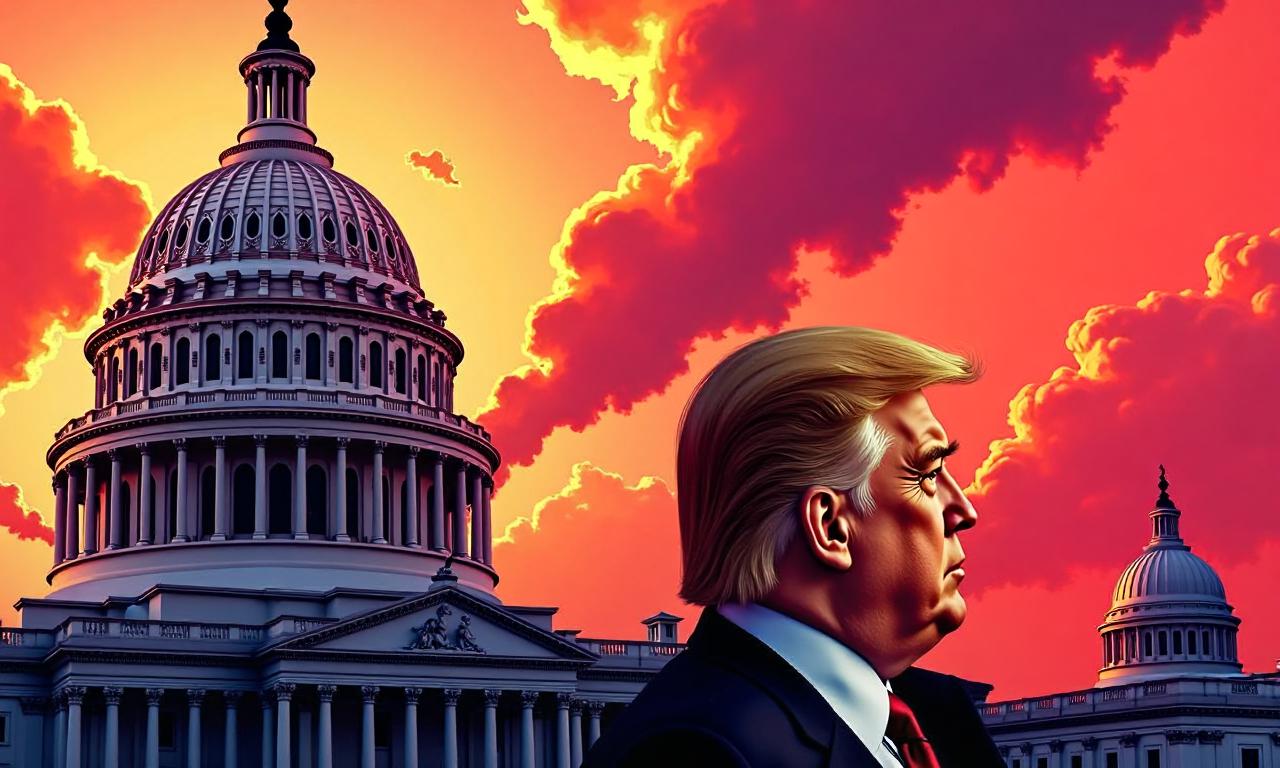
Trump Asks Congress for Billions to Support Iran War Amid Republican Tensions
Constantvpn.com – President Donald Trump has sought approval from Congress for $87.6 billion in funding to sustain the U.S. military campaign against Iran, a move that comes amid growing friction with key members of his own party. The request follows the recent passage of a congressional resolution criticizing the ongoing conflict, which has sparked debate about the role of legislative oversight in military operations. Despite the resolution, Trump remains determined to secure the necessary resources to continue the war effort, emphasizing the need for immediate action.
Funding Breakdown and Legislative Hurdles
The White House’s Office of Management and Budget submitted a formal request for the funds to House Speaker Mike Johnson on Wednesday. The proposal outlines the allocation of the majority of the budget—$67 billion—to the Department of Defense, with additional amounts designated for specific initiatives. The request includes $21 billion for munitions, $17.3 billion for operational expenses, and $12.1 billion for classified programs. A further $300 million is earmarked to enhance security at U.S. diplomatic missions in the Middle East and South Asia, following attacks on some of these sites during the conflict.
While the funding is primarily tied to the Iran war, the request also encompasses other unrelated measures, such as $11 billion for agricultural support and $1.4 billion to combat the Ebola outbreak in Central Africa. These additional funds highlight the broader economic and humanitarian priorities Trump aims to address alongside military needs. However, the war powers resolution passed earlier in the week has created a rift within the Senate, where the proposal faces significant opposition.
Political Divisions and Tense Confrontations
The Senate’s vote to pass the war powers resolution marked a pivotal moment, as it was the first of its kind to demand a president halt military action without congressional consent. This measure, which was narrowly approved by the Republican-majority chamber, has drawn criticism from Trump, who called it “poorly timed and meaningless.” The president also accused the four Republican senators who supported the resolution of being “losers” on social media, framing their actions as a betrayal of his administration’s agenda.
“I think we had a really great meeting,” Trump told reporters after a closed-door lunch with senators on Wednesday.
Bill Cassidy, a Louisiana Republican, became a focal point of the dispute after initially opposing the resolution. The senator, who was one of the few Republicans to vote against the measure, reportedly engaged in a heated exchange with Trump during a meeting. According to Cassidy, the conversation turned contentious when he asserted that the administration had not adequately informed the public about the conflict’s progress. “This was supposed to last four weeks, it’s lasted four months. Our original objectives have not been achieved,” Cassidy later explained, expressing frustration over the prolonged engagement.
Following the confrontation, Cassidy reportedly received a detailed briefing from Vice President JD Vance and Steve Witkoff, Trump’s special envoy. This reassurance led him to align with the president and help defeat another similar resolution in the Senate later that day. Trump welcomed this shift, highlighting the senator’s support as a sign of unity. The episode underscores the delicate balance between executive authority and legislative checks, particularly in matters of national security.
Peace Deal and Financial Impact
Despite the political tensions, a peace agreement was recently reached between Trump and Iran, temporarily halting hostilities. However, the deal has not quelled skepticism within the Republican Party. Some lawmakers, including Cassidy, remain unconvinced, questioning the efficacy of the plan. The Pentagon’s chief financial officer, Jules Hurst, estimated the war’s cost at around $29 billion, but analysts argue that the true financial burden is even greater. The $67 billion allocated to the Department of Defense alone represents a significant investment, with the budget office noting that the Pentagon must “rebuild stocks” after recent military strikes.
The ceasefire between the U.S. and Iran has provided a brief respite, but the war’s financial toll continues to mount. The $87.6 billion request reflects the administration’s urgency to replenish resources and maintain momentum in the conflict. Analysts suggest that the funds will not only cover immediate military needs but also support long-term strategic objectives in the region. Yet, the measure’s success depends on congressional approval, which remains uncertain in the face of partisan divides.
Public Opinion and Midterm Elections
As the November midterm elections approach, the Iran conflict has become a flashpoint for public discontent. Voters are increasingly critical of the war, which has been ongoing for several months and has not yet achieved its stated goals. The resolution passed by Congress signals a growing appetite for legislative oversight, with some lawmakers arguing that the president’s unilateral actions risk overreach. This sentiment is reflected in the bipartisan support for the war powers measure, which ultimately cleared the Senate despite Trump’s objections.
Trump’s abrupt cancellation of a signing ceremony for a housing bill—a proposal that had cross-party backing—further strained relations with Congress. The move was seen as a deliberate effort to shift focus to the Iran conflict, underscoring the president’s determination to prioritize military action. Meanwhile, the White House’s insistence on funding for the war has raised concerns about the allocation of taxpayer money. Critics argue that the $87.6 billion request should be scrutinized more closely, particularly given the current ceasefire and the potential for diplomatic resolution.
Historical Context and Legislative Dynamics
The war powers resolution marks a significant development in the legislative process, as it sets a precedent for future conflicts. By requiring congressional approval before military action continues, the measure seeks to reinforce the constitutional balance of power. However, its passage has exposed divisions within the Republican Party, with some members aligning with the Democrats to challenge Trump’s leadership. This internal conflict could influence the outcome of the midterm elections, where congressional seats are up for grabs.
As the debate over funding and war powers intensifies, the role of Congress in shaping military policy remains central. The recent events highlight the tension between executive authority and legislative accountability, with Trump’s administration facing a formidable challenge in securing the necessary support. The $87.6 billion request, while substantial, must navigate the political landscape shaped by public opinion, party loyalty, and the ongoing ceasefire with Iran.
With the midterms looming, the fate of the Iran war funding could have far-reaching implications. It may determine not only the continuation of military operations but also the cohesion of Trump’s coalition within the Republican Party. The senator’s reversal of position after the closed-door meeting suggests that personal interactions and assurances can sway legislative decisions, even in the face of strong opposition. As Congress moves forward, the interplay between executive and legislative branches will remain a key factor in the nation’s political trajectory.