Farage says £5m gift spending details ‘not public’s business’

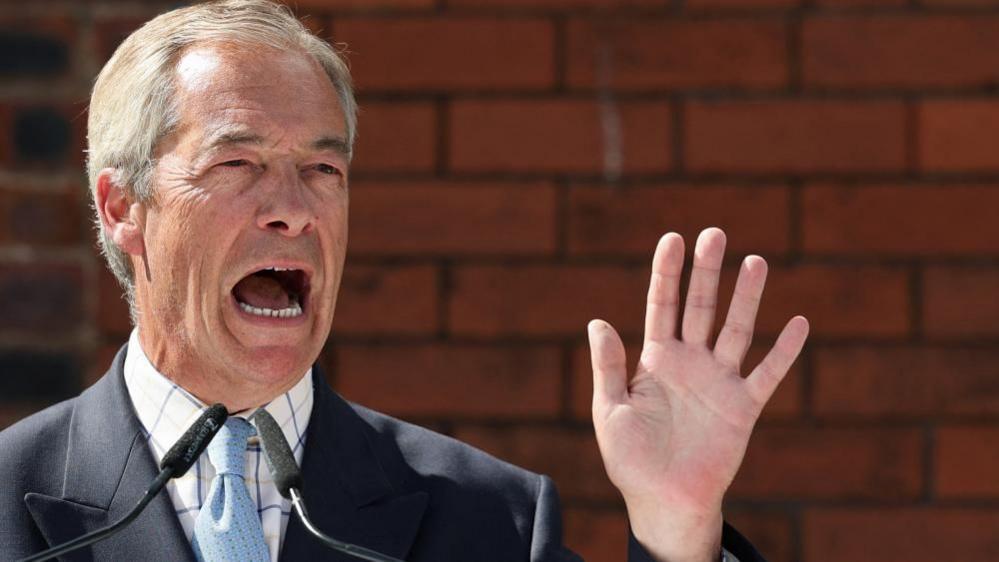
Farage says £5m gift spending details ‘not public’s business’
Constantvpn.com – Nigel Farage, leader of the Reform UK party, has asserted that the public does not need to scrutinize the specifics of how he spends a £5m gift from a billionaire donor. The financial disclosure controversy has intensified as the parliamentary standards watchdog investigates whether the gift violates transparency rules. Farage’s stance, however, remains firm: he maintains that the funds, provided by British cryptocurrency investor Christopher Harborne, are a personal matter and not subject to public oversight.
Gift as ‘Unconditional’ Personal Security Fund
Speaking to the BBC, Farage emphasized that the £5m gift was an “unconditional” sum, allowing him to allocate it as he sees fit. He claimed the money was intended for his safety, stating he requires protection “until the day that I die.” While he acknowledged the importance of personal security, he refused to specify how much of the gift has been spent so far. This ambiguity has sparked debate about whether the donation qualifies as a political benefit or a purely private gesture.
“It’s literally none of your business,” Farage remarked during a BBC Breakfast interview when pressed for details on the spending. “If I’d given it to charity, the truth is I haven’t, I know what it’s for.”
Farage’s position is that the gift, received before he became an MP, does not fall under the requirement to declare financial interests. According to the rules, new members of Parliament must register “any registrable benefits received in the 12 months before their election.” However, the code of conduct distinguishes between “purely personal gifts” and those with political implications. The commissioner’s investigation hinges on whether the donation, though personal in nature, could still influence his political decisions.
Media Scrutiny and Public Accountability
During a segment on ITV’s *Good Morning Britain*, Farage was asked directly about the gift’s usage. He responded by questioning the relevance of the inquiry, drawing a parallel to his own salary. “What on earth has that got to do with you?” he said, implying that the public should not concern themselves with how he spends the £5m. He later reiterated that the details were “none of your business” when asked about the amount allocated to security, even going so far as to accuse the BBC of attempting to “put me in danger” by demanding answers.
“No, it’s not the public’s business,” he said in response to a follow-up question. “If I answer that question you are, so I won’t.”
Farage’s refusal to detail the spending has drawn criticism from opposition parties. Labour, in particular, has questioned his transparency, arguing that the gift’s timing and context warrant closer examination. The donor, Harborne, gave the money in early 2024, just before Farage’s election as Clacton MP. While he insists the gift was not tied to political activity, critics suggest that the timing raises eyebrows, especially given his subsequent role in the party leadership.
Reversing Position and Campaign Context
Farage’s path to the £5m gift was marked by a shift in his political strategy. In May 2024, he was serving as Reform’s honorary president but had initially announced he would not run in the general election. By early June, he reversed that decision and took over the party’s leadership. This change came after he had already accepted the donation, which he described in a *Telegraph* interview as a reward for his Brexit advocacy. “I cannot be bought by anybody,” he stated, framing the gift as a personal acknowledgment of his work.
Yet, the connection between the donation and his campaign remains a point of contention. During the Makerfield by-election, Farage noted that only one person raised the issue of the gift’s political implications. He defended his actions, claiming he “took zero in personal expenses” since his election in July 2024. However, the idea that the gift might have bolstered his electoral prospects has not been dismissed by rivals.
“I’m very careful and very cautious about these things,” Farage said in a BBC interview. “I believe it to be a wholly private matter, the standards commissioner may take a different view.”
Rules and Legal Definitions
The debate centers on the definition of “registrable benefits” under parliamentary guidelines. According to the code of conduct, new MPs must register financial interests “other than earnings” received within a year of their election. While Harborne’s gift was given before Farage’s election, the rules also require consideration of “the possible motive of the giver and the use to which the gift is to be put.” This means even non-political gifts could be flagged if there is any perceived link to political influence.
Farage has argued that the donation was a straightforward personal gesture, akin to a family loan or commercial arrangement. He highlighted that Harborne’s support was not tied to his political career at the time of the gift. “It’s not the public’s business,” he said, contrasting the scrutiny he faces with the transparency expected of other public figures. His defense has been bolstered by the claim that the funds were earmarked for security, a need he has described as ongoing and justified.
Public Reaction and Ongoing Investigations
As the Parliamentary Standards Commissioner delves deeper, the question of whether Farage’s spending decisions meet the criteria for public disclosure remains unresolved. Critics, including Labour and the Liberal Democrats, argue that the gift’s value and timing demand greater transparency. The Liberal Democrats, in a recent campaign move, launched a billboard to commemorate the 10th anniversary of a pivotal moment in political history, subtly drawing attention to the current controversy.
Farage’s comments have underscored a broader tension between personal financial freedom and public accountability. While he frames the gift as a private matter, the implications of its use in political contexts could redefine how such donations are perceived. The commissioner’s findings will determine whether the gift is classified as a political benefit, potentially impacting Farage’s credibility and the party’s reputation.
Farage’s refusal to provide specifics has been met with both support and skepticism. Some view his stance as a legitimate defense of personal autonomy, while others argue it lacks transparency. As the investigation unfolds, the public will await clarity on whether the £5m gift was indeed a private matter or a strategic political investment. For now, Farage remains resolute, insisting that the details of the spending are not the public’s business. “I have not,” he said when asked about the money’s allocation, framing the issue as a personal one rather than a political obligation.
Ultimately, the case highlights the challenges of balancing individual financial decisions with the expectations of democratic accountability. Whether the £5m gift is seen as a reward for service, a personal indulgence, or a potential conflict of interest will depend on the evidence presented and the interpretation of the rules. As Farage continues to defend his actions, the debate over transparency in political financing is likely to remain a focal point for scrutiny.