Iran says no new commitments on nuclear sites after Vance says inspectors to be invited back

Iran Rejects Vance’s Claims on Nuclear Inspections
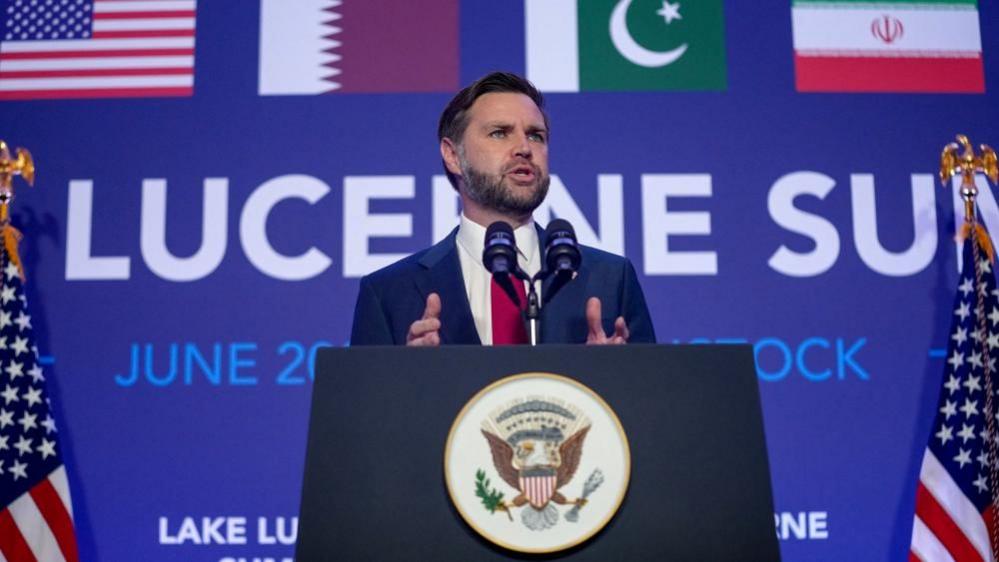
Constantvpn.com – Iran has dismissed a claim by U.S. Vice-President JD Vance that the country will permit nuclear inspectors to return, following the first round of negotiations between Washington and Tehran to finalize an agreement ending the conflict. The talks, held in the Swiss resort of Bürgenstock, saw Vance assert that discussions with the International Atomic Energy Agency (IAEA) could begin “as soon as today.” However, Iran’s foreign ministry clarified that Tehran had not made “any new commitments” regarding nuclear site inspections, according to a statement released by state media. The disagreement highlights ongoing tensions between the two nations, even as progress is reported in other areas of the dialogue.
Sanctions Waiver Enables Oil Trade Resumption
A key development during the talks was the U.S. Treasury’s temporary suspension of sanctions, allowing Iran to conduct oil sales in U.S. dollars for the first time in decades. This 60-day waiver, announced on Monday, effectively removes major restrictions on Iran’s economic activities, including the production, export, and sale of crude oil and petrochemicals. The measure, valid until 21 August, also permits direct U.S. imports of Iranian oil, eliminating the need for complex circumvention networks. Such a move is seen as a strategic effort to ease financial pressures on Iran while encouraging compliance with nuclear-related agreements.
Joint Statement Signals Progress
In a joint declaration, Qatar and Pakistan, acting as mediators, reported that the U.S. and Iran had reached a “roadmap” to finalize a deal within 60 days. The statement emphasized the formation of a communication channel to “prevent incidents and ensure safe passage for commercial vessels through the Strait of Hormuz.” Additionally, both sides agreed to establish a “de-confliction cell” involving the U.S., Iran, and Lebanon, facilitated by the mediators, to halt military operations in the region. These steps are framed as critical in stabilizing the situation and advancing diplomatic efforts.
Vance’s Confidence in Talks
Vance, during the meetings, expressed optimism about the talks, calling them a “very good foundation” for future agreements. He highlighted two major topics: the reopening of the Strait of Hormuz and “de-confliction for the regional ceasefire.” While the U.S. vice-president claimed that the process for nuclear inspectors could begin “at a minimum this week,” he also stated that “conversations with inspectors could happen as soon as today.” This confidence contrasts with Iran’s position, which maintains that no new obligations have been accepted on the matter.
“Vance described the talks as having laid a very good foundation.”
Trump’s Influence on the Negotiations
President Donald Trump’s recent statements have played a significant role in shaping the negotiations. On Truth Social, he warned that the U.S. could “hit Iran very hard again” if the talks did not yield results, prompting Iranian officials to threaten to withdraw from discussions. Vance, however, downplayed the threat, asserting that Trump’s remarks were a response to Iranian “trash talk” rather than a genuine escalation. In a fresh warning from the Oval Office, Trump reiterated his readiness to take action if Iran fails to meet its commitments.
Iran’s Stance on Nuclear Inspections
Iran’s foreign ministry spokesman, Esmail Baqai, clarified that the country had not made new commitments to the IAEA. He stated that any engagement with UN inspectors would proceed “under existing procedures set by Parliament and the Supreme National Security Council.” This aligns with Iran’s broader position that the 2015 nuclear deal, which allowed IAEA inspections, was still valid despite the U.S. withdrawal under Trump’s administration. The IAEA, which had previously suspended access to sites bombed by Israel and the U.S. during the 12-day war in the summer of 2023, has not yet issued a public response to the latest developments.
“He maintained that any engagement with UN inspectors would take place ‘under existing procedures set by Parliament and the Supreme National Security Council.'”
Historical Context of the Nuclear Deal
The current negotiations trace back to the 2015 Joint Comprehensive Plan of Action (JCPOA), which established Iran’s nuclear program under strict international oversight. The agreement, signed by Iran and six world powers—the U.S., China, France, Russia, Germany, and the UK—was a cornerstone of global efforts to limit Iran’s nuclear capabilities. However, during Trump’s first term, the U.S. withdrew from the deal in 2018, citing its perceived inequity and calling it a “bad deal.” The return to talks now signals a potential revival of this framework, albeit with adjustments to address recent geopolitical shifts.
Strategic Implications of the Waiver
The 60-day sanctions waiver is more than a financial tool; it represents a broader strategy to stabilize the U.S.-Iran relationship. By allowing oil sales in U.S. dollars, the U.S. aims to maintain economic leverage while reducing pressure on Iran. This approach also supports the global oil market, as Iran’s exports could help offset supply gaps caused by ongoing conflicts in the region. The waiver’s expiration on 21 August adds urgency to the talks, as any delay could lead to renewed sanctions and economic hardship for Iran.
Regional Ceasefire and Next Steps
Following the initial talks, the IAEA and other international bodies are expected to play a pivotal role in monitoring Iran’s nuclear activities. The joint statement from Qatar and Pakistan noted that negotiations would continue with the creation of dedicated groups to address specific issues, including nuclear inspections and sanctions. Iran’s Foreign Minister, Seyed Abbas Araghchi, highlighted Lebanon as the “real test” for the agreement, citing the reduction in Israel-Hezbollah hostilities since Saturday night. A fragile ceasefire in the region has provided a temporary window for diplomacy, but sustained progress will depend on both sides’ willingness to compromise.
As the 60-day period unfolds, the outcomes of these negotiations could have far-reaching implications. The resumption of nuclear inspections would mark a significant step toward rebuilding trust between the U.S. and Iran, while the sanctions waiver offers immediate economic relief. However, the challenges remain substantial, with political tensions and strategic interests complicating the path to a final agreement. The coming weeks will be crucial in determining whether the talks lead to a lasting resolution or another round of negotiations. For now, the momentum from the initial meetings suggests a cautious optimism that the conflict may be on the verge of a breakthrough.