Author: Jessica Jackson – constantvpn.com

  • More than 900 killed in Gaza this year despite ceasefire, Hamas-run health ministry says

    More than 900 killed in Gaza this year despite ceasefire, Hamas-run health ministry says

    Gaza’s Ceasefire Holds in Name Alone as Monthly Death Toll Exceeds 100

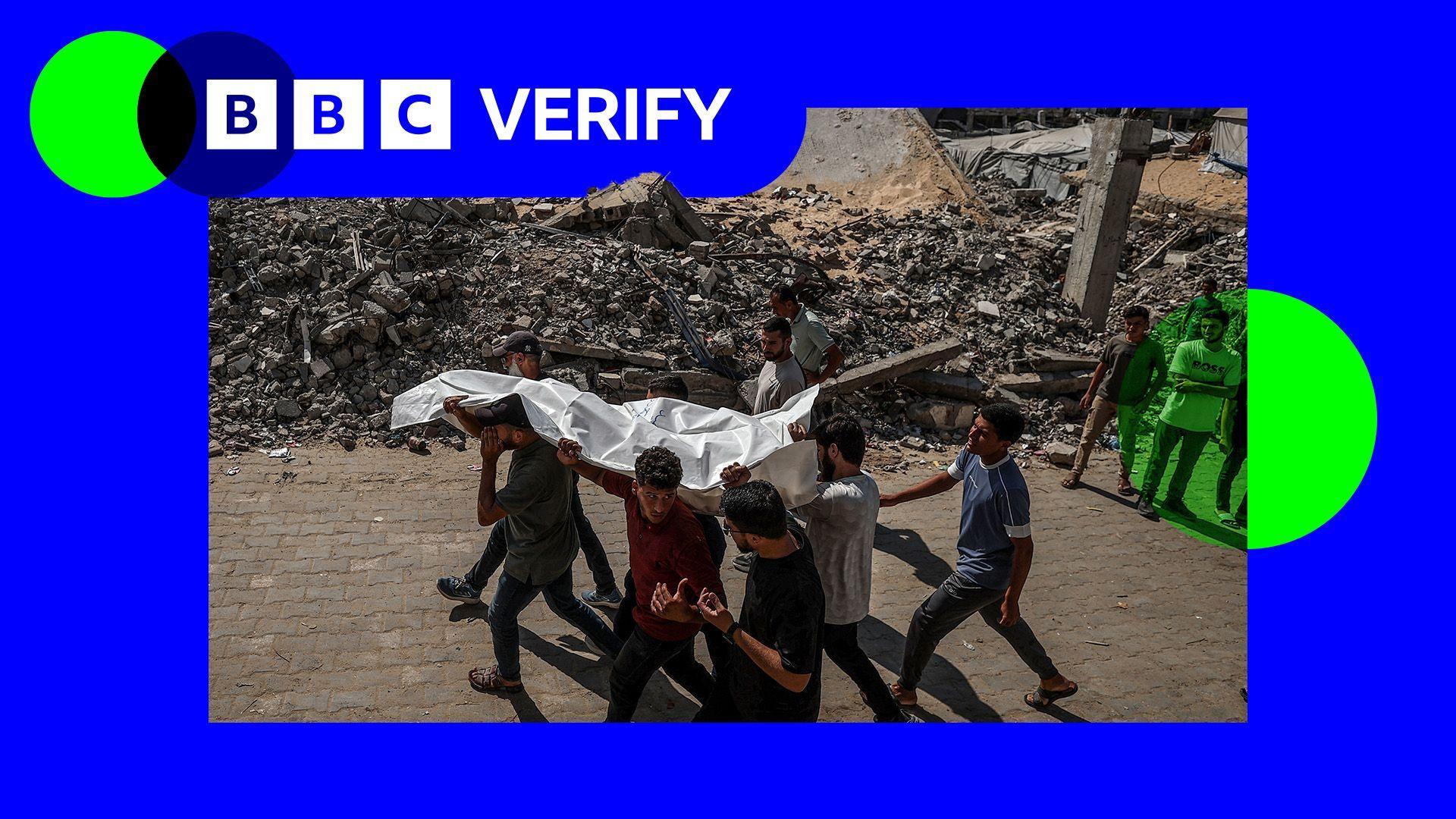
    Constantvpn.com – The truce that was supposed to end one of the deadliest conflicts of the modern era has, by most measurable accounts, failed to deliver peace to the people of Gaza. More than 900 Palestinians have lost their lives in Israeli military strikes since the start of this calendar year, according to data released by the territory’s Hamas-administered Ministry of Health. Those figures push the cumulative death toll since the ceasefire took effect on 10 October to over 1,300, of whom at least 301 were children.

    The numbers arrive against a backdrop that makes them all the more striking: both sides formally accepted a 20-point peace framework brokered by US President Donald Trump, a plan whose text explicitly called for a halt to “all military operations, including aerial and artillery bombardment.” Yet the sky over Gaza has continued to fill with jets and drones, and the ground continues to shake.

    A Pattern of Monthly Carnage

    Between April and August, the ministry recorded more than 100 fatalities in every single month. July proved the deadliest stretch of the year, with 152 people killed, including 21 children. The ministry attributes all of these deaths directly to Israeli military action but does not break them down into civilian and combatant categories. The United Nations has judged the ministry’s data to be reliable, and independent analysts have confirmed that their own assessments align with the ministry’s tallies.

    The Israel Defense Forces, however, contests the overall picture. In a statement to journalists, the IDF said there is “no basis to assume” that every individual listed was killed as a result of its operations. The military described its own conduct as operating “in a precise manner to remove threats and protect its troops and Israeli civilians, in accordance with the agreement,” while adding that it works to limit civilian harm “to the greatest extent possible.”

    What the Videos Show

    Independent video analysis of dozens of clips captured since the ceasefire took effect reveals the physical reality on the ground. Footage documents strikes on a beachside café in Gaza City, on tents where displaced families had been sheltering, and on what witnesses described as a funeral procession in central Gaza. In one sequence dated 18 August, emergency crews scramble to reach survivors at the café site, where six people were killed. The following day, a strike on a police headquarters in the al-Tuffah neighbourhood reportedly killed nine people, among them a 13-year-old. The IDF said both incidents were aimed at Hamas commanders and other fighters and that “steps were taken to mitigate harm to civilians.”

    Among the single deadliest episodes of July was a strike on a reported funeral procession in the Nuseirat area. Seven people were killed and 22 wounded, according to Al-Awda Hospital, where the casualties were brought.

    Context: A War That Already Claimed Tens of Thousands

    The current toll sits atop a far larger catastrophe. At the beginning of this year, Israeli media carried reports that a senior Israeli security official had acknowledged more than 70,000 people had been killed across the entire Gaza war, a figure that included over 20,000 combatants. The conflict was triggered by the Hamas-led assault on southern Israel on 7 October 2023, which killed approximately 1,200 people and saw 251 taken hostage. From the ceasefire’s inception on 10 October through the end of that month, the ministry recorded 251 deaths — a pace that has not slowed since.

    Targeted Strikes and the Question of Proportionality

    Conflict-monitoring organisation Acled, which cross-references official statements, media coverage, and social-media posts to verify attacks, has logged roughly 200 Israeli strikes during the ceasefire period that reportedly killed Hamas operatives or other armed “militants” in what were described as targeted operations. Among those struck, Acled noted, were commanders involved in planning the October 2023 attack that ignited the war.

    The IDF separately stated that five of its soldiers have been killed in combat since the ceasefire and that one contractor died in an “operational accident.” It also claimed to have killed hundreds of military operatives in the period since October.

    Analysts Warn the Truce Is Collapsing in Practice

    Hugh Lovatt, a senior policy fellow at the European Council on Foreign Relations, offered a blunt assessment of the situation:

    “Gaza has seen a ceasefire in name only.”

    He pointed to the near-daily cadence of air and drone strikes and added:

    “Though it claims to be targeting Hamas or imminent threats, it is Gaza’s civilians that have continued to bear the brunt.”

    Lovatt warned that the persistent killing could become a “central stumbling block” in the international effort to implement the terms of Trump’s ceasefire deal. For a population that has endured over two years of bombardment, displacement, and infrastructure collapse, the distinction between a ceasefire on paper and one on the ground is not academic — it is the difference between survival and annihilation.

    The IDF, for its part, told journalists it “remains committed” to the ceasefire agreement while citing “continued violations and threats posed by Hamas and other terror organizations” in Gaza as justification for ongoing operations. Whether that commitment translates into a meaningful reduction in strikes — or merely into a different vocabulary for the same bombardment — remains the central question facing both the people of Gaza and the international community attempting to enforce the deal.

    Frequently Asked Questions

    What is More than 900 killed in Gaza?

    More than 900 killed in Gaza is the main topic of this guide. The article explains the context, practical details, and next steps readers should understand.

    Why does More than 900 killed in Gaza matter?

    More than 900 killed in Gaza matters because readers are looking for a useful answer, not just a short summary. Good content should match search intent and help them decide what to do next.

  • Apple Maps renames Lake Ontario as Lake America after Trump order

    Apple Maps renames Lake Ontario as Lake America after Trump order

    Apple Maps Ditches “Lake Ontario” for US Users After Trump’s Naming Order

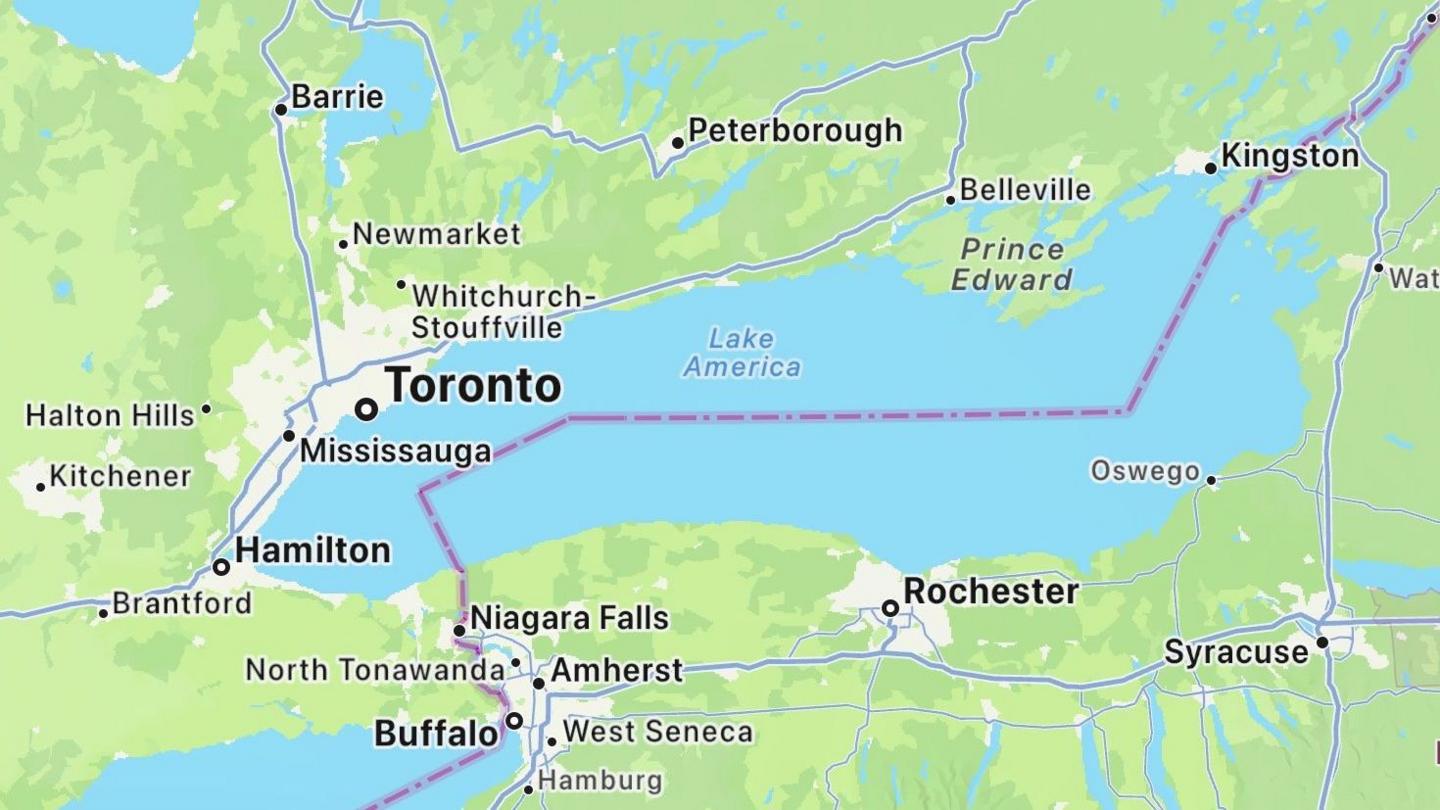
    Constantvpn.com – The smallest of North America’s five Great Lakes now carries a different name on one of the world’s most widely used navigation platforms. Apple has updated its Maps application so that users located in the United States will see the body of water between New York State and the province of Ontario labelled “Lake America.” Canadian users, meanwhile, will continue to see the traditional name, Lake Ontario, displayed on their screens. The company has not issued a public statement explaining the decision.

    The Executive Order Behind the Change

    The map update follows a directive signed by President Donald Trump, which specifically instructed Apple to alter the lake’s designation on its mapping platform. According to US Interior Secretary Doug Burgum, the order was issued to bring commercial map services into alignment with federal naming policy. The executive order grants the Department of the Interior a 30-day window to register the new name in the Geographic Names Information Service, the government’s authoritative database of place names across the country.

    Trump has amplified the renaming through social media, posting several AI-generated clips that depict him physically toppling a “Lake Ontario” sign and swapping it for one reading “Welcome to Lake America.” The videos have drawn both mockery and support from users on either side of the border.

    A Trade War Escalation

    The naming decision is the latest symbolic escalation in a fast-moving trade confrontation between Washington and Ottawa. Bilateral negotiations broke down late last month after what Prime Minister Mark Carney’s office described as unacceptable demands from the American side. In response, the US imposed fresh 50% tariffs on roughly $20 billion (approximately £14.8 billion or C$28 billion) in Canadian imports.

    Ottawa retaliated swiftly, announcing it would impose “dollar for dollar” counter-tariffs on American goods. Carney publicly urged the Trump administration to “start being serious” and cease posturing before any resumption of talks could be contemplated. The renaming of the lake, critics argue, transforms a commercial cartographic update into a political statement embedded in the daily routines of millions of American drivers and travellers.

    Google Follows Suit; MapQuest Refuses

    Apple is not acting alone. Google confirmed in a blog post that it had made an identical switch for US-based users of its Maps service, explaining that the platform is updated to “reflect name changes in official government sources.” Canadian users of Google Maps will therefore continue to see Lake Ontario. The company noted it had taken a parallel step in 2025 when Trump declared the Gulf of Mexico would be called the Gulf of America, updating its maps accordingly. Apple also renamed the Gulf for US users at that time.

    Not every mapping provider has complied. MapQuest, a free web-based mapping service, posted a brief statement on Facebook on Friday saying simply, “we’re not changing it.” The refusal proved popular: MapQuest climbed to the top of the most-downloaded free applications list on the Canadian Apple App Store earlier this week, suggesting that a segment of the public views the renaming as an overreach of executive authority into everyday geography.

    Canada Pushes Back at the Shoreline

    At the lake itself, the provincial government of Ontario has installed a new physical sign bearing the words “Lake Ontario. Now and Always.” Premier Doug Ford framed the gesture as a reminder directed at the American president and anyone else who might entertain the alternative name.

    “Just in case President Trump or anyone else forgets, we’ve set up this sign to remind them, it’s Lake Ontario, now and forever.”

    The sign sits at a point visible to visitors and boaters, turning the shoreline into a small stage for the broader sovereignty dispute. It underscores how a cartographic label, normally invisible to most users, has become a flashpoint in intergovernmental relations.

    Indigenous Roots and Cartographic Precedent

    The original name, Lake Ontario, derives from an indigenous word, as do the names of four of the five Great Lakes — Ontario, Huron, Michigan, and Erie. Lake Superior, by contrast, takes its name from an anglicised French term. The lake in question is the smallest of the five, straddling the border between the Canadian province of Ontario and the US state of New York, and has been a site of cross-border commerce, shipping, and cultural exchange for centuries.

    The current episode echoes an earlier confrontation. In 2025, after Trump declared the Gulf of Mexico would henceforth be called the Gulf of America, both Google and Apple updated their maps for US users. Mexico subsequently sued Google, alleging the company ignored repeated requests not to apply the new name to American users. That litigation remains a reference point for observers watching how commercial mapmakers navigate competing sovereign claims over place names.

    What the Change Means in Practice

    For the average American driver, the practical effect is minimal: a label swap in a navigation app, visible only when the user’s location places them within US borders. Yet the symbolic weight is considerable. It signals that executive authority can, at least temporarily, override centuries of geographic convention in the digital tools people rely on daily. It also raises questions about the durability of such changes — whether future administrations might reverse them, whether international bodies will recognise the new name, and whether commercial platforms will continue to treat a single country’s domestic database as sufficient justification for altering a globally shared geographic identifier.

    As the trade standoff between Washington and Ottawa continues, the name on the map may prove to be one of the most visible, if least consequential, battlegrounds of the dispute.

    Frequently Asked Questions

    What is Apple Maps renames Lake Ontario as Lake?

    Apple Maps renames Lake Ontario as Lake is the main topic of this guide. The article explains the context, practical details, and next steps readers should understand.

    Why does Apple Maps renames Lake Ontario as Lake matter?

    Apple Maps renames Lake Ontario as Lake matters because readers are looking for a useful answer, not just a short summary. Good content should match search intent and help them decide what to do next.

  • Menopausal women pose as men to buy testosterone online after prescription difficulties

    Menopausal women pose as men to buy testosterone online after prescription difficulties

    Menopausal Women Pose as Men to Buy Testosterone

    Constantvpn.com – Across Wales, a growing number of menopausal women pose as men when completing online pharmacy questionnaires, a workaround born from frustration with inconsistent NHS prescribing. The practice, confirmed by a sexual-health consultant, highlights a widening gap between clinical need and actual access to testosterone — a hormone now recognised as a valid component of hormone replacement therapy for persistent low libido after menopause.

    Why the Licensing Gap Exists

    The female body produces testosterone naturally, but circulating levels fall steadily with age. For decades the hormone was treated as essentially male, and the UK still has no testosterone product licensed specifically for women. Clinicians who choose to prescribe therefore use the male formulation at substantially reduced doses. Evidence supports its use for diminished sexual desire, and a trial currently running in Wales is investigating whether anecdotal reports of improved cognition and energy can be substantiated.

    Because no female-licensed product exists, any woman receiving a prescription must undergo baseline bloodwork and regular follow-up monitoring to confirm levels stay within the physiological range appropriate for women. Without that oversight, the margin for error narrows quickly.

    Uneven Access and Patient Experiences

    Dr Michelle Olver, a consultant in sexual and reproductive health, describes a “very sharp increase” in testosterone referrals reaching the NHS for post-menopausal women. Yet the experience varies markedly from one Welsh health board to another. Some practices prescribe and monitor; others decline outright, leaving patients to seek alternatives on their own.

    The Welsh government responded to questions about the disparity by stating:

    “All health boards are expected to provide individualised care.”

    That assurance has not translated into uniform practice. One patient described to reporters how, after relocating to a neighbouring area, her new GP surgery refused to continue a previously stable prescription. She paid privately for a consultation, a prescription, and blood tests. Once her levels had stabilised, she turned to an online pharmacy, completed the intake form under a male identity, and obtained the hormone at a small fraction of the private cost.

    The Risk of Unmonitored Dosing

    Dr Olver has encountered patients whose testosterone concentrations reached up to twelve times the safe upper limit for women. At those levels, the risk of irreversible adverse effects rises sharply. She described the situation as “incredibly sad,” explaining that women were effectively “denied access to something they need” and were resorting to deception to obtain it.

    “We want to maintain women in female physiological range for testosterone. We don’t want them to have sky-high levels. When you persistently have very high testosterone levels you can get undesirable permanent side effects. Nobody wants to have baldness, deepening of the voice or enlargement of the clitoris.”

    Proper counselling before initiation and structured monitoring during treatment are non-negotiable safeguards, she stressed. The online-pharmacy route strips away both.

    Community Voices

    Emma Thomas, 59, from Sully in the Vale of Glamorgan, co-founded the menopause support group Menopals Cardiff and Vale. Through that network she has heard repeatedly from members whose GPs dismissed the need for testosterone or whose surgeries would not issue the prescription at all.

    “We hear a lot of women saying their GP thinks there’s no need for it or their surgery won’t prescribe it.”

    Thomas’s own experience illustrates both the difficulty and the potential benefit. At 47 she described a marked psychological shift, moving from what she called a “really sociable, happy person” to someone who felt “quite insecure, paranoid, low in mood.” Standard HRT brought measurable improvement within roughly ten days. Once her regimen had stabilised, her GP added testosterone; the effect took around six months to become perceptible.

    “It was the final piece of the puzzle for me. I feel like my old self — I’ve got a zest for life.”

    Emma Jones, 57, offers a contrasting account. Within a week of beginning treatment she noticed changes, though her experience underscores how individual responses vary and why structured medical oversight remains essential.

    Frequently Asked Questions

    Why do menopausal women pose as men when buying testosterone online? Because no testosterone product is licensed specifically for women in the UK, some online pharmacies’ intake questionnaires default to male profiles. Women who have already stabilised their levels through private consultation may complete the

  • Will self-flying planes transform the skies?

    Will self-flying planes transform the skies?

    The Quiet Revolution in Autonomous Fixed-Wing Aviation

    Constantvpn.com – While electric vertical take-off and landing (eVTOL) air taxis dominate headlines about the future of flight, a far less glamorous but equally consequential race is unfolding beneath the radar of public attention. A handful of companies are pushing self-flying fixed-wing aircraft toward commercial deployment — starting not with passengers, but with the unglamorous work of spraying crops and hauling cargo. Among the most advanced players in this space is Pyka, a San Francisco Bay–area start-up that designs and builds pilotless aircraft with no cockpit at all.

    The company operates out of a converted Second World War-era hangar overlooking the bay, and its machines are already working fields in two continents. Roughly a dozen Pyka aircraft are active in Brazil, where they treat cotton and soybean crops — tasks once performed exclusively by human pilots. In the United States, the company’s largest autonomous fixed-wing platform received commercial civilian authorization last year, making it the biggest pilotless fixed-wing aircraft cleared for civilian operations in the country. That approval, however, is tightly scoped: flights are confined to defined agricultural zones and require both a ground operator and a visual observer on the scene.

    Low-Altitude Precision Over California’s Central Valley

    On a recent test day at a site roughly 80 kilometres (50 miles) east of the factory — accessible only via a rough dirt track — flight test engineer Russ Marotzke and a colleague were evaluating a software update on a demonstration airframe. The aircraft, a fully electric machine with its battery housed in the nose, skimmed dangerously close to the ground over an alfalfa field in California’s San Joaquin Valley. No humans were aboard.

    “We can actually go lower than a human pilot can,” Marotzke noted as the plane grazed the crop canopy. Flying at reduced altitude cuts spray drift dramatically, meaning less chemical is wasted and less product is needed compared with conventional manned dusting.

    Inside a shipping container parked beside the field, engineers marked the target spray zone on a computer screen. The onboard software then computed a flight path, factoring in mapped obstacles such as nearby power lines. Take-off from a short runway adjacent to the field was seamless. Approximately fifteen minutes later, after sensing its spray load — water, for that particular demonstration — was running low, the aircraft executed an autonomous landing. Crew members performed a manual refill and a battery swap, after which the plane relaunched and resumed spraying precisely where it had paused.

    Each airframe carries up to 300 litres of liquid in a central tank and sustains roughly 35 minutes of flight per battery cycle. Despite sometimes being labelled “large drones,” the machines boast 11.5-metre wingspans — a scale that makes the drone moniker feel like an understatement.

    Autonomy Versus Autopilot: A Critical Distinction

    The distinction between what Pyka builds and what most commercial aircraft already offer is not trivial. Autopilot systems — analogous to cruise control and lane-keeping in automobiles — assist a human pilot who retains ultimate authority. True autonomous flight, by contrast, is designed to manage the entire mission envelope, from take-off through landing, with little or no human intervention, relying on algorithms that ingest sensor data and command the airframe in real time.

    That distinction matters because it explains why self-flying planes have lagged behind self-driving cars despite operating in what many engineers consider a more structured, predictable environment. Mykel Kochenderfer, a specialist in safe aviation autonomy at Stanford University, points to two converging factors. First, major technology firms poured enormous capital into autonomous vehicles, effectively “doubling down” on the car problem. Second, aviation regulators impose far stricter safety thresholds than road-vehicle authorities.

    “The consequences for air accidents can just be so severe,” Kochenderfer observes, underscoring why the bar for deployment is considerably higher in the sky than on the street.

    Military Momentum and Regulatory Pathways

    Defence procurement has been a quiet accelerant. Several companies in the autonomous fixed-wing space hold government contracts to demonstrate and trial their systems, often navigating fewer regulatory hurdles than their civilian counterparts. Some are already delivering hardware to military customers, generating operational data that feeds back into civilian product development.

    Brazil’s aviation regulator granted Pyka a comparable approval earlier than the United States did, reflecting a more permissive regulatory posture toward autonomous agricultural aviation. That early foothold allowed the company to accumulate real-world flight hours on Brazilian cotton and soybean operations while its American programme worked through the longer federal approval pipeline.

    Scaling Ambitions and the Passenger Horizon

    Pyka currently produces around two dozen aircraft per year and targets a production rate of 1,000 units annually by 2030. Each machine is priced at $550,000, with customers receiving training to operate the fleet. The near-term commercial model centres on crop spraying and cargo delivery — tasks where labour costs, chemical-precision requirements, and repetitive route geometry make automation economically compelling.

    Yet the company’s longer-term vision reaches well beyond agriculture. Co-founder and chief executive Michael Norcia envisions a large fleet of minibus-capacity Pyka aircraft shuttling passengers along the United States east and west coasts.

    “A fully scaled, ubiquitous passenger operation is the holy grail,” Norcia says. “There’s a decent chance we’ll get to that point before the eVTOL industry.”

    Whether that timeline holds will depend on regulatory maturation, public acceptance, and the ability to demonstrate sustained safety across thousands of autonomous flight hours. What is already clear, however, is that the skies above American and Brazilian farmland are being quietly rewritten — one pilotless pass at a time — by machines that never needed a seat, a control stick, or a human heartbeat to keep them aloft.

    Frequently Asked Questions

    What is Will self flying planes transform the skies?

    Will self flying planes transform the skies is the main topic of this guide. The article explains the context, practical details, and next steps readers should understand.

    Why does Will self flying planes transform the skies matter?

    Will self flying planes transform the skies matters because readers are looking for a useful answer, not just a short summary. Good content should match search intent and help them decide what to do next.

  • Russian strikes destroy 12 million books ahead of Ukraine’s first week back at school

    Russian strikes destroy 12 million books ahead of Ukraine’s first week back at school

    12 Million Books Lost to Russian Strikes

    Constantvpn.com – As Ukrainian pupils walked back into classrooms for the opening week of the new school year, the shelves that were supposed to hold their textbooks had been reduced to ash. Russian strikes destroy 12 million books across the country — roughly a third of everything printed domestically in 2024. Warehouses, printing plants, second-hand markets, museums, opera houses, film studios, and medieval monasteries all bore the brunt of sustained missile and drone attacks over recent weeks.

    A Printing Plant and a Scorched Page

    On the Kyiv outskirts, a press that had been scaling up output to deliver 1.3 million volumes — about ten percent of the nation’s schoolbooks — was hit by a missile during a nighttime raid. Fire crews found nothing salvageable; pages that survived the flames were rendered illegible by firefighting water and rain streaming through a collapsed roof.

    Viktoria Haidai, commercial director of the Konvi publishing house, pulled a single charred leaf from the rubble. It carried a line from an English-language textbook: “My name is William, I’m from the UK. My grandmother lives in Nottingham. It’s a beautiful city.” The banal, childlike sentence now rests amid twisted steel and soot.

    “I believe it is deliberate on the part of the Russian Federation,” Haidai said. “Over the past two months, we have lost logistics warehouses where very large quantities of books were stored. The Russians are also destroying printing houses in an attempt to erase Ukraine as a nation. But frankly they will not succeed.”

    Markets, Monasteries, and the Cost of Erasure

    More than 35 publishing and book-related facilities have been struck in recent weeks. Kyiv’s Pochaina second-hand book market — a decades-old secondary circulation hub for rare editions, out-of-print titles, and personal collections — was consumed by fire. Before the blaze was fully out, 28-year-old book blogger Liliya Velyka raked through the smouldering stalls and emerged with a waterlogged science-fiction novel.

    “Books are saving us and losing this is like losing our hearts,” Velyka said.

    The capital’s largest medieval monastery complex, Kyiv-Pechersk Lavra, has also taken repeated hits. A June bombing was followed by a drone strike that set ablaze a substantial section of the roof while the golden domes of the Dormition Cathedral took direct impacts. Religious artefacts were evacuated, but structural repairs are projected at $11.2 million (approximately £8.2 million) over two years. Inscribed on UNESCO’s World Heritage List since 1990 and added to the organisation’s danger register in September 2023, the complex also houses Ukraine’s museum of books and printing — tying its cultural role directly to the publishing industry now under siege.

    At a ceremony marking 975 years since the monastery’s founding, UNESCO Director-General Khaled El-Enany addressed dignitaries including President Volodymyr Zelensky.

    “Unesco firmly condemns all attacks against cultural property protected under international law,” El-Enany declared, saying he was “deeply saddened” to witness “the significant damage.”

    Official Response: An Existential War

    Tetyana Berezhna, Ukraine’s minister of culture, toured the damaged cathedral alongside El-Enany and told reporters that military and cultural objectives are inseparable in Russia’s campaign. She stated that more than 1,900 pieces of Ukrainian heritage and over 2,000 cultural institutions have been attacked since the full-scale invasion began.

    “This is an existential war, so Russia wants to destroy us as a nation, to erase us as a nation, like Ukrainians do not exist and have never existed. That’s why Russia targets our cultural heritage, the symbols of our presence here for a long time. They understand that it’s very important for us because we protect our identity, we protect our culture, and Russia wants to destroy that.”

    Frequently Asked Questions

    How many books were destroyed? An estimated 12 million volumes — roughly one-third of Ukraine’s entire 2024 domestic print run — were lost to Russian strikes destroy 12 million books across publishing warehouses, printing plants, markets, and cultural institutions.

    What happened to the Kyiv printing plant? A press on the city’s outskirts, ramping up production of 1.3 million schoolbooks (about ten percent of national demand), was struck by a missile at night. No equipment or inventory could be salvaged.

    What is the estimated repair cost for Kyiv-Pechersk Lavra? Structural restoration is projected at $11.2 million (approximately £8.2 million) and will require roughly two years of work.

    When was the monastery added to UNESCO’s danger register? Kyiv-Pechersk Lavra, a World Heritage site since 1990, was placed on the List of World Heritage in Danger in September 2023.

    How many cultural institutions have been targeted overall? Ukraine’s culture ministry reports more than 1,900 heritage items and over 2,000 cultural institutions attacked since the full-scale invasion began.

  • US strikes Iranian launchers on Larak Island in first known attack in weeks

    US strikes Iranian launchers on Larak Island in first known attack in weeks

    US Bombs Iranian Drone Launchers on Larak Island, Reigniting Direct Combat After Weeks of Quiet

    Constantvpn.com – The Strait of Hormuz — the narrow waterway through which roughly one-fifth of global oil and liquefied natural gas flows — has once again become a battlefield. American military forces struck two Iranian rocket launchers stationed on Larak Island on Sunday, delivering what appears to be the first direct US strike inside Iranian territory since President Donald Trump halted a renewed offensive campaign in late July. The attack lands at a moment when Tehran is already absorbing fresh economic pressure from a sanctions package unveiled on 24 August, and when the broader conflict between the United States, Israel, and Iran has now stretched past its six-month anniversary.

    Airstrike Details and US Justification

    US Central Command explained the operation through spokesman Cdr Tim Hawkins, who stated that IRGC units had been spotted in the act of preparing rocket launches loaded with sea mines aimed at the strait’s shipping corridor. The launchers were destroyed before they could fire. Washington added that it had already completed the task of clearing every mine from the strait’s principal navigation channel earlier in the month, making any renewed laying of ordnance a direct provocation.

    “Islamic Revolutionary Guard Corps (IRGC) forces were observed preparing to launch rockets with sea mines into Strait of Hormuz,” Cdr Tim Hawkins told CBS News.

    Iran’s Tasnim news agency, an outlet closely aligned with the IRGC, characterized the operation as a drone strike rather than a conventional airstrike. According to reports circulating in Iranian media, two personnel were killed and two more sustained injuries in the blast.

    Tehran’s Reaction: Vows of Retaliation

    The IRGC moved quickly to frame the incident as an act of aggression warranting proportional answer. The corps announced that the Sunday strike had killed and wounded several of its members and declared it would deliver “response and punishment.” Hossein Mohebbi, the IRGC’s public spokesman, went further, branding the operation a calculated blunder by the American leadership.

    “Strategic and fatal mistake by the Trump regime,” Mohebbi declared, adding that the “enemy will pay the consequences of this miscalculation in both the economic and military fields.”

    The rhetoric signals that Tehran views the strike not as an isolated incident but as evidence of a broader American intent to dominate the waterway. Whether that translates into kinetic retaliation or remains confined to declaratory posturing will shape the next phase of a conflict already well past its first half-year.

    Why Larak Island Matters

    Larak sits barely a few nautical miles off the coast of Bandar Abbas, Iran’s largest commercial seaport, and occupies a position directly astride the Strait of Hormuz. Its geography makes it an ideal staging point for coastal artillery, drone batteries, and mine-laying operations targeting the narrow channel. During the current conflict, Iranian authorities have been routing tanker traffic past the island for inspection and have reportedly demanded a transit fee of approximately $2 million (roughly £1.5 million) per vessel — a cost that, if sustained, would add billions to global shipping expenses and further strain already-tight energy markets.

    The island’s proximity to Bandar Abbas also means any strike there lands within visual and acoustic range of one of the world’s busiest oil-loading terminals, raising the stakes for commercial operators and insurers who have already priced in elevated war-risk premiums since the fighting began.

    The Wider Conflict: From February Bombings to a Six-Month War

    The present confrontation traces its origins to 28 February, when the United States and Israel launched a sweeping wave of strikes across Iranian military and industrial targets. Tehran answered by firing missiles and drones at Israeli territory, at US installations throughout the Gulf, and at allied states in the region, while simultaneously moving to close the Strait of Hormuz to commercial marine traffic. That closure — partial at first, then near-total — triggered immediate spikes in crude-oil futures and forced shipping lines to reroute around the Cape of Good Hope, adding weeks to transit times.

    Trump paused the renewed American military campaign in late July, a decision that briefly lowered the temperature of direct hostilities. The Larak strike now punctures that pause. Last week, the president had publicly asserted that every mine Iran had placed in the strait had been either detonated or physically removed, and that Tehran had received explicit warning that any vessel deploying fresh ordnance would be destroyed. Iran’s Deputy Foreign Minister Kazem Gharibabadi dismissed that characterization as a “propaganda” fabrication, underscoring how little common ground remains between the two sides on basic facts about the waterway’s current state.

    Economic Pressure Tightens in Parallel

    The military escalation arrives alongside a second front. On 24 August, Washington announced an expanded sanctions campaign designed to deepen Tehran’s economic isolation and extend secondary penalties to allied trading partners. Iranian officials and state broadcasters have largely characterized the new measures as a continuation of earlier rounds of pressure, arguing they follow directly from what they describe as Washington’s military failure in the recent exchange. The layered effect — kinetic strikes on Iranian soil combined with financial strangulation — is intended to compress Tehran’s decision space and force concessions on the strait’s status.

    For global markets, the combination is unsettling. Energy traders now face the prospect of renewed mine-laying, possible IRGC retaliation against shipping, and further sanctions-driven supply disruptions all converging in the same narrow corridor. The six-month-old war, which began with a single weekend of bombardment, has evolved into a grinding contest of attrition, economic coercion, and intermittent strikes — and the Sunday bombing on Larak Island suggests that quiet, if it ever existed, has ended again.

    Frequently Asked Questions

    What is US strikes Iranian launchers on Larak?

    US strikes Iranian launchers on Larak is the main topic of this guide. The article explains the context, practical details, and next steps readers should understand.

    Why does US strikes Iranian launchers on Larak matter?

    US strikes Iranian launchers on Larak matters because readers are looking for a useful answer, not just a short summary. Good content should match search intent and help them decide what to do next.

  • Former Ecuadorian president imprisoned for corruption

    Former Ecuadorian president imprisoned for corruption

    Ecuador’s Third Ex-President Convicted: Lenín Moreno Gets Five Years for Hydro-Dam Bribery

    Constantvpn.com – A court in Quito has handed former president Lenín Moreno a five-year prison term after convicting him and nineteen co-defendants of corruption tied to one of Ecuador’s most ambitious infrastructure projects. The verdict extends a troubling pattern in the South American nation, where Moreno becomes the third sitting-or-former head of state to face criminal punishment for graft. At seventy-three, he will serve the sentence under house arrest owing to his age and a documented disability, and he has already signaled plans to file an appeal.

    The Coca Codo Sinclair Scheme

    The case centers on the Coca Codo Sinclair hydroelectric dam, a massive project in Ecuador’s Amazon basin that was meant to bolster the country’s energy grid. Prosecutors built their case around allegations that Sinohydro, a state-owned Chinese engineering firm, funneled $76.1 million (roughly £56.2 million) through a network of shell companies to officials and intermediaries connected with the deal. The money, they argued, was paid to grease the wheels of contract approval and construction oversight.

    Among the twenty convicted individuals were Moreno’s wife, his daughter, and his brother, alongside former plant managers, representatives of Sinohydro itself, and a Chinese ambassador who had served in Ecuador. Prosecutors noted that Moreno personally received only a modest share of the kickbacks, while family members collected tens of thousands of dollars each. All those found guilty of bribery face a financial penalty requiring them to repay three times the amount they allegedly received.

    House Arrest and Political Disqualification

    Because of his age and physical condition, Moreno will not be locked in a conventional cell. Instead, he will serve the five-year term at home under supervised house arrest. Separately, the court barred him from holding any public office, effectively closing the door on a future political comeback. Moreno has publicly maintained his innocence throughout the trial and stated his intention to challenge the verdict on appeal.

    Pointing Fingers at Correa

    In his defense, Moreno shifted blame to his predecessor and former boss, Rafael Correa, under whom he served as vice-president from 2013 to 2017. Moreno argued that Correa personally approved the Coca Codo Sinclair project during his two terms in office (2007–2013) and that, upon assuming the presidency in 2017, he immediately opened an investigation into construction irregularities. Correa himself was sentenced to eight years in prison in 2020 in a separate bribery matter, though he has continued to contest that conviction as well.

    “I did not take money from the Chinese company,” Moreno insisted, framing the prosecution as politically motivated retribution rather than a legitimate anti-corruption effort.

    A Dam That Kept Breaking

    The Coca Codo Sinclair project has been plagued by engineering problems since its completion. In 2021, the Ecuadorian government initiated formal legal proceedings against Sinohydro after cracks were discovered in the dam structure and additional technical failures emerged. Earlier this year, the state reached a $400 million settlement with the firm’s parent company to cover remediation costs and compensate for lost generation capacity. The settlement underscores how the project’s troubled history has compounded the original corruption allegations, giving prosecutors a concrete trail of financial irregularities to follow.

    Ecuador’s Pattern of Prosecuting Its Leaders

    Moreno’s conviction places him in a short but notable line of Ecuadorian presidents brought to justice for corruption. Correa’s 2020 sentence was the most high-profile precedent, and before that, other former officials had faced charges tied to state contracts and campaign financing. The cumulative effect has been a climate in which leaving office no longer guarantees immunity, though critics argue that the pace and selectivity of prosecutions can also be wielded as a political weapon.

    The involvement of a Chinese state-owned enterprise and a sitting ambassador adds a diplomatic dimension to the case. Ecuador, like much of Latin America, has deepened its economic ties with Beijing over the past two decades, and high-profile corruption cases involving Chinese firms can strain bilateral relations even as they reinforce domestic accountability norms. Sinohydro and the Chinese embassy in Quito were contacted for comment ahead of publication.

    For Ecuadorian voters, the verdict lands amid ongoing debates over energy policy, foreign investment oversight, and whether the judiciary can deliver consistent, politically neutral justice. Moreno’s appeal will keep the case alive in the courts for months, and the outcome will shape how future administrations approach both infrastructure procurement and the personal finances of those who sign off on billion-dollar projects.

    Frequently Asked Questions

    What is Former Ecuadorian president imprisoned for corruption?

    Former Ecuadorian president imprisoned for corruption is the main topic of this guide. The article explains the context, practical details, and next steps readers should understand.

    Why does Former Ecuadorian president imprisoned for corruption matter?

    Former Ecuadorian president imprisoned for corruption matters because readers are looking for a useful answer, not just a short summary. Good content should match search intent and help them decide what to do next.

  • Norway’s new king remembers ‘my dear father’ in first speech

    Norway’s new king remembers ‘my dear father’ in first speech

    Norway’s New Monarch Confronts Grief and Duty in First Address to the Nation

    Constantvpn.com – Seated behind a desk in the Oslo royal palace, flanked by a framed portrait of his late father, two burning candles, and a shallow bowl of white roses, King Haakon VIII delivered his first words to the Norwegian public as reigning monarch. The address, broadcast on television, was marked by visible emotion as the 53-year-old king honored the memory of Harald V, who died at age 89 on Friday morning following hospital treatment for a rare blood disorder.

    “Thank you for being such a good dad.”

    The brief, tender remark captured the tone of an otherwise measured speech in which Haakon pledged himself to the responsibilities of the crown while acknowledging the enormity of the loss he and his family had just endured.

    A Reign Defined by Accessibility

    Harald V ruled Norway for 35 years and was widely regarded as a monarch who modernized the institution while remaining deeply connected to ordinary citizens. The epithet “people’s king” followed him throughout his tenure, a label rooted in his habit of engaging with the public in informal settings rather than behind ceremonial barriers. His death, announced Friday morning, triggered an immediate national mourning period, though no date has yet been set for the funeral.

    Haakon spoke of his father’s role within the family with particular warmth, describing Harald as a devoted husband to Queen Sonja, a “warm and funny grandfather” to his six grandchildren, and a guiding presence for his children. He recalled how the late king held the household together “with a natural authority” that, in his son’s words, Harald may never have consciously recognized in himself.

    “He constantly reminded us in the family that each of us must do things in our own way. Find our own style. Be ourselves.”

    The new king emphasized that his father had “always stayed true” to his personal “values and commitments,” framing the late monarch’s legacy not merely as political but as moral.

    The Weight of the Anniversary

    Haakon’s composure visibly wavered when he noted that the following Saturday would have marked the couple’s 58th wedding anniversary. The coincidence of the date with the king’s passing added a layer of poignancy to an already sorrowful week for the Norwegian royal household.

    Outside the palace gates in Oslo, thousands of citizens had gathered since Friday with flowers, handwritten tributes, and candles. Haakon described witnessing this spontaneous outpouring as a “powerful and moving experience.”

    “We are in mourning, yet at the same time it brings comfort and strength that so many are grieving together with us.”

    Prime Minister Jonas Gahr Støre was among those who placed flowers at the palace and signed the official book of condolences after greeting the new king. The government described the nation as “united in grief and gratitude.” In Oslo, the mayor suspended a scheduled wedding ceremony in the city’s honor, a small gesture that underscored how quickly the death had reshaped daily life across the capital.

    Constitutional Formalities Ahead

    Haakon is scheduled to swear an oath of allegiance before parliament on Tuesday. He will subsequently take part in a consecration ceremony alongside his wife, Queen Mette-Marit. Norway no longer holds full coronations; the current rite is a pared-down service that formally invests the monarch with constitutional authority.

    The new king framed his assumption of office in terms of collective responsibility rather than personal ambition. He declared that a “major task” lay ahead and that he intended to be “present and attentive” in his role. He invoked a vision of “a society built on law and justice, where everyone is of equal value,” language that echoes the egalitarian ethos long associated with Scandinavian governance.

    A Royal Household Under Strain

    Haakon ascends the throne at a moment when the Norwegian royal family has endured a succession of personal crises over the past year. Queen Mette-Marit drew public scrutiny after it emerged that she had maintained a three-year friendship with the late convicted sex offender Jeffrey Epstein; she issued a public apology on the matter. Separately, she underwent a lung transplant following years of pulmonary fibrosis diagnosed in 2018. Medical teams have indicated she will not be declared stable until next year, meaning the new king must divide his attention between state duties and his wife’s ongoing recovery.

    Mette-Marit’s son from a prior relationship, Marius Borg Høiby, was convicted in June of rape and additional offences and received a four-year prison sentence. He is currently appealing. Though Høiby does not hold a formal title in the royal family, he was raised within the household from the age of four, when Haakon married his mother, and his trial drew sustained media attention across Norway.

    Haakon’s sister, Princess Märtha Louise, has also navigated public controversy following her 2024 remarriage to an American self-described shaman. Business disputes tied to the marriage ultimately led her to step back from official royal duties.

    Without naming any of these episodes directly, Haakon wove them into his address through a broader statement about familial resilience:

    “Our family has experienced the importance of standing together in order to remain steadfast both within ourselves and for one another even during difficult times.”

    He pledged that he, Mette-Marit, and Crown Princess Ingrid Alexandra would “always strive to understand the life situations of different people,” a formulation that positions the monarchy as an empathetic institution rather than a distant ceremonial one.

    “No one who lives in this country knows what we will face together, but what we do know is that we will stand by one another through both good days and difficult ones.”

    Harald V, despite the turbulence surrounding his household in recent months, remained a deeply popular figure among Norwegians. His passing has nonetheless left the monarchy navigating an unusually complex landscape of public sympathy, private grief, and institutional expectation simultaneously. How Haakon manages that intersection in the months ahead will define the early character of his reign.

    Frequently Asked Questions

    What is Norway s new king remembers my dear?

    Norway s new king remembers my dear is the main topic of this guide. The article explains the context, practical details, and next steps readers should understand.

    Why does Norway s new king remembers my dear matter?

    Norway s new king remembers my dear matters because readers are looking for a useful answer, not just a short summary. Good content should match search intent and help them decide what to do next.

  • British woman killed in stabbing at German railway station

    British woman killed in stabbing at German railway station

    British Traveller Found Dead After Knife Attack at Bavarian Rail Terminal

    Constantvpn.com – A 31-year-old woman from the United Kingdom has been confirmed dead following a stabbing at a major railway station in southern Germany. The attack took place in the small hours of Sunday morning at the Rosenheim terminal in Bavaria, sending shockwaves through both the local community and the British expatriate and traveller population in the region.

    The Incident

    According to Bavarian Police, the woman was struck with a knife shortly before 1:00 a.m. local time (00:00 BST) while at the station. She was rushed to a nearby hospital, where doctors were unable to save her life. Authorities described her wounds as “severe,” and she succumbed to them while under medical care.

    A 27-year-old German national was detained at the scene in the immediate aftermath of the attack. Police have not yet released his name or provided details of his connection to the victim. The circumstances surrounding the confrontation — including whether the two knew each other, what prompted the violence, and whether any third parties were involved — remain the subject of an active criminal investigation.

    “An argument or physical altercation”

    That is the specific phrasing police used when appealing to the public. Investigators are urging anyone who was present at the Rosenheim station late on Saturday night or in the first minutes of Sunday morning and who saw or heard a dispute or physical confrontation to come forward with information. Witnesses are asked to contact the local police department directly.

    Rosenheim: A Crossroads of Alpine Rail Travel

    The location of the attack carries particular significance for international travellers. Rosenheim sits in Upper Bavaria and functions as one of the region’s most important rail junctions. It is a stop on routes linking Munich to destinations across the Austrian border — Vienna, Salzburg, and Innsbruck all feature on timetables that pass through or originate at the station. On any given evening, the platform would have been occupied by commuters, weekend visitors, and long-distance passengers heading toward the Alps or the Austrian capital.

    As one of the larger urban centres in Upper Bavaria, Rosenheim draws a steady flow of British residents, students, and holidaymakers, particularly during the summer months when the surrounding Chiemsee lake district and the Bavarian Alps attract outdoor enthusiasts. The victim’s nationality, while not yet confirmed by family or the Foreign, Commonwealth and Development Office, has been noted by local authorities in their public communications.

    Investigation and Next Steps

    Bavarian Police have confirmed that the motive behind the stabbing has not yet been established. Standard investigative procedures are underway, including forensic examination of the station area, review of CCTV footage from the terminal, and interviews with anyone present during the relevant time window. The arrested man is being held for questioning while detectives work to establish the full sequence of events.

    German criminal procedure typically requires that a suspect be brought before a judge within 24 hours of detention, at which point a formal charge may be laid or the individual released pending further inquiry. In cases involving a foreign national’s death, the victim’s home-country consulate is usually notified, and the family may be offered the right to appoint a private investigator or legal representative to observe proceedings.

    What Travellers Should Know

    While knife attacks at German railway stations remain statistically rare, the incident has prompted renewed attention to personal safety in transit environments, particularly during late-night hours when station staffing is reduced and platforms are less populated. German rail operators advise passengers to remain aware of their surroundings, keep valuables close, and use well-lit, staffed areas of the station when waiting for trains after dark.

    For British nationals travelling in Germany, the Foreign, Commonwealth and Development Office maintains a consular assistance line and a travel advisory website. Families of victims or those seeking information about a relative who may have been at the station are encouraged to contact the British Consulate General in Munich, which covers Bavaria, for guidance and support.

    The Rosenheim station is expected to remain open to the public while investigators complete their work. Local authorities have not indicated any disruption to regular rail services, though passengers should check Deutsche Bahn timetables for any temporary adjustments during the investigation period.

    Further details about the victim’s identity, her reasons for being in the area, and the outcome of the investigation are expected to emerge in the coming days as police complete their initial inquiries and the public appeal for witnesses bears fruit.

    Frequently Asked Questions

    What is British woman killed in stabbing at German?

    British woman killed in stabbing at German is the main topic of this guide. The article explains the context, practical details, and next steps readers should understand.

    Why does British woman killed in stabbing at German matter?

    British woman killed in stabbing at German matters because readers are looking for a useful answer, not just a short summary. Good content should match search intent and help them decide what to do next.

  • £300m spent, bottom of the table… but Spurs boss De Zerbi ‘not angry’

    £300m spent, bottom of the table… but Spurs boss De Zerbi ‘not angry’

    Spurs’ £300m Summer Fails to Lift Them From the Bottom as Newcastle Complete a Perfect Start

    Constantvpn.com – Tottenham Hotspur sit at rock bottom of the Premier League table after a second consecutive defeat, this time falling 2-0 to Newcastle United at home — a result that has left thousands of supporters walking out mid-match and questioning what exactly £300 million of summer spending was supposed to achieve. The club’s new manager, Roberto de Zerbi, insisted there is “no panic” and that he is “not angry,” yet the familiar pattern of underwhelming home performances has returned with uncomfortable clarity.

    A Ten-Minute Collapse Seals the Result

    Newcastle’s victory was built on a devastating burst of quality in the second half. Anthony Elanga and Yoane Wissa struck within a ten-minute window to put the Magpies ahead 2-0, and the damage was done before Spurs could mount any meaningful response. The contrast in efficiency was stark: Newcastle converted both of their shots on target, while Tottenham registered 17 attempts — six of them on goal — without finding the net. Goalkeeper Lukas Hornicek produced a handful of saves in the first half to keep the score level, but his team lacked the creative spark to break down a well-organised opponent.

    For the fans packed into the stands, the sight of their side trailing with barely a goal threat was a painful echo of recent seasons. Only three home league victories have come from the past 23 matches at the club’s state-of-the-art stadium, a run of form that has made the venue feel less like a fortress and more like a place where opponents go to collect points.

    The £300m Question

    The summer transfer window saw Tottenham pour more than £300 million into their squad, a figure that placed them among the most active clubs in Europe. Midfielders Mateus Fernandes (£85 million from West Ham) and Sandro Tonali (£100 million from Newcastle) were the headline arrivals, joined by Brighton defender Jan Paul van Hecke (£52 million) and Manchester City winger Savio — formerly known as Savinho — for £75 million. Free transfers brought in defenders Marcos Senesi and Andy Robertson alongside goalkeeper Martin Dubravka, while striker Omar Marmoush made his debut against Newcastle on loan from Manchester City, with the deal set to become a permanent £60 million move next summer.

    The expectation was clear: after winning the Europa League two seasons ago and reaching the Champions League last 16 in March, Spurs were meant to be pushing for a return to European competition. Instead, the Premier League record after two games stands at zero wins, zero goals scored, and two defeats — placing them 20th out of 20. Savio, one of the most expensive additions, missed Saturday’s fixture through what the club described as “muscle fatigue,” further thinning an already unsettled squad.

    De Zerbi Defends the Process

    Speaking after the final whistle, the Italian manager attempted to project calm into a dressing room and fanbase that have every reason to feel unsettled.

    “We can improve in the defensive phases but today was an unfair result. Disappointed for the result because until the first goal we conceded, we played better than Newcastle.”

    He continued:

    “We are disappointed for the result and [for] our fans. We are working to be a great team. When we become a team, we can change the story of the last two seasons for Tottenham.”

    De Zerbi pushed back firmly against any suggestion of internal alarm:

    “Forget the result. I am not angry, we are working well and were unlucky today with the result. There is no panic. I know where we are going and what the plan is. I’m sorry for the fans for the result. We have to improve. We have to work hard on the pitch and find the connection between the players.”

    His overall record in charge stands at four wins, two draws, and four losses across ten matches in all competitions. Last season’s final-day 3-0 win over Everton kept the club in the division, but that narrow escape has done little to build momentum heading into the current campaign.

    Expert Voices Question the Direction

    Former England and Tottenham goalkeeper Joe Hart offered a less forgiving assessment, pointing to a visible disconnect between the squad’s ambition and its on-pitch output.

    “The frustration in the stadium, and among the fans, will be they are looking at that Spurs team and wondering what they are trying to achieve. When you see a Newcastle side who have been through massive change over the summer — and a more difficult change than Spurs have — it’s hard as in two games you can clearly see what [Newcastle boss] Matthias Jaissle is trying to do. The players are on board with it and they are flying.”

    Hart added that Tottenham cannot claim the same clarity of purpose, noting that integrating so many new signings under the pressure of top-flight football is no simple task. He stressed that the club’s problems predate this season: “They’ve not just suddenly fallen off a cliff, they’ve been struggling in the league for a while.” He urged De Zerbi to accelerate the settling-in period, warning that the pace of the Premier League leaves little room for prolonged adjustment.

    Rob Green, speaking on BBC Radio 5 Live, echoed the concern about creative sterility. He acknowledged Hornicek’s first-half efforts but noted that the team was “short of invention, creation, goals.” Green warned that the same questions haunting Spurs last season remain unanswered this year, and that performances of this calibre will require a “vast improvement” from the new cohort of players. He also highlighted the fragility of fan support: “It doesn’t take much for these Spurs fans to turn and the belief start to drain from the players.”

    What Comes Next

    With two matches played and nothing to show for it, the pressure on de Zerbi and his backroom staff will intensify with every fixture. The squad’s depth is considerable on paper, yet the absence of cohesion — the very thing the manager says he is still trying to build — has left Tottenham exposed at both ends. Newcastle, by contrast, have already demonstrated a coherent identity under Jaissle, converting their limited chances with ruthless efficiency. For Spurs, the gap between ambition and execution remains the defining problem of the season, and the next few weeks will determine whether the £300 million investment begins to bear fruit or whether the bottom-of-the-table label becomes a longer-term fixture.

    Frequently Asked Questions

    What is 300m spent bottom of the table?

    300m spent bottom of the table is the main topic of this guide. The article explains the context, practical details, and next steps readers should understand.

    Why does 300m spent bottom of the table matter?

    300m spent bottom of the table matters because readers are looking for a useful answer, not just a short summary. Good content should match search intent and help them decide what to do next.