DR Congo takes Rwanda to international court over decades of conflict

DR Congo Takes Rwanda to International Court Over Decades of Conflict
Constantvpn.com – The Democratic Republic of Congo (DRC) has initiated legal action against Rwanda at the International Court of Justice (ICJ), alleging that its northern neighbor has violated several international agreements. This move comes as the DRC seeks to hold Rwanda accountable for alleged breaches of treaties related to genocide prevention, racial discrimination, women’s rights, and torture. The case highlights a long-standing dispute over the role Rwanda has played in the region’s instability, particularly through its support for rebel groups operating in eastern DR Congo.
A Legacy of Tensions and Cross-Border Involvement
The conflict, which has spanned several decades, traces its roots to the 1994 Rwandan genocide. During that tragic period, approximately 800,000 people—primarily from the Tutsi ethnic group—were killed by Hutu extremists. In the aftermath, an estimated one million Hutus fled to neighboring DR Congo, seeking refuge. This mass migration deepened ethnic divisions, especially in the mineral-rich eastern regions, where the marginalized Banyamulenge Tutsi community felt increasingly threatened.
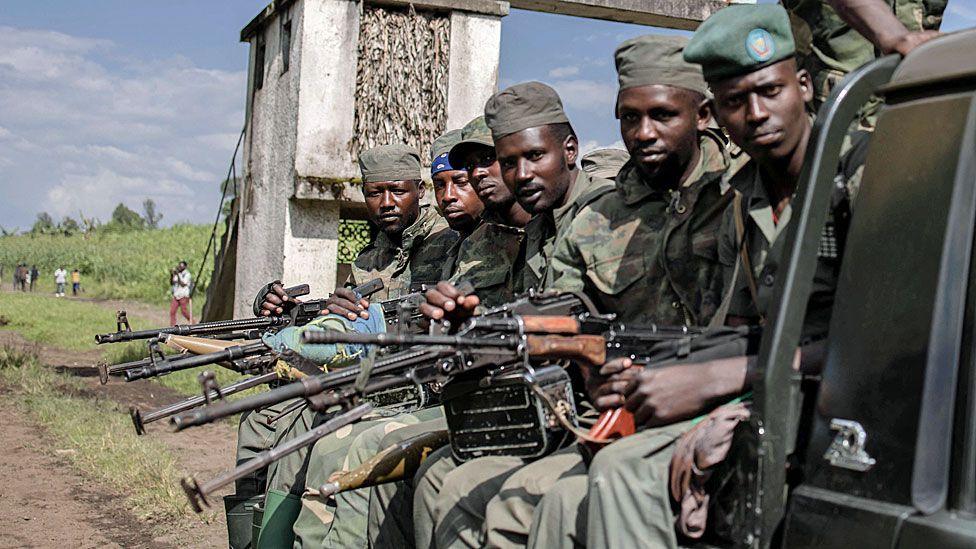
Rwanda’s military intervention in the DRC was justified by its claim to pursue those responsible for the genocide. The country’s armed forces invaded DR Congo twice, collaborating with members of the Banyamulenge and other armed factions. These actions, according to the DRC, were part of a broader pattern of supporting rebel groups to destabilize its territory. The case now alleges that Rwanda has continued this strategy, backing the M23 rebels, a significant force in the eastern DRC, to carry out unlawful military operations.
In a formal announcement, the DRC’s Justice Minister, Guillaume Andali, stated that the country is seeking justice for alleged violations of international conventions. He emphasized the importance of accountability, noting that Rwanda’s actions have not only endangered Congolese lives but also undermined regional peace efforts.
Rwanda has consistently denied allegations of supporting rebel groups in the DRC. The government describes itself as a peacekeeper, arguing that its involvement in the region is necessary to combat the Democratic Forces for the Liberation of Rwanda (FDLR), a Hutu group still active in eastern DR Congo. The FDLR, which includes some of the perpetrators of the 1994 genocide, is labeled by Rwanda as a “genocidal militia” that poses a direct threat to its borders.
The DRC’s legal filing accuses Rwanda of systematically violating treaties by deploying forces into its territory and enabling armed groups to carry out attacks. The country’s application to the ICJ, based in The Hague, demands that Rwanda cease its alleged crimes and provide reparations to Congolese authorities and victims. This marks the latest effort in a series of legal challenges against Rwanda, as the DRC aims to resolve the dispute through international mechanisms.
Previous Legal Attempts and Ongoing Disputes
This is not the first time the DRC has pursued legal action against Rwanda at the ICJ. A similar case was withdrawn by Congolese authorities in 2001, and another was dismissed in 2006. The court ruled that Rwanda had not acknowledged its jurisdiction, leaving the matter unresolved. Despite these setbacks, the DRC has persisted in its efforts, citing the need for clarity on Rwanda’s role in the conflict.
The current case adds new dimensions to the long-standing rivalry between the two nations. While Rwanda has long denied supporting rebel groups, evidence from UN experts and Western governments suggests otherwise. The M23 rebels, for instance, have been accused of receiving logistical and military aid from Rwanda, which has fueled the DRC’s claims. The conflict flared again in January of this year, when the M23 captured key areas in the mineral-rich east, including the regional capital of Goma. This event underscored the ongoing volatility of the region.
Despite a peace deal signed in December, which was spearheaded by the United States, the fighting continues. The agreement was intended to establish a framework for dialogue and reduce hostilities, but it has yet to quell the tensions. The DRC argues that Rwanda’s covert support for rebels has been a persistent obstacle to lasting peace. Meanwhile, Rwanda maintains that the DRC has failed to address the presence of groups like the FDLR, which it claims have been operating in eastern DR Congo for years.
The Human and Political Fallout
The conflict has left a profound impact on the DRC’s eastern regions, where civilians have borne the brunt of the violence. Thousands have been displaced, and infrastructure has been damaged, threatening economic progress and security. The DRC’s case at the ICJ seeks to not only address these humanitarian concerns but also to establish a legal precedent for Rwanda’s involvement in cross-border operations.
International observers have noted the complexity of the situation, with Rwanda and the DRC both pointing to historical grievances. The DRC’s accusations of Rwanda’s support for the M23 are compounded by the fact that the group has been linked to the FDLR, which remains a significant force in the region. Rwanda, however, contends that the DRC has not done enough to combat these groups, leaving its borders vulnerable to attacks.
As the ICJ begins its review, the case may set a new tone in the relationship between the two countries. The outcome could influence future diplomatic efforts and determine whether Rwanda’s actions are considered a breach of international law. For the DRC, the case represents a critical opportunity to hold its neighbor accountable for decades of conflict and to secure reparations for the suffering endured.
The dispute also reflects broader challenges in African geopolitics, where neighboring states often play pivotal roles in regional conflicts. The DRC’s decision to take Rwanda to the ICJ underscores its determination to address the root causes of instability and assert its sovereignty. As the legal proceedings unfold, the international community will be closely watching, hoping for a resolution that brings peace to the eastern DRC and strengthens the rule of law in the region.
For now, the conflict continues, with both sides citing historical injustices to justify their positions. The ICJ’s role in mediating this dispute is crucial, as its ruling could shape the future of relations between the two nations and set a precedent for similar cases. The DRC’s case against Rwanda is a testament to the enduring legacy of the 1994 genocide and the far-reaching consequences of its aftermath.