
Burnham’s PMQs Debut Exposes Westminster’s Rivalry
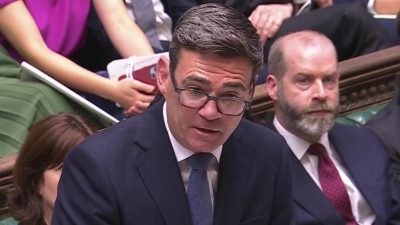
Constantvpn.com – The moment Andy Burnham stepped to the despatch box for his first session as prime minister, the packed Labour benches erupted in partisan cheering. Yet within minutes, the raucous welcome dissolved into something far older: the weekly adversarial ritual of Prime Minister’s Questions. Burnham’s PMQs debut shows how deeply entrenched that ritual remains, even in an era of algorithmic feeds and thirty-second viral clips. Westminster insiders still treat the exchange as indispensable to democratic accountability, and no prime minister has yet found a way to opt out without appearing evasive.
Burnham arrived carrying the momentum of a summer spent flooding social platforms with short-form video messages aimed at ordinary voters rather than party loyalists. That digital strategy, however, could not prepare him for the particular grammar of the chamber’s weekly theatre. His predecessor, Sir Keir Starmer, had navigated the same format, but Burnham’s debut carried an additional layer of expectation: he had publicly pledged to abandon what he termed political “point scoring,” a promise that collided immediately with the adversarial architecture of the House.
The Badenoch Gambit
Kemi Badenoch, leading the Conservative opposition, opened with a pointed joke about the prime minister’s physical endurance, referencing a marathon Commons session earlier that week in which Burnham had fielded questions for more than three hours. Laughter rippled through the chamber; Burnham offered a cautious smile. The early exchanges carried a faintly jocular edge, but the tone shifted within minutes as Badenoch pivoted to borrowing costs, tax policy, and what she characterised as profligate government spending.
Despite his stated intention to move beyond partisan scorekeeping, Burnham found himself pointing directly at the Conservative economic record. He invoked the budget delivered under former prime minister Liz Truss as evidence of fiscal mismanagement while simultaneously pledging that his own government would enforce strict fiscal discipline. The contradiction between his declared style and the reality of the exchange was, by any measure, immediate.
“Punch and Judy politics” — David Cameron’s description of Westminster’s adversarial culture when he assumed the Conservative leadership, a label that proved no more durable than Burnham’s own pledge to end point scoring.
Cameron’s experience offers a useful parallel. He entered the despatch box promising to transcend partisan theatrics, only to discover that the format itself compels escalation. Burnham’s PMQs debut confirmed the same structural reality: the chamber’s dynamics reward confrontation, and no prime minister has yet found a way to step outside them without appearing to dodge questions.
Beyond the Tone Shift
What distinguishes Burnham from his immediate predecessor is not merely rhetoric. Observers in the chamber noted that he handled the exchanges with a noticeably greater ease of communication, a comfort absent under Starmer’s tenure. Yet comfort at the podium is not the same thing as competence in governance. The questions Badenoch pressed — on tax trajectories, spending priorities, and the trajectory of government borrowing — map directly onto decisions the chancellor must take before the autumn budget at the end of October.
The macroeconomic backdrop complicates every answer. A global uptick in borrowing costs has narrowed the UK’s fiscal headroom considerably, and analysts expect the chancellor’s manoeuvring space at the October budget to be constrained by precisely the pressures Badenoch highlighted. Burnham has spoken of a “transformational government,” but the pressure points he inherits — defence spending commitments, welfare reform, social care funding — are substantially identical to those that occupied Starmer’s final months. The style may differ; the arithmetic does not.
When pressed for specifics, Burnham pointed to two early policy moves: a reduction in VAT applied to domestic electricity bills and a cut in business rates for pubs and music venues. Beyond that, he retreated into a familiar ministerial refrain — that prime ministers do not compose budgets from the despatch box. It is a defensible position for a first session, though the questions themselves will not disappear. They will recur, sharpened, until the government produces a coherent economic narrative.
Frequently Asked Questions
What happened during Burnham’s first PMQs session? Burnham faced questions from Conservative leader Kemi Badenoch covering borrowing costs, tax policy, and government spending. He cited the Liz Truss budget as evidence of prior fiscal mismanagement and outlined two early measures: a VAT cut on domestic electricity bills and reduced business rates for pubs and music venues.
How does Burnham’s approach differ from Starmer’s at the despatch box? Chamber observers noted Burnham handled the exchanges with greater communicative ease than Starmer displayed during his tenure. However, both prime ministers ultimately found themselves engaged in the same adversarial dynamic the format demands.
When is the next major fiscal decision point? The chancellor’s autumn budget, scheduled for the end of October, is the next critical moment. Global borrowing-cost pressures are expected to constrain the government’s fiscal headroom considerably.