
Flash Floods and Landslides Devastate Nepal-Tibet Border Region
Constantvpn.com – A catastrophic cascade of glacial collapse, rockfall, and torrential flooding struck the Nepal-Tibet border on Wednesday, sweeping through mountain towns, river valleys, and pilgrimage routes roughly 64 kilometres north of Kathmandu. Hundreds of people have been killed or remain unaccounted for, and military units have been deployed alongside civilian rescue teams to evacuate survivors and comb through debris fields in the Nuwakot district and surrounding areas. Nepalese officials have described the expected toll as a “huge scale loss,” while Chinese authorities confirmed significant casualties on the Tibetan side of the frontier.
What Triggered the Disaster
Not an Earthquake
In the first hours after the event, Nepal’s foreign minister indicated that a seismic tremor had been felt along the border shortly before the slope failure, raising the possibility that an earthquake had initiated the collapse. The United States Geological Survey initially logged the event as a magnitude 4.4 quake. However, after re-examining long-period seismic waveforms from nearby stations and cross-referencing satellite imagery, USGS revised its assessment on Thursday.
“Additional analysis of nearby seismic stations, long period seismic waves, and satellite imagery led to the determination that the seismic event was instead a glacial collapse and debris flow, and that no earthquake had occurred.”
Nepali authorities had separately indicated that a massive section of ice may have sheared away from a high-altitude peak, dragging rock, sediment, and frozen debris down the mountainside in a single catastrophic release.
Climate Context
The Hindu Kush Himalaya region is experiencing accelerated glacier melt driven by rising temperatures, a trend that weakens the structural integrity of mountain slopes over time. Simon Cook, a senior lecturer in energy, environment, and security at the University of Dundee with a specialisation in glaciology, noted that the warming of permafrost layers that historically stabilised steep terrain is increasing the frequency of slope failures.
“Permafrost is partially holding some mountainsides together, this permafrost is warming and thawing and degrading so you are going to get more landslides.”
One plausible sequence under investigation is that recent rainfall or accelerated ice melt introduced water into fracture planes within the ice or underlying bedrock, destabilising the slope and triggering a chain reaction of collapse and debris flow. Researchers are now scrutinising satellite imagery to pinpoint the exact failure zone, determine whether any proglacial lakes drained abruptly, identify where river channels may have been dammed, and correlate the event with recent precipitation records.
The Scale of Destruction
Witness footage captured a towering wall of mud, boulders, and water racing down a gorge along the Trishuli River, engulfing the Rasuvagadhi Border checkpoint—a multi-storey structure—and flattening roads, vehicles, and buildings in its path. In the Nuwakot region, residents were seen fleeing the fast-moving wave of debris as it tore through settlements. The border zone affected sits in a corridor long associated with mountaineering expeditions and Hindu pilgrimage routes, meaning the casualty list includes a substantial number of foreign visitors.
Severe flooding has been documented along three major waterways: the Bhote Koshi, the Trishuli, and the Narayani rivers. Deaths have also been confirmed in villages on the Tibetan side of the frontier, extending the disaster’s footprint across both nations.
Casualty Figures and Ongoing Search
Nepal Side
Nepali police confirmed at least 270 fatalities as of the latest count. Of those, 64 bodies were recovered in downstream areas of Chitwan district and another 26 in Nawalparasi East. Nepal’s National Disaster Risk Reduction and Management Authority reported on Thursday morning that 826 people remain missing, including more than 529 tourists, of whom 466 are foreign nationals. The Nepal Tourism Board separately stated that 644 tourists are unaccounted for, among them 33 British citizens.
Tibet Side
China’s state broadcaster CCTV reported on Thursday that the number of missing persons in the mudslide disaster within Gyirong county, Tibet, had climbed to 558, including 260 foreign nationals. The confirmed death toll on the Tibetan side stood at three at the time of that report. It remains unclear whether some individuals counted in both the Nepali and Chinese tallies have been double-listed.
Secondary Flood Risk
The International Centre for Integrated Mountain Development (ICIDMOD) issued a warning that secondary flooding events could occur in the coming days as accumulated debris continues to interact with river systems. In a technical assessment, ICIDMOD stated it was evaluating whether the Trishuli River had been temporarily dammed in narrow gorge sections. If such a blockage exists, it carries the risk of forming a landslide dam whose eventual breach would release a second, potentially larger, flood pulse downstream.
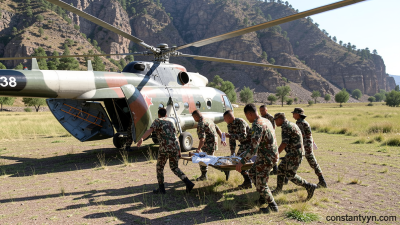
Authorities and glaciologists are continuing to assess the size, precise location, and structural stability of any potential river blockages. Helicopter evacuations have been transporting survivors to hospitals in Kathmandu, where medical teams are treating injuries ranging from hypothermia to traumatic crush wounds. Rescue operations remain constrained by ongoing instability in the affected valleys, limited road access, and the sheer volume of material that must be cleared before full accounting of the dead and missing can be completed.
The Gyirong border crossing, a historic gateway between the two nations and a key node on the ancient trade route linking Kathmandu to Lhasa, now sits amid a landscape reshaped by the disaster. For the communities that depend on the Trishuli and Bhote Koshi valleys for agriculture, transport, and tourism, the coming weeks will determine whether the river systems stabilise or deliver yet another wave of destruction.
Related Reading
Frequently Asked Questions
What is What we know about deadly Nepal?
What we know about deadly Nepal is the main topic of this guide. The article explains the context, practical details, and next steps readers should understand.
Why does What we know about deadly Nepal matter?
What we know about deadly Nepal matters because readers are looking for a useful answer, not just a short summary. Good content should match search intent and help them decide what to do next.