Author: John Williams – constantvpn.com

  • Inspectors to assess police after Henry Nowak murder

    Inspectors to assess police after Henry Nowak murder

    Independent Scrutiny Ordered for Hampshire Police After Fatal Handcuffing of Stabbed Student

    Constantvpn.com – Hampshire Police will face a formal, independent inspection of its response procedures to serious violent incidents following the death of Henry Nowak, an 18-year-old university student who was handcuffed by officers while dying from stab wounds in Southampton. The review, commissioned by the force’s Police and Crime Commissioner, will examine how the organisation trains its personnel, structures its control-room operations, and supports front-line officers in making unbiased, life-saving decisions during moments of extreme urgency.

    The inspection falls under the remit of His Majesty’s Inspectorate of Constabulary and Fire & Rescue Service (HMICFRS), the statutory body responsible for auditing police and emergency-response forces across England and Wales. Its findings will evaluate whether the force’s existing frameworks adequately prepare officers to distinguish between a perpetrator and a victim in the chaotic seconds after a knife attack — a distinction that proved fatal in Nowak’s case.

    What Happened on the Night of 3 December

    Nowak, a first-year student at the University of Southampton originally from Chafford Hundred in Essex, was repeatedly stabbed in Southampton by Vickrum Digwa. When police arrived at the scene, Digwa told officers he had been the victim of a racially motivated assault. Acting on that account, officers placed Nowak — who was bleeding and dying — into handcuffs before he was taken to hospital, where he later died.

    Footage of the handcuffing was subsequently released and ignited widespread public fury. Protests erupted in Southampton, turning into violent disorder, and the incident became a flashpoint in ongoing national conversations about policing practice, racial bias in emergency response, and the regulation of knife crime. The Prime Minister commented that the arrest footage raised “serious questions for police,” while the case prompted parliamentary scrutiny of how officers are trained to assess who is the victim and who is the aggressor in a knife incident.

    Commissioner’s Rationale for the Inspection

    Donna Jones, the Hampshire Police and Crime Commissioner, formally requested the HMICFRS review, framing it as a necessary step to restore public trust in the force. She emphasised that the family of the deceased and the wider community are entitled to clarity about how the organisation functions under pressure.

    “This inspection will provide an independent assessment of the force’s training, processes and culture, including the handling of allegations of racially aggravated assault,” Jones said. “Henry’s family deserve answers, and the public deserve reassurance that their police service is equipped to recognise victims and provide the highest standard of care when it matters most.”

    She added that officers must be guaranteed access to accurate information, appropriate training, and institutional support when making split-second decisions that determine whether a person lives or dies.

    “The public must have confidence that police officers receive the right information, the right training and the right support to make critical decisions,” Jones stated.

    Scope and Boundaries of the Review

    The inspection will trace the full operational chain of a police response to a serious-violence call: from the moment a member of the public phones the control room, through dispatch decisions, to the initial attendance of officers at the scene. Specific areas of focus include:

    How call handlers interpret and prioritise reports of knife or stab incidents; the speed and accuracy of dispatch decisions; the decision-making and risk-assessment training provided to officers before they attend; and the mechanisms in place to help officers identify where immediate intervention — such as administering first aid or applying tourniquets — is required rather than where restraint is appropriate.

    Crucially, the review will not examine the individual conduct or actions of the officers who attended the 3 December incident involving Nowak. That matter is the subject of a separate investigation by the Independent Office for Police Conduct (IOPC), which handles complaints about officer behaviour. The Commissioner’s office stated that the inspection’s scope was deliberately calibrated to avoid any overlap or interference with ongoing judicial proceedings or conduct investigations.

    Judicial Outcome and Broader Implications

    In June, Vickrum Digwa was sentenced to life imprisonment with a minimum term of 21 years. The presiding judge rejected Digwa’s defence of self-defence, finding that his account of the confrontation was not credible. The sentencing underscored the gravity of the original attack and reinforced public demand for accountability at every stage of the police response that followed.

    The Nowak case has become emblematic of wider anxieties about how British policing handles racially diverse communities in emergency situations. It has intensified debate over whether existing training adequately addresses implicit bias, whether control-room protocols allow sufficient time for officers to verify who is the victim before applying restraint, and whether legislative reform of knife-carrying offences would reduce the frequency of such incidents altogether.

    The HMICFRS inspection is expected to produce a public report with recommendations. Forces across England and Wales typically have a defined period to respond to such findings, and the outcomes may influence national training standards for all police organisations, not just Hampshire. For Nowak’s family and for the residents of Southampton who witnessed the aftermath, the inspection represents a formal acknowledgment that the sequence of events on that December night was not simply bad luck but a failure of process that can, and should, be corrected.

    Frequently Asked Questions

    What is Inspectors to assess police after Henry?

    Inspectors to assess police after Henry is the main topic of this guide. The article explains the context, practical details, and next steps readers should understand.

    Why does Inspectors to assess police after Henry matter?

    Inspectors to assess police after Henry matters because readers are looking for a useful answer, not just a short summary. Good content should match search intent and help them decide what to do next.


  • ‘Half my business will be gone’ – firms in Canada and US fear trade war

    ‘Half my business will be gone’ – firms in Canada and US fear trade war

    Constantvpn.com – Most of Cindy Baldassi's US sales will be wiped out, she says Cindy Baldassi relies on American buyers to keep her stone-and-glass jewellery company going. Some 75% of sales of pieces including amethyst, sea glass and agates from her business, CindyLouWho2, based in Calgary, Alberta, come from Americans. But after trade talks between the US and Canada collapsed over the weekend and leaders of both countries pledged to slap 50% tariffs on each other's products, business owners on both sides of the border are bracing for the fallout.

    With a majority of the items she sells falling under US President Donald Trump's newly imposed tariffs, Baldassi says she will need to add 50% to the price of most of her products to stay afloat. "It's quite likely that it will wipe out most of my US sales," Baldassi told the BBC. "I expect that at least half of my business will be gone." Canadian Prime Minister Mark Carney has pledged levies starting on 8 September on US steel, dairy, appliances and electronics.

    Trump tariffs went into effect on Saturday, hitting Canadian wine, dairy, cement, clothing and hockey equipment. In Canada, it is not clear how much more severe the impacts will be, since the country has grown somewhat used to the on-again-off-again trade war. Lind Furniture has been in business for almost 60 years in the Canadian province of Ontario, selling leather furniture to big store clients like Sears and Costco over the years.

    Sales dropped when Trump took office in 2025. "As soon as there were tariffs in the air, people put purchases on hold," Michael Saifer, general manager of Lind Furniture, told the BBC. Trump says Canada wants 'benefits' of being US state after trade talks collapse Now, his concern centres around Canadians' chances for victory.

    "Everyone wants to sell to the Americans – they can buy from whoever they want," he said. "I don't know that we're going to win a war with them; we may get killed." The US tariffs that took effect after talks broke off on Friday apply to about $20bn (£15bn; C$28bn) worth of Canadian exports to the US – about 5% of what Canada ships to the US annually. The levies add to US tariffs already in place on Canadian steel, aluminium, automobiles and lumber.

    Canada would be very exposed if the import taxes multiply on both sides because 70% of its exports are to the US. Navigating what comes next as both sides are dug in is proving a delicate balance for some business owners. Matteo Sgaramella Like many retailers, Matteo Sgaramella, founder of Toronto-based menswear brand Outclass, told the BBC that his company collects orders from clothing designers months before they are due to arrive in stores.

    Products that US stores ordered in January will arrive in September but now with a new tariff. "If I contact them now and tell them, hey, you know, you may get an extra 50% bill from UPS on top of what you need to pay me for this shipment, they're all going to say, 'no way, don't ship it,'" Sgaramella said. He still has to figure out where that additional cost will go.

    "There's going to be a lot of people that go out of business because of this," Sgaramella said, but noted that only 20% of his wholesale sales and 20% of his e-commerce come from the US. "Big business can, you know, always find a way… but small businesses are going to get smashed by this." The impacts are not only being felt north of the US-Canada border.

    Carney promised his tariffs hitting US products in September will match Trump's "dollar-for-dollar". Details of the countermeasures will be released in the coming days, he said. For Mike Roach and Kim Osgood, owners of Paloma Clothing, a clothing store in Portland, Oregon, that means preparing for one of their best-selling items to potentially increase sizably in price.

    Osgood creates designs that she has a Montreal-based company transfer onto pillows the couple sells in their store. Mike Roach and Kim Osgood Those pillows are their best-selling gift item, retailing at $59. With the newly imposed tariffs, a normal markup would bring the price of that pillow to somewhere between $86 and $90, Osgood told the BBC.

    "Gift items are really price-point sensitive; people have in their mind what they're going to pay for a gift, and they're not going to pay more than that," Roach said. The couple, whose shop has been operating for 51 years, say they will likely hold the original price and hope the "tariff problem," as Roach calls it, gets worked out. "It would be one thing if we had three months' notice; that would be something you could plan around, do some work with the vendors, but when it happens literally overnight you're really stuck," he said.

    Cushions for sale at Paloma Clothing While the tariffs could mean changes for the Paloma Clothing company, other American companies are facing the same battle they have faced since Trump returned to office and began imposing his levies. Bill Easton, owner of Terre Rouge Wines in Plymouth, California, has been unable to ship his wine north to Canada for the past year and a half due to a boycott of US alcohol. He is currently paying $2,400 a month to store that wine in a warehouse in the hope that he will one day be able to ship it to the Canadian markets he sells to.

    "The wine has just gotten better in the warehouse, but I can't expect my customer in Canada to pay that extra cost that I've assumed over the last year and a half as part of the price, if I was able to sell it tomorrow," Easton told the BBC. And then there are the American businesses impacted by proximity to the Canadian border. The number of Canadian customers travelling across the border to shop at Heather Seevers' craft shop, Northwest Yarns and Mercantile in Bellingham, Washington, has gone down some 20% since the tariff war began over a year ago.

    What has further irked Canadians has been Trump musing on Canada becoming a 51st US state. The shop sits 25 minutes from the US-Canada border and since the "war" ensued Seevers said her business received emails from Canadian customers saying they could not patronise her business "due to anti-Canadian rhetoric". "We completely understood that," she said.

    But the combined impact of fewer customers and higher prices has left the shop asking for help from the community recently via a fundraising initiative to stay afloat. And then, over the weekend, when the new tariffs struck, Seevers saw another hurdle appear. "It's going to get worse before it gets better," she said.

    "It's going to take years and years and years to get a relationship back with Canada, and I think these new tariffs are digging us deeper into a hole." Additional reporting from Nadine Yousif Carney faces crucial test after walking away from Trump's deal Many Canadians are boycotting the US, so this is where they're travelling instead

    Frequently Asked Questions

    What is Half my business will be gone?

    Half my business will be gone is the main topic of this guide. The article explains the context, practical details, and next steps readers should understand.

    Why does Half my business will be gone matter?

    Half my business will be gone matters because readers are looking for a useful answer, not just a short summary. Good content should match search intent and help them decide what to do next.

  • ‘We’re not going to run from it’: Sydney Marathon laughs off medal error

    ‘We’re not going to run from it’: Sydney Marathon laughs off medal error

    Sydney Marathon Embraces Its Most Unintended Trophy Design

    Constantvpn.com – When the Sydney Marathon unveiled its finisher medal earlier this week, runners and spectators expected the usual celebration of local landmarks. What they got instead was a small architectural mix-up that turned a routine pre-race announcement into a viral moment of good-natured confusion. The medal’s engraving featured the silhouette of Munich’s Allianz Arena in the lower-right corner rather than the similarly named Allianz Stadium that anchors Sydney’s Olympic Park precinct. Organisers responded not with a retraction but with a shrug and a joke: they were, in their words, not going to run from it.

    “A little too much international flavour has found its way onto the back of the finishers medal, with an incorrect depiction of the stadium.”

    The spokesperson for the event called the slip “an unfortunate error” but made clear that no corrected version would be produced. Every runner crossing the finish line on race day would receive the same piece of metal bearing the wrong city’s skyline.

    Two Arenas, Two Very Different Faces

    The confusion is understandable given the shared “Allianz” branding, but the two structures look nothing alike once you know what to look for. Munich’s Allianz Arena, home of Bayern Munich and the German national team, is wrapped in a lattice of thousands of diamond-shaped, air-inflated cushions that glow red or white depending on which side is playing. Sydney’s Allianz Stadium, by contrast, presents a comparatively flat, angular profile softened by long bronze-coloured fins running vertically along its exterior. Anyone familiar with either building could spot the swap within seconds, and social media users did exactly that within hours of the design going public.

    The rest of the medal’s front face, however, is unmistakably Sydney. The Opera House and the Harbour Bridge appear as recognisable landmarks along the 42.2-kilometre (26.2-mile) course that runners will traverse. The juxtaposition of correct local icons beside an imported Bavarian stadium gave the piece an almost surreal quality, as though a travel brochure had been accidentally laminated onto a city-identity token.

    Munich Joins the Laughter

    The stadium itself in Munich did not sit quietly on the sidelines. Its official Instagram account weighed in with a playful post, acknowledging the coincidence with characteristic self-awareness.

    “Oh wow, we didn’t have that on our bingo card!”

    The caption went on to riff on the shared architectural pedigree: “Perhaps they tried to find something else they had in common: Allianz Arena – Sydney Opera – Unique Architecture – Both are worth a visit!” The exchange underscored how quickly a production mistake can become a lighthearted cross-continental conversation, with neither city’s fans left feeling slighted.

    The Reverse Side: A Separate Artistic Statement

    While the front face generated headlines, the medal’s reverse carries a far more deliberate design. First Nations artist Ambrose Killian created a gold-and-indigo pattern of intricate, ornate geometry that has drawn widespread praise for its craftsmanship. Killian confirmed that he had no involvement in producing the stadium engraving on the opposite side; his contribution was confined to the decorative motif that now shares a single disc of metal with the accidental Bavarian silhouette. The pairing of his culturally specific artwork with the misplaced arena image only deepened the medal’s odd, layered character.

    Scale of the Event and What Comes Next

    The Sydney Marathon is scheduled for 30 August and is expected to field roughly 40,000 participants. That figure represents a record turnout, drawn from a ballot pool exceeding 120,000 entries. Organisers have highlighted both the participation numbers and the fundraising totals as milestones for this year’s edition. The medal controversy, while amusing, sits atop an event of considerable logistical and charitable weight: tens of thousands of runners will complete a full marathon distance through Sydney’s streets, and the finish-line ceremony will hand out the very token now circulating in memes and group chats.

    Organisers framed the situation with characteristic marathon humour, noting that the incident had “certainly given everyone something to talk about this weekend, mostly in good humour,” and that the piece remained “a beautiful medal, and now a little more unique.” In a sport where finish-line tokens are collected, traded, and displayed for decades, a single engraved error becomes a permanent footnote in the object’s biography. For the runners who will wear the medal around their necks on race day, the Munich cameo will serve as an unlikely souvenir of a city they never intended to visit — a small, metallic reminder that even the most carefully planned event can carry an accidental passport stamp.

    Frequently Asked Questions

    What is We re not going to run?

    We re not going to run is the main topic of this guide. The article explains the context, practical details, and next steps readers should understand.

    Why does We re not going to run matter?

    We re not going to run matters because readers are looking for a useful answer, not just a short summary. Good content should match search intent and help them decide what to do next.

  • ‘New season, new trim’ – Haaland reveals buzzcut

    ‘New season, new trim’ – Haaland reveals buzzcut

    Haaland Shaves His Iconic Blonde Locks Ahead of Premier League Kickoff

    Constantvpn.com – The Norwegian striker who spent the past several seasons becoming one of football’s most recognizable faces through his flowing, waist-length blonde hair has made a dramatic visual reset. Erling Haaland, now 26, posted a before-and-after reveal on social media confirming he has adopted a close-cropped buzzcut just days before Manchester City’s new Premier League campaign begins. His accompanying caption was brief and matter-of-fact: “New season, new trim.”

    A Departure from Football’s Man-Bun Era

    For roughly a decade, the long-haired male footballer has been a fixture of the sport’s visual landscape. Zlatan Ibrahimovic made the top-knot synonymous with Scandinavian swagger in the late 2000s. Gareth Bale carried the trend into the 2010s with his own elaborate ponytail, turning every header into a spectacle of swinging hair. Haaland, arriving at Manchester City in 2022, inherited the mantle and pushed the look to its most extreme expression — a cascade of pale hair that trailed well past his shoulders and became inseparable from his public identity.

    That identity, as of this week, no longer exists. The change is not a subtle trim or a seasonal taper. It is a full military-style buzz, the kind that reduces a player’s silhouette to something almost unrecognizable against the backdrop of his previous appearances. For a striker whose brand has been built partly on visual distinctiveness, the gamble is considerable.

    The Cut Itself

    Haaland documented the process in a series of social media posts that leaned heavily into self-aware humour. Before the scissors came down, he circulated a montage of his own previous hairstyles throughout his career, alongside what he described as “questionable ideas” of how the new cut might look — clearly a pre-emptive joke to soften the blow for fans. As the hairdresser made the first pass, the footage captured a visibly tense Haaland, jaw tight, eyes fixed on the mirror. The nervousness dissolved quickly. Within moments of seeing the shape take hold, he was grinning broadly, clearly pleased with the result.

    Reactions From the Inner Circle

    The real story, however, unfolded in a string of video calls Haaland placed immediately after the cut. He reached out to current teammate Jack Grealish, Oasis frontman Noel Gallagher, and former City manager Pep Guardiola — three very different voices, three very different verdicts.

    Gallagher, ever the dry wit, delivered his assessment with characteristic bluntness:

    “You look about 17 years old. It’s good. Change is good.”

    Grealish went further, laughing through his remarks:

    “You look about 10 years old. That is hilarious. I can’t stop looking at the front of your hair. I love it.”

    Guardiola, speaking from his post-City life, framed the change as an enviable privilege:

    “No way. You’re lucky you have hair. I would love to have it. I love it.”

    The final call was the most anticipated. Before dialling, Haaland set up the exchange with a running gag, telling his audience that the former Sweden international had once issued a firm directive: never touch the hair.

    “Zlatan told me, never cut your hair, because your strength is in your hair. I’m a bit nervous. I want a buzz cut, like in the military.”

    Ibrahimovic’s response, delivered with the full weight of a man whose own long-hair era defined an entire decade of football aesthetics, was less philosophical and more exasperated:

    “What did you do? You lost a bet or what? Block me and erase my number.”

    Context: The Last Time Short

    Haaland’s previous short-haired chapter dates back to his Borussia Dortmund years, before the blonde mane grew out and became a defining feature of his image. That era — the one in which he scored 86 goals in two seasons and announced himself as a generational talent — is now a distant memory for most fans. The long hair became so central to his public persona that its removal reads less like a haircut and more like a rebranding event.

    What Comes Next

    The practical stakes are straightforward. Haaland will be expected to find his goal-scoring form immediately under new manager Enzo Maresca, whose side open the season against Bournemouth at 14:00 BST on Sunday. Whether the buzzcut carries any psychological edge is, of course, unknowable. What is knowable is that a player who has scored over 200 goals in his career for City is entering a new managerial regime with a fresh visual identity attached. The hair, for better or worse, is no longer part of the equation. The football remains.

    Frequently Asked Questions

    What is New season new trim?

    New season new trim is the main topic of this guide. The article explains the context, practical details, and next steps readers should understand.

    Why does New season new trim matter?

    New season new trim matters because readers are looking for a useful answer, not just a short summary. Good content should match search intent and help them decide what to do next.
  • How Israel is expanding settlements in drive to reshape West Bank

    How Israel is expanding settlements in drive to reshape West Bank

    Settlement tenders ignite fresh alarm over West Bank’s future

    Constantvpn.com – The opening of construction bids for roughly 1,200 new homes on a narrow strip of land east of Jerusalem has sent shockwaves through diplomatic capitals and Palestinian communities alike. The parcel, designated E1, sits at a geographic chokepoint whose development would sever the northern West Bank from its southern half, effectively bisecting the territory and isolating East Jerusalem from the rest of the Palestinian-administered landscape. For decades, successive Israeli governments deferred plans to build there, wary of the geopolitical fallout. That restraint has now evaporated.

    A promise made explicit

    The current administration’s stance was laid bare last September, when Prime Minister Benjamin Netanyahu addressed a ceremony at a West Bank settlement. Speaking before signatories to an agreement accelerating construction in the E1 zone, he declared:

    “We are going to fulfill our promise that there will be no Palestinian state. This place belongs to us.”

    The remark crystallized what many observers had long suspected: that the government now treats the occupied territory not as a temporary administrative arrangement but as permanent national space. The tenders announced in recent days translate that rhetoric into concrete contracts, locking in construction before the upcoming October elections.

    International backlash

    Reactions came swiftly and from multiple directions. The UN secretary general characterized the E1 plans as an “existential threat” to any future Palestinian state. A coordinated statement issued by the United Kingdom, France, Germany, Italy, and Canada labeled the scheme “unacceptable,” warning it would “drive a wedge through the West Bank.” The European Union voiced parallel concerns. Palestinian Authority president Mahmoud Abbas, for his part, urged the signatory nations to move beyond words and adopt “concrete measures to halt the implementation of the E1 plan.”

    All settlements in the West Bank remain illegal under international law, a status confirmed repeatedly by the International Court of Justice and successive UN General Assembly resolutions. The territory was seized during the June 1967 war against a coalition of Arab states, and Israel has maintained administrative control ever since. Under the Fourth Geneva Convention, an occupying power may not transplant its own civilian population into occupied land — yet the settler population has grown steadily regardless.

    Scale and acceleration

    Since 1967, Israel has erected approximately 160 settlements housing around 700,000 Jewish residents across the West Bank. The pace of construction, however, has shifted markedly since 2022, when Netanyahu returned to the premiership at the helm of a right-wing, pro-settler coalition. The tempo quickened further after the Gaza war erupted following Hamas’s 7 October 2023 attack on southern Israel.

    Satellite imagery analysis conducted by BBC Verify documents the acceleration at the ground level. At Tzofim, a settlement in the northwest of the territory, roughly 185 new structures have appeared since 2022. Around Kochav Hashahar, an existing settlement has sprawled outward in multiple directions, accompanied by new roads, housing units, and a fresh settler outpost on adjacent land. Hundreds of such outposts — illegal under both Israeli domestic law and international law — have been established since the 1990s, and dozens have since been retroactively regularized by government decree.

    Why E1 matters geographically

    To grasp the stakes, one must look at a map. The proposed E1 development would slice the West Bank into two disconnected halves. Opponents argue it would foreclose the possibility of a contiguous Palestinian urban corridor linking Ramallah, East Jerusalem, and Bethlehem — the geographic backbone any viable state would require. Peace Now, an Israeli anti-settlement watchdog that has litigated the plans in Israeli courts, warned:

    “The government is trying to sign contracts with contractors before the (upcoming October) elections so that it will be much harder for the next government to cancel the construction.”

    The timing is deliberate. Once construction contracts are executed and foundations poured, reversing the project becomes politically and financially costly, regardless of which party wins the next ballot.

    Civilian administration and infrastructure

    Settlement expansion is not confined to housing. Over recent years, much of the West Bank’s day-to-day governance has migrated from military command to a civilian authority led by Bezalel Smotrich, the far-right finance minister. Under his oversight, a dense network of roads now threads the territory, linking settlements to one another while cutting through Palestinian towns and villages. Smotrich has described the road-building as ensuring “that the settlements will not remain on paper — but will be established on the ground.”

    In May of this year, the Israeli cabinet approved more than one billion shekels — approximately $360 million or £246 million — for new road construction across the West Bank, with the stated aim of “strengthening of their grip on the territory,” per an official press release. The infrastructure investment entrenches physical access patterns that make future partition or withdrawal logistically complex.

    Settler violence and its diplomatic cost

    Parallel to the construction boom, settler violence against Palestinian residents has intensified. In recent weeks, two Palestinian homes were besieged by settlers who cut off water and electricity supplies. The episode drew rare condemnation from US Ambassador Mike Huckabee, typically a vocal defender of settlement policy, who denounced the episode as a “criminal and terrorist act.” Such incidents, while localized, compound the sense among West Bank Palestinians that their security and property rights are increasingly subordinate to settler claims.

    What comes next

    The convergence of accelerated construction, infrastructure entrenchment, civilian administrative control, and episodic violence paints a picture that Palestinian leaders and their international allies describe as irreversible without sustained external pressure. For Palestinians living under occupation, the tenders now on the table are not merely a housing project; they are a referendum on whether the two-state framework still has any geographic or political substrate left to stand on. The answer, in the eyes of those who oppose the plan, is becoming harder to sustain.

    Frequently Asked Questions

    What is How Israel is expanding settlements in drive?

    How Israel is expanding settlements in drive is the main topic of this guide. The article explains the context, practical details, and next steps readers should understand.

    Why does How Israel is expanding settlements in drive matter?

    How Israel is expanding settlements in drive matters because readers are looking for a useful answer, not just a short summary. Good content should match search intent and help them decide what to do next.

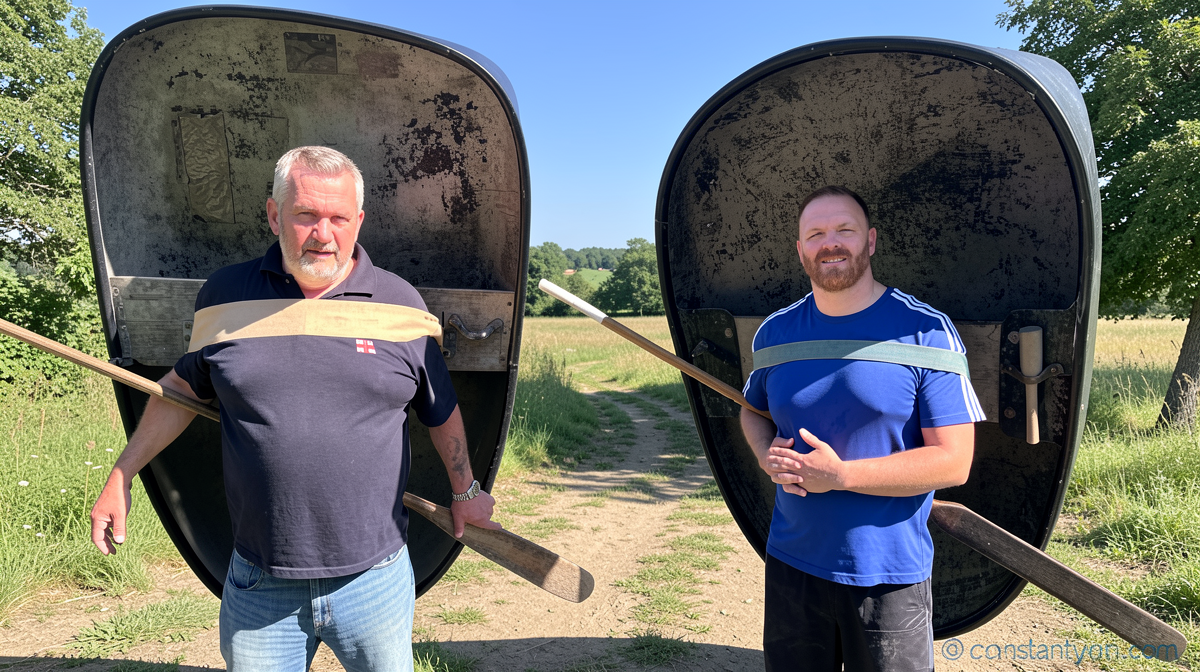
  • ‘I’ve caught one fish all season’ – how a polluted river could end 300 years of coracle fishing

    ‘I’ve caught one fish all season’ – how a polluted river could end 300 years of coracle fishing

    A River That Once Teemed With Life Now Yields Almost Nothing

    Constantvpn.com – For three centuries, the Elias family has taken to the waters of the River Tywi in Carmarthenshire, Wales, each generation passing down the craft of coracle fishing — a practice rooted in the small, rounded wooden boats that have shaped coastal and inland life across west Wales since at least the 17th century. Now, that lineage faces an existential threat. Keith Elias, a fifth-generation practitioner of the trade, spent the entire three-month season from May through July and brought home a single fish. His great-grandfather, William Elias, would have found such a haul unthinkable on a river that once ran so dense with salmon and sewin (sea trout) that nets barely had room to swing.

    The collapse in catch numbers is not anecdotal. Andrew Davies, 63, who has fished the Tywi for 38 years and chairs the Carmarthen Coracle and Netsman Association, put the situation bluntly:

    “I’ve been fishing for 38 years, I’ve never seen a season as bad as this. When I first started, this river was black with fish, it was alive with fish. But it’s gone now — there’s no life in the river.”

    Davies said only four coracle licences were issued for the current season, down from the dozen he recalls when he first cast his net. The four remaining fishers on the Tywi managed a combined total of 12 fish across the entire 2026 season — a number that, just a handful of years ago, represented a single night’s take.

    The Weight of a Vanishing Tradition

    Coracle fishing was once a genuine livelihood for communities along west Wales’s rivers. Fishermen worked at night, launching their shallow-drafted vessels from riverbanks and casting weighted nets into the current to intercept migrating salmon and sea trout. Today the practice survives largely as a heritage activity, a cultural anchor rather than a breadwinner. Even American politics once touched the tradition: President Jimmy Carter was known to enjoy fishing in Welsh rivers during visits. Yet the fishermen who keep the practice alive say recent water quality has rendered the activity functionally impossible.

    “It’s been in my family for so long, I love carrying the tradition on, but it’s getting to the point where you get to the end of the season and you’re not hitting fish. You just don’t want to go,” Elias said.

    What the Water Tells

    Citizen scientists working for the campaign group Save the River Tywi have been conducting regular water-quality tests along the river’s course. Their findings point to contamination from multiple vectors: industrial discharge, agricultural runoff, and untreated human waste. Fishermen corroborate the data with what they observe directly — dead fish bobbing to the surface, a persistent foul odour rising from the water, and visible algal blooms that turn stretches of the river into a murky, oxygen-depleted slurry.

    Local residents have also posted video footage online showing what they identify as discharge plumes entering the river near the site of Mekatek, an electronics-recycling company operating under a discharge licence issued by Natural Resources Wales (NRW). Mekatek responded by saying it shared concern over the decline in sewin populations and noted it had spent more than 40 years refining its processes to minimise environmental impact. The company invited anyone sceptical to arrange a site visit and observe operations firsthand.

    Enforcement and Investment: Promises Against a Backdrop of Spills

    NRW, the public body responsible for water-quality regulation in Wales, stated that it treats every pollution report seriously and confirmed a number of ongoing enforcement and compliance investigations within the Tywi catchment. Davies, however, expressed frustration that repeated reports to the agency have produced no visible corrective action.

    “I think something needs to be done to clean the rivers up in Wales, people have been dodging the bullet,” he said.

    The broader picture is grim. The nearby River Teifi was identified last year as one of the most polluted waterways in the United Kingdom, with 2,232 recorded spills lasting more than 22,000 cumulative hours in 2024 alone. Some of those incidents were attributed to Welsh Water, the region’s water utility. The company announced it will invest £889 million in storm-overflow infrastructure between 2025 and 2030, including six specific projects designed to reduce the volume of untreated water discharged into the Tywi. Welsh Water added that improving river water quality requires collaboration across sectors — industry, agriculture, and water services alike — rather than action by any single entity.

    What Is at Stake

    The Tywi’s decline is not merely a sporting or heritage concern. Salmon and sea trout are keystone species in freshwater ecosystems; their absence signals cascading damage to invertebrate populations, riparian habitats, and the water chemistry that supports all aquatic life. For the communities of Carmarthenshire and wider west Wales, the river also carries cultural weight — it appears in poetry, place-names, and the identity of towns built along its banks. Mayor of Carmarthen Russell Sparks described the river’s condition as a “really tough situation,” noting that over recent years it has been “really sad to see it, feel it and smell it,” attributing the odour to a combination of pollutants and algal blooms.

    If the trend continues, the coracle — a vessel type unique to Wales and a symbol of its maritime and riverine heritage — may become a museum artefact rather than a working craft. The question facing policymakers, regulators, and industry is whether intervention can still reverse decades of cumulative damage, or whether the Tywi’s fishery, and with it a 300-year-old family tradition, will simply fade into silence.

    Frequently Asked Questions

    What is I ve caught one fish all season?

    I ve caught one fish all season is the main topic of this guide. The article explains the context, practical details, and next steps readers should understand.

    Why does I ve caught one fish all season matter?

    I ve caught one fish all season matters because readers are looking for a useful answer, not just a short summary. Good content should match search intent and help them decide what to do next.

  • Wellness habits you can start now – at no (or little) cost

    Wellness habits you can start now – at no (or little) cost

    The Quiet Rebellion Against Paywalled Wellness

    Constantvpn.com – The wellness industry has spent the past decade selling a particular fantasy: that genuine peace of mind requires a five-star hotel, a floating sound bath, or a retreat priced in the thousands. For those who can write that cheque, the fantasy holds. For everyone else, a growing number of practitioners, organisers, and everyday people are quietly dismantling the assumption that you need a luxury budget to look after your body, your head, and your spirit. What they are building instead is something far more democratic — and it is spreading through parks, community plots, and living rooms across the UK right now.

    Community Yoga and Meditation Without the Membership Fee

    Studio memberships for yoga and meditation can run into hundreds of pounds a month, a barrier that has pushed many practitioners toward self-organised gatherings. Social media groups and platforms such as Meetup have become the connective tissue for these informal collectives, and the model is simple: find a green space, bring a mat, show up.

    In south London, yoga teacher Anastasiia Mirraslavska runs a monthly meetup called Sunday Reset. Each month the group relocates to a different city park, where participants practise yoga and meditate together outdoors. The collective also convenes online for guided meditation sessions via Zoom. Some of those virtual sessions carry a modest fee of around £10; others are entirely free.

    “I wanted to create a space where people could experience [yoga and meditation] in a simple and accessible way,” Mirraslavska said.

    A parallel experiment is taking shape in Liverpool, where model Erica Correa is curating a regular gathering called Soft Sunday. The format rotates through different wellness experiences — the most recent session paired a pilates class with a beauty-focused activity. Correa, who describes the project as invitation-only for the time being, hopes to widen access in the near future.

    “Everything about Soft Sunday is intention over expense,” Correa said. “Wellness is more about the decisions that you make in life, how you protect your time.”

    Digging Into Wellbeing: The Gardening Evidence

    Long before the wellness industry packaged it into branded retreats, gardening was already doing quiet work for mental and physical health. Research published by the Royal Horticultural Society found that people who tend a garden every day report measurably higher wellbeing and lower stress levels than those who do not. The finding is not confined to those with sprawling back gardens. Local councils across the country offer allotment plots for a relatively small annual fee, and community gardens — searchable through the Good to Grow map or the RHS website — provide another low-cost entry point. Many of these spaces welcome volunteers at no charge, supplying tools and equipment so that a person can get outdoors, meet neighbours, and pick up practical skills without spending a penny.

    Thrive, a charity that channels gardening into structured health and wellbeing programmes, frames the activity as far broader than horticulture. Damien Newman, the charity’s training, education and consultancy manager, describes community gardens as offering

    “the opportunity to be engaged in gardening and connect to a welcoming social group.”

    He goes further, arguing that the practice touches every dimension of health:

    “It’s good across our holistic health spectrum, good physically, cognitively, socially, psychologically and emotionally.”

    Old Hobbies, New Audiences

    Activities once dismissed as pastimes for retirees are attracting younger, cost-conscious participants who want tangible wellbeing gains without a subscription. Birdwatching, for instance, requires little more than a walk to the nearest park and a pair of binoculars. Local groups and online communities operate throughout the UK, and the RSPB’s website allows anyone to locate a nearby birdwatching collective. The evidence base is growing: research indicates that as little as 30 minutes of birdwatching can lift reported happiness, improve subjective wellbeing, and strengthen a person’s sense of connection to the natural world.

    Crochet is experiencing a similar revival. The barrier to entry is a hook and a ball of yarn — a few pounds at most. Studies have associated regular crochet practice with improved wellbeing, with practitioners reporting that the repetitive, focused handwork helped them manage stress, navigate grief, cope with chronic illness, and steady themselves through other life challenges.

    Movement Without a Gym Membership

    Staying physically active does not require a locker-room pass. Bodyweight training — often called calisthenics — uses nothing but the practitioner’s own mass to build strength through push-ups, squats, and pull-ups. Because no equipment is needed, it can be performed at home, in a park, or on a street corner, improving strength, flexibility, and coordination simultaneously.

    Running has seen a comparable surge in participation. Approximately 7.1 million adults in the UK now run regularly, representing an increase of more than 500,000 people over the past year alone. Many newcomers join local run clubs, which typically operate on a pay-what-you-can or free basis, while others simply lace up and head out on their own. Outdoor yoga sessions, free bodyweight workout videos, and community sports days round out a landscape of movement options that cost little to nothing.

    The common thread running through all of these practices is a shift in where value is placed. Rather than outsourcing wellbeing to a branded experience, participants are reclaiming it through time, attention, community, and the simple act of showing up — in a park, a garden plot, a living room, or a quiet stretch of riverbank. The overdraft stays untouched. The benefit, the evidence suggests, does not.

    Frequently Asked Questions

    What is Wellness habits you can start now?

    Wellness habits you can start now is the main topic of this guide. The article explains the context, practical details, and next steps readers should understand.

    Why does Wellness habits you can start now matter?

    Wellness habits you can start now matters because readers are looking for a useful answer, not just a short summary. Good content should match search intent and help them decide what to do next.
  • UK borrows more than expected in July as Healey prepares for first Budget

    UK borrows more than expected in July as Healey prepares for first Budget

    July Borrowing Overshoot Tightens Fiscal Squeeze Ahead of Healey’s First Budget

    Constantvpn.com – The UK Treasury’s monthly accounts revealed a borrowing gap of £1.8bn in July, a result that landed sharply above what official forecasters had projected. Economists had anticipated a modest surplus of £500m for the month, meaning the actual figure exceeded expectations by £2.3bn. The data, released by the Office for National Statistics, arrives at a particularly sensitive moment: Chancellor John Healey is finalising the spending and tax measures for his inaugural Budget, due to be delivered on 27 October.

    The overshoot narrows the policy space available to Healey and Prime Minister Andy Burnham as they weigh interventions designed to relieve household cost-of-living pressures. With fiscal headroom already constrained, the government faces a compressed window in which it must balance targeted support for families against the need to honour its existing fiscal commitments.

    A Month of Mixed Signals

    Context matters when interpreting the July number. The previous month, June, had seen borrowing spike to £16bn, driven by seasonal tax-timing effects. July’s £1.8bn therefore represented a dramatic month-on-month improvement, helped by a surge in self-assessed income tax receipts that temporarily bolstered the exchequer. Yet even after that seasonal correction, the figure still came in above forecast.

    The primary driver of the overshoot was on the spending side. Social payments — encompassing state pension outlays, welfare benefits, and other recurring transfers — ran approximately £2bn above the level recorded in the same period a year earlier. Analysts noted that these obligations are largely non-discretionary in the short term, making them difficult to trim quickly without political cost.

    The Broader Fiscal-Year Picture

    Looking across the first four months of the government’s fiscal year (April through July), cumulative borrowing reached £56.7bn. That total sits below the figure recorded over the same stretch last year, yet it remains £2.3bn above the trajectory set out by the Office for Budget Responsibility, the independent body whose projections anchor the government’s spending plans. The gap between actual and projected borrowing is the metric that ultimately determines whether the Chancellor can introduce additional stimulus or must tighten the belt.

    Healey has publicly committed to maintaining what he describes as “strong fiscal discipline” at the October Budget. He has retained the fiscal rules inherited from his predecessor Rachel Reeves, which require the government to fund all day-to-day spending from tax receipts by the end of the current decade. Those rules cap the annual borrowing ceiling and, in effect, limit how much new spending can be financed through debt.

    “We are cutting the deficit faster than any other G7 economy, while giving people a bit of breathing space with cost of living pressures and focusing support to get young people into work.” — John Healey, responding to the July figures

    Market and Expert Reactions

    Commentators were quick to flag the implications for the Budget. Ashley Webb, senior economist at Capital Economics, characterised the result as the latest in a “run of bad news” for the UK economy and cautioned that “there will be little scope to raise borrowing in the Budget later this year.” He added that the overshoot “will probably get bigger” over the course of the fiscal year as growth decelerates and the government deploys further household support measures.

    Joe Nellis, head of economic research at accountancy firm MHA, framed the issue in terms of unavoidable trade-offs. In his view, the July data will not “prevent difficult decisions that must be made in the upcoming October Budget.” He argued that Healey will need to identify “additional tax revenue, tighter control over public sector spending and changes elsewhere” to keep the books balanced while meeting the fiscal rules. “Failure to do so will unsettle the financial markets and potentially push up the cost of government borrowing still further,” Nellis warned.

    Debt Trajectory and Opposition Response

    The ONS data also confirmed that Britain’s total public debt is approaching the £3tn threshold, having expanded by £127.2bn over the preceding twelve months. At current interest rates, the servicing cost of that debt consumes a growing share of the revenue budget, a dynamic that further constrains discretionary spending.

    The Conservative opposition seized on the figures to attack Labour’s fiscal record. Shadow Chancellor Mel Stride argued that the party’s spending trajectory would leave “ordinary families” to absorb the bill. He pointed to the interest burden specifically, stating: “We spend more on just the interest of our soaring debt than we do on our defence, police, and prisons combined. We simply cannot afford the price of Labour.”

    Retail Sales Add to the Soft-Patch Picture

    In a separate release, the ONS reported that retail sales contracted by 0.5% in July, falling from the June level. Analysts attributed the dip largely to a base-effect: June had been inflated by a stretch of unusually hot weather and a World Cup–driven spike in consumer spending. Clothing and footwear recorded their slowest growth since May of the previous year, a signal that discretionary household spending remains fragile even as inflation pressures ease.

    For policymakers, the combination of a borrowing overshoot, slowing retail demand, and an approaching debt ceiling creates a narrow corridor within which the October Budget must operate. Any attempt to expand fiscal stimulus beyond what the rules permit risks unsettling bond markets and raising the cost of servicing the existing debt stock — precisely the outcome that both Healey’s fiscal framework and his critics agree would be counterproductive.

    Frequently Asked Questions

    What is UK borrows more than expected in July?

    UK borrows more than expected in July is the main topic of this guide. The article explains the context, practical details, and next steps readers should understand.

    Why does UK borrows more than expected in July matter?

    UK borrows more than expected in July matters because readers are looking for a useful answer, not just a short summary. Good content should match search intent and help them decide what to do next.
  • Will Harry’s return heal deep-rooted rift with William?

    Will Harry’s return heal deep-rooted rift with William?

    Harry’s Homecoming Puts a Six-Year Sibling Wound Back in the Spotlight

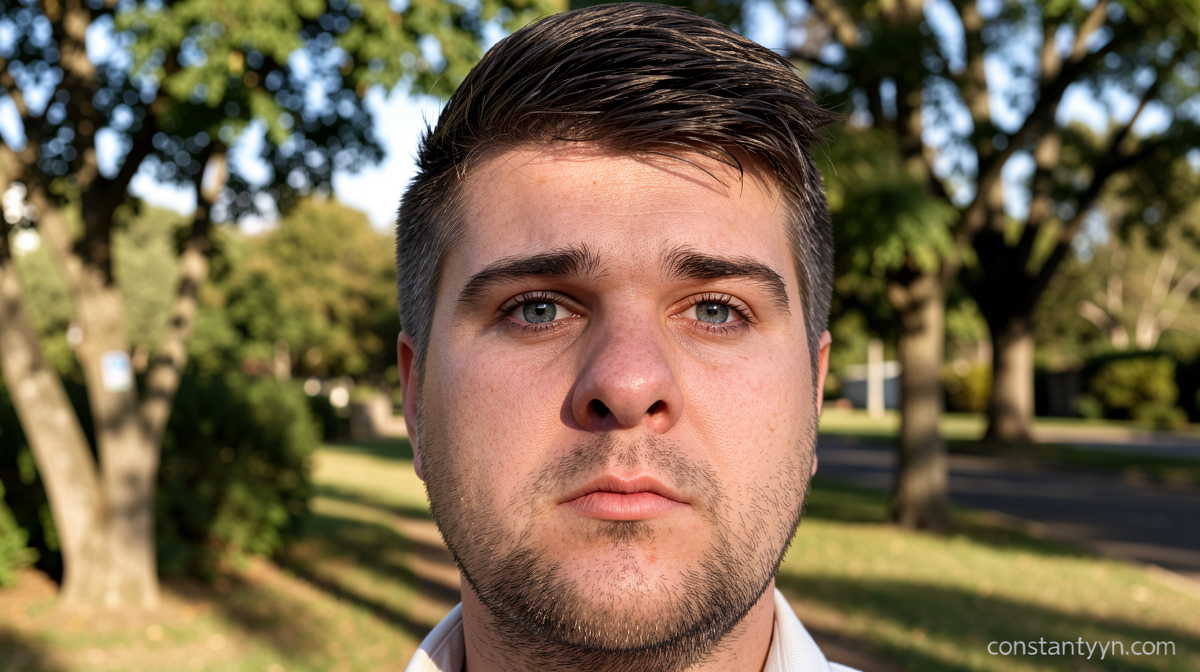
    Constantvpn.com – The Duke and Duchess of Sussex are set to relocate back to Britain within two weeks, collapsing the transatlantic distance that has separated them from their elder brother since 2020. For the better part of half a decade, Prince William and Prince Harry have operated in parallel worlds — different continents, different households, different versions of the family story. Now that geography is about to change, the question hanging over Windsor Castle and beyond is whether proximity might soften a rift that years of public feuding have calcified into something far harder to mend.

    The answer, by every indication from those closest to the Prince of Wales, is unlikely to come quickly. This is not a sibling squabble that dissolves over a shared dinner. It is what insiders describe as a structural break in trust, layered with accumulated resentment and a sense of betrayal that has been aired repeatedly in front of global audiences. The wounds are old, and the person who bears them has shown little appetite for sweeping them under the carpet.

    William’s Position: Stubbornness, Not Indifference

    A close family confidant put the Prince of Wales’s emotional state bluntly when speaking to reporters last year:

    “William is very stubborn. To feel cheated by your own brother has been painful. He can’t just put it behind him.”

    That assessment sits in sharp tension with Harry’s own words, offered in a sit-down interview the previous year, in which the Duke of Sussex expressed a clear desire to repair the relationship:

    “I would love reconciliation with my family. There’s no point in continuing to fight any more.”

    Royal commentator Valentine Low offered a more nuanced reading of the elder brother’s likely response to the impending homecoming. In Low’s view, William is not simply ignoring external pressure to reconcile; he is making a deliberate choice based on what he perceives as unresolved wrongs.

    “If he doesn’t want to reconcile with his brother because of the things he’s done, the wrongs that he feels Harry’s done to him, he’s not going to reconcile. But it does improve the chances I think.”

    The Proximity Problem

    Logistically, the Sussexes’ return places them within a short drive of Windsor, where William, Catherine, and their three children reside. That closeness introduces a dynamic neither brother can ignore: the expectation that the elder sibling, as future king, should extend a hand first. Several individuals connected to organisations that collaborate with the Prince of Wales have told reporters they intend to shield William from becoming entangled in the spectacle surrounding the move.

    One source involved in charitable projects alongside the Royal Family framed the task in protective terms:

    “This is a hard situation for him full of emotion and anger and we will support him. It is really important for me to ensure that any work we do with William will be focused on making a positive change and won’t be affected by the Harry and Meghan drama.”

    The Prince of Wales’s own calendar over the coming months is deliberately packed with duties that carry personal weight, a strategy that keeps his public profile anchored to purpose rather than family melodrama.

    A Shared Grief That Once Bound Them

    The contrast between where the brothers are now and where they stood in 2018 is stark. At a mental-health conference that year, William spoke about how their mother’s death at age sixteen had forged an unbreakable bond between them:

    “Losing our mother at a young age has helped us to travel through that difficult patch together. You’re like-minded. You go through similar things, it’s a bond and it’s something you know you’ve tackled together and come out better for it.”

    That narrative of unity-through-shared-trauma has, by all accounts, been superseded. The grief that once welded the brothers together has been replaced by a catalogue of grievances played out in courtrooms, memoirs, and televised interviews.

    What May Be Driving the Return

    Trauma specialist Dr Gabor Mate, who sat down with Harry for a conversation on healing and loss timed to the release of the Duke of Sussex’s memoir Spare, offered a sympathetic reading of the decision to come home. He pointed to the practical reality of an ageing parent facing a cancer diagnosis:

    “He’s got an ageing parent with a cancer diagnosis. The deepest human dynamic is attachment and connection and if that’s what’s motivating this I’m not in the least surprised.”

    William, meanwhile, has been quietly shouldering the role of primary caregiver for his wife Catherine through her own cancer treatment since Harry’s departure for North America. The caregiving burden has fallen on the brother who stayed, a fact that adds a further layer of complexity to any future rapprochement.

    Kensington’s Silence and the Months Ahead

    Since the relocation was announced, Kensington Palace has maintained a near-total media blackout. No official statement has been issued, and the Prince of Wales’s team has declined to engage with questions about the Sussexes’ intentions or the state of the sibling relationship. The institutional posture is one of continuity: carry on with royal business, let the calendar speak.

    That calendar is dense. In November, William will travel to Mumbai, India, to present the Earthshot Prize, his flagship environmental award. A major mental-health initiative is slated for launch within weeks. And in September arrives a milestone that no royal family can take lightly: Prince George, now thirteen, will begin senior school at Eton College in Berkshire. The media choreography surrounding that day will be meticulously managed, with both parents expected to be fiercely protective of their eldest son and determined to keep him insulated from any family turbulence.

    What underlies the entire situation is not a single incident but the accumulated weight of years — decisions made, words spoken, loyalties tested in public. Whether two weeks of shared geography can begin to erode that weight remains, for now, an open question. The brothers will be in the same country again. Whether they will be in the same conversation is another matter entirely.

    Frequently Asked Questions

    What is Will Harry s return heal deep?

    Will Harry s return heal deep is the main topic of this guide. The article explains the context, practical details, and next steps readers should understand.

    Why does Will Harry s return heal deep matter?

    Will Harry s return heal deep matters because readers are looking for a useful answer, not just a short summary. Good content should match search intent and help them decide what to do next.

  • Tinder conman who stole thousands pretended to be multi-millionaire cancer patient

    Tinder conman who stole thousands pretended to be multi-millionaire cancer patient

    Dating App Fraudster Sentenced After Fabricating Life of Extreme Wealth and Illness

    Constantvpn.com – A 35-year-old man from north Wales has been handed a prison term exceeding three years after prosecutors proved he drained nearly £68,000 from four individuals by constructing an elaborate false identity complete with terminal illness, elite military service, and a fortune measured in the hundreds of millions of pounds. Joseph Gibson, of Penbryn Nant near Ruthin in Denbighshire, met at least two of his victims through the swipe-based dating platform Tinder before spinning them into believing they were sharing a genuine romantic partnership with a multimillionaire cancer sufferer.

    The case, concluded at Bristol Crown Court on Thursday, underscores how dating applications have become fertile ground for sophisticated financial predators who exploit emotional vulnerability to extract large sums under the guise of shared investment or medical emergencies. Gibson pleaded guilty to four counts of fraud by false representation, and Judge Jaron Crooknorth imposed a custodial sentence of three years and two months.

    The Fabricated Persona

    Text messages released following the trial revealed the scale of Gibson’s invention. He told his targets he maintained residences in Sandbanks, Bath, Dubai, Singapore, and Mayfair in London, alongside a portfolio of 21 rental properties. He described owning yachts, helicopters, and luxury cars, and asserted that he had generated £1.1 million through financial trading while lying in a hospital bed.

    “Mate I have everything I want, I have amazing houses, cars, boats, helicopters.”

    In another message, he claimed to be managing a five-million-pound trading account via his mobile phone from that same hospital bed. When a victim inquired about his spending habits regarding clothing and footwear brands, Gibson responded with a figure that would have placed him among the wealthiest individuals in the country:

    “In January I was valued at 440m if you need me.”

    He also claimed prior service in the Special Boat Service, the Royal Navy’s elite special forces unit, and maintained throughout the deception that he was battling cancer — a detail designed to evoke sympathy and accelerate financial commitments.

    Four Victims, £68,000 Lost

    The court heard that between July 2020 and October 2021, Gibson employed false names, fabricated business opportunities, and counterfeit bank statements to project an image of substantial wealth. Each victim was drawn in through a different combination of these ruses.

    One woman was persuaded to transfer funds for purported business ventures, hospital costs, and online trading schemes. She lost more than £5,600 and described enduring “anxiety and emotional distress” in the aftermath.

    A second victim, identified in court as SC, handed over more than £30,000 after Gibson promised substantial returns through investments and trading. She received approximately £9,700 back, leaving her £21,000 out of pocket and, in her words, “heavily in debt.”

    A third, known as JH, invested £28,000 on the strength of Gibson’s claims to be a successful businessman. She recovered £10,000 and told the court the episode had damaged her relationships with her children.

    The fourth victim, PH, was a retired super-yacht captain who invested £23,350 and described suffering “severe” emotional impact from the betrayal.

    Judicial Response

    Gibson’s barrister had requested that the judge defer sentencing, arguing it would allow the defendant time to earn funds for victim compensation. The prosecution objected, pointing out that hundreds of thousands of pounds had passed through Gibson’s accounts but had been consumed by car purchases and overseas travel rather than set aside for repayment.

    Crooknorth described the offending as “serious, sophisticated and sustained,” noting that the deception began from the very first contact with each victim. He delivered a pointed address to the defendant:

    “Joseph Gibson, you are simply a fraudster. It has taken years for you to admit that. Pity those who have had the misfortune to have you come into their lives, prey on their affections, steal their money, steal their goals and fracture their relationships.”

    The judge acknowledged that Gibson had previously been of good character and had admitted his wrongdoing, though only shortly before trial. He offered minimal credit for remorse, telling the court:

    “You are sorry for the position you have found yourself in.”

    Gibson had told the court he held £40,000 in savings and proposed saving £5,000 per month to fully compensate his victims, requesting a further nine-month deferral. It emerged, however, that his actual savings stood at £15,000. Crooknorth responded sharply:

    “You have tried to persuade this court that you have more money than you have. You have not shown evidence of that money to me. You have sought to deceive this court into believing that you had it.”

    The judge noted that Gibson had earlier attempted to argue he had not deliberately deceived his victims, but concluded the evidence demonstrated that “deception was central” to the offending. He identified little mitigation beyond the absence of prior convictions and a degree of expressed remorse.

    Recovery and Aftermath

    A proceeds-of-crime hearing is scheduled for March, at which the court will consider mechanisms to recover Gibson’s remaining assets for distribution to the four victims. The judge emphasised that the victims had sustained “significant financial and emotional harm,” with several left deeply in debt and with fractured family relationships.

    The case illustrates a pattern increasingly documented across the UK: dating applications, designed to facilitate brief romantic encounters, are being leveraged by fraudsters who invest weeks or months in building emotional intimacy before introducing financial schemes. The combination of a fabricated illness narrative, elite military credentials, and ostentatious wealth claims created a layered deception difficult for victims to question while they were emotionally invested in the relationship. For the four individuals in this case, the total loss approached £68,000 — a sum that, for several of them, represented savings accumulated over decades.

    Frequently Asked Questions

    What is Tinder conman who stole thousands pretended?

    Tinder conman who stole thousands pretended is the main topic of this guide. The article explains the context, practical details, and next steps readers should understand.

    Why does Tinder conman who stole thousands pretended matter?

    Tinder conman who stole thousands pretended matters because readers are looking for a useful answer, not just a short summary. Good content should match search intent and help them decide what to do next.