
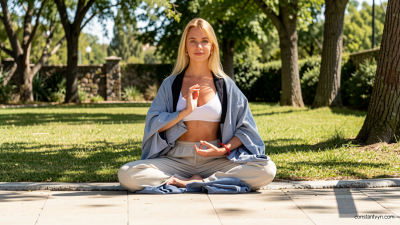
The Quiet Rebellion Against Paywalled Wellness
Constantvpn.com – The wellness industry has spent the past decade selling a particular fantasy: that genuine peace of mind requires a five-star hotel, a floating sound bath, or a retreat priced in the thousands. For those who can write that cheque, the fantasy holds. For everyone else, a growing number of practitioners, organisers, and everyday people are quietly dismantling the assumption that you need a luxury budget to look after your body, your head, and your spirit. What they are building instead is something far more democratic — and it is spreading through parks, community plots, and living rooms across the UK right now.
Community Yoga and Meditation Without the Membership Fee
Studio memberships for yoga and meditation can run into hundreds of pounds a month, a barrier that has pushed many practitioners toward self-organised gatherings. Social media groups and platforms such as Meetup have become the connective tissue for these informal collectives, and the model is simple: find a green space, bring a mat, show up.
In south London, yoga teacher Anastasiia Mirraslavska runs a monthly meetup called Sunday Reset. Each month the group relocates to a different city park, where participants practise yoga and meditate together outdoors. The collective also convenes online for guided meditation sessions via Zoom. Some of those virtual sessions carry a modest fee of around £10; others are entirely free.
“I wanted to create a space where people could experience [yoga and meditation] in a simple and accessible way,” Mirraslavska said.
A parallel experiment is taking shape in Liverpool, where model Erica Correa is curating a regular gathering called Soft Sunday. The format rotates through different wellness experiences — the most recent session paired a pilates class with a beauty-focused activity. Correa, who describes the project as invitation-only for the time being, hopes to widen access in the near future.
“Everything about Soft Sunday is intention over expense,” Correa said. “Wellness is more about the decisions that you make in life, how you protect your time.”
Digging Into Wellbeing: The Gardening Evidence
Long before the wellness industry packaged it into branded retreats, gardening was already doing quiet work for mental and physical health. Research published by the Royal Horticultural Society found that people who tend a garden every day report measurably higher wellbeing and lower stress levels than those who do not. The finding is not confined to those with sprawling back gardens. Local councils across the country offer allotment plots for a relatively small annual fee, and community gardens — searchable through the Good to Grow map or the RHS website — provide another low-cost entry point. Many of these spaces welcome volunteers at no charge, supplying tools and equipment so that a person can get outdoors, meet neighbours, and pick up practical skills without spending a penny.
Thrive, a charity that channels gardening into structured health and wellbeing programmes, frames the activity as far broader than horticulture. Damien Newman, the charity’s training, education and consultancy manager, describes community gardens as offering
“the opportunity to be engaged in gardening and connect to a welcoming social group.”
He goes further, arguing that the practice touches every dimension of health:
“It’s good across our holistic health spectrum, good physically, cognitively, socially, psychologically and emotionally.”
Old Hobbies, New Audiences
Activities once dismissed as pastimes for retirees are attracting younger, cost-conscious participants who want tangible wellbeing gains without a subscription. Birdwatching, for instance, requires little more than a walk to the nearest park and a pair of binoculars. Local groups and online communities operate throughout the UK, and the RSPB’s website allows anyone to locate a nearby birdwatching collective. The evidence base is growing: research indicates that as little as 30 minutes of birdwatching can lift reported happiness, improve subjective wellbeing, and strengthen a person’s sense of connection to the natural world.
Crochet is experiencing a similar revival. The barrier to entry is a hook and a ball of yarn — a few pounds at most. Studies have associated regular crochet practice with improved wellbeing, with practitioners reporting that the repetitive, focused handwork helped them manage stress, navigate grief, cope with chronic illness, and steady themselves through other life challenges.
Movement Without a Gym Membership
Staying physically active does not require a locker-room pass. Bodyweight training — often called calisthenics — uses nothing but the practitioner’s own mass to build strength through push-ups, squats, and pull-ups. Because no equipment is needed, it can be performed at home, in a park, or on a street corner, improving strength, flexibility, and coordination simultaneously.
Running has seen a comparable surge in participation. Approximately 7.1 million adults in the UK now run regularly, representing an increase of more than 500,000 people over the past year alone. Many newcomers join local run clubs, which typically operate on a pay-what-you-can or free basis, while others simply lace up and head out on their own. Outdoor yoga sessions, free bodyweight workout videos, and community sports days round out a landscape of movement options that cost little to nothing.
The common thread running through all of these practices is a shift in where value is placed. Rather than outsourcing wellbeing to a branded experience, participants are reclaiming it through time, attention, community, and the simple act of showing up — in a park, a garden plot, a living room, or a quiet stretch of riverbank. The overdraft stays untouched. The benefit, the evidence suggests, does not.
Related Reading
Frequently Asked Questions
What is Wellness habits you can start now?
Wellness habits you can start now is the main topic of this guide. The article explains the context, practical details, and next steps readers should understand.
Why does Wellness habits you can start now matter?
Wellness habits you can start now matters because readers are looking for a useful answer, not just a short summary. Good content should match search intent and help them decide what to do next.