
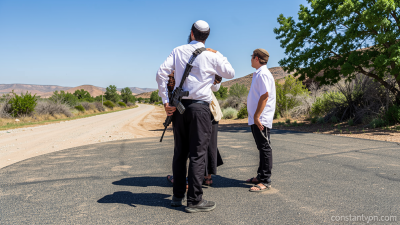
Settlement tenders ignite fresh alarm over West Bank’s future
Constantvpn.com – The opening of construction bids for roughly 1,200 new homes on a narrow strip of land east of Jerusalem has sent shockwaves through diplomatic capitals and Palestinian communities alike. The parcel, designated E1, sits at a geographic chokepoint whose development would sever the northern West Bank from its southern half, effectively bisecting the territory and isolating East Jerusalem from the rest of the Palestinian-administered landscape. For decades, successive Israeli governments deferred plans to build there, wary of the geopolitical fallout. That restraint has now evaporated.
A promise made explicit
The current administration’s stance was laid bare last September, when Prime Minister Benjamin Netanyahu addressed a ceremony at a West Bank settlement. Speaking before signatories to an agreement accelerating construction in the E1 zone, he declared:
“We are going to fulfill our promise that there will be no Palestinian state. This place belongs to us.”
The remark crystallized what many observers had long suspected: that the government now treats the occupied territory not as a temporary administrative arrangement but as permanent national space. The tenders announced in recent days translate that rhetoric into concrete contracts, locking in construction before the upcoming October elections.
International backlash
Reactions came swiftly and from multiple directions. The UN secretary general characterized the E1 plans as an “existential threat” to any future Palestinian state. A coordinated statement issued by the United Kingdom, France, Germany, Italy, and Canada labeled the scheme “unacceptable,” warning it would “drive a wedge through the West Bank.” The European Union voiced parallel concerns. Palestinian Authority president Mahmoud Abbas, for his part, urged the signatory nations to move beyond words and adopt “concrete measures to halt the implementation of the E1 plan.”
All settlements in the West Bank remain illegal under international law, a status confirmed repeatedly by the International Court of Justice and successive UN General Assembly resolutions. The territory was seized during the June 1967 war against a coalition of Arab states, and Israel has maintained administrative control ever since. Under the Fourth Geneva Convention, an occupying power may not transplant its own civilian population into occupied land — yet the settler population has grown steadily regardless.
Scale and acceleration
Since 1967, Israel has erected approximately 160 settlements housing around 700,000 Jewish residents across the West Bank. The pace of construction, however, has shifted markedly since 2022, when Netanyahu returned to the premiership at the helm of a right-wing, pro-settler coalition. The tempo quickened further after the Gaza war erupted following Hamas’s 7 October 2023 attack on southern Israel.
Satellite imagery analysis conducted by BBC Verify documents the acceleration at the ground level. At Tzofim, a settlement in the northwest of the territory, roughly 185 new structures have appeared since 2022. Around Kochav Hashahar, an existing settlement has sprawled outward in multiple directions, accompanied by new roads, housing units, and a fresh settler outpost on adjacent land. Hundreds of such outposts — illegal under both Israeli domestic law and international law — have been established since the 1990s, and dozens have since been retroactively regularized by government decree.
Why E1 matters geographically
To grasp the stakes, one must look at a map. The proposed E1 development would slice the West Bank into two disconnected halves. Opponents argue it would foreclose the possibility of a contiguous Palestinian urban corridor linking Ramallah, East Jerusalem, and Bethlehem — the geographic backbone any viable state would require. Peace Now, an Israeli anti-settlement watchdog that has litigated the plans in Israeli courts, warned:
“The government is trying to sign contracts with contractors before the (upcoming October) elections so that it will be much harder for the next government to cancel the construction.”
The timing is deliberate. Once construction contracts are executed and foundations poured, reversing the project becomes politically and financially costly, regardless of which party wins the next ballot.
Civilian administration and infrastructure
Settlement expansion is not confined to housing. Over recent years, much of the West Bank’s day-to-day governance has migrated from military command to a civilian authority led by Bezalel Smotrich, the far-right finance minister. Under his oversight, a dense network of roads now threads the territory, linking settlements to one another while cutting through Palestinian towns and villages. Smotrich has described the road-building as ensuring “that the settlements will not remain on paper — but will be established on the ground.”
In May of this year, the Israeli cabinet approved more than one billion shekels — approximately $360 million or £246 million — for new road construction across the West Bank, with the stated aim of “strengthening of their grip on the territory,” per an official press release. The infrastructure investment entrenches physical access patterns that make future partition or withdrawal logistically complex.
Settler violence and its diplomatic cost
Parallel to the construction boom, settler violence against Palestinian residents has intensified. In recent weeks, two Palestinian homes were besieged by settlers who cut off water and electricity supplies. The episode drew rare condemnation from US Ambassador Mike Huckabee, typically a vocal defender of settlement policy, who denounced the episode as a “criminal and terrorist act.” Such incidents, while localized, compound the sense among West Bank Palestinians that their security and property rights are increasingly subordinate to settler claims.
What comes next
The convergence of accelerated construction, infrastructure entrenchment, civilian administrative control, and episodic violence paints a picture that Palestinian leaders and their international allies describe as irreversible without sustained external pressure. For Palestinians living under occupation, the tenders now on the table are not merely a housing project; they are a referendum on whether the two-state framework still has any geographic or political substrate left to stand on. The answer, in the eyes of those who oppose the plan, is becoming harder to sustain.
Related Reading
Frequently Asked Questions
What is How Israel is expanding settlements in drive?
How Israel is expanding settlements in drive is the main topic of this guide. The article explains the context, practical details, and next steps readers should understand.
Why does How Israel is expanding settlements in drive matter?
How Israel is expanding settlements in drive matters because readers are looking for a useful answer, not just a short summary. Good content should match search intent and help them decide what to do next.