Astronauts return to ISS after sheltering during air leak repair attempt

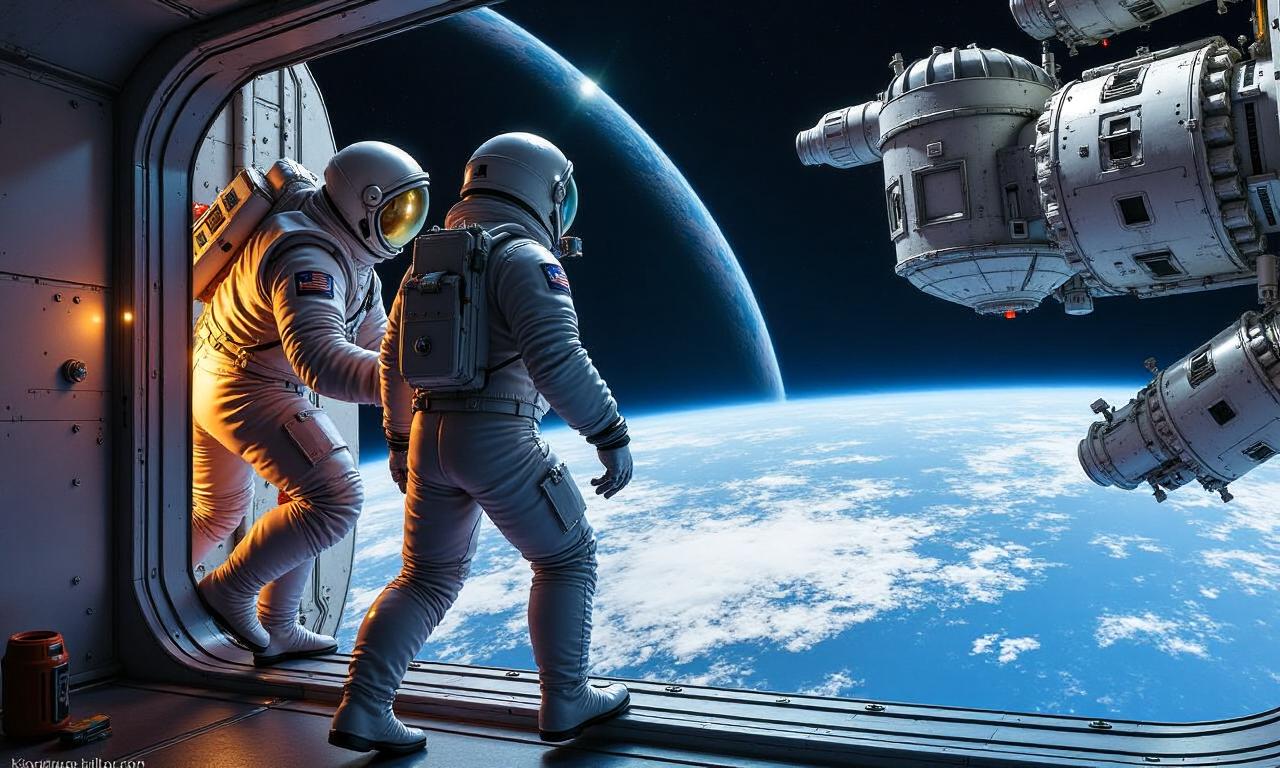
Astronauts Return to ISS After Sheltering During Air Leak Repair Attempt
Constantvpn.com – On Friday, the International Space Station (ISS) faced a sudden escalation in air leakage, leading to an emergency directive for the crew to seek refuge in a connected spacecraft. The incident, which unfolded in the transfer tunnel known as PrK, prompted NASA to order five of the seven astronauts aboard to move into the docked SpaceX shuttle Dragon “Freedom.” This step was taken as a precautionary measure, with the crew prepared to evacuate if necessary. The Dragon, functioning as a lifeboat, is designed to detach from the station swiftly in critical situations, ensuring a safe return to Earth. The decision came after the leak worsened, affecting the Russian segment’s Zvezda service module, a key component of the station’s infrastructure.
Repair Efforts and Safety Measures
Meanwhile, two Russian cosmonauts, station commander Sergey Kud-Sverchkov and flight engineer Sergei Mikaev, worked to address the issue on the Russian segment. The leak had first been detected on Monday, and the Russian space agency Roscosmos had been monitoring it, noting a gradual pressure drop. However, the arrival of a Russian cargo ship last month intensified concerns, leading to the decision to attempt a more comprehensive repair. The operation, however, faced a pivotal moment when the cosmonauts opted to use a saw to access the crack in the tunnel. This method raised alarms at NASA mission control, which advised the crew to pause their work and retreat to the Dragon spacecraft for safety.
Crew Dynamics and Emergency Procedures
The astronauts who took shelter included Jessica Meir, Jack Hathaway, Sophie Adenot, and Andrey Fedyaev, who had joined the ISS mission in February. They were accompanied by Chris Williams, who had also been stationed there since the same time. The crew was instructed to don their spacesuits immediately, ensuring they could depart the Dragon at a moment’s notice if required. The remaining two astronauts, the Russian cosmonauts, were left to manage the repair operation while the others waited for further developments. Despite the pause in repairs, the crew was reassured that no immediate danger to their lives or the station’s systems was detected, according to reports from Roscosmos.
International Collaboration and System Stability
Reuters noted that the method chosen by the Russian team was the key factor in the safety order. The use of a saw to reach the leak site in the PrK tunnel was deemed risky, prompting NASA to take charge of the situation. Although Roscosmos had initially authorized the repair, the space agency later confirmed that the crew’s safety was not compromised. NASA spokesperson Bethany Stevens, via X, stated: “Given this development, NASA has instructed the crew members inside the Dragon spacecraft to end the safe haven procedures and return to planned operations aboard the International Space Station.” This marked a shift in strategy, as the incident highlighted the need for coordinated efforts between the U.S. and Russian space agencies to address recurring technical challenges.
Historical Context of the Leak
This was not the first time the ISS had encountered such a problem. The cracks responsible for the air leakage have persisted on and off for approximately six years, requiring periodic maintenance. The current incident, however, was notable for its timing and the scope of the repair attempt. The Russian segment of the ISS, which has been a focal point of the leak, is critical for life support and power systems. The Zvezda service module, in particular, has been a recurring site of issues, prompting Roscosmos to reassess their approach to sealing the gaps.
ISS as a Global Engineering Marvel
The ISS, spanning the length of a football field, remains the largest human-made structure in orbit. It has been continuously operated by a US-Russian-led partnership since 1998, with contributions from Canada, Japan, and 11 European countries. The station’s complex design allows for modular expansion and international collaboration, but its systems are also vulnerable to wear and tear over time. The recent air leak incident underscores the challenges of maintaining such a vast and intricate facility in the harsh environment of space. While the current crisis has been resolved, it serves as a reminder of the delicate balance between innovation and reliability in long-term space habitation.
Future Implications and Crew Readiness
As the astronauts resumed their duties on the ISS, the incident sparked discussions about the effectiveness of repair strategies and the importance of contingency planning. The decision to shelter the crew reflected the cautious approach taken by NASA, prioritizing safety even when the Russian team’s methods were deemed potentially risky. The Dragon’s role as a lifeboat was reaffirmed, highlighting its value in emergency scenarios. For the astronauts involved, the experience of being on standby for evacuation tested their preparedness and underscored the critical nature of their work. The ISS continues to operate as a symbol of international cooperation, but events like this reinforce the need for ongoing vigilance and adaptability in space exploration.
Throughout the incident, communication between NASA and Roscosmos remained a key factor in managing the situation. While the initial repair attempt was paused, the decision to return the crew to the station was a collaborative effort, balancing technical expertise with safety protocols. The ISS’s ability to sustain operations during such challenges is a testament to its design and the dedication of the teams working tirelessly to maintain its functionality. As the crew adapts to the new circumstances, the event will likely influence future repair procedures and highlight the importance of unified strategies in space missions.