How Ukraine-Russia tension hangs over French Open semi-finals

How Ukraine-Russia Tension Hangs Over French Open Semi-Finals
The Clash of Nations on the Court
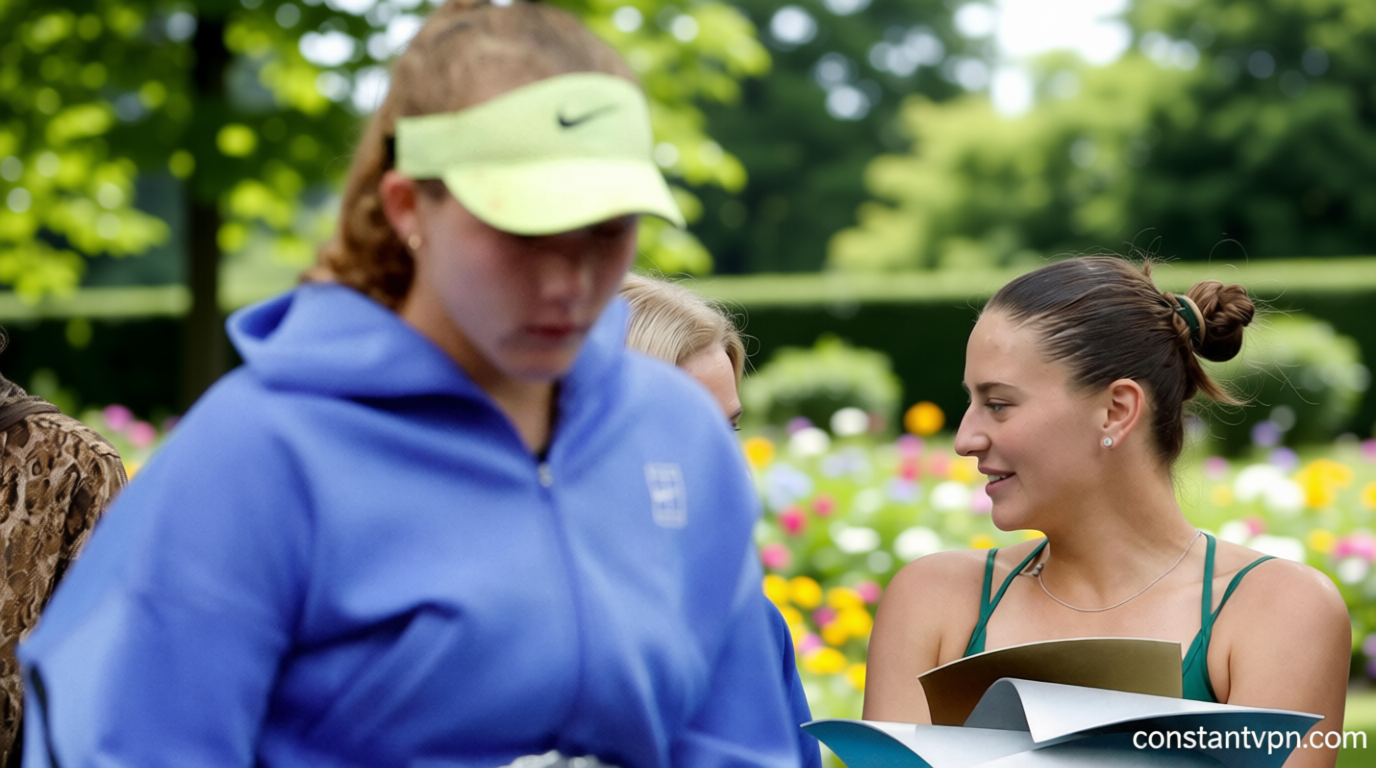
Constantvpn.com – As the French Open women’s singles semi-finals approach, the shadow of the Ukraine-Russia conflict looms large over the tennis arena. The match between Ukraine’s Marta Kostyuk and Russia’s Mirra Andreeva, set to take place on Thursday, carries added weight beyond the sport itself. Both nations remain locked in a bitter war that has reshaped lives, politics, and global perceptions. Kostyuk, a 23-year-old player ranked 15th, has become a vocal advocate for her country, while Andreeva, 19, has taken a more measured approach, focusing on the game rather than the geopolitical tensions.
“The biggest thing I can do is sit here and talk about [the war] so more people can find out about it and don’t get used to this terrible life,” Kostyuk said after her victory in the Roland Garros quarter-finals. Her words reflect a determination to use her platform to raise awareness about the ongoing conflict, even as she competes in a tournament that symbolizes unity and international competition.
Kostyuk’s journey to this point has been marked by her unwavering criticism of Russia’s actions since the invasion began in February 2022. In a recent interview, she recounted how a missile struck a building just 100 meters from her family home in Kyiv, underscoring the personal stakes behind her activism. This emotional backdrop contrasts sharply with Andreeva’s strategy of keeping discussions about the war at bay. She emphasized her focus on the game, stating, “It doesn’t matter who I play. I really try to play against the ball that is coming at me.” For Andreeva, the priority is to stay in the moment, avoiding the distractions of war.
A Controversial Path to the Final
The semi-final matchup between Kostyuk and Andreeva is the second time they’ve faced each other in a matter of weeks, following their intense encounter at the Madrid Open final last month. Kostyuk emerged victorious with a 6-3, 7-5 win, securing her most significant title to date. However, the absence of a handshake after the match highlights the lingering tensions. Ukrainian players, including Kostyuk, have boycotted such gestures since the full-scale invasion began, symbolizing their solidarity with the cause.
The same sentiment is expected to carry into the French Open. While Kostyuk and Andreeva’s match is a focal point, the other semi-final promises its own drama. Russia’s Diana Shnaider, 22, will face Polish qualifier Maja Chwalinska, 24, in a clash that represents a different dynamic. Shnaider’s path to the semi-finals has been notable for her upset victory over top seed Aryna Sabalenka, a player who has previously condemned Russia’s actions in Ukraine. This moment of success, however, has not shielded Shnaider from scrutiny.
“I think it’s the same as playing in Nazi Germany for Gestapo officers, on the tournament organised by a company which built Auschwitz. There is no difference for me,” Oleksandra Oliynykova, a Ukrainian player, said after accusing Shnaider of supporting the invasion. The accusation stemmed from Shnaider’s participation in a St. Petersburg exhibition event sponsored by Gazprom, the state-owned Russian gas company. Despite this, Shnaider defended her decision, stating it was “my one opportunity” to play in front of her family.
The Shared Burden of Conflict
For many players from Ukraine and Russia, the war has become an inescapable part of their identity. Kostyuk, who has dedicated each of her Roland Garros victories to her nation, speaks of the conflict as a source of motivation. “The desire comes from there being no other options, when you have war behind your courtyard and you know sport in particular is the only way to escape that,” said Daniela Hantuchova, a former Slovakian world number five, during a BBC Radio 5 Live interview. Her words capture the resolve of athletes who see their success as a form of resistance.
Meanwhile, Shnaider’s silence on the war has sparked criticism from Kostyuk, who feels the need to speak out. “They are all grown-ups. They know what they’re talking about. They know what’s going on. They have phones. They have Instagram. They have news. They are clearly aware of what’s happening,” Kostyuk argued. This exchange highlights the divide between players who openly address the conflict and those who choose to remain neutral. Yet, both are bound by the same reality: their careers are intertwined with the broader geopolitical struggle.
The geographical concentration of this year’s semi-finalists underscores the war’s impact on the sport. All four players—Kostyuk, Andreeva, Shnaider, and Chwalinska—hail from regions affected by the conflict. Hantuchova believes this shared context fosters a unique mindset among athletes from these nations. “You don’t question anything you are told to do to get where you want to,” she said. “The starting point creates this incredible hunger and willingness to overcome.”
A Historic Moment for Shnaider
Shnaider’s semi-final appearance marks a significant milestone in her career. Reaching the Grand Slam stage for the first time, she has become a symbol of resilience for her country. Yet, her journey has not been without controversy. The accusation from Oliynykova, though rooted in her participation in a Gazprom-backed event, has raised questions about the role of athletes in political conflicts. Kostyuk, who has consistently spoken out, sees this as a moral imperative. “I don’t know how you can sleep at night peacefully when you know that this is going on and you have nothing to say about it,” she asserted.
The upcoming match between Kostyuk and Andreeva could determine the final’s outcome. If Kostyuk wins, she would face another Russian opponent in the final, potentially challenging the narrative of a unified front. This scenario adds layers to the competition, as players from opposing nations vie for the same title. For Kostyuk, the stakes are personal: she seeks to honor her nation’s struggle through her performance. “I have been privileged to have a career that allows me to spend time away from Ukraine,” she acknowledged, “but the suffering back home fuels my motivation.”
As the tournament progresses, the interplay between sport and politics becomes more pronounced. The semi-finals are not just about individual triumphs but also about representing the values and beliefs of their nations. For Kostyuk, the match is an opportunity to amplify her message; for Andreeva, it’s a chance to prove her focus. Meanwhile, Shnaider’s presence in the final raises the question of whether athletes can remain impartial in a war that touches every aspect of their lives.
Looking ahead, the outcome of these matches will carry symbolic weight. Whether it’s Kostyuk’s 18th consecutive clay-court win or Chwalinska’s unexpected run, the semi-finals are a microcosm of the broader conflict. Players from Ukraine and Russia are not only competing for glory but also for the right to be seen as advocates for their people. As the crowd cheers and the ball flies across the court, the echoes of war remain a constant reminder of the world beyond the game.
The concentration of semi-finalists from conflict zones also invites reflection on the role of sports in times of crisis. While the game provides a temporary escape, it also becomes a stage for political expression. Kostyuk’s dedication to her homeland contrasts with Andreeva’s pragmatism, and Shnaider’s resolve to stay silent adds another dimension to the narrative. Each player’s journey is shaped by the war, yet their determination to excel on the court is a testament to their resilience. As the French Open continues, the semi-finals promise to be more than just a sporting event—they are a reflection of the world’s enduring tensions.