Blog

  • Germany says Russia behind Leipzig airport drone attack

    Germany says Russia behind Leipzig airport drone attack

    Germany Blames Moscow for Drone Strike at Leipzig Airfield, Orders Closure of Russian Consulate in Bonn

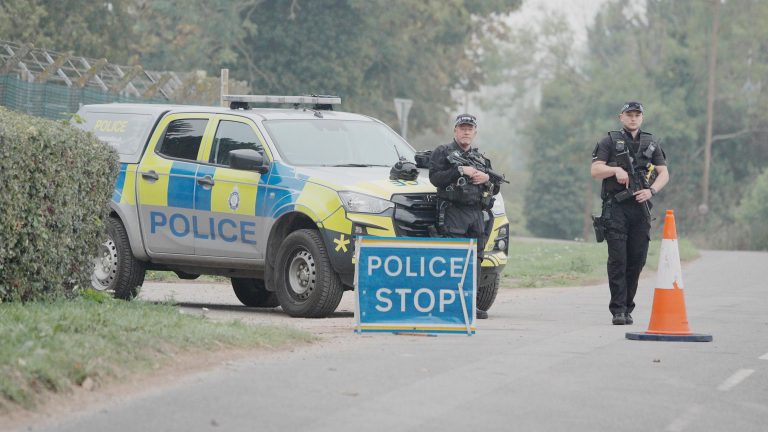
    Constantvpn.com – The diplomatic rupture between Berlin and Moscow deepened sharply this week after the German government formally attributed last month’s drone incident at Leipzig/Halle Airport to Russian intelligence operations. Interior Minister Alexander Dobrindt framed the episode not as an isolated act but as part of a broader campaign of covert pressure that Moscow has waged across the continent since the full-scale invasion of Ukraine began in February 2022. Alongside the attribution came two concrete retaliatory measures: the closure of Russia’s consulate in Bonn and the termination of the lease agreement governing the Russian House cultural centre in Berlin.

    The Incident at Leipzig/Halle

    On 4 August, airport personnel discovered a small unmanned aerial vehicle resting on the tarmac at Leipzig/Halle Airport, situated in Saxony in eastern Germany. The drone was fitted with an explosive payload positioned in close proximity to parked Ukrainian cargo aircraft. Investigators later determined that the detonator mechanism had malfunctioned, meaning the warhead never fired. Separately, forensic examination of a nearby freighter indicated that a second drone had struck the aircraft’s fuselage, causing structural damage consistent with a mid-air or ground-level collision.

    The airport’s location and operational profile made it a logical target for any actor seeking to disrupt the flow of military materiel into Ukraine. Leipzig/Halle serves as a key logistics node for the German Bundeswehr and its NATO partners, handling the movement of weapons, ammunition, and other defence supplies destined for the eastern front. It also functions as the European hub for Antonov Airlines, the Ukrainian state carrier responsible for the bulk of Kyiv’s aerial cargo operations, including the delivery of large military transport aircraft and their associated freight. A successful strike or sustained harassment campaign at this node could have throttled the pipeline through which Western allies have sustained Ukraine’s war effort.

    Official Attribution and Diplomatic Fallout

    At a press conference in Berlin, Dobrindt stated that the 4 August event followed what he described as:

    “the well-established pattern of Russian hybrid operations in Europe.”

    He added that German planners now operate on the assumption that further attempts will be made against German territory, signalling a shift from reactive defence to a posture of expected recurrence. Foreign Minister Johann Wadephul, standing beside Dobrindt at the same briefing, announced that he would direct the closure of the Russian consulate in Bonn. In a parallel move, the German government will terminate the contractual arrangement underpinning the Russian House in Berlin, a long-standing cultural institution that many analysts and parliamentary observers have long characterised as a venue for intelligence gathering and the dissemination of Kremlin-aligned messaging.

    Moscow has, until now, declined to confirm or deny any role in the Leipzig episode. Russian officials have generally dismissed Western attributions of hybrid-operations incidents as politically motivated, though they have not offered an alternative explanation for the drone’s presence on a NATO airfield.

    Strategic Context: Hybrid Warfare on European Soil

    The Leipzig episode sits within a wider pattern of low-intensity coercive actions attributed to Russian state actors across Europe since 2022. These have included drone sightings over Scandinavian airspace, sabotage of undersea cable infrastructure in the Baltic, and repeated incursions into the national airspace of Poland, Romania, and the Baltic states. German defence planners have increasingly treated the eastern flank of the country as a zone where conventional deterrence and signals-intelligence countermeasures must operate in tandem. The discovery of a functional explosive device on an active NATO airfield, even one that failed to detonate, underscores the degree to which the operational envelope of conflict has extended westward.

    The closure of the Bonn consulate removes a diplomatic and consular presence that had operated in Germany since the post-war period. The termination of the Russian House contract, meanwhile, ends a decades-old arrangement that gave Moscow a permanent cultural and informational foothold in the capital. Together, the two measures represent the most significant reduction in Russian institutional presence on German soil since reunification in 1990.

    Implications for Alliance Logistics and Ukrainian Air Cargo

    For Ukraine, the Leipzig node is not merely convenient; it is structurally important. Antonov Airlines’ An-124 and An-225 freighters, along with smaller cargo types, rely on the airport’s long runways, heavy-lift handling capacity, and proximity to central European rail corridors. Any sustained campaign of intimidation or physical disruption at the airfield would force rerouting through longer, more costly corridors and could slow the delivery of artillery shells, air-defence components, and other time-sensitive military goods. German and NATO authorities have indicated that enhanced surveillance, electronic-countermeasure coverage, and physical security upgrades will be applied at Leipzig/Halle and at comparable logistics sites across the country.

    The German government’s decision to name Moscow publicly, rather than allowing the matter to rest in the domain of intelligence briefings, marks a rhetorical escalation. It signals that Berlin intends to treat hybrid-operations incidents as matters of state-to-state accountability, subject to diplomatic consequence, rather than as ambiguous events best left to quiet investigation. Whether Moscow responds with reciprocal measures—such as reviewing German consular facilities in Russia or imposing visa restrictions—remains to be seen, but the diplomatic temperature between the two capitals has clearly risen.

    Frequently Asked Questions

    What is Germany says Russia behind Leipzig airport?

    Germany says Russia behind Leipzig airport is the main topic of this guide. The article explains the context, practical details, and next steps readers should understand.

    Why does Germany says Russia behind Leipzig airport matter?

    Germany says Russia behind Leipzig airport matters because readers are looking for a useful answer, not just a short summary. Good content should match search intent and help them decide what to do next.

  • Keir Starmer announces he is standing down as MP

    Keir Starmer announces he is standing down as MP

    Starmer Steps Down from Parliament, Triggering By-Election in Holborn and St Pancras

    Constantvpn.com – Former Prime Minister Sir Keir Starmer has confirmed he will resign his seat in the House of Commons, ending an eleven-year tenure as the MP for the London constituency of Holborn and St Pancras. The announcement, delivered just hours before his successor Andy Burnham took the floor for the first time in the Commons chamber, came as a shock to Westminster and immediately set in motion the machinery of a by-election in one of Labour’s most secure urban seats.

    The timing was deliberate and pointed. Starmer had departed Downing Street in July following sustained pressure from backbench Labour colleagues who demanded he step aside. At that point, he publicly committed to remaining a sitting MP until the next general election, which parliamentary arithmetic places no earlier than 2029. Within weeks, however, that position reversed entirely, leaving observers to wonder what changed his calculus.

    A New Chapter: International Affairs and Women’s Safety

    In a statement published in the Camden New Journal, Starmer framed his departure from Parliament as a transition toward work he considers more urgent than domestic legislative duties. He identified two principal tracks: global affairs spanning defence, security, trade, and technology in what he described as a rapidly shifting world; and the ongoing campaign against violence directed at women and girls, a cause he said he had championed before entering politics and intends to pursue after leaving it.

    “I will now focus on other things and that will be international affairs including defence, security, trade and technology in a fast-changing world.”

    “I will also continue, as I have done for a long time now with others, to work on combating violence against women and girls; that is an issue that matters to me hugely.”

    “It’s work I started before I became an MP and it’s work I’m keen to continue after I’m an MP. So international affairs on the one hand, and continuing my work on violence against women and girls on the other.”

    He characterised his eleven years representing the constituency as a “huge honour and privilege,” and told the newspaper he was prepared to “pass the baton to a successor,” calling this moment the “right time” to exit Parliament.

    Burnham Pays Tribute at His Commons Debut

    Andy Burnham, who assumed the premiership in Starmer’s wake, used his maiden speech to honour his predecessor’s record. He singled out Starmer’s diplomatic engagement with Ukraine and the Hillsborough Law — legislation drafted under the former government to tighten accountability among public officials — which was still navigating its way through Parliament at the time of the speech.

    “He has given this country a lifetime of public service, particularly for those fighting for justice.”

    “His leadership took our party from one of its worst defeats to its best victories and created a platform to change this country for the better. We will use it well, and we wish his family the very best for the future.”

    Conservative Reaction: Praise Laced with Barbs

    From the opposition benches, the response was mixed. Conservative leader Kemi Badenoch offered good wishes for Starmer’s next phase, yet appended a pointed observation about the Labour MPs who had pressured him out of office:

    “I can understand why he would not want to spend time with the Labour MPs who treated him so badly after he won them their seats.”

    Tory Party chairman Kevin Hollinrake took a sharper line, accusing Starmer of executing “another U-turn having pledged to stay on” and warning that the resulting contest would impose a “costly by-election for taxpayers.” No formal date for the poll has been fixed; that will occur only once Starmer formally vacates his Commons seat through the Clerk of the Crown in Chancery.

    The By-Election Landscape: Greens Eye a Historic Opportunity

    Holborn and St Pancras has been a Labour bastion for decades. At the 2024 general election, Starmer secured a majority exceeding 11,000 votes — a comfortable cushion by any urban standard. Yet the electoral arithmetic of the most recent local elections in the wards comprising the constituency suggests a tighter contest ahead. The Green Party polled 29.8 per cent of the vote against Labour’s 39.5 per cent, and Reform UK finished a distant third. In two wards where the Greens chose to stand aside, their effective share would have been materially higher.

    Green leader Zack Polanski, currently a member of the London Assembly, has signalled interest in contesting the seat. A party spokesperson confirmed that Polanski “has always made it clear he would like to be a London MP,” though no formal candidacy has been declared. Candidates for the by-election will not be confirmed until a later procedural stage.

    Breaking with Recent Precedent

    Starmer’s swift exit from Parliament marks a departure from the pattern established by his most recent predecessors. Rishi Sunak, who left No 10 two years ago, continues to sit as the Conservative MP for Richmond and Northallerton. Liz Truss, before him, remained a backbencher until she lost her seat at the ballot box. Starmer’s decision to resign within months of quitting the premiership — rather than riding out the parliamentary cycle — underscores how quickly the political ground shifted beneath his feet after the internal Labour revolt that ended his tenure.

    In his July departure interview, pressed on whether another major political or international appointment was already in the pipeline, Starmer offered a characteristically candid reply:

    “I don’t know is the honest answer to that.”

    For now, the former prime minister’s next role remains undefined. What is defined, however, is the political vacuum he leaves in a constituency where the Greens are preparing to test whether Labour’s urban dominance can be cracked open by a single seat’s worth of ambition.

    Frequently Asked Questions

    What is Keir Starmer announces he is standing?

    Keir Starmer announces he is standing is the main topic of this guide. The article explains the context, practical details, and next steps readers should understand.

    Why does Keir Starmer announces he is standing matter?

    Keir Starmer announces he is standing matters because readers are looking for a useful answer, not just a short summary. Good content should match search intent and help them decide what to do next.

  • UK long-term borrowing costs highest since 1998 ahead of October Budget

    UK long-term borrowing costs highest since 1998 ahead of October Budget

    UK Government Debt Costs Hit 28-Year Peak as Burnham Faces First Budget

    Constantvpn.com – The cost of keeping Britain’s government funded has climbed to levels unseen since the late 1990s, injecting fresh urgency into the political calculus facing Prime Minister Andy Burnham just weeks before his maiden Budget. On Wednesday, the yield on the 30-year gilt — effectively the interest rate lenders demand for lending to the British state over three decades — pushed up to 5.89%, a figure that had not been recorded since 1998. The benchmark 10-year gilt simultaneously touched its highest level since June 2008, when the global financial crisis was at its most acute.

    For households and businesses, the mechanics are straightforward: when gilt yields climb, bond prices fall, and the government’s existing debt becomes more expensive to service. Every additional basis point of interest paid on outstanding gilts narrows the fiscal space available for spending on public services, infrastructure, or consumer relief measures.

    What Is Driving the Spike

    Analysts point to a convergence of pressures rather than a single trigger. Inflationary anxieties tied to the ongoing conflict in Iran have kept investors demanding higher compensation for holding long-dated sovereign paper. At the same time, major technology corporations are flooding the long-end of the credit market with their own issuance to finance artificial-intelligence buildout, effectively competing with governments for the same pool of patient capital. Add persistent unease over the scale of state borrowing across advanced economies, and the result is a broad-based repricing of long-term rates.

    The phenomenon is not confined to London. In recent sessions, borrowing costs in the United States, Japan, and the eurozone have all touched comparable multi-decade peaks. In Washington, speculation that the Federal Reserve might still need to tighten policy added further upward pressure. Japan, meanwhile, faces mounting domestic pressure to lift its own rates from historically suppressed levels. The UK market itself had been shut for the bank holiday the previous day, meaning Wednesday’s move represented the first full trading session since that closure.

    Burnham’s Fiscal Dilemma

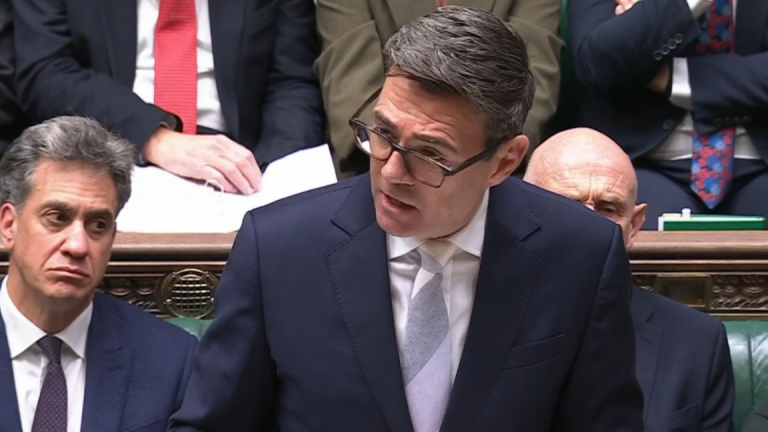
    The timing is awkward for the new government. Burnham, who addressed the House of Commons for the first time as prime minister on Tuesday, framed his administration’s economic philosophy around what he called “fiscal responsibility” — the “bedrock” on which he said the government would build its response to the cost-of-living crisis. He identified the economy and household affordability as “the biggest issues facing the country” and pledged to deliver “more substantial change” to ease living costs.

    “Britain is (not) where any of us would wish it to be,” he told MPs.

    Yet the market’s latest repricing directly constrains the fiscal headroom his Chancellor, John Healey, can deploy. Healey has publicly committed to maintaining the set of fiscal rules inherited from his predecessor Rachel Reeves — rules designed to give markets a predictable trajectory for public-sector borrowing. The more interest payments swell in official forecasts, the tighter the squeeze on discretionary spending or the greater the likelihood of compensatory tax increases to keep those rules intact.

    By one estimate, the recent rate moves alone could erase roughly half of the fiscal manoeuvring room that was projected in the last official economic forecast published in March. Layered on top of already-elevated pressures from defence spending and cost-of-living support, the arithmetic grows considerably more difficult.

    Global Context and Expert Readings

    Healey, currently in the United States attending the G20 gathering of finance ministers and central bankers, used the forum to argue that Britain had posted the fastest growth among G7 economies in 2026 to date, that productivity was trending upward, and that the UK was reducing its borrowing at the swiftest pace among major advanced economies. Those claims sit in tension with the market’s own pricing, which suggests investors remain sceptical about the sustainability of the fiscal path.

    Karen Ward, JP Morgan’s chief market strategist for Europe, told the BBC’s World at One programme that governments worldwide are expanding spending and turning to debt markets to finance it, while simultaneously contending with technology giants raising capital for AI investment. The combined effect, she explained, is that lenders now enjoy far greater choice over counterparties and can command higher interest rates across the board.

    “Markets are getting a lot more choice about who they are going to lend to and at what interest rates,” Ward said.

    Kathleen Brooks, research director at investment firm XTB, offered a more pointed assessment on the BBC News Channel. She described the current environment as one where “red lights (are) flashing,” noting that while pockets of volatility have been common over recent months, the combination of record government debt and a record tax take creates an uncomfortable position for the incoming administration.

    “These are not comfortable times for the new government and the new chancellor,” Brooks said.

    She emphasised that each incremental rise in bond yields translates directly into higher debt-servicing costs for the UK Treasury, compressing the budget year by year.

    The Road to 28 October

    Burnham has already introduced a series of short-term interventions aimed at supporting consumers and small businesses since taking up residence at Downing Street. The Budget scheduled for 28 October is expected to carry the weight of further cost-of-living measures, defence funding commitments, and whatever fiscal adjustments the market’s latest repricing forces upon the government.

    Ward urged both Burnham and Healey to set out, with specificity, how any incremental spending on defence and household relief would be financed, and how lenders providing that capital would be repaid. In a market environment where sovereign and corporate issuers are bidding against one another for long-duration capital, the credibility of that financing plan may matter as much as its content.

    For ordinary savers, mortgage holders, and small firms dependent on bank lending, the transmission channel from gilt markets to consumer credit rates is well established. Sustained elevation in long-end sovereign yields tends to lift the cost of commercial lending across the economy, adding a drag on investment and household spending at precisely the moment the government is trying to stimulate affordability. The interplay between fiscal rules, market pricing, and political ambition will define the next several months of British economic policy.

    Frequently Asked Questions

    What is UK long term borrowing costs highest?

    UK long term borrowing costs highest is the main topic of this guide. The article explains the context, practical details, and next steps readers should understand.

    Why does UK long term borrowing costs highest matter?

    UK long term borrowing costs highest matters because readers are looking for a useful answer, not just a short summary. Good content should match search intent and help them decide what to do next.

  • Russia says it helped to repel Niger attempted coup

    Russia says it helped to repel Niger attempted coup

    Niger’s Military Government Survives Mutiny as Russian Troops Play Central Role

    Constantvpn.com – The Sahel’s latest chapter of instability unfolded in the early hours of a Saturday morning when gunfire and explosions tore through the streets of Niamey, Niger’s capital. What began as a mutiny at a major military installation quickly escalated into a full-scale attempt to overthrow the country’s ruling junta. Within hours, however, Nigerien authorities declared the uprising contained — and credited Russian servicemen with helping to break the back of the revolt.

    The incident struck at two of the most symbolically important locations in the capital: the presidential palace and Air Base 101, a critical military installation embedded within the Diori Hamani airport complex. The base houses Nigerien military aircraft and drone units, hosts a joint counter-terrorism detachment operated under the Alliance of Sahel States, and also accommodates Russian and Italian military personnel stationed in the country.

    Moscow Claims Credit for Repelling the Coup

    On Sunday, Russia’s foreign ministry issued a statement confirming that elements of its African Corps had assisted Nigerien forces in driving back the mutineers. The ministry framed the intervention as part of a broader commitment to the region’s stability.

    “Nigerien forces had repelled the attack with the assistance of servicemen of the African Corps of the Russian Ministry of Defence.”

    The statement went further, pledging continued Russian backing for Niger’s campaign against what Moscow termed “extremists,” while insisting the situation had been restored to the control of what it called the “legitimate authorities headed by President [Gen Abdourahmane] Tiani.” The language was deliberate: Moscow was reinforcing its position as the security guarantor of a government that owes its very existence to a military takeover.

    Context: A Region Locked Into Moscow’s Orbit

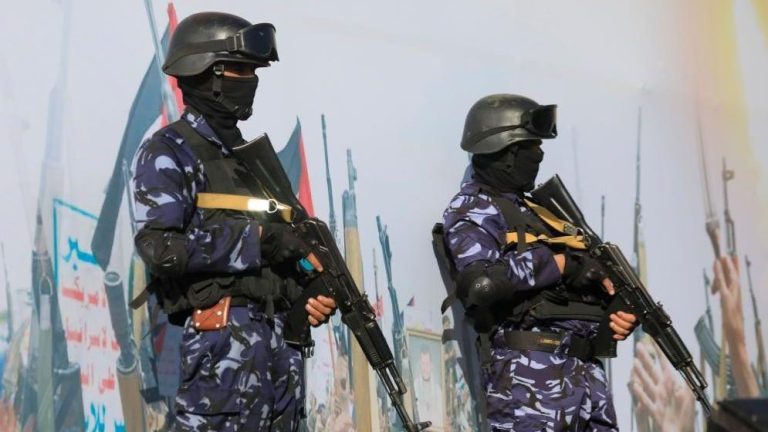
    The attempted coup lands in a region where three neighbouring juntas — Niger, Mali, and Burkina Faso — have collectively severed longstanding defence partnerships with Western powers and pivoted toward Moscow. Russia’s African Corps, a relatively small but strategically placed formation, has become the backbone of security cooperation across all three states. In exchange for Russian military presence, training, and logistical support, the Sahel governments have aligned their foreign policy, economic negotiations, and even their media narratives with Kremlin interests.

    Yet the bargain has not delivered the stability its architects promised. Jihadist insurgencies, fed by networks linked to both al-Qaeda and the Islamic State, continue to exact heavy tolls across the three countries. The very airbase where Saturday’s mutiny erupted had been struck twice earlier this year by jihadist forces — once by an Islamic State affiliate and later by an al-Qaeda-linked group — underscoring how thin the security margin remains even in the capital.

    The Alliance’s Response and the Silence of the Junta

    The Alliance of Sahel States, the trilateral bloc binding Niger, Mali, and Burkina Faso, issued a joint condemnation of the mutiny, describing it as:

    “a betrayal by a group of soldiers involved in an attempt at destabilisation.”

    Notably, neither the number of soldiers who participated in the revolt nor the casualty count has been made public. General Tiani, who assumed the presidency last year after deposing the country’s elected civilian leader, has not addressed the nation directly about the incident. Instead, the state broadcaster aired footage of several alleged mutineers being seized by members of the Presidential Guard, a visual meant to project control and finality.

    Life in Niamey Returns to a Careful Normal

    By Sunday, the Niger Press Agency reported that petrol stations, retail shops, and other commercial operations were reopening across the capital. Government supporters assembled in a central public square to voice backing for the security forces and for Tiani’s administration, a display of loyalty that also served as a signal to any remaining dissidents within the ranks.

    Security forces, meanwhile, have stepped up patrols around sensitive locations in Niamey, including the main airport entrance and the presidential pavilion. The heightened posture suggests the junta views the mutiny not as an isolated flashpoint but as a symptom of deeper fractures within the officer corps.

    What the Mutiny Reveals

    For a government whose legitimacy rests entirely on military authority, an internal revolt carries a particular sting. It signals that the chain of command is not monolithic, that grievances — over pay, deployment, or political direction — can crystallise into action even in a junta that has already removed civilian oversight. The fact that Russian troops were needed to help restore order, rather than Nigerien units acting alone, adds another layer of complexity to a relationship already defined by dependence.

    The Sahel’s three juntas entered their partnership with Moscow hoping to trade Western conditionality for unconditional military backing. Saturday’s events suggest that no amount of foreign firepower can fully insulate a fragile command structure from internal dissent. The question now is whether Niamey’s junta will treat the mutiny as a manageable hiccup or as a warning that the next challenge may come from within its own barracks.

    Frequently Asked Questions

    What is Russia says it helped to repel?

    Russia says it helped to repel is the main topic of this guide. The article explains the context, practical details, and next steps readers should understand.

    Why does Russia says it helped to repel matter?

    Russia says it helped to repel matters because readers are looking for a useful answer, not just a short summary. Good content should match search intent and help them decide what to do next.

  • Head teacher evacuated 900 children minutes before Nepal floods hit school

    Head teacher evacuated 900 children minutes before Nepal floods hit school

    Nine hundred children walked out of a Nepali school ten minutes before the river swallowed it

    Constantvpn.com – When the Trishuli River surged through Nuwakot district on Wednesday, it carried away homes, markets, and infrastructure across wide stretches of central Nepal. At least 794 people have been confirmed dead, and more than 2,426 remain missing as search teams work through mud and wreckage. Yet in one narrow window of time, a single decision by a school principal pulled 900 students out of a building that would soon be buried under debris.

    Rajendra Dawadi, head of Tribhuvan Trishuli Secondary School, made that decision at 09:10 local time (03:25 GMT) on the morning of the disaster. Within a matter of minutes, four separate phone calls reached him, each warning that a catastrophic flood was imminent. He ordered every child to run uphill and directed buses already loaded with students to reverse course and flee the valley floor.

    “If we didn’t make a quick decision, if it was 10 minutes later, we all – including the students and me – wouldn’t be able to speak to you today.”

    Dawadi explained that the urgency of the calls themselves confirmed the threat. One parent appeared at the school gate demanding to collect her daughter, a behaviour he read as confirmation that something extraordinary was unfolding.

    “A parent came and told me that ‘a big flood was coming, I am here to take my daughter, I will take her.’ Parents don’t rush without a strong reason, so it was confirmed that I shouldn’t waste a second to evacuate the children.”

    “I decided I shouldn’t delay any more. Even if the flood was not coming, it was just a matter of a single day’s classes. I feel proud that we saved so many lives.”

    The geography that made the choice urgent

    Nuwakot sits in a narrow valley where the Trishuli River, a major tributary of the Bagmati, can rise with terrifying speed after heavy rainfall upstream in the Himalayan foothills. The school’s hostel building stood roughly 100 metres (328 feet) from the riverbank. Dawadi described how that structure was engulfed almost instantaneously once the waters arrived, leaving no time for even a second evacuation wave. The main school building itself was subsequently buried under mud and debris.

    Nepal’s monsoon season, typically running from June through September, regularly produces flash-flood events of this magnitude. The country’s steep topography, combined with decades of deforestation and rapid urbanisation along river corridors, means that communities in the Terai plains and mid-hills face recurring, often fatal, inundation. The scale of this particular event — with thousands missing and hundreds confirmed dead — underscores how quickly a single afternoon of heavy rain upstream can become a valley-wide catastrophe downstream.

    A sixteen-year-old’s ten-second margin

    For the students inside the classrooms, the evacuation unfolded in confusion and fear. Yunisha Amatya, 16, was sitting in a maths lesson when teachers began gathering in one area, initially uncertain of what was happening. After roughly five minutes, staff informed pupils of the flood and instructed them to leave.

    “I along with my friends survived by just 10 seconds only,” she recalled. “Just before the flood came, we were in the class studying. Teachers had gathered in one place and initially had no idea what had happened. After five minutes teachers came and informed us about the flood and asked us to go home.”

    One student fainted upon hearing the news. Many pupils, still processing the shock, paused to wait for classmates in other rooms. Yunisha and her friends then scrambled uphill through a narrow escape route behind the school, climbing a ladder and pushing through crowds of panicked students and adults.

    “I could not walk fast, and my friends helped me to climb uphill. We tried our best to be in the safer zones then. We escaped through a narrow ladder from backside of the school. Within no time, the bazaar was swept away in front of my eyes.”

    “If there was no grip in my shoes I would have fallen and students and other people were jostling each other to reach the safer area while escaping. The people who choose to escape from another route are apparently swept away.”

    The group initially moved a few hundred metres uphill before continuing to a neighbouring village. With roads severed and transport networks paralysed, many evacuees were stranded for two nights before rescue teams could reach them. Dawadi and Yunisha, both of whom live on the opposite bank of the Trishuli, were eventually airlifted back to their home village.

    The hour a father could not reach his daughter

    While students climbed to safety, parents across Nuwakot were dialling phones into silence. Yunisha’s mother, Sabina Kumari Shrestha, repeatedly attempted to call both her daughter and her husband, reaching neither. Her husband, Yubaraj Amatya, reacted immediately.

    “Soon after the flood news spread, I tried my daughter’s number, but she was not reachable, then I was afraid. Within a few minutes I rushed toward my daughter’s school and Trishuli Bazar was all swept by the flood, then I thought my daughter was no more. I was so horrified, stopped my scooter, there was flooding but I could not think of returning without my daughter.”

    For nearly an hour he kept dialling, unable to confirm whether his daughter was alive. When the call finally connected and Yunisha answered, the relief was overwhelming.

    “Finally, my daughter received my call and I couldn’t stop myself, broke out… two relatives that were with me also cried and hugged me.”

    Yunisha, still visibly shaken, described the moment from her side of the line.

    “After I had reached the top of the hill, I received a call from my father. He was tearful and I could not speak a word then.”

    Back in their village, the family waited anxiously for hours before rescue operations allowed them to reunite. Their story, like that of the hundreds of other families separated by the flood, illustrates how quickly a routine school morning in a Nepali valley can become a life-or-death scramble — and how a single principal’s willingness to act within minutes can stand between a classroom full of children and a river that does not wait.

    Frequently Asked Questions

    What is Head teacher evacuated 900 children minutes?

    Head teacher evacuated 900 children minutes is the main topic of this guide. The article explains the context, practical details, and next steps readers should understand.

    Why does Head teacher evacuated 900 children minutes matter?

    Head teacher evacuated 900 children minutes matters because readers are looking for a useful answer, not just a short summary. Good content should match search intent and help them decide what to do next.

  • Algeria president seeks death penalty for arsonists after deadly forest fires

    Algeria president seeks death penalty for arsonists after deadly forest fires

    Algeria’s Forest Fires Claim at Least 12 Lives as President Pushes for Capital Punishment Against Arsonists

    Constantvpn.com – A scorched landscape stretches across the north-eastern provinces of Algeria, where more than 100 separate wildfires tore through woodland and scrubland over the course of several days last week. At least 12 people have died, dozens more were injured, and thousands of residents were forced from their homes as flames consumed large tracts of forested terrain. The devastation unfolded against the backdrop of a punishing heatwave that has gripped northern Africa, with Algeria and Tunisia bearing the brunt of temperatures that pushed ecosystems and infrastructure to their limits.

    In response to the carnage, President Abdelmadjid Tebboune has moved to impose the death penalty on anyone convicted of deliberately igniting fires in forested areas. On Sunday, he directed the justice ministry to draft amendments to the criminal code by 15 September, a deadline that would make intentional forest arson a capital offence. Under the existing legal framework, a person found guilty of starting a forest fire on purpose faces a maximum sentence of 30 years behind bars, or life imprisonment in aggravated circumstances.

    “I did not rule out foul play,” Tebboune said on Saturday, adding that thorough investigations would be conducted given the unusual intensity of the blazes.

    A Penal Code With a Long-Dormant Death Sentence

    The president’s directive is not an introduction of a wholly new punishment. Capital punishment already appears in Algeria’s penal code for a narrow set of offences, yet no execution has actually been carried out in the country since 1993. In practice, the death penalty has functioned as a suspended threat for over three decades. By extending it to arson, Tebboune would be reviving a sentence that has lain dormant for more than thirty years and applying it to a crime that, while devastating, has historically been treated as a serious but non-capital offence.

    Legal analysts note that the move signals a hardline posture by the executive branch. Algeria’s constitution and criminal procedure require parliamentary ratification of any amendment to the penal code, meaning the 15 September deadline sets the stage for a swift legislative session. Whether lawmakers will rubber-stamp the change or debate its proportionality remains to be seen, but the president’s framing — linking the fires to possible deliberate sabotage — suggests he intends to leave little room for hesitation.

    The Fires Themselves: Scale and Aftermath

    The blazes erupted across the north-eastern region in rapid succession during a period of extreme heat. By Sunday afternoon, Algerian civil authorities were still engaged in suppression operations, though the Algerian Press Service reported that 18 of the 19 fires that had broken out in the preceding 24 hours had been brought under control. The vast majority of the more than 100 incidents logged over the preceding days had already been extinguished.

    The human toll extended well beyond fatalities. Dozens of residents sustained burns and smoke-related injuries, while thousands were displaced from villages and towns adjacent to the burn zones. Homes, agricultural land, and critical infrastructure — including power lines and water systems — suffered extensive damage. Tebboune ordered that compensation be paid to affected families and that repairs to damaged dwellings and essential services begin without delay. He also directed that independent investigations quantify the full extent of property loss and economic damage.

    Climate Context: A Pattern Growing Worse

    Algeria is no stranger to summer wildfires. The country’s Mediterranean coastline and semi-arid interior have long been prone to seasonal blazes, particularly during the hot, dry months of July and August. What distinguishes the current episode, however, is its scale and ferocity. Climate scientists point to a combination of rising baseline temperatures, prolonged drought cycles, and increased humidity variability as factors that have intensified wildfire behaviour across North Africa over the past decade.

    The heatwave that triggered this week’s conflagration was not confined to Algeria. Tunisia, Libya, and parts of the western Mediterranean experienced simultaneous temperature spikes, straining firefighting resources and prompting emergency alerts across the region. For a country whose northern forests already face pressure from urban encroachment and limited water infrastructure, each successive heat event narrows the margin between a manageable brush fire and a catastrophic landscape-scale blaze.

    Political and Social Implications

    The president’s insistence on investigating whether human agency — beyond mere negligence — played a role in the fires introduces a layer of political sensitivity. In a country where public trust in institutional accountability has been tested by past disasters, the suggestion of deliberate arson can quickly become a rallying point for opposition voices demanding transparency. Conversely, if investigations confirm natural causes, the death-penalty amendment may be read by critics as a symbolic gesture rather than a substantive deterrent.

    Regardless of the final findings, the episode underscores a structural vulnerability: Algeria’s northern forests, which provide ecological services, tourism revenue, and cultural identity for millions of residents, remain exposed to a climate trajectory that makes each summer’s fire season more dangerous than the last. The question now is whether the political response — swift, punitive, and top-down — will be matched by longer-term investment in early-warning systems, rural firefighting capacity, and land-use planning that addresses the root conditions allowing small ignitions to become regional catastrophes.

    Frequently Asked Questions

    What is Algeria president seeks death penalty for arsonists?

    Algeria president seeks death penalty for arsonists is the main topic of this guide. The article explains the context, practical details, and next steps readers should understand.

    Why does Algeria president seeks death penalty for arsonists matter?

    Algeria president seeks death penalty for arsonists matters because readers are looking for a useful answer, not just a short summary. Good content should match search intent and help them decide what to do next.

  • South African airline defends low-altitude aerial stunt over packed stadium

    South African airline defends low-altitude aerial stunt over packed stadium

    Two Jets, One Stadium, and a Nation Holding Its Breath

    Constantvpn.com – When flares erupted into the Cape Town night sky and two fighter-style jets screamed overhead in tight formation, the thousands packed inside DHL Stadium were not watching a rugby warm-up. They were witnessing a calculated aerial display by Airlink, a South African regional carrier, whose twin aircraft reportedly grazed the upper rim of the venue at a height measured in mere feet. The manoeuvre, staged immediately before a high-stakes Test match pitting the Springboks against New Zealand’s All Blacks, ignited a wave of reactions ranging from stunned admiration to outright alarm.

    The spectacle unfolded in seconds: one aircraft painted green, the other black, threading through the stadium’s airspace in close proximity while spectators below looked up. For a brief window, the boundary between sport and aviation performance dissolved entirely. Social media erupted within minutes. Some commentators called the flyby dangerously audacious, questioning whether any commercial operation should position two aircraft so close to a structure filled with tens of thousands of people. Others lauded the extraordinary skill and coordination the manoeuvre demanded, framing it as a showcase of South African aviation competence.

    Airlink’s Response: Deliberate, Approved, Rehearsed

    Rather than retreat from the controversy, Airlink leaned into the moment. On its social media channels, the airline paired the footage with a terse three-word caption:

    “Planning. Precision. Performance.”

    In a fuller statement later reproduced on a South African government news portal, the carrier detailed the operational safeguards behind the display. Each of the two aircraft carried a crew of three senior captains, assigned to distinct roles: commander, co-pilot, and a dedicated safety and technical officer. The airline stressed that the flypast was executed within parameters it described as pre-cleared and repeatedly rehearsed.

    “The two aircraft were flown by highly experienced crew, with each comprised of three senior captains operating in the roles of commander, co-pilot and safety/technical officer,” the airline stated. It added that the flights were performed with the “approved and rehearsed safety altitude and speed limits for the flypast.”

    The airline also noted that the operation carried the backing of national aviation authorities, a point it raised to counter accusations of recklessness. In practical terms, this means the flight path, altitude envelope, and speed corridors had been vetted before the event, and that the pilots had run through the sequence multiple times in preparation.

    The Numbers Behind the Fear

    Flight-tracking platform Flightradar24, which aggregates ADS-B and other telemetry data from aircraft worldwide, offered a quantitative reading of the event. Its post-event analysis concluded that the lead aircraft cleared the stadium’s highest point by less than 50 feet — roughly 15 metres. At that altitude, over a structure whose roofline is already well above ground level, the margin between the fuselage and the concrete parapet was, by any aviation standard, extraordinarily slim. The trailing aircraft, flying in close formation behind the lead jet, compounded the risk profile: a single deviation in heading or altitude could have brought two heavy machines into contact with the stadium structure or with each other.

    Those figures explain why the stunt divided public opinion so sharply. Aviation safety culture generally favours generous vertical and lateral separation, particularly over populated areas. A commercial airline choosing to fly its own aircraft at single-digit-metre clearance above a packed arena sits at the far edge of conventional operational practice, even when authorities have signed off on the plan.

    A Tradition Rooted in Rugby and National Identity

    The low-altitude flyby over a major South African sporting event is not an isolated novelty. It draws on a lineage that stretches back to one of the most emotionally charged moments in the country’s sporting history. In June 1995, a South African Airways jet roared over Loftus Versfeld in Johannesburg moments before the Rugby World Cup final, in which the Springboks defeated New Zealand to claim the Webb Ellis Cup. That victory, set against the backdrop of a nation still healing from decades of apartheid, became a defining symbol of post-apartheid unity.

    The final was later dramatised in the 2009 Hollywood film Invictus, starring Morgan Freeman as Nelson Mandela. In the most iconic scene, the newly inaugurated president — South Africa’s first black head of state — steps onto the field wearing the Springbok jersey, a garment long associated with the apartheid-era establishment and previously closed to players who were not white. The image of Mandela in that green-and-gold shirt, with the stadium roaring beneath him, remains one of the most recognised photographs of modern South African history.

    Against that backdrop, the Airlink flyby at DHL Stadium carried an unmistakable cultural charge. For many South Africans watching, the jets overhead were not merely a marketing stunt by a domestic airline. They were an echo of 1995, a reminder that the country’s pilots and engineers could execute feats of precision on the world stage. Social media commentary from the event was saturated with national pride, with users celebrating the skill involved and framing the display as proof that South African aviation talent remains world-class.

    What Comes Next

    The episode is likely to prompt closer scrutiny of how commercial carriers interact with major sporting venues in South Africa. Aviation regulators may review whether the altitude and separation parameters used at DHL Stadium represent a replicable template or a one-off exception. Airlines, stadium operators, and event organisers will face the question of how to balance spectacle with the conservative safety margins that underpin commercial aviation. For now, the footage of two jets threading the stadium’s airspace at Cape Town will circulate for years, a reminder that the line between showmanship and risk can be measured in metres — and that a nation’s sporting pride can make even the most audacious clearance feel, to those below, like a moment of pure triumph.

    Frequently Asked Questions

    What is South African airline defends low altitude?

    South African airline defends low altitude is the main topic of this guide. The article explains the context, practical details, and next steps readers should understand.

    Why does South African airline defends low altitude matter?

    South African airline defends low altitude matters because readers are looking for a useful answer, not just a short summary. Good content should match search intent and help them decide what to do next.

  • Monza memories – Italian GP in pictures through the years

    Monza memories – Italian GP in pictures through the years

    Where Speed Meets Sacred Ground: Monza’s Unbroken Thread Through Formula 1 History

    Constantvpn.com – Every autumn, the roar of engines echoes through a stretch of royal woodland north of Milan, and the world of motorsport gathers at a place that has become inseparable from its own mythology. Monza — the so-called “cathedral of speed” — stands as the single most enduring fixture on the Formula 1 calendar. Since the sport’s inaugural season in 1950, the circuit has staged a grand prix in every year except one. That lone absence came in 1980, when the track underwent renovation work. No other venue can claim such an unbroken lineage of competition.

    The circuit sits within a royal park, its long straights flanked by dense woodland that gives the place an almost cathedral-like solemnity. For Ferrari fans — the tifosi who pack the grandstands in scarlet — Monza is not merely a race track. It is a place of worship. The Italian marque has called this stretch of tarmac its spiritual home for decades, and the emotional intensity of a home race here has no parallel elsewhere on the calendar.

    The stakes at Monza have always been existential. Seventy-six years ago, the very first Formula 1 world championship was decided on this very track. Last year, Red Bull’s Max Verstappen produced the fastest qualifying lap ever recorded in the sport’s history, again at Monza. The venue has witnessed title clinches, heartbreaking crashes, controversial finishes, and moments of pure, unrepeatable drama. To trace the history of Formula 1 is, in many ways, to trace the history of this one circuit.

    The Founding Era: Alfa, Ferrari, and the First Titles

    The 1950 Italian Grand Prix closed Formula 1’s maiden season. Giuseppe Farina, driving an Alfa Romeo, crossed the line to claim both the race and the inaugural drivers’ championship. He remains the only driver ever to win the title on home soil. Farina’s dominance in those early years was absolute — he, Juan Manuel Fangio, and Alberto Ascari collectively claimed the first eight world titles between them.

    By 1953, the grid at Monza featured all three of those champions lining up together. Fangio, in a Maserati, took the race that weekend, but Ascari, in a Ferrari, accumulated enough points across the season to carry the title. The era of near-total Italian and Argentine supremacy over the championship was well established by then.

    Banking, Brotherhood, and the First Woman

    Monza’s steep banked corners — still physically present at the circuit today — were a defining feature of the track until the 1961 season. In 1956, Fangio, Stirling Moss, and Peter Collins navigated those banks during a race that became a study in team loyalty. Moss, driving a Maserati, took the win. Collins, the British driver, handed his car to his Argentine teammate Fangio after the race, allowing them to share second place. Those points proved decisive: Fangio collected his fourth of five world championships that year.

    Two years later, in 1958, the grid carried a landmark of its own. Maria Teresa de Filippis, an Italian driver, became the first woman ever to compete in a Formula 1 race, piloting a Maserati at her home event. Her presence on the grid marked a milestone that the sport would not see matched for decades.

    Tragedy at the Lesmos

    The 1961 Italian Grand Prix will always be remembered for what happened on its second lap. Wolfgang von Trips, a Ferrari driver who was on the verge of clinching the world championship, collided with Jim Clark’s Lotus. His car launched over an embankment and into a crowd of spectators. Von Trips and fourteen others were killed. The image of the German driver before that fateful race remains one of the most haunting in the sport’s visual archive.

    Spectators watching through the Lesmos corners in 1962 saw a different kind of drama unfold. By 1963, Scotsman Jim Clark had turned the track into his own proving ground, collecting a garland after winning the grand prix to seal his first of two drivers’ titles with Lotus.

    Family, Slipstream, and the Narrowest of Margins

    In the pits before the 1967 race, Graham Hill adjusted his helmet and visor while surrounded by his family — wife Bette and their children. Among them stood a six-year-old Damon Hill, who would go on to claim the 1996 world championship.

    Before chicanes were added to the layout, Monza’s long straights turned every race into a war of slipstreaming. In 1969, Matra’s Jackie Stewart crossed the line just ahead of Jochen Rindt in a Lotus, Jean-Pierre Beltoise in a second Matra, and Bruce McLaren representing his own team. The top four finishers were separated by less than two-tenths of a second.

    The following year brought heartbreak of a different order. Nina Rindt sat in the pits, timekeeping for her husband during a practice session in 1970. Shortly after that session, Jochen Rindt was killed on the approach to the Parabolica corner, almost certainly due to a suspension failure on his Lotus. Weeks later, he became Formula 1’s only posthumous world champion.

    Thrills, Scars, and the Hunt–Lauda War

    The 1971 finish was another masterclass in razor-thin margins. BRM’s Peter Gethin edged past Ronnie Peterson in a March, Francois Cevert in a Tyrrell, Mike Hailwood in a Surtees, and Howden Ganley in a second BRM. Six-tenths of a second separated the top five.

    In 1973, team owner Frank Williams organized a charity-style race around the circuit. James Hunt led the pack at the start, but it was Williams himself — visible behind a bare-chested runner — who crossed the line first and collected the £750 prize.

    By 1976, Monza had become the stage for one of the sport’s greatest rivalries. Niki Lauda, still bearing the visible scars of his near-fatal crash at the Nürburgring German Grand Prix, returned to racing just six weeks after that accident. He drove at Monza in significant pain, finishing fourth to extend his championship lead over McLaren’s James Hunt. Hunt ultimately prevailed by a single point at season’s end, but Lauda’s decision to race at all — at that speed, with those wounds — remains one of the most extraordinary acts of will in motorsport history.

    The 1978 Italian Grand Prix opened with a multi-car accident behind the leaders, a reminder that even in an era of increasing safety, Monza’s speed demanded its toll.

    From Farina’s Alfa to Verstappen’s record lap, the circuit has absorbed every era of the sport. Its story is, quite literally, the story of Formula 1 itself.

    Frequently Asked Questions

    What is Monza memories?

    Monza memories is the main topic of this guide. The article explains the context, practical details, and next steps readers should understand.

    Why does Monza memories matter?

    Monza memories matters because readers are looking for a useful answer, not just a short summary. Good content should match search intent and help them decide what to do next.

  • Venus Williams loses 15th match in row in 2am finish

    Venus Williams loses 15th match in row in 2am finish

    Venus Williams Falls to Sofia Kenin in a Record-Breaking Midnight US Open Session

    Constantvpn.com – The Arthur Ashe Stadium complex in New York had barely emptied when the final match of the day’s opening session finally began at 00:13 local time — a start so late that it set a new record for the latest first-round commencement in US Open history. By the time the final point landed, fewer than 1,000 spectators remained in the stands, watching a contest that had already stretched past the midnight hour.

    At the centre of that late-night drama stood 46-year-old Venus Williams, who extended her singles losing streak to 15 matches after falling to compatriot Sofia Kenin, the 2020 Australian Open champion. Kenin, who had saved seven set points in the deciding tiebreak, closed out the contest 6-2, 7-6 (8-6). Williams had led the second-set tiebreak 6-2 before surrendering the final six points in a collapse that underscored how physically and mentally taxing the marathon schedule had become.

    The match had been queued behind Mariano Navone’s five-set triumph over Novak Djokovic on the main court, pushing the Williams-Kenin encounter into the small hours. Williams, granted a wildcard entry into her home Grand Slam, addressed the scheduling directly after the defeat.

    “It’s not ideal. I would have preferred something else definitely. I think it wasn’t great for either of us, so I think we both tried our best. I just don’t know any other sport where you have to start that late. I definitely think there’s room for improvement there.”

    She added that maintaining competitive rhythm under such conditions is extraordinarily difficult, particularly in a first-round match where players have had limited match practice in recent weeks.

    A Losing Streak That Stretches Back to July

    Williams’s last singles victory came against Peyton Stearns in Washington in July 2025. Since then, she has dropped 15 consecutive singles matches, bringing her tally for the current season to 19 defeats across 20 singles contests. Her most recent singles win at a major championship dates to Wimbledon 2021, and she has not entered a Grand Slam main draw through ranking since that same tournament.

    Currently ranked 618th in the world, Williams received her 12th wildcard of the season for New York. That number has drawn scrutiny from some observers who question whether a player of her current form should occupy a slot that might otherwise go to a younger competitor climbing the rankings. Yet tournament organisers have consistently sought her presence. This year alone, directors in New Zealand, Australia, Spain, Germany, Canada, and the United States have extended wildcard invitations to the Williams sisters.

    The Wildcard Debate: Legacy Versus Opportunity

    Karl Hale, tournament director of the WTA 1000 event in Toronto, defended the practice of allocating wildcards to Williams, noting that her presence generated significant commercial and cultural value for the event.

    “I think it’s good for tennis to have these generational icons. That they are still allocating wildcards for them says something to their intrinsic value to the tournaments.”

    Hale explained that Williams opened the Toronto tournament on its first day, adding what he described as substantial value to the event’s profile in local markets.

    Former Wimbledon champion Pat Cash offered a more divided perspective during BBC Radio 5 Sports Extra’s US Open coverage. He acknowledged the spectacle of watching a legend compete at smaller events while simultaneously arguing that a wildcard slot represents a real opportunity cost for emerging players.

    “That makes complete sense. You need a draw card, a legend to come out and play in these smaller tournaments. The Grand Slams sit on their own. It’s up to Venus whether she thinks she’s good enough to play and play well enough. I personally don’t think she should be taking a wildcard away from a young player after she’s had a great career.”

    Structural Context: How Wildcards Work and Where Tennis Differs From Other Sports

    In a standard Grand Slam singles draw of 128 players, eight positions are reserved for wildcards. At WTA and ATP events of varying size, the number typically ranges between four and eight. There is no cap on how many wildcards a former Grand Slam champion may receive across a season, a structural feature that distinguishes tennis from several other disciplines.

    Golf’s Open Championship offers a useful contrast. Two decades ago, any past champion under the age of 65 could enter the field at will. The current rule limits that window to age 55, effectively freeing up slots for younger, higher-ranked professionals. Tennis, by contrast, imposes no such age-based restriction, meaning a player like Williams can continue to receive invitations indefinitely.

    Precedent for late-career wildcard entries exists. Martina Navratilova, aged 47, received wildcards for both the 2004 French Open and Wimbledon, where she won a round on grass. Williams’s situation differs in scale — she is a seven-time major singles champion and two-time US Open titleholder — but the underlying question remains the same: at what point does a wildcard stop being a celebration of legacy and start becoming a barrier to competitive progression?

    For Williams, the answer appears to be one she will continue to answer on her own terms. After last year’s doubles quarter-final run at the US Open and a string of wildcard entries across five continents this season, the 46-year-old shows no indication of stepping away from professional competition. The midnight finish in New York, for all its logistical awkwardness, was simply another chapter in a career that has already outlasted most of the current generation of players.

    Frequently Asked Questions

    What is Venus Williams loses 15th match in row?

    Venus Williams loses 15th match in row is the main topic of this guide. The article explains the context, practical details, and next steps readers should understand.

    Why does Venus Williams loses 15th match in row matter?

    Venus Williams loses 15th match in row matters because readers are looking for a useful answer, not just a short summary. Good content should match search intent and help them decide what to do next.

  • Robinson’s rhythmical action reminiscent of McGrath – Agnew

    Robinson’s rhythmical action reminiscent of McGrath – Agnew

    Robinson’s Resurgence at Lord’s: How England’s Most Underrated Bowler Finally Found His Groove

    Constantvpn.com – England sealed their series victory over Pakistan at Lord’s with a performance that left little room for debate about one man’s place in the side. Ollie Robinson, now 32, collected 23 wickets across three Tests in a summer that has effectively ended any lingering argument over his selection. The second Test win at Lord’s was the final nail in the coffin of those who questioned whether the right-hand spinner deserved a permanent spot in the XI.

    What makes Robinson’s summer remarkable is not merely the numbers. It is the manner in which he delivered them. The ball swung, wobbled, and turned with a consistency that required no desperate searching for extra movement. He simply let the delivery flow from his fingertips and trusted the natural shape the ball would take. In conditions that flattered spin bowling, he did not need to force anything. The pitch gave him everything, and he collected it with surgical precision.

    A Rhythm Built on Repetition

    Former England bowler Chris Agnew has tracked Robinson’s career since the spinner’s debut roughly five years ago, and his assessment has never wavered. He called Robinson the most natural bowler he had ever watched. Between that debut and the present day, the spinner was dropped, recalled, dropped again, and ultimately recalled once more. The turbulence of his selection history did not alter Agnew’s view of the action itself.

    The comparison Agnew draws is to Glenn McGrath, Australia’s legendary pace bowler whose delivery was defined by an almost mechanical consistency. Every run-up, every arm swing, every release point landed in exactly the same place. Agnew describes Robinson’s action in similar terms: utterly rhythmical, repetitive, and perfectly grooved. His wrist position, in particular, is described as flawless. For a former bowler watching from the stands, that inherent rhythm is what separates a good spinner from a genuinely dangerous one.

    “Using the word robotic to describe him may give the wrong impression. It is a compliment. Australia’s great bowler Glenn McGrath was like that.”

    Tactical Intelligence Beyond the Action

    Beyond the physical mechanics, Robinson possesses a sharp tactical mind that sets him apart from many spinners. Agnew recalls that even when Robinson first entered the squad, a coach noted the bowler would deliver informal talks to teammates about methods of dismissing batsmen. He reads a batsman’s weakness quickly and translates that reading into immediate adjustments to his own plans. That cognitive edge compounds the physical threat he presents.

    The wicketkeeper’s position amplifies this advantage. Australia’s Alex Carey demonstrated during the Ashes how effectively a keeper standing up close to the stumps can pace a bowler and compress the batsman’s available room. England have adopted the same arrangement with Jamie Smith at the other end. The practical effect is significant: a batsman who might otherwise walk down the pitch to meet a shorter-length delivery is now constrained by the stump threat. Robinson can therefore bowl a yard fuller, giving the ball additional time in flight to swing through the air. More deliveries hit the stumps rather than bouncing over from a shorter length. The adjustment plays directly into his strengths.

    The Selection Wound and Its Aftermath

    Robinson’s summer has arrived against the backdrop of a painful omission. Last winter, Ben Stokes, Brendon McCullum, and managing director Rob Key excluded him from the Ashes squad, prioritising bowlers with greater pace. Talk of a breakdown in trust between the spinner and the Stokes-McCullum regime followed. Robinson himself has suggested at various points that he believed his England career was finished.

    Bowling coach Jon Lewis publicly questioned the spinner’s fitness levels in 2022, and there have been periods where Robinson’s physical preparation did not meet the demands of the role. Yet Agnew argues that the treatment has not always been kind. The winter omission, painful as it was, may have sharpened Robinson’s focus. Captain Joe Root now reaps the benefits of that sharpened intent.

    Jamie Smith’s Quiet Transformation

    Credit must also be directed at Jamie Smith, whose glovework has improved markedly since his struggles during the Ashes. Wicketkeeping coach Sarah Taylor has been drilling him relentlessly before play, using a tennis-ball racket to fire balls at him while a batsman stands in front, edging, missing, and hitting. Smith must stay low and collect the skidding balls under pressure. The visible improvement in his hands and reflexes has made the up-close keeping arrangement viable and has removed a key constraint on Robinson’s bowling.

    The South Africa Test: Where the Real Question Begins

    The summer’s conditions were ideal for spin, and Robinson would carry those pitches in his cricket bag if he could. The genuine test comes this winter in South Africa, where England face a three-Test series on harder, flatter surfaces and in hotter conditions that will strain fitness levels. England have historically left Robinson out for Tests on batter-friendly pitches. Agnew’s view is that the time has come to throw him in regardless.

    Behind the scenes, England are working to stabilise Robinson’s pace. Currently he begins his spell around 82 mph before dropping to 77 or 78 mph as the innings progresses. The target is to maintain that 82 mph figure throughout. If achieved, the additional bounce generated should compensate for the reduced movement available on flatter surfaces. It is a fine adjustment, but one that could determine whether Robinson remains a regular fixture in the side or reverts to the bench.

    For now, the message from Lord’s is unambiguous. Robinson has earned his place, and England’s stated intention is not to rest him, Jofra Archer, Gus Atkinson, or Josh Tongue for the third Test. The spinner’s five-year odyssey through selection purgatory appears, at last, to be over. What happens on South African soil will determine whether this is a genuine arrival or merely another summer blip in a long, turbulent career.

    Frequently Asked Questions

    What is Robinson s rhythmical action reminiscent of McGrath?

    Robinson s rhythmical action reminiscent of McGrath is the main topic of this guide. The article explains the context, practical details, and next steps readers should understand.

    Why does Robinson s rhythmical action reminiscent of McGrath matter?

    Robinson s rhythmical action reminiscent of McGrath matters because readers are looking for a useful answer, not just a short summary. Good content should match search intent and help them decide what to do next.