Blog

  • I was told I was unworthy to be a mother, then they stole my baby

    I was told I was unworthy to be a mother, then they stole my baby

    A Teenage Mother’s Nine Months of Joy, Then a Lifetime of Silence

    Constantvpn.com – In the summer of 1966, a seventeen-year-old girl from Stranraer in south-west Scotland boarded a journey of more than 150 miles northward to Newcastle-upon-Tyne. She was pregnant, unmarried, and carrying a secret her family had not yet learned. What followed was not a brief stay but a nine-month period of motherhood that ended, abruptly and without consent, in a corridor of a Salvation Army-run maternity home. Her name was Marion McMillan, and her story is one thread among roughly 250,000 pulled from the fabric of Britain’s forced-adoption system between 1949 and 1976.

    That system, now formally acknowledged by the state, placed infants born to single mothers into adoptive families — overwhelmingly middle-class households — while the biological mothers were left with little recourse. The machinery involved social workers, religious institutions, and state policy operating in concert. For decades, many of the women involved carried their experience in silence, treating the separation as a private shame rather than a systemic failure.

    The Boyfriend Who Vanished

    Marion’s pregnancy followed a brief romance with an older man who had emigrated from Pakistan. She described the relationship as tender and uncomplicated, though it lasted only a handful of encounters. When the pregnancy became apparent, her partner understood that their families and their communities would not accept the union.

    “Nobody will want you to go with a black man, Marion,” he told her.

    In their final conversation, he proposed they emigrate to Hawaii, where he believed mixed-race marriages faced less social resistance. Marion never saw him again.

    “Didn’t know what was ahead of me. The conveyor belt of ‘unwed mother’ took control, and that was when I lost control.”

    Hopedene: Where Motherhood Was Denied at the Door

    She gave birth at Hopedene, a home for unmarried mothers where conditions were austere and staff treatment could be harsh. Marion described the atmosphere as one of immediate devaluation: from the moment a woman crossed the threshold, the message was that she was unfit to raise her child.

    “Everything, from the minute you cross their threshold, is that you’re unworthy to be a mother and we’re taking your baby from you. It’s going for adoption. So you better get used to that, girl, because you’ve no money, you’ve no place to live, you’ve not got anybody to support you.”

    During labour itself, the matron struck Marion across the face for attempting to move off the bed. She recalled the physical shock of the blow colliding with the intensity of contractions, and then, almost instantly, her son was born. He was not permitted to be held until the following day.

    “I was absolutely terrified. Absolutely terrified that they’re taking my baby. They cannae take my baby away from me.”

    Nine Months, Then the Separation

    Unlike many women in mother-and-baby homes across the UK who were separated from their infants within days, Marion was allowed to keep her son for nine months. She described him as a beautiful boy with what she called “gorgeous wee black hair.” Yet the institution’s internal calculus worked against her. She was identified by staff as a “Scotch girl with a half-caste,” and told that such children were very rarely placed successfully with adoptive families.

    When his adoptive parents selected him at nine months old, the final handover was staged with a kind of performative grief. The matron held Marion while another member of staff carried the infant away. Marion’s pleas went unheard.

    “I said ‘please help me keep my baby, don’t let them take my baby, please’ and he was gone.”

    She compared the waiting period before the separation to a death-row countdown.

    Forty Years of Distance, Then a Reunion

    Marion did not see her son again until 2004. By then she had been displaced from Stranraer, the town where she was born and raised, and was living alone in a women’s hostel in Glasgow.

    “Suddenly I’m banished from where I was born and brought up and I’m entirely on my own again.”

    The reunion, while longed for, carried its own weight. Marion acknowledged the layered grief it produced — for herself, for her son, for his adoptive parents, for everyone caught in the web of that original decision.

    “It’s been painful for him, painful for me, painful for his [adoptive] parents, painful for everybody. But it you take away the pain it’s been a gift from God because all the years I missed him.”

    An Apology That Arrives Late

    In July, outgoing prime minister Sir Keir Starmer issued a formal state apology to mothers affected by the forced-adoption era. His words addressed the decades of silence directly:

    “The shame is not yours… the shame is ours.”

    For Marion, and for the thousands of women whose stories mirror hers, the apology arrives after a lifetime of unanswered questions. The broader scandal — spanning nearly three decades and touching an estimated 250,000 mothers — operated at the intersection of class, race, and gender norms that made an unmarried working-class pregnancy, particularly one involving a mixed-race child, a problem to be solved by removal rather than supported by the state. As Ann Keen, another woman affected by the system, put it:

    “Let’s face it, we were working class unmarried girls having babies that were being adopted by middle class women.”

    The infrastructure that enabled those separations — religious-run homes, social-work protocols, and legal frameworks that prioritised adoptive placement over maternal consent — has since been dismantled or reformed. Yet for the mothers who lived through it, the architecture of that era still shapes how they understand their own childhoods, their sons’ childhoods, and the years in between.

    Frequently Asked Questions

    What is I was told I was unworthy?

    I was told I was unworthy is the main topic of this guide. The article explains the context, practical details, and next steps readers should understand.

    Why does I was told I was unworthy matter?

    I was told I was unworthy matters because readers are looking for a useful answer, not just a short summary. Good content should match search intent and help them decide what to do next.

  • Mount Fuji pics, life-changing ramen and a weak yen – why young Brits are going to Japan

    Mount Fuji pics, life-changing ramen and a weak yen – why young Brits are going to Japan

    Constantvpn.com – Seeing others' holiday snaps of Japan on social media made Maitri Sanghvi want to go there As I open up Instagram, I see another person in their late-20s has been to Japan. It shouldn't come as a surprise any more. "I cannot scroll through TikTok or Instagram without seeing videos of people in [convenience store] 7-11 and trying all the different skincare and trying all the snacks and the viral sandwiches and the viral drinks and going to all the viral restaurants," says Alex Baker, who has been to Japan three times.

    There's been growing hype about Japan as a travel destination among young British people. Data from the Japanese National Tourism Organization , external shows that 483,157 British tourists visited Japan in 2025, up 24.8% on 2024 and up 40.8% on 2019, the benchmark year used by travel companies to compare with pre-pandemic trends. Provisional data for 2026 suggests numbers are continuing to grow.

    This reflects the boom in total tourism to Japan since the pandemic, with a record number of foreign visitors in 2025. The Brits in their 20s and 30s I spoke to gave a long list of reasons for wanting to go to Japan – the cityscapes, food, anime, nature, history, gaming, temples. But they largely agreed that social media was the main driving force behind so many young people heading there.

    When Maitri Sanghvi scrolled through TikTok, "Japan just kept popping up," she says. It was a big reason why Maitri, 24, and her boyfriend went for three weeks earlier this year. "Seeing [Japan] on social media restarted my urge of wanting to go," she says.

    Search #japantravel on TikTok or Instagram and you'll see countless videos of Mount Fuji, bowls of steaming ramen, itinerary suggestions, small villages in the Japanese Alps, the Fushimi Inari torii gates in Kyoto, the neon lights of Osaka's Dotonbori, and the chaos of Shibuya Crossing. "Seeing other people's Japan videos definitely influenced my decision to go," says Aden Ibrahim, 29. Aden says the social media buzz around Japan made him want to go Since he went with friends last July, Aden has posted dozens of TikToks of his trip, and he's still uploading them more than a year later.

    One captioned "Japan made it out the group chat" has 1.1 million views. Travelling to Japan isn't cheap – return off-peak flights with a layover in China start at about £450 with a budget airline. But the yen is weakening , making it cheaper for tourists when they're actually out there – even as rising prices hit residents.

    In July, the yen fell to a 40-year low. "You can literally get a bowl of life-changing ramen for £3/£4 compared to a rubbish one here for like £20," says Faye Jawad, 26, who reviews restaurants on TikTok and visited Japan last year. Faye says eating out in Japan was surprisingly affordable "When the yen was weakening, I thought 'actually this is a good time to go, things are going to be cheap'," says Vivek Haria, 26, who has a trip planned for this autumn.

    His interest in Japanese culture means he's wanted to visit for years – he has been learning the language and even sings in the UK-Japan Choir – but he says the value of the yen made it even more attractive. The low prices have led to many tourists splashing out on souvenirs when they're out there. Videos of people showing off their Japan "haul" of flavoured KitKats, stationery and clothes have become popular on social media.

    When Sam Corbett, 23, was in Japan in May he bought so many souvenirs – including snacks, matcha, clothes and skincare – that he had to buy an extra suitcase, which he stuffed full. Everything was "really affordable," he says. Many visitors talk about being entranced by Japan's convenience stores Almost all the Brits I spoke to had stuck to the same route known as the Golden Route: Tokyo, Kyoto and Osaka, often with day trips to nearby destinations like Nara, Hiroshima and Mount Fuji.

    It's easy to see why so many tourists pick this route. These cities are easy to travel between and packed with some of Japan's biggest attractions. But complaints about badly-behaved tourists are sparking debate about overtourism.

    Chiyuki Izumii, a tour guide for the Japan Guide Agency, feels tourist behaviour has got worse in recent years. She says that while her customers are respectful, she's seen other tourists jumping queues for buses, blocking space on board with big suitcases, carving their initials on trees in Kyoto's bamboo forest, speaking in loud voices at night and entering restricted areas to take pictures. Some authorities are cracking down.

    Fujikawaguchiko, a town near Mount Fuji, cancelled this year's cherry blossom festival after repeated issues with misbehaving tourists, while Tokyo's Shibuya ward, home to the famous Shibuya Crossing, started issuing on-the-spot fines for littering in June. In July, Japan increased its international tourist tax , external – typically incorporated into flight and boat tickets for people leaving Japan – from 1,000 yen (£4.60) to 3,000 yen, which it says will be spent on things like improving public transport and restoring historic sites. Overtourism is a big topic of discussion in cities like Kyoto Some visitors were surprised just how crowded major cities in Japan were.

    "I was prepared for it to be busy but I didn't expect it to be as busy as it was," says Millie Dring, a huge anime fan who went in November with a friend to celebrate her 21st birthday. The DisneySea theme park near Tokyo was so busy that Millie and her friend only went on one ride, which had a three-hour queue, and felt overwhelmed by the crowds. Millie says cities like Tokyo were even busier than she expected Sam blames some of the crowds at tourist hotspots on social media hype and he says he regrets going to some places just because they were popular online.

    One dessert spot he went to in Kyoto after seeing it "all over social media" was very busy "and there wasn't a single local person in the queue," he says. Sites like the Hakone torii gates and Arashiyama bamboo forest had huge crowds of people trying to get Instagram-perfect photos, he says. But for some visitors, the hustle and bustle of the tourist destinations are all part of the attraction.

    "I think there's a snobbiness around being a tourist over the past couple of years where people want to avoid looking like one," says Laura McGregor, 29, who's spending two weeks in Tokyo and Osaka in November for her honeymoon. Her plans include going to Disney and Universal, attending a sumo event, visiting Fuji and Hiroshima, and hiring go-karts to drive around Tokyo. "Of course I want to experience an authentic side of Japan but I'm excited to embrace the tourist side too and go along with it," she says.

    Foreign tourists are falling out of love with Goa – here's why Why Gen Z chilling red wine is socially acceptable, especially in the summer heat The influencers getting bitten while chasing the perfect shark shot

    Frequently Asked Questions

    What is Mount Fuji pics life changing ramen?

    Mount Fuji pics life changing ramen is the main topic of this guide. The article explains the context, practical details, and next steps readers should understand.

    Why does Mount Fuji pics life changing ramen matter?

    Mount Fuji pics life changing ramen matters because readers are looking for a useful answer, not just a short summary. Good content should match search intent and help them decide what to do next.

  • I’ve been to Gamescom six times – here’s what excited me this year

    I’ve been to Gamescom six times – here’s what excited me this year

    Cologne’s Gaming Mega-Event Delivers a Year of Headline Titles

    Constantvpn.com – The Koelnmesse exhibition halls in Cologne, Germany, once again became the beating heart of the global games industry this week as Gamescom opened its doors to what organisers expect to be a record-breaking crowd. Last year the event drew more than 350,000 visitors; this year’s turnout is projected to surpass that figure, with major publishers such as Xbox and Sega sharing floor space with two-person indie teams. For attendees, the scale of the show means walking past hundreds of booths in a single afternoon, each competing for attention with playable demos, cinematic trailers, and live panels.

    For a veteran visitor attending for the sixth consecutive year, the sheer density of announcements can feel overwhelming. Yet the week’s most talked-about reveals spanned three very different corners of the spectrum: a long-delayed sequel to a survival-horror franchise, a major expansion for a role-playing landmark that is now over a decade old, and a full reboot of a beloved open-world RPG built around a distinctly British identity.

    The Witcher 3 Returns with “Songs of the Past”

    When CD Projekt Red confirmed it was developing new content for The Witcher 3, many in the audience at Tuesday’s Opening Night Live show reacted with genuine surprise. The original title shipped in 2015, making it more than eleven years old by now. Still, the energy in the room was unmistakable. Gasps and cheers erupted when the studio announced that existing owners would receive a free upgrade to the base game alongside the new material.

    The expansion, titled Songs of the Past, centres on Geralt of Rivia and his investigation into the hidden history of his bard companion Dandelion. Doug Cockle, the actor who has voiced Geralt since the first game, described returning to the role as a “thrill” in conversation after the show.

    “I love this character so much… it’s like slipping into a warm bath, or putting on an old pair of shoes.”

    Gameplay previews reinforced that player agency remains the franchise’s defining mechanic. Demo segments offered multiple dialogue branches and reactive choices, echoing the branching structure that made the original trilogy so replayable. Jakub Rokosz, head of co-developer Fool’s Theory, told reporters the expansion would be “on par with the size” of earlier add-ons such as Hearts of Stone and Blood and Wine, suggesting a substantial narrative arc rather than a brief interlude.

    Alien: Isolation 2 Ratchets Up the Dread

    Creative Assembly, the Horsham-based studio behind the 2014 survival-horror title Alien: Isolation, returned to the floor with a playable demo of its long-awaited sequel. What made the original so effective was the Xenomorph’s apparent intelligence: the creature seemed to observe player habits and adjust its hunting patterns accordingly. That adaptive pressure was on full display in the Cologne demo, and the tension it generated was visceral enough to make nearby spectators flinch.

    The sequel shifts the protagonist away from the Ripley lineage. Players now control Blake, a chief executive of the Weyland-Yutani corporation, navigating both the claustrophobic corridors of a spaceship and larger open-air environments. Project Art Director Anastasia Sopikova cautioned that the expanded spaces would not automatically reduce threat levels.

    “You step outside. And you’re like, ‘Oh yeah, I’m relieved, I’m outside.’ And then the rain picks up and it gets foggier, and you hear something nearby and you’re like, ‘Oh, okay.’ Suddenly you realise you’re really vulnerable. You’re really exposed.”

    The design philosophy echoes the original’s core loop: limited resources, unpredictable enemy behaviour, and the constant question of whether the next corridor will deliver silence or a kill.

    Fable’s 2027 Reboot Bets on British Identity

    Perhaps the most culturally specific announcement of the week came from Playground Games, the Leamington Spa studio founded by Ralph Fulton. The studio outlined its plans for a 2027 reboot of the Fable role-playing series, built around what Fulton called two “tonal pillars”: Britishness and fairy tales.

    Fulton was explicit about wanting to sidestep the generic fantasy accents that dominate the genre. He noted that “accent is such an identifier in the UK, where accents change every 15 to 20 miles,” and said the team deliberately recruited voices from across the island.

    “I want to hear people from Newcastle, from Edinburgh, from Cardiff, you know? And we’ve done that and it brings this incredible sense of Britishness, and also this incredible sense of humour.”

    The resulting voice cast exceeds one hundred actors. Rather than continuing the narrative timeline of the original trilogy, the reboot constructs a fresh open-world interpretation of Albion, the series’ fairy-tale analogue of medieval Britain, while retaining certain tonal quirks fans associate with the franchise.

    Tomb Raider’s Legacy of Atlantis

    Among the other titles generating buzz on the floor was Legacy of Atlantis, a new entry in the Lara Croft franchise. The original Tomb Raider launched in 1996, meaning the character has been scaling ruins and dispatching local fauna for nearly three decades. The new title revisits Lara’s earliest adventure, reimagining the journey that introduced players to her world with modern production values and expanded narrative scope.

    Why Gamescom Still Matters

    The event’s continued growth underscores a structural shift in how games are marketed. With digital storefronts handling most retail sales, the physical show has pivoted toward hands-on experience, press access, and community spectacle. Publishers use the Cologne floor to generate organic social-media moments, while indie developers rely on the foot traffic to find their first thousand players. The coexistence of a billion-dollar console showcase and a two-person tabletop RPG pitch, separated by a few metres of carpet, remains the event’s most telling image.

    For industry observers, the week’s announcements confirmed that the appetite for legacy IP—whether a decade-old RPG, a two-decade-old horror franchise, or a fairy-tale sandbox—remains robust. The question heading into the next development cycle is less whether these titles will ship and more how their respective studios will translate the hype generated in Cologne into sustained player engagement over the coming years.

    Frequently Asked Questions

    What is I ve been to Gamescom six times?

    I ve been to Gamescom six times is the main topic of this guide. The article explains the context, practical details, and next steps readers should understand.

    Why does I ve been to Gamescom six times matter?

    I ve been to Gamescom six times matters because readers are looking for a useful answer, not just a short summary. Good content should match search intent and help them decide what to do next.

  • They fell in love – then had to check they weren’t brother and sister

    They fell in love – then had to check they weren’t brother and sister

    Constantvpn.com – Audrey and Arthur Kermalvezen met at a gathering of donor-conceived activists For years, Arthur Kermalvezen, the child of a sperm donor, saw possible fathers everywhere he went. "I imagined it might be my teacher, the people I saw on the bus… and I was very angry because it's impossible to live like this." When, as an adult, he fell in love with Audrey, another sperm donor baby from Paris, the question became even more pressing.

    Audrey describes the moment they met at a gathering for donor conceived activists in 2010 as "love at first sight" – but was this connection a romantic or genetic attraction? When they were born, there were only two sperm banks in Paris and many men had made multiple donations – so there was a real possibility they could be half-siblings. Before building a life together, Arthur and Audrey needed to know whether they were related.

    But in France, laws governing genetic testing and donor anonymity made finding the answer extremely difficult. It is a criminal offence to take a home DNA test in France In France, only a research scientist, doctor or judge can order and supervise a genetic test, and people can be fined more than €3,500 ($4,288; £3,191) for possessing a home testing kit. As a result, companies such as 23andMe, Ancestry and MyHeritage don't make their kits available in France.

    Supporters of the law, in place since 1994, say it stops sensitive genetic data being given to commercial companies, and prevents family disputes being caused by unexpected results. But Arthur points out that France is the only country in Europe that criminalises the use of such tests. Even before her parents told her as an adult that she was donor-conceived, Audrey had qualified as a lawyer, specialising in bioethics law.

    Because of this, she fully understood that French law had guaranteed donor anonymity, even after a donor's death. But Audrey had been conceived in 1979, before any such legislation existed. Audrey and Arthur have both campaigned for the right to know one's origins While searching for other donor-conceived people born before 1994, Audrey came across Arthur.

    He had written a book detailing his desire to learn more about his biological origins. Audrey says she was struck by how precisely he expressed feelings she herself had struggled to articulate. Both had loving families, yet both found themselves drawn to questions about the unknown people who had helped to create them.

    When they met in person the chemistry was immediate. So was the problem. Before they could move from platonic friendship to a romantic relationship, and even build a life together, they had to know the truth about their fathers.

    But no one in authority was willing to tell them. After months of searching, they found a doctor in southern France who, for €900 ($1,028; £764) in cash, conducted a genetic test which found that they were not related. But their unease remained as the doctor was breaking the law in sharing that result with them.

    "We were worried he was a charlatan," Audrey says. They considered using a home-testing kit to confirm the result, but as a lawyer, Audrey was determined to act within the law. So, from 2010, she launched a series of legal challenges to the French system.

    She wanted to know whether her donor was still alive and, if so, whether he still wished to remain anonymous. Could she access non-identifying information about how many times he had donated and whether Arthur could be among her half-siblings? Her efforts failed.

    After three years of legal challenges, the couple took a 'leap of faith' and got married. In 2015, France's highest administrative court rejected Audrey's final appeal. In 2013, they took a leap of faith and got married Shortly before the birth of their first child, a doctor agreed to investigate what information might exist about their respective donors.

    Under French law, a medical practitioner has access to this information about their patients, but is not allowed to share it with them. The doctor found that their donors were born in different years – and so could not be the same man. A life-changing piece of information, but one they only gained because a doctor agreed to break the rules.

    "It's completely weird," Audrey says, "because it means that the doctor can know more than me… about me." Even with this new information, Arthur still worried they could be related, so after years of resisting it, they finally took a home DNA test. Campaigners say the French ban has done little to stop people taking home tests, with the advocacy group DNA Pass estimating that well over a million French people have taken one.

    Many order them via friends in countries where they are legally obtainable – or by using forwarding services in neighbouring countries. The test said they weren't related. The DNA results soon opened more doors.

    After 30 years of imagining who his father might be, Arthur finally made contact with his sperm donor on Christmas Day in 2017. But Audrey had the greatest shock. Among her DNA matches was a woman named Sophie whom she'd represented in court.

    The two women had been fighting for similar legal rights. "I discovered that Sophie – a woman whose case I had pleaded in court – was my biological sister," Audrey says. Arthur and Audrey finally built their family Audrey and Arthur had taken their DNA test alongside eight other donor-conceived activists campaigning for access to their origins.

    Of the 10, four turned out to share the same donor: Audrey, her brother Peter, Sophie and Sophie's brother David – highlighting how real the risk of a shared donor had always been. Today, Audrey and Arthur have three children together Many years later, a genetic match with an American led Audrey to her donor – a man called Philippe – but he had already died. Audrey's mother wrote Philippe's family a letter, thanking them for his "gift" which she described as "immeasurable".

    His family welcomed Audrey for a visit. "Everybody had tears in their eyes," recalls Audrey. Philippe's sister had never known he was a donor.

    The discovery gave Audrey answers that she had sought for decades. She learned details about her biological family's medical history. She saw photographs and video footage of Philippe.

    "I can watch him, see how he moved and hear his voice." Audrey's legal campaign and Arthur's book together helped drive changes to French donor-conception laws, allowing people conceived after April 2025 to access identifying information about their donors when they reach adulthood. For now, however, France remains one of the few countries in Europe where at-home DNA testing is still prohibited. Which means, for Audrey, the wider fight continues.

    "Every person has the right to know their origins and the right to know their history," she says. Based on an episode of The Gift on BBC Radio 4 These twins were born within minutes of each other – but have different dads Swapped at birth: How two women discovered they weren’t who they thought they were We always joked dad looked nothing like his parents – then we found out why

    Frequently Asked Questions

    What is They fell in love?

    They fell in love is the main topic of this guide. The article explains the context, practical details, and next steps readers should understand.

    Why does They fell in love matter?

    They fell in love matters because readers are looking for a useful answer, not just a short summary. Good content should match search intent and help them decide what to do next.

  • Heavyweight Itauma handed harsh world-title lesson

    Heavyweight Itauma handed harsh world-title lesson

    The Night Talent Met the Wall: Itauma’s Brutal Introduction to World-Title Boxing

    Constantvpn.com – At twenty-one, Moses Itauma had built a reputation on speed, precision, and an almost supernatural ability to finish opponents before they could settle into a rhythm. Yet on a Saturday evening at London’s O2 Arena, that reputation collided with something far older and far harder to counter: the accumulated wisdom of a man who had spent over a decade absorbing punishment in the ring. Filip Hrgovic, the 34-year-old Croatian heavyweight, absorbed every ounce of Itauma’s youthful fury and simply waited, round after round, until the younger man’s engine stalled. The referee ended the contest in the ninth round after Itauma’s corner surrendered, handing Hrgovic the vacant IBF heavyweight championship and handing the boxing world a stark reminder that raw ability alone does not survive twelve rounds at the summit.

    A Stretcher, a Hospital, and a First Loss

    The image that followed the final bell was difficult to watch. Itauma, whose professional record stood at fourteen wins before this night, departed the arena on a stretcher before being transported to a hospital for precautionary checks. Promoter Frank Warren framed the medical attention as standard protocol rather than cause for alarm.

    “It’s precautionary that he’s gone to the hospital. That’s what we always do to make sure because the most important thing is the boxer’s health,” Warren said. “He’s done something to his leg as well and he was quite tired. It was a high paced, fast fight for both the guys.”

    It was Itauma’s first professional defeat, and it arrived in a fight he had never previously been required to survive past the sixth round. The physical toll of nine rounds against a veteran who refused to back down was simply beyond what his conditioning had prepared him to endure.

    The Build-Up: Trash Talk, a Slap, and a Frayed Nerve

    Long before the first bell, Hrgovic had been working a different kind of fight. Throughout fight week, the Croatian repeatedly dismissed his opponent as “just a kid,” a refrain designed to rattle a young man who prides himself on intellectual composure. The tension boiled over at the official weigh-in, where Itauma shoved Hrgovic and received a slap in return. The episode was brief, but it underscored a broader question: had the psychological pressure of the week bled into the night itself?

    Itauma has cultivated a public identity as an unusually cerebral heavyweight. He reads psychology and self-help literature, speaks openly about mental sharpening, and devotes considerable time to self-analysis. That disposition can be an asset, but it carries a well-known risk in boxing: the line between strategic thinking and paralytic overthinking is thinner than most fans appreciate. Anthony Joshua, whose later career has been dogged by accusations of overthinking, offers a cautionary parallel that Itauma’s camp would prefer not to draw.

    The Gameplan That Backfired

    Once the gloves went on, Itauma’s intention was transparent. He wanted to end the evening quickly, to avoid the very scenario that ultimately consumed him. Warren confirmed the mindset after the bout.

    “Someone said to me he doesn’t feel like he’d win a world title unless he knocks him out. I didn’t like that,” the promoter remarked.

    The desire to finish early had served Itauma admirably throughout his career. But it also meant he poured his energy into a task that Hrgovic had already proven nearly impossible. The eighth round encapsulated the dilemma: Itauma threw more punches than in any other round of the contest, expending what remained of his stamina against an opponent who had shown, repeatedly, that he could not be put away. Hrgovic’s post-fight assessment was blunt.

    “He was throwing too much. He was fighting like an amateur,” Hrgovic said. “I knew I needed to endure it. I need to stay there. He will get tired and I’ll get him in the later rounds.”

    What the Loss Actually Revealed

    It would be reductive to frame this night as proof that Itauma cannot operate at world level. His boxing, particularly in the earlier rounds, displayed the quicker hands, the sharper angles, and the more assured footwork. He repeatedly found Hrgovic with the left hand and demonstrated, in clear terms, why a substantial portion of the sport’s insiders believe he possesses the tools to reach the pinnacle.

    What the contest exposed was a different gap: the distance between possessing elite talent and possessing the conditioning, ring craft, and experiential depth required to manage a twelve-round world-title bout. Hrgovic, an Olympic bronze medallist, had gone twelve full rounds against the colossal Zhilei Zhang. His sole professional defeat, at the hands of Daniel Dubois, came only after he was leading on two of three scorecards before cuts forced a stoppage. He knew, in his body, what it felt like to be hurt, to be exhausted, and to keep fighting when the odds had turned. Itauma, at twenty-one and still finding his limits, did not.

    The bookmakers had installed the British heavyweight as a heavy favourite. The pundits, the former fighters, the media cycle — all had leaned toward the young man’s potential. Hrgovic, by contrast, had been underestimated by nearly every voice in the room. That miscalculation, combined with Itauma’s own insistence on an early finish, created the conditions for a night in which talent met its ceiling and experience collected its due.

    For Itauma, the lesson is neither a verdict nor a ceiling. It is, more precisely, a map of what remains to be built: the gas tank, the patience, the willingness to let a fight breathe through its middle rounds without trying to strangle it. The tools are already in his hands. The conditioning and the craft must now catch up, or the next world-title night will look very much like this one.

    Frequently Asked Questions

    What is Heavyweight Itauma handed harsh world title?

    Heavyweight Itauma handed harsh world title is the main topic of this guide. The article explains the context, practical details, and next steps readers should understand.

    Why does Heavyweight Itauma handed harsh world title matter?

    Heavyweight Itauma handed harsh world title matters because readers are looking for a useful answer, not just a short summary. Good content should match search intent and help them decide what to do next.

  • Rescue to continue overnight for ‘in distress’ vessel carrying five in the Channel

    Rescue to continue overnight for ‘in distress’ vessel carrying five in the Channel

    Constantvpn.com – A coastguard helicopter, plane and RNLI lifeboats are involved in the search Rescue efforts for a vessel "in distress" in the English Channel with five people on board will continue overnight, the Maritime and Coastguard Agency has said. A helicopter, plane and lifeboats were launched on Saturday evening south-west of Eddystone Lighthouse off Plymouth. Further details about the type of boat involved and the nature of the emergency have not been confirmed by officials.

    RNLI lifeboats from Falmouth and Plymouth have been joined by a number of civilian vessels which are assisting the operation. Several boats, primarily French fishing vessels, appear to be assisting rescue efforts, according to information from the maritime monitoring website Marine Traffic. Around a dozen boats were clustered in an area off the coast of Plymouth in the early hours of Sunday.

    A HM Coastguard aircraft has been flying over the same area, according to Flight Radar. Moderate to rough conditions were expected off the coast of Plymouth overnight, the Met Office said. Some thundery showers have been forecast, while visibility was expected to deteriorate at times.

    More news stories for Devon Listen to the latest news for Devon Follow BBC Devon on X , external , Facebook , external and Instagram , external. Send your story ideas to spotlight@bbc.co.uk , external. Maritime and Coastguard Agency

    Frequently Asked Questions

    What is Rescue to continue overnight for in distress?

    Rescue to continue overnight for in distress is the main topic of this guide. The article explains the context, practical details, and next steps readers should understand.

    Why does Rescue to continue overnight for in distress matter?

    Rescue to continue overnight for in distress matters because readers are looking for a useful answer, not just a short summary. Good content should match search intent and help them decide what to do next.

  • Iceland EU referendum on a knife edge as counting continues

    Iceland EU referendum on a knife edge as counting continues

    Iceland’s EU Vote Hinges on a Margin of Fewer Than 500 Ballots

    Constantvpn.com – With the count still running and the outcome effectively undecided, Iceland finds itself balanced on the thinnest of margins in a referendum that could reshape the island’s relationship with continental Europe. Of the first 153,197 ballots tallied out of roughly 270,000 registered voters, public broadcaster RUV reported that 50.1% answered “No” to resuming accession talks with the European Union, while 49.9% voted “Yes.” That translates to a gap of just 435 votes — a sliver so narrow that a handful of remaining uncounted ballots could swing the final result either way.

    The question printed on every ballot paper read: “Should Iceland resume accession negotiations with the European Union?” The phrasing matters. A “Yes” outcome would not constitute a final decision to join the bloc. Instead, it would open the door to an accession agreement, which itself would require approval through a second national vote before any formal membership could proceed. Conversely, a “No” result would not permanently close the pathway; Iceland could theoretically revisit the question at a later date.

    Why the Vote Was Pulled Forward

    Prime Minister Kristrún Frostadóttir’s centre-left administration had originally committed to holding the referendum no later than 2027. That timeline was accelerated, however, by a rapidly shifting geopolitical landscape. US President Donald Trump’s repeated public statements expressing interest in acquiring Greenland — an autonomous territory within the Kingdom of Denmark — sent shockwaves through the North Atlantic region and sharpened anxieties about sovereignty and alliance reliability across the Nordic states. Frostadóttir’s government judged that waiting another year or two was no longer prudent given the pace of international change.

    Still, for most Icelanders the debate was less about missile ranges and more about cod quotas. Fish and marine-based industries generate close to 40% of the nation’s export revenue. Opponents of EU accession argued that joining the customs union would subject Iceland’s prized fishing grounds to the bloc’s common fisheries policy, effectively diluting national control over waters that sustain tens of thousands of livelihoods. That economic fear proved more galvanising than any security argument, and it dominated campaign rhetoric on both sides.

    A Decade of Stalled Accession

    Iceland first submitted its EU application in 2009, a decision driven largely by the aftermath of the 2008 financial crisis, which triggered the collapse of the country’s three major banks and plunged the small economy into its deepest recession in decades. Negotiations progressed considerably before a eurosceptic coalition took power in 2013 and froze the process. Fishing rights emerged as the principal sticking point then, and they remain the central obstacle today. Iceland has since maintained its position within the EU single market and the Schengen area of passport-free travel, but full membership — with its attendant obligations around customs harmonisation and, ultimately, adoption of the euro — has stayed out of reach.

    The Prime Minister’s Response

    Frostadóttir cast her own ballot in Reykjavik on Saturday and addressed reporters immediately afterward, framing the exercise as a long-overdue democratic milestone rather than a partisan contest.

    “This is a great day, we’ve been waiting for this for years to be able to have a vote,” she said, adding that her government would continue its work regardless of the outcome.

    Her remarks were notable for their attempt to de-escalate the moment. By insisting the administration would press ahead with its legislative agenda whether the count landed on one side of the line or the other, she sought to prevent the referendum from becoming a constitutional crisis or a trigger for a snap election.

    Security Undercurrents

    Although economic arguments dominated the campaign trail, the security dimension could not be ignored. Iceland is a founding member of NATO yet fields no standing military of its own, relying entirely on allied forces for territorial defence. The country has voiced strong support for Ukraine since Russia launched its full-scale invasion in February 2022, and Icelandic officials have expressed alarm at an uptick in Russian naval activity in waters adjacent to the island. Trump’s Greenland remarks added a further layer of unease, prompting questions about whether transatlantic guarantees remain dependable in a period of renewed great-power competition.

    For a nation of barely 400,000 inhabitants, the referendum thus carried weight far beyond its arithmetic. Whatever the final tally, Iceland’s leaders will face the task of translating a near-50-50 verdict into a coherent foreign-policy course — one that must satisfy fishermen in the north, traders in the south, and a public still digesting the memory of its 2008 banking catastrophe.

    Frequently Asked Questions

    What is Iceland EU referendum on a knife?

    Iceland EU referendum on a knife is the main topic of this guide. The article explains the context, practical details, and next steps readers should understand.

    Why does Iceland EU referendum on a knife matter?

    Iceland EU referendum on a knife matters because readers are looking for a useful answer, not just a short summary. Good content should match search intent and help them decide what to do next.

  • WhatsApp chat used to send cash for crime and extremism

    WhatsApp chat used to send cash for crime and extremism

    A WhatsApp Group Chat Exposed a Hidden Banking Network Moving Hundreds of Millions of Euros

    Constantvpn.com – A single WhatsApp group of 532 members became the key to unraveling a sprawling underground cash-transfer operation that moved hundreds of millions of euros across borders with virtually no electronic footprint. The chat, titled “Traders of Greater Europe,” coordinated payments for clients spanning continents, with destinations including Birmingham, London, and detention camps in Syria where families of Islamic State fighters were held. The revelation emerged from a European Broadcasting Union (EBU) investigative journalism inquiry that traced the group’s role in financing organised crime, extremism, people smuggling, and drug trafficking.

    How the Chat Was Discovered

    The trail began in Belgium, where investigating magistrate Vincent Guerra was probing a terror-financing case. What started as a narrow inquiry into funds flowing to militants quickly expanded into something far larger. Guerra described the volume of transactions as “staggering” and said the network’s reach covered “the entire planet.”

    “It became just a drop in the ocean of transactions,” Guerra said.

    The breakthrough came when Belgian police arrested Abu Adam, identified as the Brussels-based head of the network, along with his deputy, Abu Ahmed. A 2024 Belgian court subsequently convicted six money launderers connected to the operation. During the arrest of Abu Adam, officers found the Traders of Greater Europe group chat stored on his phone. Guerra compared the discovery to “hitting the jackpot,” saying it exposed the internal mechanics of a vast, unregulated financial system operating beneath the surface of the formal banking world.

    The Scale of the Operation

    The chat contained more than 82,000 messages exchanged between late February and December 2022. Members communicated in Arabic to arrange cash payments through the centuries-old hawala system. The group was reserved for transfers exceeding €5,000 (approximately £4,279), though many individual payments were substantially larger. Guerra noted there was no evidence that every participant in the chat was directly involved in moving criminal money; the group likely included legitimate traders and brokers alongside those linked to illicit activity.

    Abu Adam’s phone also held 6,000 photographs of €5 banknotes showing their serial numbers, alongside 6,000 photographs of identity cards. In hawala transactions, these details serve as unique reference codes linking sender to recipient. Guerra calculated that the sheer volume of notes and IDs implied Abu Adam had personally processed at least 12,000 transactions.

    “This isn’t just amateur work; it’s professional, and at a level we could never have imagined. They’re bankers with no government oversight.”

    Understanding Hawala

    Hawala is an ancient remittance mechanism predating modern banking. It relies on a web of trusted intermediaries called hawaladars, typically operating in different cities or countries. A sender hands cash to a local hawaladar, who then instructs a counterpart in the destination city to release the equivalent amount to the recipient, minus a commission. The two brokers reconcile their accounts at a later date. No physical banknotes cross borders, and no electronic transaction record is generated in the conventional sense.

    The system has long served legitimate purposes. Migrant workers in countries with limited banking infrastructure have relied on hawala to send support home to families. However, its opacity makes it attractive to those wishing to sidestep the SWIFT messaging network that underpins most international wire transfers. Under SWIFT, banks are obliged to flag unusually large payments and report suspicious activity to regulators. Hawala, by contrast, leaves no such trail for authorities to follow.

    The Islamic State Connection

    Among the most striking findings was evidence that payments routed through the Brussels node of the network reached Islamic State militants in Syria. Belgian police established that the convicted defendants had been sending money specifically to help wives of IS fighters escape from detention camps in the country. This linked the chat directly to a global counter-terrorism concern, showing how informal cash channels can sustain extremist organisations even after their territorial caliphate collapsed.

    Wider European Reach

    The EBU investigation did not stop at the Traders of Greater Europe group. Reporters identified additional gangs across Europe exploiting hawala structures for criminal purposes, including people smuggling and narcotics trafficking. One former money launderer, whom the investigation team refers to as Frank, described being involved in transactions totalling several hundred million euros. He recalled his first exposure to the system at an office in a small town outside Rotterdam, where five or six couriers arrived within roughly an hour and a half, collectively moving at least one million euros in cash.

    Legal Status and Regulatory Gaps

    Hawala operates outside formal banking regulation in most European Union member states, where it is effectively illegal unless brokers hold appropriate licences. In the United Kingdom, however, the system is lawful provided the brokers register with HM Revenue & Customs. This patchwork of national rules creates jurisdictional blind spots that underground networks can exploit. The Belgian case underscores how a single phone, a single group chat, and a single magistrate’s persistence can illuminate a financial infrastructure that governments have struggled to map for decades.

    The implications extend beyond any one country. If informal remittance channels of this scale can move funds to extremist groups, smugglers, and drug dealers without triggering a single automated alert, the question for European regulators is not merely how to prosecute the individuals involved, but how to build oversight capable of seeing the entire network before the next WhatsApp chat goes silent.

    Frequently Asked Questions

    What is WhatsApp chat used to send cash?

    WhatsApp chat used to send cash is the main topic of this guide. The article explains the context, practical details, and next steps readers should understand.

    Why does WhatsApp chat used to send cash matter?

    WhatsApp chat used to send cash matters because readers are looking for a useful answer, not just a short summary. Good content should match search intent and help them decide what to do next.

  • Burnham gets the early prison release changes he wanted – but at what cost?

    Burnham gets the early prison release changes he wanted – but at what cost?

    Constantvpn.com – The prime minister's announcement that he will keep hundreds of criminals behind bars who would otherwise have been released early is one he has wanted to make for weeks. Andy Burnham had already expanded the list of people ineligible for early release and had consistently said he wanted to go further. What is not clear is exactly what has changed to allow him to do so.

    Earlier this month, the Ministry of Justice warned that exempting any more prisoners risked "prisons reaching capacity and collapsing". The prime minister himself previously said he had "pushed to the very limits of what is possible to do". In his exclusive interview with BBC Breakfast, Burnham picked out the release of people on controversial indefinite sentences and the deportation of foreign criminals as measures that had made his latest intervention possible.

    It is understood extra capacity will also be created by immediately beginning work to create new cells in existing prisons. But none of these are short-term solutions. Ending indefinite sentences will require new legislation, meaning it could be years before space is freed up.

    Previous governments have struggled to quickly deport foreign offenders and there are not thought to be any new returns agreements with other countries. Retrofitting prisons to create more cells is also expected to take months. Watch: PM confirms PC Harper's killers will remain in prison People in government concede that in the short-term, Burnham will only be able to follow through on today's announcement by making prisons even more full.

    With the adult male prison estate already running at 98% capacity, it is a move that could worry some in the sector. But in the end, the prime minister believed he simply had to act. The extra exemptions Burnham has announced are being described within government as a "political decision".

    That is not surprising given the intense pressure that had built up, especially around the potential for PC Andrew Harper's killers to be released early. Police officer Andrew Harper suffered fatal injuries while on duty in 2019 Burnham's inner circle are mindful that political misjudgements at the start of Sir Keir Starmer's premiership caused long-lasting damage. They believe Sir Keir never recovered from early rows over freebies and winter fuel payments, and point to a lack of major mishaps in Burnham's first six weeks in office as evidence of a more slick political operation.

    There was some surprise in Downing Street about how much media attention the issue of early release received over the summer. That is one reason why the prime minister's aides are relishing the new parliamentary term, when news stories come along at a faster rate and so are less likely to linger in the headlines. After the initial flip-flopping on whether the government would be able to exempt more prisoners, the mother of PC Harper told BBC Breakfast that the handling of the situation had been a "hash".

    Government officials working on the plans have spoken to the families of victims, who made it clear they did not want the new measures to be dripped out in leaks to the media. Instead it was decided one big announcement would be the neatest option. It had seemed likely that would come in the form of a parliamentary statement on Tuesday from the justice secretary.

    Instead, the prime minister decided to make the announcement himself in an interview with BBC Breakfast. It is understood Burnham was mindful of mounting speculation and wanted to give victims and the public as much certainty at the earliest possible opportunity. In doing so, he may have risked the ire of the Speaker Sir Lindsay Hoyle, who is generally disdainful of governments that make major announcements outside of Parliament.

    He may also have offered up ammunition to the Conservative leader Kemi Badenoch, who has already accused Burnham of being a "people pleaser" who finds it difficult to say no to people. That characterisation is likely to be tested again when more stories inevitably appear about the victims of prisoners who will still be released early. While this is not the first time Burnham has said he has pushed the system to the limit, Whitehall sources are now adamant there will be no more additional exemptions.

    Burnham's summer tour is over – now he has to prove himself in Parliament Mother backs calls to stop killers' early release Killed a month after his wedding – why PC Andrew Harper's story touched so many PC Harper's killers to stay in jail as PM announces changes to early release scheme

    Frequently Asked Questions

    What is Burnham gets the early prison release?

    Burnham gets the early prison release is the main topic of this guide. The article explains the context, practical details, and next steps readers should understand.

    Why does Burnham gets the early prison release matter?

    Burnham gets the early prison release matters because readers are looking for a useful answer, not just a short summary. Good content should match search intent and help them decide what to do next.

  • PC Harper’s killers to stay in jail as PM announces changes to early release scheme

    PC Harper’s killers to stay in jail as PM announces changes to early release scheme

    Prison Overcrowding Crisis Forces PM to Overhaul Early Release Rules After Police Officer’s Family Campaign

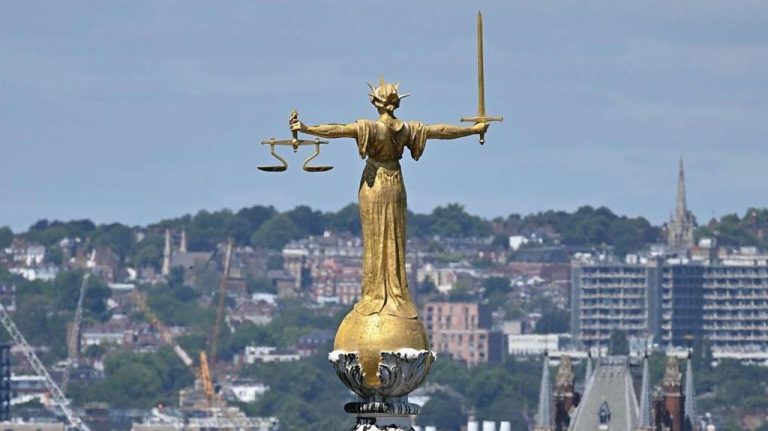
    Constantvpn.com – The English and Welsh prison system, operating at more than 97 percent of its stated capacity, has been thrust into the centre of a political storm after Prime Minister Andy Burnham confirmed that the men convicted of murdering a serving police officer will not benefit from a newly designed early release programme. The announcement, made in an exclusive BBC Breakfast interview, represents a significant intervention in sentencing policy and signals that the government will prioritise public sentiment over mechanical application of release criteria when it comes to those who have taken a uniformed officer’s life.

    The Harper Case That Triggered the Policy Shift

    PC Andrew Harper, aged 28 at the time of his death, was responding to a burglary in Berkshire in 2019 when his life was cut short. Three teenagers, fleeing the scene of a quad bike theft, dragged him along a road in a vehicle before disappearing. The officer sustained fatal injuries while on duty. Months later, it became clear that two of those responsible — Jessie Cole and Albert Bowers — would qualify for early release under the existing framework. That revelation ignited a sustained campaign by Harper’s family and former colleagues, who lobbied relentlessly to prevent the killers from walking free before their full sentences expired.

    Burnham acknowledged the weight of that campaign directly:

    “I heard obviously what Andrew Harper’s family were saying, I mean who couldn’t? Nobody would want a position to arise where those guilty of killing a police officer are let out early from prison.”

    What the New Scheme Excludes

    Under the revised rules, anyone convicted of unlawful killing — a category that encompasses every form of manslaughter as well as murder — will be categorically excluded from early release. The prime minister extended the exclusion beyond homicide: prisoners serving sentences for indecent assault offences, death by dangerous driving, historic child sex offences, and causing or allowing the death of a child will likewise remain in custody until their full terms are completed. The scope of the carve-out is considerably wider than the Harper case alone would require, suggesting the government is drawing a broader line around offences it considers to demand full custodial sentences.

    Where the Extra Space Comes From

    Burnham conceded that the announcement will keep “hundreds” more people behind bars, a reality that demands additional capacity in a system already stretched beyond its design limits. Two principal mechanisms were outlined to free up space.

    The first involves terminating Imprisonment for Public Protection sentences, commonly known as IPPs. These were handed out between 2005 and 2012 to offenders judged to pose a significant risk of causing serious harm to the public. Once a minimum term has elapsed, release depends entirely on the Parole Board being satisfied the individual no longer needs to be confined for public safety — a standard that has kept many prisoners locked up indefinitely. Ministry of Justice data shows 2,271 people were serving IPP sentences as of June, of whom 856 have never been released because the Board deemed it unsafe to do so.

    Burnham described his reasoning in plain terms:

    “I was faced with a situation where people on those sentences who have more than served their time, not being released when others who’ve committed very serious crimes being released early.”

    “The judgement I’ve made is the public, in my view, would prefer a situation where people who have served their time to be considered for release before those who haven’t.”

    He characterised the move as applying “common sense” to a problem about which he said he had “long-standing concerns.” A cross-party oversight group will be established to monitor the transition, and legislation to formally terminate the remaining IPP sentences is expected to be tabled before the end of this Parliament. Burnham acknowledged that among those currently held under IPP terms, there will be “individuals who will pose a risk to communities,” a concession that underscores the difficulty of unwinding a sentencing category that has persisted for nearly two decades.

    The second mechanism targets foreign prisoners. Burnham indicated that “hundreds” will be returned to their countries of origin. New powers, to be implemented early next year, will allow some foreign criminals to be deported immediately after sentencing. Those powers would also prevent foreign prisoners from ever returning to the country, while ensuring those held for the most serious crimes remain locked up for a substantial period before removal. Notably, the government is not understood to have signed any additional prisoner returns agreements with other nations, and work has only recently begun on adapting space within existing prisons to create more cells — a process expected to take months.

    Timeline and Practical Constraints

    The first cohort of prisoners slated for early release under the original scheme is due to be freed in October. None of the capacity-creating measures described above — whether deportation, IPP termination, or physical cell expansion — is likely to generate meaningful additional space by that date. Sources indicate the prime minister made what was described as a “political decision” to absorb the Harper-related exclusions using whatever residual capacity remained in the system, effectively front-loading the policy change ahead of the infrastructure needed to support it.

    The decision lands against a backdrop of sustained pressure from victims’ families, police unions, and local communities who have watched successive governments struggle to reconcile release targets with public expectations of justice. By tying the early release reform to the Harper case so explicitly, Burnham has made the political cost of any future reversal extremely high — while simultaneously accepting that the prison estate will operate at or beyond full capacity for the foreseeable future.

    Frequently Asked Questions

    What is PC Harper s killers to stay?

    PC Harper s killers to stay is the main topic of this guide. The article explains the context, practical details, and next steps readers should understand.

    Why does PC Harper s killers to stay matter?

    PC Harper s killers to stay matters because readers are looking for a useful answer, not just a short summary. Good content should match search intent and help them decide what to do next.