Train passed red signal before fatal crash – report

Train Passed Red Signal Before Fatal Crash – Report
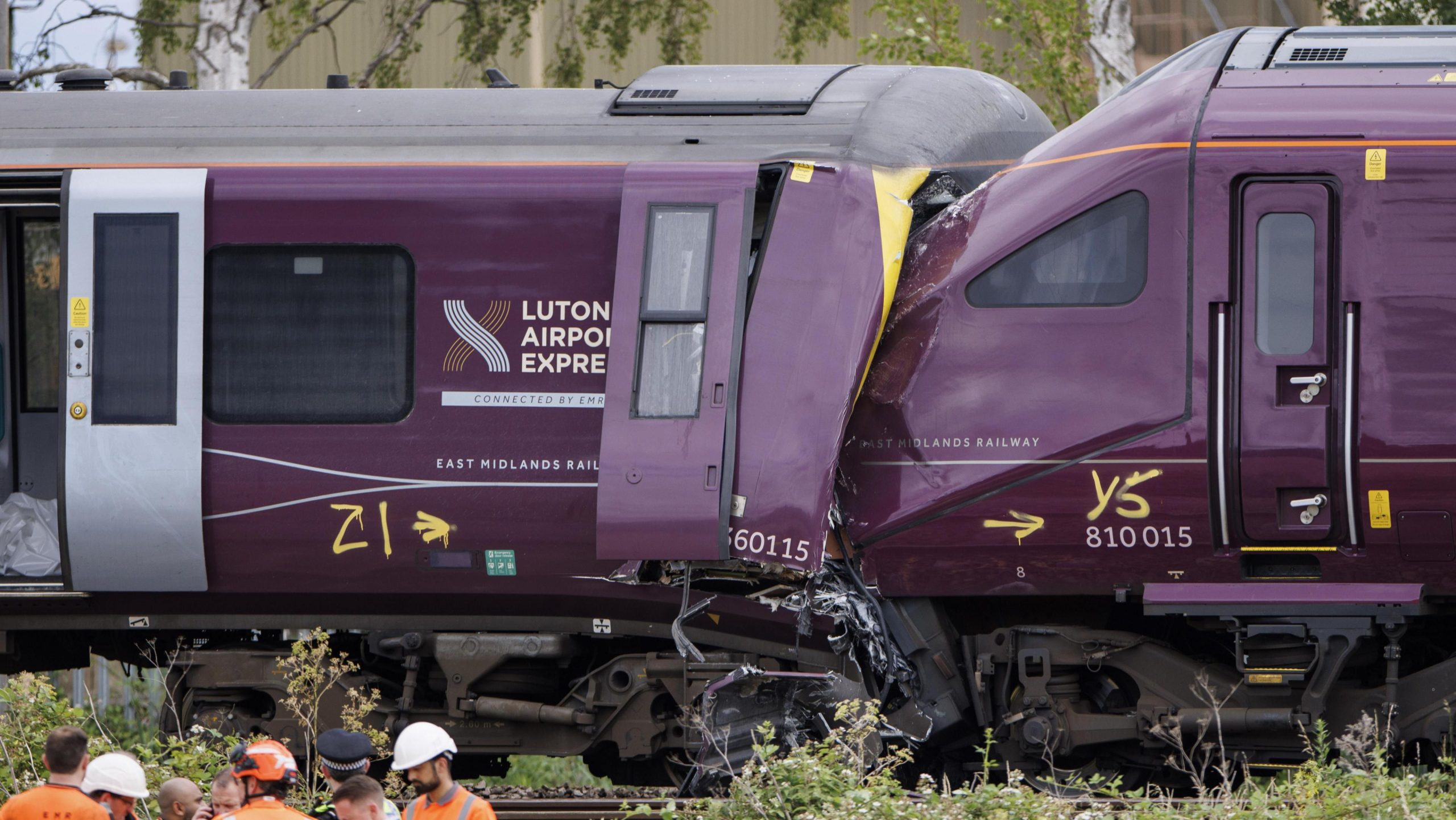
Constantvpn.com – On Friday, a collision between two trains in Bedfordshire resulted in one fatality and approximately 100 injuries, according to preliminary reports. The incident occurred when a London-bound train, operated by a driver named Shaun Burton, 60, crashed into the rear of another service. Burton, who was killed in the crash, had passed a red signal just moments before the collision, as revealed by investigators.
The Rail Accident Investigation Branch (RAIB) released an interim report indicating that Burton’s train proceeded past a red signal near the crash site in Elstow. This signal was part of the Automatic Warning System (AWS) installed on the train. The report noted that it is currently unclear what specific warning the driver received from the AWS equipment. Additionally, the RAIB highlighted that the stationary train had stopped unexpectedly due to a malfunction in its own AWS system.
Data from the incident suggests that the signal behind the stationary train was red at the time of the crash. The moving train, which departed Corby at 16:40, passed this red signal and activated its brakes approximately nine seconds before the collision. Despite the braking, the train was traveling at 76mph shortly before impact, according to investigators. By the time the collision occurred, its speed had dropped to 49mph.
Union Reaction and Safety Concerns
Dave Calfe, the general secretary of the train driver union ASLEF, emphasized the importance of safety systems in preventing such accidents. He stated that the incident might have been avoided if the Train Protection and Warning System (TPWS) had been installed at the location. “Passengers and our union are concerned that safety measures, such as TPWS, should be in place to ensure such tragedies are minimized,” Calfe said. He added that the rail network should have been capable of handling the situation with the right safeguards.
“Because what will concern passengers, and what concerns us, is that there are safety systems that can be put in place to prevent such accidents happening and the network should have been able to cope.”
The collision took place just south of Elstow at 17:15 BST, involving the 16:40 service from Corby and the 15:50 train from Nottingham. British Transport Police confirmed that 53 individuals are hospitalized, with eight in critical condition. One passenger, Pete Knapp, described the crash as “like a bomb explosion,” highlighting the sudden and violent nature of the event.
Emergency Services Response
Following the crash, emergency services, including multiple air ambulances and 70 firefighters, were deployed to manage the aftermath. Cranes were used to remove the train carriages, which were then transported out via a temporary road constructed by workers. The swift actions of the emergency teams were praised by Transport Secretary Heidi Alexander, who described their efforts as “quick, professional, and brave.”
Network Rail reported that the Midland Main Line would remain closed to East Midlands Railway and Thameslink services until the end of the week. This disruption affects travel for many commuters, with the exact duration of the closure depending on the progress of the investigation and repairs.
Political Statements and Public Response
Prime Minister Sir Keir Starmer expressed his condolences to the victims and their families during a speech in the House of Commons. He stated, “I was deeply saddened to learn of the death of the driver of the Corby to St Pancras train. His family have requested privacy, and we should all respect that. I send my deepest sympathies to them at this awful time.”
As the investigation continues, the RAIB aims to examine the actions of all involved, including the driver, the stationary train operator, and any contributing factors. The report also underscores the need for further analysis of the AWS system’s performance and potential improvements to prevent similar incidents in the future.
Recovery Efforts and Passenger Support
British Transport Police officers have recovered a significant amount of passenger property from the crash site and are sending it to a storage facility operated by East Midlands Railway. Passengers who lost personal belongings are being encouraged to contact the police to reclaim their items. This process has been initiated to ensure that affected travelers can recover their possessions as soon as possible.
The ongoing investigation will also assess the effectiveness of existing safety protocols and the potential for implementing additional measures to enhance rail safety. With the accident occurring at a busy junction, the focus is on understanding how the AWS system failed to provide adequate warnings and whether the TPWS could have played a critical role in averting the collision.
As the rail network works to restore services, the community remains in shock from the tragic event. The incident has sparked discussions about the reliability of automated systems and the importance of human oversight in high-speed rail operations. With more than 160 individuals affected, the report serves as a reminder of the need for continued vigilance and technological advancements in the transportation sector.