D-Day veterans mark 82nd anniversary as nearly 100 British names added to memorial

D-Day Commemoration Honors Fallen Soldiers with New Names Added
Constantvpn.com – The 82nd anniversary of D-Day has been marked by a poignant gathering of veteran participants, as the British Normandy Memorial honors 98 additional service members whose names were recently inscribed onto its roll of honor. This year’s ceremonies, held at the site of the historic Allied invasion in northern France, feature the smallest turnout of veterans since the memorial’s inauguration in 2021, with only six confirmed attendees. Among those recognized are names that had long been overlooked due to incomplete records, bringing fresh attention to the sacrifices of those who fought in the campaign to liberate Nazi-occupied Europe.
A Legacy of Sacrifice and Recognition
On June 6, 1944, the largest military seaborne operation in history began with the Allied invasion of Normandy. British, American, and Canadian forces stormed the beaches, launching the liberation of France and setting the stage for the broader European war effort. This year’s commemorative events are particularly significant, as they coincide with the inclusion of nearly 100 British names into the memorial. The addition highlights the ongoing efforts to correct historical gaps and ensure that every fallen soldier receives proper acknowledgment.
“For many visitors, the names on the memorial are merely a list of names. But for people like myself, they are people, and I can see their faces,” said Kenneth Hay, a 100-year-old veteran who shared his reflections with the BBC.
Hay, who participated in the D-Day landings, emphasized the emotional weight of the memorial. His words echo the sentiments of other veterans, who have witnessed the site evolve over the years. The British Normandy Memorial, situated above the former Gold Beach, now bears the names of soldiers who perished during the campaign. Researchers uncovered evidence of 98 men who fought in the battle but were not initially listed due to inaccuracies in historical documentation. Some of these individuals were killed in Normandy, while others succumbed to their wounds in British hospitals after the initial operations.
Cecil Green is one of the newly commemorated soldiers. His name was added to the memorial after his son, John Green, fought for years to ensure his father’s legacy was preserved. Green, who was mortally wounded during the invasion, passed away in a British hospital, leaving his name unrecorded on the memorial’s walls until now. John Green described the moment of recognition as both bittersweet and deeply moving, sharing, “It’s a strange mixture of being glad and happy and sad at the same time. When I touched the stone, I felt like I was holding onto a piece of my father’s memory.”
The commemoration this year also marks a shift in the number of veterans attending. With only six confirmed participants, the event has seen a decline in attendees since its inception in 2021. This trend underscores the passing of time and the dwindling number of those who lived through the historic operation. Despite the smaller turnout, the ceremony remains a powerful tribute to the bravery of the soldiers who risked their lives in the face of overwhelming odds.
Planning and Execution of D-Day
D-Day was the culmination of months of meticulous planning, with its execution dependent on precise weather conditions. Originally scheduled for June 5, the operation was delayed by 24 hours due to unpredictable storms. The decision to move the invasion to June 6 was based on the alignment of calm seas, a full moon, and low tide, factors that would have minimized the challenges faced by troops landing on the beaches. The term “D-Day” itself is a military designation, symbolizing the first day of an operation, with subsequent days labeled as D+1, D+2, and so on.
The invasion involved the coordinated deployment of tens of thousands of Allied troops across five separate beaches in Normandy: Utah, Omaha, Gold, Juno, and Sword. Each beach had its own challenges, with Omaha Beach proving to be the most perilous due to heavy German defenses. The success of the operation hinged on the ability of forces to overcome these obstacles, securing critical footholds that would later enable the liberation of France and the eventual defeat of Nazi Germany.
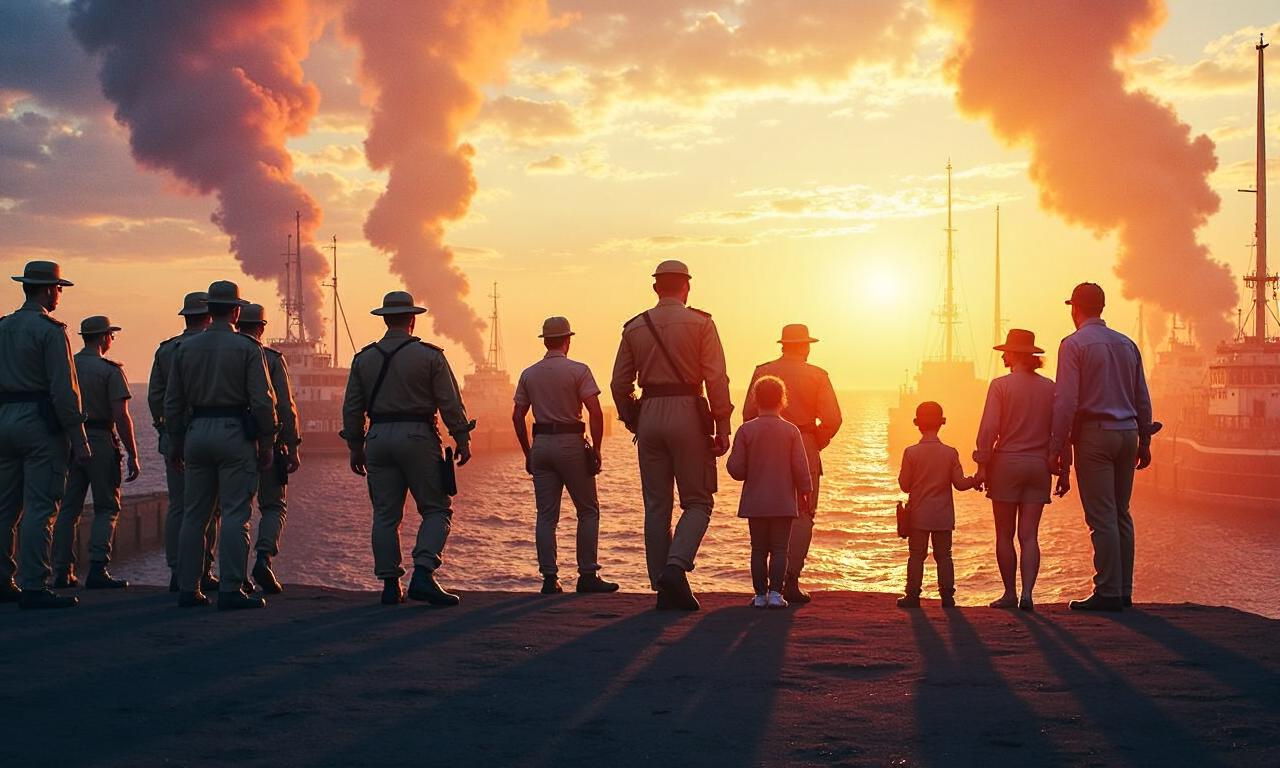
Commemorations for the 82nd anniversary began with French schoolchildren walking across Juno Beach, marking the exact time of H-Hour—the moment when British servicemen were deployed. This symbolic act was followed by a procession of military personnel, including the grandson of Field Marshal Bernard Montgomery, one of the key Allied commanders. The ceremony also featured traditional elements such as pipers from the Jedburgh Pipe Band, whose music added a solemn and reverent tone to the proceedings.
The inclusion of these 98 names underscores the importance of preserving the stories of those who fell during the campaign. Some of the soldiers were not recognized at first because their deaths occurred after the initial landings, leading to confusion in the records. For instance, a handful of men who were wounded in Normandy and later died in hospitals in the UK were omitted from the original memorial. This year’s update corrects such oversights, ensuring that every name represents a life lost in the service of freedom.
As the veterans gather at the memorial, they reflect on the legacy of D-Day and its enduring impact. The event serves as a reminder of the courage and sacrifice required to achieve victory in World War Two. For the families of the newly added names, the ceremony is a long-awaited acknowledgment of their loved ones’ contributions. For the veterans themselves, it is a chance to connect with the history they helped shape and to honor the fallen who paved the way for their survival.
The D-Day commemorations not only pay tribute to the past but also highlight the ongoing work to complete the historical record. Each new name added to the memorial represents a step toward ensuring that no sacrifice goes unremembered. As the 82nd anniversary unfolds, the collective memory of the invasion lives on, even as the number of living participants dwindles. The ceremony stands as a testament to the enduring bond between the soldiers who fought and the generations that remember their bravery.