Author: Robert Lopez – constantvpn.com

  • Pubs and hotels could see business rates reformed after review

    Pubs and hotels could see business rates reformed after review

    England and Wales Pubs Face a Landmark Overhaul of How Their Rates Bills Are Calculated

    Constantvpn.com – The Treasury has confirmed that a formal inquiry into the valuation methodology behind business rates for pubs and hotels across England and Wales is now underway. The move, which could reshape how tens of thousands of hospitality premises are assessed for tax purposes, represents the most significant intervention in the rates framework since the post-pandemic discount era began winding down. A report is expected by March 2027, and the government has explicitly invited input from landlords, hotel operators, and independent business owners during the consultation window.

    Who Leads the Inquiry and What It Covers

    Jerry Schurder, previously the business rates policy lead at advisory firm Newmark UK, has been appointed to steer the review. His mandate centres on how rateable values are assigned to hospitality properties — a question that has generated sustained industry frustration for years. Findings from his work will feed directly into the next full rates revaluation scheduled for 2029, meaning the practical impact of any recommendations will land on bills roughly two years after the report is published.

    James Murray, the Treasury’s financial secretary, framed the exercise as a structural correction rather than a one-off concession:

    “A rethink of valuations — so that we can build a fairer system for the future.”

    The Valuation Problem: Why Pubs Are Treated Differently

    The core grievance among pub operators is that their premises are assessed under a fundamentally different logic than retail or office space. Where a shop or warehouse is valued primarily on floor area, a pub’s rateable value is derived from a metric called Fair Maintainable Trade. In practical terms, this means that if a pub’s turnover rises — perhaps through a successful events programme or a change in management — its rates bill climbs in tandem, regardless of whether the physical footprint of the building has changed. Industry bodies have long argued that this creates a perverse incentive structure and exposes hospitality businesses to tax volatility that their fixed-cost competitors do not face.

    A Sector Under Severe Pressure

    The urgency of the reform debate is underscored by closure data. The British Beer and Pub Association (BBPA) reports that 161 pubs shut their doors during the first quarter of this year across England, Scotland, and Wales — a loss the group equates to roughly 2,400 jobs. While rising rates bills are cited as a contributing factor, operators also point to increases in National Insurance contributions and the minimum wage as compounding pressures on staffing costs.

    Emma McClarkin, chief executive of the BBPA, described the cumulative effect in blunt terms:

    “For years pubs have paid a disproportionately higher business rates bill which has ground down their ability to keep the doors open, so this review is sorely needed and hugely welcome.”

    Recent Policy Shifts and the Road to the Current Discount

    The political trajectory leading to today’s review has been turbulent. Under the previous chancellor, Rachel Reeves, the government signalled its intention to phase out the pandemic-era business rate discounts entirely, with no relief remaining from April of this year. That announcement coincided with substantial upward adjustments to the rateable values of pub premises, leaving landlords facing sharply higher bills almost overnight.

    After sustained pushback from the hospitality sector, the government reversed course earlier in 2026, introducing a 15% rates cut for pubs and music venues. In July, Andy Burnham then announced a further 20% reduction for pubs, social clubs, and live music venues in England, effective from April. The two measures stack: the 20% discount operates on top of the existing 15% support. However, the government specified that the relief would not extend to the “very largest” live music venues, and some operators reported confusion over whether their premises would qualify as a “pub” under the eligibility criteria. Full clarification on which businesses are covered is expected to appear in Chancellor John Healey’s first Budget later this autumn.

    Reactions Across the Business and Political Spectrum

    Craig Beaumont of the Federation of Small Businesses welcomed Schurder’s appointment, noting he would bring “crucial heavyweight business rates expertise into the Treasury.” At the same time, Beaumont urged the government to go beyond hospitality-specific fixes and address the wider rates architecture, including raising the small-business rates relief threshold so that more micro-enterprises fall outside the system entirely.

    Tom Ironside of the British Retail Consortium also supported the review but cautioned that “it is vitally important that the needs of retailers are not overlooked” in any subsequent reform package.

    From the opposition benches, the tone was sharper. Shadow Chancellor Sir Mel Stride dismissed the timing:

    “Far too late for a sector this Labour government has already done its best to kill off. Tax hikes on business premises and jobs, alongside job-destroying regulation in the Employment Rights Act, have left many hospitality businesses on the brink.”

    Daisy Cooper, the Liberal Democrat Treasury spokesperson, called rates reform “long overdue” but paired that endorsement with demands for an emergency VAT reduction and a reversal of recent jobs-tax changes, which she described as having “hammered hospitality in particular.”

    What Comes Next

    The review’s output will land in March 2027, giving Parliament and industry roughly eighteen months to digest recommendations before the 2029 revaluation cycle. For pub owners watching the closure statistics climb, that timeline is both a reason for cautious optimism and a reminder that the next two years of operating decisions will be made under the current, contested valuation rules. The autumn Budget will be the immediate next milestone, where eligibility boundaries for the stacked discounts are expected to be drawn with greater precision.

    Frequently Asked Questions

    What is Pubs and hotels could see business?

    Pubs and hotels could see business is the main topic of this guide. The article explains the context, practical details, and next steps readers should understand.

    Why does Pubs and hotels could see business matter?

    Pubs and hotels could see business matters because readers are looking for a useful answer, not just a short summary. Good content should match search intent and help them decide what to do next.


  • How easy is it to find an NHS dentist? It depends where you live

    How easy is it to find an NHS dentist? It depends where you live

    Constantvpn.com – Hundreds of dentist practices are abandoning NHS work as the service drifts towards a two-tier system, new analysis suggests. Data analysed by the Nuffield Trust found that nearly 600 practices in England have withdrawn from NHS dentistry over the last 10 years. The decline has been particularly sharp in parts of the South West and East of England, raising concerns about growing inequalities in access to care.

    The analysis suggests more than one in 10 dental practices that once offered NHS care no longer do so, leaving it near impossible for some communities to find NHS appointments. NHS dental activity is 8% lower than it was pre Covid, while six in 10 adults have not seen an NHS dentist in two years. Of those who attempted to get a new appointment in the last two years, just 38% were successful, according to the NHS GP Patient Survey.

    Cornwall, Devon and Northamptonshire have seen some of the biggest reductions in the number of practices offering NHS care. In Cornwall, more than a quarter of practices that previously offered NHS treatment have stopped doing so, making it one of the starkest examples of the shift away from NHS dentistry. The findings come as ministers have pledged to tackle so-called "dental deserts", but dentists say the current deal is not viable.

    Many have handed back their NHS contracts because to work is loss-making. In Somerset, fewer than one in five dental practices now offers NHS services. Alan, 83, who lives in the county, says he has given up trying to find an NHS dentist.

    "I used to try, but getting a dental appointment anywhere near where I live would be impossible," he says. Alan has only one tooth remaining after the others "crumbled out over the years" and says he has had to adapt what he eats, although he jokes that he has perfected a way of eating Brazil nuts. Alan, 83, says he has given up trying to find an NHS dentist Vivak Shah, who runs three dental practices in Northamptonshire, continues to offer NHS treatment but says it operates at a loss.

    He no longer takes on new NHS patients. "Each year we struggle to decide what to do, and there is a limit to how much the private side can cover the NHS losses," says Shah. He warned that if practices stop providing NHS treatment, many patients could be left in pain or forced to seek help elsewhere in the health service, including hospital accident and emergency departments.

    "A contract handed back in one town attracts little national attention on its own but repeated across the country for a decade it amounts to the quiet transformation of dentistry into a two-tier service," says Mark Dayan, head of public affairs at the Nuffield Trust. "Access to dental care increasingly depends on what people can afford to pay and where they live." Jim Sykes is a dentist in Hexham. He handed back his NHS contract in 2024.

    "It was a really hard emotional decision, but the NHS work was running at such a loss. I had to think of my team of staff and make it work," he says. Sykes asked if he could continue treating just children but was told he had to accept adults as well, or give up the NHS work.

    "There has been a real breakdown in trust for me. Even if there was a new government offer, I would still be very nervous about entering a new NHS contract," he says. Dentist Jim Sykes handed back his NHS contract in 2024 and says it was "a really hard emotional decision" Sykes says that none of his friends in his graduating class in dentistry still works in the NHS.

    "My friends have gone private, retired or teach – any pathway to avoid NHS dentistry." Shiv Pabary, chair of the British Dental Association's General Dental Practice Committee, says the situation is "the direct result of choices made by successive governments". He warns that unless ministers "fix and fund NHS dentistry", more dentists could choose to reduce their NHS work or leave the service altogether. Overall dentist practice numbers have risen in England over the last decade.

    "This is not a shortage of dentistry but a shortage of NHS dentistry," says Dayan. "Practices will need to be incentivised back into NHS work in the places where the NHS footprint has thinned most." While most parts of England recorded declines in practices offering NHS dental care, the reductions were smallest in North West London, the Black Country and North East London. North East London was the only area to see any increase during the period, recording one additional practice offering NHS treatment compared with a decade ago.

    Every other region of England saw the number of NHS dental practices fall. Looking at the number of practices doing NHS work is not the same as looking at exactly how much health service capacity there is – practices can vary in size. But if you look at other measures such as the amount of treatment being done, the numbers are still down, although not as steep as the fall in practice numbers.

    The government says that it is changing the dental contract and training more dentists in the areas most in need. The government says it will also make it a requirement for newly qualified dentists to practice in the NHS for a minimum period of at least three years. Campaign group 38 degrees calls the current dental crisis "shameful", with people being "forced to pay money they can't afford or suffer with the pain, shame, and further complications that come from being denied vital NHS healthcare".

    NHS dentistry is rotting. Will the plan to fix it work? 'I spent uni savings on getting my teeth fixed' – the real cost of NHS dentist shortage Get our flagship newsletter with all the headlines you need to start the day.

    Sign up here.

    Frequently Asked Questions

    What is How easy is it to find?

    How easy is it to find is the main topic of this guide. The article explains the context, practical details, and next steps readers should understand.

    Why does How easy is it to find matter?

    How easy is it to find matters because readers are looking for a useful answer, not just a short summary. Good content should match search intent and help them decide what to do next.
  • Dozens of co-ordinated arson attacks hit southern Thailand

    Dozens of co-ordinated arson attacks hit southern Thailand

    Wave of Arson Strikes Thailand’s Restless South as Insurgency Flares Again

    Constantvpn.com – Over fifty coordinated fires and incendiary strikes swept through Thailand’s southern border provinces in a single night, according to the military’s Internal Security Operations Command. The attacks, which unfolded between 20:00 local time (13:00 GMT) and midnight on Saturday, were described by officials as deliberate operations designed to sow disorder in a region already strained by decades of low-intensity conflict.

    At least two people sustained injuries in the barrage. A convenience store, a local government administrative office, and a stolen vehicle were among the structures reduced to smoldering wreckage. Telecommunication towers were targeted at multiple sites, disrupting communications in the affected districts. Security personnel urged residents to avoid handling any unfamiliar objects left near blast zones.

    Injuries and the Overnight Curfew

    The most serious casualty reports came from Muang district in Narathiwat province, where two women were wounded when an explosive device detonated. The military statement noted that the majority of incidents were concentrated in Narathiwat, with additional strikes registered in the adjacent provinces of Yala and Pattani.

    Authorities imposed an overnight curfew across Narathiwat province following the attacks. The restriction was lifted on Sunday morning, and no further incidents had been recorded by that point. Charred vehicles were photographed parked outside an administrative office in the province, underscoring the scale of destruction in a single night.

    No faction or armed group has publicly claimed responsibility for the coordinated operation.

    A Conflict That Has Never Truly Ended

    The southernmost provinces of Thailand — Narathiwat, Yala, Pattani, and parts of Songkhla — have been the theater of a persistent insurgency since 2004. In a country where Buddhism holds cultural and political dominance, these provinces are home to a substantial Muslim population that has long pressed for greater self-governance. More than 7,000 people have lost their lives in the violence over the past two decades, making it one of the longest-running internal conflicts in Southeast Asia.

    The insurgency is principally directed by the Barisan Revolusi Nasional (BRN), a coalition of separatist factions. Since 2013, a peace process brokered by Malaysia has attempted to bring both sides to a durable agreement. Yet the talks have stalled repeatedly, undermined by shifting governments in Bangkok and by internal fractures within both the insurgent ranks and the Thai state apparatus.

    In July of this year, five soldiers were killed in a combined gun-and-bomb ambush at a checkpoint in Narathiwat. That incident prompted the authorities to postpone a planned round of dialogue, deepening skepticism about whether a negotiated settlement remains achievable.

    Targeting State Symbols

    Thai media have noted a pattern in which insurgents select security personnel and government installations as targets, sometimes timing strikes to coincide with official visits to the region. The Saturday night operation — hitting administrative offices, commercial premises, and communications infrastructure simultaneously — fits that pattern of symbolic disruption aimed at projecting state weakness.

    Political Stakes: The Prime Minister’s Visit

    The timing of the attacks carries particular weight given that Thai Prime Minister Anutin Charnvirakul and members of his cabinet are scheduled to travel to Hat Yai, the commercial hub of southern Songkhla province, for a two-day visit next week. The itinerary includes discussions on investment projects, flood-prevention measures, and regional security. A fresh wave of violence so close to a high-profile government trip raises questions about whether the visit will proceed as planned and what signal its continuation — or cancellation — would send to communities already living under the shadow of periodic insurgency.

    For residents of the southern provinces, each new episode of coordinated violence reinforces a familiar anxiety: that the peace process, whatever its formal status, has not translated into daily safety. The curfew lifted on Sunday morning, but the charred shells of vehicles and the silence of burned-out towers will remain visible reminders for weeks.

    Frequently Asked Questions

    What is Dozens of co ordinated arson attacks?

    Dozens of co ordinated arson attacks is the main topic of this guide. The article explains the context, practical details, and next steps readers should understand.

    Why does Dozens of co ordinated arson attacks matter?

    Dozens of co ordinated arson attacks matters because readers are looking for a useful answer, not just a short summary. Good content should match search intent and help them decide what to do next.
  • Zelensky should be asked what he knew about government corruption, sacked minister tells BBC

    Zelensky should be asked what he knew about government corruption, sacked minister tells BBC

    Zelensky Should Be Asked What He Knew

    Constantvpn.com – The man Ukraine just removed from its defence ministry is now turning the spotlight back onto the president. In a fresh interview, Mykhailo Fedorov — the 35-year-old former minister who had become one of Kyiv’s most recognisable wartime faces — put forward a blunt accountability demand: Zelensky should be asked what he personally understood about alleged corruption operating inside his closest circle of advisers. Fedorov framed the question not as a partisan jab but as the kind of answer any citizen in a functioning democracy is entitled to expect.

    Fedorov’s exit from the cabinet came last month, reportedly after a sharp clash with the commander of Ukraine’s armed forces. Over the preceding years he had restructured the country’s military machinery and pushed drone-centric tactics into the mainstream of Ukrainian combat doctrine. His dismissal sparked street protests in several cities, though the demonstrations lost momentum quickly once his replacement was confirmed and the crowds dispersed by Wednesday.

    The corruption probe that triggered the demand

    The immediate catalyst was a money-laundering investigation announced the prior week, aimed at lawmakers and bankers. Ukraine’s anti-corruption bureau revealed a scheme in which more than $3 million (roughly £2.2 million) in hryvnia had been channelled to post bail for a former energy minister facing laundering charges. A senior figure attached to the presidential office, alleged to have played a role in the arrangement, was subsequently dismissed.

    Fedorov stopped short of pinning personal wrongdoing on the president. He emphasised that across every month of working together he had never received an instruction that ran counter to the law or to his own sense of integrity.

    “In all the time that I worked with him, not a single time have I received from him any task or assignment that would go against law or my sense of integrity.”

    Even so, he insisted the president owed the public a transparent answer about whether graft had operated within his immediate orbit without his knowledge. Zelensky should be asked what he was aware of, Fedorov argued, and the president was fully capable of providing that answer.

    “Let him answer this question… I believe that he’s ready for such questions. It’s his responsibility to tell us all whether he was aware of all that or not… I don’t want to make any assumptions.”

    A spokesperson for the presidential office pushed back, noting that Fedorov had held posts in successive governments since 2019 and questioning why he now treated the current administration as though it were categorically separate from the ones in which he had participated. The spokesperson added that no strong anti-corruption statements had come from the former minister during those earlier years.

    The elections argument and Zelensky’s counter

    Days before the corruption probe surfaced, Fedorov had published a video calling for a presidential vote even amid active hostilities. He framed the issue in broad democratic terms rather than as a personal bid for power, and he declined to say whether he would back Zelensky in any such contest.

    “Democracy should not be the hostage of Putin.”

    He elaborated that citizens cannot indefinitely inhabit a political system in which the reasoning behind major decisions remains opaque.

    “People cannot endlessly live in a state where they do not understand why certain decisions are made.”

    Fedorov acknowledged the practical enormity of organising a ballot while millions of Ukrainians are displaced abroad, soldiers are scattered across a long front, and occupied territories remain under Russian administration. He also recognised the risk of coordinated disinformation campaigns aimed at undermining any vote. Still, he argued the conversation itself was a moral obligation.

    “We should not be afraid of discussing it. That’s what democracy is all about. If I cannot share my ideas and be open about them with my own society, then what are we fighting for?”

    He added a pointed conditional: if elections were never held, the country would no longer qualify as a democracy.

    The president responded on Sunday with remarks warning that a wartime ballot would carry enormous risk. He characterised the prospect as destabilising rather than unifying.

    “I believe that in a war like this, elections as such are a huge risk.”

    “Elections right now are a tsunami for the country that will split Ukraine.”

    Ukraine has operated under martial law since Moscow launched its full-scale invasion in February 2022, which suspends the normal electoral calendar. Zelensky’s original five-year presidential term expired in May 2024, yet no mechanism for a successor vote has been established while the conflict continues.

    FAQ

    Who is Mykhailo Fedorov and why was he removed? Fedorov, 35, served as Ukraine’s defence minister and was dismissed last month following a reported disagreement with the armed-forces commander. Before his tenure he had overseen major reforms to the military apparatus, including the integration of drone tactics into standard combat doctrine.

    What did the anti-corruption bureau uncover? The bureau disclosed a scheme diverting more than $3 million (approximately £2.2 million) in hryvnia to post bail for a former energy minister facing laundering charges. A senior figure in the presidential office linked to the arrangement was dismissed.

    Why does Fedorov say Zelensky should be asked what he knew? Fedorov argues that the president has a responsibility to tell the public whether corruption operated within his immediate circle without his knowledge. He frames the question as a basic democratic accountability measure rather than a personal accusation.

    What is the status of elections in Ukraine? Martial law, in force since February 2022, suspends the normal electoral calendar. Zelensky’s five-year term expired in May 2024, but no successor vote has been organised while the war continues. Fedorov has called for a ballot; Zelensky has warned elections now would be destabilising.

  • Stokes stars as leaders Durham hammer Derbyshire

    Stokes stars as leaders Durham hammer Derbyshire

    Durmus’ Promotion Charge Accelerates as Stokes and McKinney Overwhelm Derbyshire

    Constantvpn.com – At the OurCoop County Ground in Derby, the contest between two Division Two sides dissolved into a one-sided exercise within three days. Durham, already carrying 20 points into the fixture, dispatched Derbyshire for a combined total of just 240 runs and posted a margin of 338 runs — a figure that stands as the largest run-victory in Derbyshire’s County Championship history. The visitors, who entered the match on only three points, were dismantled by a performance that combined classical batting with ruthless fast bowling, leaving little doubt about which side belongs in Division One.

    McKinney’s Century Anchors a 300-Run Total

    The foundation of Durham’s second innings was laid by Ben McKinney, the 21-year-old opener who has drawn sustained attention from England selectors. Facing a Derbyshire attack that included England off-spinner Shoaib Bashir, McKinney compiled 140 from 162 balls, striking 15 boundaries and six sixes. His innings displayed a blend of classical technique and calculated aggression that separated him from the rest of the field. After one early slog, he settled into a rhythm that made him nearly impossible to dismiss.

    His second-wicket partnership with Will Rhodes (52) reached 157 runs, stretching Durham’s lead well past the 300-run mark before Rhodes fell. McKinney grew increasingly expansive in his final overs, launching Bashir over the boundary twice before finally holed out to long off. It marked his second Championship century of the summer and reinforced the case for his continued presence on England’s radar as a future Test candidate.

    Stokes’ Batting Cameo Extends the Lead

    With the innings already well beyond Derbyshire’s reach, former England Test captain Ben Stokes produced a punishing 66 not out from just 55 balls. His unbeaten knock included a second half-century of the match, reached when he launched a delivery from Matthew Montgomery onto the roof of the Media Centre. By the time Durham declared on 295-6, the visitors had been handed a notional target of 423 — a number rendered entirely theoretical by what followed.

    Potts’ Pace and Movement Leave No Escape

    England paceman Matthew Potts had already claimed 5-46 in Derbyshire’s first innings of 156, and he returned with 3-22 in the second to cement his status as the Championship’s leading wicket-taker. His bowling combined full, quick delivery with late movement that left batters guessing at the last moment. In the morning session, he tore through the lower order with clinical precision: Ben Aitchison was given lbw playing across the line, and Anuj Dal was bowled by a delivery that dipped late to beat a defensive push.

    Brydon Carse followed with another quick, full ball to clean up Nick Potts, and in the next over Bashir lost his middle stump to a ball angled in. It was Potts’ second five-wicket haul against Derbyshire this season, following an 8-68 performance at Chester-le-Street in June that had also delivered a three-day win. His latest figures placed Durham in an unassailable position before the batting even began.

    Stokes’ Bowling: Four Balls, Three Wickets

    Once Durham pulled out, Stokes turned to the ball and produced a spell that reduced Derbyshire’s second innings to a formality. He claimed three wickets in four balls — a hat-trick that included Brooke Guest top-edging a pull, Dal given lbw, and Aitchison edging a drive to first slip after surviving the third ball of the sequence. A bouncer then felled Brett Randell, who batted on for roughly ten minutes before retiring following a second concussion check.

    Stokes finished with figures of 5-17 as Derbyshire crumbled to 84 all out. The collapse was total: after Carse had Caleb Jewell caught at short leg, Potts trapped Harry Came and Wayne Madsen lbw within three balls, and the innings was effectively over before lunch.

    Implications for the Division Two Title Race

    Durham’s 20-point haul from the fixture moves them a decisive step closer to a Division One return. The combination of McKinney’s emerging Test-level batting, Stokes’ dual threat with bat and ball, and Potts’ sustained pace gives them a depth of quality that few sides in the division can match. For Derbyshire, the 338-run margin — their worst run-defeat ever recorded in the Championship — underscores how far they remain from competing at the top of the table. With only three points in hand, their season has effectively ended, and the question now shifts entirely to whether Durham can convert their current form into a promotion place before the summer concludes.

    The match scorecard: Durham 283 & 295-6 dec (McKinney 140, Stokes 66*); Derbyshire 156 (Potts 5-46) & 84 (Stokes 5-17). Durham won by 338 runs.

    Frequently Asked Questions

    What is Stokes stars as leaders Durham hammer?

    Stokes stars as leaders Durham hammer is the main topic of this guide. The article explains the context, practical details, and next steps readers should understand.

    Why does Stokes stars as leaders Durham hammer matter?

    Stokes stars as leaders Durham hammer matters because readers are looking for a useful answer, not just a short summary. Good content should match search intent and help them decide what to do next.
  • Infantino asked to stay away from youth tournament

    Infantino asked to stay away from youth tournament

    FIFA Chief Told to Step Back From Caribbean Youth Event Amid Governance Turmoil

    Constantvpn.com – The head of world football has received a formal request to withdraw his planned appearance at a junior tournament in the Caribbean, a move that underscores just how deeply the institutional crisis engulfing FIFA has now reached into the sport’s regional development programmes. Concacaf president Victor Montagliani, a Canadian who simultaneously serves as a FIFA vice-president, penned a letter urging Gianni Infantino to reconsider travelling to the Dominican Republic for the Caribbean Football Union Under-14 Series scheduled for the weekend.

    A Letter Framed Around Governance Concerns

    In correspondence reviewed by journalists, Montagliani pointed directly to what he called the “governance crisis surrounding Fifa” before making his ask. His argument was not personal but structural: the spectacle of a sitting FIFA president attending a youth development competition while his own leadership is under active challenge would, in his view, distort the purpose of the event.

    “The media will focus on this situation, which will unfortunately significantly take away from the technical nature of the CFU youth competition.”

    Montagliani went on to frame his request in terms of duty to the sport itself:

    “As such, I respectfully ask you in the name of football to reconsider your attendance as it will unfortunately undermine the technical nature of this important youth development activity.”

    The phrasing is notable. Montagliani did not say Infantino should be barred or that his presence was unwelcome in a blunt sense. He invoked the language of respect and collective responsibility, positioning himself as a fellow officer of the global game asking a colleague to step aside for the sake of the competition’s integrity. Yet the subtext is unmistakable: the president’s continued visibility at a development event is now itself a governance problem.

    The Invitation and Its Timing

    Infantino had been extended an invitation as a guest of the Dominican Republic. According to reporting, that invitation was issued before the Swiss-Italian administrator unveiled his now-abandoned FIFA Forward Enterprise (FFE) proposal, a plan that would have opened stakes in the World Cup and other marquee competitions to private investors. The proposal generated a firestorm of opposition from member associations across multiple confederations and was subsequently scrapped, but its aftermath has left Infantino’s chair under sustained pressure.

    The timing matters. A gesture of hospitality extended in calmer institutional waters has, in the current climate, become a flashpoint. Montagliani’s letter effectively asks the host nation’s guest to reconsider whether his presence still serves the event’s stated purpose.

    Warm Reception in Santo Domingo

    Despite the letter, Infantino arrived in the Caribbean country to what appeared to be a cordial welcome. The 56-year-old was photographed meeting local officials in a video shared on social media by the Caribbean Football Union on Friday. Dominican Republic’s minister of sports and recreation, Kelvin Cruz, issued a public statement praising the visit:

    “We deeply appreciate your visit to the Dominican Republic, without doubt that your presence in our country puts us on the international football radar and opens us great prospects for growth and development of Dominican football.”

    Several Concacaf member associations have publicly reaffirmed their backing for Infantino to seek a fourth term as FIFA president, suggesting the split within the confederation is not total. The president retains the institutional support of CONMEBOL, South America’s governing body, and CAF, the African confederation, both of which have not joined the broader campaign to remove him.

    The Broader Governance Crisis

    The FFE episode is the most visible symptom of a wider rupture. UEFA, Concacaf, and the Asian Football Confederation issued a joint open letter accusing Infantino of breaking trust “through deception,” language that carried extraordinary weight coming from three of the six continental confederations. Multiple national associations withdrew their endorsements in the wake of the proposal’s collapse.

    Compounding the institutional strain, FIFA’s decision to dismiss senior executive Kevin Lamour after he voiced criticism of the president drew further scrutiny. Lamour had been one of the most visible internal voices questioning the direction of FIFA’s commercial strategy, and his removal was read by many observers as a signal that dissent within the organisation’s leadership would not be tolerated.

    The Under-14 tournament itself is one of several development projects financed through FIFA’s Forward programme, the body’s umbrella initiative for grassroots and youth investment. That the event is funded by the very institution whose president is the subject of the governance dispute adds a layer of institutional awkwardness: the money flowing into the competition comes from the organisation whose leadership is in question, and the president’s personal presence at the event blurs the line between institutional development work and individual political visibility.

    What Comes Next

    Whether Infantino ultimately attends the weekend’s matches remains to be seen. Montagliani’s letter is a request, not a directive, and the president is under no formal obligation to comply. Yet the fact that a fellow FIFA vice-president felt compelled to write publicly — or at least to write in a manner that reached the press — signals that the internal consensus around Infantino’s continued visibility has fractured. For a body that has spent years insisting its governance problems are contained and manageable, the spectacle of its own leadership being asked to stay home from a youth tournament in the Caribbean is a small but telling indicator of how far the crisis has spread beyond the boardroom.

    Frequently Asked Questions

    What is Infantino asked to stay away?

    Infantino asked to stay away is the main topic of this guide. The article explains the context, practical details, and next steps readers should understand.

    Why does Infantino asked to stay away matter?

    Infantino asked to stay away matters because readers are looking for a useful answer, not just a short summary. Good content should match search intent and help them decide what to do next.
  • One killed in sword attack at Swedish school

    One killed in sword attack at Swedish school

    Sword Attack at Swedish High School Leaves One Dead, Two Critically Wounded

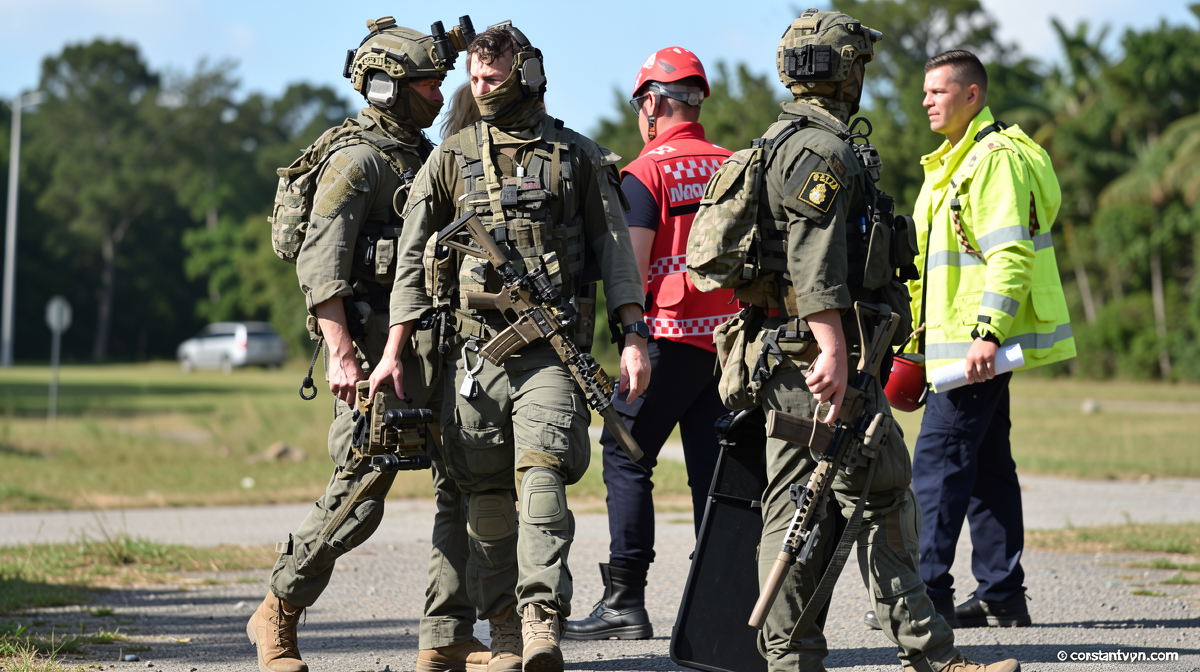
    Constantvpn.com – A fatal blade assault struck the Brinell School in Fagersta, a town in central Sweden, on Friday afternoon, killing one person and sending two teenage boys to hospital in serious condition. The incident, which unfolded shortly after 14:00 local time (13:00 BST), sent shockwaves through the small community and triggered a region-wide security alert across the Västmanland county.

    What Happened at Brinell School

    Officers arrived at the campus after receiving calls reporting a sword-based assault inside the building. Upon reaching the scene, police discharged their weapons toward the suspect before taking him into custody. The individual detained was an 18-year-old male whose identity had not been made public as of the latest update. Two adolescent male students sustained serious injuries in the attack, while a third person suffered minor wounds. The single fatality was confirmed by authorities in their initial briefing.

    According to information carried by Sweden’s public broadcasting service, the assailant was wearing a helmet at the time of the assault. Regional press outlets further identified him as a former pupil of the school, though police had not independently confirmed that detail in their official statements.

    Lockdown and Regional Alert

    In the immediate aftermath, eight additional schools in the surrounding area were placed under lockdown protocols. Those restrictions were subsequently lifted once the situation was contained. Authorities declared a heightened state of alert across the entire Västmanland region, signaling that the threat environment warranted expanded vigilance beyond the single campus.

    Police stated that investigators were actively working to determine what motivated the attack. They added that, at the time of their update, no ongoing danger to the general public remained.

    Official Reactions

    Prime Minister Ulf Kristersson addressed the nation via a post on X, characterizing the event as a “serious incident.” He acknowledged the uncertainty surrounding the perpetrator’s intentions while emphasizing the scale of the investigative effort:

    “We do not know what lies behind the act, but we know that police are working very intensively.”

    King Carl XVI Gustaf issued a separate statement expressing that he had received the news “with dismay and sadness.” In his remarks, the monarch extended his sympathies to those closest to the victims:

    “My thoughts are with those directly affected, as well as their families and loved ones.”

    A School Just Back from Summer

    The timing of the attack compounded its emotional impact. Students at Brinell School had only recently returned to their classrooms after the summer holiday, with the new academic term commencing either on Monday or Wednesday of that week, depending on the year group. For many families, the first days back were meant to be a routine resumption of daily life.

    The campus, located roughly 170 kilometres (105 miles) north-west of Stockholm, enrols just under 500 students. Fagersta itself is a modest industrial town in the Västmanland region, and the scale of the response — including multi-school lockdowns and a county-wide alert — underscored how quickly a single incident can upend the sense of security in a small community.

    A Pattern of School Violence in Sweden

    The Fagersta attack arrives against a backdrop of recurring violence targeting educational institutions across the country, a trend that has intensified public debate over campus safety, mental-health support, and weapons regulation.

    In 2025, Sweden endured its deadliest mass shooting to date when 11 people, including the gunman, were killed at an adult education centre in Örebro. That tragedy prompted the government to tighten national firearms legislation after investigators discovered the suspect had legally possessed four rifles, three of which were recovered from the school premises where the shooting occurred.

    Earlier, in 2022, two teachers were fatally attacked at a secondary school in Malmö. An 18-year-old student subsequently confessed to carrying out that assault. And in 2015, a teacher and a pupil lost their lives in a sword-based attack at a school in Trollhättan — a detail that makes the Fagersta incident particularly resonant, as it marks the second time in a decade that a blade has been used to kill inside a Swedish school building.

    What Comes Next

    With the suspect detained and the immediate threat neutralized, attention now turns to the investigative phase. Police have not yet disclosed a motive, and the question of whether the assailant acted alone or had prior contact with the victims remains open. The Swedish justice system will determine charges once the inquiry concludes.

    For the families of the dead and injured, and for the roughly 500 students who walked those corridors just days earlier, the coming weeks will be defined by grief, uncertainty, and the slow work of reconstruction — both of the school’s daily rhythm and of a community’s trust in its own safety.

    Frequently Asked Questions

    What is One killed in sword attack at Swedish?

    One killed in sword attack at Swedish is the main topic of this guide. The article explains the context, practical details, and next steps readers should understand.

    Why does One killed in sword attack at Swedish matter?

    One killed in sword attack at Swedish matters because readers are looking for a useful answer, not just a short summary. Good content should match search intent and help them decide what to do next.
  • Ofcom investigating Sky News over Farage harassment claims

    Ofcom investigating Sky News over Farage harassment claims

    Media Regulator Opens Formal Probe Into Broadcaster After Political Leader’s Family Privacy Complaint

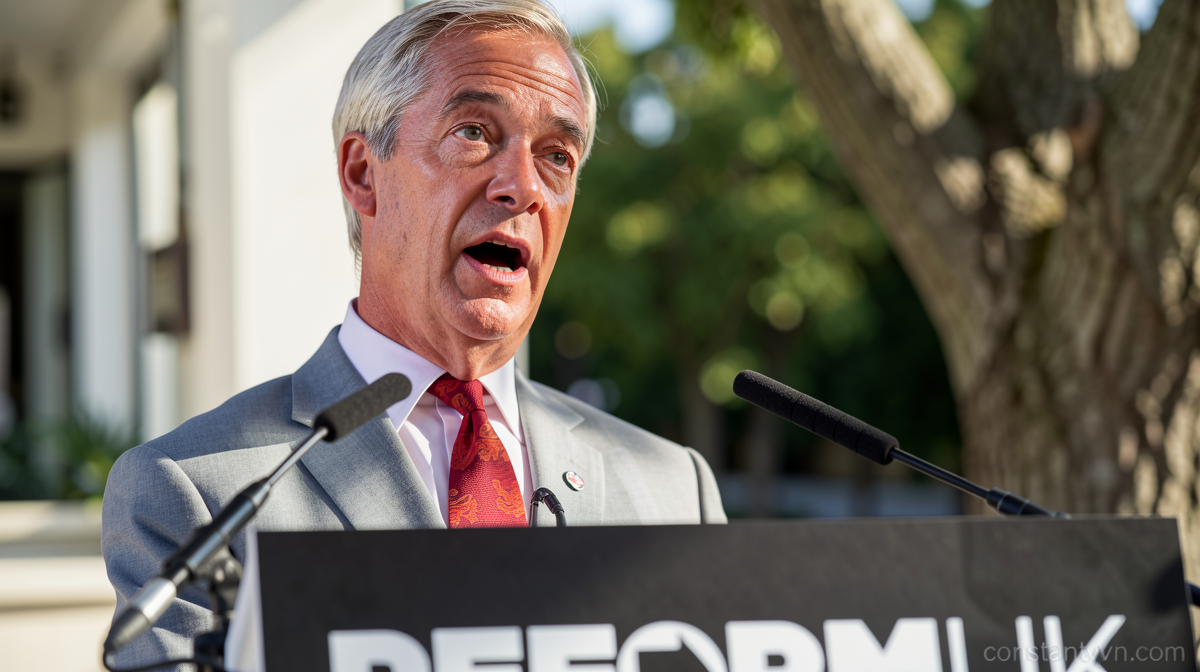
    Constantvpn.com – The UK’s communications regulator, Ofcom, has opened a formal investigation into Sky News following a complaint lodged by Reform UK and its leader, Nigel Farage, alleging that the broadcaster’s reporters infringed the privacy of his family members. The probe centres on an incident in which Farage claims journalists were sent to the residence of his adult daughter while he was abroad, an action he characterised as harassment of his household.

    Reform UK filed the official complaint with Ofcom and simultaneously demanded that Sky News deliver an on-air apology and commit publicly to ceasing all attempts to contact Farage’s relatives at their private addresses. The party framed the issue not merely as a personal grievance but as a pattern of conduct warranting regulatory scrutiny.

    Farage’s Public Reaction

    On Friday, the Clacton MP took to Facebook to announce that the regulator had taken up the matter. His tone was pointed:

    “I am appalled at the way various members of my family have been treated.”

    The post signalled that Farage intended to keep the dispute in the public eye even as Ofcom moved the matter into its confidential complaint-handling process. The broadcaster, for its part, has consistently denied that it approached or spoke with Farage’s daughter during the episode in question.

    The Underlying Dispute: An Undeclared Gift

    The confrontation over the daughter’s home did not arise in isolation. It was rooted in a separate controversy over a £5 million gift that Farage received from cryptocurrency investor Christopher Harborne before he first took his parliamentary seat in July 2024. Questions about whether the donation breached parliamentary financial rules had been simmering for months.

    A parliamentary standards investigation into the gift resumed earlier this month after Farage was re-elected as MP for Clacton in a by-election he himself triggered. That contest was boycotted by the other major parties, and an eccentric candidate known as Count Binface nonetheless captured more than a quarter of the vote, underscoring how fragmented the local electorate had become.

    When Farage returned to the country following his time abroad, Sky News reporters were present to question him about the undeclared donation. The exchange, captured on camera, became the flashpoint for the wider privacy dispute.

    The On-Camera Exchange

    Confronted with questions about the gift, Farage’s response was sharp and personal:

    “You tell your bosses, you harass my family any more, there will be serious consequences, that’s what your organisation has done this morning, now go away.”

    Pressed once more on the donation, he added:

    “Did you not hear me? You have broken all the rules, Leveson and everything else, cut.”

    The reference to “Leveson” invoked the 2012 Leveson Inquiry into press standards, a landmark review that recommended stronger protections for private individuals against intrusive journalism. Farage’s invocation of that framework suggested he viewed the reporters’ actions as a breach of the very norms the inquiry was designed to enforce.

    Sky News’s Account

    The broadcaster set out its version of events in a detailed statement posted on X. It maintained that its team was not at the daughter’s property at 7.41 am, and that the footage available from 10.19 am showed reporters outside a different address — one where Farage himself had been registered to vote in the previous general election.

    “Sky News did not interact with Mr Farage’s daughter.”

    The statement went on to explain that on a single occasion, a reporter had approached the property without a camera operator, identified himself as being from Sky News, and that the adult occupant simply chose not to engage. The broadcaster stressed it was seeking to reach Farage himself to ask questions about the gift he had accepted from Mr Cottrell, and described the approach as “a well-established and routine journalistic practice when reporting on matters of legitimate public interest.”

    “The footage clearly demonstrates that Sky News did not ‘hound’ or pursue Mr Farage’s daughter. At no stage did we seek to speak to anyone other than Mr Farage in connection with this story.”

    The broadcaster has been approached for further comment beyond that statement.

    Ofcom’s Process and Timeline

    Ofcom declined to comment on the specifics of the investigation, noting that it handles all complaints in strict confidence and will not “publicly confirm the identities of individuals concerned.” The regulator stated that its target for concluding fairness and privacy complaints is within 90 working days, meaning a determination could be expected by late autumn or early winter depending on when the complaint was formally logged.

    The investigation will examine whether the broadcaster’s approach to the property met the standards set out in the Ofcom Broadcasting Code, which governs fairness, privacy, and the treatment of non-participants in news reporting. Outcomes can range from a finding of no breach to a formal criticism and, in more serious cases, a requirement to publish an apology or undertake remedial action.

    Broader Implications

    The case sits at the intersection of two long-running tensions in British media: the right of journalists to pursue stories of public interest, and the right of private individuals — including family members of public figures — to be free from unwanted contact at their homes. Farage’s position is that his daughter, though an adult, was not herself a newsworthy subject and should not have been approached. Sky News’s position is that it was acting within normal journalistic practice by seeking to reach the subject of the story at an address associated with him.

    For Reform UK, the complaint also carries a political dimension. The party has positioned the episode as evidence of a broader pattern of media hostility toward its leader, and the formal Ofcom process gives that narrative an institutional weight it would not otherwise carry. Whether the regulator ultimately sides with the broadcaster or the complainant will shape how other outlets approach family members of politicians in future reporting, and it will be watched closely by both press freedom advocates and privacy campaigners.

    Frequently Asked Questions

    What is Ofcom investigating Sky News over Farage?

    Ofcom investigating Sky News over Farage is the main topic of this guide. The article explains the context, practical details, and next steps readers should understand.

    Why does Ofcom investigating Sky News over Farage matter?

    Ofcom investigating Sky News over Farage matters because readers are looking for a useful answer, not just a short summary. Good content should match search intent and help them decide what to do next.
  • Coolcations: ‘They used to joke about our weather – now they can’t wait for the rain’

    Coolcations: ‘They used to joke about our weather – now they can’t wait for the rain’

    Scotland’s Rainy Reputation Becomes Its Most Marketable Asset

    Constantvpn.com – Across much of continental Europe and the southern reaches of England and Wales, summer 2025 has delivered temperatures that push outdoor life to a standstill. Yet on a sheltered sea loch tucked into the western Highlands near Glencoe, the sky hangs low and grey, the wind barely stirs the water, and seals drift lazily beneath a canopy of cloud. Kayakers glide across the flat surface of Loch Leven without sunscreen, without sunburn, without the oppressive weight of a heatwave. For a growing cohort of travellers, that very greyness is the point of the trip.

    The phenomenon has a name now: the “coolcation.” And in Scotland’s west coast, a handful of operators have stopped apologising for the weather and started selling it.

    Turning a Joke into a Booking Engine

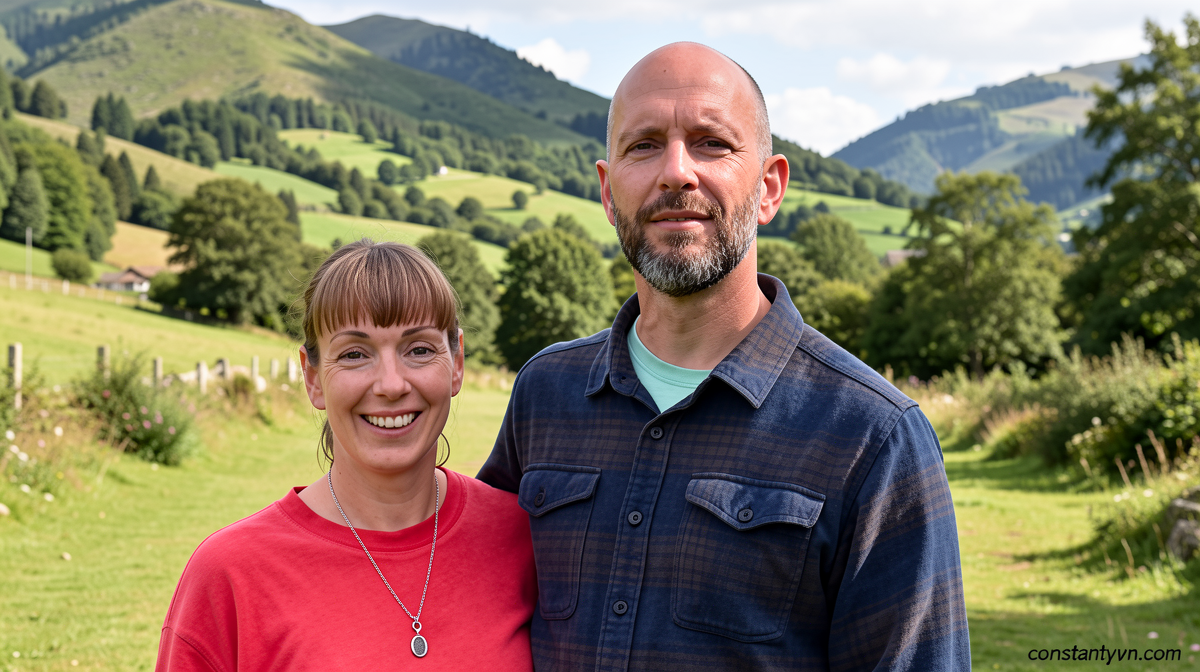
    Esther and Nick Cochrane run Beside the Loch, a self-catering cottage operation set on the shore of Loch Leven. For years, the couple fielded the same quip from prospective guests: “You don’t come to Scotland for the weather.” The punchline was reliable. Then the punchline stopped landing.

    Nick describes a noticeable shift in the origin of their bookings. Early adopters of the coolcation concept arrived from France, Italy, and Spain, fleeing continental heat domes. But this season the pattern has broadened sharply. Guests now book from within the United Kingdom itself, particularly from the south of England, where sustained temperatures above 30 °C have made ordinary daily life feel unworkable.

    “That has been a real surprise,” Nick says of the domestic coolcation wave.

    The Cochranes have responded by repositioning their entire marketing narrative. Cloud cover, drizzle, and fresh air are no longer caveats buried in the fine print; they are headline selling points. The cottages are now pitched explicitly as heat-escape destinations.

    Esther recalls a recent arrival who, upon stepping off the train, asked whether rain was imminent — not as a complaint, but as a confirmation that the trip was working as intended.

    “The first thing they did when they arrived at the train station was to stand in the rain. They hadn’t experienced it for two or three months in Southern England, and they loved it.”

    She adds that the couple once spent years softening the weather in their communications. That instinct has reversed.

    “At one point we were apologising for the Scottish weather but people now want it. It’s no longer a joke. It’s quite a serious part of their holidays.”

    What the Guests Actually Want

    Caroline and Christian Grant, parents from southern England, spent their summer holiday in one of the Cochranes’ cabins. Their motivation was straightforward: at sustained temperatures above 30 °C, outdoor activity collapses into sitting still and waiting for the evening.

    “When it gets to plus thirty you tend to just sit around, really can’t do too much. Here you can go back to normality, doing things,” Christian explains.

    Caroline highlights a smaller but genuine comfort: the ability to sleep under a duvet rather than a thin sheet, a luxury that southern English bedrooms have not afforded in months.

    “We get to sleep under a duvet here. It is quite nice.”

    The Numbers Behind the Grey Sky

    The coolcation is not merely an anecdotal trend. Chris Greenwood, based at the Moffat Centre for Travel and Tourism within Glasgow Caledonian University, notes that early-year data for 2025 shows measurable growth in flight searches directed at Scottish destinations alongside rising international credit-card spending in the region.

    Global travel-platform data reinforces the signal. Searches for cooler holiday destinations climbed by 74 percent during the first four months of 2025, a surge attributed to travellers actively redirecting bookings toward locations offering more tolerable temperatures and thinner crowds.

    Outdoor Operators See the Shift Too

    Rob Kingsland, who runs Rugged Coast, an outdoor adventure outfit operating out of Glencoe, has watched the demographic of his kayaking and coastal-tour clients change over several seasons. Europeans and North Americans now arrive at the west coast of Scotland with an explicit climate preference: mild temperatures, a little rain, nothing extreme.

    “It’s a cracking day to be out. We’ve got very little wind, some nice temperatures. It’s perfect,” he says, paddling alongside the small islands scattered across Loch Leven.

    The practical advantage, Kingsland notes, is that participants can layer up in a sweatshirt, stay active for hours, and return to shore without needing air-conditioned accommodation to recover.

    “They can do activities, they can put on a sweatshirt, not have the air conditioning on.”

    Economic Weight and the Overtourism Question

    Tourism underpins roughly five percent of Scotland’s gross domestic product and sustains approximately a quarter of a million jobs. Millions of visitors pour billions of pounds into the economy each year, funding everything from ferry operators to mountain-bike hire to the cottage businesses along the lochs.

    Yet the same influx that fills a coolcation cottage in Glencoe also pressures the infrastructure of Edinburgh, where the city recently imposed a five-percent visitor levy on overnight accommodation to manage the physical and social costs of overtourism. The tension is real: the west coast’s cooler, less crowded profile may absorb demand that would otherwise concentrate on already-saturated urban centres, but it also risks importing the very overtourism dynamics the Highlands have historically avoided.

    For operators like the Cochranes, the calculus is simpler. The weather that once cost them bookings now drives them. The joke about Scottish rain has been retired, replaced by a line item on a booking confirmation: fresh air, low mercury, and the quiet satisfaction of a grey afternoon on the water.

    Frequently Asked Questions

    What is Coolcations?

    Coolcations is the main topic of this guide. The article explains the context, practical details, and next steps readers should understand.

    Why does Coolcations matter?

    Coolcations matters because readers are looking for a useful answer, not just a short summary. Good content should match search intent and help them decide what to do next.
  • Anger and fear over ‘dangerous’ illegal e-motorbike riders

    Anger and fear over ‘dangerous’ illegal e-motorbike riders

    Electric Motorbikes Turn English Town Streets into Unpredictable Hazards

    Constantvpn.com – Across parts of southern England, residents are reporting that packs of riders on high-powered electric motorbikes have turned ordinary pavements, village lanes, and even motorway carriageways into zones of fear. The vehicles — often unregistered, sometimes carrying two people — zip through residential areas at speed, performing wheelies, swerving between cars, and aiming directly at pedestrians. For many locals, the experience has shifted from annoyance to genuine dread.

    A Walk That Nearly Ended in Impact

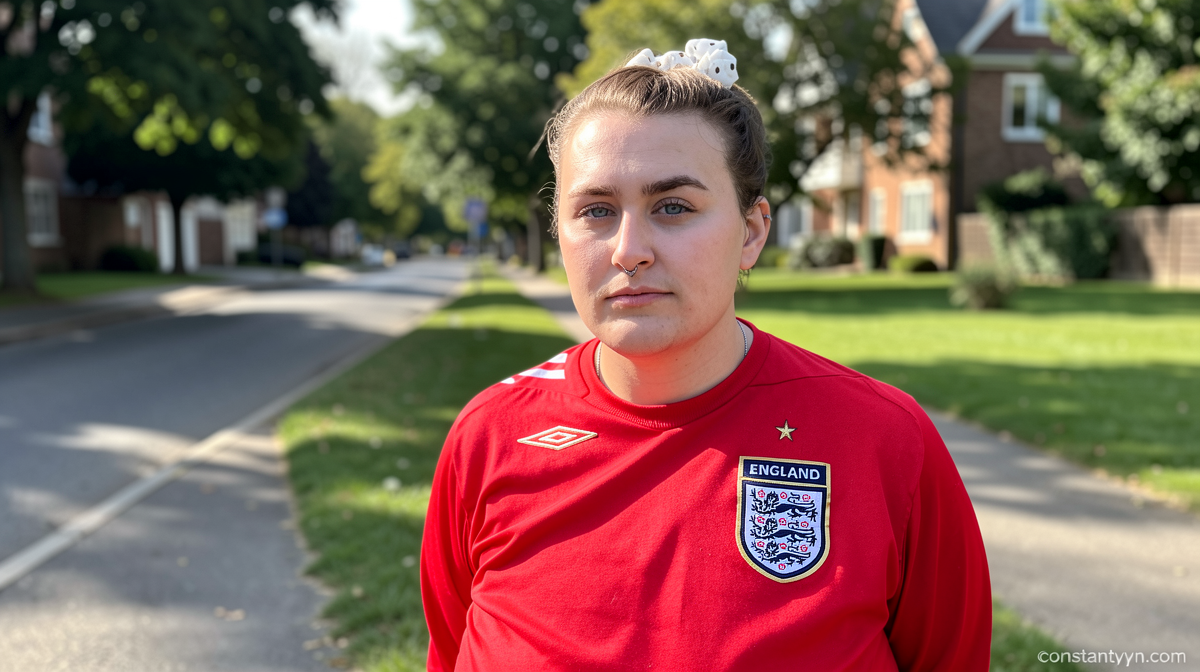
    Britt, a resident of Burgess Hill in West Sussex, was out walking with her partner when two separate groups of e-motorbike riders came barreling down the centre of the pavement toward them. She describes having to physically shove her partner aside to avoid a direct collision.

    “As we were walking, there were two groups of bikes coming down the pavement. They rode straight down the middle of it. They were aiming at us, to the point where I had to push him out of the way because they were just going to hit him.”

    Britt says such encounters are routine in her area. Riders arrive in groups of four or more, swerving through traffic, shouting to one another, and occasionally mounting two people on a single machine. She has watched elderly women sprinting to escape and small children being deliberately targeted by riders who treat footpaths as racetracks.

    “I’ve seen little old ladies have to run. I’ve seen little kids being aimed at.”

    Her fear extends beyond collisions. The face coverings many riders wear — balaclavas that conceal identity — combined with the near-silent acceleration of electric drivetrains, raise the prospect that these machines could become tools of street crime.

    “If it continues to grow, I’m genuinely concerned that we could be walking and come across a bike and someone on that bike could be carrying a knife. They could try and mug you. They could do anything.”

    Local Officials Feel the Threat Firsthand

    Deputy mayor David Eggleton has documented the behaviour on his phone, capturing riders executing wheelies in the middle of streets, travelling on the wrong side of the carriageway, and wearing full face coverings while doing so. He says the footage itself was frightening to record.

    “Never mind the residents being intimidated. I was intimidated when I took that footage. I thought they were going to come back to get me.”

    Eggleton’s account underscores a point that residents keep raising: the riders do not appear to regard local authority or community norms as constraints. The anonymity of masked faces and the speed of machines capable of rapid acceleration make accountability difficult for ordinary citizens.

    Near Miss in a Narrow Alleyway

    Near a local football ground, Simon was walking through a tight passage close to the railway station when two masked riders crashed past at speed. He estimates they were no older than fourteen or fifteen.

    “It’s a narrow path, you don’t really have any room to get out of the way, and then all of a sudden there was a rush of movement behind. Two lads came crashing past.”

    The woman accompanying him had to dive to one side to avoid being struck. Simon highlights a particular danger unique to electric machines: their near-total silence means pedestrians receive no auditory warning until the vehicle is already alongside them.

    A Tragedy in Sunderland

    For some families, the threat has become fatal. In May 2025, Gloria Stephenson, aged 86, was struck and killed while crossing a zebra crossing in Sunderland. The rider, Billy Stokoe, was on an illegal and defective Sur-Ron electric motorbike at the time of the collision. The incident became a national talking point about the regulatory gap surrounding unregistered electric two-wheelers on public roads.

    Chased, Flung, and Left Behind

    Taylor, 20, also from Burgess Hill, was riding his legally registered motorbike to work on a routine Monday morning around eleven o’clock when he overtook two e-motorbikes pulling out from a junction. One rider began performing wheelies and blocking traffic; the other pursued him down the road.

    “The other one chased me down. Before you know it, I’m on the side of the road. I went flying.”

    Dashcam footage captured the moment of impact and the riders departing the scene while Taylor lay injured mere metres away. An ambulance transported him on a stretcher fitted with a pelvic brace. Although his physical wounds have healed, the psychological aftermath has persisted. He says he can no longer watch social-media clips of e-motorbike riders without feeling physically unwell, and his own bike remains unrepaired.

    “All the videos on social media of people riding their bikes, I couldn’t watch anymore. They’d make me feel ill. I couldn’t even look at it.”

    Government and Police Response

    The UK government has introduced new statutory powers enabling police to seize vehicles being used anti-socially without first issuing a formal warning. Sussex Police has stated it will continue to take enforcement action against anyone found riding e-bikes or e-scooters illegally. Riders have also been filmed using the M2 motorway, a route where electric two-wheelers are not permitted.

    The regulatory landscape for electric two-wheelers in England remains fragmented. Unlike conventional motorbikes, many e-motorbikes sold online fall into a grey area: they may lack type approval, insurance, or roadworthiness certification, yet their performance rivals that of small petrol motorcycles. Until clearer classification and enforcement catch up with the market, residents in towns from West Sussex to Tyne and Wear will continue to face the prospect of silent, masked machines appearing without warning on their streets.

    Frequently Asked Questions

    What is Anger and fear over dangerous illegal?

    Anger and fear over dangerous illegal is the main topic of this guide. The article explains the context, practical details, and next steps readers should understand.

    Why does Anger and fear over dangerous illegal matter?

    Anger and fear over dangerous illegal matters because readers are looking for a useful answer, not just a short summary. Good content should match search intent and help them decide what to do next.