
Ecuador’s Third Ex-President Convicted: Lenín Moreno Gets Five Years for Hydro-Dam Bribery
Constantvpn.com – A court in Quito has handed former president Lenín Moreno a five-year prison term after convicting him and nineteen co-defendants of corruption tied to one of Ecuador’s most ambitious infrastructure projects. The verdict extends a troubling pattern in the South American nation, where Moreno becomes the third sitting-or-former head of state to face criminal punishment for graft. At seventy-three, he will serve the sentence under house arrest owing to his age and a documented disability, and he has already signaled plans to file an appeal.
The Coca Codo Sinclair Scheme
The case centers on the Coca Codo Sinclair hydroelectric dam, a massive project in Ecuador’s Amazon basin that was meant to bolster the country’s energy grid. Prosecutors built their case around allegations that Sinohydro, a state-owned Chinese engineering firm, funneled $76.1 million (roughly £56.2 million) through a network of shell companies to officials and intermediaries connected with the deal. The money, they argued, was paid to grease the wheels of contract approval and construction oversight.
Among the twenty convicted individuals were Moreno’s wife, his daughter, and his brother, alongside former plant managers, representatives of Sinohydro itself, and a Chinese ambassador who had served in Ecuador. Prosecutors noted that Moreno personally received only a modest share of the kickbacks, while family members collected tens of thousands of dollars each. All those found guilty of bribery face a financial penalty requiring them to repay three times the amount they allegedly received.
House Arrest and Political Disqualification
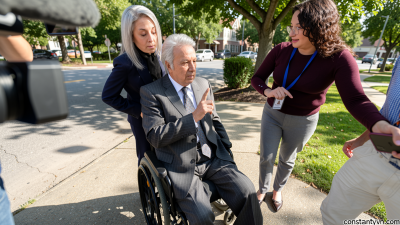
Because of his age and physical condition, Moreno will not be locked in a conventional cell. Instead, he will serve the five-year term at home under supervised house arrest. Separately, the court barred him from holding any public office, effectively closing the door on a future political comeback. Moreno has publicly maintained his innocence throughout the trial and stated his intention to challenge the verdict on appeal.
Pointing Fingers at Correa
In his defense, Moreno shifted blame to his predecessor and former boss, Rafael Correa, under whom he served as vice-president from 2013 to 2017. Moreno argued that Correa personally approved the Coca Codo Sinclair project during his two terms in office (2007–2013) and that, upon assuming the presidency in 2017, he immediately opened an investigation into construction irregularities. Correa himself was sentenced to eight years in prison in 2020 in a separate bribery matter, though he has continued to contest that conviction as well.
“I did not take money from the Chinese company,” Moreno insisted, framing the prosecution as politically motivated retribution rather than a legitimate anti-corruption effort.
A Dam That Kept Breaking
The Coca Codo Sinclair project has been plagued by engineering problems since its completion. In 2021, the Ecuadorian government initiated formal legal proceedings against Sinohydro after cracks were discovered in the dam structure and additional technical failures emerged. Earlier this year, the state reached a $400 million settlement with the firm’s parent company to cover remediation costs and compensate for lost generation capacity. The settlement underscores how the project’s troubled history has compounded the original corruption allegations, giving prosecutors a concrete trail of financial irregularities to follow.
Ecuador’s Pattern of Prosecuting Its Leaders
Moreno’s conviction places him in a short but notable line of Ecuadorian presidents brought to justice for corruption. Correa’s 2020 sentence was the most high-profile precedent, and before that, other former officials had faced charges tied to state contracts and campaign financing. The cumulative effect has been a climate in which leaving office no longer guarantees immunity, though critics argue that the pace and selectivity of prosecutions can also be wielded as a political weapon.
The involvement of a Chinese state-owned enterprise and a sitting ambassador adds a diplomatic dimension to the case. Ecuador, like much of Latin America, has deepened its economic ties with Beijing over the past two decades, and high-profile corruption cases involving Chinese firms can strain bilateral relations even as they reinforce domestic accountability norms. Sinohydro and the Chinese embassy in Quito were contacted for comment ahead of publication.
For Ecuadorian voters, the verdict lands amid ongoing debates over energy policy, foreign investment oversight, and whether the judiciary can deliver consistent, politically neutral justice. Moreno’s appeal will keep the case alive in the courts for months, and the outcome will shape how future administrations approach both infrastructure procurement and the personal finances of those who sign off on billion-dollar projects.
Related Reading
Frequently Asked Questions
What is Former Ecuadorian president imprisoned for corruption?
Former Ecuadorian president imprisoned for corruption is the main topic of this guide. The article explains the context, practical details, and next steps readers should understand.
Why does Former Ecuadorian president imprisoned for corruption matter?
Former Ecuadorian president imprisoned for corruption matters because readers are looking for a useful answer, not just a short summary. Good content should match search intent and help them decide what to do next.