
Author: Jessica Jackson – constantvpn.com

  • Six ways parents could make the return to school a little easier

    Six ways parents could make the return to school a little easier

    When Summer Ends: Practical Strategies for Navigating the Back-to-School Transition

    Constantvpn.com – For millions of families across the UK, the final days of August mark a sharp pivot from the unstructured freedom of summer to the rigid architecture of the school year. Children in Scotland have already returned to classrooms in mid-August, while pupils in England, Wales, and Northern Ireland face the transition in the coming week as September takes hold. The shift is not merely logistical — it carries emotional weight for both children and parents, particularly those welcoming their offspring into formal schooling for the very first time.

    Experts and experienced parents agree that the single most effective antidote to back-to-school anxiety is preparation: not perfection, but predictability. Below are six strategies drawn from educators, psychologists, and parents who have walked this road many times before.

    1. Engineer a Fixed Morning Sequence

    Cerys Parker, a teacher and parenting blogger, structures her household mornings around a rigid but gentle template. Her day begins thirty minutes before her children wake, giving her a window of solitude and a hot coffee. Breakfast follows the same menu every single morning, eaten together at the table with screens switched off. Afterward, the children head upstairs for showers and dressing while Parker handles the practical side: checking timetables for PE days, grabbing lunch boxes, and confirming that bags were packed the previous evening.

    The household departs at 07:30 for the school bus, or at 07:50 when Parker drops the children off en route to her own workplace. The night before, she ensures shoes are staged, uniform is laid out, and lunch is sealed in the bag.

    “We have things in the same place, so the bags are always in the same location, the keys, and that makes the morning smoother. There’s no panic about where everything’s going to be.”

    The underlying principle is spatial consistency. When objects occupy fixed positions, the cognitive load of a rushed morning drops dramatically, and the parent’s role shifts from frantic search-and-rescue to calm supervision.

    2. Anchor the Household to a Visible Calendar

    Non-uniform days, sports fixtures, study sessions, and exam periods are easy to overlook once the academic rhythm sets in. Parker pins a family calendar to the kitchen wall — a document with a dedicated column for each household member plus a general events section. The moment a school notice arrives, she transcribes it into the calendar.

    The calendar also tracks meal plans, after-school commitments, and, for older children, examination windows. Separately, she marks key dates in the school year so the household can anticipate them:

    Children in Need — Friday, 13 November; World Book Day — Thursday, 4 March 2027; Red Nose Day — Friday, 19 March 2027; Earth Day — Thursday, 22 April 2027.

    She also keeps a small purse of loose coins in circulation throughout the year, so that children can cover the cost of non-uniform-day purchases or bake-sale contributions without a scramble for change at the gate.

    3. Reframe the After-School Conversation

    Many children arrive home too fatigued to narrate their day in any structured way. Will Shield, professor of child and educational psychology at the University of Exeter, advises parents to abandon the interrogation format entirely.

    “Ask some open questions, instead of interrogating them. Ask what made you smile today? Or who did you play with at lunchtime?”

    These prompts, he explains, require far less executive function from a tired child than a broad “How was your day?” Parker echoes the approach with questions such as “What was the silliest thing that happened, or what made you laugh today?” The goal is connection without pressure.

    4. Normalise the Emotional Gate Moment

    Tears at the school gate — whether from a four-year-old starting reception or a seven-year-old moving to secondary — are developmentally expected. Clinical psychologist Dr Martha Deiros Collado, speaking to CBeebies Parenting Download, urges parents to resist the instinct to treat pick-up time as a crisis.

    “See it as part of the process of separating and loving you, missing you, which is really important.”

    Reframing the behaviour as evidence of attachment rather than failure reduces parental anxiety, which in turn lowers the child’s own distress. The separation is temporary, repeated daily, and ultimately builds the child’s confidence in their own resilience.

    5. Desensitise the New Routine Gradually

    For families entering school for the first time, the moment can loom as large for parents as it does for pupils. Shield recommends that parents “reassure themselves” about the morning logistics well before day one. Practical steps include walking or driving past the school building in advance, pulling bedtimes forward by twenty to thirty minutes in the final week of summer so the body adjusts gradually, and avoiding a single dramatic overnight switch.

    He also suggests introducing the concept of school through low-stakes exposure: reading picture books set in classrooms, browsing the school’s website together, trying on the new uniform or PE kit at home. The aim is not to flood the child with information but to reach a threshold where the environment feels “familiar” rather than alien.

    6. Build Independence Before the Bell Rings

    Deiros Collado emphasises that school readiness has little to do with counting to twenty or recognising letters. What matters is the child’s felt sense of safety and comfort in a room full of other children.

    “It’s about much more basic things, like feeling comfortable and safe to be in a classroom with other children.”

    She recommends cultivating small acts of independence at home — dressing without prompting, packing a simple bag, choosing between two breakfast options — so that the child arrives at school already practised at managing their own needs. These micro-skills narrow the gap between the supervised home environment and the semi-autonomous school day, giving the child a sense of competence before the first bell ever rings.

    None of these strategies demands perfection. They demand consistency, a degree of advance planning, and the willingness to treat the first weeks of September as a learning curve rather than a test. The summer is over; the year ahead is long. A little structure now saves a great deal of friction later.

    Frequently Asked Questions

    What is Six ways parents could make the return?

    Six ways parents could make the return is the main topic of this guide. The article explains the context, practical details, and next steps readers should understand.

    Why does Six ways parents could make the return matter?

    Six ways parents could make the return matters because readers are looking for a useful answer, not just a short summary. Good content should match search intent and help them decide what to do next.

  • Clean-up of illegal waste supersite costs taxpayers £6m

    Clean-up of illegal waste supersite costs taxpayers £6m

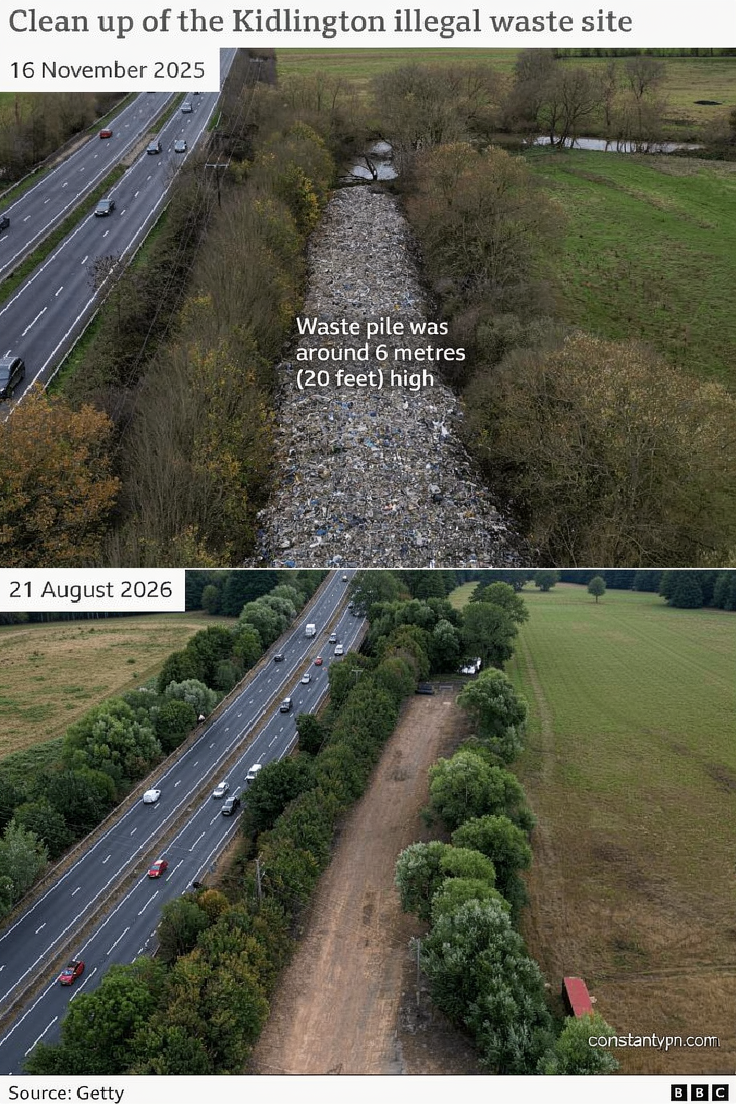
    Constantvpn.com – Drone footage from November 2025 captured the scale of the Kidlington tip The clear-up of one of England's largest illegal waste tips has been completed – landing taxpayers with a £6m bill. The government has vowed to recoup the clearance costs for the Kidlington dump in Oxfordshire – and seven other sites – from the criminals responsible. In 2025, around 22,000 tonnes of domestic and commercial rubbish was dumped at the spot, between the River Cherwell and the A34.

    It is one of nearly 30 so-called "supersites" first uncovered by a BBC investigation. The government, which launched a crackdown on waste crime last week, said it would do more to force criminals to pay for clean-up operations by confiscating their money and assets. But figures obtained by the BBC show that, in the past five years, the Environment Agency has so far managed to claw back just over £7m from waste criminals using Proceeds of Crime Act (Poca) confiscation orders.

    At the same time, the agency says waste crime costs the economy £1bn a year. , external Campaigners have labelled the amount taken from convicted criminals as "derisory" while the Country Land and Business Association (CLA), which represents rural landowners, asked: "Where is the deterrent?" The amount paid by criminals so far was revealed by an Environmental Information Regulations (EIR) request to the Environment Agency by the BBC. It shows there have been 66 confiscation orders between January 2021 and March 2026, totalling £7.3m.

    Fourteen orders have yet to be fully paid, leaving around £1.4m still to be recovered. The figures cover those larger illegal sites for which the Environment Agency is responsible, and do not include confiscation orders for smaller fly-tipping offences, which fall under the remit of local authorities. Baroness Sheehan, who chairs the House of Lords environment and climate change committee, said the figures obtained by the BBC showed "consistent, decisive enforcement" was lacking.

    "With clean-up costs at sites such as Kidlington far exceeding these sums, and enforcement still lagging, the taxpayer continues to foot the bill," she said. "The Environment Agency must do more to secure and enforce confiscation orders against those responsible, so criminals pay – not communities." As well as the work at the Kidlington site, the Environment Agency has also stepped in to clear a supersite at Hoads Wood, near Ashford in Kent. The cost of these two clearances alone has been budgeted at £20m by the Environment Agency – although the Kidlington project has come in under the original £7.3m contract.

    The government estimates that 20% of waste in England is illegally managed. In the Waste Crime Action Plan , external , launched under Keir Starmer's administration, the government said the Environment Agency would step in "on an exceptional basis to clear sites where that waste presents an untenable risk to the public and the environment". Private landowners whose land is used for illegal waste dumping are normally expected to pay for the clear-up.

    Last week, Prime Minister Andy Burnham announced a nationwide crackdown on waste crime and plans to clean up three more of the largest illegal tips in England. In total, six supersites have been earmarked to be cleared using public money, but they will be assessed first. They are: Power Station Road – Isle of Sheppey, Kent Aymer Close – Runnymede, Surrey Midland Road – Bradford, West Yorkshire Alan Ramsbottom Way – Hyndburn, Lancashire Worthing Road – Sheffield, South Yorkshire Bolton House Road – Bickershaw, Greater Manchester Environment secretary Dame Angela Eagle said: "After years of waste crime being allowed to fester, we are taking decisive action.

    "By putting more officers on the frontline and using drones to catch offenders in the act, we're putting the criminal gangs on notice that there is nowhere left to hide." But many more illegal supersites remain – and it is not known if or when they will be cleared up, and who will be made to pay. This includes one supersite in the countryside of Over, Gloucestershire, which Charlie Coats, chairman of Highnam Parish Council, is calling for the Environment Agency to also deal with. He told the BBC that the amount of money taken from waste criminals was "derisory" and added: "It acts as absolutely no deterrent whatsoever because the income that they can derive from this dwarfs anything by way of any fine." Gavin Lane, president of the CLA, which represents around 28,000 landowners, farmers and rural businesses across England and Wales – who are often left paying the cost of clean-up – also called for more to be done to make the criminals foot the bill.

    "The punishment has to be real: seize their vehicles, recover the money they owe and make waste crime a losing business," he said. The Environment Agency told the BBC that some of the unpaid confiscation orders were outstanding "because they are still within the six-month payment period allowed for settlement" and the failure to pay was a matter for the courts. It added that more money could still be seized if further information is uncovered about the offenders' assets.

    Four men have so far been arrested in connection with the illegal waste tip at Kidlington. All have since been released while the investigation continues. Is there an illegal waste site where you live?

    Burnham announces plans to clean up worst three illegal waste dumps Nearly 30 illegal waste 'super sites' revealed in new government watchlist Taxpayers to fund clear-up of huge illegal waste dumps

    Frequently Asked Questions

    What is Clean up of illegal waste supersite?

    Clean up of illegal waste supersite is the main topic of this guide. The article explains the context, practical details, and next steps readers should understand.

    Why does Clean up of illegal waste supersite matter?

    Clean up of illegal waste supersite matters because readers are looking for a useful answer, not just a short summary. Good content should match search intent and help them decide what to do next.

  • Iceland holds knife-edge referendum on EU – and it could be decided on fish

    Iceland holds knife-edge referendum on EU – and it could be decided on fish

    Iceland’s 400,000 Citizens Face a Binary Choice: Brussels or the Open Sea

    Constantvpn.com – On Saturday, voters across Iceland’s rugged coastline and volcanic interior will cast ballots in a referendum so tightly contested that pollsters describe it as effectively unpredictable. The question before them is not whether to join the European Union outright, but whether to reopen accession negotiations that were suspended in 2013. The margin separating the two camps is so thin that a single swing district could tip the outcome.

    The stakes are enormous for a nation of barely 400,000 people perched at the edge of the North Atlantic. A “Yes” vote would trigger formal talks with Brussels, though a second referendum would still be required before any final treaty could take effect, and all 27 existing EU member states would need to sign off. A “No” vote would shelve the question indefinitely, leaving Iceland to navigate an increasingly turbulent geopolitical landscape on its own.

    The Currency and Cost-of-Living Argument

    Proponents of closer European integration point to Iceland’s chronically volatile króna and a cost of living that ranks among the highest in the world. Finance Minister Daði Már Kristófersson, whose Liberal Reform party anchors the Yes campaign, frames membership as a stabilizing force for ordinary households and small businesses alike.

    “We see the opportunity of joining the EU and adopting the euro as a very significant benefit to Icelandic companies and to the Icelandic general public.”

    Kristófersson also argues that formal EU membership would insulate Iceland from pressure by far larger powers, strengthening both its trade position and its security posture. He notes that Norway, a non-EU member, nonetheless secured a successful accession framework in 1994 without completing the full process, and that Finland and Sweden obtained special agricultural terms for their northern regions. He expresses confidence that Iceland could negotiate comparable exemptions.

    The Fishing Fault Line

    Opponents see a different arithmetic. Fish and marine industries generate nearly 40 percent of Iceland’s total exports, and the common fisheries policy that accompanies EU membership would, in their view, dilute Reykjavik’s sovereign control over waters they consider irreplaceable. Inside a waterfront processing plant, workers in hairnets and blue overalls sort freshly landed cod and haddock into fillets destined largely for European tables. For Pétur Pálsson, boss of the Visir fishing operation, the prospect of Brussels dictating quota policy is intolerable.

    “If we are in the EU, they will be the ones who make the policy.”

    Guðrún Hafsteinsdóttir, opposition leader and figurehead of the No campaign, has pledged that Icelandic waters will never be shared with a supranational authority. The No campaign’s slogan — “Iceland for sale? No thanks” — captures the emotional register of the debate. Professor Eirikur Bergmann of Bifröst University, a political scientist who has tracked Icelandic politics for decades, observes that fishing is woven so deeply into national identity that no sitting politician could credibly concede it.

    “They’d be expelled from the country.”

    Margrét Ágústa Sigurðardóttir, head of the Icelandic Farmers’ Association, dismisses the government’s promise of a “special arrangement” protecting agriculture and fisheries. She points out that no member state has ever been granted a permanent opt-out from EU policy domains.

    Geopolitics Accelerates the Clock

    The referendum was originally pledged by Prime Minister Kristrún Frostadóttir’s centre-left government after its snap-election victory in 2024, with a deadline set for 2027. But a cascade of external shocks compressed the timetable. Russia’s ongoing war in Ukraine has intensified Arctic competition. US President Donald Trump’s tariff threats and repeated suggestions about Greenland’s future have added urgency. Iceland sits adjacent to the GIUK gap — the Greenland-Iceland-United Kingdom corridor through which Russian naval activity is closely monitored by Western intelligence. It is a founding NATO member yet fields no standing military of its own, a vulnerability that Kristófersson says has pushed Iceland’s strategic positioning “up the agenda.”

    “Things have been moving very rapidly with respect to geopolitical challenges.”

    What the Numbers Say

    A poll published this week placed the Yes side at 51.3 percent against 48.7 percent for No; an earlier survey had the two camps virtually tied. Bergmann calls the outcome “impossibly [hard] to predict,” noting that both sides have deployed every rhetorical and organizational resource available to them.

    Some undecided voters lean Yes precisely because this is not the final referendum. Anna Ragnarsdottir, a Reykjavik resident, explains her reasoning plainly:

    “We have to know what’s in the package from the EU. If we say no, we won’t ever know.”

    The Existing Framework

    Even outside the EU, Iceland already participates in the European Economic Area alongside Norway and Liechtenstein, giving it access to the single market and inclusion in the Schengen border-free zone. Reykjavik first opened accession talks two years after the 2008 global financial crisis, only to abandon them in 2013 when fishing proved an insurmountable obstacle. That same obstacle remains the central dividing line today, and the outcome of Saturday’s vote will determine whether Iceland attempts to solve it a second time — or walks away from the table entirely.

    Frequently Asked Questions

    What is Iceland holds knife edge referendum on EU?

    Iceland holds knife edge referendum on EU is the main topic of this guide. The article explains the context, practical details, and next steps readers should understand.

    Why does Iceland holds knife edge referendum on EU matter?

    Iceland holds knife edge referendum on EU matters because readers are looking for a useful answer, not just a short summary. Good content should match search intent and help them decide what to do next.
  • How Dolly Parton’s business savvy helped her succeed far beyond the charts

    How Dolly Parton’s business savvy helped her succeed far beyond the charts

    The Rejection That Built an Empire: How Dolly Parton Turned a “No” Into $450 Million

    Constantvpn.com – In the summer of 1974, a young songwriter named Dolly Parton had just finished recording one of the most enduring love songs in American music history. The track, “I Will Always Love You,” was ready for release, and a call came asking whether Elvis Presley might record a version. Most artists would have leapt at the opportunity without hesitation. Parton, however, listened to the terms attached to the offer — his manager wanted half the publishing rights — and said no. She later admitted she wept through the entire night afterward, torn between pride and fear of what she might have gained.

    Two decades later, in 1992, Whitney Houston transformed the song into a chart-topping power ballad. Worldwide sales surpassed 20 million copies, and the royalties flowing back to Parton exceeded $10 million, as tallied by Forbes. That single decision, made in a moment of instinctive self-protection, became the defining anecdote of a career that extended far beyond the stage.

    From Rags to Royalties: A Childhood Lesson in Ownership

    Parton did not arrive at that instinct by accident. Born into rural poverty in Tennessee, she described in her 1971 smash hit “Coat of Many Colours” the patched garments her mother stitched together so she could walk to school without shame. The economic precarity of those years left a permanent imprint on how she viewed money, contracts, and creative ownership.

    Her father, though unable to read or write, possessed what Parton called “a great sense of business.” In a 2017 conversation with the BBC’s World Service, she recalled how he shaped her thinking from the earliest days of her career:

    “My dad wasn’t an educated man, he wasn’t able to read and write, but my daddy had a great sense of business. So when I got into the music business, I thought of it as a business. And so I started early on keeping my own songs and my own publishing company.”

    That publishing company became the financial backbone of everything that followed. By retaining ownership of her catalog rather than ceding it to labels or outside writers, Parton ensured that every subsequent cover, sync placement, or streaming play generated income that stayed within her own structure.

    Diversification: Theme Parks, Film, and the Smoky Mountains

    The publishing royalties were only one pillar. In 1985, Parton co-founded Sandollar Productions, a film and television company that went on to produce projects including the 1990s cult thriller Buffy the Vampire Slayer. The following year, in 1986, she became co-owner of Dollywood, a theme park nestled in the foothills of the Great Smoky Mountains in her home state of Tennessee. The attraction had changed hands several times over its first quarter-century before her involvement, and her buy-in triggered an exponential surge in annual visitor numbers.

    She continued expanding the property’s footprint. In 2015, the DreamMore Resort opened nearby — a four-star hotel and spa designed to extend guests’ stays beyond a single park day. Today, numerous members of Parton’s family are employed at the complex, which stands as the largest employer in its county.

    Recent Ventures and the “Cup of Ambition”

    The entrepreneurial engine has not slowed with age. In 2025, Parton launched the Dolly Beauty cosmetics line, extending her personal brand into consumer goods. That same year, in June, she opened Dolly’s Tennessean Travel Stop, a retail concept shop that includes a signature coffee brand called Cup of Ambition — a deliberate nod to her Grammy-winning single “9 to 5.” The move underscores a pattern: every new venture is tethered to an existing cultural touchpoint, reducing the marketing risk of entering unfamiliar markets.

    Paul Milliken, a Fox 5 Atlanta reporter who has interviewed Parton repeatedly over the years, identified diversification as the central mechanism behind her commercial longevity. Speaking to the BBC’s Wake Up to Money programme, he noted that the lesson she models for younger artists remains active and influential.

    Philanthropy as Extension of Brand

    Wealth, for Parton, was never purely an end in itself. She has directed millions of dollars toward child literacy initiatives, wildfire relief efforts, and research aimed at developing a cure for Covid-19. In 2022, the Carnegie Medal of Philanthropy was awarded to recognize the scale and consistency of that giving.

    Yet she has also spoken candidly about how poverty shapes spending habits long after the bank account has changed. In that same 2017 interview, she offered a reminder that no amount of success fully erases the child who once wore a knitted coat to class:

    “Being brought up poor means I don’t take things for granted, and no matter how much money I make, I’ll always count my blessings quicker and more often than I count my money.”

    She added, with characteristic self-deprecation, that walking into a store and facing a high price tag still triggers a reflexive thought about what her parents might have accomplished with that sum.

    Neutrality as Strategy

    Parton’s commercial reach depended in part on her status as one of the rare cultural figures Americans could agree upon across partisan lines. She declined the Presidential Medal of Freedom on two separate occasions — once when offered by Donald Trump, once by Joe Biden — a choice that preserved the brand’s apolitical positioning and kept her consumer products accessible to every demographic.

    Maike Currie, vice president of personal finance at savings firm PensionBee, told the BBC’s Wake Up to Money that Parton’s example has rippled through the industry. She pointed to Taylor Swift’s decision to rerecord her catalog in order to reclaim ownership of her masters as a direct echo of the publishing-ownership philosophy Parton adopted decades earlier. Currie characterized Parton as a “brilliant businesswoman” whose influence extends well past the chart positions her music once held.

    By the time of her death, Forbes estimated her net worth at $450 million — a figure built not on a single hit or a single endorsement, but on a lifetime of retaining ownership, diversifying revenue streams, and treating every creative asset as a long-term investment rather than a one-time transaction. The woman who cried all night after saying no to Elvis ended up proving that the most profitable answer in show business is sometimes the one that protects what you already own.

    Frequently Asked Questions

    What is How Dolly Parton s business savvy?

    How Dolly Parton s business savvy is the main topic of this guide. The article explains the context, practical details, and next steps readers should understand.

    Why does How Dolly Parton s business savvy matter?

    How Dolly Parton s business savvy matters because readers are looking for a useful answer, not just a short summary. Good content should match search intent and help them decide what to do next.

  • Why high energy bills look like they are here to stay

    Why high energy bills look like they are here to stay

    Constantvpn.com – Energy bills may have been a long way from our minds through the sweltering summer. Clothes on a washing line have been drying in minutes. Cold showers have been more tempting than hot ones.

    But the latest news and forecasts on gas prices will bring a renewed sense of worry and urgency to families, as well as government ministers. Energy prices will rise by nearly 4% for millions of households in October. Even more striking is a prediction from the respected consultancy Cornwall Insight of a further 9% increase at the peak of winter in January.

    With ongoing volatility in the wholesale gas market sparked by events in the Gulf region, the energy sector says high prices are here to stay. EDF suggests bills will remain "stubbornly high" at their current level at least until the end of the decade. High bills have, and continue to, bite.

    Energy prices have been central to the cost-of-living squeeze. The typical household's dual-fuel bill is now 70% higher than it was at the start of 2021, before Russia's invasion of Ukraine. That amounts to around £600 more each year than pre-crisis levels, according to industry body Energy UK.

    Inevitably, more and more people have been unable to pay. Unpaid energy debt of more than three months is now at a record high, according to regulator Ofgem. Suppliers, who chart debt levels for missed payments of a month or more, estimate total unpaid bills and charges to have reached £6bn.

    By the end of the year, they expect that to rise to £7bn. The average household in debt, without a repayment plan, owes more than the typical annual bill. And even if you are not in debt, you pay.

    Covering the cost of debt already adds about £60 to the average annual bill. Consultancy Baringa says everyone could, on average, be paying £100 to cover the cost of unpaid debts by the end of the year. Someone who pays their bill on demand every three months, rather than a monthly direct debit, is typically already paying £150 a year to cover debt of others, owing to the greater risk of non-payment on this type of bill.

    So, pressure on the government to help those most in need will only intensify. Ofgem has a proposed debt relief scheme on the table, and campaigners keep telling them to get on with it, urging the government as to provide funding for it to be implemented. Charities and the industry also want ministers to introduce a discounted tariff for those who need it most – based on benefits, health and income data.

    Energy UK says a targeted plan would cost £1.9bn. That would be much cheaper than the £40bn commitment to protect everyone's bills after Russia invaded Ukraine. But, who would pay?

    It could go on everyone else's bills. Or ministers could opt to raise taxes, borrow the money, or cancel spending elsewhere – all of which are tricky political choices. Those who can have cut back on their energy use to reduce bills in recent years.

    Thermostats up and down the country have not been set as high as before. Batch cooking is more common. So much so that Ofgem's official calculations for typical energy consumption were lowered again in July (to 9,500 kWh of gas and 2,500 kWh of electricity a year).

    Millions have shifted onto fixed tariffs, with 35% of billpayers on such a deal. So, many can justifiably say they have done their bit. Others who are older or who have health conditions might not have the luxury of lowering their energy use.

    So, community warm hubs have become popular. Some became cold hubs during the hot summer so people could make use of the air con. The heatwave has reduced the amount of energy stored across Europe, which needs to be restocked, piling more pressure on prices.

    Add to that the huge cost of upgrading the UK's electricity network and you can see why there are predictions of longstanding high energy bills – irrespective of whether a lasting peace in the Iran war brings down the international price of wholesale gas. In the long-term, the government and Ofgem wants to shift the country away from our reliance on gas, with its volatile international pricing. Expect lots of fanfare over the sale, for the first time in the UK, of plug-in solar panels.

    In the short-term ministers – and the new prime minister – say they are helping where they can, and promising that there is "more to do". VAT will be cut on electricity bills in October. It means the price of electricity will fall, but that's been more than outstripped by an 8% rise in the price of gas.

    In the last Budget, then-Chancellor Rachel Reeves cut some so-called policy costs and shifted some onto general taxation instead. Ministers may be tempted to do more of that, but could face be criticised for simply shifting the burden off bills and onto taxes. So, the options are limited.

    The new chancellor, John Healey, has choices to make – with lots of calls for help but with limited room for manoeuvre in the public finances. All eyes will be on his first Budget, which comes soon after those higher autumn energy bills kick in. Are you affected by issues covered in this story?

    What will the energy cap changes mean for my bills?

    Frequently Asked Questions

    What is Why high energy bills look like?

    Why high energy bills look like is the main topic of this guide. The article explains the context, practical details, and next steps readers should understand.

    Why does Why high energy bills look like matter?

    Why high energy bills look like matters because readers are looking for a useful answer, not just a short summary. Good content should match search intent and help them decide what to do next.

  • Rockstar Games breaks silence on Grand Theft Auto 6 leaks

    Rockstar Games breaks silence on Grand Theft Auto 6 leaks

    Rockstar Games Responds to GTA 6 Leak Storm Ahead of Netflix Premiere

    Constantvpn.com – The week that was supposed to belong entirely to Rockstar Games’ long-awaited sixth installment of its flagship franchise has instead been dominated by unauthorised footage. Clips purporting to show gameplay sequences and cinematic cutscenes from Grand Theft Auto 6 surfaced online roughly seven days ago, and the developer’s parent company, Take Two Interactive, has now moved from silence to formal legal action in a New York court. The timing is awkward: the studio had scheduled a major “extended look” preview for streaming on Netflix this Thursday, an event the platform is promoting with the weight of a cultural moment.

    The Statement

    After days of public speculation and fan anxiety, Rockstar finally broke its quiet. In a written statement, the company described the situation as “heartbreaking” for the developers still deep in production on the sequel. The tone was apologetic but forward-looking, with the studio pledging to “exceed” what fans hoped to see when the Netflix preview aired.

    “Not how we intended for you to see the game after all this time.”

    The company also apologised for what it characterised as delays in putting out official updates on a title that has generated enormous anticipation. It acknowledged that players had been waiting for some kind of response to the leaked material and conceded that it was “unfortunate the intended game experience may now be impacted by some spoilers.” A note of gratitude closed the statement, directed at fans who had sent messages of encouragement during the turbulent week:

    “Your words have meant more to the team than you can imagine.”

    From Doubt to Legal Action

    When the first clips appeared, scepticism was immediate. The gaming community had grown accustomed to fabricated footage and AI-generated hoaxes, so initial reactions ranged from excitement to outright dismissal. Over the following days, however, the weight of evidence shifted the consensus. Multiple independent uploads showed consistent visual language, character models, and environmental detail that aligned with what Rockstar had previously confirmed about the title’s direction.

    The turning point came when copyright strikes were filed against social media hosts, forcing rapid takedowns of the clips. That procedural step — available to rights holders who can request removal of unauthorised copies of their work — strongly implied that a corporate entity with legal standing was behind the enforcement. Then, on Friday, Take Two Interactive filed proceedings in a New York court, converting what had been a PR headache into a formal litigation matter.

    Who Is Behind the Leaks?

    The group distributing the footage has framed its actions as consumer advocacy. It accuses Rockstar of anti-consumer behaviour, pointing specifically to the decision not to ship a physical disc version of GTA 6 at launch — a move that has drawn criticism from players who value tangible media. Yet not every observer buys the altruistic framing. Each new batch of material has been accompanied by prompts encouraging viewers to send cryptocurrency “donations” to the account uploading the clips, a detail that has fuelled suspicion of a coordinated monetisation scheme rather than a grassroots protest.

    The Game Itself

    Grand Theft Auto 6 follows two lovers, Lucia and Jason, through the criminal underworld of Leonida — a fictional American state modelled on Florida. Its swamps, neon-lit coastlines, and sprawling urban cores give the title a distinctly different palette from the Los Santos setting of its predecessor. The game is slated for PlayStation 5 and Xbox consoles in November, and industry consensus still positions it as the largest single video game launch of the decade.

    The scale of expectation is not accidental. GTA 5, released in 2013, shattered sales records and has since moved more than 200 million copies worldwide. Two official trailers for the sixth entry have accumulated close to 500 million combined views on YouTube. The Netflix “extended look” scheduled for Thursday is being packaged by the streaming service as a singular event, complete with promotional build-up, signalling that Rockstar intends to reclaim narrative control of the week’s conversation.

    A Parallel Legal Battle in Scotland

    Complicating the studio’s public posture is a separate dispute. Next month, Rockstar is due to appear before an employment tribunal in Scotland, where a group of former employees alleges they were unlawfully dismissed for attempting to organise a trade union. The company has categorically denied the characterisation, maintaining that the workers in question were terminated on grounds of gross misconduct. The tribunal date lands in the same window as the Netflix preview, meaning the studio will be managing two very different kinds of scrutiny simultaneously.

    What Comes Next

    For players, the immediate question is whether the Netflix extended look will deliver enough new, unspoiled material to reframe the conversation away from the leaks and back toward genuine excitement. Rockstar’s stated intent is clear: it wants the Thursday broadcast to be the definitive first look at Lucia and Jason’s story. Whether the legal proceedings in New York, the tribunal in Scotland, and the ongoing copyright enforcement allow the studio to protect that window remains to be seen. What is certain is that no major game launch in recent memory has entered its final months under quite so many simultaneous pressures.

    Frequently Asked Questions

    What is Rockstar Games breaks silence on Grand?

    Rockstar Games breaks silence on Grand is the main topic of this guide. The article explains the context, practical details, and next steps readers should understand.

    Why does Rockstar Games breaks silence on Grand matter?

    Rockstar Games breaks silence on Grand matters because readers are looking for a useful answer, not just a short summary. Good content should match search intent and help them decide what to do next.

  • Prince Harry and Meghan land in UK days after announcing move

    Prince Harry and Meghan land in UK days after announcing move

    Sussex Family Touches Down in Birmingham as UK Relocation Takes Effect

    Constantvpn.com – The Duke and Duchess of Sussex, accompanied by their two young children, have completed a private flight from California and landed at Birmingham Airport just before midday, marking the start of a long-anticipated return to British soil. Prince Harry, Meghan, Archie, and Lilibet arrived together after weeks of speculation about when and how the family would physically execute the move that had been announced the previous week.

    A representative for the couple offered a characteristically terse response when asked to confirm the arrival:

    “This is not something we would comment on.”

    Those present at the airport noted the conspicuous absence of a visible police cordon as the family departed the terminal — a detail that immediately fed into the broader conversation about how the Sussexes’ security will be handled during their time in Britain.

    Life as Non-Working Royals

    The family’s new arrangement places them squarely in the category of non-working members of the royal household. They will reside in Britain without resuming any formal duties attached to their former titles. This distinction matters: since stepping back from official royal responsibilities in early 2020, Harry and Meghan have operated outside the institutional framework of the Crown, and their return does not alter that status. They will not represent the King at state occasions, will not undertake patronages, and will not draw from the Sovereign Grant for official expenses.

    The couple is understood to have secured a private residence in the Cotswolds, a region of rolling hills and stone villages in south-central England roughly an hour’s drive from Oxford and two hours from London. The choice of location — deliberately removed from the capital’s media orbit — signals an intention to keep a low public profile while remaining accessible enough for family visits and occasional charitable engagements.

    Archie and Lilibet have already been enrolled at a local school, with the new academic term commencing the following week. The timing of the flight, landing just before midday on what appears to have been a weekday, suggests the family aimed to settle in before the children’s first day of classes.

    A Four-Year Gap Closed

    The Sussexes departed the United Kingdom in early 2020 and established themselves in Los Angeles by March of that year. For nearly four years, their physical presence in Britain was limited to a single occasion: the state funeral of Queen Elizabeth II in September 2022. Since then, the family had not set foot in the country together until now.

    Their most recent visit before this relocation was a July trip to King Charles at his private estate at Highgrove, near Sandringham in Norfolk. That gathering — the first time Harry had seen his father in person in four years — was framed publicly as a family reunion. The relocation itself was not on the agenda during that visit, though the King had been informed of the plans earlier in the month.

    The Prince and Princess of Wales, William and Catherine, were likewise made aware of the family’s intentions before the announcement became public.

    The Security Question

    Perhaps the most persistent question surrounding the return is one of protection. Since the news of the relocation broke, commentators and former security officials have debated what level of police cover the Sussexes will receive and, crucially, who will foot the bill.

    Last year, Prince Harry took his case to court seeking to overturn a decision that had downgraded his security classification following his departure from working-royal status and his move to the United States. He lost that challenge. The ruling effectively confirmed that his protection tier in Britain had been reduced, though the precise operational details remain opaque.

    In response to post-announcement questions, a Home Office spokesperson stated that decisions regarding royal security are made by the Executive Committee for the Protection of Royalty and Public Figures, known as Ravec, and that the government’s protective security framework is

    “rigorous and proportionate.”

    Harry himself has spoken in past interviews about how anxieties over personal safety had deterred him from travelling to Britain with his wife and children. Whether the family’s new arrangement resolves those concerns — or simply relocates them — remains to be seen.

    Legal and Financial Backdrop

    The move arrives against a backdrop of ongoing legal and financial pressure. Last month, the Duke and six other public figures lost their High Court privacy action against the publisher of the Daily Mail and Mail on Sunday. The judgment exposes them to a potential costs order of up to £34.5 million payable to Associated Newspapers, a figure that dwarfs most private legal settlements and underscores the financial stakes of their public-facing disputes.

    For readers unfamiliar with the distinction: a non-working royal lives privately, funds their own household, and may engage in charitable work or commercial ventures without institutional backing. The Sussexes’ California years included the Archewell Association, a media and philanthropy enterprise, and various public appearances. What shape their Cotswolds life will take — whether it leans toward quiet domesticity, selective charity work, or continued media activity — is the question that will define the next chapter.

    Frequently Asked Questions

    What is Prince Harry and Meghan land in UK?

    Prince Harry and Meghan land in UK is the main topic of this guide. The article explains the context, practical details, and next steps readers should understand.

    Why does Prince Harry and Meghan land in UK matter?

    Prince Harry and Meghan land in UK matters because readers are looking for a useful answer, not just a short summary. Good content should match search intent and help them decide what to do next.

  • Young care leavers dying early a ‘national tragedy’

    Young care leavers dying early a ‘national tragedy’

    Young Adults Leaving Care Face Mortality Rates Four Times the National Average

    Constantvpn.com – A government-commissioned review has revealed that young people who exit the English care system at age 18 die at roughly four times the rate of their peers in the wider population. The finding, drawn from a detailed examination of 112 deaths notified in 2025 among care leavers aged 18 to 24, translates to approximately 130 fatalities per 100,000 in that cohort — a figure the authors describe as catastrophic and entirely preventable.

    The review, jointly authored by broadcaster Ashley John-Baptiste and social worker Clare Chamberlain under commission from the Department for Education, identifies the moment a young person turns 18 as a precipice. At that threshold, the state withdraws what the report terms “significant levers of support,” plunging former foster children into adulthood with no safety net, no structured guidance, and often no stable roof over their heads. The authors label this abrupt severance the “care cliff” and argue it demands urgent systemic reform.

    The Age-18 Spike

    Among the 112 deaths examined, 22 occurred at exactly age 18 — more than at any other single age within the 18-to-24 window. The review describes this clustering as “strongly suggestive of the stark challenges and pressures” confronting young adults the instant their statutory protections expire. Just over a third of the fatalities, 40 in total, were attributed to suicide, a rate the authors estimate could be five times higher than that seen in the general population. Remaining causes spanned homicide, road-traffic collisions, drug misuse, and what the report characterises as potential mismanagement of chronic medical conditions such as diabetes.

    A Personal Account of the Cliff

    Ashley John-Baptiste, who spent his childhood moving through four foster placements before being discharged at 18, spoke about his own experience of sudden independence. He recalled being told to live alone and figure out adulthood on his own terms.

    “I was made to live alone and work out how to be an adult,” he said.

    Unable to afford even a basic bed frame, he slept on a bare mattress laid on the floor of his council flat. He described the period as defined by a deep sense of abandonment and isolation — feelings he now believes are shared by many young people who exit care without adequate preparation or ongoing contact.

    Failures in the Personal Adviser System

    The primary mechanism through which former care children receive post-18 support is the personal adviser (PA) role. The review found that the quality of PA practice varies enormously between local authorities. With statutory minimum visiting requirements set at once every two months, the authors note it is “not surprising” that several advisers they interviewed “hardly knew” the young person assigned to their caseload. This gap between policy intent and lived experience, the report argues, leaves many care leavers effectively invisible to the very system designed to protect them.

    Housing as a Point of Failure

    Beyond advisory contact, the report criticises the accommodation arrangements offered to young adults leaving care. It finds that housing is frequently supplied through a profit-making arm of the service with no specific requirements for therapeutic or social-work discipline. The authors call for a fundamental redesign of how accommodation is sourced, managed, and monitored so that it serves the developmental needs of its occupants rather than the financial interests of providers.

    Government Response

    The Department for Education says it is advancing a national rollout of connected housing options for care leavers, beginning with £25 million allocated this year. Officials state the programme will “significantly increase” young people’s chances of being offered a “home that provides them with community and connection rather than leaving them isolated in inappropriate accommodation.”

    Children’s Minister Josh MacAlister framed the issue in relational terms, insisting that “enduring relationships” must become the “central obsession” of the care system.

    “Care must build and not break the relationships that young people need, and this must be the new North Star,” he added.

    Voices from the System

    Izy Winter entered care at 13. Now 25, she describes a pattern of neglect that persisted well beyond her formal exit from the system. While in foster care, she says she was cold, hungry, and overlooked. After leaving care, welfare checks that should have identified an abusive partner were carried out perfunctorily or not at all.

    “The person who was meant to check asked to meet me in the car park and got me to sign a piece of paper to say he’d been inside my home when he hadn’t,” she said.

    Living with ADHD and dyslexia, Izy struggles with administrative paperwork. Her support worker failed to verify that she was receiving all financial entitlements to which she was legally entitled. By the time the omission was flagged, the deadline for reclaiming the missed funds had passed. She describes a period of acute financial strain during which requests for help went unanswered.

    “I was really struggling financially and was so frustrated that even when I asked for help, I wasn’t given it.”

    Reading the new review, she says she is saddened but unsurprised.

    “The recent findings reflect a reality that too many of us have lived through.”

    Why the Gap Matters

    The mortality differential documented in this review is not an abstract statistic. It represents young adults who, by virtue of having entered the state’s protective custody as children, lost the family scaffolding that most teenagers rely on during the turbulent transition to independent adulthood. The combination of abrupt benefit withdrawal, inconsistent advisory contact, profit-driven housing, and unmanaged health conditions creates a convergence of risks that no single intervention can address alone. The report’s central argument is that the current architecture treats the 18th birthday as an administrative endpoint rather than the beginning of a period of heightened vulnerability — and that correcting this framing is a matter of public-health urgency, not merely social-policy preference.

    Anyone affected by the issues raised here can find practical guidance through the BBC’s Action Line. Those feeling emotionally distressed or suicidal can contact Samaritans free of charge on 116 123 or visit samaritans.org within the United Kingdom.

    Frequently Asked Questions

    What is Young care leavers dying early a national?

    Young care leavers dying early a national is the main topic of this guide. The article explains the context, practical details, and next steps readers should understand.

    Why does Young care leavers dying early a national matter?

    Young care leavers dying early a national matters because readers are looking for a useful answer, not just a short summary. Good content should match search intent and help them decide what to do next.

  • 70,000 social and affordable homes to be built across England as part of £39bn plan

    70,000 social and affordable homes to be built across England as part of £39bn plan

    England’s £39bn Plan: 70,000 Affordable Homes Announced

    Constantvpn.com – The UK government has confirmed the locations where 70,000 social and affordable homes will be constructed across England over the coming decade. The allocation forms the opening tranche of a far larger programme targeting 300,000 units under a £39bn social housebuilding initiative. Greater Manchester, the West Midlands, West Yorkshire, South Yorkshire, North East England, and Liverpool each received dedicated funding, while London was earmarked for £6bn. Roughly 60% of the newly announced units are designated for social rent, meaning tenants pay approximately half the cost of comparable market-rate properties and must meet strict eligibility criteria.

    Where the Money Lands

    Ministers framed Monday’s announcement as stage one of a ten-year build-out, noting that more than £16bn still awaits allocation outside the capital. Housing Secretary Angela Rayner indicated that local councils would play a central role in delivery, saying she and the prime minister were “doing everything we can to get councils building once again.” The government added that millions in additional support would flow to authorities to bolster technical capacity. However, the statement stopped short of specifying how funds would be divided between council-built stock and housing-association developments.

    Historical context underscores the scale of the ambition. During the 1950s, local authorities delivered close to 200,000 council homes annually; today, half of all councils neither own nor construct their own housing stock. In the 2024-25 financial year, just over 12,000 social-rent units were completed — the strongest annual figure since 2013-14 — yet sector bodies including the National Housing Federation and homelessness charities have long argued that at least 90,000 social homes per year are required to stem the backlog.

    Voices from the Waiting List

    For the 1.34 million households sitting on social-housing waiting lists as of March 2025, the announcement lands amid a housing emergency that shows no sign of easing. Government data released earlier this month placed 177,530 children in temporary accommodation. Among them is Natasha, a 22-year-old mother who has spent the past four months in a Milton Keynes hotel with her five-week-old son, Zayd.

    “I’m just scared when he gets older, when he starts crawling around, I can’t even allow him to crawl in such a place like that because it’s so dirty,” Natasha told the BBC. She described the shared kitchen used by roughly 60 residents, the ant infestation that forced a room change during her pregnancy, and the rule barring visitors — meaning friends and family cannot come to help. “I just want somewhere peaceful for him and calm. Somewhere nice where I can bring him up.”

    Prime Minister Andy Burnham, who has pledged the “biggest council house-building programme since the post-war period,” addressed the crisis directly: “No child should be raised in a hostel room and no family should wait 10 years for a front door of their own. I have said from my first day in this job that everything starts with a good home.”

    Can the Programme Close the Gap?

    Reaction was mixed. Housing charities acknowledged the step forward while stressing it falls well short of need. Charlie Berry, policy manager at Shelter, called the announcement “not near the level we need to truly tackle that backlog and end homelessness,” though she conceded it represented a “significant improvement” and urged Rayner to commit publicly to an annual build target. The Conservative opposition labelled the package an “unfunded spending commitment.” Separately, the Labour government has pledged to deliver 1.5 million homes of all types by 2029, a figure that dwarfs the social-rent component announced this week.

    Frequently Asked Questions

    How many homes are included in this first allocation?

    The initial tranche covers 70,000 social and affordable units across England, with 60% designated for social rent. It is the first phase of a broader 300,000-home programme funded at £39bn over ten years.

    Who qualifies for a social-rent home?

    Tenants must meet strict local-authority criteria, typically tied to income thresholds, household composition, and need. Social-rent rents sit at roughly half the level of comparable market rents.

    How much funding goes to London versus the rest of England?

    London received £6bn in this round. More than £16bn remains to be allocated to regions outside the capital in subsequent stages of the programme.

    What is the current scale of the social-housing waiting list?

    As of March 2025, 1.34 million households were on waiting lists, according to the latest government figures. Sector bodies estimate at least 90,000 new social homes per year are needed to begin reducing that backlog.

  • ‘I didn’t speak the Queen’s English’: Why people worry about their accents

    ‘I didn’t speak the Queen’s English’: Why people worry about their accents

    Accent Anxiety in British Workplaces: What a Major Survey Reveals About Professional Bias

    Constantvpn.com – For millions of workers across Britain, the way they speak carries an invisible weight in boardrooms, job interviews, and networking events. A sweeping new survey of over 3,300 adults spanning England, Scotland, and Wales has quantified a concern many have long felt but rarely voiced: that regional and foreign accents continue to shape how colleagues and employers perceive competence, ambition, and belonging in professional life.

    The research, carried out by the organisation More in Common and commissioned by Common Ground — a body dedicated to fostering social cohesion — found that roughly one in ten Britons report feeling anxious or self-conscious about their accent in high-pressure professional situations, such as contributing to a business meeting or presenting in front of senior management. The findings paint a detailed map of where that anxiety concentrates most sharply.

    Where the Pressure Falls Hardest

    The data revealed pronounced regional variation. Speakers from the Newcastle area — colloquially known as Geordies — and those carrying an east London or Cockney accent reported the highest levels of workplace accent anxiety, each at 19 percent. Welsh-accented respondents followed closely at 18 percent. Around five percent of all surveyed adults believed their accent had directly cost them a promotion, a pay rise, or a senior position. Among those who felt this, “Brummies” — residents of Birmingham — were the most likely to report such a loss, at 13 percent.

    Mockery and criticism from colleagues also tracked regional lines. West Country speakers reported the highest incidence of having their accent ridiculed or singled out by coworkers, at 15 percent, with Geordie speakers next at 13 percent. Separately, 13 percent of all respondents admitted they consciously modify their speech patterns to sound more “professional,” with Cockney and Scottish speakers most likely to engage in this softening behaviour.

    Personal Encounters with the Bias

    Mia Tanswell, now 22, grew up in Manchester without giving her northern vowels a second thought. That changed abruptly during her first week at university in Loughborough, where she found herself the sole northern student in several seminars.

    “I knew people were going to notice that I was northern and that I didn’t speak the ‘Queen’s English’,” she recalls. “Definitely in seminars I would sometimes feel like my accent would sound a bit less intellectual than other people, especially if I was the only northern student in the classroom.”

    Her experience mirrors a broader pattern: the perception that a particular Received Pronunciation register signals education and authority, while regional dialects are quietly coded as less credible. That association — accent as a proxy for class and schooling — is precisely what Common Ground’s founder, Lara Newman, identifies as the structural problem.

    Newman, who has spent more than three decades working in construction, property, and the built-environment sector, says she deliberately altered her own West Country accent early in her career to avoid being marginalised.

    “I am incredibly realistic about what would have happened had I gone to university or gone into the workplace with a strong west country accent,” she explains. “I felt like that was going to be an issue for me.”

    She argues that accent functions as a shorthand for assumed education level and social class, creating an additional barrier for people from disadvantaged backgrounds trying to enter skilled professions.

    Pride, Adaptation, and the Foreign-Accent Dimension

    Not every speaker feels the pressure as a deficit. Martha Powell, 24, from Newport in south Wales, describes herself as proud of her Welsh vowels.

    “I love my accent, if anything I wish it was more Welsh,” she says.

    Yet even pride does not eliminate the strategic calculation. Powell admits she gravitates toward other Welsh speakers at networking events and subtly adjusts her pronunciation depending on which part of the country she is in, hoping to stand out more authentically rather than blending into a neutral register.

    A foreign accent introduces a different but related set of challenges. Benjaimin Aidomoan arrived in the United Kingdom from the Czech Republic at age 16, four years ago, speaking no English. He acquired the language quickly but says his non-native pronunciation has made job-hunting noticeably harder.

    “You can just see on many people’s faces, that the expression and the way they are looking at you and the way they are talking to you kind of changes,” he observes.

    Now employed in a restaurant, Benjaimin believes most employers ultimately look past surface markers of identity.

    “It’s about who you are, how you present yourself, what is your attitude and we how hard you’re willing to work,” he adds.

    Employers and the Shifting Standard

    Most hiring managers would describe equal treatment regardless of accent as their stated ambition. Charlotte Davies, a career expert at LinkedIn, notes that while gaps remain, the trajectory is improving.

    “Hiring is increasingly about skills, not background or polish. Your accent is part of your story, and the workplaces getting this right, treat that as a strength, not something to smooth out,” she says.

    Sian Jackson, a partner at the law firm Mills & Reeve, describes a recent internal shift toward encouraging local hiring and welcoming a wider diversity of accents within the firm.

    “We don’t judge, we scrutinise based on capability beyond somebody’s accent, or appearance. Like any other prejudice or bias it’s about being conscious of it so you can then set it aside,” she says.

    Why It Matters Now

    The survey’s timing is significant. Britain’s labour market is under sustained pressure to widen participation from regions and communities historically underrepresented in professional and managerial roles. If accent continues to operate as an unspoken filter — whether through conscious discrimination or unconscious association with lower educational status — it undermines both individual opportunity and organisational diversity goals. The data suggest the problem is neither trivial nor confined to a single region; it is diffuse, cross-regional, and embedded in everyday professional interactions. Addressing it requires not only employer policy but a broader cultural shift away from the assumption that one particular way of speaking is the default marker of intelligence or authority.

    Frequently Asked Questions

    What is I didn t speak the Queen?

    I didn t speak the Queen is the main topic of this guide. The article explains the context, practical details, and next steps readers should understand.

    Why does I didn t speak the Queen matter?

    I didn t speak the Queen matters because readers are looking for a useful answer, not just a short summary. Good content should match search intent and help them decide what to do next.