US appeals court halts Trump ballroom project paving way for Supreme Court showdown

Daftar Isi
Supreme Court Battle Looms After Appeals Court Blocks White House Ballroom Construction
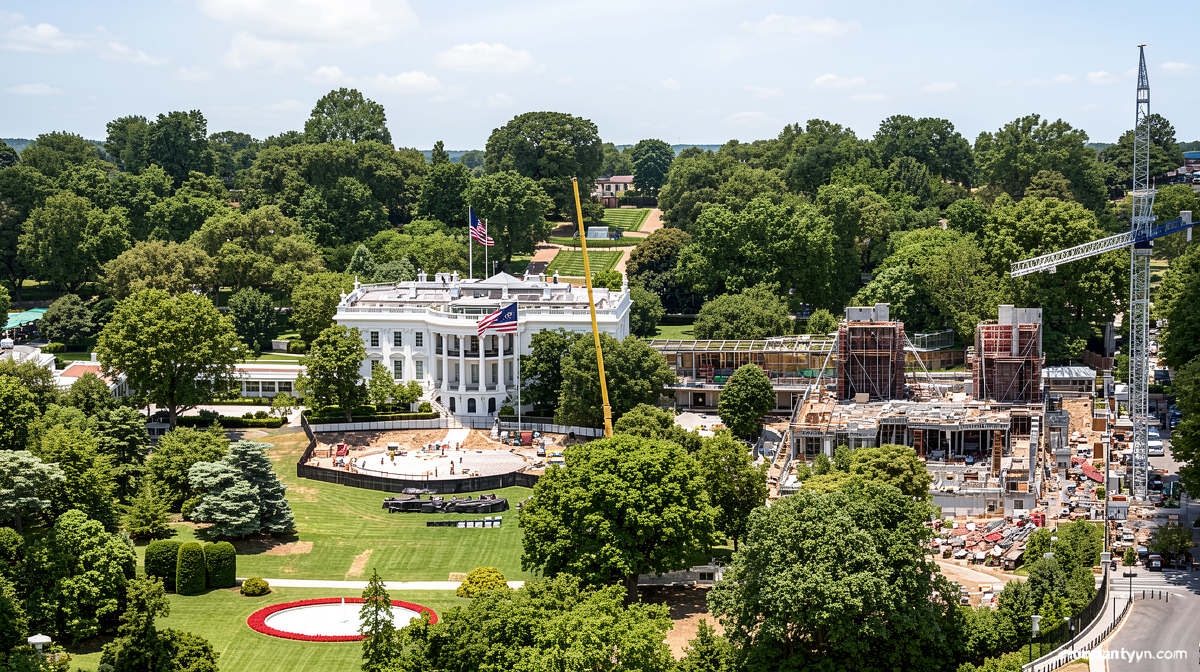
Constantvpn.com – A federal appeals court has issued a significant blow to the Trump administration’s ambitious plans for a new White House ballroom, ordering an immediate halt to above-ground construction while the legal battle continues. The ruling, delivered on Friday, sets the stage for what could become a landmark Supreme Court case regarding presidential authority over the nation’s most iconic residence.
Legal Grounds for the Halt
The three-judge panel, voting 2-1, determined that the executive branch exceeded its constitutional bounds when it began dismantling the historic East Wing without seeking congressional approval. The court’s majority opinion emphasized that the White House belongs to the American people and all future presidents, not to any single occupant of the Oval Office.
“Whether or not a massive ballroom should be constructed is for Congress to decide and is not a matter for Executive self-help,” the panel stated in its ruling.
The decision upholds a preliminary injunction previously secured by the National Trust for Historic Preservation, a nonprofit organization dedicated to protecting America’s cultural heritage. The group filed suit after the administration demolished the East Wing—originally constructed in 1902—to make way for the sprawling new entertainment complex.
“Congress has not ceded unfettered authority to the Executive Branch to dramatically redesign, reshape, and reconstruct the White House — the People’s House — to fit a particular President’s desires,” the court explained.
Presidential Response and Planned Appeal
President Trump wasted no time in criticizing the ruling, taking to social media to denounce what he called a “politically motivated” decision. He highlighted the dissenting judge’s opinion, which characterized the injunction as “a blatant abuse of discretion.” The president also claimed that both the military and the Secret Service considered the ruling a threat to national security.
Trump has promised to challenge the decision at the nation’s highest court. The appeals court granted a 14-day window for the administration to file its appeal, ensuring the ballroom remains under construction but preventing any new above-ground work until the legal process concludes.
“Each President is a temporary tenant, not the owner, of the White House and its Executive Residence,” the panel noted in its opinion.
Project Details and Security Rationale
The controversial ballroom project represents one of the most significant structural modifications to the presidential residence in over seven decades. With a price tag of $400 million (£297 million), the complex includes both an above-ground entertainment space and an extensive underground security facility. The president has described the addition as essential for hosting grand parties, State Visits, and maintaining national security.
Government attorneys have argued that the expanded underground complex provides critical protection against modern threats, including drones, ballistic missiles, and biohazards. According to the administration, the facility will house bomb shelters, medical facilities, and classified military operations.
The project gained additional urgency following an assassination attempt at the White House Correspondents’ Association dinner in April 2026. Trump has consistently maintained that the ballroom serves dual purposes—both ceremonial and defensive—making it vital for the safety of the president, his family, and government staff.
Funding Controversies and Timeline
While the president has characterized the ballroom as a gift to the American people, funded primarily by private donors, Republicans have attempted to redirect portions of $1 billion in taxpayer money toward Secret Service security upgrades related to the project. A budget watchdog rejected this proposal in May, adding another layer of complexity to the controversy.
Trump first unveiled his vision for the ballroom in July 2025, promising the most substantial architectural transformation since the Truman-era renovations. However, the project has faced persistent legal obstacles since October, when the administration demolished the East Wing despite initial statements suggesting the structure would remain intact.
“The President has no – and claims no – constitutionally assigned authority over that property, which is designed and maintained for the use of all Presidents, current and future, and for the American people,” the court’s opinion concluded.
What Comes Next
The appeals court made clear that its decision does not address whether the ballroom is ultimately desirable or necessary. Rather, it focuses on the procedural question of whether the executive branch had the authority to proceed without congressional consent.
“What it does mean is that the Defendants may not do so during the district court’s expeditious litigation,” the panel stated.
As the legal proceedings continue, the White House remains in a state of partial construction. Underground work has been permitted to proceed, while above-ground development waits for either congressional approval or a potential Supreme Court reversal. The outcome of this case could establish important precedents regarding presidential power and the limits of executive authority over historic federal properties.
Related Reading
Frequently Asked Questions
What is US appeals court halts Trump ballroom?
US appeals court halts Trump ballroom is the main topic of this guide. The article explains the context, practical details, and next steps readers should understand.
Why does US appeals court halts Trump ballroom matter?
US appeals court halts Trump ballroom matters because readers are looking for a useful answer, not just a short summary. Good content should match search intent and help them decide what to do next.