Resistance and revenge – Iran wanted to send a message with its farewell to Khamenei
Resistance and Revenge: Iran’s Farewell to Khamenei as a Political Statement
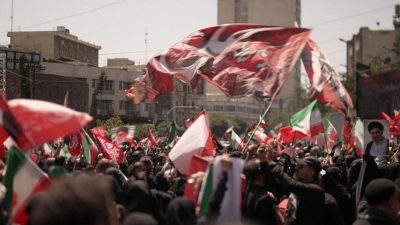
Resistance and revenge – Tehran’s three-day period of public mourning for its slain supreme leader concluded with a grand political display intended to convey a message to the global audience. The procession, featuring the coffins of Ayatollah Ali Khamenei and four of his family members, moved slowly through a 10-kilometer stretch, paused repeatedly by millions of people in one of the most massive gatherings in recent memory. The event was not merely a tribute to the late leader but a carefully orchestrated spectacle meant to underscore themes of defiance and retribution. As the funeral concluded, the nation’s new leadership sought to project an image of unity and resolve, even as economic hardship and public dissent lingered in the background.
A Spectacle of Grief and Determination
The funeral march on Monday was the most symbolic of the week’s ceremonies, designed to reinforce Khamenei’s legacy as a central figure in Iran’s religious and political identity. Aerial footage captured the nation’s capital teeming with loyalists, their faces streaked with tears, chanting the Islamic Republic’s hallmark slogans. “Death to America” and “Death to Israel” echoed through the streets, underscoring the belief that the assassination of Khamenei was not just a personal loss but a calculated attack on Iran’s sovereignty. The imagery of grief was amplified by the presence of religious flags, which symbolized sacrifice and martyrdom, turning the streets into a living testament to the nation’s resolve.
“Tears arise from the pain and sorrow that surges within a person, and the world sees this truth,” declared Iran’s President Masoud Pezeshkian, countering U.S. President Donald Trump’s assertion that the mourning was insincere. His words highlighted the effort to frame the event as a genuine expression of national grief, contrasting with Western perceptions of staged sentiment.
Despite the overwhelming displays of solidarity, some citizens opted to stay away. The aftermath of two conflicts in less than a year, combined with soaring inflation—estimated at 80%—and the unrest of January’s anti-government protests, left many disillusioned. For these individuals, the funeral was a reminder of the costs of war and the suffering of ordinary Iranians. “Of course I’m not going to the funeral,” said one man outside a “mookeb,” a temporary station offering free food and water. “Many people don’t have work and are so unhappy,” he explained, reflecting the growing sentiment that the event’s grandeur overshadowed the realities of daily hardship.
Symbolism in Every Detail
The visual elements of the procession were laden with meaning. A flatbed truck adorned with intricate latticework and Arabic Islamic script transported five caskets, each colored in the green, red, and white of Iran’s flag. The smallest casket, reserved for Khamenei’s 14-month-old granddaughter Zara, was a poignant reminder of the personal toll of the attacks. The Israeli-American air strikes on February 28, which killed the supreme leader and his relatives in the early hours of the conflict, had ignited a wave of anger that the funeral sought to channel.
Red, the color of Khamenei’s casket, dominated the crowds, though black was the traditional attire for mourning. The contrast between the two hues symbolized both the deep sorrow of loss and the fervor for vengeance. Posters in English, prominently displayed for foreign journalists, singled out Donald Trump as the primary target of Iran’s ire. These visuals were part of a broader strategy to align the mourning with global narratives of conflict and retaliation.
“I want to say one sentence to President Trump and the world,” declared Mojtaba, a grey-haired man who approached the BBC with a clear message. “Soon, very soon you will see signs of revenge at the top of the White House, and soon the color of the White House will be the color of my red flag.” His words echoed the sentiments of many, who saw the funeral as a prelude to further actions against the United States.
Legacy and Criticism
While the funeral aimed to elevate Khamenei to a transcendent status, some analysts offered a more nuanced perspective. “The revolution he preserved was for a world which no longer exists,” assessed Karim Sadjadpour, author of *Reading Khamenei: the World View of Iran’s Most Powerful Leader*. His critique pointed to the evolving political landscape, where Khamenei’s ideological vision now faced challenges from a generation weary of prolonged conflict and economic strain.
Iran’s new leaders, who have navigated weeks of war, now face the dual task of maintaining unity and addressing the country’s dire financial situation. The easing of sanctions and the unfreezing of assets remain critical to their survival, yet the funeral served as a reminder of the nation’s broader geopolitical ambitions. “The funeral proceedings are designed to frame him as more than a national leader but a transcendent religious and political figure whose authority extended across the Muslim world,” noted Mohammad Eslami, a research fellow at Tehran University. This narrative aims to solidify Khamenei’s legacy as a unifying symbol for Shia communities beyond Iran’s borders.
Voices in the Crowd
Amid the sea of supporters, the funeral also revealed a spectrum of perspectives. Government loyalists, eager to project a cohesive message, approached foreigners—including what officials claimed were 400 social media influencers—to ask, “Where are you from?” These interactions were often accompanied by appeals for honest reporting, as the regime sought to control the narrative of the event. Yet, even in the throng of fervor, other voices emerged.
Two young Iranian women, dressed in black cloaks typical of female mourners, pulled aside a reporter to share their thoughts. “The real voice of the people isn’t just in the chants,” one whispered. “It’s in the silence of those who can’t afford to attend. They’re tired of war, tired of sanctions, and they’re questioning whether the path of resistance is still the right one.” Their words hinted at a growing divide between the regime’s messaging and the sentiments of the general population, even as the funeral continued to serve as a platform for political theater.
As the ceremonies transitioned to sacred Shia sites, the focus shifted from public displays to spiritual reflection. On Tuesday, the procession would reach Qom, a city revered for its Islamic scholarship, before moving to Najaf and Karbala in Iraq. These locations, steeped in religious significance, were chosen to underscore the global reach of Khamenei’s influence and the interconnectedness of Shia identity. The final burial at the Imam Reza Shrine in Mashhad, the ayatollah’s birthplace, would mark the culmination of a week-long journey to honor a leader whose death has become a catalyst for both mourning and movement.
The funeral’s symbolic weight lies in its ability to transform personal loss into collective purpose. For the regime, it is a chance to reframe the assassination as a rallying point for resistance, a moment to galvanize support and legitimize their ongoing strategies. Yet, for many Iranians, the event also serves as a reminder of the complex legacy Khamenei left behind—one of both triumph and turmoil, of ideological steadfastness and the challenges of a changing world.
