Stand-up comic held for jokes about Erdoğan and Islam in Turkey crackdown
Stand-up comic held for jokes about Erdoğan and Islam in Turkey crackdown
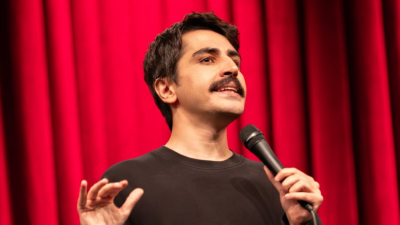
Constantvpn.com – Deniz Göktaş, a prominent figure in Turkish comedy, has been detained by authorities in Istanbul following a performance that garnered over 9.4 million views on YouTube. The comedian, known for his sharp wit and satirical takes on societal issues, was arrested at the city’s main airport after a court ordered his pre-trial detention. His arrest is part of a sweeping campaign against dissent in Turkey, which has targeted activists, journalists, and public figures alike.
Authorities accuse Göktaş of “inciting hatred and hostility” during a stage routine that included critiques of President Recep Tayyip Erdoğan and references to the Quran. This comes amid a series of measures to suppress opposition, including the blocking of social media accounts for several LGBT+ organizations and activists. Over 200 individuals have been detained in the lead-up to the NATO leaders’ summit in Ankara, where Erdoğan will host U.S. President Donald Trump, European counterparts, and Ukraine’s Volodymyr Zelensky.
Tens of thousands of security personnel are deployed for the summit scheduled from July 7 to 8, raising concerns about the scope of the crackdown. Turkish officials have imposed a ban on public demonstrations in Ankara until July 10, while independent media outlets report difficulties in securing accreditation for the event. Despite this, NATO stated it relied on the host nation to ensure access but maintained communication with Turkish authorities throughout the preparations.
Broader implications of the crackdown
The detention of Göktaş is seen as part of a larger trend in Turkey targeting individuals who challenge the government’s narrative. Human Rights Watch has highlighted “far-reaching restrictions on the main political opposition party, the media, and freedom of expression in general.” This includes the arrest of volunteers from the Tema Foundation, one of the country’s leading environmental organizations. The group noted that many of those detained were retirees returning from a nature trip, with most later released.
While Göktaş was taken into custody as he returned to Istanbul from a holiday, the images of him being led away with handcuffs behind his back have sparked public backlash. Supporters gathered outside the Çağlayan courthouse to protest his detention, with chants of “traitor” echoing inside as his former party leader, Kemal Kılıçdaroğlu, arrived. Kılıçdaroğlu criticized the airport arrest, arguing that Göktaş should be freed and his case seen as a political move.
Göktaş, in his statement to prosecutors, denied any intention to offend religious sensibilities. He emphasized that the use of the word “dictator” in his performance was a common topic of discussion in Turkey and not an insult. The comedian also noted that the section in question had been viewed by over 100,000 people, with no complaints received about its content.
The religious affairs directorate of Turkey’s government mentioned Göktaş’s show in its weekly sermon, without naming him, as part of a broader effort to frame the performance as an attack on Islamic values. The top mufti’s office condemned the “occasional mockery of our sacred values under the guise of humor,” claiming it was undermining the nation’s cultural identity. This rhetoric aligns with the government’s efforts to control public discourse ahead of the NATO summit.
Political tensions in Turkey have escalated as the ruling party continues to consolidate power. The arrest of Istanbul Mayor Ekrem Imamoğlu, Erdoğan’s most vocal opponent, has been a key part of this strategy. Imamoğlu, who has been in jail for over a year, faces multiple corruption charges in a trial that began in March. His opposition Republican People’s Party (CHP) has accused the government of orchestrating a “judicial coup” against Turkish democracy.
Recent actions by the judiciary have seen the removal of the CHP’s entire leadership, including chairman Özgür Özel, who was replaced by Kemal Kılıçdaroğlu. This move has drawn criticism from the opposition, as it is perceived as a means to weaken the party’s influence. Göktaş’s arrest has further intensified these concerns, with critics arguing that it reflects a broader effort to silence voices critical of the administration.
The impact of these measures is evident in the public’s reaction. While Göktaş’s supporters gathered outside the courthouse to show solidarity, the government continues to justify its actions as necessary for maintaining order and protecting national values. The case has become a symbol of the challenges faced by those who use humor to critique authority in Turkey.
Context of the NATO summit and political repression
The upcoming NATO summit in Ankara has provided a backdrop for increased surveillance and arrests. With thousands of security forces deployed, the event has become a focal point for the government’s efforts to control dissent. The ban on demonstrations in the capital has raised questions about the balance between security and civil liberties, as activists struggle to voice their concerns.
Göktaş’s performance, recorded at Istanbul’s iconic open-air venue on June 1 and released on June 24, has sparked both praise and criticism. While some view it as a clever critique of Erdoğan’s leadership, others see it as a direct attack on religious values. The comedian’s detention underscores how even popular artists can become targets of the government’s rhetoric.
As the political landscape in Turkey continues to shift, the crackdown on dissent shows no signs of slowing. The government’s use of legal mechanisms to target opposition figures has drawn international attention, with concerns about the erosion of freedom of expression. Göktaş’s case, along with others, highlights the challenges faced by those who dare to challenge the status quo in a climate of heightened political tension.
