The 91-year-old Argentine journalist covering his 18th World Cup

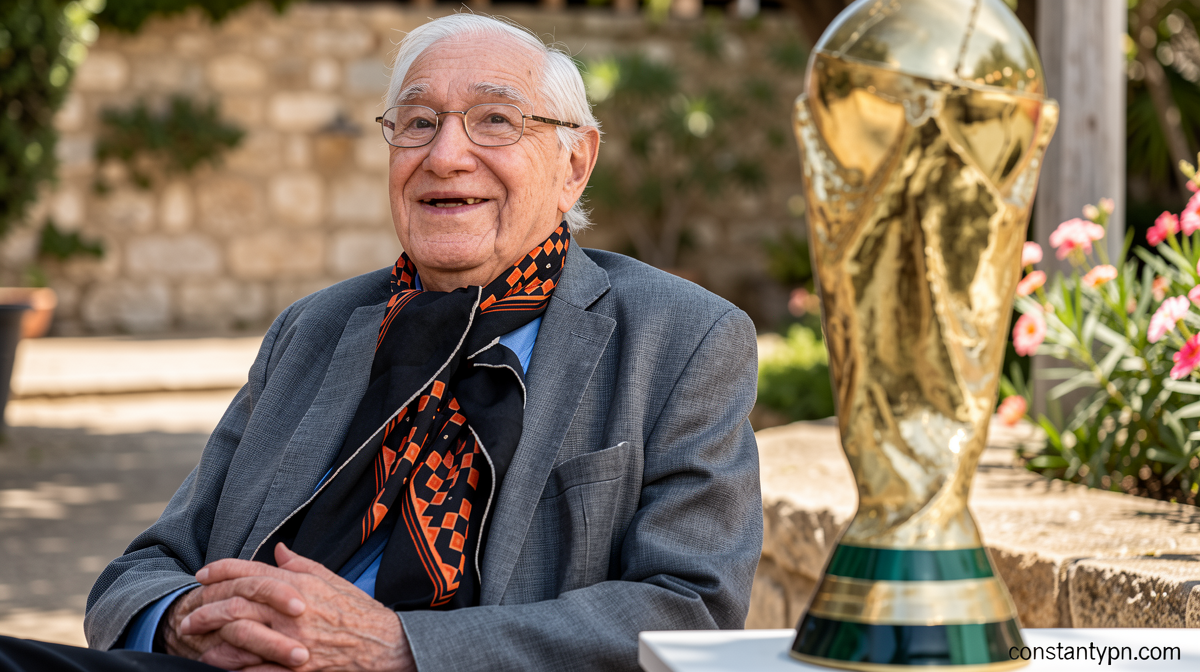
A Century of Football: Enrique Macaya Marquez at His Eighteenth World Cup
Constantvpn.com – Enrique Macaya Marquez has become something of a living legend in Argentine sports journalism. At ninety-one years of age, the veteran broadcaster is preparing to attend yet another FIFA World Cup, marking his eighteenth consecutive tournament since first traveling to Sweden in 1958. His presence at every major football gathering has made him an instant celebrity, with everyone from casual fans to world-class managers seeking his attention for photographs. Even Argentina’s current head coach, Lionel Scaloni, made time to pose with the distinguished journalist following his pre-tournament press conference ahead of the group stage encounter against Jordan.
From Sweden 1958 to Modern Day
When Macaya first arrived in Sweden as a twenty-four-year-old reporter, the footballing world was vastly different from what we know today. His initial assignment involved covering Brazil’s match against Austria, featuring a seventeen-year-old Pele who would go on to become one of the sport’s greatest icons. However, his most vivid early memory centers on what became known as the “Disaster of Sweden” — Argentina’s crushing six-one defeat to Czechoslovakia. Reflecting on that humbling experience decades later, Macaya recalled: “It remains etched in my memory as a tremendous thrashing for the Argentine national football team.” He noted that his team knew virtually nothing about their opponents, lacking both information and data, which left them completely unprepared for the Czechoslovakian challenge.
Witnessing Football’s Transformation
Nearly seven decades of covering the beautiful game have allowed Macaya to observe football’s evolution firsthand. He has reported on legendary figures including Pele, Diego Maradona, and Lionel Messi, watching as the sport transformed from a regional pastime into a global phenomenon. The medium of sports journalism itself has undergone revolutionary changes — television has given way to digital platforms, and statistical analysis has become instantaneous. Yet through all these transformations, one aspect of Macaya’s approach has remained constant: his reluctance to rush to conclusions. This measured philosophy became particularly evident when Scaloni received an unexpected appointment as Argentina’s manager in 2018. “I didn’t have high hopes,” Macaya admitted, explaining that he simply didn’t know the coach at the time. Today, Scaloni has guided Argentina to victory in the Copa America, the Finalissima, and most importantly, the World Cup, transforming what many considered a risky gamble into one of football’s most inspiring success stories.
A Philosophy of Nuance
Macaya’s career has been defined by his belief that proper judgment requires deep understanding. “You can’t pass judgement without a much deeper, more complete understanding of the person being judged,” he explained. This principle extends to his views on football’s greatest players. When asked about his favorite Argentine player, the answer came immediately: “Clearly, it’s Messi.” However, when confronted with the perennial question of who stands as the greatest of all time, his certainty melted away. “That question deserves a smile,” he responded thoughtfully. “There’s no way to measure players throughout history. Times have changed. Opponents have changed. Every player is unique.” He acknowledged that while he could identify players he personally admired, that preference didn’t necessarily equate to historical superiority.
This nuanced perspective became particularly apparent when discussing comparisons between Messi and Maradona. “It is very difficult to make a cold comparison,” Macaya stated. “The opponents were different. The needs were different. The support from their team-mates was different. Each had their own life and their own history.” He applied the same reasoning when comparing Pele’s celebrated 1970 Brazilian side with Maradona’s triumphant 1986 Argentine team. “There is no way to compare them,” he declared firmly. “The style is completely different.”
Memories and the Road Ahead
While victories naturally receive more attention, Macaya emphasizes that defeats hold equal importance in creating lasting memories. “There are many memorable matches,” he observed. “Negative results are also part of that memory.” For an Argentine, however, World Cup triumphs occupy a particularly sacred position. “Winning the World Cup is my favourite memories,” he shared. “And in Maradona’s case, I think the trophy had finally given him the answer he sought his entire life: to be a world champion.”
After nearly seventy years chronicling football’s greatest spectacle, retirement has begun to feel inevitable. “I’m going to retire at some point,” Macaya said with characteristic humor. “I’m retiring now… so I’ll hang up and leave it for another time.” For a man who has dedicated his life to documenting the sport’s history, this gentle farewell seems entirely appropriate. Yet true to his nature, Macaya Marquez’s departure never feels truly final — only postponed.