
White House Opens Probe Into Alleged Missile Strike on Iranian Wedding Ceremony
Constantvpn.com – The United States military has launched an internal review into claims that an American missile struck a family wedding gathering in southern Iran, killing at least four people and wounding dozens more. Vice-President JD Vance confirmed the investigation on Thursday while simultaneously expressing deep doubt about the Iranian account of events, framing the episode as another contested narrative in a conflict that has now stretched past six months.
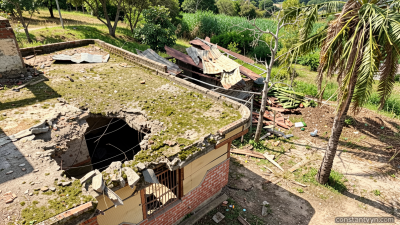
The incident took place on Tuesday at a private residence in Sirik, a town in Iran’s southern province. According to the Iranian Red Crescent Society, a humanitarian organization that coordinates disaster response across the country, shrapnel from a missile landed directly on the celebration. The organization reported that 67 people were injured when fragments tore through the building. At least four guests died at the scene, and a fifth victim — a 22-year-old woman — succumbed to her injuries shortly afterward in hospital.
Names and Ages of the Dead
Local authorities identified the four killed at the ceremony as Zarkhatoon Taheri, aged 50; Kolsum Mallahi Nazhdnia, 43; Mohammad Mallahi, 16; and Amirali Karimi, four. The presence of two children among the dead intensified public outrage in Iran and gave the episode a symbolic weight that transcended ordinary wartime casualties.
Esmaeil Baqaei, spokesman for Iran’s foreign ministry, did not mince words in his immediate reaction, labeling the strike a “war crime” and demanding accountability from Washington. The characterization was designed to frame the incident within international humanitarian law and to rally domestic and regional sympathy for Tehran’s position.
Vance: “Extremely Sceptical”
Speaking at a White House briefing on Thursday, Vice-President Vance acknowledged the investigation but cast wide doubt on the Iranian version of events. He pointed to what he described as a pattern of unreliable reporting from Tehran’s state-run media throughout the conflict.
“I will say that the Iranian state media has not been a very good scribe about what’s happened in the conflict thus far. So I’m extremely sceptical of this,” Vance told reporters. “I know that we’re investigating.”
The tone was deliberate. By coupling skepticism with a confirmed probe, Vance signaled that Washington would not concede the narrative while still appearing responsive to civilian casualties — a balance that reflects the political pressure on the administration as the war grinds on.
US Military Position
A spokesperson for US Central Command, the theater command overseeing operations in the Middle East, stated that American forces “never target civilians.” The missiles in question were fired on the same day as the wedding, in response to what Washington described as “attempted attacks” by Iranian forces on American military personnel. The timing overlap — US strikes and a civilian gathering occurring simultaneously — is precisely what makes the investigation necessary and what makes the Iranian claim plausible enough to warrant scrutiny.
Tehran’s Retaliatory Response
Iran did not wait for the investigation’s outcome. Within hours of the alleged strike, Tehran launched fresh missile and drone attacks aimed at US military installations in Kuwait and the United Arab Emirates, explicitly citing the wedding incident as justification. The retaliatory salvo underscored how quickly a single contested event can escalate into a broader exchange of fire, and it complicated any diplomatic effort to de-escalate the confrontation.
Independent Verification of the Scene
Separate from the official claims of either side, independent verification work examined geolocated video and imagery captured on Tuesday near the coast of Kuhestak. Footage showed a telecommunications tower being destroyed, while additional clips from Tuesday and Wednesday documented severely damaged residential structures situated roughly 130 metres (427 feet) north of that tower. Forensic analysis of the geographic relationship between the tower and the wedding venue placed the structure at approximately 112 metres (367 feet) from the house where the ceremony was underway. The proximity is consistent with a missile impact or near-miss generating shrapnel across a small radius, though it does not by itself confirm which side fired the weapon or whether the strike was intentional, accidental, or the result of a third-party projectile.
Broader Context: A Conflict Past Six Months
The wedding episode is one thread in a far larger tapestry. The current round of hostilities began on 28 February, when the United States and Israel launched a coordinated military operation against Iran. Since that date, the two countries have exchanged strikes across multiple fronts — air defenses, naval assets, ground installations, and now, apparently, civilian spaces. More than half a year of sustained combat has exhausted diplomatic channels, hardened public positions on both sides, and made every new casualty a potential flashpoint.
For families in Sirik and for the wider Iranian public, the question is not whether Washington will investigate but whether the investigation will produce findings that match the grief of those who lost relatives at a celebration meant to mark joy. For American audiences watching from afar, the episode raises the recurring question of how precision-guided munitions interact with dense civilian gatherings, and whether the assurance that forces “never target civilians” holds when the geography of a strike puts a wedding hall within a hundred metres of a destroyed communications tower. The answer, if it comes, will shape the next phase of a conflict that shows no sign of winding down.
Related Reading
Frequently Asked Questions
What is US investigating if missile hit Iran?
US investigating if missile hit Iran is the main topic of this guide. The article explains the context, practical details, and next steps readers should understand.
Why does US investigating if missile hit Iran matter?
US investigating if missile hit Iran matters because readers are looking for a useful answer, not just a short summary. Good content should match search intent and help them decide what to do next.