
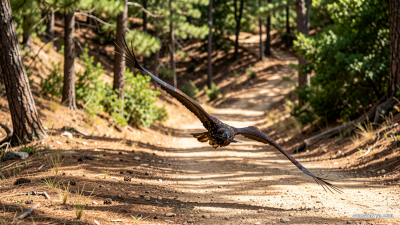
A Broken-Wing Eagle Defies the Odds Over Scotland’s West Coast
Constantvpn.com – Three years after a violent storm tore a young sea eagle from its nest and shattered its wing, the bird has been confirmed alive and airborne above the waters of Scotland’s west coast. The sighting, captured over Loch Spelve on the south-eastern shore of the Isle of Mull, marks a remarkable survival story that conservation biologists had written off as statistically impossible. The male chick, now carrying a permanent angular deformity in one wing where the fractured bone healed crookedly, has earned the informal nickname “Kinky” among those who track the island’s raptor population.
From Storm-Struck Chick to Adult Sky
The sequence of events began in 2023, when a severe weather system battered the Isle of Mull and dislodged a fledgling from its nest. The chick fell, sustaining a serious wing fracture that, by conventional expectations, should have been fatal. Monitors tracking the island’s sea eagle cohort did not anticipate the young male reaching adulthood. Yet the bird not only survived its injury but endured its first winter entirely on its own — a milestone that underscores the species’ hardiness even under compromised physical conditions.
The most recent confirmed image shows Kinky in flight above Loch Spelve, a sea loch indenting Mull’s south-eastern coastline. The kink in the wing is unmistakable in the photograph, a permanent reminder of that storm night. Earlier footage, recorded from a boat in 2024, had already documented the bird’s return to the area, but the latest sighting confirms sustained presence and active flight capability.
An Unprecedented Parental Bond
What made the chick’s early survival possible was an extraordinary display of extended parental care. Both white-tailed eagle parents — unusual in their sustained attentiveness — skipped an entire breeding season to continue feeding and sheltering their year-old offspring. In the wild, white-tailed eagles typically cease provisioning once a chick reaches independence; extending that care by a full year is, by the account of long-term observers, without precedent in the monitored population. The parents’ intervention bought the injured young eagle enough time and nutrition to weather its first winter, after which it was forced to fend for itself.
What Comes Next for a Sub-Adult
Dave Sexton, a retired RSPB officer who has spent more than two decades monitoring sea eagles on the Isle of Mull, called the latest confirmation “incredible” and placed himself squarely in the camp of those who view Kinky as an anomaly of natural resilience.
“I’m in awe of this bird!”
Yet Sexton cautioned that the coming years may prove far more perilous than the first three. As Kinky transitions into what Sexton terms a “sub-adult,” established breeding pairs on the island will no longer regard him as a harmless immature. Territorial aggression from dominant adults can be severe, and a bird flying with a visibly deformed wing may be singled out for repeated harassment or outright displacement.
“He’ll no longer be tolerated as an immature by established adult pairs and might well come in for some ‘you’re not welcome here’ behaviour, which can be pretty severe sometimes. But Kinky’s a born survivor; I’m keeping everything crossed for him.”
The Wider Story: Eagles Reclaimed
Kinky’s individual drama sits atop a century-long narrative of loss and recovery. White-tailed eagles — the species’ common name in British usage — were driven to extinction across the United Kingdom by hunting and habitat pressure. The final native bird was shot in Shetland in 1918, ending an unbroken presence that had spanned millennia. For over half a century, no wild white-tailed eagle flew over British skies.
The turning point came in 1975, when a reintroduction programme began releasing captive-bred birds into Scottish uplands. Decades of careful management, predator control, and public engagement allowed the population to grow beyond the threshold of self-sustainability. By the 1980s, eagles had re-established themselves on the Isle of Mull, where they now nest in numbers that support active conservation monitoring. The species’ recovery in Scotland is regarded as one of the country’s most successful large-raptor reintroductions.
Within that broader success, Kinky represents something rarer still: an individual whose survival defied the expected outcome of a catastrophic early-life injury. The bird’s crooked wing will never straighten, and its flight silhouette will always read as asymmetric. Yet the fact that it soars at all — three winters after the storm, alone, over open sea loch — speaks to a tenacity that no population-level statistic can capture. For the small team of observers who have watched this one eagle since its first days, the sighting is less a data point than a vindication of patience, vigilance, and the stubborn unpredictability of wild life.
Related Reading
Frequently Asked Questions
What is Miracle eagle with broken wing spotted?
Miracle eagle with broken wing spotted is the main topic of this guide. The article explains the context, practical details, and next steps readers should understand.
Why does Miracle eagle with broken wing spotted matter?
Miracle eagle with broken wing spotted matters because readers are looking for a useful answer, not just a short summary. Good content should match search intent and help them decide what to do next.