UN nuclear chief says inspectors will visit Iran sites as part of war deal

UN Nuclear Chief Confirms IAEA Inspections in Iran Amid Preliminary Peace Talks
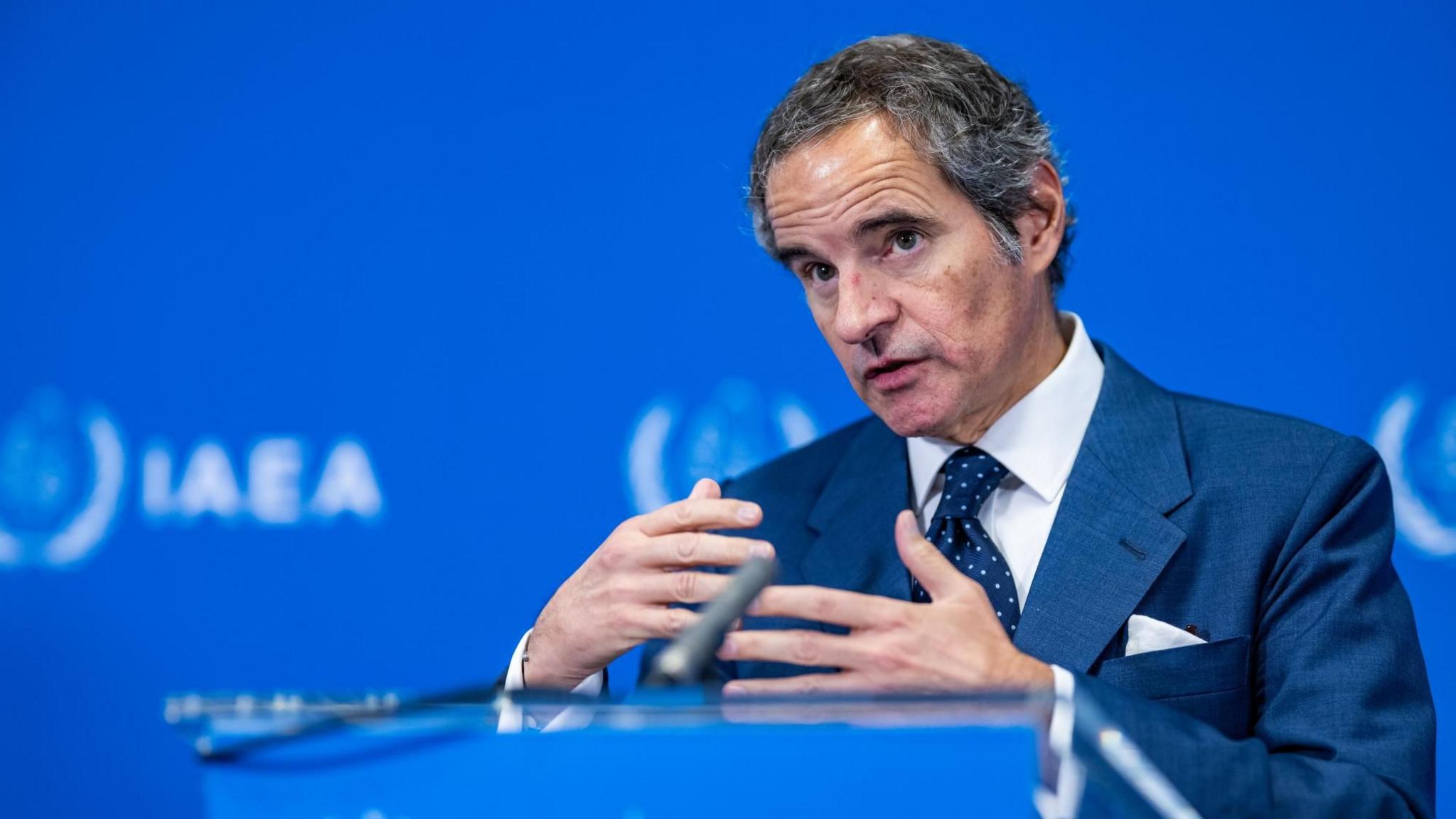
Constantvpn.com – The head of the International Atomic Energy Agency (IAEA), Rafael Grossi, has confirmed that the organization will conduct inspections at Iran’s nuclear sites as part of a tentative agreement between the United States and Iran. Speaking in Japan, Grossi emphasized that the IAEA is finalizing the details of these inspections, including the timing, procedures, and locations, with the goal of implementing them shortly. This development comes after a series of high-stakes negotiations that have seen both sides making concessions to revive the stalled agreement.
Agreement Framework and IAEA Role
According to the recent agreement, Iran has committed to allowing the dilution of its enriched uranium under IAEA supervision. Grossi reiterated that this process would be “explicitly” outlined in the terms of the deal, which he described as a critical step toward ensuring transparency in Iran’s nuclear activities. The IAEA’s involvement is designed to verify that Iran adheres to its commitments, particularly regarding the reduction of its nuclear stockpile.
“The inspections will indeed take place,” said Grossi. “We will be working on the modalities—dates, procedures, places—very soon.”
Despite this progress, Iran’s Deputy Foreign Minister, Kazem Gharibabadi, has expressed reservations, stating that access to damaged nuclear facilities and materials will only be fully addressed in the final phase of the negotiations. He argued that the current agreement is not binding on these specific points and that the US must first lift all sanctions before the IAEA can gain unrestricted access.
US Diplomatic Efforts and Regional Security Concerns
As part of the broader diplomatic initiative, US Secretary of State Marco Rubio engaged in discussions with UAE President Mohamed bin Zayed Al Nahyan before heading to Kuwait and Bahrain. During a press conference in Kuwait City, Rubio emphasized the US’s commitment to aligning with Gulf allies, ensuring that any deal with Iran does not compromise the security of regional partners. “We’re going to be completely aligned with our partners in the Gulf,” he stated. “If Iran wants to make a good and real deal, the United States is open to that. If they’re not, then of course the president has options.”
Rubio also hinted at the possibility of further negotiations, noting that the parties are likely to meet again in Switzerland before the end of the month. The ongoing talks aim to bridge differences while maintaining momentum toward a comprehensive resolution. However, the process has been marked by competing claims, with both sides asserting their position on the extent of IAEA access.
Strait of Hormuz and Economic Implications
A separate development highlighted the economic dimension of the peace deal. The price of Brent crude oil dropped below $75 (£57) for the first time since the US-Israeli conflict with Iran began in June 2025. This decline reflects market confidence in the potential easing of tensions, particularly as the agreement includes provisions for Iran to permit unimpeded shipping through the Strait of Hormuz. The UN reported that some vessels have already traversed the strait under a temporary scheme to evacuate sailors stranded by the conflict, signaling a cautious step toward stability.
While the agreement outlines Iran’s agreement to allow inspections, it also includes a conditional clause: the US will lift its naval blockade on Iranian ports in exchange for Iran’s cooperation in facilitating maritime traffic. This mutual understanding underscores the interdependence of economic and security interests in the negotiations.
Dispute Over Inspection Scope
Recent days have seen a back-and-forth between the US and Iran regarding the specifics of the IAEA’s access to nuclear sites. On Monday, US Vice President JD Vance stated that Iran had “agreed to invite IAEA inspectors back into their country,” marking a significant breakthrough. However, the following day, an Iranian foreign ministry spokesman clarified that no detailed discussions had occurred yet, and the country remains hesitant to grant inspectors full access to facilities bombed during the 12-day conflict in June 2025.
“There’s a war or words here. Some say ‘yes,’ the others say ‘no,’” Grossi remarked on Wednesday, acknowledging the political nature of the dispute. “I can understand political statements. They are part of the reality.”
Gharibabadi further challenged the IAEA’s authority, tweeting that access to Iran’s nuclear materials and sites would only be determined after the final agreement is reached and sanctions are fully lifted. He criticized the use of media narratives to create the impression of progress, insisting that tangible steps are necessary before any commitments are solidified.
Memorandum of Understanding and Timeline
The 14-point memorandum of understanding signed by both US and Iranian presidents sets a clear timeline for finalizing the deal. It stipulates that negotiations must conclude within 60 days, with a focus on resolving the disposition of Iran’s stockpiled enriched uranium. The document emphasizes a mutual agreement on a mechanism for down-blending the material on-site, supervised by the IAEA. This framework is intended to balance Iran’s nuclear ambitions with international security concerns.
Grossi highlighted the IAEA’s role in verifying Iran’s compliance, stating that the inspections will be conducted in collaboration with the Iranian government. While he acknowledged that the timing of the inspections is flexible—ranging from immediate implementation to a week or ten days later—he stressed that the IAEA’s involvement is essential to the deal’s credibility. The organization’s recent visit to the Bushehr nuclear power plant, as noted in a statement, marks a practical step in this process.
As the negotiations progress, the focus remains on reconciling Iran’s sovereignty over its nuclear program with the need for international oversight. The conflicting statements from US and Iranian officials reflect the complexity of the agreement, which seeks to address both nuclear proliferation concerns and regional security dynamics. With the deadline approaching, the success of these talks will hinge on finding common ground while maintaining the integrity of the IAEA’s supervisory role.
The ongoing dialogue underscores the significance of the agreement in reshaping the geopolitical landscape. If finalized, it could pave the way for a more stable relationship between the US and Iran, potentially easing tensions in the Middle East. However, the path to resolution remains fraught with challenges, requiring careful navigation of political and technical hurdles. The IAEA’s inspections, once implemented, will serve as a critical indicator of the deal’s progress and Iran’s willingness to cooperate with international standards.