Former Olympian indicted for allegedly vandalising Washington Reflecting Pool
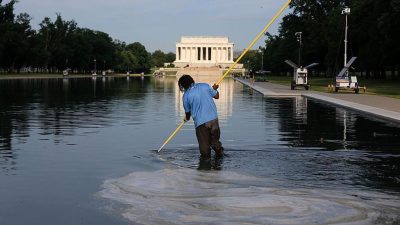
Former Olympian Indicted for Alleged Vandalism at Lincoln Memorial Reflecting Pool
Constantvpn.com – A retired American Olympic athlete has been formally charged with damaging the Lincoln Memorial Reflecting Pool, an iconic landmark in Washington, DC. The indictment follows an incident reported on June 19, 2026, during which David “Davey” Hearn, 67, a three-time Olympic canoeist, was observed interacting with the water after a lengthy bike ride. Authorities allege that Hearn intentionally removed a section of the newly applied sealant on the pool’s surface, causing approximately $1,000 in property damage. US Attorney Jeanine Pirro announced the charges at a press conference, stating the act was “a deliberate attempt to harm the National Mall’s restored reflection pool.”
Renovation Efforts and Emerging Issues
Despite a $14 million renovation project completed in the spring of 2026, the Reflecting Pool has faced ongoing challenges. Within days of being refilled, the water became murky with algae, and the sealant on its bottom began peeling. The National Park Service had worked tirelessly to restore the pool, which stretches 2,030 feet (619 meters) between the Lincoln Memorial and the Washington Monument, a site symbolizing American history and public gatherings. However, these maintenance issues have sparked controversy, with some questioning whether the pool’s condition was due to natural wear or human interference.
The indictment centers on the June 19 incident, which officials claim involved Hearn physically tearing the sealant. According to Pirro, the act was not accidental but a targeted effort to damage the pool. “This was a deliberate act to harm the reflecting pool,” she emphasized, highlighting the significance of the National Park Service’s restoration work. Hearn, however, disputes the allegations, asserting that he only touched existing damage and was merely curious about the pool’s state. He described the situation as a “capricious prosecution” and claimed he “did not destroy, rip, tear, peel, or remove any part” of the paint.
Trump’s Reaction to the Vandalism
President Donald Trump took to social media on June 20 to condemn the vandalism, calling it “seriously vandalized” and vowing immediate action to repair it. In a statement, he expressed astonishment at the incident, asking,
“Who would do such a thing? SICK, DERANGED PEOPLE!”
His remarks underscored a broader frustration with what he perceived as a coordinated effort to undermine public spaces. The pool, which has long struggled with leaks, structural weaknesses, and pipe failures, now faces a new wave of criticism following the alleged act.
Hearn’s arrest occurred as he completed a long bike ride near the pool, where he was detained by park officers. While he maintained his innocence, the authorities’ report suggests he was seen reaching into the water, a detail that led to his indictment. The US Park Police confirmed that five individuals have been arrested in connection with the incident, alongside five others who received federal citations for similar offenses. This highlights the scale of the problem, with multiple suspects involved in the damage.
Public and Political Backlash
The allegations against Hearn have ignited a debate about accountability and the state of public infrastructure. Some argue that the pool’s frequent maintenance issues make it a target for frustration, while others see the incident as evidence of a deliberate attack on national symbols. The National Park Service has faced years of criticism for its inability to fully address the pool’s structural problems, which include leaks, algae growth, and bird droppings. Hearn’s case adds another layer to this controversy, with his Olympic status drawing attention to the potential for high-profile individuals to be implicated in such incidents.
Meanwhile, the political climate has amplified the incident’s visibility. Trump’s swift condemnation of the vandalism aligns with his pattern of criticizing environmental and maintenance efforts, often framing them as failures of leadership. His focus on the pool’s condition as a reflection of national pride has resonated with supporters, though critics question whether the damage was exaggerated for political gain. The pool’s restoration, which cost millions, was intended to enhance its appearance and functionality, yet the recent events have cast doubt on its long-term stability.
Historical Context and Future Concerns
Constructed in the 1920s, the Lincoln Memorial Reflecting Pool has been a focal point for visitors and politicians alike, serving as a backdrop for historic speeches and events. Its recent renovation was meant to address decades of neglect, but the vandalism has raised concerns about the sustainability of these efforts. Environmental factors, such as algae blooms, combined with human activity, have created a perfect storm of challenges for the site. Hearn’s alleged actions, while seemingly minor, have become a symbol of the broader issues facing public spaces in the nation’s capital.
As the legal process unfolds, Hearn’s case will likely be scrutinized for its implications on both individual accountability and the politicization of public infrastructure. The $1,000 damage, while not catastrophic, represents a tangible loss for a site that is a cornerstone of American heritage. Meanwhile, the National Park Service faces the daunting task of repairing the pool and restoring public confidence in its ability to maintain such a historic location. The incident also serves as a reminder of the delicate balance between preserving landmarks and addressing the wear and tear they inevitably endure.
The public’s reaction to the vandalism has been mixed. While some view Hearn as a scapegoat for systemic issues, others believe his actions, however small, are emblematic of a larger problem. The pool’s condition has been a point of contention for years, and the recent damage has reignited discussions about the need for more robust maintenance plans. As the trial progresses, the case will not only determine Hearn’s fate but also shed light on the intersection of personal conduct, public policy, and the cultural significance of American landmarks.
With the pool’s restoration work under threat, questions remain about how to prevent similar incidents in the future. Whether the damage was an isolated act or part of a coordinated effort, the episode underscores the vulnerability of even well-maintained sites to human error and intentional sabotage. As authorities investigate further, the case will continue to spark conversations about the responsibilities of individuals and institutions in safeguarding national treasures.
