Category: News

Be in the know with our curated selection of fresh news updates.

  • Pubs and hotels could see business rates reformed after review

    Pubs and hotels could see business rates reformed after review

    England and Wales Pubs Face a Landmark Overhaul of How Their Rates Bills Are Calculated

    Constantvpn.com – The Treasury has confirmed that a formal inquiry into the valuation methodology behind business rates for pubs and hotels across England and Wales is now underway. The move, which could reshape how tens of thousands of hospitality premises are assessed for tax purposes, represents the most significant intervention in the rates framework since the post-pandemic discount era began winding down. A report is expected by March 2027, and the government has explicitly invited input from landlords, hotel operators, and independent business owners during the consultation window.

    Who Leads the Inquiry and What It Covers

    Jerry Schurder, previously the business rates policy lead at advisory firm Newmark UK, has been appointed to steer the review. His mandate centres on how rateable values are assigned to hospitality properties — a question that has generated sustained industry frustration for years. Findings from his work will feed directly into the next full rates revaluation scheduled for 2029, meaning the practical impact of any recommendations will land on bills roughly two years after the report is published.

    James Murray, the Treasury’s financial secretary, framed the exercise as a structural correction rather than a one-off concession:

    “A rethink of valuations — so that we can build a fairer system for the future.”

    The Valuation Problem: Why Pubs Are Treated Differently

    The core grievance among pub operators is that their premises are assessed under a fundamentally different logic than retail or office space. Where a shop or warehouse is valued primarily on floor area, a pub’s rateable value is derived from a metric called Fair Maintainable Trade. In practical terms, this means that if a pub’s turnover rises — perhaps through a successful events programme or a change in management — its rates bill climbs in tandem, regardless of whether the physical footprint of the building has changed. Industry bodies have long argued that this creates a perverse incentive structure and exposes hospitality businesses to tax volatility that their fixed-cost competitors do not face.

    A Sector Under Severe Pressure

    The urgency of the reform debate is underscored by closure data. The British Beer and Pub Association (BBPA) reports that 161 pubs shut their doors during the first quarter of this year across England, Scotland, and Wales — a loss the group equates to roughly 2,400 jobs. While rising rates bills are cited as a contributing factor, operators also point to increases in National Insurance contributions and the minimum wage as compounding pressures on staffing costs.

    Emma McClarkin, chief executive of the BBPA, described the cumulative effect in blunt terms:

    “For years pubs have paid a disproportionately higher business rates bill which has ground down their ability to keep the doors open, so this review is sorely needed and hugely welcome.”

    Recent Policy Shifts and the Road to the Current Discount

    The political trajectory leading to today’s review has been turbulent. Under the previous chancellor, Rachel Reeves, the government signalled its intention to phase out the pandemic-era business rate discounts entirely, with no relief remaining from April of this year. That announcement coincided with substantial upward adjustments to the rateable values of pub premises, leaving landlords facing sharply higher bills almost overnight.

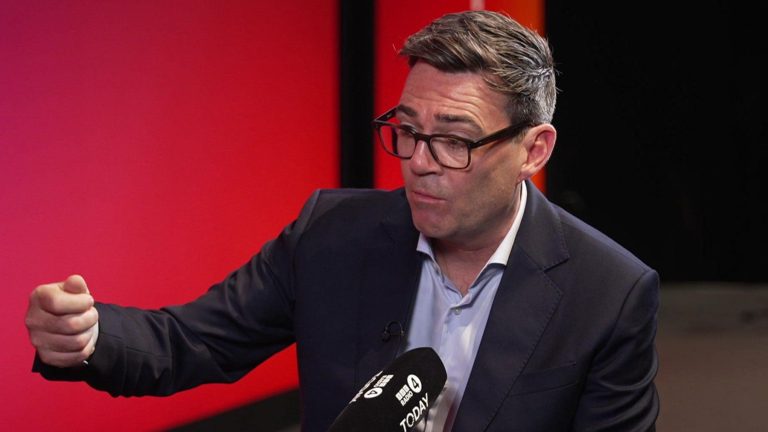
    After sustained pushback from the hospitality sector, the government reversed course earlier in 2026, introducing a 15% rates cut for pubs and music venues. In July, Andy Burnham then announced a further 20% reduction for pubs, social clubs, and live music venues in England, effective from April. The two measures stack: the 20% discount operates on top of the existing 15% support. However, the government specified that the relief would not extend to the “very largest” live music venues, and some operators reported confusion over whether their premises would qualify as a “pub” under the eligibility criteria. Full clarification on which businesses are covered is expected to appear in Chancellor John Healey’s first Budget later this autumn.

    Reactions Across the Business and Political Spectrum

    Craig Beaumont of the Federation of Small Businesses welcomed Schurder’s appointment, noting he would bring “crucial heavyweight business rates expertise into the Treasury.” At the same time, Beaumont urged the government to go beyond hospitality-specific fixes and address the wider rates architecture, including raising the small-business rates relief threshold so that more micro-enterprises fall outside the system entirely.

    Tom Ironside of the British Retail Consortium also supported the review but cautioned that “it is vitally important that the needs of retailers are not overlooked” in any subsequent reform package.

    From the opposition benches, the tone was sharper. Shadow Chancellor Sir Mel Stride dismissed the timing:

    “Far too late for a sector this Labour government has already done its best to kill off. Tax hikes on business premises and jobs, alongside job-destroying regulation in the Employment Rights Act, have left many hospitality businesses on the brink.”

    Daisy Cooper, the Liberal Democrat Treasury spokesperson, called rates reform “long overdue” but paired that endorsement with demands for an emergency VAT reduction and a reversal of recent jobs-tax changes, which she described as having “hammered hospitality in particular.”

    What Comes Next

    The review’s output will land in March 2027, giving Parliament and industry roughly eighteen months to digest recommendations before the 2029 revaluation cycle. For pub owners watching the closure statistics climb, that timeline is both a reason for cautious optimism and a reminder that the next two years of operating decisions will be made under the current, contested valuation rules. The autumn Budget will be the immediate next milestone, where eligibility boundaries for the stacked discounts are expected to be drawn with greater precision.

    Frequently Asked Questions

    What is Pubs and hotels could see business?

    Pubs and hotels could see business is the main topic of this guide. The article explains the context, practical details, and next steps readers should understand.

    Why does Pubs and hotels could see business matter?

    Pubs and hotels could see business matters because readers are looking for a useful answer, not just a short summary. Good content should match search intent and help them decide what to do next.

  • Australian shark attack victim grateful for ‘second chance at life’

    Australian shark attack victim grateful for ‘second chance at life’

    Shark Attack Survivor Leah Stewart Speaks Out: “I’ve Been Given a Second Chance at Life”

    Constantvpn.com – A Sydney mother who lost an arm and endured months of agonising surgery after being mauled by a shark at one of Australia’s most frequented beaches has broken her silence, telling supporters she intends to make the most of what remains. Leah Stewart, 34, posted her first public remarks since the June incident at Coogee Beach, where she was struck multiple times on her arms and legs during a routine morning swim. The update, shared online on Monday, marks the first time she has addressed the public since being pulled from the water in a critical condition.

    Stewart described the months following the attack as “incredibly difficult,” yet insisted her recovery has been “remarkable.” She credited an outpouring of global support — from family, friends, and complete strangers — for sustaining her through what she called the darkest stretch of her life.

    “After what has been an incredibly difficult few months, I’m so happy that I’ve progressed enough to build some independence, and I can finally see some light after all of this,” Stewart wrote.

    “I want you to know that I feel like I’ve been given a second chance at life, and I’m not going to waste it.”

    A Fundraiser That Changed Everything

    The community response to Stewart’s injuries was swift and enormous. An online fundraising campaign gathered more than AU$550,000 (approximately US$394,000 or £289,000) for her medical and rehabilitation needs. In her post, she announced the fundraiser would now be closed, explaining that the sum would allow her to continue recovering at home and preserve “options for further medical treatment down the road.”

    Stewart said the generosity of strangers had “overwhelmed” her and that their encouragement had inspired her “to get better, not bitter.” She described the wave of love, prayers, and encouragement surrounding her family as an “absolute army” that played a “huge part” in her progress.

    “I still have a long way to go, but my recovery has been remarkable, and a huge part of that is because of the absolute army of love, support, prayers and encouragement surrounding my family and I from all over the world.”

    The Moment She Will Never Forget

    In a separate interview with Nine Network’s 60 Minutes programme, scheduled to air that weekend, Stewart recounted the seconds of terror as the shark latched onto her leg. She described seeing the animal’s face up close and called it “horrific.”

    “I’ll never forget its face — it was a monster,” she said. “It was holding onto my leg and I just thought of (my daughter) August, and I thought, ‘she’s not going to have a mum. She’s gonna grow up without a mum.’”

    Fighting back tears on camera, Stewart added that the thought of leaving her daughter without a mother was something she could not accept.

    “I couldn’t handle that, I didn’t want her to not have a mum. I just thought, I’ve got to fight it, do everything I can to be here.”

    A Year of Unprecedented Danger in Australian Waters

    Stewart’s ordeal unfolded against a backdrop of escalating shark activity along the Australian coastline. Earlier in the year, four separate attacks occurred within a single 48-hour window in January, one of which claimed the life of a 12-year-old boy. The cluster of incidents reignited a long-running national debate over the use of controversial shark-netting programmes and other mitigation strategies.

    The toll continued into spring. In May, a man was killed while spearfishing off the Queensland coast. Separately, in Western Australia, a father of two died after being struck by a shark estimated at roughly 4 metres (13 feet) in length. Each fatality intensified public scrutiny of how coastal communities balance recreational ocean access with predator management.

    Coogee Beach itself sits on Sydney’s eastern seaboard, a stretch of sand and rock that draws thousands of swimmers, surfers, and paddle-boarders daily. Its proximity to the city’s inner suburbs makes it one of the most heavily used public beaches in New South Wales, and its popularity means that even a single incident there sends shockwaves through the local community.

    What Comes Next

    Stewart’s medical journey is far from over. The amputation of one arm, combined with multiple deep lacerations to both legs, means she faces an extended programme of physiotherapy, prosthetic fitting, and psychological rehabilitation. Her stated goal — rebuilding enough independence to manage daily life and, ultimately, to be present for her daughter August — will require sustained effort over months, if not years.

    Yet her tone in both the online post and the television interview carries a determination that has resonated widely. For a woman who, just weeks earlier, was lying in an induced coma after surgeons worked through the night repairing her injuries, the shift from helplessness to agency represents what she frames not as a victory, but as a responsibility: a second chance she refuses to squander.

    Frequently Asked Questions

    What is Australian shark attack victim grateful for second?

    Australian shark attack victim grateful for second is the main topic of this guide. The article explains the context, practical details, and next steps readers should understand.

    Why does Australian shark attack victim grateful for second matter?

    Australian shark attack victim grateful for second matters because readers are looking for a useful answer, not just a short summary. Good content should match search intent and help them decide what to do next.

  • Reform says it will prioritise British-born young workers for social housing

    Reform says it will prioritise British-born young workers for social housing

    Reform UK to Place British-Born Young Workers First in Social Housing Queue

    Constantvpn.com – Reform UK has confirmed that, should it secure a governing mandate, British-born workers aged under 35 will sit at the front of the queue for social housing allocation. The announcement, set to be detailed by deputy leader Richard Tice at a Monday press conference, forms part of a broader package that includes a pledge to construct 50,000 affordable social homes annually — a figure the party insists can be financed without introducing new taxes or additional public borrowing.

    The prioritisation list extends beyond young domestic workers. Former members of the armed forces and married couples raising children will also receive preferential treatment under the proposed framework, according to party statements released ahead of the briefing.

    The Numbers Behind the Policy

    The English Housing Survey for 2024/25 recorded that 88.5% of principal householders in social homes were UK or Irish nationals. That leaves roughly 11.5% of tenanted households headed by non-UK or non-Irish citizens. Reform, however, frames the issue far more sharply: the party estimates that 540,000 social homes are currently occupied by foreign nationals, a figure it intends to reverse through its proposed eviction and reprioritisation measures.

    The party has also signalled its intention to abolish indefinite leave to remain for migrants, a move that would tighten the residency status of long-settled non-citizens and, in Reform’s framing, free up additional units for domestic applicants. Nigel Farage has separately vowed to bar foreign nationals entirely from social housing stock.

    Tice’s Case: Breaking Barriers, Building Homes

    Speaking on Sunday ahead of the formal announcement, Tice positioned himself as a practitioner rather than a theorist.

    “It is time for us to prioritise young British workers, and that is what our policy is about,” Tice said. “I have spent my entire career in property development, as a private citizen I have led companies which delivered thousands of new homes. In government I will break down the barriers to getting generation rent onto the housing ladder.”

    He framed the plan as a matter of national momentum, calling it “time to get Britain building” and insisting the policy exists to give “our young people the homes they deserve.” The Monday briefing will, the party added, lay out the specific financing mechanisms behind the 50,000-unit annual target.

    Labour: “Unserious and Unworkable”

    The governing Labour Party moved quickly to dismiss the proposal. A spokesperson labelled the plans “unserious and unworkable” and accused Reform of pushing “gimmicks and division” through measures that “go after long-term UK residents that have contributed to our country.”

    The Labour line stressed that social housing allocation is already “tightly controlled,” noting that illegal migrants, asylum seekers, and holders of student or work visas are not eligible for council tenancies. The spokesperson warned that Reform’s approach would target settled non-citizens — including NHS staff who have lived and worked in Britain for years — and would leave more families exposed to homelessness while driving up reliance on temporary accommodation at taxpayer cost. The spokesperson also flagged that the plan would trigger renegotiations with the EU, “resulting in years of wrangling.”

    Conservatives Claim They Moved First

    The Conservative Party, which has its own proposal to strip foreign nationals of social housing rights, characterised Reform’s announcement as an attempt to “catch up” with policies already tabled. The Tories’ version would permit Irish citizens and certain EU nationals to remain in social housing while freeing up approximately 230,000 units for British applicants.

    “The Conservatives have already set out comprehensive plans to ensure British nationals are at the front of the queue for social housing. Now Reform are trying to catch up,” said Sir James Cleverly, shadow housing secretary. “We also believe in a home owning society and that those who work hard should be able to buy their own home, without unnecessary barriers standing in their way.”

    Liberal Democrats and Housing Charities Push Back

    Gideon Amos, Liberal Democrat spokesperson, described the Reform plan as a “cruel gimmick,” aligning with a broader cross-party scepticism about whether reshuffling the allocation queue addresses the underlying shortage of units.

    Housing charity Shelter had previously criticised the eviction element of Reform’s programme, arguing that the solution lies in building more homes rather than “changing the order of the queue” and “stoking division.” The charity’s position underscores a recurring debate in UK housing policy: whether the crisis is one of supply, of allocation, or of both simultaneously.

    Why the Queue Question Matters

    Social housing in England operates under local authority allocation schemes, typically weighted by need, waiting time, and local ties. Introducing a nationality or birthplace criterion at the top of that weighting would represent a significant departure from existing practice and would interact with equality legislation, immigration law, and bilateral agreements with the EU and other jurisdictions. The scale of the change — potentially affecting hundreds of thousands of tenancies, as Reform’s own 540,000 figure suggests — means any implementation would require primary legislation and, depending on the precise design, could face judicial challenge.

    The 50,000-unit annual construction pledge, meanwhile, sits well above current delivery rates. England built roughly 200,000 homes of all types in the most recent complete year, of which a fraction were social or affordable. Scaling the social segment to 50,000 per year would require substantial increases in land assembly, planning throughput, and construction labour — challenges that Tice’s Monday briefing will need to address if the plan is to move beyond aspiration.

    Frequently Asked Questions

    What is Reform says it will prioritise British?

    Reform says it will prioritise British is the main topic of this guide. The article explains the context, practical details, and next steps readers should understand.

    Why does Reform says it will prioritise British matter?

    Reform says it will prioritise British matters because readers are looking for a useful answer, not just a short summary. Good content should match search intent and help them decide what to do next.

  • Divorce, smartphones and control – BBC sees how Taliban run Afghanistan

    Divorce, smartphones and control – BBC sees how Taliban run Afghanistan

    Inside the Taliban’s Northern Courts: A Divorce Petition Exposes the Machinery of Control

    Constantvpn.com – In the offices of Sheberghan city, capital of Jawzjan province in northern Afghanistan, an eighteen-year-old woman stands before the provincial governor and demands her freedom from a marriage she says has been defined by months of physical abuse. Her face is entirely concealed behind a full-face veil and dark sunglasses. Her voice, however, is steady. She has made up her mind, and no amount of persuasion from the grey-bearded former Taliban commander seated across from her will alter that decision.

    The scene, captured over two years of embedded reporting by the BBC, offers an unfiltered window into how the Taliban govern at the local level — five years after they toppled the US-backed government in August 2021 and restored what they call an Islamic emirate. What unfolds in that Jawzjan office is not merely a family dispute. It is a microcosm of a system in which women have been systematically stripped of education, employment, mobility, and legal autonomy.

    The Petitioner and the Governor

    The woman, identified only as Tuba to protect her privacy, accuses her husband of sustained beatings. Under the Taliban’s interpretation of Sharia, a wife seeking divorce must typically return some or all of the financial gifts her husband provided at the time of marriage. A settlement is negotiated. In Tuba’s case, her husband demands four times the customary amount. Her family refuses.

    Governor Abdullah Sarhadi, who once commanded Taliban forces during the movement’s first period of rule in the 1990s, attempts to talk her out of the petition. He urges compromise, warning that a divorced woman will find remarriage difficult and that her social standing will suffer.

    “Ask yourself: ‘Who would marry me after I get my divorce?’ You’ll have to compromise a lot or you’ll lose your dignity and honour.”

    Tuba’s reply is immediate and unflinching:

    “Mr Governor, my honour and dignity have already been ruined.”

    Her husband, seated nearby, waits his turn to speak. The governor ultimately instructs that the woman be given her own room and that officials will warn the husband not to strike her again — adding that failure to comply would result in his being jailed. Tuba’s father, dissatisfied with the outcome, later states the family intends to pursue the divorce through the formal court system, despite the well-known difficulty women face in obtaining a divorce without their husband’s consent under the Taliban’s judiciary.

    A Governor’s Past and Present

    Sarhadi’s biography is itself a compressed history of the conflict. During the Taliban’s first rule in the 1990s, he served as a military commander in Bamiyan province — the same province home to the colossal ancient Buddha statues that the Taliban dynamited in 2001, provoking global outrage. When the US-led coalition invaded in late 2001, Sarhadi was among thousands of insurgents who surrendered. He spent several years in US detention at Guantanamo Bay before eventual release.

    Upon the Taliban’s return to power in 2021, he was appointed governor of Bamiyan and subsequently of Jawzjan. By the time of the late-June encounter described here, he had also taken on the role of deputy commander of a military corps in the northern province of Kunduz.

    After the divorce exchange, Sarhadi makes a remark that draws laughter from the male officials, bodyguards, and village elders gathered in the room: he describes women as “mindless” and “deficient in intellect.” The comment lands without correction or rebuke.

    Smartphones, Statues, and the Question of Change

    Later in the same office, Sarhadi taps an old-style mobile phone with a tiny screen and complains that a recent Taliban ban on smartphones for officials has slowed administrative work. He recalls being able to send quick messages, transmit documents, and receive answers rapidly. If he says anything further about the ban, he notes, “it will cause trouble.”

    Asked about the destruction of the Bamiyan Buddhas — an act that defined the Taliban’s first era for much of the world — Sarhadi initially deflects. Eventually he acknowledges responsibility, stating plainly that he destroyed the statues. His worldview, in other respects, appears largely continuous with the hard-line reading of Islamic religious law the movement imposed in the 1990s.

    Five Years of Exclusion

    The divorce petition is one thread in a broader pattern. Since 2021, Afghan women have been barred from secondary schools, excluded from most workplaces, denied university access, prohibited from travelling alone, and kept from parks and leisure centres. The BBC’s two-year reporting effort, which included time spent with men who once planned suicide attacks or lived for years in underground hideouts before becoming officials and soldiers, found a consistent tension: these men wished to project reasonableness yet showed little appetite for discussing the violence of their past. Unease between rulers and ruled surfaced repeatedly.

    Afghan women interviewed over the same period describe lives rendered unrecognisable by five years of Taliban governance. The eighteen-year-old in the Jawzjan office, veiled and sunglasses-shielded, arguing calmly for her own body and her own future, embodies both the constraint and the quiet defiance that now define daily existence under the movement’s rule.

    Frequently Asked Questions

    What is Divorce smartphones and control?

    Divorce smartphones and control is the main topic of this guide. The article explains the context, practical details, and next steps readers should understand.

    Why does Divorce smartphones and control matter?

    Divorce smartphones and control matters because readers are looking for a useful answer, not just a short summary. Good content should match search intent and help them decide what to do next.

  • Nearly three million Teslas recalled in China over hidden door handles

    Nearly three million Teslas recalled in China over hidden door handles

    China’s Largest-Ever Automotive Recall Targets a Design Choice Once Celebrated as the Future of Electric Cars

    Constantvpn.com – More than four million vehicles across China are being pulled from the road in what regulators describe as the country’s biggest single-vehicle recall to date. At the heart of the action sits a design element that electric-vehicle makers once touted as a symbol of sophistication: the flush-mounted, retractable door handle. Nearly three million of the affected units are Teslas manufactured domestically, while the remainder belong to Chinese brands XPeng, Xiaomi, and Geely.

    The trigger for the recall is straightforward yet alarming. In a crash severe enough to knock out the vehicle’s low-voltage electrical system, the powered handles fail to deploy. Occupants and first responders then face doors whose release points are nearly invisible against the surrounding trim, making rapid evacuation or rescue extraordinarily difficult.

    How a Styling Choice Became a Safety Crisis

    The flush-handle concept gained mainstream visibility through Tesla’s Model S sedan, which debuted the look in 2014. The handles sit flush with the door panel and spring outward only when the owner’s key fob or smartphone signals proximity. For years, the feature was marketed as a marker of premium, aerodynamic design. Chinese manufacturers, eager to match the aesthetic, adopted the approach across their own lineups within a few years.

    The design’s popularity accelerated quickly. Tu Le, founder of the consultancy Sino Auto Insights, described the spread as a phenomenon that had “snowballed” once domestic brands began replicating what he called the “sleek” appearance of Tesla’s flagship sedan. What started as one company’s styling decision became an industry-wide norm across the Chinese EV market.

    The Crashes That Shifted the Conversation

    Two fatal accidents involving Xiaomi electric vehicles in China moved the issue from design debate to urgent safety inquiry. In both incidents, investigators suspected that a power failure prevented the door handles from extending, trapping occupants inside burning or damaged vehicles. The deaths gave regulators and consumers a concrete, visceral reason to question whether a purely electronic release mechanism could ever be considered adequate for an emergency exit.

    Tesla’s Response: Labels, Software, and a Partial Concession

    In a statement issued on Friday, Tesla confirmed it would recall portions of its Model 3, Model Y, Model S, and Model X fleets produced in China. The company acknowledged that the handles are

    “difficult to identify and operate because their colour is similar to the interior trim.”

    Tesla explained that this visual ambiguity could impede both occupants and rescue personnel from opening doors quickly during a “severe collision causing the vehicle’s low-voltage system to fail.” As remediation, the company said it will affix high-visibility warning labels near each handle and push an over-the-air software update that automatically lowers all windows following a detected collision, giving occupants an alternate exit path.

    Whether Tesla or the other affected manufacturers intend to extend a comparable recall to markets outside China remains unclear. The companies have not publicly confirmed any global follow-up action.

    Beijing Moves to Ban the Feature Entirely

    The regulatory response in China has gone well beyond a recall. In February, authorities announced a outright prohibition on hidden door handles for new vehicles sold in the country. Under rules scheduled to take effect on 1 January 2027, every car entering the Chinese market must incorporate a mechanical release mechanism accessible from both the interior and exterior of each door. The requirement effectively ends the era of purely electronic, flush-mounted handles for new registrations in the world’s largest auto market.

    The ban signals that Chinese regulators view the problem as structural rather than cosmetic. A software patch or a sticker on the door panel does not restore a mechanical means of opening a door when the electrical system is dead.

    US Regulators Also Watching

    The issue is not confined to Chinese roads. Tesla’s flush handles have drawn scrutiny from the US National Highway Traffic Safety Administration following multiple reports that the mechanisms stopped functioning unexpectedly, leaving children locked inside parked vehicles. In July, NHTSA indicated it was considering the creation of a new formal safety standard that would apply to all automakers, not just Tesla, governing how doors must be operable in post-collision conditions. The agency has not yet finalized rulemaking details.

    Is a Sticker and a Software Patch Enough?

    Industry observers are skeptical that Tesla’s stated remediation addresses the root problem. Tu Le characterized the combination of warning labels and an automatic window-lowering update as closer to a “band-aid” than a durable engineering solution. His point is that neither measure restores a physical, always-available means of opening a door when the vehicle’s electronics have failed. Until a mechanical fallback exists, the fundamental vulnerability remains.

    The broader implication for the global EV industry is significant. Flush handles have become so ubiquitous across premium and mid-market electric vehicles that a regulatory ban in China, combined with potential US rulemaking, could force a redesign cycle spanning millions of units worldwide. Manufacturers that built their brand identity around the seamless, handle-free door line now face the prospect of reintroducing visible, mechanical hardware—a concession that many consumers and designers will find aesthetically jarring but functionally indispensable.

    For now, the four-million-vehicle recall stands as a stark reminder that a design choice once celebrated as the hallmark of electric-vehicle sophistication can become, within a few years, the defining safety failure of the era.

    Frequently Asked Questions

    What is Nearly three million Teslas recalled in China?

    Nearly three million Teslas recalled in China is the main topic of this guide. The article explains the context, practical details, and next steps readers should understand.

    Why does Nearly three million Teslas recalled in China matter?

    Nearly three million Teslas recalled in China matters because readers are looking for a useful answer, not just a short summary. Good content should match search intent and help them decide what to do next.

  • How easy is it to find an NHS dentist? It depends where you live

    How easy is it to find an NHS dentist? It depends where you live

    Constantvpn.com – Hundreds of dentist practices are abandoning NHS work as the service drifts towards a two-tier system, new analysis suggests. Data analysed by the Nuffield Trust found that nearly 600 practices in England have withdrawn from NHS dentistry over the last 10 years. The decline has been particularly sharp in parts of the South West and East of England, raising concerns about growing inequalities in access to care.

    The analysis suggests more than one in 10 dental practices that once offered NHS care no longer do so, leaving it near impossible for some communities to find NHS appointments. NHS dental activity is 8% lower than it was pre Covid, while six in 10 adults have not seen an NHS dentist in two years. Of those who attempted to get a new appointment in the last two years, just 38% were successful, according to the NHS GP Patient Survey.

    Cornwall, Devon and Northamptonshire have seen some of the biggest reductions in the number of practices offering NHS care. In Cornwall, more than a quarter of practices that previously offered NHS treatment have stopped doing so, making it one of the starkest examples of the shift away from NHS dentistry. The findings come as ministers have pledged to tackle so-called "dental deserts", but dentists say the current deal is not viable.

    Many have handed back their NHS contracts because to work is loss-making. In Somerset, fewer than one in five dental practices now offers NHS services. Alan, 83, who lives in the county, says he has given up trying to find an NHS dentist.

    "I used to try, but getting a dental appointment anywhere near where I live would be impossible," he says. Alan has only one tooth remaining after the others "crumbled out over the years" and says he has had to adapt what he eats, although he jokes that he has perfected a way of eating Brazil nuts. Alan, 83, says he has given up trying to find an NHS dentist Vivak Shah, who runs three dental practices in Northamptonshire, continues to offer NHS treatment but says it operates at a loss.

    He no longer takes on new NHS patients. "Each year we struggle to decide what to do, and there is a limit to how much the private side can cover the NHS losses," says Shah. He warned that if practices stop providing NHS treatment, many patients could be left in pain or forced to seek help elsewhere in the health service, including hospital accident and emergency departments.

    "A contract handed back in one town attracts little national attention on its own but repeated across the country for a decade it amounts to the quiet transformation of dentistry into a two-tier service," says Mark Dayan, head of public affairs at the Nuffield Trust. "Access to dental care increasingly depends on what people can afford to pay and where they live." Jim Sykes is a dentist in Hexham. He handed back his NHS contract in 2024.

    "It was a really hard emotional decision, but the NHS work was running at such a loss. I had to think of my team of staff and make it work," he says. Sykes asked if he could continue treating just children but was told he had to accept adults as well, or give up the NHS work.

    "There has been a real breakdown in trust for me. Even if there was a new government offer, I would still be very nervous about entering a new NHS contract," he says. Dentist Jim Sykes handed back his NHS contract in 2024 and says it was "a really hard emotional decision" Sykes says that none of his friends in his graduating class in dentistry still works in the NHS.

    "My friends have gone private, retired or teach – any pathway to avoid NHS dentistry." Shiv Pabary, chair of the British Dental Association's General Dental Practice Committee, says the situation is "the direct result of choices made by successive governments". He warns that unless ministers "fix and fund NHS dentistry", more dentists could choose to reduce their NHS work or leave the service altogether. Overall dentist practice numbers have risen in England over the last decade.

    "This is not a shortage of dentistry but a shortage of NHS dentistry," says Dayan. "Practices will need to be incentivised back into NHS work in the places where the NHS footprint has thinned most." While most parts of England recorded declines in practices offering NHS dental care, the reductions were smallest in North West London, the Black Country and North East London. North East London was the only area to see any increase during the period, recording one additional practice offering NHS treatment compared with a decade ago.

    Every other region of England saw the number of NHS dental practices fall. Looking at the number of practices doing NHS work is not the same as looking at exactly how much health service capacity there is – practices can vary in size. But if you look at other measures such as the amount of treatment being done, the numbers are still down, although not as steep as the fall in practice numbers.

    The government says that it is changing the dental contract and training more dentists in the areas most in need. The government says it will also make it a requirement for newly qualified dentists to practice in the NHS for a minimum period of at least three years. Campaign group 38 degrees calls the current dental crisis "shameful", with people being "forced to pay money they can't afford or suffer with the pain, shame, and further complications that come from being denied vital NHS healthcare".

    NHS dentistry is rotting. Will the plan to fix it work? 'I spent uni savings on getting my teeth fixed' – the real cost of NHS dentist shortage Get our flagship newsletter with all the headlines you need to start the day.

    Sign up here.

    Frequently Asked Questions

    What is How easy is it to find?

    How easy is it to find is the main topic of this guide. The article explains the context, practical details, and next steps readers should understand.

    Why does How easy is it to find matter?

    How easy is it to find matters because readers are looking for a useful answer, not just a short summary. Good content should match search intent and help them decide what to do next.

  • PCs killed in A66 crash were heroes, say families

    PCs killed in A66 crash were heroes, say families

    Two Officers Lost Their Lives Protecting the Public on a North-East Motorway

    Constantvpn.com – The families of two Cleveland Police constables have spoken of their grief and pride after both men were killed in a high-speed collision on the A66 near Middlesbrough. PC Tom Clough, aged 38, and PC Matthew Blades, 37, were travelling in a marked armed response vehicle when a Volkswagen Passat travelling in the wrong direction on the dual carriageway struck them. The impact was fatal for all occupants of both vehicles.

    The crash occurred on Saturday and claimed the lives of five additional people inside the Passat: Michael Robert Cahill, 23; Jacob Matusiak, 23; Theo Rae, 17; Makai Saddington, 18; and Cole Robert Worthy, 17. All seven individuals died at the scene.

    Families Speak of Devotion and Sacrifice

    In statements released through Cleveland Police, PC Blades’ wife described a man whose love for his family transcended language. She called him a “beloved husband” and the “most devoted father” to their two young sons, saying they would grow up knowing what an “incredible” dad he had been.

    “He gave his life in the line of duty, protecting and serving others with courage, dedication and selflessness. The pain of losing him is beyond words, and our lives will never be the same. Neither will the love he gave us ever fade. He may have left this world committed to the duty he believed in, but his greatest legacy will always be the love he gave to his family.”

    She closed her tribute with the words: “Forever loved. Forever missed. Forever our superhero. Our Matt and Dad.”

    PC Clough’s relatives painted a picture of a man defined by humour and selflessness. They described his “fantastic sense of humour” and his readiness to jump “into action whenever needed.” The family said he had been their “hero,” always “willing to help anyone for any reason,” and noted that he had “proudly fought for his country to make the world a better place” while remaining “on public duty throughout his short life.”

    A man who had known PC Clough posted on social media that the officer had been a “true friend, fantastic soldier and I have no doubt even better police officer.”

    Community Tributes Span Football Pitches and Classrooms

    PC Blades had recently taken up a coaching role at Seaton Carew FC, preparing for his first season with the club’s under-sevens squad. The club described him and his family as “much loved members” of its community. Separately, FC Hartlepool, where he had coached an under-10s team, remembered him as a “role model, mentor [and] friend” whom the children had “looked up to and admired.” The club added that “his kindness, patience, and infectious personality made him loved by all who had the privilege of knowing him.”

    Before entering policing, PC Blades taught English at Carmel College in Darlington. The school recalled him as an “intelligent, kind and approachable teacher” who “gave generously of himself to the young people in his care.”

    Investigation Reveals Details of the Final Minutes

    The Independent Office for Police Conduct (IOPC), which has opened an investigation into the collision, confirmed that the two officers were in the area to assist in a search for the Passat. Cleveland Police had received reports linking the vehicle to “numerous incidents.” The car was believed to be displaying cloned registration plates, which triggered an automatic number-plate recognition camera and alerted officers to its presence.

    According to the IOPC, officers pursued the vehicle for almost seven minutes before the Passat turned onto the A66 in the wrong direction. At that point, officers “aborted” the pursuit. The collision followed within seconds of that decision.

    Public Outpouring and Fundraising Response

    On Monday morning, more than £235,000 had been pledged through an online fundraiser organised by the Cleveland Police Federation. The federation stated that the two officers had “paid the ultimate sacrifice in the line of duty” and that they “leave behind heartbroken loved ones who will struggle to come to terms with the loss of their loved one.” The organisation said it would support the families “at this unfathomable moment,” with donations to be used “as they so wish.”

    Earlier that week, a group of serving officers gathered at the police cordon on Eston Road to lay floral tributes. Several removed their hats, bowed their heads, and observed a brief silence before speaking quietly to colleagues at the scene. Some embraced one another as they walked away.

    Local residents Elisia and Vincent Haarhoff also travelled to the crash site to show solidarity with the police force. “No family deserves that,” Elisia said. “God bless all the families, honestly. We wanted to come… [the police here have] always been so lovely.”

    The A66 is a major arterial route linking Teesside with the wider North-East network, and the wrong-way collision on a dual carriageway underscores the particular danger posed by drivers travelling against traffic flow at speed. The incident has prompted renewed public discussion about road safety on high-speed roads in the region, while the families of all seven victims continue to receive support from Cleveland Police and local communities.

    Frequently Asked Questions

    What is PCs killed in A66 crash were?

    PCs killed in A66 crash were is the main topic of this guide. The article explains the context, practical details, and next steps readers should understand.

    Why does PCs killed in A66 crash were matter?

    PCs killed in A66 crash were matters because readers are looking for a useful answer, not just a short summary. Good content should match search intent and help them decide what to do next.

  • Girl, 17, killed in Swedish sword attack, police say

    Girl, 17, killed in Swedish sword attack, police say

    Teenage Girl Slain in Sword Attack at Swedish Secondary School

    Constantvpn.com – A quiet town in central Sweden was thrown into shock on Friday afternoon when a 17-year-old student was killed and several others wounded in a sword attack at Brinell School in Fagersta. Police confirmed the death of the teenage girl and identified two boys, aged 12 and 17, as having sustained serious injuries in the same incident. A fourth person suffered minor wounds. Authorities have opened a murder and attempted-murder investigation.

    The attack struck at a particularly vulnerable moment: students had only just walked back into their classrooms after the summer holiday, and the violence unfolded during the afternoon session. For a community of roughly 500 pupils, the sudden intrusion of a blade into a school corridor transformed the first days of a new term into a national tragedy.

    The Suspect and the Investigation

    Police detained an 18-year-old man at or near the scene and have not yet released his name. Officers fired shots once they arrived on the scene, though they stopped short of confirming whether the alleged attacker was struck before being taken into custody. Swedish public broadcasting noted that the suspect was wearing a helmet at the time of the incident, and local media identified him as a former pupil of the school.

    Investigators have conducted two house searches linked to the suspect. The regional authority declared a state of emergency on Friday, a measure that remained in force until Saturday, underscoring the scale of the police and emergency response mobilised around the small town.

    Political and Royal Reaction

    Swedish Prime Minister Ulf Kristersson and Magdalena Andersson, leader of the Social Democratic opposition party, travelled to Fagersta on Saturday morning. Together they visited the makeshift memorial outside the school, where flowers and candles had been placed by grieving classmates, teachers, and townspeople. The joint appearance was a rare moment of bipartisan unity in a country where the two parties have been locked in a tight parliamentary contest.

    “We do not know what lies behind the act, but we know that police are working very intensively,” Kristersson wrote on X on Friday, describing the event as a “serious incident.”

    King Carl XVI Gustaf issued a brief statement saying he had received the news “with dismay and sadness,” a measured but unmistakable expression of national grief from the head of state.

    Fagersta and the School

    Fagersta sits roughly 170 kilometres (105 miles) north-west of Stockholm, in the Västmanland region. It is a small industrial town whose population hovers around 15,000, and whose daily life revolves around a handful of workplaces, a few schools, and the surrounding forests and lakes. Brinell School, the site of the attack, carries just under 500 students on its rolls and serves as one of the town’s principal secondary institutions.

    The timing of the assault — the first afternoon of the autumn term — gave the event an added cruelty. Families who had spent weeks preparing backpacks, arranging bus routes, and settling back into routines found their children’s first day back punctuated by sirens, police cordons, and the sight of ambulances pulling away from the school gates.

    What Happened Next

    With the suspect in custody and the emergency lifted by Saturday, attention turned to the forensic and investigative work that will define the coming weeks. Swedish police typically treat school-based violence as a priority matter, deploying dedicated homicide units and, where appropriate, liaising with neighbouring county forces. The two house searches suggest investigators are seeking to establish the suspect’s motive, prior contacts, and whether any planning preceded the act.

    The question of motive remains open. No official statement has linked the attack to a specific grievance, dispute, or broader social cause. Until evidence is laid before a prosecutor, the case will be described simply as murder and attempted murder, and the public will wait for details that explain how a blade ended up in a classroom corridor on a Friday afternoon in a town most Swedes would not be able to point to on a map.

    A National Pause

    In the hours after the attack, Swedish social media filled with tributes, candlelit photos from the memorial, and calls for calm. Teachers at Brinell School were seen consoling younger pupils, some of whom had been in adjacent classrooms when the alarm sounded. The two seriously injured boys were taken to hospital for treatment, and local authorities asked residents to give the families space while they processed the loss.

    For Fagersta, a town that had not been in the national spotlight in years, the coming weeks will be defined by court proceedings, school-community support efforts, and the slow work of rebuilding a sense of safety among children who must return to the same hallways where a classmate was killed. The flowers at the memorial will wilt; the investigation will not.

    Frequently Asked Questions

    What is Girl 17 killed in Swedish sword?

    Girl 17 killed in Swedish sword is the main topic of this guide. The article explains the context, practical details, and next steps readers should understand.

    Why does Girl 17 killed in Swedish sword matter?

    Girl 17 killed in Swedish sword matters because readers are looking for a useful answer, not just a short summary. Good content should match search intent and help them decide what to do next.

  • ‘We’re not going to run from it’: Sydney Marathon laughs off medal error

    ‘We’re not going to run from it’: Sydney Marathon laughs off medal error

    Sydney Marathon Embraces Its Most Unintended Trophy Design

    Constantvpn.com – When the Sydney Marathon unveiled its finisher medal earlier this week, runners and spectators expected the usual celebration of local landmarks. What they got instead was a small architectural mix-up that turned a routine pre-race announcement into a viral moment of good-natured confusion. The medal’s engraving featured the silhouette of Munich’s Allianz Arena in the lower-right corner rather than the similarly named Allianz Stadium that anchors Sydney’s Olympic Park precinct. Organisers responded not with a retraction but with a shrug and a joke: they were, in their words, not going to run from it.

    “A little too much international flavour has found its way onto the back of the finishers medal, with an incorrect depiction of the stadium.”

    The spokesperson for the event called the slip “an unfortunate error” but made clear that no corrected version would be produced. Every runner crossing the finish line on race day would receive the same piece of metal bearing the wrong city’s skyline.

    Two Arenas, Two Very Different Faces

    The confusion is understandable given the shared “Allianz” branding, but the two structures look nothing alike once you know what to look for. Munich’s Allianz Arena, home of Bayern Munich and the German national team, is wrapped in a lattice of thousands of diamond-shaped, air-inflated cushions that glow red or white depending on which side is playing. Sydney’s Allianz Stadium, by contrast, presents a comparatively flat, angular profile softened by long bronze-coloured fins running vertically along its exterior. Anyone familiar with either building could spot the swap within seconds, and social media users did exactly that within hours of the design going public.

    The rest of the medal’s front face, however, is unmistakably Sydney. The Opera House and the Harbour Bridge appear as recognisable landmarks along the 42.2-kilometre (26.2-mile) course that runners will traverse. The juxtaposition of correct local icons beside an imported Bavarian stadium gave the piece an almost surreal quality, as though a travel brochure had been accidentally laminated onto a city-identity token.

    Munich Joins the Laughter

    The stadium itself in Munich did not sit quietly on the sidelines. Its official Instagram account weighed in with a playful post, acknowledging the coincidence with characteristic self-awareness.

    “Oh wow, we didn’t have that on our bingo card!”

    The caption went on to riff on the shared architectural pedigree: “Perhaps they tried to find something else they had in common: Allianz Arena – Sydney Opera – Unique Architecture – Both are worth a visit!” The exchange underscored how quickly a production mistake can become a lighthearted cross-continental conversation, with neither city’s fans left feeling slighted.

    The Reverse Side: A Separate Artistic Statement

    While the front face generated headlines, the medal’s reverse carries a far more deliberate design. First Nations artist Ambrose Killian created a gold-and-indigo pattern of intricate, ornate geometry that has drawn widespread praise for its craftsmanship. Killian confirmed that he had no involvement in producing the stadium engraving on the opposite side; his contribution was confined to the decorative motif that now shares a single disc of metal with the accidental Bavarian silhouette. The pairing of his culturally specific artwork with the misplaced arena image only deepened the medal’s odd, layered character.

    Scale of the Event and What Comes Next

    The Sydney Marathon is scheduled for 30 August and is expected to field roughly 40,000 participants. That figure represents a record turnout, drawn from a ballot pool exceeding 120,000 entries. Organisers have highlighted both the participation numbers and the fundraising totals as milestones for this year’s edition. The medal controversy, while amusing, sits atop an event of considerable logistical and charitable weight: tens of thousands of runners will complete a full marathon distance through Sydney’s streets, and the finish-line ceremony will hand out the very token now circulating in memes and group chats.

    Organisers framed the situation with characteristic marathon humour, noting that the incident had “certainly given everyone something to talk about this weekend, mostly in good humour,” and that the piece remained “a beautiful medal, and now a little more unique.” In a sport where finish-line tokens are collected, traded, and displayed for decades, a single engraved error becomes a permanent footnote in the object’s biography. For the runners who will wear the medal around their necks on race day, the Munich cameo will serve as an unlikely souvenir of a city they never intended to visit — a small, metallic reminder that even the most carefully planned event can carry an accidental passport stamp.

    Frequently Asked Questions

    What is We re not going to run?

    We re not going to run is the main topic of this guide. The article explains the context, practical details, and next steps readers should understand.

    Why does We re not going to run matter?

    We re not going to run matters because readers are looking for a useful answer, not just a short summary. Good content should match search intent and help them decide what to do next.

  • DR Congo and M23 rebels agree roadmap for peace talks

    DR Congo and M23 rebels agree roadmap for peace talks

    Five Days in Switzerland Yield a Fragile Path Toward Ending Congo’s Endless War

    Constantvpn.com – After decades of intermittent violence in eastern Congo’s mineral-rich highlands, the government of the Democratic Republic of Congo and the Rwanda-aligned M23 rebel movement have formally committed to a structured schedule of peace negotiations. The announcement, made jointly at the close of a five-day diplomatic session hosted in Switzerland, marks the latest attempt to translate a paper agreement into something that actually stops the guns.

    The two sides pledged to “pursue negotiations towards comprehensive peace and conflict resolution” and to create a dedicated mechanism for overseeing ceasefire compliance. The framework they are now operationalizing was brokered by the United States and signed in 2025, yet fighting in the eastern provinces continued almost immediately afterward, underscoring how thin the line between diplomatic language and battlefield reality can be.

    What the Roadmap Actually Contains

    The Swiss talks brought together representatives of M23, the DR Congo state, Qatar, the United States, the Republic of Togo, the African Union Commission, and the Swiss host government. Their output is a sequenced timetable of negotiation steps paired with what the joint statement calls a commitment to “flexibility and creativity” in implementation.

    Central to the arrangement is a monitoring architecture. The parties agreed to establish a body charged with “reviewing progress and addressing challenges in implementation of obligations and commitments under the Doha Framework Agreement”—the name given to the 2025 deal signed in Qatar. A secretariat for this mechanism has already been stood up, and the first on-the-ground verification mission was scheduled to depart for Minembwe, a contested locality in South Kivu province, on Monday.

    Minembwe sits in a corridor of villages and farmland that has changed hands repeatedly since hostilities intensified. Sending observers there signals an intent to test whether ceasefire language translates into quiet roads and open markets, or whether it remains another document filed away while shells continue to fall.

    Points of Friction That Remain

    Despite the shared language of the joint statement, substantive disagreements persist. The most contentious include:

    Sanctions imposed on M23 leaders and their financiers; the conditions and timetable for releasing political and military detainees held by each side; and the sequencing of domestic political reforms that Kinshasa has been asked to undertake. None of these issues was resolved in Switzerland, and each carries the potential to derail the timetable if either side walks away from the table.

    The Regional Knot: Rwanda, the FDLR, and a Decade-Old Accusation Cycle

    The eastern Congo conflict cannot be separated from the rivalry between Kinshasa and Kigali. Rwanda maintains that the Congolese state has failed to dismantle the Democratic Forces for the Liberation of Rwanda (FDLR), a veteran armed group operating in the Virunga highlands that Kigali treats as an existential security threat. DR Congo, in turn, rejects any charge of harboring the FDLR and instead accuses Rwanda of supplying M23 with troops, weapons, and logistical support.

    Rwanda has consistently denied backing M23, characterizing its military footprint in the region as purely defensive—a shield against other armed groups rather than an instrument of Congolese politics. Observers note that the two narratives have been running in parallel since at least the early 2000s, each side citing incidents to confirm its own version while dismissing the other’s.

    Human and Economic Stakes

    The conflict’s human toll is staggering. Thousands of civilians and combatants have been killed over the decades of fighting, and hundreds of thousands have been displaced from their homes, many more than once. In January 2025 the crisis escalated sharply when M23 forces captured portions of eastern DR Congo, including the city of Goma and two airports, pushing the humanitarian situation to a new severity level.

    Beneath the suffering lies an economic dimension that gives the war its stubborn persistence. Eastern DR Congo holds vast deposits of coltan, tin, tungsten, and other minerals that feed the global electronics supply chain. Control over extraction points and transport corridors translates directly into revenue, which in turn funds further fighting. Any durable peace must therefore address not only who holds which territory but how mineral wealth is governed, taxed, and shared.

    The image of M23 fighters moving through Goma in March, days after an air strike on the territory, captured the paradox of the current moment: a ceasefire exists on paper, a verification mission is being prepared, and yet the guns have not fallen silent. Whether the Swiss roadmap will outlast the next round of accusations over violations in North and South Kivu remains the central question for the region and for the millions of Congolese civilians whose lives depend on the answer.

    Frequently Asked Questions

    What is DR Congo and M23 rebels agree?

    DR Congo and M23 rebels agree is the main topic of this guide. The article explains the context, practical details, and next steps readers should understand.

    Why does DR Congo and M23 rebels agree matter?

    DR Congo and M23 rebels agree matters because readers are looking for a useful answer, not just a short summary. Good content should match search intent and help them decide what to do next.