
Burnham links pension reform to proposed national care service
Constantvpn.com – Andy Burnham has proposed changing the state pension triple lock after 2030 as part of a wider plan to finance a new national care service in England. The prime minister said the current arrangement would remain in force until the end of the decade, but argued that altering its earnings element thereafter could create substantial savings for social care.
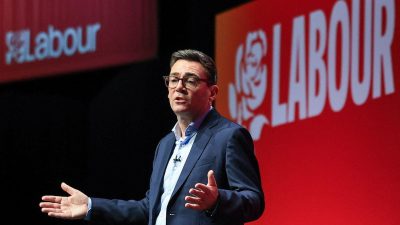
In a major speech to the Labour Party conference in Liverpool, Burnham presented the measure as one element of a broader programme to reshape public services and the economy. He also outlined ambitions for increased public influence over housing, water and energy, while leaving open the prospect of electoral reform.
A different formula from 2030
The triple lock has governed annual state pension increases since it was introduced by the coalition government in 2010. At present, pensions rise each April by whichever is highest: inflation, average earnings growth or 2.5%.
Burnham’s proposal would retain protection against inflation and maintain the 2.5% minimum increase. However, it would remove the automatic year-by-year connection to average earnings. He said pensioners would still share in national prosperity over time, while the adjustment would free resources for the care system.
“The state pension will continue to rise every year at least by prices or 2.5%. And it will hold its value relative to earnings over time so that pensioners will always share in the rising prosperity of the nation.
“But this change will generate significant savings which we will use to build up our national care service.”
Officials have suggested that the revised approach could save £15bn annually by 2040. The financial effect would not be immediate on that scale: Jonathan Cribb, deputy director of the Institute for Fiscal Studies, said the early savings were likely to be modest before increasing considerably over time.
Cribb also cautioned that the measure alone should not be expected to pay for universal social care during the next parliament. That leaves important questions about the full cost, timetable and detailed design of Burnham’s proposed service.
Care reform aimed at the next election
Burnham said his plan is for social care in England to be free when people need it, with the policy developed for presentation to voters in 2029. He stressed that the service would be funded without borrowing.
He argued that the present system can place a severe burden on people with limited retirement income. Pensioners receiving little more than the state pension can currently have care charges taken from that income. Under his proposal, he said, that would no longer happen.
The prime minister described a national care service as a defining reform, comparing its potential significance with the creation of the NHS and arguing that stronger care provision is vital to the health service’s future. He also connected the policy to his own family’s experience, recalling that his grandmother Kitty’s engagement ring was stolen while she was in a care home.
“Someone has to go through the pain barrier and rip the plaster off.”
Burnham acknowledged that changing the triple lock could carry a political cost. The policy touches one of the most closely watched commitments affecting pensioners, and the debate is likely to focus on whether protections for lower-income retirees are sufficient alongside the promised benefits of care reform.
Immediate political opposition
Criticism from opposition parties and trade union figures followed quickly. Unite general secretary Sharon Graham said the government should have chosen a different source of funding, such as a wealth tax, rather than revising the triple lock.
Conservative leader Kemi Badenoch said Labour’s plans would make further tax rises unavoidable. Reform UK leader Nigel Farage accused Burnham of beginning an attack on older people. Liberal Democrat leader Sir Ed Davey said families should not have to wait for another election and warned against paying for reform through the incomes of the poorest pensioners.
Those responses underline the central challenge for Burnham: persuading voters that a change to pension uprating can be balanced by a care system that offers greater security to older people and their families. Supporters of the proposal will point to the pressure created by care costs, while critics are likely to question how pensioners’ living standards will fare once the earnings link is removed.
A wider appeal for national renewal
Burnham spoke for more than an hour before a packed conference hall, with family and friends among those watching. His speech was emotionally charged at points as he referred to his father, Roy, who died earlier this month.
He entered to “All Together Now” by Liverpool group The Farm and returned repeatedly to its message of unity. Burnham said he wanted Britain to move beyond years of division, urging people to stop dwelling on pessimistic messages about the country.
Drawing on what he called his family’s working-class aspiration, he said the government should help more people gain the opportunities that had shaped his own life. While some of the agenda was framed as material for Labour’s next general-election manifesto rather than immediate legislation, the speech set out the direction he wants the country to take.
The pension proposal is therefore not simply a technical change to an annual uprating formula. It is intended as a financing mechanism for a larger argument: that Britain should offer people more certainty when care needs arise, while preserving a state pension that rises with prices or by at least 2.5% each year.
Related Reading
Frequently Asked Questions
What is Burnham vows to end existing pension?
Burnham vows to end existing pension is the main topic of this guide. The article explains the context, practical details, and next steps readers should understand.
Why does Burnham vows to end existing pension matter?
Burnham vows to end existing pension matters because readers are looking for a useful answer, not just a short summary. Good content should match search intent and help them decide what to do next.