
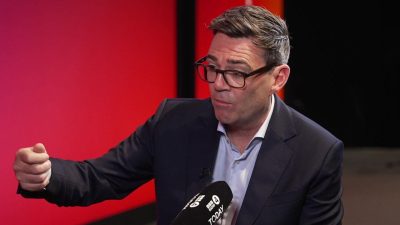
Burnham signals EU membership could be considered in future UK strategy
Constantvpn.com – Andy Burnham has indicated that returning to the European Union could be one of several paths considered as the UK reviews its longer-term relationship with Europe.
The comments mark his strongest suggestion so far that Labour may move beyond the approach set out in its 2024 general election manifesto. That document committed the party to improving the operation of Brexit while explicitly rejecting renewed membership of the EU, its customs union or its single market.
Burnham has argued that the present post-Brexit settlement has left Britain in a weaker position. He believes the government should set out a clearer destination for the country’s relationship with the continent over the coming decade, rather than allowing the issue to remain unresolved.
“We could stay as we are. That’s definitely an option, if people think this is the right place to stay.”
A range of possible relationships
When asked whether he wanted Britain to re-enter the EU, Burnham said he wanted to examine the available choices. He noted that he had once supported rejoining during his lifetime, while stressing that this was not automatically his current conclusion.
He outlined a spectrum of options: maintaining the existing arrangements, pursuing a customs union similar to one previously advocated by former Chancellor George Osborne, considering the single-market approach promoted by the Liberal Democrats, or seeking full EU membership.
“So there are clearly options that need to be considered, and we have to look at what is doable and what would be the pros and cons of each.”
A customs union would focus on trade arrangements and tariffs, while single-market participation would involve a more extensive economic relationship. Full membership would represent the broadest possible change, restoring the UK’s place within the EU’s political and economic institutions. Burnham has not committed his government to any one of these outcomes.
His position is that the choices should be openly assessed, with their practical consequences and public support considered before a direction is selected. He has said he does not want the question of Europe simply left “hanging”.
Summit and economic plan expected later this year
Burnham intends to use a delayed UK-EU summit later this year to begin setting out different possibilities for the relationship. The meeting had originally been expected during the summer, but was postponed after Sir Keir Starmer left office.
The summit is due to coincide with Burnham’s planned publication of a 10-year strategy aimed at reshaping the UK economy. For Burnham, the relationship with Europe is closely linked to that wider economic agenda.
In his Labour conference address on Tuesday, he said Brexit had reduced Britain’s control over immigration and economic policy. He told party members that the current arrangement with the EU was not sufficient and promised to seek agreement around a more clearly defined long-term position.
“I want to be clear on where we want Britain to go in the next decade.”
Although Burnham has spoken of finding consensus, he has not yet explained how a preferred option would be tested or measured. That leaves important questions unanswered, including whether any major shift would require a specific electoral mandate and how public opinion would influence the decision.
A break from Labour’s previous Brexit position
Burnham’s remarks contrast with the more limited reset pursued under Sir Keir Starmer. That approach sought closer cooperation in selected areas without reopening the question of EU membership.
The proposed measures included alignment with EU food standards, a youth visa arrangement and reconnecting British industry with the EU carbon-trading system. Those policies were designed to reduce some of the frictions created by Brexit while remaining outside the customs union and single market.
Burnham’s willingness to discuss rejoining potentially widens the debate considerably. Last week, he left open the possibility of campaigning for a mandate to return to the EU at the next general election.
That was a notable change in tone from the Makerfield by-election, which returned him to Parliament. During that campaign, Burnham said he would not “re-run” the arguments surrounding Brexit and stated that he was not proposing that Britain should consider rejoining the EU.
The latest intervention does not mean that re-entry is now Labour policy. Instead, it places membership alongside other constitutional and economic options that Burnham says deserve examination. Even so, it creates a significant political distinction from the party’s recent manifesto and could reshape debate ahead of the next election.
Conservatives attack proposed shift
The Conservatives have accused Labour of attempting to revive the conflicts of the Brexit period. They argue that Burnham is reopening a divisive argument instead of focusing on the government’s economic decisions.
Conservative deputy leader Alex Burghart said Labour could not blame its economic choices on a referendum vote held more than a decade ago. He also claimed that Labour’s existing efforts to reset relations with the EU were already moving the country closer to the bloc indirectly.
“Labour cannot pin the blame for their disastrous economic decisions on a vote that happened over a decade ago.”
The argument is likely to become increasingly prominent if Burnham develops his proposals into a formal electoral offer. The Conservatives see an opportunity to portray a renewed EU debate as an attempt to reopen settled questions, while Labour will need to explain whether closer ties are intended as practical economic cooperation, a step towards deeper integration, or an examination of all available outcomes.
For voters, the issue will concern more than the language of Brexit. It will involve decisions about trade, regulation, migration, industrial policy and Britain’s role in Europe. Burnham’s intervention ensures that the future shape of the UK-EU relationship is likely to be a major point of political contention in the years ahead.
Related Reading
Frequently Asked Questions
What is Move to rejoin EU among options?
Move to rejoin EU among options is the main topic of this guide. The article explains the context, practical details, and next steps readers should understand.
Why does Move to rejoin EU among options matter?
Move to rejoin EU among options matters because readers are looking for a useful answer, not just a short summary. Good content should match search intent and help them decide what to do next.