Author: Mark Martin – constantvpn.com

  • Israel re-establishes closed West Bank settlement, defying growing international protests

    Israel re-establishes closed West Bank settlement, defying growing international protests

    Thirty Families Return to Kadim, Reopening a West Bank Settlement Abandoned Two Decades Ago

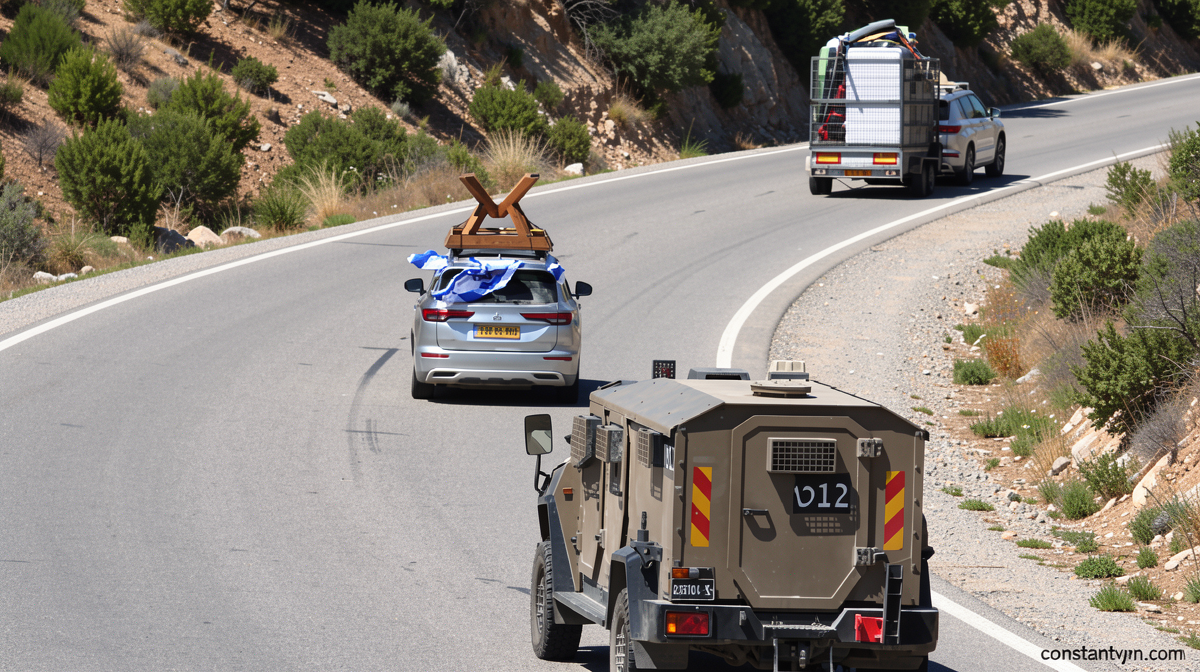
    Constantvpn.com – Truck convoys carrying mattresses, household furniture, and construction supplies rolled up a dirt track toward a hillside overlooking the Palestinian city of Jenin on Thursday, marking the return of Jewish settlers to Kadim — a community that had been empty since a previous Israeli government ordered its evacuation in 2005. Thirty families, described by the regional settlers’ council as “pioneer families,” traveled from Tel Aviv to reclaim the site, arriving in small groups, some under military escort, with blue-and-white national flags streaming from their vehicles as they passed Palestinian villages and cultivated fields.

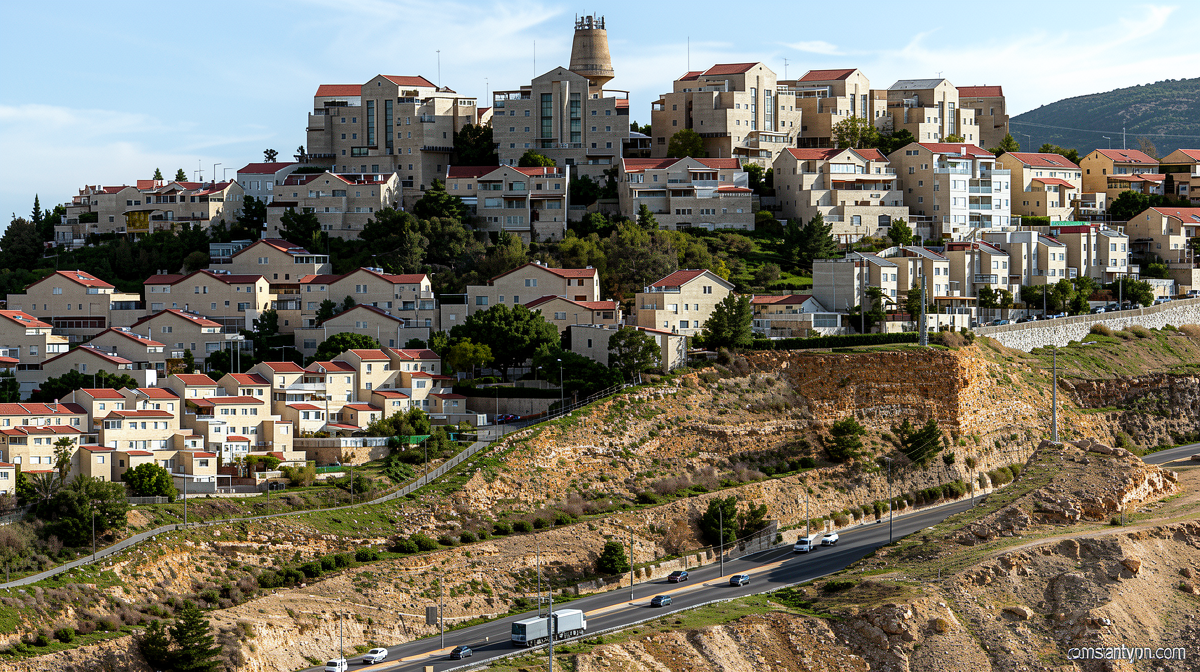
    The move represents the final chapter in a sweeping reversal of policy. Israel’s current government has dismantled a two-decade prohibition on Jewish settlement activity in the Jenin area, effectively undoing the legacy of the 2005 Disengagement Plan. That earlier initiative, enacted unilaterally, saw all Jewish settlers and soldiers withdrawn from Gaza and three additional northern West Bank communities — Kadim, Ganim, Sanur, and Homesh — dismantled. At the time, officials judged those four outposts too remote, too expensive to defend, and of negligible strategic importance. Today, the political calculus has inverted entirely.

    A Ceremony Framed in Biblical Language

    The reopening was staged as a national event. Finance Minister Bezalel Smotrich, a far-right figure who has long championed settlement expansion, addressed the gathering using the Biblical term “Samaria” to describe the northern West Bank. Beside him stood the Justice Minister, Knesset Speaker Amir Ohana, and Yossi Dagan, head of the regional settlers’ council. Dagan went further than mere celebration, declaring that settlers would eventually return to Gaza as well — a statement that lands with particular weight given the ongoing war and displacement there.

    “21 years after the crime of expulsion from northern Samaria, we have completed the correction […] and have returned to the settlement of Kadim.”

    The language of “correction” signals how the current leadership frames the 2005 evacuation not as a pragmatic security decision but as a historical wrong now being rectified. For Palestinians in the Jenin area, that framing translates into very concrete anxieties about land, movement, and livelihood.

    What International and Domestic Law Say

    Under international law, all Israeli settlements in occupied territory are considered illegal. Outposts — small, often informally established communities — additionally violate Israeli domestic law, yet they routinely receive state services, infrastructure funding, and police protection. Kadim itself was technically an outpost before it was evacuated, and its reopening underscores how the distinction between “settlement” and “outpost” has become increasingly academic in practice.

    A Farmer’s Fifty-Three Years on the Hillside

    Media were barred from entering the settlement on the day of the ceremony. From a dirt track behind the hill, however, a Palestinian vegetable farmer — a man who has lived in the same house since his birth 53 years ago — offered a perspective spanning both the original construction of Kadim and its forced abandonment. As a boy, he watched the first settlers arrive; two decades later, he watched the government order them out.

    “Back then, the settlers were living alongside us, and we coexisted peacefully. They lived their lives and we lived ours.”

    Now, watching the same hillside fill again with white trailer homes and construction activity, his tone shifts to dread. He described a bypass road project in which shops and businesses were demolished, and his nephews were driven away from their vegetable plots and citrus trees with the instruction that they had no place there and should not return.

    “I’m afraid of the events spreading around us, and the bypass road [where] they demolished shops and businesses.”

    “There’s no more displacement left in me. We’re living with a sense of resignation. It’s a life of fear.”

    His family fled Haifa during the 1948 Arab-Israeli War, a displacement that shaped the geography of the region for generations. For him, the return of settlers to Kadim is not an isolated event but the latest layer in a long accumulation of forced movement.

    The Broader Settlement Acceleration

    Kadim’s reopening is the last of the four communities evacuated in 2005 to be formally re-established. Ganim, Sanur, and Homesh have already been opened, and families have moved in. Yet even that modest number sits within a far larger project. Since taking power in late 2022, the current government has approved more than 100 new settlements across the West Bank, including 19 in the northern sector alone.

    Hagit Ofran, director of the Settlement Watch programme at Peace Now, characterizes the rapid construction around Jenin as part of a broader race to lock in settlement expansion before Israeli elections scheduled for October. The timing matters: once communities are physically established, with roads, water lines, and schools, reversing them becomes politically and logistically far more difficult.

    One such new community is Emek Dotan, situated west of Jenin and formally opened the previous Sunday. It now houses nearly two dozen Jewish families. From a small cluster of Palestinian houses adjacent to the site, teacher Samer Jaber has watched the settlement take shape over recent weeks — another example of how new construction is compressing the space available to existing Palestinian residents.

    Why This Matters Beyond the Hillside

    The reopening of Kadim carries implications that extend well past a single hilltop. It signals that the current government intends to treat the 2005 Disengagement not as a final act but as a temporary pause, reversible at its discretion. It reinforces a pattern in which international legal norms are set aside in favor of demographic and territorial objectives. And for the Palestinian population of Jenin — already among the poorest and most isolated in the West Bank — it deepens the sense that their land, water, and movement rights are being eroded incrementally, one trailer home and one bypass road at a time, until the cumulative effect leaves little room for negotiation or return.

    Frequently Asked Questions

    What is Israel re establishes closed West Bank?

    Israel re establishes closed West Bank is the main topic of this guide. The article explains the context, practical details, and next steps readers should understand.

    Why does Israel re establishes closed West Bank matter?

    Israel re establishes closed West Bank matters because readers are looking for a useful answer, not just a short summary. Good content should match search intent and help them decide what to do next.


  • Stifling heat and broken toilets: TUI River Cruise passengers tell of their holiday hell

    Stifling heat and broken toilets: TUI River Cruise passengers tell of their holiday hell

    Passengers Describe Months of Broken Cooling, Faulty Plumbing, and Inadequate Compensation on TUI River Ships

    Constantvpn.com – European river cruising is marketed as a polished, climate-controlled way to glide past centuries-old cities along the Danube, Rhine, and other waterways. For a growing number of travellers, however, the experience aboard two TUI-operated vessels has been defined by sweltering cabins, non-functional toilets, and what they describe as dismissive corporate responses. Dozens of passengers have come forward with accounts spanning multiple seasons, alleging that the Skyla and its sister ship, the Isla, have repeatedly sailed with persistently broken air conditioning and unreliable plumbing systems.

    A June Voyage That Became a Heat Trap

    Andy Peach and his wife booked a seven-day itinerary on the Skyla in June, with ports of call including Budapest, Vienna, and Linz. The couple paid close to £4,000 for the package. What they encountered, Peach says, was the worst TUI holiday the pair has ever taken.

    Rather than functioning climate control, the ship carried what Peach calls “big blowers” that pushed hot air through the interior spaces.

    “One was in the middle of the corridor, blocking the exit. It didn’t seem to cool the place down.”

    As the days progressed, onboard temperatures continued to climb. Peach described feeling exhausted by the cumulative heat. By the final stretch of the week, even the cabin-level air conditioning had failed. On the second-to-last day, passengers were moved ashore into hotels that Peach characterised as “really basic.”

    The financial remedy offered was a £300 refund, with a 72-hour window to accept it. Peach questioned the logic of the arrangement.

    “TUI know there’s problems on these boats, but continue to sell them to people as a full luxury cruise.”

    Assurances That Did Not Match Reality

    Joan Craven, who was scheduled to board the Skyla’s next departure from Budapest just days after Peach’s sailing, had been following social media complaints about the vessel. Concerned, she contacted TUI’s customer service team. By email, the company assured her that the air conditioning was operational. Upon arrival, a holiday representative told her the opposite. Craven said she felt misled by the written assurance.

    Earlier that same spring, other passengers aboard the Skyla had logged both cooling failures and water-supply disruptions during a May sailing, compounding the pattern of mechanical neglect.

    The Isla: A Longer Trail of Complaints

    Wendy Charnley and her husband Rob booked a cruise on the Isla in April 2025, departing from Amsterdam, as a celebration of Rob’s retirement. The vessel, they said, felt like “being in a tropical house at a zoo,” with no visible sign of working air conditioning.

    “Some areas were really, really hot. There wasn’t really anywhere that you could go that you could cool down.”

    Kevin Darvill boarded the same ship in Frankfurt a couple of months later. He noticed immediately that the toilet in the reception area was inoperable. Portable fans and makeshift air-conditioning units were visible throughout the public spaces. Darvill described the atmosphere as “really hot” with “no respite.”

    “It was intolerable because there was literally no air circulation. The worst places were the restaurants.”

    Sleep became difficult. His shower, he added, swung between freezing cold and “scalding hot.” TUI initially offered a 15 per cent refund tied to the cooling failures. When the cruise was cut short on the penultimate day, that figure rose to 40 per cent. Darvill nonetheless argued the sailing should never have departed.

    “Had I known that the air conditioning wasn’t working, having gone on river cruises before, I wouldn’t have gone.”

    June Sailings: Sweat, Rooftop Sleeping, and a £140 Gesture

    John Welsh boarded the Isla in June and found several toilets out of order alongside ongoing air-conditioning faults.

    “The whole ship was a sweat box.”

    Passengers assigned to windowless cabins reportedly resorted to sleeping on the vessel’s roof to escape the heat. Welsh observed restaurant staff working while “soaking to the skin with sweat” and said he had to change his own clothes after dining. When he raised the issue with the cruise director, he felt “fobbed off.” He ultimately accepted a £140-per-person refund for the cooling problems.

    Corporate Response and Broader Implications

    TUI issued an apology to customers whose trips “fell short of the standards we aim to deliver.” A company spokesperson added: “We understand the disappointment and frustration caused to affected customers.”

    The complaints span at least two vessels, multiple months, and several nationalities of travellers. River cruise ships of this size typically carry between 100 and 200 passengers and rely on compact mechanical systems that, when they fail, leave little room for alternative cooling in enclosed corridors and dining halls. The recurrence of faults across both the Skyla and the Isla suggests a fleet-wide maintenance or design issue rather than an isolated breakdown.

    For consumers, the episode raises questions about how cruise operators verify vessel readiness before departure, how quickly mechanical faults are escalated, and whether modest percentage-based refunds constitute fair compensation when a multi-thousand-pound holiday is rendered uninhabitable. Passengers in this group of accounts say the answer, so far, has been inadequate.

    Frequently Asked Questions

    What is Stifling heat and broken toilets?

    Stifling heat and broken toilets is the main topic of this guide. The article explains the context, practical details, and next steps readers should understand.

    Why does Stifling heat and broken toilets matter?

    Stifling heat and broken toilets matters because readers are looking for a useful answer, not just a short summary. Good content should match search intent and help them decide what to do next.
  • What are BTecs and how are they graded?

    What are BTecs and how are they graded?

    What Are BTecs and How Are They Graded: A Complete Guide

    Constantvpn.com – What are BTecs and how are they graded? That question sits at the heart of every post-16 decision made by thousands of students each year. As GCSE results land and young people weigh up their next steps, vocational routes like the BTec (Business and Technology Education Council) qualification have become a practical alternative to the traditional A-level pathway. Understanding what these qualifications actually involve — from assessment methods to grading scales — helps students, parents and careers advisers make informed choices.

    BTecs are practical, occupation-focused qualifications delivered across England, Wales and Northern Ireland. Scotland operates its own vocational framework through the Scottish Qualifications Authority. A typical BTec programme blends written examinations, ongoing coursework, portfolio projects and, in some specialisms, workplace placements. This mixed-assessment model means students are judged not only on what they can recall under timed conditions but also on sustained, applied work over the course of a term or year.

    Two Levels, Two Different Purposes

    The qualification splits into two tiers. BTec Firsts sit at Level 2, placing them on par with GCSEs; many students combine the two in a mixed programme to build a broader base before progressing. BTec Nationals operate at Level 3 and can be taken alongside, or in place of, A-levels. They run over one or two years depending on the subject and the depth of study. Survey data indicates that roughly one in four BTec National students use the qualification as a stepping stone into higher education, while the remainder move directly into occupation-specific employment.

    Popular specialisms span health and social care, applied science, construction, engineering, business and art and design. Age is not a barrier: BTec Nationals can be entered by learners of any age, and in practice the majority of entrants are over 22, often adults reskilling or deepening practical career competencies. Research published by the Social Market Foundation think tank has also highlighted that the qualification is disproportionately popular among white working-class students, pointing to its role as an accessible route into skilled employment.

    How BTec Results Are Graded and What They Mean

    Grading follows a four-point scale rather than the percentage or letter system used in GCSEs and A-levels. From highest to lowest the grades are: Distinction Star (D*), Distinction (D), Merit (M) and Pass (P). Depending on the subject and the number of units completed, a single BTec National can carry the UCAS tariff equivalent of two or even three A-levels, which matters for university applications.

    Results are normally released on the same day as A-level and GCSE outcomes, though some centres issue them slightly earlier. Hundreds of thousands of learners across the UK sit BTec and other vocational assessments each summer. The qualification sits alongside other recognised routes — National Vocational Qualifications (NVQs), TechBacs, Cambridge Technicals and Scottish Vocational Qualifications (SVQs) — all of which feed into the wider post-16 landscape.

    The government has confirmed that BTecs will be defunded to make way for new V-Levels, introduced in stages from September 2027. Existing programmes will continue until the transition is complete, but new funding allocations are shifting toward the replacement framework.

    This defunding decision forms part of a broader review aimed at simplifying the vocational system and aligning course content with employer demand. Overlapping qualifications have had their funding withdrawn, while others have been retained. T-levels, another pillar of the technical-education reform, continue to expand but have encountered implementation challenges including scheduling delays, student-retention concerns and assessment-quality issues.

    Frequently Asked Questions

    Can I take a BTec alongside A-levels? Yes. BTec Nationals are Level 3 qualifications and can be studied concurrently with A-levels, giving students a blended academic-and-practical profile. Many further-education colleges structure timetables to accommodate both.

    What grade do I need to get into university? Universities set their own entry requirements, but a Distinction or Distinction Star in the relevant units is typically expected for competitive courses. Because some BTecs carry the tariff value of two or three A-levels, check the specific UCAS points with the admissions team of your chosen institution.

    Will my BTec still be available if I start after 2027? The government plans to defund BTecs as V-Levels roll out from September 2027. Students already enrolled will complete their programmes, but new intakes will progressively shift to the replacement qualification. Confirm current availability with your local college before enrolling.

    Are BTecs recognised by employers? Yes. Employers in construction, engineering, health and social care, and creative industries routinely list BTec Nationals as acceptable entry qualifications. The practical, project-based nature of the assessment means graduates often arrive with portfolio-ready skills that purely academic routes do not provide.

  • Israel opens up bids for highly-sensitive West Bank settlement project

    Israel opens up bids for highly-sensitive West Bank settlement project

    Israel Launches Tender for 1,234 Homes in Contested E1 Corridor Ahead of October Election

    Constantvpn.com – The Israeli housing ministry has published a tender inviting contractors to build 1,234 residential units in the E1 zone, a narrow strip of land wedged between East Jerusalem and the large settlement of Maale Adumim. The move, timed to land just eight days before Israel’s general election on 27 October, locks in construction commitments that any successor government would face considerable difficulty unwinding. The bid deadline falls on 19 October, a date chosen deliberately to make reversal politically costly.

    The approved master plan, greenlit by the cabinet last August, ultimately envisions 3,401 housing units spread across roughly 12 square kilometres (4.6 square miles). The current tender covers the first tranche of that total. Strategically, the corridor would slice the occupied West Bank into two disconnected halves, severing the north from the south and isolating East Jerusalem from the Palestinian urban spine linking Ramallah to Bethlehem.

    Why E1 Has Long Been a Flashpoint

    Since Israel captured the West Bank and East Jerusalem from Jordan in the 1967 Middle East War, the E1 area has sat at the centre of diplomatic anxiety. Successive governments deferred construction for decades under sustained international pressure, with allies and Palestinian negotiators warning that any build-out would deliver a near-fatal blow to the two-state framework. The current administration, however, moved to authorise the project roughly a year ago, stating explicitly that its purpose was to “erase” the prospect of a Palestinian state.

    Finance Minister Bezalel Smotrich, an ultranationalist and longtime settler, framed the August approval in those exact terms. Critics note that even partial implementation would render contiguous Palestinian urban development impossible, effectively foreclosing statehood before a single foundation stone is poured.

    London’s Sharp Response

    UK Foreign Secretary Ed Miliband reacted with unusual directness on Wednesday evening, summoning the Israeli Chargé d’Affaires to the Foreign Office to register what he described as Britain’s “profound objection” to the Netanyahu government’s decision. In a written statement, Miliband labelled the tender publication

    “an unacceptable and destructive act”

    and urged Israel to

    “halt E1 plans immediately, retract the tender and stop all settlement expansion.”

    He went further, declaring that

    “Britain will not stand back and accept the destruction of the Two-State Solution.”

    Miliband added that

    “all settlements damage that prospect and are a flagrant breach of international law,”

    and signalled that within weeks the British government would table a package of measures aimed at protecting Palestinian state viability, imposing targeted sanctions on participants in illegal settlement expansion, and advancing what he called “a just and lasting peace for Israelis and Palestinians.”

    The Broader Settlement Landscape

    The West Bank and East Jerusalem now host approximately 160 Israeli settlements home to around 700,000 Jewish residents, living alongside an estimated 3.3 million Palestinians. Although settlements have grown under every government since 1967, the pace of expansion accelerated markedly after Benjamin Netanyahu returned to power in late 2022 at the helm of a right-wing, pro-settler coalition. The outbreak of the Gaza war, triggered by Hamas’s 7 October 2023 attack on southern Israel, further emboldened settlement activity and shifted public discourse toward maximalist territorial claims.

    East Jerusalem itself was annexed by Israel in 1980, a step the vast majority of the international community has never recognised. The city’s eastern sector remains the site Palestinians designate as the capital of any future state, making the E1 corridor’s position all the more consequential: it would physically interpose Israeli-built housing between that sector and the rest of the West Bank.

    Court Challenges and Political Calculus

    Bedouin Palestinian residents of the area, together with Israeli peace organisations including Peace Now, have mounted legal challenges to the E1 plans. Peace Now, which has litigated the matter before Israeli courts, warned that the government’s rush to sign contractor agreements before the ballot was designed to make cancellation by a future cabinet “much harder.” The organisation cautioned that even partial execution of the build-out would

    “fuel” further entrenchment of the status quo.

    Analysts observe that the eight-day gap between the bid deadline and election day is not accidental. A government elected on 27 October would inherit signed contracts, allocated plots, and committed public expenditure, raising the political and financial cost of reversal to a level few leaders would readily accept. In effect, the tender converts a reversible planning decision into a fait accompli before voters have cast their ballots.

    For Palestinians, the stakes extend beyond one construction project. The E1 corridor represents the last major geographic obstacle to a contiguous, viable Palestinian territory. Its activation, even in stages, would convert decades of diplomatic language about a two-state solution into a description of a map that no longer permits one.

    Frequently Asked Questions

    What is Israel opens up bids for highly?

    Israel opens up bids for highly is the main topic of this guide. The article explains the context, practical details, and next steps readers should understand.

    Why does Israel opens up bids for highly matter?

    Israel opens up bids for highly matters because readers are looking for a useful answer, not just a short summary. Good content should match search intent and help them decide what to do next.

  • How Root brought welcome calm on return as England captain

    How Root brought welcome calm on return as England captain

    Root’s Quiet Authority Steers England to a Day-One Sweep at Headingley

    Constantvpn.com – England’s new chapter under Joe Root began with a statement of intent: Pakistan were bowled out for 171 on the opening day of their first Test at Headingley, a score that signalled the old turbulence of recent seasons had been left firmly behind. Root, now 35 and back in the captaincy for a second spell after Ben Stokes stepped aside, had already claimed the toss before the first over was bowled. By the time the game was five balls old, the architecture of his leadership was visible — measured, collaborative, and pointedly unlike the high-octane style of his predecessor.

    A Partnership Written in Yorkshire

    The most telling image of the day came when Root walked off the field for the first time in his reinstated role, Harry Brook’s arm draped over his shoulder. The two Yorkshiremen — the only candidates England considered when Stokes vacated the captaincy — displayed no trace of rivalry. Brook, who had been passed over in favour of his friend and teammate, showed no bitterness. Root, who might have been tempted to assert dominance early, instead deferred to Brook’s tactical instincts throughout the session.

    That deference was most apparent when Pakistan’s number three, Shan Masood, probed at the stumps. Brook, who has demonstrated sharp tactical acumen in his own white-ball captaincy, recommended reinforcing the gully region. Root, whose first spell in charge drew criticism for a perceived lack of on-field feel, agreed without hesitation. Yet the same captainship showed a ruthless streak moments later when Jofra Archer was pulled from the attack after two wayward overs with the new ball. Decisions were made quickly, then executed without drama.

    Mid-Off: A Different Kind of Command

    Root positioned himself at mid-off rather than the slips, a tactical choice with clear lineage. Both Stokes and former skipper Michael Vaughan — a figure who shaped Root’s early career through their shared Sheffield club roots — had captained from that vantage point. The move allows the 35-year-old to keep his ear close to his bowlers while ensuring the ball is always returned through him before the next delivery. Nothing happens until Root releases the ball.

    The positioning also freed him from the reflexive catch-taking that defined his earlier career. Root holds a joint-record 218 Test catches, more than two-thirds of which came from the slips. Standing at mid-off, with his two young children watching from the stands, he could observe the broader picture and control tempo without becoming a passive fielder.

    “I might not be as dynamic as Ben but we’ll see if we can make it work,” Root said on Tuesday.

    That self-awareness extended to his pre-match remarks, where he identified the central challenge of his second stint:

    “One of the big challenges is not trying to be Ben Stokes.”

    Stokes had been a hands-on skipper, constantly chatting, encouraging, and intervening between deliveries. Root’s approach was markedly quieter. Overs from his pace bowlers passed with minimal verbal exchange — a word before the first ball, another after the sixth. The captain observed, adjusted, and stepped back.

    Robinson’s Redemption Arc

    The day’s standout performance belonged to Ollie Robinson, who returned 5-51 with accuracy and relentless variation. Robinson, 32 and the next-oldest member of the squad after Root, had been discarded under Stokes and former coach Brendon McCullum amid frustrations over his attitude and fitness. His average pace of 78.4 mph at Headingley belied any suggestion of diminished capability.

    After pinning Azan Awais with his first ball, Robinson probed Masood’s outside edge from around the wicket before switching his angle in the third over. An inswinger found Masood plumb lbw, and Root celebrated with both arms raised high — a flash of the child-like enthusiasm from his early England days.

    “He was good at just telling me he was moving the field and then to carry on bowling the same way,” Robinson said of Root’s minimal intervention. “Between the four bowlers, Joe and Harry we were discussing plans, discussing what was working. Brooky is always great on the field. He is the go-between guy and, standing at slip, can see different things.”

    Robinson’s journey under Root has been marked by two painful memories. He made his debut in the first Test against New Zealand at Lord’s in 2021, a match England squandered by turning down a chase of 273. He was last man out in Hobart at the tail end of Root’s second Ashes defeat in 2021-22. Both losses sat within a run of just one win in 17 Tests at the close of Root’s first tenure — the record that had haunted his captaincy. Robinson’s immaculate day at Headingley offered a sharp counter-narrative.

    What Remains

    The afternoon was not without blemish. Imam-ul-Haq and Abdullah Shafique stitched together a 91-run partnership that drew the crowd’s attention away from England’s bowlers, and the pace quartet of Robinson, Archer, Gus Atkinson, and Josh Tongue still carries the rawness of a group not yet fully settled. Archer never located his rhythm; Atkinson and Tongue required time to find their groove.

    Yet the structural foundations were laid. Root’s quiet authority, Brook’s tactical bridge role, and Robinson’s restored confidence formed a coherent unit on day one. Vaughan, who has urged England to commit fully ahead of a demanding 12-month schedule, would have noted that the captain’s approach — collaborative, restrained, and built around trusted lieutenants — offered a sustainable model for the long season ahead. England’s new era at Headingley began not with a shout, but with a controlled, collective exhale.

    Frequently Asked Questions

    What is How Root brought welcome calm on return?

    How Root brought welcome calm on return is the main topic of this guide. The article explains the context, practical details, and next steps readers should understand.

    Why does How Root brought welcome calm on return matter?

    How Root brought welcome calm on return matters because readers are looking for a useful answer, not just a short summary. Good content should match search intent and help them decide what to do next.

  • Vapes could lead to health harms in children, doctors warn

    Vapes could lead to health harms in children, doctors warn

    Medical Review Sounds Alarm on Vaping’s Growing Grip on Young Britons

    Constantvpn.com – A systematic examination of nearly 81 published studies has concluded that electronic cigarettes are far from the benign habit many young people assume them to be. The Royal College of Paediatrics and Child Health (RCPCH) has published its findings in the journal Archives of Disease in Childhood, warning that vaping among children and adolescents is associated with a range of physical and psychological harms that demand urgent regulatory attention.

    The review, which scrutinised research examining both health and social outcomes of vaping in under-18 populations, found statistically significant links between e-cigarette use and respiratory complaints such as wheezing and coughing. Beyond the lungs, the evidence pointed to deteriorating oral and dental health, disrupted sleep patterns, worsening mental health indicators, and unexplained eye symptoms. Perhaps most strikingly, the analysis identified signals of harm in infants born to mothers who vaped during pregnancy — a finding that extends the conversation well beyond the teenager holding the device.

    What the Evidence Actually Shows

    Prof Will Carroll, co-author of the systematic review, described the findings as demonstrating “clear links” between vaping and respiratory symptoms, nicotine dependence, and a subsequent step up to conventional cigarette smoking. In other words, the pathway many public-health officials have long feared — that a child picks up a vape at school and transitions to a pack of combustibles within a few years — appears to be borne out by the data.

    “We must act to make vaping less attractive and accessible to children,” Prof Carroll said.

    The college’s position is unambiguous: vaping should not be normalised as “a harmless part of growing up.” That framing, the authors argue, has allowed a nicotine-delivery system to embed itself in adolescent culture faster than regulators have been able to respond.

    A Market Moving Faster Than Policy

    Dr Mike McKean, vice-president for policy at the RCPCH, acknowledged that the product category remains young enough that long-term paediatric data are still sparse. Yet he cautioned that a “clear and concerning picture is emerging” from what is already known.

    “We need to keep pace with a rapidly evolving market and continue to take action to protect children from nicotine products,” Dr McKean added.

    The urgency is underscored by polling commissioned by the charity Action on Smoking and Health (Ash), which found that almost one in five British teenagers aged 11 to 17 have tried vaping at least once. That penetration rate, in a demographic that was largely smoke-free a generation ago, has prompted calls for controls as aggressive as those once applied to combustible tobacco.

    Government Response: Plain Packs, Hidden Shelves, and a Lifelong Tobacco Ban

    In July, the UK government opened a 12-week (100-day) consultation on the appearance, packaging, and in-store display of vapes. The stated aim is to strip away the visual and sensory appeal that draws younger buyers. Under the proposals under discussion, packaging would be required to be plain, with strict limits on branding and only straightforward flavour descriptors such as “apple” or “cola.” Retail displays would be moved out of sight, mirroring the existing regime for cigarettes and tobacco products.

    The consultation follows the recent passage of the Tobacco and Vapes Act, which enshrines what ministers describe as the UK’s first smoke-free generation. Under the new law, anyone born after 1 January 2009 — meaning all children aged 17 or younger today — faces a lifelong prohibition on purchasing cigarettes, as shops will be legally barred from selling tobacco to that cohort.

    “An important step towards protecting children from nicotine addiction, but it must not be seen as a one-and-done solution,” Dr McKean said of the new act.

    Prof Carroll went further, arguing that the government needed “to go further and limit the types of flavours available to them as opposed to just their descriptions.” In practical terms, that would mean capping the sheer variety of flavours on the shelf rather than merely regulating how they are labelled.

    Charities and Clinicians Weigh In

    Hazel Cheeseman, chief executive of Ash, stressed that while vaping remains less harmful than smoking, it is categorically not risk-free.

    “As it was with tobacco, strong controls on marketing and promotion will be key to reducing youth vaping,” she said.

    Andrew McCracken of Asthma + Lung UK drew a sharper line: vapes may serve a legitimate quit-smoking function for adult smokers, but for non-smokers — and especially for children — the advice is simple.

    “Anyone who doesn’t smoke, shouldn’t vape, and that is especially true for children,” McCracken stated.

    The Department of Health and Social Care echoed the medical consensus, confirming that “children should never vape and this evidence shows just some of the risks associated.” The department noted it has already banned single-use vapes and has legislated to prohibit vaping advertising and sponsorship from next year. It added that it is actively consulting on measures to crack down on packaging designed to appeal to younger consumers.

    Why This Matters Now

    The convergence of new paediatric evidence, a surging teen vaping rate, and a government already mid-consultation creates a narrow window in which policy can still shape the trajectory of a product that has, in just over a decade, become a fixture of school corridors and teenage social life. The RCPCH’s review does not argue that vaping is as dangerous as combustible tobacco; rather, it insists that the assumption of safety — the quiet premise that lets a child pick up a device without adult intervention — is no longer defensible. What follows from that premise, both in the consultation room and on the shop floor, will determine whether the next generation inherits a nicotine habit or escapes it entirely.

    Frequently Asked Questions

    What is Vapes could lead to health harms?

    Vapes could lead to health harms is the main topic of this guide. The article explains the context, practical details, and next steps readers should understand.

    Why does Vapes could lead to health harms matter?

    Vapes could lead to health harms matters because readers are looking for a useful answer, not just a short summary. Good content should match search intent and help them decide what to do next.

  • Giant whales move into Greenland waters as ice disappears

    Giant whales move into Greenland waters as ice disappears

    Whales Flood Into East Greenland’s Thawing Seas

    Constantvpn.com – For centuries, a wall of sea ice kept the largest animals on Earth locked out of East Greenland’s coastal waters. That barrier is now crumbling. Over the past two decades, researchers have documented a sweeping ecological transformation along this Arctic coastline: humpback, fin, and minke whales — species that historically never appeared in these waters — are arriving in growing numbers each summer to feed in what was once an ice-bound exclusion zone.

    The shift is not subtle. It represents what one lead scientist has termed a fundamental reorganization of the marine environment, driven by warming ocean temperatures and the retreat of seasonal ice cover. What was once a frozen frontier has become, for several months of the year, an open feeding ground accessible to some of the planet’s most massive animals.

    A Decade-by-Decade Record of Change

    The scale of the transformation becomes stark when viewed through the lens of long-term observation data. Ship-based surveys conducted in the region failed to record a single humpback whale sighting before 2006. The following year, seven individuals were logged. By 2024, the tally had surged to 150 ship-based sightings of humpbacks alone — a jump from zero to three figures in roughly two decades.

    To capture a fuller picture, researchers conducted the first systematic aerial surveys of baleen whales — the filter-feeding group encompassing fin, minke, and humpback species — off the East Greenland coast during the summers of 2015 and 2024. Those flights were supplemented by data from 15 whales fitted with satellite tracking devices, which allowed scientists to follow individual animals’ seasonal migrations. Testimony from Inuit hunters, whose generations of coastal observation provide an irreplaceable long-term record, was also woven into the analysis.

    The combined dataset revealed that an estimated 4,000 humpback whales, 6,000 fin whales, and 6,000 minke whales entered the Greenland Sea during the summer of 2024. Researchers calculated that these three species together would consume at least 800,000 tonnes of fish and krill over a single summer feeding season — a figure that underscores just how much biomass is now flowing through these waters.

    What the Scientists Are Saying

    Prof Mads Peter Heide-Jørgensen, based at the Greenland Institute of Natural Resources, described the magnitude of change in blunt terms:

    “Probably the most radical we can see anywhere in the subarctic.”

    He characterized the phenomenon as a “major ecological regime shift” — a phrase that signals not a gradual drift but a categorical change in how the marine ecosystem functions along this stretch of coast. The whales, he noted, appear to be feeding on fish populations that themselves have migrated into the warming waters of East Greenland, creating a cascade of ecological redistribution.

    On whether climate change is uniformly harmful for marine life, Heide-Jørgensen offered a more nuanced framing:

    “For some species, climate change is not necessarily a problem — it opens up new opportunities, but other species are losing their habitat.”

    Winners and Losers in a Rewiring Arctic

    The baleen whales arriving in East Greenland are, in effect, opportunistic generalists. Their large body size, broad dietary flexibility, and migratory range allow them to exploit newly available feeding grounds with relative ease. Yet the same warming that opens these waters is closing others.

    Arctic specialists such as narwhals and beluga whales — species adapted to cold, ice-associated environments — are finding their traditional habitat compressed or eliminated. Heide-Jørgensen described these animals as being “in trouble now,” sharing space with, or in some cases being displaced by, the influx of larger baleen whales. The competitive and spatial pressures of this overlap remain an active area of study.

    Redistribution or True Growth?

    An important question the study does not fully resolve is whether the growing whale presence in East Greenland reflects a genuine increase in the total populations of these species, or simply a geographic redistribution from other feeding areas — particularly West Greenland. Several independent experts noted that the data are consistent with animals shifting eastward from western waters rather than with a population boom. This distinction matters in a country like Greenland, where certain whale species are subject to subsistence and commercial hunting, and where shifts in distribution can carry direct implications for local communities and management policy.

    The scientists emphasized that their findings nonetheless point to genuine adaptive behavior: these “opportunistic” baleen whales appear to be adjusting their seasonal ranges in response to changing conditions, and may be deriving net benefit from the altered environment.

    Broader Context and Publication

    The research, spanning multiple decades of fieldwork, aerial survey, satellite telemetry, and Indigenous knowledge, was published in the peer-reviewed journal Frontiers in Marine Science. It adds to a growing body of evidence that the Arctic marine ecosystem is being restructured at a pace that outstrips many existing management frameworks. As sea-ice extent continues to decline and ocean temperatures climb, the question for policymakers and conservation planners is no longer whether these shifts will occur, but how quickly adjacent species, fisheries, and Indigenous livelihoods will be affected by the cascading consequences.

    Frequently Asked Questions

    What is Giant whales move into Greenland waters?

    Giant whales move into Greenland waters is the main topic of this guide. The article explains the context, practical details, and next steps readers should understand.

    Why does Giant whales move into Greenland waters matter?

    Giant whales move into Greenland waters matters because readers are looking for a useful answer, not just a short summary. Good content should match search intent and help them decide what to do next.

  • From jumpers to slug pellets – how British wool is back in demand

    From jumpers to slug pellets – how British wool is back in demand

    British Wool Hits a Decade High as Supply Shrinks and Global Appetite Surges

    Constantvpn.com – The price tag on a kilogram of clean, shorn British wool now sits above £2.50 — a figure that would have been unthinkable twelve months ago when the same fibre traded below £1.50. That jump of more than 70 percent in a single year marks the steepest climb in a decade, pushing the commodity to its highest valuation since 2014. Behind the spike sits a convergence of factors: a shrinking national flock, the gradual absorption of pandemic-era stockpiles that had flooded global markets, and a renewed international appetite for natural fibre in everything from formal tailoring to agricultural pest control.

    For the farmers who once burned their own fleeces in open fields as a protest against pitiful returns, the reversal is palpable. The act of setting wool alight — a gesture of frustration that made headlines across the UK — now seems almost quaint. With shearing costs rising alongside fuel and fertiliser, the improved price means many flocks will be properly clipped rather than left to overgrow, easing both welfare concerns and the financial strain of hiring professional shearers, their assistants, and the labour needed to wrap and transport each fleece.

    A Farmer’s Perspective from the Powys Hills

    Wyn Williams tends roughly 700 sheep on the upland pastures above Llanfair Caereinion in Powys, Wales. His operation is oriented primarily toward meat production and breeding; the wool is, in his framing, a by-product that nonetheless demands careful management. He notes that the current price environment “helps cover costs” associated with the annual clipping cycle.

    “We’ve got professional shearers coming, it’s not everybody who can shear. You’ve also got your helpers, the wool wrappers and everything else so it assists with the costs.”

    Williams is equally clear that the welfare imperative drives shearing regardless of market conditions. A heavy winter coat left on a sheep through a warm spell invites heat stress and parasitic load. The fibre must come off; the question has always been whether the return justifies the expense of doing so properly.

    From Fleece to Formal Wear: The Grading Pipeline

    Once clipped, the fleeces from Williams’s flock travel to a wool depot in Newtown, where manager Barry Bellis performs a task that blends craft with commerce. Working through the raw material by hand, Bellis identifies as many as 68 distinct grades within a single batch. The hierarchy runs from the finest, longest-staple white fleeces — destined for dyeing and formal tailoring — down to coarser, kemp-laden material that finds its way into carpet blends or, in a more prosaic application, slug pellets.

    “If you’ve got a nice white fleece, you’re able to dye it pink, green, blue, whatever colour you want. The blue face Leicester fleece, which is our closest to the merino, that will go into knitwear like men’s suits.”

    The distinction matters commercially. A Leicester fleece with fine, uniform staple commands a premium in the suiting and knitwear supply chain. Coarser Welsh mule fleece, carrying the short, coarse kemp fibres characteristic of that breed, is better suited to walked-on surfaces — carpeting, upholstery backing — where colour variation is a feature rather than a flaw.

    Why the Market Tightened

    Gareth Jones of British Wool, the national marketing board, attributes the price surge to straightforward supply-and-demand arithmetic. Flock numbers in Wales and across the UK have declined over successive years, reducing the volume of fibre entering the market. Comparable dynamics operate in New Zealand, the world’s largest wool exporter, where sheep counts have also fallen. Layered on top of that structural contraction was a temporary glut: during the pandemic years, global consumption slowed while production continued, building up a carry-over stockpile. That surplus has now been worked through over the past two seasons, removing the price ceiling it had imposed.

    “There are less sheep in Wales, less sheep in the UK, producing less wool and if we look at a comparable market like New Zealand, there are less sheep there. They also had a carry-over of wool since Covid – that’s cleared in the last two years.”

    On the demand side, Jones points to a broadening of international buyers. China remains a critical destination for processed wool. A bedding manufacturer in South Korea sources British fibre for its product lines, and licensing arrangements extend into Japan. The fibre’s versatility — spanning flood-protection geotextiles, agricultural slug pellets, insulation, and high-end apparel — means that demand is not confined to a single seasonal cycle.

    Context: A Fibre Older Than Recorded History

    The commercial drama of the current price cycle sits atop an extraordinarily long history. Wool spinning dates to the Bronze Age; the fibre has underpinned economies from medieval monasteries to the industrial mills of eighteenth-century Britain. What has changed in recent decades is the scale of British production. The UK once supported millions of sheep; today’s flock is a fraction of that, and the wool sector operates at a scale that makes every percentage-point shift in price economically significant for individual farmers. The current upswing, while welcome, does not erase the structural vulnerability of a small, dispersed supply base competing against industrialised exporters.

    For shoppers reaching for a wool jumper or a pair of thick socks this winter, the upstream price movement will filter through retail gradually. For the farmer on the Powys hills, the arithmetic is immediate: the difference between a fleece that pays for its shearing and one that does not.

    Frequently Asked Questions

    What is From jumpers to slug pellets?

    From jumpers to slug pellets is the main topic of this guide. The article explains the context, practical details, and next steps readers should understand.

    Why does From jumpers to slug pellets matter?

    From jumpers to slug pellets matters because readers are looking for a useful answer, not just a short summary. Good content should match search intent and help them decide what to do next.

  • Princess Eugenie announces name of baby daughter

    Princess Eugenie announces name of baby daughter

    Princess Eugenie’s Newborn Daughter Receives a Name Spanning Two Nations’ Histories

    Constantvpn.com – The youngest addition to the Brooksbank household now has a full name: Adelaide Elizabeth Annina Brooksbank. The announcement came via an Instagram post from Princess Eugenie herself, who described the choice as a tribute to “three people we love and admire past and present” while also weaving together threads from English and Portuguese heritage. The baby girl arrived earlier this month at a hospital in Lisbon, weighing six pounds nine ounces, and her arrival marks the third child born to Eugenie and her husband, Jack Brooksbank.

    A Name Rooted in Royal and Religious History

    The given name Adelaide carries considerable historical weight in both countries the family calls home. In England, it recalls Queen Adelaide (1792–1849), the consort of King William IV, whose brief reign in the early nineteenth century left a modest but enduring mark on the British monarchy. In Portugal, the name connects to Santa Maria Adelaide, a figure embedded in the country’s religious and cultural memory. By selecting a name that resonates across both traditions, Eugenie and Jack underscored the dual geography of their lives — a household split between the Iberian Peninsula and the grounds of Kensington Palace in London.

    The middle name Annina, meanwhile, appears to carry a more intimate significance. No public explanation has been offered for its selection, though it is understood to reflect a personal connection within the family. The full three-part naming thus layers public history, private devotion, and familial affection into a single identity for the newborn.

    The Announcement and the Family’s Words

    Alongside the naming, Eugenie shared a series of photographs, including an image of her two young sons cradling their baby sister. In the accompanying caption, she wrote:

    “Two weeks ago today we welcomed our girl to the world. And since then we’ve had the most special, cosy and love-filled time.”

    “We are so happy to share Adelaide Elizabeth Annina Brooksbank.”

    “Named after three people we love and admire past and present, including her great-grandmother who we hold close in our hearts.”

    “Her name is part of English and Portuguese history, two places we love and call home.”

    “Augie and Ernie are already the best big brothers.”

    The reference to a “great-grandmother” points to Queen Elizabeth II, who died in September 2022. For a child born in 2026, the late monarch would indeed be a great-grandmother — a generational distance that makes the tribute both tender and historically specific.

    Where the Newborn Sits in the Line of Succession

    As the daughter of Princess Eugenie — herself the second daughter of Prince Andrew, Duke of York, and Sarah Ferguson — the baby does not carry the style of Royal Highness. She enters the line of succession to the British throne at number fifteen, a position that places her ahead of her great-uncle, Prince Edward, Duke of Edinburgh. The shift in ordering reflects the straightforward arithmetic of birth: each new child born into the royal family displaces those further down the queue.

    At the moment of her birth, Buckingham Palace issued a brief statement: “Their Majesties The King and Queen and other members of The Royal Family were delighted to be informed of the news.” The wording follows the standard protocol used for announcements of royal births, confirming that King Charles III and Queen Camilla received the news directly.

    A Household Divided Between Two Continents

    Eugenie and Jack have maintained a transatlantic — or rather, trans-continental — domestic arrangement for several years. The family splits its time between Portugal, where Jack works in the wine industry, and Ivy Cottage, a residence within the grounds of Kensington Palace in west London. This dual-base lifestyle is unusual among members of the wider royal family and has drawn periodic public curiosity about how the household manages schooling, travel, and family obligations across two time zones.

    The pregnancy itself was made public last May through a photograph showing the two young sons holding a baby-scan image. The caption read: “Baby Brooksbank due 2026!” — a playful, informal tone consistent with the couple’s preference for keeping their family life visible yet unceremonious on social media.

    The Siblings and the Growing Family

    Adelaide joins two brothers already established in the household. August Philip Hawke Brooksbank, born in 2021, and Ernest George Ronnie Brooksbank, born in 2023, are now three and one years older than their sister respectively. Eugenie’s caption noted that “Augie and Ernie are already the best big brothers,” a line that underscores the family’s emphasis on sibling bonding from the earliest days.

    For Eugenie, now thirty-six, the birth completes a family she has spoken about wanting since the early years of her marriage to Jack. The couple wed in October 2018 at St George’s Chapel, Windsor Castle, in a ceremony that drew considerable public attention given Eugenie’s position as the daughter of a former prince and her own high-profile career in fashion and publishing.

    Broader Context: The Place of Eugenie’s Line in the Modern Monarchy

    The Brooksbank children occupy a particular niche in contemporary royal life. They are close enough to the throne to feature in official family photographs and to receive palace statements at milestones, yet distant enough to avoid the full machinery of royal duty. Their upbringing, split between a working household in Portugal and a London residence, represents a model of royal family life that is increasingly common among younger members: present in the institution, but not bound to its daily schedule. Adelaide’s entry into the succession at number fifteen, while constitutionally significant, carries no practical expectation of public role in the foreseeable future — a reality that allows the family to shape her childhood largely on its own terms, within the broad parameters of royal protocol.

    Frequently Asked Questions

    What is Princess Eugenie announces name of baby?

    Princess Eugenie announces name of baby is the main topic of this guide. The article explains the context, practical details, and next steps readers should understand.

    Why does Princess Eugenie announces name of baby matter?

    Princess Eugenie announces name of baby matters because readers are looking for a useful answer, not just a short summary. Good content should match search intent and help them decide what to do next.
  • Five teenagers dead and four injured after car drives on wrong side of motorway

    Five teenagers dead and four injured after car drives on wrong side of motorway

    Five Teenagers Killed in Head-On Collision on Ireland’s M9 Motorway

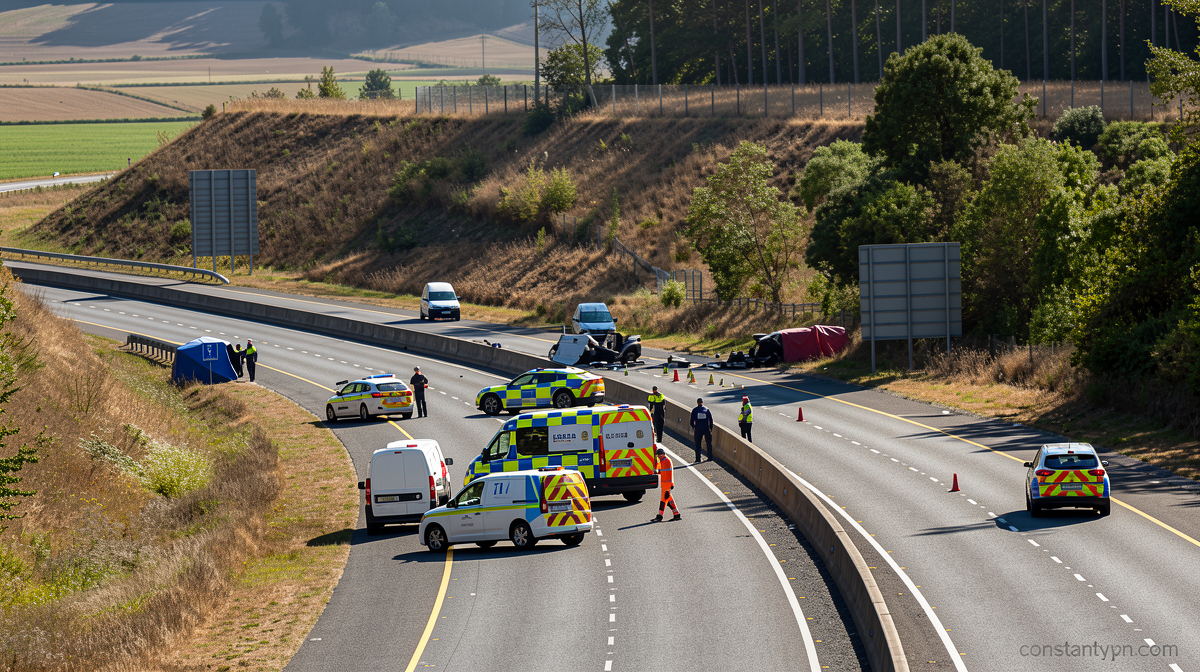
    Constantvpn.com – A head-on collision between two cars on the M9 motorway in County Kildare claimed the lives of five teenage boys in the early hours of Sunday, while four other occupants of the second vehicle were rushed to hospital in critical or serious condition. The crash, which struck at approximately 03:00 local time near Junction 3 on the northbound carriageway, has left communities across the county in shock and prompted a wide-ranging appeal for witnesses and dashcam footage.

    What Happened

    Gardaí confirmed that one of the two vehicles involved had been travelling on the wrong side of the carriageway when it met the second car head-on. All five occupants of the wrong-way vehicle were teenage boys; their bodies were recovered from the scene and transported to Naas General Hospital, where post-mortem examinations are scheduled to take place. Irish broadcaster RTÉ relayed that gardaí stated no police pursuit was underway at the moment of impact.

    The second vehicle sustained far less structural damage but its four occupants were all hospitalised. The driver and front-seat passenger — both women in their 30s — were airlifted or transported to Tallaght University Hospital and remain in critical condition. A female rear-seat passenger in her 20s was taken to St. Luke’s General Hospital in serious condition, while a child passenger was conveyed to Children’s Health Ireland at Crumlin, also listed in serious condition.

    Motorway Closure and Local Impact

    The stretch of the M9 between Junction 3 and Junction 4 was closed in both the northbound and southbound directions following the collision. Local diversion routes were activated to reroute traffic around the sealed section. The M9 is a primary arterial route linking Dublin to the west of Ireland, and closures of this magnitude typically generate significant congestion for commuters and freight operators heading toward Limerick, Galway, and beyond.

    Garda Commissioner’s Reaction

    Garda Commissioner Justin Kelly addressed the public shortly after the crash, describing the event as a “horrific incident” caused by “irresponsible and dangerous driving.” He identified the injured occupants of the second car as “family members” who were “travelling innocently” when struck by the vehicle on the wrong side of the carriageway.

    “What makes this reckless behaviour even more appalling is that in some cases it is being done for social media likes regardless of the potentially devastating impact it might have on innocent people and themselves.”

    Kelly acknowledged the operational difficulty faced by frontline officers, noting that they “do what they can to stop such vehicles while also taking into consideration all other road users” and that “Gardaí are put in a really challenging situation dealing with such incidents.”

    The Social-Media Driving Trend

    The Commissioner’s remarks pointed to a growing pattern in which drivers deliberately travel the wrong way on motorways or major roads to capture short video clips for platforms such as TikTok and Instagram Reels. In Ireland, several near-misses and minor collisions have been attributed to this behaviour over recent months, and road-safety advocates have called for clearer signage and stronger enforcement at junctions where wrong-way entry is most likely. The M9’s design, with its multiple slip roads and a relatively narrow median at certain points, makes wrong-way entry particularly hazardous at night when visibility is limited and traffic volumes are lower.

    Independent Investigation Underway

    Fiosrú, the Office of the Police Ombudsman, was formally notified of the incident and dispatched an on-call team of investigators to the scene. An independent inquiry is now in progress. Fiosrú explained that its mandate covers incidents involving contact with gardaí in which a member of the public has died or been seriously injured, and clarified that a referral does not imply an accusation of wrongdoing against any officer. Rather, the body exists to determine independently whether any act or omission by a garda may have contributed to the death or serious harm of a person.

    Political Response

    Shónagh Ní Raghallaigh, Sinn Féin TD for Kildare South, described the aftermath as “absolutely catastrophic” and extended her “deepest sympathies” to the families of the five teenagers killed and to those still fighting for their lives in hospital beds.

    “My heart also goes out to the first responders and all of those working in our emergency services who were met with the most horrific of scenes this morning. This loss of life is colossal and the effect those losses will have on their friends and families is incalculable.”

    Appeal for Witnesses and Dashcam Footage

    Gardaí have issued a public appeal asking anyone who witnessed the collision to come forward with details. Separately, they are urging road users who were travelling on the M9 — in either direction — between 02:00 and 03:00 on Sunday to check whether their vehicles were fitted with dashcams and, if so, to make any relevant footage available to the investigating team. Even brief clips capturing traffic flow, lighting conditions, or the approach of the wrong-way vehicle could prove significant in reconstructing the sequence of events leading up to the fatal impact.

    Naas General Hospital, Tallaght University Hospital, St. Luke’s General Hospital, and Children’s Health Ireland at Crumlin have all been involved in the aftermath, and families of the deceased are expected to receive updates as post-mortem examinations are completed. The full circumstances of the crash, including the identity of the driver of the wrong-way vehicle and whether any prior police contact occurred, remain under active investigation.

    Frequently Asked Questions

    What is Five teenagers dead and four injured?

    Five teenagers dead and four injured is the main topic of this guide. The article explains the context, practical details, and next steps readers should understand.

    Why does Five teenagers dead and four injured matter?

    Five teenagers dead and four injured matters because readers are looking for a useful answer, not just a short summary. Good content should match search intent and help them decide what to do next.