
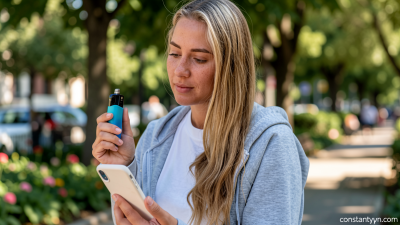
Medical Review Sounds Alarm on Vaping’s Growing Grip on Young Britons
Constantvpn.com – A systematic examination of nearly 81 published studies has concluded that electronic cigarettes are far from the benign habit many young people assume them to be. The Royal College of Paediatrics and Child Health (RCPCH) has published its findings in the journal Archives of Disease in Childhood, warning that vaping among children and adolescents is associated with a range of physical and psychological harms that demand urgent regulatory attention.
The review, which scrutinised research examining both health and social outcomes of vaping in under-18 populations, found statistically significant links between e-cigarette use and respiratory complaints such as wheezing and coughing. Beyond the lungs, the evidence pointed to deteriorating oral and dental health, disrupted sleep patterns, worsening mental health indicators, and unexplained eye symptoms. Perhaps most strikingly, the analysis identified signals of harm in infants born to mothers who vaped during pregnancy — a finding that extends the conversation well beyond the teenager holding the device.
What the Evidence Actually Shows
Prof Will Carroll, co-author of the systematic review, described the findings as demonstrating “clear links” between vaping and respiratory symptoms, nicotine dependence, and a subsequent step up to conventional cigarette smoking. In other words, the pathway many public-health officials have long feared — that a child picks up a vape at school and transitions to a pack of combustibles within a few years — appears to be borne out by the data.
“We must act to make vaping less attractive and accessible to children,” Prof Carroll said.
The college’s position is unambiguous: vaping should not be normalised as “a harmless part of growing up.” That framing, the authors argue, has allowed a nicotine-delivery system to embed itself in adolescent culture faster than regulators have been able to respond.
A Market Moving Faster Than Policy
Dr Mike McKean, vice-president for policy at the RCPCH, acknowledged that the product category remains young enough that long-term paediatric data are still sparse. Yet he cautioned that a “clear and concerning picture is emerging” from what is already known.
“We need to keep pace with a rapidly evolving market and continue to take action to protect children from nicotine products,” Dr McKean added.
The urgency is underscored by polling commissioned by the charity Action on Smoking and Health (Ash), which found that almost one in five British teenagers aged 11 to 17 have tried vaping at least once. That penetration rate, in a demographic that was largely smoke-free a generation ago, has prompted calls for controls as aggressive as those once applied to combustible tobacco.
Government Response: Plain Packs, Hidden Shelves, and a Lifelong Tobacco Ban
In July, the UK government opened a 12-week (100-day) consultation on the appearance, packaging, and in-store display of vapes. The stated aim is to strip away the visual and sensory appeal that draws younger buyers. Under the proposals under discussion, packaging would be required to be plain, with strict limits on branding and only straightforward flavour descriptors such as “apple” or “cola.” Retail displays would be moved out of sight, mirroring the existing regime for cigarettes and tobacco products.
The consultation follows the recent passage of the Tobacco and Vapes Act, which enshrines what ministers describe as the UK’s first smoke-free generation. Under the new law, anyone born after 1 January 2009 — meaning all children aged 17 or younger today — faces a lifelong prohibition on purchasing cigarettes, as shops will be legally barred from selling tobacco to that cohort.
“An important step towards protecting children from nicotine addiction, but it must not be seen as a one-and-done solution,” Dr McKean said of the new act.
Prof Carroll went further, arguing that the government needed “to go further and limit the types of flavours available to them as opposed to just their descriptions.” In practical terms, that would mean capping the sheer variety of flavours on the shelf rather than merely regulating how they are labelled.
Charities and Clinicians Weigh In
Hazel Cheeseman, chief executive of Ash, stressed that while vaping remains less harmful than smoking, it is categorically not risk-free.
“As it was with tobacco, strong controls on marketing and promotion will be key to reducing youth vaping,” she said.
Andrew McCracken of Asthma + Lung UK drew a sharper line: vapes may serve a legitimate quit-smoking function for adult smokers, but for non-smokers — and especially for children — the advice is simple.
“Anyone who doesn’t smoke, shouldn’t vape, and that is especially true for children,” McCracken stated.
The Department of Health and Social Care echoed the medical consensus, confirming that “children should never vape and this evidence shows just some of the risks associated.” The department noted it has already banned single-use vapes and has legislated to prohibit vaping advertising and sponsorship from next year. It added that it is actively consulting on measures to crack down on packaging designed to appeal to younger consumers.
Why This Matters Now
The convergence of new paediatric evidence, a surging teen vaping rate, and a government already mid-consultation creates a narrow window in which policy can still shape the trajectory of a product that has, in just over a decade, become a fixture of school corridors and teenage social life. The RCPCH’s review does not argue that vaping is as dangerous as combustible tobacco; rather, it insists that the assumption of safety — the quiet premise that lets a child pick up a device without adult intervention — is no longer defensible. What follows from that premise, both in the consultation room and on the shop floor, will determine whether the next generation inherits a nicotine habit or escapes it entirely.
Related Reading
Frequently Asked Questions
What is Vapes could lead to health harms?
Vapes could lead to health harms is the main topic of this guide. The article explains the context, practical details, and next steps readers should understand.
Why does Vapes could lead to health harms matter?
Vapes could lead to health harms matters because readers are looking for a useful answer, not just a short summary. Good content should match search intent and help them decide what to do next.