Author: David Williams – constantvpn.com

  • Trump Mobile promoted a ‘Made in the USA’ phone – but the details kept changing

    Trump Mobile promoted a ‘Made in the USA’ phone – but the details kept changing

    Trump Mobile’s USA Phone: Details Kept Changing

    Constantvpn.com – When Trump Mobile promoted a Made-in-the-USA smartphone in the summer of 2025, the announcement was unmistakably political as much as commercial. Two sons of the sitting president unveiled the “T1” handset with a pledge that final assembly would occur on American soil and that pre-ordering customers would receive their units within a matter of months. The branding was explicit: a domestic-manufacturing identity meant to signal a break from decades of overseas assembly.

    Twelve months later, that narrative has fractured. Where the phone is built, what its final form factor looks like, and when buyers actually receive their devices — each of these details has been revised more than once. A slice of the early customer base still sits in limbo, watching delivery windows slide further out with every update.

    The Family Behind the Flagship

    The venture operates under the management of Donald Trump’s eldest sons, who have long overseen the family’s commercial interests across real estate, licensing, and media. That proximity to the White House means every public stumble reads differently. A slipped shipment date from an unknown startup becomes a support ticket; the same slip from a brand carrying a president’s surname becomes a headline.

    “A delayed shipment from an obscure startup generates a support-ticket; a delayed shipment from a phone marketed under a president’s family name generates headlines.”

    Why the Domestic-Assembly Claim Lands Differently

    The United States has not mass-produced a smartphone domestically for well over a decade. Nearly every handset sold in American retail is assembled in Asian facilities, with components drawn from a global supplier web. Claiming that a new phone would be built stateside therefore implies a level of vertical integration — component sourcing, final assembly, quality control — that very few consumer-electronics firms have attempted in the country since the industry consolidated its manufacturing footprint abroad.

    For a product tied to a sitting president’s family name, the domestic angle also echoes campaign-era rhetoric about reshoring factory jobs and cutting dependence on foreign production. When the specifics of where and how the T1 is actually manufactured begin to wobble, the gap between political promise and commercial reality becomes harder to dismiss.

    A Pattern of Shifting Specifications

    Across the year following the summer 2025 launch, publicly available information about the T1’s build location, physical design, and expected delivery window changed on multiple occasions. Each revision pushed the timeline further out or altered the device description in ways that made it difficult for consumers to identify which version of the product they had ordered. The cumulative effect: a phone that exists, in the public eye, more as a moving target than a fixed item on a shelf.

    Instability of this kind is not unheard of in consumer electronics. Startups and established brands alike revise roadmaps when supply-chain constraints, regulatory hurdles, or engineering challenges intervene. What distinguishes this case is the scale of public attention and the political symbolism embedded in the launch messaging.

    What Early Buyers Are Experiencing

    Customers who pre-ordered in the wake of the summer 2025 announcement have, in some cases, waited well beyond the original “within months” window without receiving a device. Repeated adjustments to delivery estimates have left a cohort of buyers in an uncertain holding pattern, unsure whether their order will materialize soon or whether the product they envisioned has been materially altered. For many, the frustration is compounded by the absence of a single, stable public account of what the phone is, where it is made, or when it will arrive.

    FAQ

    What is the Trump Mobile T1?

    The T1 is a consumer smartphone announced in summer 2025 by the Trump Mobile venture, managed by Donald Trump’s eldest sons. It was marketed with a domestic-manufacturing pledge
  • Tarling third in Vuelta opener after brother’s death

    Tarling third in Vuelta opener after brother’s death

    Josh Tarling Rides Back Into the Peloton Eight Days After Losing His Brother

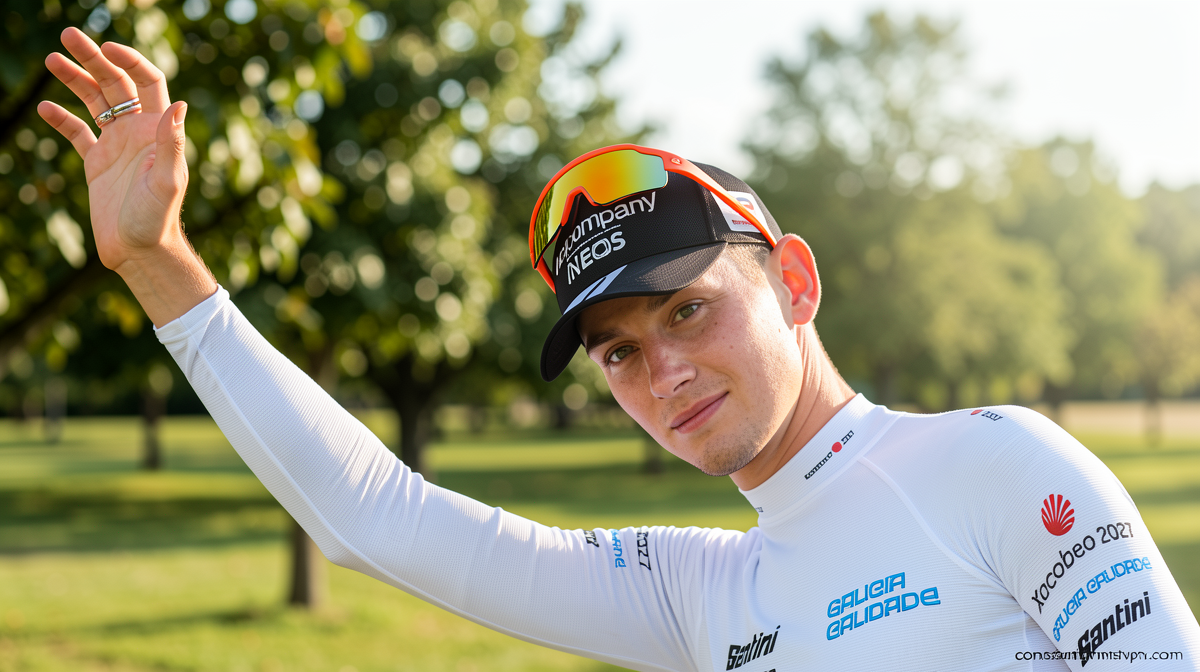
    Constantvpn.com – On a winding, technical circuit carved through the streets of Monaco, a 22-year-old Welsh time trial specialist crossed the line in third place — four seconds behind the winner — and the image of that finish line moment carried a weight far beyond the stopwatch. Josh Tarling, riding for Netcompany Ineos, had decided on his own to enter the Vuelta a España just eight days after his younger brother Finlay, known to friends and teammates as Fin, was killed in a cycling crash in Portugal. The young rider’s choice to return to competition so quickly, and the quality of his performance on what is arguably his strongest discipline, turned the opening stage of Spain’s Grand Tour into something the peloton will remember long after the results fade.

    A Tragedy That Shadowed the Start

    Finlay Tarling, 19, died last Friday during the eighth stage of the Volta a Portugal when a van strayed onto the road and struck him at high speed. The collision ended a career that was still in its earliest chapters. The Tarling family’s grief deepened further later that same week when the brothers’ grandfather also passed away. In the space of seven days, the family lost two people, and the cycling world watched helplessly as one of its most promising young talents was pulled from the sport by circumstances no one could have predicted.

    Yet Josh Tarling made the decision to ride the Vuelta himself. He did not wait for a team directive or a medical clearance beyond what was already in place. He wanted, in the words of his own racing director, to return to the day job, to find comfort in the process, and to be around the team as normally as possible. That choice framed everything about his stage-one effort.

    The Monaco Circuit and the Finish

    Stage one of the 2025 Vuelta a España began at the Casino Monte Carlo, its starting ramp spitting riders onto a course that threaded through a circus and looped around the famous swimming pool section of the Formula 1 circuit. It was a tight, technical layout — exactly the kind of terrain where a time trial specialist’s power-to-weight ratio and bike-handling skill translate into seconds gained or lost. For Tarling, it was also the first time he had properly ridden a race bike in weeks, making his result all the more remarkable.

    Tadej Pogacar, the 27-year-old Slovenian and five-time Tour de France champion riding for UAE Team Emirates-XRG, took the stage win by nine hundredths of a second from Britain’s Ethan Hayter of Soudal-Quick Step. Tarling crossed four seconds behind the pair, with Callum Thornley of Red Bull-Bora-Hansgrohe just one second further back — meaning three British riders occupied the top four positions. Pogacar, before the podium presentation, walked over and embraced the Welshman in a gesture of solidarity that spoke louder than any commentary.

    Geraint Thomas on What Tarling Did

    Netcompany Ineos’ racing director, fellow Welshman Geraint Thomas, spoke after the stage about what it meant to see his rider back in the saddle:

    “It’s been great to have him here – he was really keen to ride and wanted to get back to the day job and find comfort in the process and be around the team to be a normal as possible.”

    “It’s great to have him here, it’s been unimaginable what he’s gone through this last week or so.”

    “To put in a performance like that at the end of the week or so is just fantastic and shows the class of him as person and an athlete, so couldn’t be prouder.”

    “I think the course suited him technically – he’s one of the best and yesterday was probably the first time he’s ridden a bike properly in a while, so to still put that in is insane, really.”

    “We’ll just continue to be normal around him now and support as best we can.”

    What Tarling Brings to the Sport

    The result was not a fluke. Tarling has already claimed a stage victory at the Giro d’Italia and holds the European time trial championship title. His discipline — sustained, solo power output over short, technical courses — is the one in which he has consistently operated at the very top of the international field. The Monaco layout, with its tight corners and limited recovery zones, played directly to that strength. Finlay Tarling, had tragedy not intervened, was expected to become a permanent fixture in the sport’s biggest races. His brother’s performance on stage one, delivered under extraordinary personal pressure, offered a glimpse of what that shared future might have looked like.

    Looking Ahead: Stage Two and Beyond

    Tarling now wears the white jersey of the fastest young rider heading into stage two, a 214.3-kilometre hilly route to Manosque in Provence. Netcompany Ineos will allow him to decide whether he wishes to continue through the three weeks of sprints and mountainous climbs that define the southern Spanish Grand Tour. A second time trial is scheduled for stage 18, a stage where Pogacar — riding for overall percentages in his bid to collect all three Grand Tours and complete the sport’s most complete Grand Tour record — may be less motivated to attack. That stage could represent Tarling’s clearest opportunity for a victory in the race.

    The mood around the peloton in Monaco was one of quiet respect. Riders acknowledged the pain of losing a member of their own community and the ongoing need to push for greater safety in road racing. The Tarling family’s loss sits alongside a broader conversation about van access to race routes, spectator zones, and the physical vulnerability of riders at speed. In that context, Josh Tarling’s decision to ride — and the level he produced — was not merely a sporting result. It was a statement, made in watts and seconds, that the sport’s most intimate bonds survive even its worst days.

    Stage One Results

    Pogacar (Slo/UAE Team Emirates-XRG) 10:57; Hayter (GB/Soudal Quick-Step) +0.09; Tarling (GB/Netcompany-Ineos) +4; Thornley (GB/Red Bull-Bora-Hansgrohe) +5; Laporte (Fra/Team Visma-Lease a Bike) +6; Chamberlain (Aus/Decathlon-CMA CGM) +8; Bisiaux (Fra/Decathlon-CMA CGM) +9; Van Aert (Bel/Team Visma-Lease a Bike) same time; Fisher-Black (NZ/Red Bull-Bora-Hansgrohe) +10; Kluckers (Lux/Tudor Pro Cycling) +11.

    Frequently Asked Questions

    What is Tarling third in Vuelta opener after?

    Tarling third in Vuelta opener after is the main topic of this guide. The article explains the context, practical details, and next steps readers should understand.

    Why does Tarling third in Vuelta opener after matter?

    Tarling third in Vuelta opener after matters because readers are looking for a useful answer, not just a short summary. Good content should match search intent and help them decide what to do next.

  • Tonali nightmare as Sangare stars – Brentford v Spurs player ratings

    Tonali nightmare as Sangare stars – Brentford v Spurs player ratings

    Brentford’s 3-0 Rout Exposes Tottenham’s Rebuild in Costly Fashion

    Constantvpn.com – The Premier League’s opening weekend delivered a brutal reality check for Tottenham Hotspur. Roberto de Zerbi’s squad, assembled at considerable expense over the summer transfer window, fell to a comprehensive 3-0 defeat at the Gtech Community Stadium. Brentford, playing with disciplined intensity and clinical finishing, turned three separate scoring opportunities into goals and left Spurs’ new-look backline scrambling for answers that never came.

    The result lands with particular weight given the financial outlay behind several of the visitors’ summer acquisitions. Sandro Tonali, a £100m signing from Atalanta, made his Spurs debut in front of a hostile crowd and produced a performance that raised immediate questions about value for money. Meanwhile, Brentford’s own marquee arrival, Mamadou Sangare, arrived at a club-record £39m and instantly justified the investment with a composed, influential display that anchored the Bees’ midfield.

    The Goals That Decided the Afternoon

    Brentford struck first through Keane Lewis-Potter, whose clinical finish from the flank gave the home side a lead they would never relinquish. The goal was set up by Sangare, whose combination of winning possession and distributing it with precision made him the standout performer on the pitch. Vitaly Janelt doubled the advantage shortly after, pouncing on a Mathias Jensen set-piece delivery that Antonin Kinsky pushed out awkwardly. Michael Kayode sealed the matter late on, arriving wide and converting a chance that effectively ended any lingering hope of a comeback.

    Igor Thiago, the Brazilian striker whose physical presence troubled Spurs’ defenders throughout, had a golden opportunity to make it four when he stepped up to a penalty in the second half. He sent it wide, and the miss marred what had otherwise been an excellent individual outing.

    Tonali’s Debut: A £100m Question Mark

    For Spurs, the most uncomfortable storyline of the afternoon belonged to Tonali. The Italian midfielder, acquired for a fee that places him among the most expensive signings in the club’s history, failed to exert any meaningful influence on the contest. One first-half effort drew ironic applause from the Brentford end, but beyond that single moment he was largely invisible. The contrast with Sangare’s commanding performance just a few yards away made the disparity in impact impossible to ignore.

    Conor Gallagher, who took several heavy early knocks and was booked for a trip on Sangare, was replaced at the interval. Rodrigo Bentancur, who came on at the break, compounded the midfield’s problems by giving away a penalty. Lucas Bergvall, also substituted at half-time, was guilty of a poor giveaway that led directly to Janelt’s second goal.

    Spurs’ Defensive Disarray

    The backline, reshaped by summer departures and emergency selections, never found cohesion. Archie Gray, the youngest captain in Tottenham’s history, was thrust into an emergency right-back role and looked every bit the stopgap he was. Marcos Senesi and Jan Paul van Hecke both struggled to contain Thiago’s movement and the surrounding overloads. Andrew Robertson, making a difficult debut at left-back for the veteran, was repeatedly stretched by Brentford’s pace on the right flank.

    Antonin Kinsky, installed as the new first-choice goalkeeper, was at fault on the second goal when his push-out from a Jensen shot fell to Janelt. His distribution was also wayward on several occasions, compounding the team’s broader distributional problems.

    Brentford Player Ratings

    Caoimhin Kelleher – 6: Unflappable between the posts, making the necessary saves without ever looking rattled.

    Michael Kayode – 7: A constant threat out wide whose opportunistic goal put the match beyond doubt.

    Kristoffer Ajer – 6: Read the game well and dealt with the limited Spurs danger with composure.

    Nathan Collins – 6: Missed an early headed chance but otherwise went untroubled at the back.

    Keane Lewis-Potter – 7: Clinical on the opening goal and a quality provider from the flanks throughout.

    Vitaly Janelt – 7: Pounced for the second goal and delivered the sort of reliable performance Brentford have come to expect.

    Mathias Jensen – 7: Dangerous from set pieces; his shot created the chance that led to Janelt’s goal.

    Dango Ouattara – 6: A poor touch cost him a first-half chance, but his prodigious work-rate made a crucial contribution elsewhere.

    Mamadou Sangare – 8: Outstanding. Won possession, used it intelligently, and set up Lewis-Potter’s opener superbly. The £39m club-record signing looks like a bargain already.

    Igor Thiago – 7: His physicality worried Spurs all afternoon, though the missed penalty marred an otherwise excellent display.

    Kevin Schade – 6: Constantly linking with Thiago and troubling the Spurs defence.

    Subs: Yehor Yarmoliuk (67, Jensen) – 5; Jaidon Anthony (67, Ouattara) – 5, a quiet introduction for the debutant.

    Tottenham Player Ratings

    Antonin Kinsky – 5: A bad day for the new first-choice keeper; at fault on the second goal and wayward in distribution.

    Archie Gray – 5: Youngest captain in club history, but not a day for celebration. Played emergency right-back and looked like exactly that.

    Marcos Senesi – 5: Struggled to cope with Thiago’s physicality and the movement around him.

    Jan Paul van Hecke – 5: Never comfortable in a shambolic Spurs defence.

    Andrew Robertson – 5: A tough debut; struggled with Brentford’s pace and movement on the right flank.

    Conor Gallagher – 4: Took heavy early knocks, shot wildly, was booked for a trip on Sangare, and replaced at half-time.

    Lucas Bergvall – 4: Too many wasted passes and a poor giveaway leading to the second goal.

    Sandro Tonali – 4: Desperately poor debut for the £100m signing. One ironic-cheered effort and no serious influence thereafter.

    Mikey Moore – 6: Isolated on the right with little support, but at least looked dangerous and gave Kelleher work to do.

    Richarlison – 4: Ineffective and visibly losing heart as the contest progressed.

    Mathys Tel – 4: An early clever flick hinted at a threat, then anonymity followed.

    Subs: Mateus Fernandes (45, Gallagher) – 5, anonymous on debut; Rodrigo Bentancur (45, Bergvall) – 5, gave away a penalty; James Maddison (68, Moore) – 5, no time to make an impact; Dominic Solanke (68, Richarlison) – 5, the game was already decided.

    What Comes Next

    For De Zerbi, the afternoon raises urgent questions about squad depth, defensive organisation, and whether the summer’s most expensive acquisitions can deliver at the required level. Tonali’s £100m tag means every poor performance will be magnified under the spotlight, and the contrast with Sangare’s immediate impact at Brentford only sharpens the scrutiny. For Thomas Frank’s side, the emphatic win validates a season of patient, structured development and suggests the squad’s collective work-rate can trouble even the most expensive opposition. The Premier League season, for Tottenham at least, began in the most uncomfortable of ways.

    Frequently Asked Questions

    What is Tonali nightmare as Sangare stars?

    Tonali nightmare as Sangare stars is the main topic of this guide. The article explains the context, practical details, and next steps readers should understand.

    Why does Tonali nightmare as Sangare stars matter?

    Tonali nightmare as Sangare stars matters because readers are looking for a useful answer, not just a short summary. Good content should match search intent and help them decide what to do next.

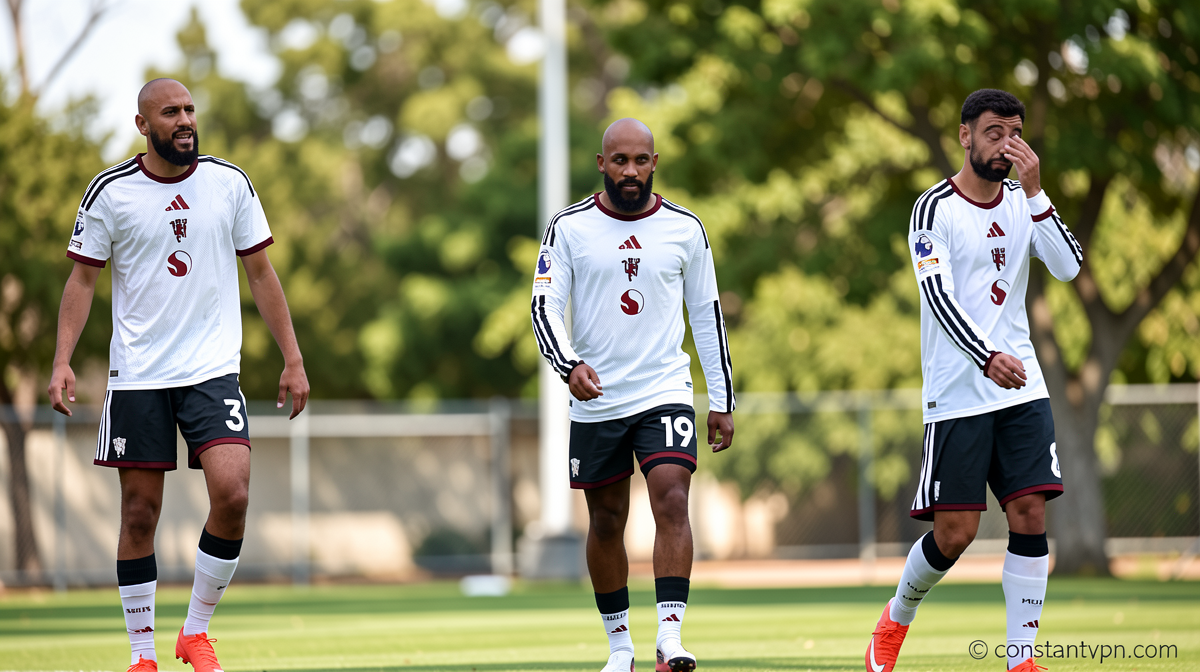
  • Man Utd ‘didn’t look ready’ – but hurting Carrick remains calm

    Man Utd ‘didn’t look ready’ – but hurting Carrick remains calm

    Opening-Day Humiliation at the KC Stadium: Manchester United’s Season Begins in Disarray

    Constantvpn.com – Two goals in the first half were all Hull City needed to hand Manchester United their first-ever opening-game defeat to a newly promoted side in Premier League history. The result, delivered on a Saturday afternoon in East Yorkshire, marked the first top-flight victory over United by the Tigers and extended a league drought stretching back to a Second Division fixture in 1974. For the travelling supporters, the evening took a darker turn when the stadium announcer interrupted the second half to inform them that two return trains from Hull city centre had been cancelled. The home crowd’s roar at that announcement reportedly matched the volume of their celebration for the goals themselves.

    The 2,400 United fans who made the journey north would have found little comfort in the performance. Hull’s wing-back system stretched United’s back line repeatedly, and the visitors struggled to generate meaningful chances across the full ninety minutes. The defeat compounded an already bruising week: just days earlier, United had fallen to AC Milan in a pre-season friendly in Poland, raising early questions about match sharpness and defensive organisation.

    Voices from the Touchline

    Former United striker Wayne Rooney, speaking to BBC Sport, identified the absence of creative threat as the central concern.

    “They didn’t create much, which was the biggest worry. When you play a promoted team, it’s always difficult. First game of the season away from home, United just didn’t seem ready for it.”

    Alan Shearer, the ex-Newcastle forward, framed the problem in physical terms during a BBC Radio Five Live broadcast, suggesting the squad had not arrived at the match in adequate condition.

    “I haven’t seen Manchester United in pre-season. I saw them in this game and they didn’t look fit, they didn’t look ready to play 90 minutes of intense, high pressure, high-energy football.”

    That assessment sits in tension with the training data: six members of the starting eleven returned to work on 9 July, and no fitness concerns had surfaced until the Milan result. The debate over whether the issue is physical, tactical, or psychological will dominate the coming days of analysis.

    Tactical Fault Lines Exposed

    Hull manager Sergej Jakirovic had clearly studied United’s vulnerabilities in advance, targeting set-pieces as a primary route to goal. The approach paid dividends, and the pattern echoed what AC Milan had exploited in Poland the previous weekend: opponents deploying wide wing-backs to overload United’s defensive channels. Captain Bruno Fernandes acknowledged the recurring problem in his post-match remarks to TNT Sports.

    “Same mistakes as we did last season in every away game. We give too much of the ball to them. In the first 20 minutes the goalkeeper had more touches on the ball, too much time. We need to press a little bit more, be more aggressive, and set-plays — we need to work on it, to be more aggressive and try not to concede these types of goals.”

    Marcus Rashford came on at the break for his first United appearance since December 2024, but his introduction could not alter the trajectory of a match already decided before the interval. The toothlessness in attack persisted on either side of the half-time whistle.

    Carrick’s Composure Under Fire

    Michael Carrick’s response to the defeat offered a study in controlled emotion. Where his predecessor Ruben Amorim brought volatility and headline-chasing to the Old Trafford dug-out, Carrick projects a steadier, more measured public persona. Yet he made clear the composure is a choice, not an absence of feeling.

    “I’m talking to you quite calm. But I’m not exactly calm inside and enjoying the day, you know? It’s 100% not that, trust me, it’s not that. Inside we’re hurting but it doesn’t mean we all have to shout and scream and come out and create some chaos. The calmness doesn’t mean there’s no emotion in it, for sure.”

    He framed the result in deliberately narrow terms:

    “It’s just one game, we’re disappointed we haven’t won. It’s not more than that, it’s not less than that. We’ve got to soak it up and come back stronger.”

    That measured tone will be scrutinised by a media ecosystem hungry for reaction. Carrick knows the optics matter, and his ability to absorb enormous publicity without fracturing remains one of his defining managerial traits.

    What Comes Next

    United entertain another promoted opponent, Ipswich Town, at Old Trafford on 30 August. Carrick dismissed the notion on Thursday that his side had received a “favourable” fixture schedule, calling the idea “ridiculous” — a view the Hull result only reinforced. The £70m signing of Brighton midfielder Carlos Baleba has already arrived at the club, offering a potential answer to the creative drought that defined both halves at the KC Stadium. Whether that answer materialises in time for the Ipswich visit remains the central question as United’s Premier League campaign begins from a position of genuine discomfort.

    Frequently Asked Questions

    What is Man Utd didn t look ready?

    Man Utd didn t look ready is the main topic of this guide. The article explains the context, practical details, and next steps readers should understand.

    Why does Man Utd didn t look ready matter?

    Man Utd didn t look ready matters because readers are looking for a useful answer, not just a short summary. Good content should match search intent and help them decide what to do next.

  • Watch: Moment humanoid robot beats Usain Bolt’s 100m record

    Watch: Moment humanoid robot beats Usain Bolt’s 100m record

    Watch: Moment humanoid robot beats Usain Bolt’s 100m record

    Constantvpn.com – In a scene that looked pulled straight from science fiction, a humanoid robot sprinted the 100-metre dash in 9.39 seconds at the World Humanoid Robot Games held in China, officially eclipsing the human world record. The machine, engineered by the Beijing Innovation Centre of Humanoid Robotics, crossed the finish line faster than any athlete has ever done, shaving nearly two-tenths of a second off the benchmark set by Jamaica’s Usain Bolt. The moment captured on camera — the one you can watch in full — shows the robot’s mechanical limbs cycling at a speed that leaves human sprinters in the dust.

    Bolt, an eight-time Olympic gold medallist, established the 100-metre world record of 9.58 seconds back in 2009, a mark that stood for over fifteen years. Now that record belongs to a machine. The robot’s 9.39-second run at the World Humanoid Robot Games means that, on paper, no human being has ever run the distance faster. The achievement underscores how rapidly bipedal robotics has advanced from clumsy laboratory prototypes to competitors that can outpace the fastest humans on the planet.

    How the Robot Outran Its Rivals

    The sprint was not a solo exhibition. Two other humanoid robots entered the race, and the Beijing-built machine finished ahead of both. Among its competitors was a robot manufactured by Honor, the Chinese smartphone company, whose engineers claim the unit clocked 9.32 seconds during a closed test run. That figure, if verified in competition, would place the Honor-built robot even further ahead of Bolt’s mark, though the official race result at the Games went to the Beijing Innovation Centre entry.

    The World Humanoid Robot Games, which opened on Saturday, are far from limited to track events. The programme also features boxing matches, football (soccer) contests, and a series of household-task challenges in which robots attempt chores such as folding laundry. The breadth of the schedule signals that organisers view humanoid robotics as a general-purpose discipline rather than a single-sport curiosity, and the sprint event simply provided the most visually dramatic headline of the opening days.

    BBC China correspondent Laura Bicker, reporting from Beijing, noted that the crowd reaction to the robot’s sprint was indistinguishable from the roar that greets a human world-record attempt. The blend of spectacle and genuine engineering milestone made the event a viral sensation across Chinese social media within hours of the race.

    Frequently Asked Questions

    Did the robot actually break Usain Bolt’s world record? Yes. The humanoid robot completed the 100-metre sprint in 9.39 seconds at the World Humanoid Robot Games, beating Bolt’s 9.58-second record set in 2009. Because the run took place at a robotics competition rather than an IAAF/World Athletics-sanctioned meet, it is not recognised as an official athletics world record, but the time itself is faster than any human has ever posted.

    Who built the robot that ran the race? The sprinting robot was developed by the Beijing Innovation Centre of Humanoid Robotics, a research institution based in China’s capital. It competed against two other humanoid units, including one produced by Honor, a Chinese consumer-electronics company.

    What other events were part of the World Humanoid Robot Games? Beyond the 100-metre sprint, the Games featured boxing, football, and domestic-task challenges such as folding laundry. The multi-event format is designed to test robots across a range of physical and cognitive capabilities, not just raw speed.

    Where can I watch the footage of the robot beating the record? The full clip of the moment the humanoid robot beats Usain Bolt’s 100m record was broadcast by the BBC and is available through its video platform. The clip shows the robot’s entire sprint from start to finish, including the finish-line crossing.

    The robot’s 9.39-second run does not rewrite the athletics rulebook, but it rewrites the public’s sense of what a bipedal machine can do in a single afternoon.

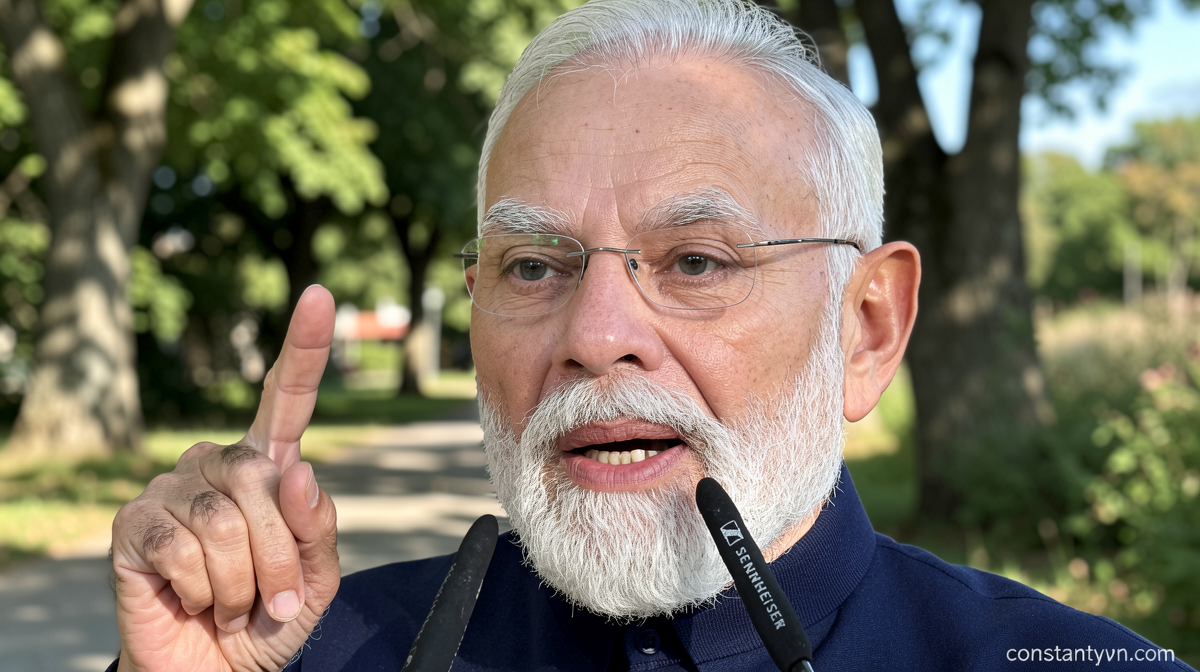
  • Modi spent years building his strong image – why is he making Gen Z reels now?

    Modi spent years building his strong image – why is he making Gen Z reels now?

    From Scripted Authority to Selfie Reels: How India’s Prime Minister Is Rebuilding His Digital Persona for a Generation That Never Met Him

    Constantvpn.com – For over two decades, Narendra Modi’s public image was constructed with the precision of a state-level production: rehearsed speeches delivered from podiums, formal television addresses, and appearances staged to project unshakeable authority. Now, at 75, the Indian prime minister is posting “get-ready-with-me” reels and selfie-style video clips on Instagram, addressing young viewers as “friends” and attempting to sound like one of them. The pivot marks a striking departure from a political brand that spent years cementing a strongman identity through carefully choreographed media moments.

    Modi’s Instagram timeline, which until roughly a month ago carried only polished, curated posts, now features what his team frames as more “candid” material. Among the additions: a casual behind-the-scenes style video and several direct-to-camera addresses aimed squarely at younger Indians. In one clip recorded at a graduation ceremony in Delhi, he attempted to deploy a phrase circulating among Gen Z audiences:

    “First in my bloodline to build a rocket, a chip and a drone.”

    The attempt landed awkwardly. But the numbers behind the account are undeniable: Modi commands more than 106 million Instagram followers, placing him among the most-followed political figures on the platform globally. Yet for years, the tone of his social media presence was never a priority for either his inner circle or the Bharatiya Janata Party’s broader digital apparatus — despite the BJP’s well-documented success in mastering online campaigning that helped carry it to power in 2014.

    The Protests That Forced a Recalibration

    The catalyst for this sudden tonal shift was not a polling dip or a by-election loss. It was a wave of youth-led protests that swept through Indian cities earlier this year, organized and amplified through a satirical collective known as the Cockroach Janta Party, or CJP. What began as an internet joke — a fictional party built on memes, livestreams, and Instagram reels — escalated into a movement powerful enough to compel the resignation of Education Minister Dharmendra Pradhan.

    The CJP’s capacity to convert online attention into street mobilisation and sustained political pressure reportedly caught the BJP by surprise. Author and political commentator Anurag Minus Verma notes that for more than a decade the Hindu nationalist party had constructed one of India’s most formidable online political machines, leveraging WhatsApp groups, Facebook pages, and X accounts to amplify its messaging. But that infrastructure was built for a different audience, consuming content in a different rhythm.

    Why the Demographics Make This a Stakes Question

    The urgency behind the pivot is arithmetic. More than 60 percent of India’s population is under 35. The Gen Z cohort — those born between 1997 and 2012 — is projected by electoral analysts to constitute one of the country’s largest voting blocs by the time of the 2029 general election. Capturing their allegiance will require meeting them where they actually consume media: on platforms like Instagram, where unfiltered, personal-feeling content tends to outperform traditional political messaging in engagement metrics.

    That logic explains why Modi’s team moved quickly once the protests subsided. According to reports, the prime minister reportedly instructed his cabinet ministers to ramp up their own social media engagement and reach out directly to younger citizens. The instruction signals that the party’s leadership views the digital gap not as a stylistic preference but as an electoral vulnerability.

    Reception: Sarcasm, Skepticism, and the “Cringe” Factor

    The initial rollout did not go smoothly. Young users responded to Modi’s first selfie-video reel — in which he broke his silence about the ongoing youth protests — with swift sarcasm. What generated the most viral attention was not the policy content but a long, conspicuous pause after he addressed viewers as “friends.” Edited versions of that moment trended across Instagram, with users layering jokes over the clip and mocking the lighting, camera angles, and overall production quality.

    In subsequent posts, the team appeared to adjust: experimenting with different backdrops, angles, and lighting setups. Some younger users acknowledged the outreach as a step in the right direction. Others remained unconvinced about the timing.

    “I understand why the BJP wants to connect with people my age, but the timing of this sudden increased engagement is what we really need to look at,” says Ginni Malia, 22. “The videos appear to adopt Gen Z language and formats, but fail to address the concerns that fuelled the protests.”

    The problem extends beyond Modi’s personal account. BJP-affiliated social media pages have begun deploying memes, slang, and pop-culture references aimed at younger demographics. Shortly after the protests wound down, the party published a reel set in a gym, featuring young people and an older trainer arguing that young Indians should steer clear of protest activity. The comment section largely labelled the video “cringe.” Another BJP post paired the title track from the 1990s sitcom Friends with the caption “PM Modi is there for you” — a reference that resonated with millennials but carried little cultural recall among Gen Z viewers.

    Among Malia’s peer group, these videos are treated as comic content rather than as genuine political outreach. They generate laughs, not persuasion.

    What Comes Next

    The BJP appears to recognize that its initial attempts to court younger audiences have not landed as intended. Whether the party can recalibrate quickly enough — moving past surface-level format mimicry toward substantive engagement with the policy grievances that drove the protests — will determine whether this digital rebranding becomes a durable electoral asset or another short-lived meme cycle. With the 2029 election horizon approaching and a voting bloc of unprecedented size coming of age, the margin for error in that recalibration is narrowing.

    Frequently Asked Questions

    What is Modi spent years building his strong?

    Modi spent years building his strong is the main topic of this guide. The article explains the context, practical details, and next steps readers should understand.

    Why does Modi spent years building his strong matter?

    Modi spent years building his strong matters because readers are looking for a useful answer, not just a short summary. Good content should match search intent and help them decide what to do next.

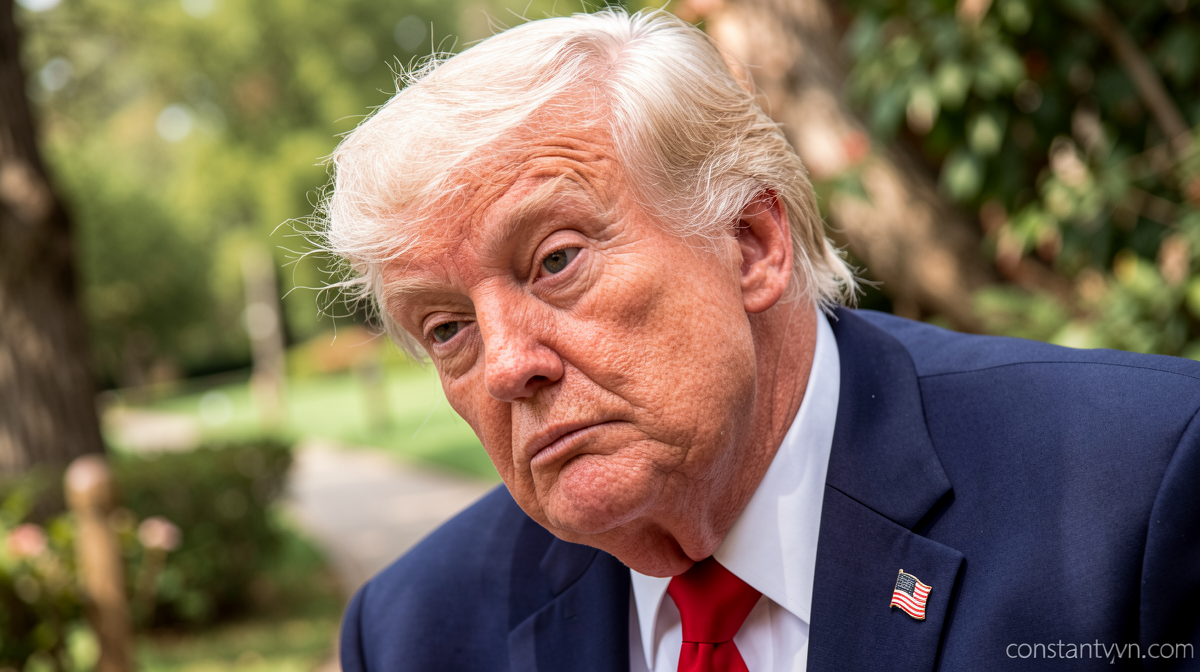
  • How much could Trump’s ‘economic D-Day’ hurt Iran?

    How much could Trump’s ‘economic D-Day’ hurt Iran?

    Washington’s Latest Gambit: An Economic Siege Aimed at Iran’s Trade Partners

    Constantvpn.com – What began as a promise of rapid military dominance over Tehran has, nearly half a year later, calcified into a grinding stalemate. Neither a decisive battlefield outcome nor a negotiated ceasefire has materialised, and the diplomatic channels that once offered a sliver of hope have largely gone silent. Into that vacuum, President Donald Trump has now injected a new instrument of coercion: what he has labelled an “economic D-Day,” a sweeping campaign designed to impose “tremendous” financial penalties on any nation that continues to trade with, fund, or otherwise sustain the Iranian economy.

    The logic is straightforward in theory. If direct military pressure cannot compel Tehran to capitulate, then strangling the external lifelines that keep its economy afloat might. The complication, however, is that Iran has been living under layers of Western sanctions for decades. Its leadership has repeatedly demonstrated both the political will and the institutional ingenuity to absorb severe economic shocks, reroute commerce through informal networks, and outlast the very measures meant to break it.

    What Washington Has Signalled

    The precise operational details of the new pressure campaign have not yet been published. Treasury Secretary Scott Bessent indicated that a formal briefing would follow on 24 August, at which point the mechanics of enforcement would be laid out. In the interim, however, his remarks on CNBC left little ambiguity about the administration’s posture toward third-party traders.

    “You are either with us or against us. If you insist on doing business with [Iran], either transferring money, buying their oil or doing seaborne sea transfers, then the US Treasury and the US government… will put its full might and force toward enforcing against you.”

    Vice-President JD Vance framed the initiative as a distinct escalation in the broader confrontation, calling economic coercion the “most effective” lever remaining in the American toolkit. Speaking on the Clay Travis and Buck Sexton programme, Vance characterised recent weeks as evidence that Tehran had absorbed more pressure than Washington had.

    “They’re going to try to apply economic pressure to us, but what has been true over the last couple of weeks is that they felt a lot more pressure than we have. We’re going to keep that going because we think that’s the best way to ultimately achieve the final objective.”

    Decades of Sanctions and the JCPOA Rupture

    Any assessment of whether a fresh sanctions wave can achieve what predecessors could not must begin with history. The United States has maintained some form of economic restriction on Iran since shortly after the Islamic Republic was established in 1979. Those restrictions tightened dramatically in 2018, when the first Trump administration pulled Washington out of the Joint Comprehensive Plan of Action — the 2015 multilateral agreement in which Iran agreed to cap its uranium enrichment in exchange for phased relief from Western financial penalties. The JCPOA’s collapse removed the principal incentive structure that had kept Iran’s nuclear programme within negotiated limits, and it reset the economic calculus for every trading partner that had been courting Tehran’s oil and petrochemical exports.

    In the present conflict, the administration has already deployed what it calls Operation Economic Fury, a two-track programme pairing Treasury-coordinated sanctions aimed at regime financial flows with a naval blockade of Iranian ports. The “economic D-Day” announcement appears to layer a third dimension onto that architecture: explicit, publicly signalled consequences for foreign governments and firms that continue to move goods, capital, or shipping services through or toward Iran.

    Analysts Question the Strategy’s Coherence

    Imran Bayoumi, a geostrategy specialist at the Atlantic Council in Washington and a former policy adviser within the US defence department, read the latest announcement less as a coherent new doctrine than as a symptom of frustration. In his assessment, the administration has exhausted its preferred military and diplomatic options without securing the outcome Trump publicly demanded, and is now reaching for economic instruments as a fallback.

    “This is really a recognition that the US is almost stuck in this war. It’s another try at economic pressure.”

    Bayoumi went further, arguing that neither a military end-state nor an economic end-state has been clearly articulated by the White House. Without a defined objective, he contended, the sanctions apparatus risks becoming a blunt instrument that punishes peripheral economies while leaving Tehran’s core decision-making calculus unchanged.

    Michael Parker, who spent eight years inside the Office of Foreign Assets Control and now advises on sanctions architecture, offered a more technical reading. He suggested the new campaign is an attempt to widen what he called the “economic blast radius” of existing measures by explicitly targeting third-country actors whose economies depend on the US dollar but who continue to facilitate Iranian trade. Historically, Washington has relied on the implicit threat of secondary sanctions against foreign banks to secure voluntary compliance. Parker argued that the current approach would make that threat explicit and operational, reaching into any dollar-denominated transaction that also touches an Iranian counterparty.

    “Thus far, the US has largely used the threat of these secondary sanctions against foreign financial institutions to encourage compliance with sanctions policy. But this is a lever that is sort of unexplored insofar as targeting anything touching the US dollar that is also touching Iran.”

    Tehran’s Proven Capacity to Adapt

    The central counter-argument to any new sanctions package is empirical: Iran has repeatedly found workarounds. Mohammed Hammouda, an export-control and sanctions manager at the London Stock Exchange, described a pattern in which Tehran deploys “shadow” tanker fleets to move crude oil outside sanctioned shipping lanes, and spins up new commercial entities that do not appear on US Treasury watch-lists. Each enforcement action, he noted, tends to generate a fresh set of intermediaries within weeks.

    “You keep seeing new names popping up, because Iran is adapting really quickly. Whatever sanctions one does, they find a new road [around it].”

    Hammouda emphasised that the visible architecture of sanctions — the lists, the regulations, the public designations — represents only the surface layer. The substantive enforcement work occurs behind the scenes, with teams in multiple jurisdictions attempting to trace funds, vessels, and corporate structures that are deliberately obscured. That asymmetry between the speed of Iranian adaptation and the slower tempo of multilateral enforcement is, in his view, the principal reason successive sanctions packages have failed to produce the political concessions Washington sought.

    What Comes Next

    The 24 August briefing will determine whether the administration’s rhetoric translates into enforceable mechanisms or remains a declaratory posture. For trading partners in Asia, Europe, and the Gulf, the stakes are immediate: continued engagement with Iranian oil, petrochemicals, and transit shipping now carries an explicit, named threat of Treasury action. For Tehran, the question is whether a further tightening of external pressure can finally compress the space within which its informal networks operate, or whether the regime will once again absorb the shock, reroute its commerce, and wait for the next administration to recalibrate its objectives.

    Frequently Asked Questions

    What is How much could Trump s economic?

    How much could Trump s economic is the main topic of this guide. The article explains the context, practical details, and next steps readers should understand.

    Why does How much could Trump s economic matter?

    How much could Trump s economic matters because readers are looking for a useful answer, not just a short summary. Good content should match search intent and help them decide what to do next.

  • What are T-levels and what are the grades worth?

    What are T-levels and what are the grades worth?

    A Practical Pathway for Post-16 Learners: Understanding T-levels and Their Place in English Education

    Constantvpn.com – As GCSE and BTec results land across England, Wales, and Northern Ireland, thousands of sixteen-to-nineteen-year-olds face a pivotal decision about their next stage of study. For those who find traditional A-levels too academically oriented yet want something less employer-bound than a full apprenticeship, a vocational qualification introduced in 2020 has grown steadily in popularity: the T-level.

    How the Qualification Works

    T-levels blend classroom instruction with substantial workplace experience. A mandatory industry placement of at least 315 hours — roughly nine weeks — accounts for approximately 20% of the total programme. This distinguishes them sharply from apprenticeships, which can demand that up to 80% of a learner’s time be spent with an employer. The design intent is clear: give students meaningful hands-on exposure without removing them entirely from structured academic settings.

    Assessment draws on multiple components. Final marks combine written examinations, coursework outputs, and completion of the industry placement. Learners receive one of four overall grades, spanning from a basic pass up to a distinction* at the top of the scale. The certificate issued at completion records the overall grade alongside a detailed list of experiences undertaken during the course.

    Grading, UCAS Points, and University Access

    For students planning to continue into higher education, the grading framework carries specific weight. A distinction* translates to 168 UCAS points — identical to the value of three A*s at A-level. A merit sits at the equivalent of three Bs. The Department for Education states that more than 150 UK universities and colleges recognise T-levels as an entry qualification, making the pathway a credible alternative for those who might otherwise default to A-levels.

    Subject Range and Recent Changes

    More than 20 T-level subjects are currently available, spanning areas such as accounting, craft and design, engineering, and media production. However, the landscape is shifting. The DfE has announced that students will no longer be able to begin a T-level in onsite construction, citing low enrolment numbers. The department explained the decision with the following statement:

    “The needs of learners and the economy are best met through apprenticeships and other classroom provision.”

    Other disruptions have affected the pipeline. Delays have pushed back the availability of certain courses, including catering, while some proposed T-levels — hairdressing among them — have been scrapped entirely before launch.

    Retention and Quality Concerns

    Enrolment numbers have climbed year on year since the qualification’s debut, yet completion remains a persistent challenge. Of the cohort that began a T-level in 2024, 77% finished the two-year programme in 2026 — an improvement over the 73% completion rate recorded for the 2025 cohort. By contrast, retention for most A-levels and comparable qualifications consistently exceeds 90%, highlighting a gap that policymakers and colleges continue to scrutinise.

    Teaching and assessment quality have also drawn regulatory attention. In July 2024, the exams watchdog Ofqual imposed a £300,000 fine on the NCFE exam board over what it described as “major failings” in papers sat by approximately 1,200 health and science T-level students in 2022.

    Streamlining a Fragmented Vocational Landscape

    The Conservative government that introduced T-levels in 2020 faced a post-16 vocational sector comprising more than 12,000 distinct qualifications delivered by over 150 awarding bodies. The stated aim was to consolidate this sprawl into a smaller, clearer set of options for both students and employers.

    As part of that consolidation, funding was withdrawn for certain overlapping qualifications, including some BTec programmes. A subsequent government review allowed some of those qualifications to retain funding, with the DfE noting they would “be able to coexist” while improvements were implemented. The department’s longer-term position, however, is that T-levels would ultimately become “the large technical qualification of choice” in England’s post-16 market.

    Other Vocational Routes in the UK

    T-levels operate alongside several other vocational frameworks. BTecs remain available across the entire UK. NVQs continue to be offered in England, Wales, and Northern Ireland. In Scotland, the Scottish Vocational Qualification (SVQ) system provides its own structured pathway. Learners weighing their options therefore navigate a multi-layered landscape in which T-levels represent one — increasingly prominent — strand of a broader vocational ecosystem.

    For students and parents evaluating these routes, the practical questions centre on subject availability in their region, the quality of local college provision, and whether the workplace placement component aligns with their career ambitions. As the qualification matures and its completion rates edge upward, the coming years will determine whether T-levels fulfil their original promise of simplifying post-16 choice without sacrificing rigour or relevance.

    Frequently Asked Questions

    What is What are T levels and what?

    What are T levels and what is the main topic of this guide. The article explains the context, practical details, and next steps readers should understand.

    Why does What are T levels and what matter?

    What are T levels and what matters because readers are looking for a useful answer, not just a short summary. Good content should match search intent and help them decide what to do next.

  • Asylum seekers told rape and harassment illegal in UK in new Home Office booklet

    Asylum seekers told rape and harassment illegal in UK in new Home Office booklet

    Asylum Seekers Told Rape and Harassment Are Illegal

    Constantvpn.com – The Home Office has published a nine-page digital booklet that tells asylum seekers rape and harassment are crimes under UK law. Aimed at people who have recently arrived in Britain to claim protection, the guide explains where British legal norms diverge from those in many other countries — covering sexual consent, gender equality, and acceptable behaviour in public spaces. Its release has ignited a heated political argument over whether such a document is a sensible orientation tool or an implicit rebuke directed at newcomers.

    What the Handbook Covers

    The guide is structured around three core themes. Its gender-equality section states outright that women in Britain enjoy identical legal rights to men and need no permission from a husband, father, or other male relative to work, study, travel, or make personal choices. A second section on sex and consent explains that mutual agreement must be present for any sexual contact and that consent lapses when a person is asleep, intoxicated, or otherwise unable to respond. The text is blunt:

    “If you have sex with someone who does not want to, this is called rape. Rape is a serious crime.”

    The guide adds that being married or in a relationship does not immunise either party from rape charges, and that a previous “yes” carries no obligation to keep agreeing. A third section, titled “Respect in Public,” warns that whistling at strangers, making kissing noises on the street, or directing sexual comments at passers-by — even when packaged as compliments — are regarded as unacceptable in British society. Contact details for charities and support organisations serving victims of abuse are listed at the end.

    The department framed the booklet as a practical safeguard, noting that ignorance of UK law could lead to police involvement, loss of asylum support, or a negative effect on a pending claim.

    Enforcement Context and Political Reactions

    Prime Minister Andy Burnham tied the booklet’s launch to what he called a straightforward enforcement principle:

    “A very clear principle that if you break UK law, you will be removed from the country.”

    Burnham said removals of illegal immigrants “are significantly up” and that his government is working to separate foreign-national offenders from the domestic prison system. Home Office figures released alongside the announcement show 93,525 asylum applications between April 2025 and March 2026, a 12 per cent drop year-on-year. The department also stated that returns of failed asylum seekers have hit their highest level since 2010, and that nearly 70,000 illegal migrants and foreign criminals have been sent home since Labour took office in July 2024. Close to 10,000 foreign criminals — including murderers and rapists — have been removed since the last general election, a 36 per cent increase over the preceding 21 months.

    Conservative shadow home secretary Chris Philp dismissed the booklet, arguing that the answer to behavioural problems among mainly young, male arrivals is deportation, not instruction. He said many immigrants come from societies whose attitudes toward women are “completely incompatible with Western society” and that “too many communities are failing to properly integrate and become part of our culture.” Reform UK’s home affairs spokesman Zia Yusuf called the document “a disgrace” in a two-minute social-media video.

    FAQ

    Who is the booklet intended for? It is aimed at people who have recently arrived in the UK to seek asylum. The Home Office describes it as a practical orientation resource rather than a legal requirement.

    Does the booklet create new laws? No. The document that tells asylum seekers rape and harassment are crimes explains existing UK statutes and social norms around consent, gender equality, and public conduct. It does not introduce new offences or alter current legislation.

    What happens if someone breaks UK law while claiming asylum? The Home Office states that non-compliance can lead to police involvement, loss of asylum support, refusal of the claim, and removal from the country.

  • ‘Harry’s coming home’ and ‘Day trip tragedy’

    ‘Harry’s coming home’ and ‘Day trip tragedy’

    UK Press Roundup: Royal Return Dominates Headlines as Summer Tragedies and Medical Breakthroughs Compete for Attention

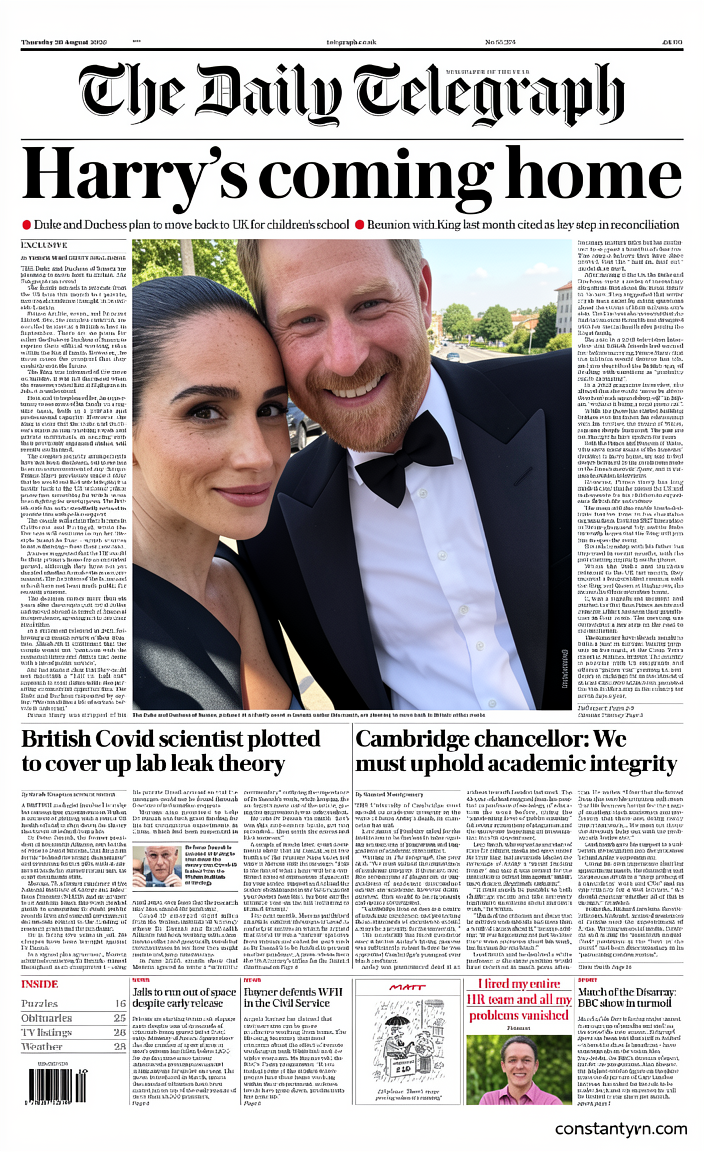
    Constantvpn.com – The prospect of Prince Harry and Meghan Markle returning to British soil has seized the front pages of virtually every major UK newspaper, with several titles scrambling to publish late editions to accommodate the breaking announcement. The couple, who departed the royal family’s inner circle in 2020 in what became widely known as “Megxit,” intend to relocate from the United States later this month. Their two children, Prince Archie and Princess Lilibet, are set to begin at a British school come September, marking a full-circle moment six years after the family’s departure from public royal life.

    The Royal Homecoming

    The Daily Telegraph leads with the headline “Harry’s coming home,” framing the move as a definitive end to the Sussexes’ American chapter. The Sun mirrors the sentiment with “Harry and Meg coming home,” underscoring the six-year gap since the original split. That paper characterises the return as a “shock” and notes the family will remain for “an extended period,” adding that a new UK residence has already been secured.

    The Times offers a more measured take, headlining the story “Royal return” while specifying that the couple’s new address will be a private, non-royal property believed to sit outside London. The distinction matters: unlike previous royal residences such as Frogmore House or the former Windsor cottage, this dwelling carries no official royal designation, signalling a continued distance from the institution even as the family re-enters British daily life.

    The Daily Mail brands the development “a royal sensation” and pairs the story with an image of the couple holding their youngest child. For readers tracking the Sussexes’ trajectory since their 2018 wedding, the announcement lands against a backdrop of years spent in California, a documentary empire, and a public feud with senior royals that reshaped the monarchy’s modern image.

    Asylum Guidebook Sparks Outrage

    Far from the palace, a quieter but equally contentious story has ignited debate. A Home Office guidebook distributed to asylum seekers contains a plain-language warning that having sex with another person without their consent “is a serious crime in the UK.” The document, part of a broader education campaign aimed at those seeking to remain in the country, lays out what it calls the “rules and expectations” of British life.

    The Daily Express frames the episode as an “outcry,” questioning why a government publication must spell out, in explicit terms, how residents should behave towards women. Critics argue the phrasing implies a deficit of basic social norms among newcomers, while defenders of the guidebook note that clear, unambiguous language reduces misunderstandings in a system where ignorance of local law does not excuse non-compliance.

    Shoreham-by-Sea Tragedy and a Deadly Summer

    The Daily Mirror provides further detail on the Shoreham-by-Sea, West Sussex, incident in which three members of one family perished in the water. The father, described as a refugee who fled Palestine roughly a decade ago, drowned alongside his partner and their teenage daughter. Their younger daughter remains in critical condition in hospital.

    Metro contextualises the loss within a broader pattern, noting the family is among numerous victims in what it terms a “summer of swim deaths.” Data compiled by the London School of Hygiene and Tropical Medicine indicates at least 35 people have drowned so far this season amid record-breaking heatwaves, a figure that underscores how extreme temperatures are reshaping the risks associated with Britain’s coasts, rivers, and lakes.

    Inside No 10: Sue Gray’s Candid Account

    The Guardian reports that Sue Gray, Sir Keir Starmer’s former chief of staff, has described the working atmosphere at Downing Street as “unbearable.” Gray, who resigned in 2024 and was characterised as the most powerful adviser in the building during her tenure, spoke on a podcast about fearing she was being recorded by colleagues. Her remarks add a new layer to the ongoing scrutiny of the culture inside the UK’s executive heart, where staff turnover and internal tensions have periodically surfaced since the current government took office.

    Moderna and Merck: A Cancer Vaccine Milestone

    The Financial Times and the i Paper both lead with what may be the most consequential scientific story of the week. US biotechnology firm Moderna saw its shares more than double in value after publishing successful trial results for an experimental skin cancer therapy developed jointly with Merck. The approach involves custom-made vaccines tailored to specific tumours — a strategy described as “unprecedented” in oncology.

    The trial focused on patients with high-risk melanoma and found that those who received the personalised vaccine after surgery remained free of cancer for significantly longer than untreated controls. Analysts anticipate US regulatory approval within the next year, which would position the therapy as a potential adjunct to standard surgical and immunotherapy protocols for one of the most aggressive skin cancers.

    Lighter Notes

    The Daily Star closes the roundup with a story of a woman who discovered a bat in her toilet after the creature had flown into her bathroom seeking a drink of water. The paper’s headline — “Draculoo” — captures the absurdity of the encounter and offers a brief, if unlikely, diversion from the heavier material dominating the day’s news cycle.

    Together, Thursday’s pages illustrate the breadth of the UK news agenda: a royal family re-entering domestic life, bureaucratic language igniting public anger, a coastal community mourning its dead, a prime minister’s inner circle under the microscope, and a pharmaceutical breakthrough that could reshape how doctors fight melanoma. Each story, in its own register, speaks to the tensions and possibilities defining the current moment.

    Frequently Asked Questions

    What is Harry s coming home and Day trip?

    Harry s coming home and Day trip is the main topic of this guide. The article explains the context, practical details, and next steps readers should understand.

    Why does Harry s coming home and Day trip matter?

    Harry s coming home and Day trip matters because readers are looking for a useful answer, not just a short summary. Good content should match search intent and help them decide what to do next.