
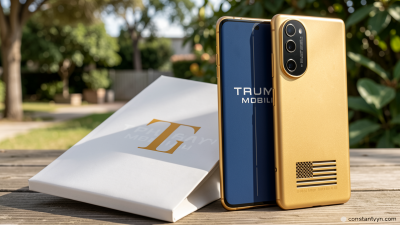
Trump Mobile’s USA Phone: Details Kept Changing
Constantvpn.com – When Trump Mobile promoted a Made-in-the-USA smartphone in the summer of 2025, the announcement was unmistakably political as much as commercial. Two sons of the sitting president unveiled the “T1” handset with a pledge that final assembly would occur on American soil and that pre-ordering customers would receive their units within a matter of months. The branding was explicit: a domestic-manufacturing identity meant to signal a break from decades of overseas assembly.
Twelve months later, that narrative has fractured. Where the phone is built, what its final form factor looks like, and when buyers actually receive their devices — each of these details has been revised more than once. A slice of the early customer base still sits in limbo, watching delivery windows slide further out with every update.
The Family Behind the Flagship
The venture operates under the management of Donald Trump’s eldest sons, who have long overseen the family’s commercial interests across real estate, licensing, and media. That proximity to the White House means every public stumble reads differently. A slipped shipment date from an unknown startup becomes a support ticket; the same slip from a brand carrying a president’s surname becomes a headline.
“A delayed shipment from an obscure startup generates a support-ticket; a delayed shipment from a phone marketed under a president’s family name generates headlines.”
Why the Domestic-Assembly Claim Lands Differently
The United States has not mass-produced a smartphone domestically for well over a decade. Nearly every handset sold in American retail is assembled in Asian facilities, with components drawn from a global supplier web. Claiming that a new phone would be built stateside therefore implies a level of vertical integration — component sourcing, final assembly, quality control — that very few consumer-electronics firms have attempted in the country since the industry consolidated its manufacturing footprint abroad.
For a product tied to a sitting president’s family name, the domestic angle also echoes campaign-era rhetoric about reshoring factory jobs and cutting dependence on foreign production. When the specifics of where and how the T1 is actually manufactured begin to wobble, the gap between political promise and commercial reality becomes harder to dismiss.
A Pattern of Shifting Specifications
Across the year following the summer 2025 launch, publicly available information about the T1’s build location, physical design, and expected delivery window changed on multiple occasions. Each revision pushed the timeline further out or altered the device description in ways that made it difficult for consumers to identify which version of the product they had ordered. The cumulative effect: a phone that exists, in the public eye, more as a moving target than a fixed item on a shelf.
Instability of this kind is not unheard of in consumer electronics. Startups and established brands alike revise roadmaps when supply-chain constraints, regulatory hurdles, or engineering challenges intervene. What distinguishes this case is the scale of public attention and the political symbolism embedded in the launch messaging.
What Early Buyers Are Experiencing
Customers who pre-ordered in the wake of the summer 2025 announcement have, in some cases, waited well beyond the original “within months” window without receiving a device. Repeated adjustments to delivery estimates have left a cohort of buyers in an uncertain holding pattern, unsure whether their order will materialize soon or whether the product they envisioned has been materially altered. For many, the frustration is compounded by the absence of a single, stable public account of what the phone is, where it is made, or when it will arrive.
FAQ
What is the Trump Mobile T1?
The T1 is a consumer smartphone announced in summer 2025 by the Trump Mobile venture, managed by Donald Trump’s eldest sons. It was marketed with a domestic-manufacturing pledge