Alexander Butterfield, the Nixon aide who disclosed Watergate tapes, dies at 99
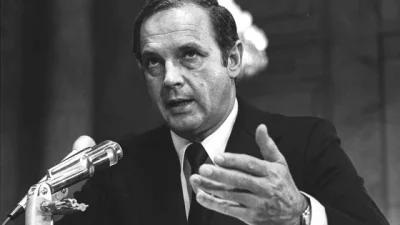
Alexander Butterfield, Nixon Aide Who Unveiled Watergate Tapes, Dies at 99
Alexander Butterfield, a former White House deputy assistant who played a pivotal role in the Watergate scandal by revealing the president’s secret taping system, has passed away at the age of 99. His wife, Kim, and John Dean, the White House counsel during the crisis, confirmed his death. Dean, who later collaborated with Butterfield to expose White House misconduct, reflected on the moment the tapes were disclosed: “He had the heavy responsibility of revealing something he was sworn to secrecy on, which is the installation of the Nixon taping system. He stood up and told the truth.”
A Career Shaped by the Taping System
Born in 1925, Butterfield joined the Nixon administration in 1969 as a deputy assistant to the president. In this role, he managed the taping system, which used voice-activated devices to record conversations in four key locations, including the Oval Office and the Cabinet Room. He estimated that only a select few—Nixon, himself, H.R. Haldeman, a Haldeman assistant, and a small group of Secret Service agents—knew about the system. “Everything was taped … as long as the president was in attendance,” he told Watergate investigators during a preliminary hearing in 1973.
The Tapes That Changed History
On July 13, 1973, Senate committee staff questioned Butterfield about the taping system. A simple inquiry sparked a revelation that would shake the nation. When he confirmed the system’s existence, he was called to testify before a public hearing. The July 16 announcement of Nixon’s ability to record all conversations stunned political allies and adversaries alike. The tapes, later made public by the National Archives, offered a candid glimpse into Nixon’s private thoughts, exposing his volatile temper, prejudiced views, and candid remarks about public figures.
A Legacy of Unforeseen Consequences
Butterfield believed his testimony had significant implications for Nixon’s political future. “I just thought, ‘When they hear those tapes …’ I mean, I knew what was on these tapes … they’re dynamite,” he remarked to the Nixon Library. He hadn’t anticipated the president’s resignation in August 1974, just weeks after the Supreme Court compelled him to hand over the tapes. “I guess I couldn’t conceive of (Nixon) being forced out of office. It had never happened before,” he later admitted.
Life After the White House
After leaving the White House, Butterfield served as administrator of the Federal Aviation Administration until 1975. He claimed that Gerald Ford, Nixon’s successor, dismissed him from that post as part of a deal between the two administrations. Butterfield noted that his testimony to the Senate committee had drawn attention, with White House associates hinting at his role in Nixon’s downfall. Later in life, he pursued a career in business and earned a master’s degree, though details of his academic pursuits were not specified in the original account.
