Players who cover mouths face red card at World Cup
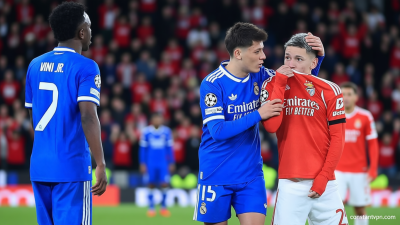
Players who cover mouths face red card at World Cup
Constantvpn.com – A significant shift in football discipline rules has been introduced for the upcoming World Cup, with players who conceal their mouths during confrontations with opponents now at risk of receiving a red card. This decision emerged from a special gathering of the International Football Association Board (Ifab) in Vancouver, Canada, where two proposed amendments to FIFA regulations were finalized. The new measures aim to address instances of verbal misconduct, particularly those involving discriminatory remarks, and are set to take effect during the tournament this summer.
New Rule Adopted by IFAB
The rule change allows referees to issue red cards to players who cover their mouths while speaking to opponents in high-pressure situations. This follows similar actions taken in recent matches, where verbal exchanges have been scrutinized for potential offensive language. The Ifab meeting in Vancouver also approved an additional regulation: players who leave the field in protest of a referee’s decisions may now be sent off. This came after heated incidents during the Africa Cup of Nations final, where Senegal players temporarily exited the pitch over a controversial penalty call against Morocco.
Gianluca Prestianni’s Case
The issue gained national attention in February when Benfica’s Gianluca Prestianni was accused of homophobic comments during a Champions League encounter. Prestianni raised his shirt to address Real Madrid’s Vinicius Jr, prompting allegations of racial and sexual orientation-based abuse. Initially, he was provisionally banned for one match, but a subsequent UEFA investigation found him guilty of homophobic conduct. As a result, he received a six-match suspension, with three of those cases postponed. The case underscored the need for stricter enforcement of verbal conduct, leading to the Ifab’s decision to formalize the rule.
Africa Cup of Nations Incident
The Africa Cup of Nations final became a pivotal moment for the new rule. Senegal’s players stormed off the field in protest of a penalty awarded to Morocco, returning to their dressing rooms before the match resumed. When they re-entered, Brahim Diaz converted a Panenka-style penalty, scoring for Senegal. However, the Confederation of African Football (CAF) later reversed the outcome, stripping Senegal of the title and awarding Morocco a 3-0 victory. This controversial decision highlighted the potential for on-field protests to influence results, prompting FIFA to take action.
Broader Implications and Applications
The new rule extends beyond players to include team officials who may incite players to leave the pitch. If a team’s actions lead to a match being abandoned, it will face consequences, including forfeiting the game. This expansion ensures that all parties involved in the protest are held accountable. The change also applies to verbal exchanges that occur during critical moments, such as penalty kicks or set-pieces, where players might attempt to hide their words from view.
FIFA President’s Rationale
FIFA President Gianni Infantino emphasized the importance of the rule, stating it was designed to have a deterrent effect. He argued that covering one’s mouth during a confrontation implies intent to hide something inappropriate. “If a player covers his mouth and says something, and this has a racist consequence, then he has to be sent off, obviously,” Infantino said. “There must be a presumption that he has said something he shouldn’t have said, otherwise he wouldn’t have had to cover his mouth. If you do not have something to hide, you don’t hide your mouth when you say something. That’s it, as simple as that.” His comments reflect the broader goal of ensuring accountability in verbal interactions.
Historical Context and Football Culture
This development builds on ongoing efforts to address discriminatory behavior in football. Vinicius Jr, who was targeted in the Champions League incident, has faced 20 alleged cases of racist abuse since joining Real Madrid eight years ago. The rule’s introduction aligns with FIFA’s commitment to eradicating racism and homophobia from the sport. Fans and analysts have debated the effectiveness of such measures, with some praising the clarity they bring to on-field conduct and others questioning whether the rule could be applied too broadly.
Global Impact and Future Considerations
The World Cup, as the pinnacle of international football, will serve as a testing ground for these new regulations. The tournament’s group stage has also been designated for a yellow card amnesty, allowing teams to benefit from leniency in early matches. This strategy aims to balance strict enforcement with opportunities for players to adapt to the new rules. Meanwhile, other proposed changes, such as expanding VAR coverage and introducing countdowns for key moments, will further shape the competitive landscape.
These updates are part of a larger initiative to modernize football governance. The Ifab’s annual general meeting in Wales earlier this year had already begun discussions on the matter, leading to a consensus for a revised approach ahead of the Vancouver meeting. The board’s decision to grant competition opt-ins ensures that the rules can be applied flexibly while maintaining consistency across global tournaments.
As the World Cup approaches, clubs and players are expected to review the implications of the new regulations. The case of Gianluca Prestianni has become a symbol of the growing scrutiny on verbal conduct, with the potential for a single gesture to alter the course of a match. Whether this rule will be a game-changer or a point of contention remains to be seen, but it underscores FIFA’s determination to enforce accountability in every aspect of the game.
Additional Rule Changes
Alongside the mouth-covering regulation, the Ifab approved another amendment addressing “tactical timeouts.” This change allows referees to intervene more frequently during stoppages, ensuring that teams cannot exploit pauses to coordinate strategies unfairly. The decision also expands the role of VAR, granting officials greater authority to review critical decisions in real-time. These adjustments aim to enhance fairness and reduce subjective interpretations of on-field actions.
While the focus has been on verbal misconduct and protests, the broader implications of these changes extend to
