Wildfire in southern France forces evacuation of 10,000 people
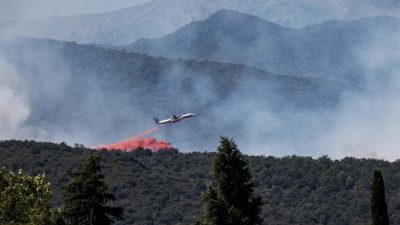
Wildfire in Southern France Forces Evacuation of 10,000 Residents
Constantvpn.com – A major wildfire in the French Pyrenees has prompted the evacuation of thousands of residents from towns and villages near the Spain border. The blaze, which erupted in the foothills of the region, has already consumed over 4,600 hectares, according to local prefect Pierre Regnault de la Mothe. With temperatures climbing due to an early summer heatwave, authorities have warned that the situation could worsen, urging swift action to secure affected communities.
Heatwave Intensifies Fire Spread and Emergency Response
French officials are battling the flames as the country experiences a record-breaking heatwave that has scorched much of Europe. Interior Minister Laurent Nunez emphasized on TF1 that conditions are deteriorating, stating, “This morning, the situation is getting worse again. Today, the battle resumes.” Strong winds have compounded the challenge, threatening to push the fire further into populated areas. Patrice, a local resident from Trévillach, described the rapid spread of the blaze as “bordering on panic,” noting how it approached within 300 metres of homes.
Impact on Tour de France and Public Safety Measures
The wildfire has disrupted the Tour de France, with spectators advised to avoid the finish line of Monday’s third stage. The race’s 195.9km route begins in Granollers, Spain, and concludes in Les Angles, France. Race director Christian Prudhomme stated, “An exceptional fire requires exceptional measures for the Tour. We invite the public not to gather at the edge of the race or the finish site.” As a result, the motorcade of team vehicles will be reduced, allowing emergency services to navigate the area more efficiently.
EU Support and Cross-Border Effects
European Commission President Ursula von der Leyen announced that the EU will deploy four aircraft from Cyprus and Sweden to assist with firefighting efforts. The fire has also spread to neighboring Spain, where more than 2,200 hectares of the Les Gavarres natural reserve were lost. Catalan officials reported late Saturday that the blaze is now stable and expected to be fully extinguished by the end of the week, per Reuters.
Evacuation in Eastern Castellon and Regional Concerns
Further south, in the Castellon province of Spain, 500 residents were evacuated after a wildfire entered the Sierra de Espadan national park. The region’s proximity to the French Pyrenees highlights the interconnected nature of the crisis, with both countries facing similar challenges from the heat. In France, the fire’s location near Perpignan has raised fears about its potential to spread to nearby areas.
Health Impacts and Climate Change Context
The heatwave has not only fueled the wildfire but also triggered a surge in health emergencies. During the peak of the extreme temperatures, France recorded at least 2,025 excess deaths, with Belgium and the Netherlands also reporting significant fatalities. The Copernicus climate service notes that Europe is warming at twice the global average, increasing the frequency and intensity of summer heatwaves. This trend is expected to continue, with temperatures potentially reaching 40C in south-west France this week and already surpassing that threshold in parts of Portugal and Spain.
Historical Heatwave Comparison and Future Risks
The current heatwave, while less severe than June’s record-breaking event, still poses significant risks. June saw temperatures peak at 42C in certain regions, culminating in France’s hottest day ever on average. BBC Weather Lead Forecaster Matt Taylor remarked, “Although this heatwave may not break records like June’s did, it is still exceptional for the time of year.” With the heatwave expected to persist into next week and minimal rain forecast, the likelihood of additional wildfires remains high.
Paris Implements Alcohol Restrictions Amid Regional Heat
As the heatwave shifts eastward, Paris has introduced temporary restrictions on alcohol consumption and sales. The measure aims to reduce heat-related health risks, particularly among vulnerable populations. This underscores the broader impact of the climate crisis, which is accelerating across Europe and intensifying natural disasters. The French government has reiterated its commitment to addressing the crisis, with officials stressing the need for coordinated efforts to mitigate further damage.
Preparing for a Worsening Climate Emergency
Local and national authorities are working tirelessly to contain the fire, but challenges persist. The combination of high temperatures, dry vegetation, and strong winds creates a volatile environment. “We are in a race against time,” said Regnault de la Mothe, adding that the fire’s movement is unpredictable. The situation has also prompted a satellite comparison of the region, illustrating the drastic changes in the French countryside due to prolonged heatwaves.
Long-Term Implications of Warming Trends
Climate change is reshaping Europe’s summer, making heatwaves more frequent and severe. The Pyrenees, a region historically known for its temperate climate, now faces conditions that rival those of the Mediterranean. This shift is linked to broader global trends, with the continent experiencing the fastest temperature rise compared to other regions. Scientists warn that such extremes will become more common, requiring sustained adaptation strategies to protect both people and ecosystems.
Community Resilience and Emergency Coordination
Residents in Trévillach and surrounding areas have shown remarkable resilience, with many assisting firefighters and emergency teams. However, the scale of the evacuation has placed immense pressure on local resources. Coordinated efforts between France and Spain are critical, as the fire’s spread demonstrates the need for cross-border collaboration. The EU’s involvement is a key step in bolstering these responses, with international support playing a vital role in managing the crisis.
As the situation evolves, authorities are monitoring weather patterns closely. The potential for temperatures to hit 40C in south-west France has heightened concerns about further wildfires. With the Tour de France’s conclusion delayed and evacuation orders in place, the region remains under intense scrutiny. The incident serves as a stark reminder of the growing impact of climate change, urging a reevaluation of preparedness strategies for future extreme weather events.
