
The Uncomfortable Allure of Watching Someone Else’s Mess Get Fixed
Constantvpn.com – There is a particular kind of online content that makes millions of people pause their scroll, lean slightly closer to the screen, and feel a strange mix of revulsion and relief. A kitchen buried under rotting food. A bedroom where the bed has become a geological layer of unwashed linens. A toilet so clogged it has become a structural hazard. Then, methodically, a professional wades in and turns the chaos into something almost recognisable as a home. The viewer exhales. They watch again. They share the clip.
This is the world of extreme clean-up content, and it has become one of the most reliably viral genres on short-form video platforms. The numbers are staggering: by the time Unilever joined forces with TikTok in 2023 to formalise a dedicated CleanTok community, the broader cleaning genre had already accumulated 78 billion views on the platform. The partnership was not a speculative bet. It was a response to an audience that had already made its preferences unmistakably clear.
The People Behind the Gloves
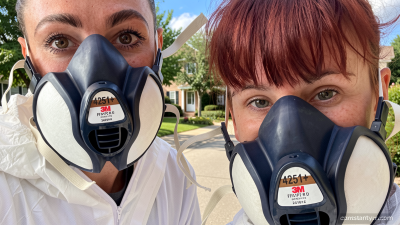
Victoria Gordon, a 44-year-old cleaner based in Lincoln, represents the more extreme end of this content spectrum. Her work involves hoarder clearances, crime-scene decontamination, and other jobs that most domestic cleaning services would decline without a second thought. When she walks through a front door, what greets her can include towering piles of soiled clothing, dishpiles that have begun to decompose, and sanitation fixtures rendered completely inoperable by years of neglect.
Gordon has long enjoyed the physical and logistical challenge of these assignments. What surprised her was the reaction her work generated once she began filming it. She posts before-and-after sequences to TikTok, and the engagement has been consistently high. She attributes the audience’s appetite to a simple human trait.
“We like to have a little delve into other people’s lives – in particular where there’s a shocking ‘before and after’, or they’re able to watch the process. People find it really interesting and actually quite satisfying.”
Her approach is deliberately cautious. Because the homes she enters often contain personal documents, photographs, and objects of sentimental value, she does not publish footage without explicit client consent. Many assignments, she notes, are ones she would not even ask permission to film.
Why the Brain Keeps Watching
Dr Wasim Ahmed, a senior lecturer in marketing at the University of Hull, has studied the mechanics behind short-form video virality and offers a framework for understanding the genre’s grip. He identifies three psychological drivers: a craving for control, genuine curiosity, and a need for relatability.
“You’re seeing something in the short-form video where it’s creating tension, showing you a lot of mess, and there’s a process and resolution that can be quite reassuring. It’s quite satisfying seeing a clear problem and a clear ending in just under a minute.”
The structure matters. A typical clip compresses an entire transformation into under sixty seconds. The viewer witnesses the problem, watches the intervention, and receives the resolution in a single, self-contained narrative arc. There is no ambiguity left hanging. The mess is gone. The brain registers completion.
A Television Prehistory
The appetite for watching disorder be corrected is not new. Long before smartphone cameras made every kitchen accessible, British television devoted entire series to the spectacle of accumulated excess. Programmes such as Britain’s Biggest Hoarders, The Hoarder Next Door, and Hoarder SOS drew substantial audiences by pairing the emotional stories of residents with the physical labour of restoration crews. What social media has done is strip away the broadcast schedule, the presenter’s narration, and the weekly cadence, delivering the raw transformation in bite-sized, algorithmically amplified fragments.
The Cleaner’s Own Paradox
Ann Russell, a professional cleaner from Hampshire, built a following of three million TikTok users by simply filming her ordinary working day. Her explanation for why the work feels different when performed for others rather than for herself is blunt and widely shared.
“I still don’t like cleaning my own house but cleaning someone else’s house – you can go into absolute chaos, you can tidy it, clean it, you can render it beautiful and then you can leave and somebody says ‘Thank you’. When it is your own house, just when you are getting to the end of it, somebody drops a bottle of squash and throws a pair of socks on the floor. It’s disheartening and it’s never-ending.”
The distinction she draws – between a task with a defined endpoint and one that perpetually resets – mirrors exactly what the viewer experiences on screen. The video ends. The mess is resolved. There is no next morning where the socks reappear.
The Algorithm as Curator
Ahmed’s current research examines how platform algorithms interact with this content category. The mechanism is straightforward: the system measures dwell time. If a user lingers on a clip of a particularly grim room or a shocking crime-scene reveal, the algorithm interprets that attention as a quality signal. It then surfaces similar or escalating content to the same user.
“So when there’s a really filthy room and it’s holding people’s attention or it’s a really shocking crime scene, the algorithm is reading that as a quality metric. It starts finding the user worse rooms, worse crime scenes, [and] allowing the content to be served up in greater numbers as well.”
The result is a feedback loop. The most extreme examples receive the most distribution, which trains the audience to expect ever-greater severity, which in turn rewards the next escalation. Engagement metrics – likes, comments, shares – compound the effect. Ahmed notes that comment sections become secondary viewing experiences in themselves, where users compare notes on the worst details they spotted.
A Mars Bar and a Possible Tour
Gordon’s content occasionally veers into the purely absurd. Earlier this month, during a clearance in Scunthorpe, she uncovered a Mars bar that had been sitting undisturbed for thirty-five years. She filmed the discovery, posted it, and watched the response.
“It’s so fascinating what people find so interesting. I almost put it in the skip [but now] I might do a UK tour with it.”
The anecdote captures something essential about the genre’s appeal. It is not merely about cleanliness or domestic order. It is about the unexpected artefacts of other people’s lives surfacing into view – a forgotten chocolate bar, a decade-old receipt, a photograph no one has looked at since 2009. The viewer is granted a brief, sanctioned glimpse into a private world, and the cleaning is simply the vehicle that makes the glimpse possible.
As long as homes continue to accumulate what their occupants cannot bring themselves to discard, and as long as platforms continue to reward the seconds of attention those spaces command, the genre shows no sign of exhausting its audience. The scroll pauses. The mess is revealed. The gloves go on. And the viewer, unable to look away, watches it all become a room again.
Related Reading
Frequently Asked Questions
What is Why we can t look away?
Why we can t look away is the main topic of this guide. The article explains the context, practical details, and next steps readers should understand.
Why does Why we can t look away matter?
Why we can t look away matters because readers are looking for a useful answer, not just a short summary. Good content should match search intent and help them decide what to do next.