US blocks long-term renewal of North American trade deal
US Blocks Long-Term Renewal of North American Trade Deal
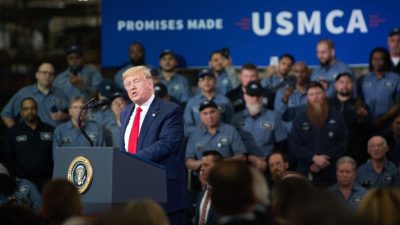
Constantvpn.com – On January 30, 2020, then-US President Donald Trump addressed the United States-Mexico-Canada Agreement (USMCA) during a visit to Dana Incorporated, a key auto parts manufacturer in Warren, Michigan. The agreement, which replaced the 1994 North American Free Trade Agreement (NAFTA), has now faced a pivotal decision from the American administration. A senior official confirmed that the United States has chosen not to extend the trade pact beyond its initial term, marking a shift in its approach to the trilateral economic partnership.
The decision effectively ends the automatic 16-year extension that would have kept the USMCA in effect until 2042. According to the official, the US administration “chose not to rubber stamp a USMCA renewal without addressing existing issues,” emphasizing the need for revisions before committing to a long-term extension. This move leaves the future of the agreement uncertain, as it will no longer benefit from a guaranteed renewal. Without unanimous agreement among the three nations, the pact could be terminated as early as 2036, with a ten-year countdown initiated by the US’s choice to opt out.
“The United States did not agree to renew the USMCA in its current form,” the official stated. “If the countries fail to unanimously agree to renew the agreement, it essentially sets a ten-year shot lock to termination.”
Under the terms of the USMCA, each country is required to decide independently whether to extend the agreement. However, the current decision means the US will not automatically continue the pact. This has created a new dynamic, where the three nations must negotiate annually to determine its future. The agreement, which facilitates approximately $2 trillion in annual trade, remains in place for now but is now subject to periodic reviews rather than a fixed timeline.
Key Concerns Driving the Decision
The US trade officials have been vocal about several unresolved issues within the USMCA. Among their primary concerns are the automotive rules of origin, which mandate a higher percentage of vehicle components to be produced within North America to qualify for preferential treatment. Additionally, the dairy market access provisions have been scrutinized, with the administration pushing for more favorable terms for American farmers. The pact also allows third-party countries like China to leverage the agreement for their own economic advantage, a point that has raised alarms in Washington.
These disputes highlight the tension between the US and its North American trade partners. While the USMCA updated rules on digital trade, labor standards, and regional manufacturing, the original terms did not fully satisfy all parties. The lack of consensus has led to the decision to block the long-term renewal, forcing the nations to revisit the agreement every year rather than relying on a set extension. This change aims to give the US more leverage in negotiations, as domestic trade groups argue that annual reviews provide flexibility to address specific concerns.
Reactions from Industry and Business Groups
The decision has sparked mixed reactions across the continent. The US Chamber of Commerce and other organizations have expressed caution, warning that the uncertainty could disrupt sectors reliant on predictable trade relationships. For instance, the manufacturing and agricultural industries, which depend heavily on cross-border certainty, face potential challenges without a clear renewal plan.
On the other hand, certain US-based trade groups have welcomed the change. The American Iron and Steel Institute and the Steel Manufacturers Association, for example, argue that the annual review process allows American negotiators to strategically address weaknesses in the agreement. By maintaining the ability to renegotiate terms each year, these groups believe the US can secure more favorable conditions for its industries.
Despite the initial approval of the USMCA in 2020, the decision to block its renewal underscores the ongoing debates over its structure. The agreement, which came into effect six years after its signing, introduced significant reforms compared to NAFTA. These changes included stricter labor protections, updated environmental standards, and provisions to ensure more regional production of goods. However, the US has maintained its focus on specific areas, such as automotive manufacturing and agricultural trade, as points of contention.
Economic Implications of the Decision
The USMCA’s original terms were designed to provide stability for North American trade, but the lack of a long-term commitment now introduces fresh economic uncertainty. While the agreement remains in place, the absence of a guaranteed extension means that businesses must prepare for potential changes in the future. This could affect supply chains, tariffs, and investment decisions across the continent.
For the automotive industry, the rules of origin have been a focal point. The requirement for a higher percentage of vehicle parts to be sourced locally has raised concerns about the cost and competitiveness of US manufacturers. By withholding a long-term renewal, the US administration has signaled its intent to revisit these terms, potentially altering the landscape for automakers and suppliers.
The dairy market access issue has also been a source of friction. US dairy farmers have lobbied for greater access to Canadian markets, which the original agreement did not fully address. The decision to block renewal allows the US to push for amendments that could benefit domestic producers. Meanwhile, the inclusion of third-party countries like China in the agreement’s framework has been seen as a way for them to bypass US trade barriers and access regional markets more easily.
As the ten-year countdown begins, the focus shifts to the negotiations that will determine the USMCA’s fate. Each year, the three nations will need to reach a consensus on whether to extend the deal, with the US holding the key to its continuation. The stakes are high, given the agreement’s role in supporting a vast network of trade and investment. Without a clear path forward, the economic landscape of North America may face unpredictable shifts.
Industry leaders have called for a renewed commitment to the USMCA, highlighting its importance in fostering growth and stability. The decision to block the long-term renewal, however, has set the stage for a more flexible approach. While this could allow for targeted improvements, it also introduces the risk of prolonged uncertainty. The outcome of future negotiations will be critical in shaping the long-term economic prospects of the region.
With the USMCA now entering a new phase, the focus remains on addressing the unresolved issues that led to the decision. The agreement’s structure, which was updated to reflect modern trade challenges, will need to evolve further. The impact of these changes will be felt across industries, from manufacturing to agriculture, as the nations navigate the complexities of their economic relationship. The road ahead is uncertain, but the decision has opened the door to a more dynamic and adaptable trade framework.
