US and Iran exchange strikes after two US soldiers killed in Jordan
Escalating Tensions: US and Iran Trade Military Strikes Following Jordan Casualties
Constantvpn.com – Washington and Tehran have intensified their military confrontation over the past several days, with both nations launching coordinated attacks against each other’s positions. The latest round of hostilities began on Saturday night when American forces initiated another series of aerial bombardments targeting Iranian military installations along the coastline. According to representatives from the US military, these operations focused specifically on coastal surveillance systems and air defense networks.
US Central Command, commonly referred to as Centcom, announced that its forces achieved successful hits against Iranian military capabilities during the operation. Simultaneously, Iranian state television reported that Qeshm Island, located within the strategically important Strait of Hormuz, sustained damage from American strikes. The command further clarified that Iran’s Revolutionary Guards—forces directly responsible for the assault that claimed two American service members in Jordan on Friday—were among the primary targets.
Regional Retaliation and Infrastructure Damage
Iran responded swiftly to the American bombardment by deploying drone attacks against two American military installations situated in Kuwait. This counteroffensive was confirmed through Iranian state media channels. The escalating violence has seen both countries accused of striking critical infrastructure that serves civilian populations alongside military objectives.
On Saturday, Iranian officials announced they conducted “large-scale attacks with kamikaze drones” directed at American military facilities. According to the IRGC-affiliated Tasnim news agency, these strikes targeted a military depot located at Camp Udairi as well as Ali Al Salem Air Base in Kuwait. The American operations marked the eighth consecutive night of bombardments against Iranian positions.
Centcom explained that the ongoing strikes aimed to “further degrade Iran’s ability to threaten commercial shipping in the Strait of Hormuz.” The military command emphasized that these operations were intended to “swiftly punish Islamic Revolutionary Guard Corps forces who launched attacks against American service members in Jordan last night.” These actions followed a week of heightened tensions during which Washington reinstated its blockade of Iranian ports while Tehran announced the closure of the Strait of Hormuz. This escalation occurred as their preliminary ceasefire arrangement collapsed less than a month after its initial implementation.
Casualties and Diplomatic Fallout
In a statement released earlier on Saturday, Centcom provided additional details about the Jordan incident: “Two US service members in Jordan were killed in action as US Central Command (Centcom) and partner forces defended against Iranian ballistic missile and drone attacks. Additionally, one service member is currently missing.”
US Defence Secretary Pete Hegseth addressed the fatalities through a message posted on X, writing: “Godspeed, heroes. Their sacrifice only stiffens our resolve.” The American death toll in this conflict has now climbed to sixteen following the declaration that an American Navy pilot, who had been missing since earlier in the month, was deceased. This represents the second increase in casualties reported this week.
Within Iran, the health ministry reported that at least fifty individuals have lost their lives while more than five hundred sustained injuries from American strikes over the preceding three weeks. Smoke was observed rising near an oil facility in Mangaf, Kuwait, on Saturday following Iranian bombardment of the area.
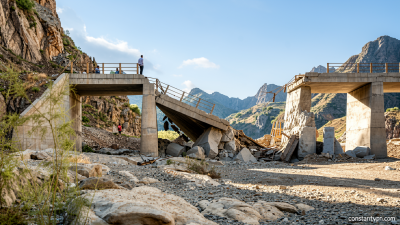
Both nations face accusations regarding the targeting of civilian infrastructure. The United States has maintained that it “carried out strikes exclusively on military targets, including military logistics infrastructure,” countering Iranian claims that bridges and railway stations were damaged. Meanwhile, the Gulf Cooperation Council criticized Tehran on Saturday for targeting civilian facilities after Kuwait reported that a power plant and water distillation plant sustained hits.
Under international legal frameworks, attacking civilian populations or civilian zones constitutes a violation. Nevertheless, civilian structures such as bridges or power stations may lose their protected status when utilized to support military operations. Washington and Tehran initially reached a preliminary agreement to halt hostilities in June, though this arrangement deteriorated within weeks. President Donald Trump announced on July 8 that the agreement was “over.”
Late on Saturday, Iran’s Supreme Leader Mojtaba Khamenei issued a written statement criticizing American actions. He declared that America’s “repeated breaches” of the agreement had “laid bare a fundamental truth: the signature of the US president is utterly worthless and devoid of credibility.”
“Two US service members in Jordan were killed in action as US Central Command (Centcom) and partner forces defended against Iranian ballistic missile and drone attacks. Additionally, one service member is currently missing.”
“Godspeed, heroes. Their sacrifice only stiffens our resolve.”
